NPR News: 05-21-2024 7PM EDT
Learn more about sponsor message choices: podcastchoices.com/adchoices
 The South Caucasus News - SouthCaucasusNews.com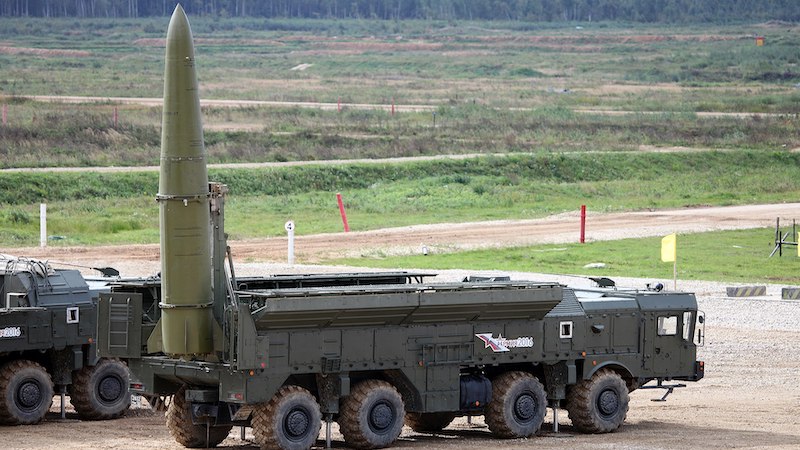
Russia has begun “practical training in the preparation and use of non-strategic nuclear weapons,” its Defense Ministry said Tuesday.
Russian President Vladimir Putin ordered the drills earlier this month in “response to provocative statements and threats by Western officials,” the ministry said.
French President Emmanuel Macron has said NATO should not rule out deploying troops to Ukraine, while British Foreign Minister David Cameron has said Ukraine has the right to fire Western missiles into Russian territory.
The drills are being conducted in Russia’s southern military district, which borders Ukraine and also includes parts of Ukraine that Russia claims it has annexed.
The Russian defense ministry said the training is designed to test “the readiness of personnel and equipment of non-strategic nuclear weapons combat units to respond and to unconditionally ensure the territorial integrity and sovereignty of the Russian state.”
It was not immediately clear if any test firings have occurred.
The West has accused Putin of irresponsible nuclear saber-rattling.
Non-strategic nuclear weapons, widely known as tactical, are less powerful than strategic nuclear weapons, but they also have the capacity to wield devastating destruction.
The governor of Ukraine’s Kharkiv region, Oleh Syniehubov, said Tuesday the area was under Russian bombardment all night, while Ukraine’s military said the country’s air defenses shot down 28 of 29 Russian drones launched at multiple Ukrainian regions.
Syniehubov said falling debris from destroyed drones damaged several houses and injured at least three people.
Serhiy Lysak, governor of the Dnipropetrovsk region, said falling drone debris damaged commercial buildings.
The latest attacks came after Ukrainian President Volodymyr Zelenskyy again appealed to allies to better equip Ukraine with air defense systems and new combat aircraft.
“Unfortunately, the free world still lacks efficiency in these two tasks,” Zelenskyy said. “But we still have a perspective and promising work with several partners — and we are doing everything to make sure that the day comes as soon as possible when we can add the power of ‘Patriots’ [air-defense batteries] to our eastern regions, our cities — such as Kharkiv, Sumy and others.”
Russia’s defense ministry said Tuesday its air defenses destroyed a guided missile and two aerial drones over the Belgorod region, and another drone over the Kursk region.
Vyacheslav Gladkov, the regional governor of Belgorod, said a Ukrainian drone attack hit a car, killing at least one person.
U.S. Defense Secretary Lloyd Austin and at least 50 other defense leaders from Europe and around the world met Monday to coordinate military support to Ukraine as it battles a renewed onslaught from Russia in the Kharkiv region.
Austin said Monday’s meeting came at “a moment of challenge” and promised to move U.S. weapons to Ukraine “week after week.”
The U.S. Congress and President Joe Biden approved a $61 billion aid package for Ukraine in late April after political gridlock largely stalled shipments to help Ukraine’s military for months.
Russia during that time intensified its invasion of Ukraine, especially with its campaign in Kharkiv.
Austin said Monday the latest U.S. aid package would help Ukraine in Kharkiv and other areas facing Russian pressure.
“We’ve already delivered many of Ukraine’s top-priority requirements, and much more assistance is on the way. That includes additional munitions for NASAMS and Patriot air-defense systems, more HIMARS systems and ammunition, Stinger anti-aircraft missiles, and Javelin and AT-4 anti-armor systems,” Austin said. “This package also includes armored vehicles. And that’s essential for Ukraine’s work to reconstitute its arsenal.”

By Ahammad Foyez
Calling it a disgrace for their country, civil society groups on Tuesday demanded that authorities investigate ex-army chief Gen. Aziz Ahmed and his family after Washington blacklisted him for “significant corruption.”
Aziz and his immediate family as a result are ineligible to enter the United States, the U.S. State Department announced Monday as it designated the now-retired military official, who had been accused of graft before.
Aziz, who served as army chief from June 2018 to June 2021, had helped his brother evade prosecution, had taken bribes in exchange for handing out government appointments, and had worked closely with his sibling to influence the awarding of military contracts, the department alleged.
For some anti-corruption activists such as Iftekharuzzaman of Transparency International Bangladesh, the blacklisting did not come as a surprise because “the U.S. has been vocal” that it will not tolerate corruption.
“It is really a shame for the country and the people of the country to witness that the former chief of the army is involved in corruption and abused his power,” the executive director of TI Bangladesh, who goes by one name, told BenarNews.
“Now Bangladesh has to prove that there is a rule of law here too. Therefore, these corruption allegations should be investigated through impartial investigation,” Iftekharuzzaman said.
Bangladesh authorities, especially the Anti-Corruption Commission, must take “immediate exemplary action” against Aziz and others involved in corruption, said Badiul Alam Majumdar, who is with a Dhaka-based civil society group.
“It is a huge disgrace for Bangladesh as a country and its people,” the leader of the group, Shushashoner Jonno Nagorik, told BenarNews.
According to him, Aziz and his brothers – he has three – became akin to some of the world’s biggest mafia groups due to the prolonged political patronage and unlimited benefits that military officers enjoyed.
On Tuesday, reporters asked Foreign Minister Hasan Mahmud whether Bangladesh’s government was planning any action against Aziz in response to the U.S. blacklisting him.
“This is a military issue. I don’t want to say anything right now,” the minister said.
“We are in contact with the United States and are working together in anti-corruption, anti-terrorism and other fields internationally.”
The minister said the U.S. government had informed the Bangladesh Embassy in Washington before publicly announcing the ban.
The U.S. announcement, published on the State Department website Monday, said Aziz’s actions had undermined Bangladesh’s democratic institutions.
“Aziz Ahmed engaged in significant corruption by interfering in public processes while helping his brother evade accountability for criminal activity in Bangladesh,” said the statement attributed to spokesman Matthew Miller.
“Aziz also worked closely with his brother to ensure the improper awarding of military contracts and accepted bribes in exchange for government appointments for his personal benefit,” it added.
For his part, the ex-army chief of Bangladesh said that all the allegations against him were false, and he was “surprised to hear” about the U.S. announcement.
“[A] friend sent me the copy [of the State Department statement] in the morning,” he said in an interview on Tuesday with Jamuna TV, a private television channel in Bangladesh.
Aziz said that a documentary aired in 2021 by the Qatar-based media group Al Jazeera had made the same claims against him as the U.S.
During the interview, Aziz was asked about the allegations linked to his three brothers who were convicted in a murder case in 2004. Of the three, two evaded arrest and are still on the run, while the third had no such luck and was thrown in jail. He received a presidential pardon in 2018 after more than a decade in prison.
The U.S. allegation that Aziz had helped a brother dodge responsibility for a criminal activity was untrue, the ex-army chief said.
“That brother of mine has been living abroad for a long time. He went abroad with a valid passport. I cannot accept the complaint of using my surname here, it is not correct,” he said.
“Another [complaint] is that I committed corruption by giving my brother a military contract and taking a bribe,” he said, without specifying which of his three siblings he was referring to.
“If anyone can prove I have given any work to any of my brothers or any relatives during my four-year service as the chief of BGB [Border Guard Bangladesh] and three years as army chief, I am ready to accept any consequences,” he said.
If there was no proof, how could the U.S. take action, the interviewer asked Aziz.
“I will not comment on this matter, because I don’t have any data,” he replied.
According to the Al Jazeera documentary, one of his brothers, Haris Ahmed, had moved to Budapest in 2015 and was doing business there since. Another brother, Anis Ahmed, reportedly lives in Malaysia. Some media reports said the third sibling who was pardoned, Tofail Ahmed Joseph, had also left Bangladesh.
Back in 2021, a Bangladesh court ordered the removal of Al Jazeera’s documentary, “All the Prime Minister’s Men,” from the country’s social media platforms.
At that time, Al Jazeera’s investigative unit defended the documentary.
It “exposes how the head of the Bangladesh army helped two fugitive brothers, convicted of murder, to escape justice,” Al Jazeera said in a statement.
“One brother, Haris Ahmed, boasts that he can use police and paramilitary units to abduct rivals and earn a fortune in bribes thanks to his powerful family links,” it added.
Al Jazeera said it had contacted everyone mentioned in the documentary, including Prime Minister Sheikh Hasina, Aziz’s brothers, senior members of the security forces and ministers, but none of them responded to a detailed set of questions.
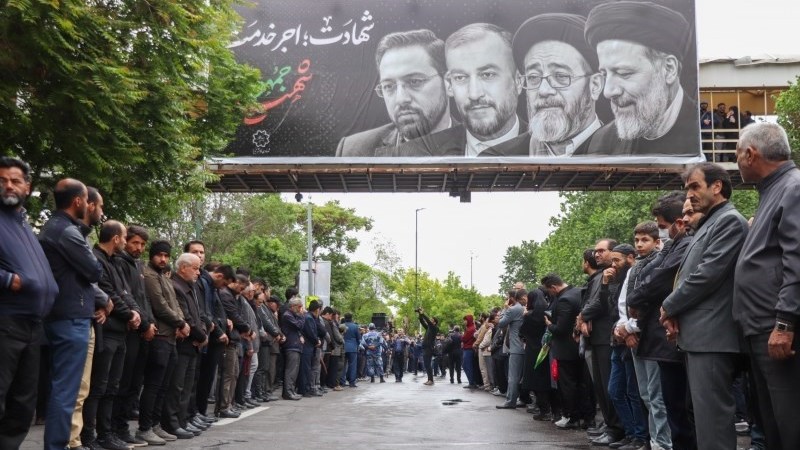
The funeral procession of Iranian President Ebrahim Raisi and seven others killed in a helicopter crash began in the northwestern city of Tabriz on Tuesday.
A helicopter carrying President Raisi and his entourage crashed in northwestern mountainous forests on May 19.
The fatal accident happened as the president was returning from Khoda Afarin region in Iran’s northwestern province of East Azarbaijan after inaugurating a dam at the common border with the Republic of Azerbaijan.
The crash killed President Raisi, Foreign Minister Amirabdollahian, Friday prayers leader of Tabriz Ayatollah Mohammad Ali Al-e-Hashem, Governor of East Azarbaijan Malek Rahmati, the commander of the president’s security team, two pilots and a flight crew.
The funeral of the eight martyrs began in Tabriz on Tuesday morning.
Another funeral service is scheduled to be held in the holy city of Qom on Tuesday evening.
The bodies will then be transferred to Tehran for people to bid farewell to the eight martyrs at the Grand Musalla (prayer hall) of Tehran on Tuesday night.
On Wednesday morning, the ritual ‘prayer for the deceased’ (Salat al-Mayyit) will be performed for the late president and his entourage in Tehran and people will attend the funeral procession that will be held from the University of Tehran to the Azadi (Liberty) Square.
Foreign officials and high-ranking delegations will attend a ceremony in commemoration of the martyrs in Tehran on Wednesday evening.
The president will be laid to rest Thursday at noon in the holy city of Mashhad in northeastern Iran, where the holy shrine of Imam Reza (AS) is located.
Leader of the Islamic Revolution Ayatollah Seyed Ali Khamenei has offered his condolences on the “martyrdom-like” passing away of the president, declared five days of public mourning, and appointed the first vice president as the manager of the executive power.
By Kerry Boyd Anderson
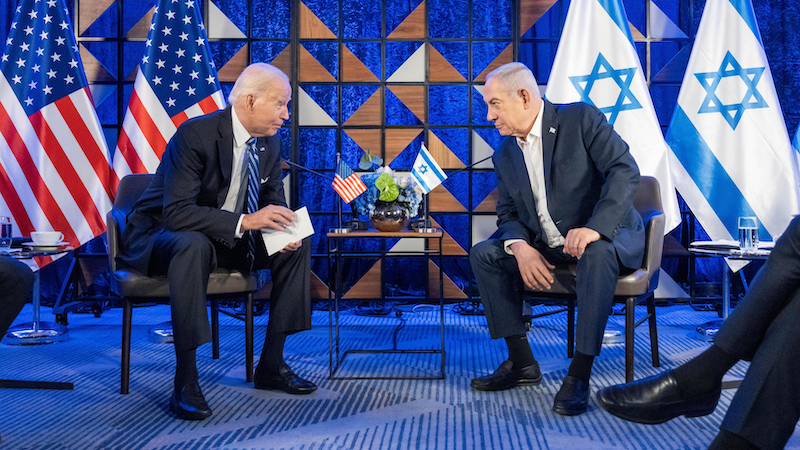
On Friday, aid deliveries began via the US-constructed floating pier connected to Gaza’s coast. While any aid reaching Gaza is helpful, the pier is emblematic of the Biden administration’s efforts to show concern for Palestinian civilians, while maintaining support for Israel. President Joe Biden’s attempts to take a middle-of-the-road position on the war in Gaza expose him to political attacks from all sides.
Nuanced approaches to policy that recalculate in response to new information or events are often commendable. Indeed, some supporters of Biden’s approach argue that that is exactly what the US leader is trying to do — listen to all sides and adjust policy as needed, while holding firm to core principles.
However, Biden and his foreign policy advisers face intense polarization in American responses to the war in Gaza. Pro-Israel Republicans and many older Democrats view anything short of absolute support for Israel, especially in the aftermath of the horrific Oct. 7 attack by Hamas, as a betrayal. Democratic critics, who are mostly younger, see US military support for Israel as directly contributing to the death of many thousands of Palestinian civilians and growing famine; for them, such support equals complicity in severe human rights violations, at a minimum.
In the immediate wake of the October attack, Biden and his senior officials doubled down on support for Israel. However, as Israel pursued an intensely destructive form of warfare in the crowded and isolated Gaza Strip, the US administration faced growing demands to use its leverage to mitigate or stop the violence. To Biden’s frustration, however, Prime Minister Benjamin Netanyahu was unwilling to cooperate. The current Israeli government either does not care if it faces consequences in Washington, or is calling Biden’s bluff and simply does not believe that the US government will take serious action against Israel.
The Biden administration has shifted its rhetoric and tinkered with some elements of policy in an effort to respond to criticisms that it is too willing to support Israel. During a speech on Sunday, Biden called for an “immediate ceasefire,” a demand he had been unwilling to make earlier in the war. The president and his officials have frequently repeated a call for a two-state solution. Over the past few months, Biden increasingly has criticized Netanyahu, while maintaining his overall support for Israel.
The US provides support for Israel in many forms, but its provision of weaponry is, perhaps, the most important, and is Washington’s greatest source of leverage with Israel. For critics of Israel’s conduct in Gaza, it is essential to place conditions on or altogether halt deliveries of US offensive weapons. For many supporters of Israel, threatening to limit or cut off arms supplies — let alone actually doing it — would be a betrayal.
The US government process of providing or approving the sale of weapons to other countries can be complex — involving multiple funding streams, approval processes, and timelines — which makes it difficult to properly analyze US funding and approval for sending weapons to Israel. Nonetheless, the Biden administration has taken some steps that suggest increased scrutiny of which weapons it sends to Israel.
On May 8, Defense Secretary Lloyd Austin confirmed that the administration had paused a specific shipment of particularly large bombs to Israel, citing the “context of unfolding events in Rafah.” In a CNN interview that aired the same day, Biden said that his administration would stop sending certain types of weapons if Israel pushed into “population centers” in Rafah, though he said that Washington would still provide defensive weapons. He acknowledged that some civilians have been killed by US-provided bombs. In a statement that seemed stunning to many observers, the US leader said: “We’re not walking away from Israel’s security. We’re walking away from Israel’s ability to wage war in those areas.”
However, the Biden administration has continued to actively supply weapons to Israel. In March, the Washington Post reported that the administration had approved more than 100 military sales to Israel since the war in Gaza began. On May 14, the administration informed Congress that it plans to proceed with the sale of more than $1 billion in weapons to Israel. Under a 2016 agreement, the US provides $3.8 billion per year to Israel in military aid, and Congress in April approved an additional $17 billion in defense aid for Israel.
The Biden administration has tried to provide aid to Gaza, including via airdrops and now the pier, but has been unwilling to use its full leverage with Israel to allow sufficient amounts of aid into the enclave by road. Biden also suspended funding for UNRWA in January after Israel accused UNRWA employees of supporting Hamas; since then, Congress has ensured that no US aid will resume to the agency until at least March 2025.
It appears that the Washington administration has not come to terms with the fact that some small shifts in US policy that might seem huge to Biden’s team seem completely insufficient to critics. For officials who come from traditional Washington foreign policy circles, pausing even one delivery of weapons to Israel, calling for a ceasefire, or acknowledging that US-provided weapons have killed civilians can feel like enormous changes, but to younger Americans who have a fundamentally different view of the conflict, these barely make a dent. At the same time, for those who unconditionally support Israel, these policy adjustments appear to be an abandonment of Israel. Biden’s efforts to find a compromise position risk angering everyone, while reassuring no one.

oe Biden was not substantially advantaged in the 2020 presidential election by COVID-related private funding, according to a new study co-authored by Daniel Thompson, UCLA assistant professor of political science.
Published in the journal Proceedings of the National Academy of Sciences, the study rebuts longtime arguments made by conservative leadership that these grants swayed the election outcome.
“We can confidently say that the funding did not substantially improve the performance of Democratic candidates,” Thompson said. “There was at least some reason to wonder because Democratic counties were substantially more likely to apply for these grants, but it had such a small effect on turnout that it didn’t noticeably affect the outcome.”
To conduct their study, Thompson and co-author Apoorva Lal, then a doctoral candidate at Stanford University and now a data scientist, analyzed administrative data from counties that obtained these grants and compared them to those without funding but with similar previous turnout and voting trends — using new advancements in statistical methods.
“Many reforms have sought to limit the influence of money in politics by changing who can spend how much money on which races,” the authors wrote. “While many public officials and members of the public are concerned that donations to support local election administration offer a new, previously untapped way to influence election results without giving directly to candidates, our results suggest this may not be a substantial risk.”
At the heart of the debate are so-called “Zuckerbucks” — more than $400 million in grants given by Facebook founder Mark Zuckerberg and his wife, Priscilla Chan — which were meant to cover COVID-related polling site accommodations across the country in the face of inadequate Congressional and state funding.
Although the couple’s donations were made to two nonpartisan institutions (the Center for Election Innovation & Research and the Center for Tech and Civic Life) and the grants ultimately paid for accommodations such as Plexiglass dividers, additional poll workers and more counting machines to handle the influx of mailed-in ballots, controversy has only increased.
As the issue has grown more heated across the nation — former President Donald Trump notably called Zuckerberg a “criminal” in a 2021 email to his supporters — 28 states thus far have banned private funding for election administration.
These developments have more to do with partisan politics than an evidence-based, unbiased response, according to the authors, who caution citizens and lawmakers alike to frame these vital issues in a more scientifically rigorous way — especially as the 2024 presidential election looms.
“While there are important values questions as to how we should set policies around elections administration, how they shape election results shouldn’t be the first thing we’re concerned about,” Thompson said. “When credible research designs are brought to the data, we find that many of the strong claims about one party or the other benefiting from election administration are overblown.”
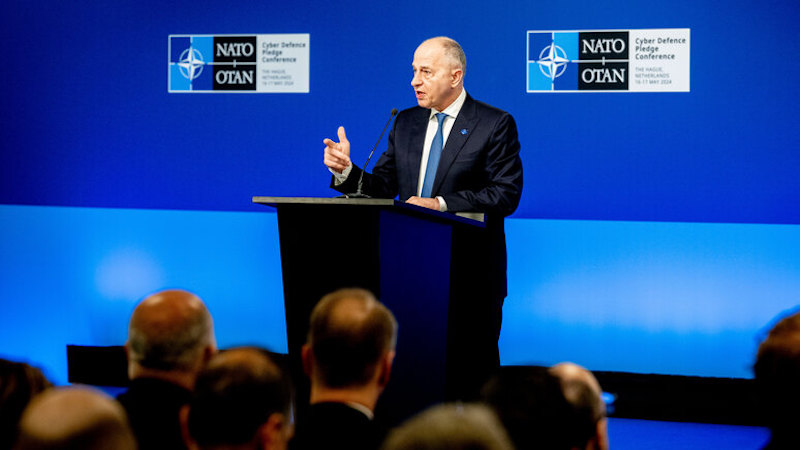
Speaking at NATO’s 2024 Cyber Defence Pledge Conference in the Hague last week, NATO Deputy Secretary General Mircea Geoană said that Allies “must be big on ambition” on cyber defence and called for “a new mindset” to strengthen our resilience against cyber threats.
“Our adversaries are increasingly defying international norms and using cyber and hybrid operations against us” Mr Geoană said, stressing that “there is no peace in cyberspace”. The Cyber Defence Pledge, established in 2016, is helping boost Allies’ cyber defences. It is also helping to strengthen national networks and infrastructures, and enhance NATO’s collective resilience to cyber threats. Following the 2023 Vilnius Summit, Allies have taken further steps to develop a cyber ‘maturity model’ to help focus their resources more efficiently.
Looking ahead, NATO’s Deputy Secretary General stressed the importance of strengthening civil-military cooperation at all times, including through closer cooperation with the tech industry. He indicated that this will be a focus of the upcoming Washington Summit. He welcomed the participation, for the first time, of eighteen NATO partner countries in the Cyber Defence Pledge Conference. “Cyber is something that our partners most request from Allies,” the Deputy Secretary General said. “I encourage all Allies to be open to these requests, and help all of us become stronger and more resilient in cyberspace”.
The Netherlands and Romania co-hosted NATO’s 2024 Cyber Defence Pledge Conference. Following his address, the Deputy Secretary General met with the Dutch Minister of Defence, Kasja Ollongren, and with students from Leiden University to discuss NATO’s agenda for the Washington Summit.