
Categories
South Caucasus News

Global Water Governance: A Crucial Priority For Sustainable Development – OpEd


Global Water Governance: A Crucial Priority For Sustainable Development – OpEd

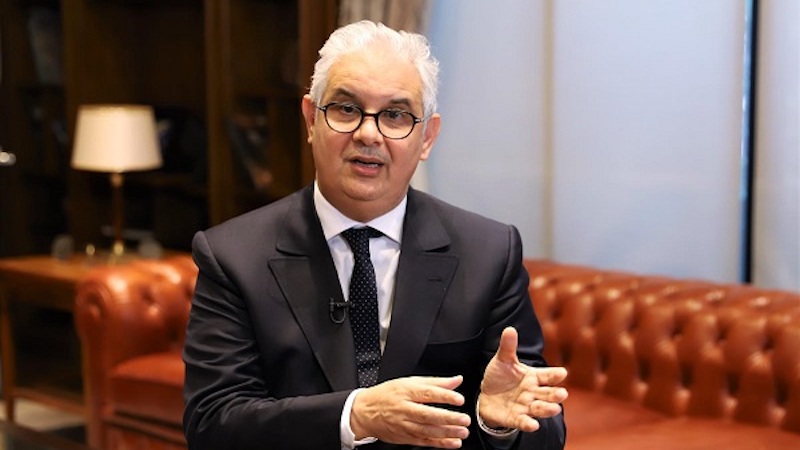
Morocco's Minister of Equipment and Water Nizar Baraka. Photo Credit: MAP

In an era where water scarcity and climate change threaten global stability, the proceedings of the recent high-level event dedicated to “global water governance” underscore one of the most pressing issues of our time. This event aimed to foster a unified global reflection on the critical strategies necessary to improve water resource governance across countries, sharing experiences and efforts to ensure sustainable management and equitable access.

During this crucial discussion, Mr. Nizar Baraka, Minister of Equipment and Water in Morocco, highlighted the urgent need for effective, efficient, and inclusive water governance to address the current challenges facing the global water sector. He noted that in Morocco, the governance of water resources has long been a national priority. The country has focused on establishing and consolidating a framework for integrated, anticipatory, decentralized, and collaborative water management involving public services, water users, elected officials, NGOs, and civil society.

Morocco’s proactive approach is anchored by the enactment of Law 10-95 on water, which emphasized basin-scale management, decentralized and concerted administration through the creation of Hydraulic Basin Agencies, and the promotion of actions to safeguard water quality and ecosystems. This law also institutionalized consultative bodies such as the Superior Council of Water and Climate and the Prefectural and Provincial Water Commissions, ensuring a participatory approach to water governance.

Further cementing its commitment to water security, Morocco introduced the comprehensive Water Law 36-15 in 2016. This law integrates new provisions and mandates the development of strategic plans, including the National Water Plan and Master Plans for Integrated Water Resources Management at the basin level. These plans are designed to outline the national water policy framework and guide the interventions of all stakeholders in the water sector over the next three decades.

Morocco’s model of efficient water resource management is unique and exemplary, contributing actively to international efforts to enhance water governance. Mr. Baraka emphasized that improving water governance globally requires robust, coherent public policies to complete sustainable development projects across all continents and countries.

In his concluding remarks, Mr. Baraka stressed that the consolidation of improved governance foundations necessitates integrated public policies targeting measurable objectives within predetermined timelines. Effective governance should operate at the appropriate scale, with a clear division of responsibilities among authorities, and be subject to regular monitoring and evaluation.

The high-level event on global water governance serves as a reminder that water is not just a resource but a vital lifeline that demands our collective action. As countries like Morocco demonstrate, with effective governance and strategic planning, we can safeguard this precious resource for future generations, ensuring sustainable development and global stability.

Categories
South Caucasus News

Unveiling The Veil: Media Censorship In Pakistan – OpEd


Unveiling The Veil: Media Censorship In Pakistan – OpEd

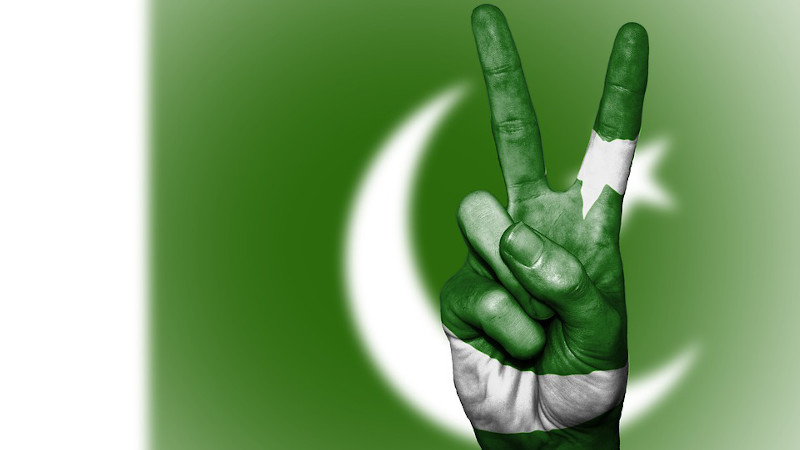
pakistan flag peace

In the bustling tapestry of Pakistan’s socio-political landscape, there exists a contentious issue that often lurks in the shadows: media censorship. Like a shroud veiling the truth, censorship casts its ominous shadow over the realm of free speech and expression, stifling the vibrant voice of democracy. As the global village witnesses the dance between liberty and control, Pakistan stands at a crossroads, grappling with the delicate balance between safeguarding national interests and upholding the pillars of democracy.

At the heart of this debate lies the fundamental question: to what extent should the hand of censorship cloak the media? Advocates of censorship argue that it serves as a safeguard, shielding the nation from divisive narratives that could sow seeds of discord. They paint a picture of censorship as a benevolent guardian, protecting the delicate fabric of society from the corrosive influence of misinformation and sensationalism. Yet, this narrative is akin to painting over cracks in a crumbling wall, masking the underlying issues rather than addressing them.

The recent spate of laws aimed at gagging the media represents a dangerous escalation in the ongoing battle for control over the flow of information. From the notorious Prevention of Electronic Crimes Act (PECA) to the draconian Pakistan Media Development Authority (PMDA) Ordinance, these legislative juggernauts have sent shockwaves rippling through the journalistic community, striking fear into the hearts of even the most seasoned reporters and editors. With provisions that grant unprecedented powers to government authorities to censor and control content, these laws represent a clear and present danger to the very essence of democracy.

Under the guise of safeguarding national security and preserving societal harmony, these laws effectively muzzle the voice of dissent, transforming the once vibrant media landscape into a barren wasteland of conformity and censorship. Like a shepherd herding sheep into a pen, the authorities wield these laws as tools of control, corralling journalists into submission and silencing any voices that dare to challenge the status quo. In such an environment, the truth becomes a casualty, sacrificed at the altar of political expediency.

Moreover, these laws cast a chilling effect on the very soul of journalism, stifling the spirit of inquiry and innovation that lies at its core. In a society where self-censorship reigns supreme, journalists are forced to tiptoe around sensitive topics, lest they incur the wrath of the powers that be. The once fearless watchdogs of democracy are reduced to mere lapdogs, obediently parroting the party line and regurgitating sanitized narratives devoid of truth or nuance.

In reality, censorship operates as a double-edged sword, with its blade cutting deep into the essence of democracy. By curtailing the freedom of expression, censorship undermines the very foundation upon which democracy stands: the unbridled exchange of ideas. It transforms the vibrant marketplace of ideas into a muted echo chamber, where dissenting voices are silenced and alternative perspectives are erased. In such an environment, truth becomes a casualty, sacrificed at the altar of conformity.

The consequences of censorship extend far beyond the confines of the media landscape, seeping into the fabric of society itself. When the flow of information is stifled, the seeds of ignorance take root, nourished by a diet of half-truths and propaganda. In the absence of a robust media ecosystem, citizens are deprived of the tools they need to make informed decisions, leaving them vulnerable to manipulation and exploitation. Thus, censorship not only undermines the principles of democracy but also poses a grave threat to the very essence of citizenship.

Moreover, the specter of censorship casts a pall over the realm of creativity and innovation, stifling the voices of artists, writers, and intellectuals. In a society where self-censorship reigns supreme, creative expression becomes a risky endeavor, fraught with the fear of retribution. The vibrant tapestry of cultural diversity is replaced by a monochrome canvas, devoid of nuance and richness. In such an environment, innovation withers on the vine, as the seeds of dissent are plucked before they can take root.

Yet, amidst the gloom and despair, there exists a glimmer of hope: the indomitable spirit of the Pakistani people. Despite the shackles of censorship, brave souls continue to raise their voices in defiance, challenging the status quo and pushing the boundaries of freedom. From the bustling streets of Karachi to the majestic peaks of the Himalayas, the flame of resistance burns bright, illuminating the path to a brighter tomorrow.

In the face of censorship, it is imperative that we stand united in defense of our most cherished values. We must resist the temptation to retreat into the comfort of silence, for in silence lies complicity. Instead, we must raise our voices in solidarity, demanding accountability and transparency from those in power. We must strive to build a media landscape that is truly reflective of the diverse tapestry of Pakistani society, where every voice is heard and every perspective is valued.

In the words of the great Pakistani poet Faiz Ahmed Faiz, “Bol, ke lab aazaad hain tere” (Speak, for your lips are free). Let us heed these words and break the chains of censorship that bind us. Let us embrace the power of free speech and expression, for in doing so, we unleash the full potential of our democracy and pave the way for a brighter, more inclusive future for all.


Categories
South Caucasus News

Carter cosponsors bill creating Georgia’s first National Park – Buddy Carter


Carter cosponsors bill creating Georgia’s first National Park  Buddy Carter

Categories
South Caucasus News

The Search for Security in the Caucasus – Carnegie Endowment for International Peace


The Search for Security in the Caucasus  Carnegie Endowment for International Peace

Categories
South Caucasus News

Menendez trial delves into wife’s finances | Video – NJ Spotlight News


Menendez trial delves into wife’s finances | Video  NJ Spotlight News

Categories
South Caucasus News

Several witnesses called in Menendez trial before week-long break | Video – NJ Spotlight News


Several witnesses called in Menendez trial before week-long break | Video  NJ Spotlight News

Categories
South Caucasus News

AP Headline News – May 21 2024 19:00 (EDT)


28013281


Categories
South Caucasus News

AP Headline News – May 21 2024 18:00 (EDT)


28013281


Categories
South Caucasus News

AP Headline News – May 21 2024 18:00 (EDT)


28013281


Categories
South Caucasus News

Music that speaks: Interview with Ara Gevorgyan – Armenian Weekly


Music that speaks: Interview with Ara Gevorgyan  Armenian Weekly