
U.S. says it was ‘unable’ to provide Iran assistance after crash Honolulu Star-Advertiser
Day: May 21, 2024
Categories
Armenia News – NEWS.am
Categories
NPR News: 05-21-2024 8PM EDT
It was faint, but there was more than just a flicker of hope. In the tormented (and tormenting) journey the WikiLeaks founder and publisher, Julian Assange, has endured, May 20, 2024 provided another pitstop. As with many such stops over the years, it involved lawyers. Many of them.
The occasion was whether the UK High Court of Justice would grant Assange leave to appeal his extradition to the United States to face 18 charges, 17 hewn from the monstrous quarry that is the Espionage Act of 1917. He is wanted for receiving and publishing classified US government materials comprising diplomatic cables, the files of those detained in Guantanamo Bay, and the wars in Iraq and Afghanistan. Any computed sentence, glacially calculated at 175 years, would effectively spell his end.
News on the legal front has often been discomforting for Assange and his supporters. The US has been favoured, repeatedly, in various appeals, chalking up the lion’s share of victories since successfully overturning the decision by Judge Vanessa Baraitser to bar extradition in January 2021 on mental health grounds. But Justice Johnson and Dame Victoria Sharp of the High Court of Justice in London promised to keep matters interesting.
A key sticking point in the proceedings has been whether the First Amendment would protect Assange’s publishing activity in the course of any trial in the US. The attitude from the central US prosecutor in the extradition proceedings, Gordon Kromberg, and former Secretary of State and ex-CIA director Mike Pompeo, has been one of hearty disapproval that it should.
Pompeo’s remarks in an infamous April 2017 address as CIA director to the Center for Strategic and International Studies openly branded WikiLeaks “a hostile intelligence service” that proselytised in the cause of transparency and aided such powers as Russia. Assange “and his kind” were “not in the slightest bit interested in improving civil liberties or enhancing personal freedom. They have pretended that America’s First Amendment freedom shield them from justice.” They were “wrong” to have thought so.
On January 17, 2020, Kromberg submitted an affidavit to the UK district court that was eye opening on the subject. The following remains salient: “Concerning any First Amendment challenge, the United States could argue that foreign nationals are not entitled to protections under the First Amendment, at least as it concerns national defense information, and even were they so entitled, that Assange’s conduct is unprotected because of his complicity in illegal acts and in publishing the names of innocent sources to their grave and imminent risk of harm.”
In March 2024, the High Court curtly dismissed six of the nine arguments submitted by Assange in part of his effort to seek a review of the entire case. The judges, anchoring themselves in the initial reasoning of the district court judge, refused to accept that he was being charged with a political offence, something barred by the US-UK Extradition Treaty, or that the CIA had breached lawyer-client privilege in having spied on him in the Ecuadorian embassy in London, not to mention the serious thought given to abduction and assassination.
The judges gave the prosecution a heavy olive branch, implying that the case for extradition would be stronger if a number of assurances could be made by the US prosecution. These were, in turn, that Assange be offered First Amendment protections, despite him not being deemed a journalist; that he not be prejudiced, both during the trial and in sentence, on account of his nationality, and that he not be subject to the death penalty. The insistence on such undertakings had a slightly unreal, woolly-headed air to them.
On April 16, the US State Department filed the fangless assurances in a diplomatic note to the Crown Prosecution Service (CPS). “Assange will not be prejudiced by reason of nationality with respect to which defenses he may seek to raise at trial and at sentencing.” If extradited, he could still “raise and seek to rely upon at trial (which includes any sentencing hearing) the rights and protections given under the First Amendment of the Constitution of the United States. A decision as to the applicability of the First Amendment is exclusively within the purview of the US Courts.”
The US authorities further undertook to avoid seeking or imposing the death sentence. “The United States is able to provide such assurance as Assange is not charged with a death-penalty eligible offense, and the United States assures that he will not be tried for a death-eligible offense.” This can only be taken as conjecture, given the latitude the prosecution has in laying further charges that carry the death penalty should Assange find himself in US captivity.
In court, Edward Fitzgerald KC, representing Assange, explained with cold sobriety that such an assurance made no guarantee that Assange could rely on the First Amendment at trial. “It does not commit the prosecution to take the point, which gave rise to this court’s concerns, i.e. the point that as a foreign citizen he is not entitled to rely on the First Amendment, at least in relation to a national security matter.” In any case, US courts were hardly bound by it, a point emphasised in the statement given by defence witness and former US district judge, Professor Paul Grimm. It followed that the assurance was “blatantly inadequate” and “would cause the applicant prejudice on the basis of his nationality.”
Written submissions to the court from Assange’s legal team also argued that discrimination “on grounds that a person is a foreigner, whether on the basis that they are a foreign national or a foreign citizen, is plainly within the scope of the prohibition [against extradition under the UK Extradition Act 2003]. ‘Prejudice at trial’ must include exclusion on grounds of citizenship from fundamental substantive rights that can be asserted at trial. On the US argument, trial procedures could discriminate on grounds of citizenship.”
In response, the US submitted arguments of a headshaking quality. Through James Lewis KC, it was submitted that the High Court had erred in its March judgment in equating “prejudice on grounds of foreign nationality with discrimination on grounds of foreign citizenship”. The UK Extradition Act mentions “nationality” in preference to “citizenship”. These terms were not “synonymous”.
According to Lewis, Article 10 of the European Convention of Human Rights (ECHR) protecting journalists and whistleblowers was qualified by conduct “within the tenets of reasonable and responsible journalism”. One factor in this context “whether it is reasonable and responsible is where the publication took place – inside a member state’s territory or outside a member state’s territory.”
The prosecution’s written submissions summarise the points. The First Amendment’s applicability to Assange’s case depended on “the components of (1) conduct on foreign (outside the United States of America) soil; (2) non-US citizenship; and (3) national defense information”. Assange, Lewis elaborated, “will be able to rely on it but that does not mean the scope will cover the conduct he is accused of.”
The prosecution suggested that former US Army whistleblower Chelsea Manning, a vital source for WikiLeaks, had been unable to rely on the First Amendment, limiting the possibility that its protections could extend to covering Assange.
Mark Summers KC, also representing Assange, was bemused. “The fact that Chelsea Manning was found in the end to have no substantial First Amendment claims tells you nothing at all. She was a government employee, not a publisher.”
He also made the point that “You can be a national without being a citizen [but] you cannot be a citizen without nationality.” It followed that discrimination arising out of citizenship would result in discrimination based on nationality, and nothing adduced by the prosecution in terms of case law suggested otherwise.
Unconvinced by the prosecution’s contorted reasoning, Dame Victoria Sharp agreed to grant leave to Assange to appeal on the grounds he is at risk of discrimination by virtue of his nationality, in so far as it affects his right to assert protections afforded by Article 10 of the ECHR and the First Amendment.
It remains to be seen whether this legal victory for the ailing Australian will yield a sweet harvest rather than the bitter fruit it has. He remains Britain’s most prominent political prisoner, held in unpardonable conditions, refused bail and subject to jailing conditions vicariously approved by those in Washington. In the meantime, the public campaign to drop the indictment and seek his liberation continues to ripen.
By Sandhya Krishnan
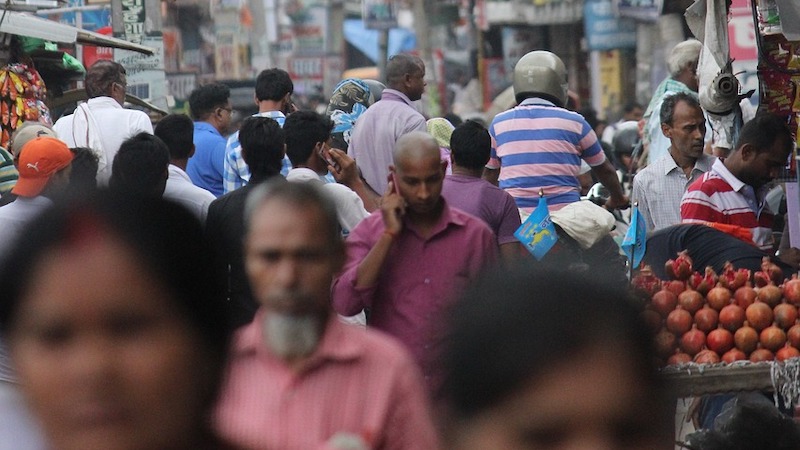
India’s middle class first emerged in the early 19th century, when British policies gave rise to a small group of educated, upper caste, English-speaking Indian elite. But the economic potential of the Indian middle class only became a major phenomenon in the 21st century when it started to attract attention for its potential to drive global consumption. India’s contemporary middle class is more multidimensional with economic growth since the 2000s spawning the formation of multiple middle classes — an ‘old’ or established middle class and an emerging ‘new’ middle class.
There is no consensus on the actual size of India’s middle class. Using the classification of those spending between US$2–10 per capita per day, over 600 million people — half of India’s population — were in the middle class in 2012, up from less than 300 million or 27 per cent of the population in 2000. Nearly 75 per cent of the middle class is comprised of the lower middle class — those spending US$2–4 per capita per day, a figure that’s only slightly above the global poverty line.
If using a higher income band — where a person is considered middle class if their daily income is approximately US$17–100 — 432 million Indians can be included in the middle class as of 2021, comprising 31 per cent of the population, up from 14 per cent in 2005.
The wide variation of income within India’s middle class, yields a substantial diversity in spending patterns. The lower rungs of the middle class spend much of their income on private healthcare and education, non-essential consumables and assets such as motorbikes and basic household appliances. The upper rungs also spend a large proportion of their income on private healthcare and education, but also discretionary goods, entertainment, property and personal services. The upper middle class is more likely to own luxury assets such as cars, computers, air conditioners and washing machines.
Although income levels vary within the middle class, both sub-classes are large and promising consumer markets. This makes them the drivers of consumption and economic growth in India.
The liberalisation, privatisation and globalisation of the Indian economy in the early 1990s not only opened the Indian market to multinational firms, but also introduced new high-paying jobs for the established middle class.
This changed the middle-class occupational structure. The new jobs in sectors such as finance and information technology attracted many of the established middle class and saw a move away from traditional government jobs. Affirmative action policies helped lower castes and the poor to grasp opportunities in government vacated by the established middle class. Unskilled workers also found opportunities in the peripheral and lower rungs of the new private sector as food vendors, security guards, domestic staff and construction workers.
Recent policies and legislation including the Mahatma Gandhi National Rural Employment Guarantee Act, have boosted rural incomes, enabling rural India to enter the middle class as well. According to some definitions, the rural middle class is now larger than its urban counterpart.
The growth of India’s middle class is synonymous with changing political attitudes. During India’s struggle for Independence the English-speaking middle class was actively engaged in politics and critical in communication with the British. In the 1950s and early 1960s India’s middle class identified strongly with India’s politics under the prime ministership of Jawaharlal Nehru. But as the socialism of the Nehru era developed cracks, the middle class lost interest in politics. For politicians, the middle class was an insignificant source of votes because of its small size.
After India began to liberalise, the middle class moved into better-paying job opportunities presented by globalisation and privatisation. From the 2000s, as the size of the middle class expanded, it also became a significant vote bank.
Economic and social diversity among the middle class attracts different political agendas. The aspirational or ‘new’ middle class focus on personal economic opportunities, while the established middle class demand cleaner air, better infrastructure and technological development. The nature of their engagement also differs. The established middle class are digitally switched in, while also participating in local civic engagement and voting. The ‘new’ middle class is more likely to be involved in social mobilisation.
Although the ‘old’ and ‘new’ middle classes use different channels for political expression, they are linked by the common call for India’s development.
Economic growth in India has created a larger, more socially inclusive and politically engaged middle class. A large part of the growth in India’s middle class is attributable to the lower classes climbing the economic ladder. Given the unstable nature of some of their jobs, this group is vulnerable to falling back into poverty if economic growth falters.
In 2021 the Pew Research Centre found that the Indian middle class contracted during the COVID-19 pandemic. The Indian government’s 2022–23 Household Consumption Expenditure survey also showed that while rural nominal household consumption expenditure increased at an annual rate of 1.62 per cent between 2004–05 and 2011–12, it increased by just 1.02 per cent between 2011–12 and 2022–23. For urban areas, the corresponding growth rates were 1.85 per cent and 1.12 per cent.
Even as the Indian economy recovers, it is essential to ensure that there are enough jobs available for poorer Indians to climb the economic ladder. There is evidence of increasing joblessness and jobless growth in India despite increasing levels of education. This could threaten social unrest. Recent agitation by the Maratha community, an upper caste group in western India, demanding Other Backward Class status in order to benefit from affirmative action policies, is an example of the potential outcomes of joblessness and a sluggish economy.
India’s large, heterogenous and burgeoning middle class is a promising component of its domestic market. But there’s a risk of serious social crisis in the middle class if growth falters and fails to create enough quality jobs. Meeting the aspirations of India’s ‘new’ middle class, and ensuring that they are not left behind, is a priority for government in managing the country’s new social and economic fabric.
- About the author: Sandhya Krishnan is an economist in the School of Development at Azim Premji University.
- Source: This article appears in the most recent edition of East Asia Forum Quarterly, ‘India’s Sweet Spot‘, Vol 16, No 1.
Not since Theodore Roosevelt ran against William Howard Taft in 1912 have voters been able to weigh the records of two men who have done the job of president.
The mystery is why Americans have more positive views of Donald J. Trump’s policies than they do of Joe Biden’s.
You and I both know that polls this far before an election are almost worthless. Even on the eve of an election, they’re mostly baloney. (Polling generated by HuffPost on Election Day 2016 concluded that Hillary Clinton had a 98 percent chance of beating Trump.)
Nonetheless, I confess that last week’s polls — The New York Times/Siena poll of seven swing states showing Joe Biden losing to Trump due to the economy, the FT/Michigan Ross survey finding voters trust Trump more on the economy than Biden (43 percent to 35 percent), Gallup’s showing that Americans’ confidence in Biden to do the right thing for the economy is among the lowest Gallup has measured for any president since 2001, and a Politico–Morning Consult poll finding Trump and Biden statistically tied on who did more to boost infrastructure — gave me pause.
When this many polls show the same thing, the thing they show deserves attention.
So let me attend to it.
First, I’ll give you the facts. Then I’ll try to explain why the facts aren’t getting through to voters. Finally, what I believe Biden and his allies must do.
1. The facts.
Under Trump the economy lost 2.9 million jobs. Under Biden, it has gained 15 million,so far.
Under Trump, the unemployment rate rose by 1.6 percentage points to 6.3 percent. Under Biden, unemployment has remained under 4 percent for the longest stretch in over 50 years. Working-age women are being employed at a record rate, and wages are rising for American workers.
In 2016, candidate Trump campaigned against the trade deficit with China. He called it “theft” and even used the term “rape” to describe it. In 2016, the U.S. goods trade deficit with the China was near $350 billion. In the first three years of the Trump administration (before COVID-19), it worsened, averaging almost $379 billion per year.
Under Biden, America’s trade deficit with China has improved dramatically — falling by $103 billion, or 27 percent, to $279 billion. It’s the lowest bilateral deficit in goods since 2010.
Under Biden, the stock market has soared. On Friday, the Dow Jones Industrial Average closed above 40,000 for the first time in history, exceeding the market’s annualized return under Trump.
Under Trump, the national debt rose from about $19.9 trillion to about $27.8 trillion, an increase of about 39 percent, and more than in any other four-year presidential term. It happened mainly because of Trump’s enormous tax cuts for wealthy Americans and big corporations.
The Trump and George W. Bush tax cuts have added $10 trillion to the debt since their enactment and are responsible for 57 percent of the increase in the debt ratio since 2001. They’re responsible for more than 90 percent of the increase in the debt ratio if the one-time costs of bills responding to COVID and the Great Recession are excluded.
Under Biden, the national debt has grown at a far slower pace.
Under Trump, the number of Americans lacking health insurance rose by 3 million. Under Biden, it’s been just the opposite. Enrollment in Obamacare has surged from 12 million in 2021 to 21.3 million today. To address consumer prices, the American Rescue Plan (ARP) and the Inflation Reduction Act (IRA) signed by President Biden expanded and extended the refundable tax credits that help Americans purchase health insurance.
Meanwhile, the actual prices of goods and services is lower today than it was four years ago under Trump, according to the nonpartisan Congressional Budget Office. That’s because incomes have grown faster than prices over that four-year period.
Biden’s investments in infrastructure, semiconductors, and green technologies are rebuilding the middle class. While Biden is making the biggest investment in infrastructure in 60 years, Trump talked about investing in infrastructure (his “infrastructure weeks” became a late-night TV joke), but he never did.
Spending on new factories has almost tripled over the past three years, as companies rush to locate in the U.S. market. Construction employment in April hit an all-time high of 8.2 million workers.
The CHIPs Act is creating large numbers of manufacturing jobs. It also activates the Davis Bacon Act, requiring that contractors and subcontractors pay the prevailing wage. It commits companies receiving grants to allow workers to unionize. It builds new plants in areas that have suffered job losses and decline. And it commits companies getting grants to include daycare facilities in their new plants.
Trump and other Republicans pretend to be on the side of average working Americans, while promising their big corporate backers even more tax cuts. Trump cut taxes on big corporations and the wealthy. He reduced the threshold salary for overtime pay.
By contrast, Biden has said he will not extend Trump’s tax cuts for the wealthy and big corporations. Biden raised the threshold salary for overtime pay and made it easier to unionize. He was the first president in history to walk a picket line.
Trump’s record on antitrust enforcement was abysmal. By contrast, Biden has been the most activist trustbuster in a half-century.
In terms of the core goal of rebuilding the middle class, Biden’s administration has been the most successful of any administration over the past 40 years. Trump’s was the least successful.
Oh, and let’s not forget: Trump mounted an attempted coup against the United States government, seeking to overturn the results of the 2020 election and encouraging his followers to riot at the Capitol.
2. Why isn’t any of this getting through?
Partly because Americans suffer from a form of collective amnesia. There’s simply too much going on. We’re also very vulnerable to the power of suggestion — things we learn after the fact that become incorporated into our memory, fooling us into thinking they were real.
Our memories are also affected by our biases — experiences, beliefs, prior knowledge, and what our friends and associates believe. When we retrieve a memory, these biases influence what information we actually recall.
Anyone who watches a lot of Fox News or hears lots of right-wing radio is vulnerable to both suggestion and bias.
But there’s something else.
The media lives off conflict. And Trump is nothing but conflict. He bloviates, lies, exaggerates, takes credit, avoids blame, and belittles and excoriates opponents.
So he gets a lot of airtime.
Meanwhile, Biden does the hard work of getting stuff done. But editors and publishers don’t find this particularly exciting. Biden doesn’t lash out. He doesn’t ridicule his opponents or call them names. He doesn’t intentionally lie. He doesn’t exaggerate his successes or minimize challenges ahead.
So few people know what Biden is doing or has accomplished.
Look, I’ve had my disappointments with Biden. I wish he had confronted Netanyahu more forcefully and refused much earlier to supply American weapons to Netanyahu’s right-wing government. I wish he had headed off the bloodbath in Gaza. I wish he would continue to hold back armaments.
Biden did warn Netanyahu publicly, and early on, that an Israeli occupation of Gaza would be a “big mistake.” And while Republicans bellyached that Biden had no policy for the Middle East, he negotiated the beginnings of a Saudi-Israeli peace pact that would have made considerable concessions to Palestinians. It was the single best opportunity for a more ordinary life for Palestinians and Israelis since the assassination of Yitzhak Rabin and Anwar Sadat by Israelis and Arabs opposed to peace. Tragically, it may never happen now.
Anyone who thinks Trump would be better on Israel and Gaza is living on another planet.
Looking at the larger picture, Biden is an adult. He quietly and competently does the work of governing the nation. His Cabinet is talented and committed. His White House staff is one of the best I’ve seen.
Trump is a wildly narcissistic child.
When voters tell pollsters they think Trump is “stronger” than Biden on foreign policy or the economy, the “strength” they feel comes from the emotions Trump stirs up — rage, ferocity, vindictiveness, and anger. These emotions are connected to brute strength.
Biden projects strength the old-fashioned way — through mature and responsible leadership. But mature and responsible leadership doesn’t break through today’s media and reach today’s public nearly as well as brute strength.
3. So what’s the answer?
Not for Biden (or his Democratic allies and surrogates) to abandon facts, data, analysis, and reasoned argument.
Their best response is to draw the starkest possible contrast between Trump’s unhinged childishness and Biden’s competent adulthood. Rather than sell Biden’s policies, sell Biden’s character. Rather than dispute Trump’s arguments, condemn his temperament.
Point out the many ways Biden is sticking it to big corporations and Wall Street (through antitrust litigation, labor law, tax policy, noncompete agreements, and so on), in contrast with the tax cuts and regulatory rollbacks Trump gave big corporations and Wall Street — which is why corporate America and Wall Street are putting big money into Trump’s campaign.
And ask Americans the following question, repeatedly: Do they want a sociopathic infant at the helm again, or a sane grown-up?
- This article was published at Robert Reich’s Substack
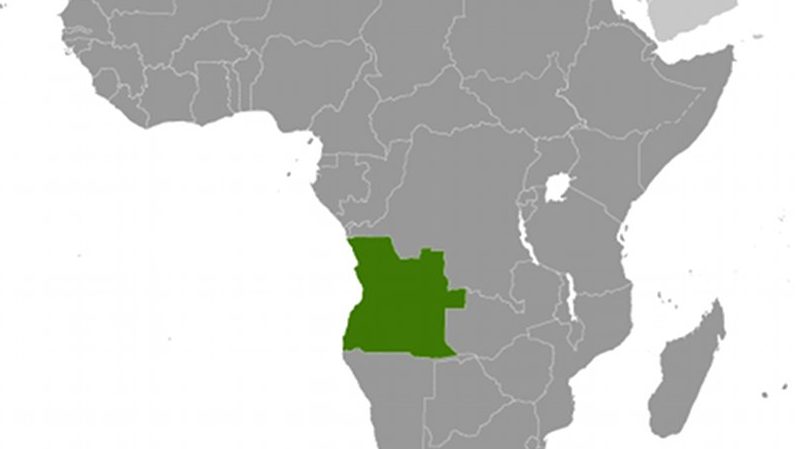
Patrick Pouyanné, Chairman and CEO of TotalEnergies, met on May 20 in Luanda with João Lourenço, President of Angola, Diamantino Azevedo, Minister of Mineral Resources, Oil & Gas (MIREMPET), Paulino Jerónimo, Chairman and CEO of ANPG and Gaspar Martins, Chairman and CEO of Sonangol, to announce the Final Investment Decision of the Kaminho deepwater project.
TotalEnergies (40%), along with its Block 20/11 partners, Petronas (40%) and Sonangol (20%), announced the Final Investment Decision (FID) of the Kaminho project to develop the Cameia and Golfinho fields, located 100 km off the coast of Angola, by 1,700 m water-depth. This FID has been made possible thanks to a close collaboration with the concessionaire Agencia Nacional de Petroleo e Gas (ANPG).
The Kaminho project which is the first large deepwater development in the Kwanza basin comprises the conversion of a Very Large Crude Carrier (VLCC) to a Floating Production Storage and Offloading (FPSO) unit, which will be connected to a subsea production network. Designed to minimize greenhouse gas emissions and eliminate routine flaring, this FPSO is all-electric and associated gas will be fully reinjected into the reservoirs. Production start-up is expected in 2028, with a plateau of 70,000 barrels of oil per day.
The Kaminho project will involve over 10 million man-hours in Angola, mainly with offshore operations and construction at local yards.
On this occasion, TotalEnergies and Sonangol EP also signed a Memorandum of Understanding to share expertise on Research & Technology, notably in decarbonization of the Oil & Gas industry, with a strong focus on methane emissions reduction and renewable energies. TotalEnergies’ teams will provide support to Sonangol EP for the start-up and operation of its new Sumbe R&D center and for the development of the skills of the Sonangol research and technology teams, with a focus on reservoir geology, process electrification and photovoltaics.
“Building on our pioneering spirit and our long-term partnership with Angola, we are pleased to launch the Kaminho project along with our strategic partners, Sonangol and Petronas, and the strong support and confidence of the Angolan authorities. This project, which leverages innovation to fit with our investment criteria – breakeven under 30 $/b and carbon intensity of 16 kg CO2e/boe – will become our seventh FPSO in the country and the first-ever development in the Kwanza basin”, said Patrick Pouyanné, Chairman and CEO of TotalEnergies. “We look forward to joining forces with Sonangol in technology to promote innovation and low-carbon technologies for the energy industry in Angola, in particular to slash methane emissions and contribute to the diversification of Angola’s energy mix.”
Diamantino de Azevedo, Minister of Mineral Resources, Oil & Gas (MIREMPET), highlighted the importance of the partnership between TotalEnergies, Sonangol and Petronas to make possible the Kaminho project and said: “This partnership is for us of extreme importance, as it creates a joint operating entity between Sonangol and TotalEnergies in production phase. It is also relevant that the contracts signed today include national companies and contribute to local content with more than 10 million hours of work to be performed by local companies”.
Paulino Jerónimo, Chairman of the Board of ANPG, said: “The first development in the maritime zone of the Kwanza basin is important to showcase the opening of new oil frontiers in Angola, and it’s part of our strategy to keep Angola on the top of African oil producers, bringing important income to our economy.”
Gaspar Martins, CEO Sonangol, said: “The final investment decision of Kaminho project materializes the commitment and efforts made by the Angolan government, through its Ministry and National Concessionaire, and TotalEnergies, Sonangol and Petronas as partners. They allowed the right conditions to contribute to increasing national production of oil and natural gas, and with that the revenues for the country”.
Tan Sri Tengku Muhammad Taufik, Petronas President and Group CEO, said, “This milestone is in line with Petronas’ continued efforts to strengthen our international portfolio by participating in prospective regions in Africa with trusted partners. Reaching the FID for this development in the Kwanza basin further demonstrates our steadfast commitment to deliver much-needed reliable energy to our customers and sustainable long-term value to our stakeholders.”