Categories
South Caucasus News

Why Politicians Cannot Be Trusted With Just War Theory – OpEd


Why Politicians Cannot Be Trusted With Just War Theory – OpEd

By Aaron Sobczak

Most modern aspects of just war theory found in the West can be traced to Saint Augustine of Hippo, and later specified by Saint Thomas Aquinas. The basic purpose of this theory was to teach Christians, and other just rulers, that waging war in general was not sinful if war was waged under certain circumstances for certain moral purposes. This theory is broken down into two parts. First is the right to go to war, and second is how states are to act during war. The principles of just war theory have been the underlying justifications for many modern conflicts, even if not acknowledged explicitly.

This examination of just war theory is not meant to oppose violent conflict in its entirety, or to necessarily oppose the ideals set out by just war theory. Instead, it is meant to demonstrate how just war theory has become a scapegoat for state actors as they seek to gain approval. Rather than ensuring that governments only participate in just conflicts, it has given governments a green light to participate in any war, as long as they can make the public believe that the conflict falls roughly into the requirements set by the just war theory. The requirements for how combatants act during the conflict may be an exception to this, as the public is often either unaware of the actions taking place or is aware via photos and video clips. However, warring governments are usually able to point to the necessity or morality of the war to justify any violations during the war itself.

The competent authority requirement seems to be one of the more subjective points in the theory. Aquinas in Summa theologiae II-II focused on the legitimacy behind the declaration of war itself. As an example, a sovereign must declare war, not a private individual. It is important to note that sovereigns during Aquinas’s time acted similarly to private persons in that they had authority over their realm if their subjects and noblemen were happy, rather than a system where a government has power indefinitely, with regular elections providing the illusion of choice. Additionally, sovereigns at the time were directly responsible for their realm as it was their property; thus, wars declared had the potential to greatly affect the sovereign’s personal finances. The point however is problematic due to differing definitions and theories of individual and natural rights that would supersede the rights of sovereigns in modern-day states.

Because of tricky definitions, this requirement may mean that a group is never justified in violent resistance. After all, what defines a nation? Surely Kosovo is a nation at this point, even though the United Nations has not awarded it with this status. What about groups that existed before the United Nations? Hungary was surely a nation, even when it was dominated by the Austrian Habsburgs. Did a nation only exist if they had a king? An argument can surely be made that the Jews resisting during World War II made up a nation of sorts, but with no sovereign. The Czechs and Poles had fighting regiments, but their states were overtaken by the Axis and Soviet powers. Their governments in exile existed out of necessity, not with a popular vote or regular elections. The British assisting the Czechs and Poles may have been fighting a just war, but were the resisting Czechs and Poles? Wars of resistance must be admissible if violent force in general is, but they find no room in just war theory.

A possible update to this point could change it to require that wars must be fought not by dictators, but by elected leaders. This is easy for a state to ignore, unfortunately, as almost every state has policies that allow for increased power for the executive during times of emergency or war. This starts a pattern of the state ignoring requirements when convenient.

The probability of success requirement is a tricky point as well. First, one must measure it morally. Should any state that will certainly lose resist going to war to regain lost territory or to rescue hostages? What of purely defensive struggles? Should a state give up as soon as it is clear that it has no chance against an invading enemy? Surely a defense cannot be labeled as unjust simply because it is a lost cause. When looking at this through a modern lens, this requirement may be extremely outdated and useless. All an executive must do is make a legislature believe that winning a war is possible, even if it is not.

Additionally, war prospects often change or can fool military officials. The first Arab-Israeli war in 1948 certainly had the potential for a strong win from the Arab coalition. Fighters from seven Arab countries had a great shot at defeating Israel during this conflict. However, foreign arms shipments, among other factors, resulted in a largely favorable outcome for Israel. Similarly, in Vietnam, the United States Congress was assured that this conflict would be an easy win for the American-led coalition in South Vietnam. Predictably, however, intelligence reports were faulty, and Congress was misled. Both historically and logically, this requirement of just war theory has been less than useful.

The last resort requirement is perhaps the most problematic point as there could always be another “last” resort after other options are tried. As states and elected officials usually need to look outwardly strong, they are less likely to offer satisfactory terms during negotiations if there is no threat of violence, or continued violence. A realist must understand that the threat of violence is the ultimate diplomatic tool, to be used often before serious nonviolent routes have been exhausted. This is of course not what is claimed by either side during conflict. Both sides are quick to point to supposed attempts at peace before a conflict is started. Additionally, states that are painted as the aggressor will never have truly exhausted diplomatic routes according to opposing state actors and major media outlets. This requirement of last resort will always be viewed, or painted, as respected by both sides, but it rarely is. It is, by definition, subjective, completely reliant on the strategic goals of each actor.

The final requirement of this first part—the right to go to war—states that a just war must be fought over a just cause. The just cause point is easily manipulated by warmongers and the media that serve them. Saddam Hussein using chemical weapons or killing babies in hospitals was an easy story to tell, harder to prove, but it was hypothetically possible in the minds of Americans and thus did not have to be proven true. Similarly, Vladimir Putin attacking the virtuous Ukraine in a completely unprovoked fashion is easy to claim, but only when ignoring recent historical events. Even if the truth comes out, as has largely been the case for the Iraq War, consequences rarely come for the fabricators. As with all the previous requirements, organizations such as the United Nations in theory can ensure that state actors adhere to the just cause requirement. The unfortunate reality is that the UN is made of state actors who represent the strategic interests of their sender nations. The UN also has few enforcement mechanisms, and the permanent members of the Security Council can veto meaningful resolutions.

The second part of the just war theory lists requirements on how states must act during the war and are all related. The distinction between combatants and civilians, the proportionality between civilian and military targets, the necessity of attacking militarily strategic targets, the fair treatment of prisoners of war, and the necessity to resist using methods that are considered evil are all principles that are easy to forget during the fog of war. Both sides are rarely equally accountable for infractions, with the winning side being almost always absolved from most of its infractions. This occurrence means that a side may violate the just war theory as long as it sufficiently increases the odds of winning.

Rather than critiquing all the moral ideals found within just war theory, this observation was meant to point out how unrealistic, and historically ignored, these principles are. State actors will always justify conflict for their own benefit. Instead of giving such allowances to state actors, it would be wise to restrict their use of force to something much more measurable. One can look to Murray Rothbard for this:

just war exists when a people tries to ward off the threat of coercive domination by another people, or to overthrow an already-existing domination. A war is unjust, on the other hand, when a people try to impose domination on another people or try to retain an already-existing coercive rule over them.

  • About the author: Aaron Sobczak holds an M.A. in Public Policy with an emphasis on International Policy. He has written for various outlets, and especially enjoys researching topics related to international law, American History, and public choice. He is currently part of the Mises Institute’s apprenticeship program. Aaron lives in Lynchburg, Virginia with his wife.
  • Source: This article was published at the Mises Institute
Categories
South Caucasus News

The ‘Inside Track’ Of Putin-Xi Jinping Talks – OpEd


The ‘Inside Track’ Of Putin-Xi Jinping Talks – OpEd

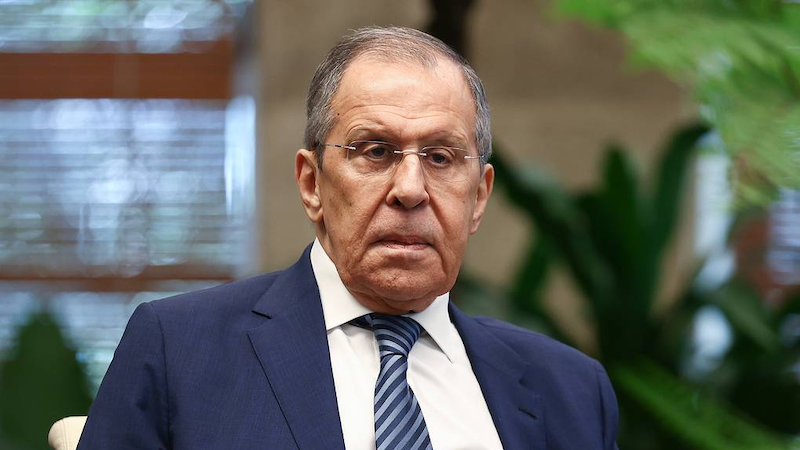
Russia’s Foreign Minister Sergey Lavrov. Photo Credit: MFA.ru

In international diplomacy, summit meetings stand apart from regular high-level meetings when they are held at key moments or important junctures to reinforce partnerships and/or launch major initiatives. 

The summit meeting at Beijing last Thursday between Chinese President Xi Jinping and Russian President Vladimir Putin last falls into such a category, taking place at a momentous juncture when a great shift in the global power dynamic is happening and the breathtaking spectacle of history in the making playing out in real time. (Read my article in NewsClick titled Sino-Russian Entente Shifts Tectonic Plates of World Politics.)

The two statesmen spent an entire Thursday together after Putin’s presidential jet landed at the crack of dawn in Beijing. Extensive and very detailed discussions indeed took place. As Putin said later, this was a state visit which turned into a “working visit.” 

The “debriefing” on Saturday by Russian Foreign Minister Sergey Lavrov for the foreign and security policy elite in Moscow at the annual plenary of the Council on Foreign and Defense Policy — Russia’s equivalent of the Council of Foreign Relations headquartered in New York — soon after Putin’s entourage returned from China gives some invaluable glimpses into the ‘inside track’ of the closed-door discussions in Beijing. 

At the most obvious level, Lavrov hit hard in his speech at the US and its NATO Allies with exceptional bluntness that their agenda to inflict a “strategic defeat” on Russia militarily and otherwise — to “decolonise’’ or “dismember” Russia, et al — is pure fantasy and it will be resolutely countered. Lavrov predicted that the escalation in western weapon supplies to Ukraine only highlights the ground reality that “the acute phase of the military-political confrontation with the West” will continue in “full swing”. 

The western thought processes are veering round dangerously to “the contours of the formation of a European military alliance with a nuclear component,” Lavrov said. In particular, France and Germany are still struggling with the demons in their attics — the crushing defeat France suffered at the hands of the Russian army in the Napoleonic war and the destruction of Hitler’s Wehrmacht by the Red Army. 

The big picture is that the West is not ready for a serious conversation. Lavrov lamented that “they have made a choice in favour of a showdown on the battlefield. We are ready for this. And always.” That Lavrov spoke in such exceptionally tough tone suggests that Moscow is supremely confident of Beijing’s support in the crucial phase of the Ukraine war going forward. This is the first thing. 

The current Russian offensive in the Kharkov Region took off when only six days were left for Putin’s forthcoming visit to China. Moscow gave the clearest signal possible that this is Russia’s existential war which it will fight no matter what it takes. Beijing understands fully the highest stakes involved.  

In Lavrov’s words, “Russia will defend its interests in the Ukrainian, Western and European directions. And this, by and large, is understood in the world by almost all foreign colleagues with whom we have to communicate.” 

In his speech, Lavrov acknowledged that the stance of the Chinese leadership is a matter of great satisfaction for the Kremlin. As he put it, “Just the day before, President Vladimir Putin visited China. This is his first foreign visit since his re-election. Negotiations with Chinese President Xi Jinping and meetings with other representatives of the Chinese leadership have confirmed that our comprehensive partnership and strategic cooperation surpass the traditional interstate alliances of the previous era in quality and continue to play a key role in maintaining international security and balanced global development.” This is the second thing. 

The salience of Lavrov’s speech, however, lies in certain momentous remarks he made regarding the future trajectory of the Russia-China entente as such. In measured language, Lavrov declared that Russia has an open mind on “building a real alliance with China.” 

“This topic can and should be discussed specifically. We [Russian foreign and security policy elites] can and should have a special conversation on this topic. We are ready to debate and discuss the ideas expressed in publications and aimed at building a real alliance with the PRC,” he told the elite audience.

Indeed, this is a hugely consequential statement against the backdrop of the gathering storms in the US-Russia-China triangle, with Russia in the middle of a bitterly-fought proxy war with the US and Beijing bracing for the inevitability of a confrontation with Washington in Asia-Pacific. 

Lavrov, the consummate diplomat, ensured that his explosive idea of a “real alliance” had a soft landing. He said, “The assessment given by our leaders says that the relationship is so close and friendly that it surpasses the classic alliances of the past in quality. It fully reflects the essence of the ties that exist between Russia and China and are being strengthened in almost all areas.” 

Indeed, the very fact that Lavrov aired such views openly is important, signalling coordination between Moscow and Beijing. In some form or the other, the topic figured in the discussions in Beijing just the previous day between Putin and Xi.  

Of course, never in their history have Russia and China been so deeply entwined. But for the Sino-Russian entente to assume the form of “a real alliance,” conditions are steadily developing in the Asia-Pacific. Lavrov noted meaningfully that “Our actions in Chinese and other non-Western areas arouse the undisguised anger of the former hegemon [read the US] and his satellites.”

He argued that even as the US is on overdrive “to set up as many countries as possible against Russia and then take further hostile steps,” Moscow will “work methodically and consistently to build new international balances, mechanisms, and instruments that meet the interests of Russia and its partners and the realities of a multipolar world.” 

With an eye on China, Lavrov pointed out that the NATO is actively making a bid for its leading role in the Asia-Pacific region. The NATO doctrine now speaks of the “indivisibility of security in the Euro-Atlantic and the Indo-Pacific region. Blocks are being introduced into it — the incarnation of the same NATO. More and more numerous attempts. “Threes”, “fours”, AUKUS and much more are created.” 

Lavrov concluded that “it is impossible not to think about how we should structure our work on the topic of security in these conditions.” He sensitised the audience that the time may have come to combine “the Eurasian ‘sprouts’ of a new architecture [EAEU, BRI, CIS, CSTO, SCO, etc], a new configuration with some kind of “common umbrella.” 

Lavrov assessed that such an effort will be entirely in sync with Xi Jinping’s “concept of ensuring global security based on the logic of indivisibility of security, when no country should ensure its security at the expense of infringing on the security of others.”     

Lavrov disclosed that Xi Jinping’s concept on global security was indeed  discussed during Putin’s visit to China both at delegation level as well as in a restricted narrow format, and during the one-on-one conversation between the two leaders. He summed up that “We see a great reason for the practical promotion of the idea of ensuring global security to begin with the formation of the foundations of Eurasian security.”

Lavrov made these profound remarks publicly on the eve of his working visit to Astana to take part in the Foreign Ministers Meeting of the Shanghai Cooperation Organisation. China is assuming the SCO Chair later this year. Lavrov continued the discussions on this complex issue with his Chinese counterpart, Foreign Minister Wang Yi, whom he met earlier today in Astana. The Russian readout is here.


Categories
South Caucasus News

It’s A War Of Words And The Truth Doesn’t Matter – OpEd


It’s A War Of Words And The Truth Doesn’t Matter – OpEd

US and China relations

Manufactured consent is always a threat to truth–and that makes it a threat to freedom. It can make us think and do things we ordinarily would not.

It is a war of words these days, and it is no longer important who has the last word. What does carry import is how effective one’s words are in convincing others that what you say has greater merit than another’s. 

After commenting on the recent difficult years involving escalating disputes between Beijing and Washington, outspoken Chinese Professor and President of the China Institutes of Contemporary Relations, Yuan Peng, in the article, “The Coronavirus Pandemic and a Once-in-a-Century Change,”(June 17, 2020) writes caustically: 

It no longer matters what is true or false – what matters is who controls the discourse.”

The Chinese academic was generally alluding to the West’s modern liberal media campaign to undermine the “Asian Giant.” But, there is a deeper meaning to Pengs warning. He had inadvertently pointed to something patently characteristic of today and much more invidious. Today we live in what scholars call the “postmodern era” of public opinion. It is a time when what people accept as “the truth” is in large measure shaped and molded not by facts or truth, but rather by governments and the modern liberal media colluding to manufacture consent in the minds of the populace through hyperbole, exaggeration and deception. And this is done using emotional appeal, fear and even hysteria delivered to the populace by accepted authority figures in the government and the media.

Essentially, it is what Walter Lippman in his seminal work (Public Opinion-1922) and Edward Hermann and Noam Chomsky called in their book (Manufacturing Consent-1988). It is simply government propaganda aided in its distribution by a press willing to advance the same political agenda as the ruling elite. It is an insidious process because people are not aware it is happening to them. But it can also be invidious when it undermines truth and places “official” limits on what media sources people are allowed to hear or read, or what they are willing to accept as an alternative to what the government tells them is “the truth.” The latter circumstance prevails today in the EU and Britain–it is censorship by any other name. Fear and insecurity will do that to a government afraid that its people will hear a different “truth.”

Governments and mass media which can guide and manipulate these feelings with a particular bias are what shapes an “information agenda” and essentially manufactures consent in the minds of the people. The emotions and feelings generated about some issue, country or person, expressed or otherwise, essentially become the “discourse.” One need only consider the vilification of Russia today or its current president to understand its impact.

This concept was first considered by Sigmund Freud in his work, Group Psychology and the Analysis of the Ego, which explored the extent to which instinctive group psychology could affect rational thinking. Ironically, Freud’s ideas were further developed by his nephew, Edward Bernays, who, perhaps unfortunately for all of us, became the father of modern political propaganda. In the mid-twentieth century, the concept was further developed by French post-structuralist philosophers (primarily Michel Foucault), and continues to have a major impact on a global basis today, as nation-states compete for political and economic dominance employing its principles.

Post-structuralism is merely another way of referring to postmodernism. Advocates of this concept (Ferdinand de Saussure, Jacques Derrida and Michel Foucault), hold that there are no absolute realities or truths; all such elements (statements, ideas, narratives, initiatives etc.) must be understood as mere constructions of human beings. With postmodernism everything is a function of the human psyche–all truth and reality is subjective and thus relative. Countries therefore compete on a global basis to have their ideas prevail amongst a populace to a greater degree than another’s. It’s a not too subtle form of propaganda in which all countries engage. 

Over the last several years turbulent events have escalated the global information war raging between the US and China and, of course, Russia. The diplomatic boycott of the Beijing Olympics, the escalation of the Ukraine war, the extraordinary sanctions against Russia, the continued expansion of what some are now calling a Western effort to create a “global NATO”–each contributed to stoke the already fiery discourse between these superpowers.

There is little basis in assuming anything different will manifest between the behemoths this year. In fact, there is more at stake now than before. China, although late to the “game” of discursive capital, understands the salient issues and is now fully engaged in building up what scholars term discursive power (capital).

Beijing and Russia both became concerned about this issue in the last decade, when it became evident that their “soft power” initiatives vis-a-vis the US were having minimal results. It became apparent that in the face of substantial investment in promoting their image (e.g. Belt and Road Initiative from China and Russia’s Nord Stream pipelines to Europe etc.) neither nation experienced anything remotely resembling anything other than a blank stare from the West.

As China and Russia’s economic development burgeoned, the degree of Sinophobia and Russophobia increased in direct proportion to that growth. Efforts made by China to increase cross culture exchange of ideas with the West were less than successful. Its Confucius Institutes, for example, came under severe scrutiny from the US government and media sourced allies. In particular they were collectively perceived as breeding grounds for Chinese influence and propaganda. International public relations events as discernibly successful as the 2008 Summer Olympics in China and Russia’s in 2014 were countered with relentless accusations of human rights violations.

It did not take Beijing long to realize that  “the truth” is no longer important globally, but rather, how it is made to appear to the general public by media sources–how it is reported on the internet.

The concern for China was that much online content in today’s world is mostly generated, controlled and distributed by Westerners and in the English language.  China’s problem was the pervasive “cultural lens” of the West, through which not only the West but also China’s neighbors experienced content–and the narrative of that lens was biased against anything advantageous to Sino-Russian interests. 

Thus, the primary issue for China was a loss of control of the narrative, and the solution to the problem was found in the concept of “discourse.” Chinese scholars commenced a concerted effort to adapt and adopt postmodern concepts, effectively altering Foucault’s ideas to accommodate China’s own political needs.

Whoever controls the discourse controls the power

Based on the above premise, theoretical findings quickly emerged from scholars and became the informational basis of Beijing’s new foreign policy initiative–one focused on the “Great Renaissance of the Chinese Nation” a concept introduced by Chinese President Xi Jinping in 2013, which aims to revitalize China’s economy, politics, and culture, and to achieve the “Chinese Dream” of national rejuvenation.

An overtly demonstrated foreign policy position from China began to emerge. The Chinese diplomatic hierarchy and those on social media developed what is termed “wolf warrior diplomacy,” and the promotion of their terminology on various international platforms is now evident. This is what Beijing describes as its “discursive power,” and now pursues it globally.

The phenomenon of “discursive power” in China has not remained unnoticed by think-tank scholars and academics specializing on China and Chinese culture. The Institute of International Studies of the Moscow State Institute of International Relations (MGIMO) has also published an analytical report titled “From Soft Power to Discursive Power: The New Ideology of China’s Foreign Policy.”And from the Valdai Discussion Club, “Chinese Transfer: From Soft to Discursive Power” by Yana Leksyutina (2-15-2023). Both provide a comprehensive assessment of this phenomenon and make predictions for the future success of China’s efforts.

According to its findings, China’s main goal is to counter the “discursive hegemony” of the West, but without overthrowing it.  Beijing as well as Russia need the structure to build constructive relations with other countries not ensconced in the social, economic and political vise of the West (e.g. the BRICS+Algeria,Iran, UAE, Egypt, Ethiopia, Saudi Arabia). As a result, an alternative discursive reality to the West is gradually being created and most countries of the world will find themselves caught on the horns of a dilemma in determining which point of view to adopt.

Most importantly, “discursive power” via Chinese and Russian interpretations is not limited to the written or spoken word generally–technological, financial and managerial standards are also being employed embracing multipolar centers of trade, currency and finance. What this means, of course, is that a new divide is taking shape beyond the unipolar political hegemony of the West where EastAsian and countries of the heretofore neglected South have considerably more voice.

Such is the “brave new world” of the twenty-first century on planet earth. It is a world in transition, where “discursive power” from China and Russia and “multipolarity” through the BRICS+ are enabling voices previously stifled by the West to be heard. And these voices seek to provide a countervailing force to American unipolar foreign policy initiatives in particular and Western political hegemony in general. Postmodern chatter is ubiquitous today, but if one listens closely, the truth is out there to be heard.

He who controls the media controls the minds of the public.” — Avram Noam Chomsky


Categories
South Caucasus News

Witness in Menendez trial describes setting up mortgage payment and consulting job for senator’s girlfriend-turned-wife – CNN


Witness in Menendez trial describes setting up mortgage payment and consulting job for senator’s girlfriend-turned-wife  CNN

Categories
South Caucasus News

There are at least four thoroughfares that commemorate the Armenians – The Hindu


There are at least four thoroughfares that commemorate the Armenians  The Hindu

Categories
South Caucasus News

Some Myths Regarding The Genesis Of Enterprise – Analysis


Some Myths Regarding The Genesis Of Enterprise – Analysis

Not only were “modern” elements of enterprise present and even dominant already in Mesopotamia in the third millennium BC, but the institutional context was conducive to long-term growth.

If a colloquium on early entrepreneurs had been convened in the early 20th century, most participants would have viewed traders as operating on their own, bartering at prices that settled at a market equilibrium established spontaneously in response to fluctuating supply and demand.

According to the Austrian economist Carl Menger, money emerged as individuals and merchants involved in barter came to prefer silver and copper as convenient means of payment, stores of value, and standards by which to measure other prices. History does not support this individualistic scenario for how commercial practices developed in the spheres of trade, money and credit, interest, and pricing. Rather than emerging spontaneously among individuals “trucking and bartering,” money, credit, pricing, and investment for the purpose of creating profits, charging interest, creating a property market and even a proto-bond market (for temple prebends) first emerged in the temples and palaces of Sumer and Babylonia.

The First Mints Were Temples

From third-millennium Mesopotamia through classical antiquity the minting of precious metal of specified purity was carried out by temples, not private suppliers. The word money derives from Rome’s temple of Juno Moneta, where the city’s coinage was minted in early times. Monetized silver was part of the Near Eastern pricing system developed by large institutions to establish stable ratios for their fiscal account-keeping and forward planning. Major price ratios (including the rate of interest) were administered in round numbers for ease of calculation1.

The Palace Forgave Excessive Debt

Instead of deterring enterprise, these administered prices provided a stable context for it to flourish. The palace estimated a normal return for the fields and other properties it leased out, and left managers to make a profit—or to suffer a loss when the weather was bad or other risks materialized. In such cases shortfalls became debts. However, when the losses became so great as to threaten this system, the palace let the agrarian arrears go, enabling entrepreneurial contractors with the palatial economy (including ale women) to start again with a clean slate. The aim was to keep them in business, not to destroy them.

Flexible Pricing Beyond the Palace

Rather than a conflict existing between the large public institutions administering prices and mercantile enterprise, there was a symbiotic relationship. Mario Liverani2 points out that administered pricing by the temples and palaces vis-à-vis tamkarum merchants engaged in foreign trade “was limited to the starting move and the closing move: trade agents got silver and/or processed materials (that is, mainly metals and textiles) from the central agency and had to bring back after six months or a year the equivalent in exotic products or raw materials. The economic balance between central agency and trade agents could not but be regulated by fixed exchange values. But the merchants’ activity once they left the palace was completely different: They could freely trade, playing on the different prices of the various items in various countries, even using their money in financial activities (such as loans) in the time at their disposal, and making the maximum possible personal profit.”

Mesopotamian Institutions Boosted the Commercial Takeoff

A century ago it was assumed that the state’s economic role could only have taken the form of oppressive taxation and overregulation of markets, and hence would have thwarted commercial enterprise. That is how Michael Rostovtzeff3 depicted the imperial Roman economy stifling the middle class. But A.H.M. Jones4 pointed out that this was how antiquity ended, not how it began. Merchants and entrepreneurs first emerged in conjunction with the temples and palaces of Mesopotamia. Rather than being despotic and economically oppressive, Mesopotamian institutions and religious values sanctioned the commercial takeoff that ended up being thwarted in Greece and Rome. Archaeology has confirmed that “modern” elements of enterprise were present and even dominant already in Mesopotamia in the third millennium BC, and that the institutional context was conducive to long-term growth. Commerce expanded and fortunes were made as populations grew and the material conditions of life rose. But what has surprised many observers is how much more successful, fluid, and more stable economic organization was as we move back in time.

Ex Oriente Lux

Growing awareness that the character of gain-seeking became economically predatory has prompted a more sociological view of exchange and property in Greece and Rome (e.g., the French structuralists, Leslie Kurke5 and Sitta von Reden6, and also a more “economic” post-Polanyian view of earlier Mesopotamia and its Near Eastern neighbors. Morris and Manning7 survey how the approach that long segregated Near Eastern from Mediterranean development has been replaced by a more integrated view8,9 in tandem with a pan-regional approach to myth,  religion,10,11 and art works.12 The motto ex oriente lux now is seen to apply to commercial practices as well as to art, culture, and religion.

Individualism Was a Symptom of Westward Decline

For a century, Near Eastern development was deemed to lie outside the Western continuum, which was defined as starting with classical Greece circa 750 BC. But the origins of commercial practices are now seen to date from Mesopotamia’s takeoff two thousand years before classical antiquity. However, what was indeed novel and “fresh” in the Mediterranean lands arose mainly from the fact that the Bronze Age world fell apart in the devastation that occurred circa 1200 BC. The commercial and debt practices that Syrian and Phoenician traders brought to the Aegean and southern Italy around the eighth century BC were adopted in smaller local contexts that lacked the public institutions found throughout the Near East. Trade and usury enriched chieftains much more than occurred in the Near East where temples or other public authority were set corporately apart to mediate the economic surplus, and especially to provide credit. Because the societies of classical antiquity emerged in this non-public and indeed oligarchic context, the idea of Western became synonymous with the private sector and individualism.

  • About the author: Michael Hudson is an American economist, a professor of economics at the University of Missouri–Kansas City, and a researcher at the Levy Economics Institute at Bard College. He is a former Wall Street analyst, political consultant, commentator, and journalist. You can read more of Hudson’s economic history on the Observatory.
  • Source: This article was produced by Human Bridges.

1. “Das Palastgeschäft in der altbabylonischen Zeit.” In Interdependency of Institutions and Private Entrepreneurs: Proceedings of the Second MOS Symposium (Leiden 1998), ed. A.C.V.M. Bongenaar, 1998, pp.153–83; “Royal Edicts of the Babylonian Period—Structural Background.” In Debt and Economic Renewal in the Ancient Near East, ed. Michael Hudson and Marc Van De Mieroop, 2002, pp. 139–62.
2. “The Near East: The Bronze Age,” The Ancient Economy: Evidence and Models, ed. J. G. Manning and Ian Morris, 2005, pp. 53-54.
3. The Social and Economic History of the Roman Empire, 1926.
4. The Later Roman Empire, 284–610: A Social, Economic, and Administrative Survey, 1964.
5. Coins, Bodies, Games, and Gold: The Politics of Meaning in Archaic Greece, 1999.
6. Exchange in Ancient Greece, 1995.
7. The Ancient Economy: Evidence and Models, ed. J. G. Manning and Ian Morris, 2005.
8. The Mediterranean and the Mediterranean world in the age of Philip II by Fernand Braudel (author) Sian Reynolds (translator), 1972.
9. “Did the Phoenicians Introduce the Idea of Interest to Greece and Italy—and If So, When?”, Greece between East and West, ed. Gunter Kopcke and I. Tokumaru, pp. 128–143.
10. Die orientalisierende Epoche in der griechischen Religion und Literatur by Walter Burkert, 1984.
11. The East Face of Helicon: West Asiatic Elements in Greek Poetry and Mythby M.L. West, 1997.
12. Greece between East and West: 10th-8th centuries BC by (G.) Kopcke and (I.) Tokumaru, ed., 1992.


Categories
South Caucasus News

Global Climate Battle Comes To California – OpEd


Global Climate Battle Comes To California – OpEd

Shield Street Sign California

NO Climate Crisis’ Says Coalition of 1,600 Actual Scientists,” ran the headline on the May 13 California Globe article by Katy Grimes.

In an open letter to the California Air Resources Board (CARB), the 1,600 scientists noted low levels of air pollution, no danger of drought, and contended that carbon dioxide (CO2) is beneficial to the earth and other evidence.

That prompted an email from “Julie Johnston from Canada,” who told Grimes: “I’m wondering why you decided to amplify dangerous and deadly climate emergency denial.” And Julie wanted to know:

“Could you explain why—in the midst of flooding all over the world (Texas, Brazil, China, Afghanistan, eastern Africa, all at the same time), huge evacuation-causing wildfires already starting up (actually, never going out completely) in the north (24,710 acres burning across western Canada already; Russia, too), killer heatwaves throughout South and Southeast Asia and Mexico, etc.—you would amplify a PR/publicity stunt meant to confuse and disinform your readers about the climate emergency? Doesn’t a journalist research their sources before publishing a PR piece?” And so on, but Julie wasn’t done:

“You know what? Shame on you. You, too, conflated your paper’s political/economic views with the science of the climate emergency. You made a deadly decision, and you should retract it.” Instead of backing off, Grimes answered every charge in detail, but there was more to it.

Like Gov. Gavin Newsom, Julie failed to note that May 5 marked the heaviest snowfall of 2023-24 in California’s Sierra Nevada, with an accumulation of 26.4 inches. That was according to the UC Berkeley Central Sierra Snow Lab which pegged May 3 as the second-snowiest day with 23.8 inches. Chains were required in the Sierra, but the central valley, normally quite hot in May, could be traversed with no need for air conditioning.

Gov. Newsom attended Santa Clara University on a “partial baseball scholarship” and graduated in 1989 with a degree in political science—which is not the same as empirical science, a matter of measurement, testing, and replication. The debates on global warming seem to have passed by the governor. In 2021, when much of California was ablaze, Gov. Newsom blamed climate change.

“The hots are getting hotter, the dries are getting drier,” Gov. Newsom explained, “something happened to the plumbing of the world. Climate change is real and exacerbating this.” According to Wade Crowfoot, Gov. Newsom’s natural resources secretary, “If we ignore that science and sort of put our head in the sand and think it’s all about vegetation management, we’re not going to succeed together protecting Californians.” Californians had cause to wonder.

Wade Crowfoot graduated from the University of Wisconsin in 1996 with a degree in political science and in 2004 earned his master’s degree in public policy—not atmospheric science. Crowfoot was deputy cabinet secretary to Gov. Jerry Brown and served as West Coast director for the Environmental Defense Fund.

Gov. Newsom jetted off to the May 1517 “From Climate Crisis to Climate Resilience” conference at the Vatican. According to the Pontifical Academy of Sciences:“The Climate Crisis is upon us. It will get a lot worse over the next few decades as planetary heating shoots past 1.5C by early 2030s. The warming curve is likely to bend around the latter half of this century in response to global scale actions to mitigate emissions of the heat trapping pollutants. We no longer have the luxury of relying just on mitigation of emissions. We need to embark on building climate resilience so that people can bend the emissions curve and bounce back from the climate crisis safer, healthier, wealthier to a sustainable world,” and so on.

That sounds a lot like Julie Johnston from Canada. As Grimes explained:

“‘Consensus’ on climate change has become a form of bullying, intimidation and censorship—which is exactly what Julie from Canada tried to do here. It has been used to bludgeon and attack the character of anyone who questions the very shallow claims. It is a cult completely divorced from science and reality. And the larger problem with these climate change cultists is they lack humility, and any interest in self-reflection. I rest my case.”

At this writing, Julie has issued no rejoinder.


Categories
South Caucasus News

What Rouhani’s ‘Sudden Discovery’ Says About The State Of Iran’s Regime – OpEd


What Rouhani’s ‘Sudden Discovery’ Says About The State Of Iran’s Regime – OpEd

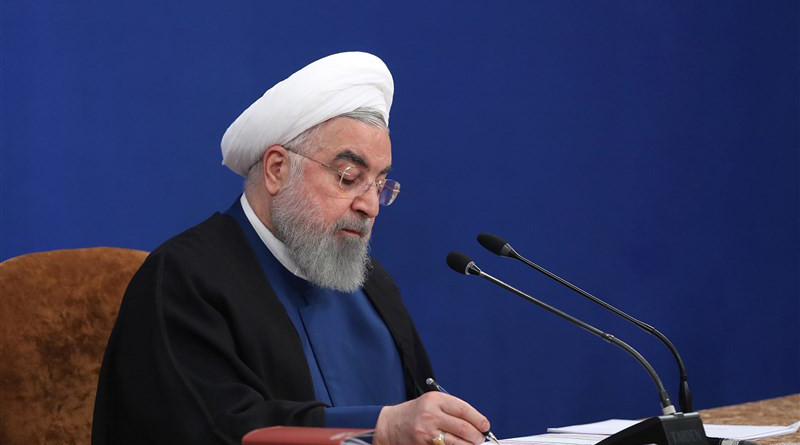
Iranian President Hassan Rouhani. Photo Credit: Tasnim News Agency

Hassan Rouhani, the former president of Iran’s regime who was recently disqualified from running for the Assembly of Experts, recently expressed his complaint about his disqualification by publishing an open letter.

After 45 years, he has suddenly discovered that “Even the highest elected official does not enjoy the right to freedom of expression, not even at the level of an ordinary citizen.”

It is unclear what freedom of expression rights an ordinary citizen in Iran under the current regime enjoys that the regime’s president does not have.

In exploring the judgment, he wrote, “I know what the reason for sensitivity is for some influential elected officials in the Assembly of Experts, especially in this term… I know that the sixth term of the Assembly of Experts is an important and decisive period, and the presence of individuals like me in it is concerning to the jurists of the Guardian Council.”

The Guardian Council is a body of 12 officials who vet candidates for parliamentary elections. They are all either directly or indirectly appointed by the regime’s supreme leader.

In his remarks, Rouhani was careful not to go beyond the Guardian Council, as if he doesn’t know whose hand controls the reins of the Guardian Council and who dictates disqualifications. He doesn’t settle for this ignorance and, with flattery and subservience, writes about regime supreme leader Ali Khamenei: “What has the Guardian Council done in implementing the explicit demands of the Supreme Leader, which warned against instances of injustice in confirming qualifications in previous elections? What action has the Guardian Council taken to ensure maximum public participation in the elections, which the leadership considered the responsibility of all institutions?”

However, Rouhani’s flattery towards did not prevent Khamenei from showing his dominance and silencing him with his political maneuvers. The regime’s mouthpiece, Kayhan, wrote, “If we were to try him and force him to answer for his incompetence, he wouldn’t go so far as to make long-winded speeches in defense of his disqualification.”

Regardless of the propaganda of Kayhan and other regime mouthpieces, the reality is that Rouhani has not refrained from any wrongdoing or malice in the past 45 years to preserve this regime:

Rouhani was one of the first officials of the regime to actively enforce mandatory hijab on Iranian women since the early 1980s and issued a circular regarding compulsory hijab. Referring to women employees’ protests, he himself writes: “…but I stood firm and said: From tomorrow morning, the guard at the entrance gate is obligated to prevent unveiled women from entering the premises of the Joint Chiefs of Staff. After the General Staff, it was the turn of the tripartite forces.”

Rouhani recommended the execution of opponents in a public speech.

On July 15, 1980, the state-run Etelaat newspaper quoted him as saying, “If possible, for the sake of setting an example for others, let the conspirators be executed in a place where Friday prayers are held.”

Rouhani was the main instigator of the suppression of the 1998 uprising. As the Secretary of the Supreme National Security Council, he issued a decisive order to the Islamic Revolutionary Guard Corps (IRGC) to ruthlessly crush and eliminate the student movement. In a public speech on July 14, 1998, he said, “A decisive order has been issued to confront and suppress these opportunistic elements wherever they may be and with utmost intensity and determination. Our people will witness that from today, the law enforcement forces, the heroic Basij forces present on the scene, will act against these opportunistic and riotous elements if they dare to continue their savage movements.”

Apart from these criminal acts, many individuals within the regime, even his own allies, now question how it is that Rohani, throughout all these years when he disqualified members and factions within the regime through the Guardian Council, firmly embraced the supervisory role, but now he complains and expresses dissatisfaction.

The regime’s futile attempt to delay its inevitable downfall with these maneuvers will only further sink it into more crises. All signs indicate that the people of Iran, along with their Resistance movement and Resistance Units, are surely moving toward another revolution to wipe out the regime in its entirety.


Categories
South Caucasus News

Iranian President Ebrahim Raisi Dies In Helicopter Crash, Leaving Behind A Polarizing Legacy – OpEd


Iranian President Ebrahim Raisi Dies In Helicopter Crash, Leaving Behind A Polarizing Legacy – OpEd

Ebrahim Raisi, the Iranian President, and the country’s foreign minister were tragically found deceased on May 20, 2024, shortly after their helicopter crashed in foggy conditions. In response, Supreme Leader Ayatollah Ali Khamenei swiftly appointed a relatively unknown vice president as the interim leader.

According to Iran’s Constitution, the First Vice President assumes the presidency in the event of the President’s death or incapacity. Mohammad Mokhber, appointed to this role by the late President Raisi in August 2021, will now take over the presidency. Despite Iran having several Vice Presidents serving in its Cabinet, the First Vice President holds the most senior position. Mohammad Mokhber will serve as President until a new election is held, as mandated, within the next 50 days.

The helicopter crash occurred on Sunday in East Azerbaijan amidst challenging conditions in mountainous terrain and icy weather.

Ebrahim Raisi, a significant figure in Iran’s political arena, was elected as the next president of Iran following the 2021 elections. These elections took place amid concerns over the COVID-19 pandemic, the economic impact of U.S. sanctions, and uncertainties regarding the nuclear deal. Notably, there were significant concerns about voter disengagement. The outcome signaled a strengthening of conservative power in Iran’s political sphere.

Born into a devoutly religious family in Mashhad, Iran’s second-largest city in 1960, Ebrahim Raisi commenced his extensive theological studies at the Qom religious seminary at the tender age of 15. By the time of the establishment of the Islamic Republic following the 1979 revolution, Raisi, then 18, rapidly ascended the ranks of power. He initially served as the prosecutor general of Karaj, a suburb of Tehran, and later assumed the position of deputy prosecutor for the entire capital. 

Following the conclusion of the Iran-Iraq war in 1988, Iran’s first supreme leader Ayatollah Ruhollah Khomeini covertly issued decrees condemning thousands of political prisoners to death. These prisoners, primarily from dissident groups like the People’s Mujahedin of Iran and supporters of leftist factions, were targeted following Iran’s acceptance of a ceasefire, which triggered a series of attacks.

A “death commission,” comprising four individuals, reportedly including Ebrahim Raisi, was subsequently established to oversee the executions. Amnesty International released a report in 1990 documenting these killings, highlighting the absence of fair trials for the victims. Despite international condemnation, Iran has never officially acknowledged its role in these events.

In 2019, the U.S. Treasury Department imposed sanctions on Raisi and other high-ranking Iranian officials for their involvement in human rights abuses. Raisi, who served as Tehran’s deputy prosecutor general, was accused of participating in the “death commission” responsible for the extrajudicial killings of political prisoners.

Raisi, always a staunch supporter of the establishment, held several key positions within Iran’s judicial system. After the death of Ayatollah Khomeini, in 1989, Raisi was appointed as the prosecutor of Tehran. He served as the First Deputy Chief Justice from 2004 to 2014, followed by his appointment as the Attorney-General of Iran from 2014 until 2016.

In 2016, Mr. Khamenei appointed him to lead the Astan Quds Razavi (Imam Reza charity foundation), which manages a vast network of businesses and endowments. These foundations, mainly sustained by donations or assets seized during the 1979 revolution, operate directly under the Supreme Leader’s authority. When Raisi assumed leadership of the foundation, Mr. Khamenei publicly praised him as a trustworthy person with high-profile experience, a rare commendation from the Supreme Leader. This endorsement fueled speculation that Raisi might be groomed as a potential successor.

Raisi assumed office during a critical period for Iran. The nation grappled with a faltering economy, exacerbated by sanctions, and the collapse of the nuclear deal, which had promised economic relief. The death of Mahsa Amini, a 22-year-old woman detained for violating Iran’s strict hijab regulations, triggered widespread protests. Raisi endorsed a severe crackdown on these demonstrations.

In response to both internal unrest and external pressures, Iran escalated its nuclear activities, initiated arms shipments to Russia, and reaffirmed its support for various organizations, including Hezbollah, the Houthis, Palestinian Islamic Jihad, and the Shia Mobilization Units.

Raisi, a notable figure in Iran’s political landscape, earned recognition for his efforts in establishing robust partnerships with China and Russia, significantly shaping Iran’s foreign policy. He played a crucial role in brokering the Chabahar Port deal with India, contributing to the cessation of Iran’s global isolation.

Analysts attribute these diplomatic accomplishments to Raisi’s strategic prowess. The reconciliation with Saudi Arabia facilitated dialogue with other regional powers and led to a temporary reduction in tensions. In November last year, amidst Israel’s Gaza conflict, both Syrian President Bashar Assad and Raisi attended an urgent Arab League summit in Riyadh, advocating for stronger measures against Israel. Alongside political gains, the reconciliation between two major regional economies stimulated discussions on enhancing trade relations.

Under Raisi’s leadership, Iran revitalized the Chabahar port agreement with India, defying potential U.S. sanctions. The recent decade-long pact between the two nations will witness India undertaking the development and management of Iran’s strategic port, facilitating access to Afghanistan and Central Asian countries while bypassing Pakistan. India’s infusion of $120 million into Shahid Beheshti terminal infrastructure, coupled with an additional $250 million credit line for associated projects, brings the contract’s total worth to $370 million.

Iran’s continued endorsement of groups like Hamas under Raisi has magnified its sway in West Asia and the Arab world, prompting other Arab nations such as Egypt to publicly extend support and assistance to Palestinians.

The passing of Raisi creates a significant vacuum in Iranian politics. Vice President Mohammad Mokhber’s appointment as the temporary leader adds to the uncertainty during this transitional phase. Raisi’s contributions to Iran’s politics and foreign relations leave a lasting impression on the nation and its surroundings. As Iran moves through this critical period, the future direction of its leadership remains uncertain.

  • About the author: Pranjal Pandey, a journalist and editor located in Delhi, has edited seven books covering a range of issues available at LeftWord. You can explore his journalistic contributions on NewsClick.in.
  • Source: This article was produced by Globetrotter.

Categories
South Caucasus News

The Rages Of Equivalence: The ICC Prosecutor, Israel And Hamas – OpEd


The Rages Of Equivalence: The ICC Prosecutor, Israel And Hamas – OpEd

The legal world was abuzz.  The diplomatic channels of various countries raged and fizzed.  It had been rumoured that Israel’s Prime Minister Benjamin Netanyahu, along with his cabinet colleagues, had been bracing themselves for a stinging intervention from the International Criminal Court, a body they give no credence or respect to.  

Then came the words from the Prosecutor of the ICC, Karim A.A. Khan on May 20, announcing that arrest warrants were being sought in the context of the Israel-Hamas War, benignly described as the “Situation in Palestine”, under the Rome Statute.  “On the basis of evidence collected and examined by my Office, I have reasonable grounds to believe that Benjamin NETANYAHU, the Prime Minister of Israel, and Yoav GALLANT, the Minister of Defence of Israel, bear criminal responsibility for […] war crimes and crimes against humanity on the territory of the State of Palestine (in the Gaza strip) from at least 8 October 2023”.

Hamas figures responsible for the attacks of October 7 against Israel also feature.  They include the essential triumvirate: Hamas chief, Yahya Sinwar, Mohammed Al-Masri, the commander-in-chief of Al-Qassam Brigades, and Ismail Haniyeh, head of the Hamas Political Bureau.  All “bear responsibility for […] war crimes and crimes against humanity committed on the territory of Israel and the State of Palestine (on the Gaza Strip) from at least 7 October 2023”. 

On Israel’s part, Khan’s office points the accusing finger at such alleged war crimes as starvation, the wilful causing of “great suffering, or serious injury to body or health”, including cruel treatment, wilful killing or murder, the intentional direction of attacks against a civilian population, extermination, persecution and other inhumane acts falling within the Rome Statute “as crimes against humanity”.  

The ICC prosecutor’s assessment follows the now increasingly common claim that Israel’s military effort, prosecuted in the cause of self-defence, is not what it claims to be.  Far from being paragons of proportionate warfare and humanitarian grace in war, Israel’s army and security forces are part of a program that has seen needless killing and suffering.  The crimes against humanity alleged “were committed as part of a widespread and systematic attack against the Palestinian civilian population pursuant to State policy.”

Khan acknowledges Israel’s innate right and marrow to self-defence.  He does not consider it estranged from the objects of international humanitarian law.  To divorce them would merely enliven barbarism.  The means Israel chose to achieve its military aims in Gaza, “namely, intentionally causing death, starvation, great suffering, and serious body or health of the civilian population – are criminal.”

On the part of Hamas, the prosecutor cites extermination, murder, the taking of hostages, the use of rape and sexual violence, the resort to torture, cruel treatment and “[o]utrages upon personal dignity” as crimes worthy of investigation.  Khan finds that the accused individuals “planned and instigated the commission of crimes” on October 7 and had “through their own actions, including visits to hostages shortly after their kidnapping, acknowledged their responsibility for their crimes.”

When law intrudes into the violence of war and conflict, the participants and instigators are rarely satisfied.  The matter becomes even more testy when international tribunals feature.  Concerns about power, bias, and an inappropriate coupling (or decoupling) of potential culprits abound.

No doubt anticipating the fulminating response, Khan convened a panel of experts in international law to advise him whether his applications for arrest warrants met the threshold requirements of Article 58 of the Rome Statute.  It would be hard to dismiss the weighty credentials of a group made up of such figures as Lord Justice Fulford, Judge Theodor Meron and Baroness Helena Kennedy.

None of this mattered in the catatonic rage arising from pairing the warring parties in the same effort.  The response reads like a decrypting key to hate and exceptionalism.  All wage war justly; all wage war righteously.  According to Netanyahu, Israel had suffered a “hit job”, with Khan “creating a false symmetry between the democratically elected leaders of Israel and the terrorist chieftains”.  The subtext is clear: democracies, at least those declaring themselves as such, are beyond reproach when fighting designated savages.

On the side of the Middle East’s only nuclear power (officially undeclared) came the erroneous argument that lumping Hamas officials with Israeli cabinet members was tantamount to equivalence.  “The ICC prosecutor’s application for arrest warrants against Israeli leaders is outrageous,” declared US President Joe Biden.  “And let me be clear: whatever this prosecutor might imply, there is no equivalence – none – between Israel and Hamas.”  Ditto the Austrian Chancellor Karl Nehammer, who thought the pairing “non-comprehensible”.

The prosecutor implied no such thing, focusing on the profile of each of the individuals.  The allegations regarding Netanyahu and Gallant, for instance, keenly focus on starvation as a means of waging war, including broader applications of collective punishment against Gaza’s civilian population.  For the leaders of Hamas, the interest is on allegations of murder, sexual violence, extermination, torture, hostage taking and incidents of captivity.

The trope of faultless democracy at war against terrorism is a common one.  The George W. Bush administration made incessant use of it in justifying illegal renditions and torture during the scandalously named Global War on Terror.  Memoranda from the White House and the US Justice Department gave nodding approval to such measures, arguing that “illegal combatants” deserved no human rights protections, notably under the Geneva Conventions.  

Unfortunately, many a just cause sprouts from crime, and the protagonists can always claim to be on the right side of history when the world takes notice of a plight.  Only at the conclusion of the peace accords can stock be taken, the egregiousness of it all accounted for.  Along the way, the law looks increasingly shabby, suffering in sulky silence.  These applications for arrest warrants are merely a modest measure to, pardon the pun, arrest that tendency.  It is now up to the pre-trial chamber of the ICC to take the next step.