
Day: May 20, 2024
Categories
NPR News: 05-20-2024 9PM EDT
The deaths of Iran’s president, Ebrahim Raisi, and foreign minister leave the country without two influential leaders at a particularly tumultuous moment of international tension and domestic discontent, although analysts and regional officials expect little change in Iran’s foreign or domestic policies.
Mr. Raisi, 63, and Foreign Minister Hossein Amir Abdollahian were killed on Sunday in a helicopter crash resulting from a “technical failure,” Iranian state news media reported. They were traveling from Iran’s border with Azerbaijan after inaugurating a dam project when their helicopter went down in a mountainous area near the city of Jolfa. Search and rescue teams scoured a rugged area of dense forest through rain and fog for hours before finding the crash site. There were no survivors.
The Iranian authorities have sought to project a sense of order and control. The supreme leader, Ayatollah Ali Khamenei, said there would be “no disruption” to the government’s work, and on Monday he said that the first vice president, Mohammad Mokhber, would assume the role of acting president and must organize elections for a new president within 50 days.
A public funeral procession for the president and foreign minister will be held in the city of Tabriz on Tuesday morning, and the bodies will then be taken to Tehran for an official funeral on Wednesday, said the interior minister, Ahmad Vahidi. Mr. Raisi’s body will then be taken to his hometown of Mashhad for another funeral service on Thursday. He will be buried in one of the holiest sites in Shiite Islam, the Imam Reza shrine, Iran’s state media reported.
The death of Mr. Raisi, a conservative who crushed dissent and had been viewed as a possible successor to Mr. Khamenei, occurred weeks after Tehran came close to open conflict with Israel and the United States. A long shadow war with Israel burst into the open in an exchange of direct strikes last month. And looming over everything is the question of Iran’s nuclear program. Iran has produced nuclear fuel enriched to a level just short of what would be needed to produce several bombs.
Here’s what else to know:
-
Mr. Raisi, a hard-line religious cleric who came of age during the country’s Islamic Revolution, was the second most powerful individual in Iran’s political structure after Mr. Khamenei. His death opens a new chapter of instability, just as the increasingly unpopular Islamic Republic is engaged in selecting its next supreme leader, and it might pave the way for Mr. Khamenei’s son Mojtaba to eventually assume that role.
-
Following his ascent to the presidency in 2021, Mr. Raisi consolidated power and marginalized reformists. He continued to expand Iran’s regional influence, backing proxies across the Middle East that have conducted strikes against Israel and the United States, and oversaw a deadly crackdown on domestic protesters, many of them women and young people.
-
The clandestine war with Israel burst into the open after Hamas attacked Israel on Oct. 7, setting off the war in Gaza and a cascade of strikes and counterstrikes across the region. The hostilities became even more pronounced after Israel conducted airstrikes on a building in the Iranian Embassy complex in Syria in April. Iran retaliated with its first direct attack on Israel after decades of enmity, launching more than 300 drones and missiles toward the country, almost all of which were shot down.
-
The authorities in Iran also face domestic anger, with many residents calling for an end to clerical rule. Corruption and international sanctions have ravaged the economy. In the last two years, the country has seen a domestic uprising, the Iranian currency plunging to a record low, water shortages intensified by climate change and the deadliest terrorist attack since the 1979 founding of the Islamic Republic.
People gathering in Tehran on Monday to pray after the deaths of the country’s president, foreign minister and other officials in a helicopter crash.Credit…Arash Khamooshi for The New York Times
The news that the Iranian president and foreign minister were killed in a helicopter crash brought shock and apprehension about what lies ahead as the country was flung, yet again, into crisis, according to interviews with analysts and politicians inside Iran and public comments by some officials on social media.
President Ebrahim Raisi was far from a widely popular or unifying leader, but in death his political opponents and rivals in Iran came together, offering condolences and messages of respect. Among them were the former presidents Hassan Rouhani and Mohammad Khatami.
Mr. Khatami, who boycotted parliamentary elections in March to show discontent for the conservatives’ unilateral rule, called Mr. Raisi a “respected and hardworking civil servant,” apparently putting aside years of animosity and targeted attacks on him and his reformist party.
Iran announced on Monday that it would hold presidential elections on June 28. Analysts in Iran said that although the stability and survival of the Islamic Republic’s rule was not at risk, many were apprehensive about who would be the next president and the makeup of the next government.
They said there were already discussions among analysts and politicians that the supreme leader, Ayatollah Ali Khamenei, may encourage and allow for a more pragmatic and centrist president to form a new, less ideological government with the aim of defusing both domestic and international tensions.
“Naturally there will be political tensions and anxieties when a president is killed, and now we have no president in the country amid a long list of challenges,” said Nasser Imani, a conservative political analyst in a telephone interview from Tehran. “Everyone is wondering who will take over and what policies will be prioritized, but the system desperately needs to inject some new blood into the government and signal new policies both at home and abroad.”
Billboards honoring the deceased president, Ebrahim Raisi, quickly appeared in Tehran on Monday.Credit…Arash Khamooshi for The New York Times
Two of the three main branches of Iran’s government — the presidency and the parliament — are now without leaders. Runoff parliamentary elections were held last week and a new parliament speaker has not been decided. The death of the foreign minister, Hossein Amir Abdollahian, also disrupts Iran’s recent flurry of diplomacy with regional Arab countries to forge closer ties, manage the wider conflict with Israel and conduct indirect talks with the United States.
Sasan Karimi, an adjunct professor of political science at the University of Tehran, said in a telephone interview that Iran was facing three key issues politically: a new presidential election and cabinet; a new parliament starting soon with very little public support; and the question of who will succeed Mr. Khamenei, who is 85 and in fragile health.
Mr. Raisi was considered one of the front-runners to be Mr. Khamenei’s successor, and he was also an elected member of the Assembly of Experts, the clerical body that chooses the supreme leader of Iran.
Hatef Salehi, who held a senior management position at Tehran’s municipality but was fired recently because he criticized Mr. Raisi’s policies, said in a telephone interview from Tehran that he was nonetheless “very anxious” about Iran’s future and sad about the helicopter crash.
“I’m surprised to find myself so upset, but I think it’s mostly because I’m anxious about what may happen in this period of transition,” Mr. Salehi said. “Our sense of stability has been shaken even if we didn’t like Raisi and his policies.”
People gathering for prayers in Valiasr Square in Tehran on Monday after the deaths of the president and other officials.Credit…Arash Khamooshi for The New York Times
For the average Iranian, Mr. Raisi remained as polarizing in death as in life. His supporters holding public mourning rituals in Tehran, his hometown of Mashhad and other cities, while his critics, many of them victims of Mr. Raisi’s brutal crackdowns and oppressive policies, celebrated.
Dr. Mohsen Asadi-Lari, a former senior official with the Ministry of Health, posted a message on Instagram that read: “Sometimes you have to wait for God to take revenge for you.”
He was referring to the failed attempts to seek justice through the judiciary for the deaths of his two children, Mohammad Hossein and Zeinab, who were killed when Iran’s Revolutionary Guards shot down a Ukrainian Arlines passenger plane with two missiles in January 2020, killing 176 people on board. Mr. Raisi was the head of the judiciary at the time.
Sources: Satellite imagery from CNES/Airbus via Google Earth; basemap via Mapbox and OpenStreetMap
By The New York Times

May 20, 2024, 4:43 p.m. ET
May 20, 2024, 4:43 p.m. ET
Following an official U.S. statement that said nothing specifically about Raisi’s record, Matthew Miller, a State Department spokesman, was scathing at a daily press briefing:
“We have been quite clear that Ebrahim Raisi was a brutal participant in the repression of the Iranian people for nearly four decades,” Miller said.
“Some of the worst human rights abuses occurred during his tenure as president — especially the human rights abuses against the women and girls of Iran,” Miller added. “That said, we regret any loss of life, and don’t want to see anyone die in a helicopter crash.”
May 20, 2024, 4:46 p.m. ET
May 20, 2024, 4:46 p.m. ET
Miller added that the Biden administration’s “fundamental approach to Iran has not changed and will not change,” and specifically noted that Americans would stand with Iranians pressing for “an open, free society and democratic participation.”
May 20, 2024, 3:37 p.m. ET
May 20, 2024, 3:37 p.m. ET
Matthew Miller, a State Department spokesman, dismissed a suggestion by a former Iranian foreign minister that American sanctions on Iran’s aviation industry were responsible for the crash.
“Ultimately, it’s the Iranian government that is responsible for the decision to fly a 45-year-old helicopter in what was described as poor weather conditions, not any other actor,” Miller told reporters.
Iran’s former foreign minister, Mohammad Javad Zarif, made the comments about American sanctions on Monday, according to the official Iranian news agency, IRNA.
In Tehran on Sunday, Iranians checking their phones after news that a helicopter carrying Iran’s president and foreign minister had crashed.Credit…Arash Khamooshi for The New York Times
When they learned that President Ebrahim Raisi’s helicopter had crashed on Sunday evening, the many Iranians for whom Mr. Raisi was one of the faces of a corrupt, brutally repressive regime waited with bated breath — hoping his era of influence had finally come to an end.
Gallows humor was all over social media. One user posted an image of a bear on X, writing, “Don’t disappoint us,” egging on the bears of the mountain where the helicopter had gone down to finish the job.
“I was very happy and I was following the jokes online and waiting for it to be announced so that we could go out” to celebrate, said Safa, 55, a doctor in the northeastern city of Mashhad, Mr. Raisi’s hometown. She, like other Iranians interviewed on Monday, asked to be identified only by her first name for fear of government retribution.
Some Iranians mourned Mr. Raisi on Monday, including people in Mashhad who held an overnight vigil for the president there and wailed when they learned of his death. State media showed images of other vigils in Tehran, the capital, and across the country.
After the authorities announced the president’s death on Monday, another image circulated online: a helicopter being strangled and brought down by ropes of braided hair, a young woman with her head uncovered standing unbowed in the foreground. It was a triumphant reference to the “woman, life, freedom” protest movement that convulsed Iran for months starting in September 2022, which began as a demonstration against a morality law requiring women to dress modestly and wear headscarves.
Mr. Raisi’s government harshly suppressed the protests with arrests and violence. Online, the daughters of an antigovernment protester whom rights groups said was shot to death during the demonstrations posted a video of themselves toasting the president’s death on Monday with what appeared to be alcoholic drinks, which are also banned in Iran.
Iranians gathering in Valiasr Square in Tehran to mourn the death of President Ebrahim Raisi.Credit…Arash Khamooshi for The New York Times
When Safa woke up to the news, however, she burst into tears, though not exactly of grief. She could not believe she was cheering the death of a man and indifferent to the deaths of even the flight crew.
“During these 45 years, they made us monsters,” she said, referring to Iran’s autocratic regime, which came to power in a bloody 1979 revolution.
“I haven’t been able to laugh since morning, and my heart aches for Iran and Iranians,” she added. “All this humor is a bitter expression of the pain of a nation. Otherwise, how can you be happy when people are burned and torn to pieces?”
For many Iranians who grew disenchanted with the country’s clerical rulers, Mr. Raisi embodied some of the darkest moments of the regime. They said his past as a prosecutor who helped order the executions of hundreds of political prisoners in the 1980s should have disqualified him from the presidency. His death, for them, was an escape from the justice he deserved to face.
Parisa, 57, a housewife from Lahijan, in northwestern Iran, said she felt relief at first when she heard the news.
“But after they were found, I thought this easy death wasn’t enough for them,” she said. “They should have been tried in court and forced to howl like dogs and been given long and painful punishments.”
All around Iran, conspiracy theories were flying. Some thought foreign powers might be to blame; others pinned it on internal machinations. But most agreed that it would have limited effect on what many Iranians care about most: overturning the system.
Kaveh, 40, an engineer from Mashhad, said he hated the regime but had shrugged at the president’s death. Because Mr. Raisi was not the final decision-maker in Iran and clerical rule remained in place, he said, his death would change little.
“One member of a mafia was killed,” he said. “That’s it.”

May 20, 2024, 3:16 p.m. ET
May 20, 2024, 3:16 p.m. ET
Defense Secretary Lloyd J. Austin III said on Monday that the Pentagon was awaiting the results of an Iranian investigation into the crash.
“Regarding the death of Iran’s president in the very unfortunate helicopter crash, we continue to monitor the situation,” Austin told reporters after a virtual meeting of Ukraine’s allies. “But we don’t have any insights into the cause of the accident at this point.”
May 20, 2024, 3:18 p.m. ET
May 20, 2024, 3:18 p.m. ET
“I know the Iranians are investigating or will investigate, and so we’ll see what the outcome is, once their investigation is complete,” the defense secretary added.
Credit…Jim Lo Scalzo/EPA, via Shutterstock
The scene of a helicopter crash in Brovary, Ukraine, in January 2023 that killed more than a dozen people, including the interior affairs minister, Denys Monastyrsky.Credit…Ed Ram/Getty Images
The president of Iran, Ebrahim Raisi, is but the latest leader to die in a helicopter crash. Mr. Raisi and Iran’s foreign minister, Hossein Amir Abdollahian, died on Sunday when the helicopter in which they were traveling went down in a mountainous area near the city of Jolfa in northwestern Iran.
Here is a brief look at some other prominent figures who have died in helicopter crashes:
A helicopter carrying senior Ukrainian officials including the minister for internal affairs, Denys Monastyrsky, crashed in January 2023 in a suburb of the capital, Kyiv, killing more than a dozen people including other pivotal figures in the wartime leadership.
Mr. Monastyrsky was a political ally of President Volodymyr Zelensky, and the crash, which happened near an elementary school, is believed to have been an accident.
Ukraine’s president, Volodymyr Zelensky, and first lady, Olena Zelenska, attending a memorial ceremony for Denys Monastyrsky, and others who died in a helicopter crash in 2023.Credit…Nacho Doce/Reuters
Last month, the chief of Kenya’s military, Gen. Francis Omondi Ogolla, died when a military helicopter in which he was traveling crashed in the west of the country. Other officials were also killed.
It was not the first such death involving a prominent Kenyan. In 2012, George Saitoti — whose posts included finance minister, education minister, acting foreign minister and vice president — died when the police helicopter he was riding in plunged into a forest west of Nairobi, Kenya’s capital.
The president of Kenya, William Ruto, at the coffin of Gen. Francis Omondi Ogolla last month.Credit…Luis Tato/Agence France-Presse — Getty Images
In 2005, a helicopter carrying John Garang, who for decades had led the country’s rebellion against the Sudanese government, died in a helicopter crash in northern Uganda. He had been flying to southern Sudan.
Mr. Garang had been installed as vice president of Sudan just weeks before, having played a pivotal role in a peace agreement that ended that country’s civil war. His swearing-in drew in excess of a million people to the streets of Khartoum, the Sudanese capital.
Mr. Garang had led a rebel group, the Sudan People’s Liberation Army, that had fought since 1983 to topple the Sudanese government. South Sudan eventually became a nation in 2011.
John Garang boarding the helicopter that would later crash, in 2005 at the Entebbe airport in Uganda.Credit…Peter Busomoke/Agence France-Presse — Getty Images
Several other prominent people have also died in helicopter crashes. These include Thai billionaire Vichai Srivaddhanaprabha, owner of the English Premier League soccer club Leicester City, who was killed in 2018 in a crash outside the stadium, and Aleksandr I. Lebed, a Soviet paratroop commander who later played a crucial supporting role in the birth of Russian democracy, who died in southern Siberia in 2002.

May 20, 2024, 2:06 p.m. ET
May 20, 2024, 2:06 p.m. ET
John F. Kirby, a national security spokesman at the White House, offered the government’s “condolences” for the death of the Iranian president, but he said “we’re going to continue to stand with the Iranian people as they fight for their own civil rights and, as they should, and we’re going to continue to hold Iran accountable for all their destabilizing behavior in the region, which continues to this day.”
May 20, 2024, 2:08 p.m. ET
May 20, 2024, 2:08 p.m. ET
Kirby added that the Iranian president “was responsible for atrocious human rights in his own country” and had “a lot of blood on his hands.” But, he said, “We certainly regret in general the loss of life and offered official condolences as appropriate.”

May 20, 2024, 1:49 p.m. ET
May 20, 2024, 1:49 p.m. ET
The bodies of the president, foreign minister and other officials who perished in the helicopter crash will have funeral services in three cities over as many days, Iran’s state media reported. There will be a public procession in Tabriz, the closest major city to the site of the crash, on Tuesday. The bodies then will be taken to Tehran, the capital, for a state funeral on Wednesday. Ayatollah Ali Khamenei will deliver the Islamic prayer for dead at the service, and Iran is expecting heads of states from allies and regional countries to attend, state media said.
May 20, 2024, 1:51 p.m. ET
May 20, 2024, 1:51 p.m. ET
Hossein Amir Abdollahian, the foreign minister, will be buried in Tehran. But Ebrahim Raisi, the president, will be taken to his hometown of Mashhad for another funeral service on Thursday. He will be buried in one of the holiest sites in Shiite Islam, the Imam Reza shrine.
Mojtaba Khamenei, the son of Iran’s supreme leader, for years has been considered to be a potential candidate to succeed his father, Ayatollah Ali Khamenei.Credit…Saeid Zareian/via Getty Images
He is known as a man in the shadows of Iranian politics. Yet Mojtaba Khamenei has a powerful influence over a country that rarely sees or hears him.
For years, the son of Iran’s supreme leader has been speculated to be a potential candidate to succeed his father, Ayatollah Ali Khamenei.
That speculation has grown with the death of Iran’s president, Ebrahim Raisi, who many analysts said was being groomed to replace the supreme leader, who is 85. Mr. Raisi’s death in a helicopter crash on Sunday will not only trigger new presidential elections. It could also shift the dynamics around the selection of Ayatollah Khamenei’s replacement.
“When people started talking about Mojtaba as a potential successor in 2009, I considered it a cheap rumor,” said Arash Azizi, a lecturer at Clemson University who focuses on Iran. “But it’s not that anymore. It’s very clear now that he is a remarkable figure. And he’s remarkable because he’s been almost entirely invisible in the public eye.”
Yet a growing number within Iran’s political establishment have begun to publicly endorse him, added Mr. Azizi.
Mr. Khamenei, 55, is the second son of the ayatollah’s six children. A conservative hard-liner, he grew up in the clerical and political elite of the Islamic Republic, established in 1979, and later fostered ties within the powerful Revolutionary Guards. Today, he is believed to play a critical role in running his father’s office.
But many Iran experts dismiss the idea that the ayatollah’s own son could replace him as a danger to the system.
Since the 1979 revolution deposed Shah Mohammed Reza Pahlavi, a small group of Shiite clerics that run Iran have held far more power than elected officials. But a foundational principle of the Islamic Republic was that it ended hereditary rule.
“If the supreme leader turns into a hereditary system, what does that mean? It means the system is dead,” said Mohammad Ali Shabani, an Iran analyst and editor of Amwaj, an independent online media outlet that focuses on Iran, Iraq and the Arabian Peninsula.
Mojtaba Khamenei teaches at Iran’s largest seminary, in Qom, but other religious leaders have disputed his credentials. He has not achieved a high rank within the Shiite clerical hierarchy, something long seen as necessary for taking on the role of supreme leader.
Where he seems adept, however, is in political maneuvering.
A veteran of the Iran-Iraq war, Mr. Khamenei became a friend of his fellow soldier Hossein Taeb, who later became leader of the Revolutionary Guards’ paramilitary unit, the Basij, and later led its intelligence forces for many years. Mr. Khamenei is believed to have other high-level links to Iran’s security apparatus as well, said Mr. Azizi.
Mr. Khamenei was accused by Iranian reformists of playing a significant role in the 2005 election of Mahmoud Ahmadinejad, a hard-line populist, who unexpectedly beat the leading candidates at the time.
In 2009, after Mr. Ahmadinejad’s re-election against the reformist leader Mir-Hossein Mousavi, antigovernment protests swept the country. Responding to Mr. Khamenei’s suspected role in the election, as well as rumors of his succession, some opposition activists chanted, “Mojtaba, may you die and not become supreme leader.”
Then, in 2022, in another wave of antgovernment protests, Mr. Mousavi, who has been under house arrest since 2011, called on Ayatollah Khamenei to dispel the rumors about his son succeeding him. The ayatollah did not respond then.
But earlier this year, he did, as the issue of succession becomes far more pressing.
The cleric Mahmoud Mohammadi Araghi, a member of the Assembly of Experts that selects the supreme leader, told the state-affiliated news agency ILNA that Ayatollah Khamenei was vehemently opposed to his son being considered.
The Assembly of Experts must unanimously select the supreme leader. Until then, they could choose a three- or five-member leadership council to run the country.
Ultimately, the fate of any potential successor lies within an opaque system that critics say has only become less transparent in recent years.
“The reality is that nobody knows,” said Mr. Shabani. “And that is crazy. There is zero transparency on a process that affects millions of Iranians.”
A correction was made on :
An earlier version of this article incorrectly stated the age of Mojtaba Khamenei. He is 55, not 65.
How we handle corrections
May 20, 2024, 1:10 p.m. ET
May 20, 2024, 1:10 p.m. ET
Ali Bagheri Kani, a deputy foreign minister and chief nuclear negotiator, has been named the next foreign minister of Iran. Bagheri Kani has led the Iranian delegation that has been secretly negotiating with the United States in the past year in Oman. He is a hard-line conservative, and it’s unclear if he will remain foreign minister after elections are held in 50 days and a new government takes office.
Wreckage at the site of the helicopter crash near Jolfa, in northwestern Iran, on Monday.Credit…Azin Haghighi/MOJ News Agency, via Agence France-Presse — Getty Images
While Iranian state media said on Monday that the helicopter crash that killed President Ebrahim Raisi was the result of a “technical failure,” some Iran observers suggested that decades of international sanctions, which have caused the country’s aviation fleet to atrophy, might have played a role.
Iran has been under strict international sanctions since the 1979 Islamic Revolution — including U.S. measures that for decades prevented the Islamic Republic from buying new Western planes and spare parts.
On Monday, Iran’s former foreign minister, Mohammad Javad Zarif, said that by imposing sanctions on the country’s aviation industry, the United States was responsible for the crash. His comments were carried by the official Iranian news agency, IRNA.
Sanam Vakil, a Middle East expert at Chatham House, a research group based in London, said that Iran’s aviation sector has long suffered under sanctions.
“Iran has seen a lot of airline incidents, not just helicopter but airplane crashes, and I think this is definitely tied to sanctions,” she said.
Ms. Vakil said that while she did not have details of the circumstances surrounding Sunday’s fatal crash, it was telling that two of the country’s top leaders — Mr. Raisi and the foreign minister, Hossein Amir Abdollahian — were traveling in an aging helicopter. Iranian state media showed images of the crashed helicopter, a Bell 212, a model that was originally developed for the Canadian military in the 1960s, according to the Reuters news agency.
Iran has historically had a significant airline sector — its national carrier is Iran Air — that serves its population of 88 million people with domestic and international routes. In 1995, the United States under President Bill Clinton put in place sanctions that prevented Iran from updating its commercial airline fleet. They forced it to use substandard Russian planes and to patch up older jets far past their normal years of service, sometimes drawing on spare parts bought on the black market.
The 2015 nuclear agreement that Iran reached with world powers including the United States saw some of those sanctions lifted, but they were largely reinstated three years later when President Donald J. Trump pulled out of the deal. The Trump administration also canceled Boeing’s licenses to sell aircraft to Iran, nullifying a $16.6 billion deal that the aviation giant reached with Tehran in 2016 for the sale of 80 airplanes.
The reintroduction of the restrictions, which Iran’s then-president, Hassan Rouhani, described as economic war, further threatened the country’s oil, shipping and banking industries as well as its currency.
The Iranian authorities have attempted to build up domestic production and supplies of aircraft parts in line with a broader policy of developing a resistance economy as a bulwark against sanctions. But the high-tech spare parts important in aviation can be difficult to fabricate domestically, according to experts.
More broadly, the economic effects of the sanctions have fueled broader grievances and protests against the ruling establishment, including over a lack of political and social freedoms, corruption and economic mismanagement.

May 20, 2024, 11:09 a.m. ET
May 20, 2024, 11:09 a.m. ET
More details have emerged about who else was killed in the helicopter crash. The Iranian state news agency, IRNA, reported that in addition to Raisi and Amir Abdollahian, Malek Rahmati — the governor of East Azerbaijan province — and Mehdi Mousavi, the head of Raisi’s security team, also died. It reported that Mohammad Ali Al-e-Hashem, the local representative of the supreme leader, was also with them.
Video

After scouring a mountainous area of dense forest, rescuers found the remains of the aircraft, which had the president and foreign minister on board.CreditCredit…Maansi Srivastava/The New York Times
May 20, 2024, 9:53 a.m. ET
May 20, 2024, 9:53 a.m. ET
A public funeral procession for Iran’s president and foreign minister will be held in the northwestern city of Tabriz on Tuesday morning, Interior Minister Ahmad Vahidi said. The bodies will then be taken to Tehran for an official funeral, he said.
News Analysis
A banner with a picture of President Ebrahim Raisi of Iran on Monday in Tehran. He had been seen as a top candidate to be the country’s next supreme leader. Credit…Majid Asgaripour/Wana News Agency, via Reuters
The sudden death of Iran’s president, Ebrahim Raisi, opens a new chapter of instability just as the increasingly unpopular Islamic Republic is engaged in selecting its next supreme leader. Mr. Raisi, 63, had been considered a prime candidate, especially favored by the powerful Revolutionary Guards.
Even before the helicopter crash that killed Mr. Raisi, the regime had been consumed with internal political struggles as the supreme leader, Ayatollah Ali Khamenei, 85, the longest-serving head of state in the Middle East, is in declining health.
But given the Islamic Republic is facing internal protests, a weak economy, endemic corruption and tensions with Israel, analysts expect little change in Iran’s foreign or domestic policies. Ayatollah Khamenei has set the direction for the country, and any new president will not alter it much.
The system is “already on a trajectory to make sure that the successor of the supreme leader is completely in line with his vision for the future of the system,” said Ali Vaez, the Iran director at the International Crisis Group.
He described “a pretty hard-line vision” in which crucial areas of foreign policy, like support for regional proxy militias and developing components for a nuclear weapon, are not going to change.
Whoever is chosen as the next president, Mr. Vaez said, “has to be someone who falls in line with that vision, a subservient figurehead.”
Ellie Geranmayeh, an Iran expert with the European Council on Foreign Relations, also sees continuity on major foreign policy issues, including regional affairs and the nuclear program. “These files have been under the control of Iran’s supreme leader and the I.R.G.C.,” she said, referring to the Islamic Revolutionary Guards Corps, “with Raisi having little influence during his tenure as president.”
“Raisi was certainly useful to some I.R.G.C. factions,” Ms. Geranmayeh said. Unlike his predecessor, Hassan Rouhani, Mr. Raisi, a more conservative loyalist, “did not challenge the I.R.G.C. either on domestic or foreign policy issues,” she said.
But criticism of Mr. Raisi’s performance as president had already raised questions about whether he was the best candidate to succeed Ayatollah Khamenei, she said.
Mr. Raisi’s main rival was considered to be Ayatollah Khamenei’s son Mojtaba, 55, whose candidacy has been harmed by the aura of a monarchical succession.
Mojtaba Khamenei, center, the son of Iran’s supreme leader, Ayatollah Ali Khamenei, in 2019. He is seen as a potential successor to his father.Credit…Saeid Zareian/DPA, via Associated Images
With previous supreme leaders arguing that hereditary rule under the shah was illegitimate, “they would be hard-pressed to sell hereditary leadership to the Iranian people now,” said Shay Khatiri, a senior fellow at the Yorktown Institute, a research institution focused on superpower competition.
Mr. Raisi’s death may give Mojtaba Khamenei an easier path to succeed his father. But the internal workings of Iran’s religious and domestic politics are deliberately mysterious, and the decision in the end will be made by a council of senior clerics known as the Assembly of Experts. Though Mojtaba Khamenei, himself a cleric, is considered to be a favorite of the clergy, the assembly may yet decide to pick one of their own or have more of a collective leadership.
His father, the supreme leader, had worked hard “to reduce the unpredictability within the system by grooming President Raisi to potentially be his successor, and now all of those plans are out of the window and they’re back to the drawing board,” Mr. Vaez said. “They have to organize an internal election” for the next supreme leader inside the system “at a time that the regime is facing a severe crisis of legitimacy at home.”
As for the public election for the next president, supposed to take place within 50 days, there are worries about public indifference.
The regime has become increasingly divorced from the population, Mr. Vaez and others said, by cracking down on public dissent, including on women protesting the Islamic dress code and a lack of freedoms.
By disqualifying “any candidate who is even a loyal critic of the system,” elections have become a farce, Mr. Vaez said. “The Islamic Republic has really focused on ideological conformity at the top rather than legitimacy from below.”
A photo provided by the Moj News Agency showing rescue team members carrying the body of a victim of the helicopter crash on Monday in northwest Iran. Credit…Azin Haghighi/Moj News Agency, via Associated Press
That has produced enormous political apathy, with fewer than 10 percent of voters in Tehran turning out for parliamentary runoff elections just 10 days ago. “All the government cares about now is a smooth transition to the next supreme leader,” Mr. Vaez said.
A new administration, Ms. Geranmayeh said, “will inherit a broken economy and an even more broken social contract with a population that has been deeply frustrated with the Islamic Republic.”
Externally, the challenges are steep as well. Iran and Israel attacked each other directly in April, even as Israel is already fighting Iran’s military proxies — Hamas in Gaza and, less vividly, Hezbollah in Lebanon. Iran also sponsors the Houthis in Yemen, who have attacked shipping in the Red Sea.
Iran has worked to avoid a larger war between Hezbollah and Israel, and a direct conflict with Israel is also something the Islamic Republic can ill afford.
It has been holding intermittent talks with the United States on de-escalating the regional conflict and on the future of its nuclear program. The death of Mr. Raisi threatens to complicate those talks, too.
“While there will be no love lost in D.C. for Raisi, instability in Iran would come at a bad time,” said Trita Parsi, an Iran expert at the Quincy Institute for Responsible Statecraft, making “escalation prevention all the more difficult.”
A missile defense system operating last month in Ashkelon, Israel, after Iran launched drones and missile strikes. Credit…Amir Cohen/Reuters
Since the collapse of the 2015 Iran nuclear deal in 2018, when Donald J. Trump, then the president, pulled out of the arrangement, Iran has moved to enrich uranium very close to bomb grade, causing tensions, too, with the International Atomic Energy Agency.
Iran has turned openly toward closer alignment with American rivals, especially Russia and China, which once supported the international effort to constrain Iran’s nuclear program but do so no longer.
Both countries have been buying Iran’s oil, despite international sanctions, helping to keep the Iranian economy barely afloat. Iran has been a crucial supporter of Russia’s war against Ukraine, selling it drones of all kinds as well as ballistic missiles in return for help with missile design, analysts say.
Increasingly, some Iranian officials speak of the program as a nuclear deterrent, even as the government insists that Iran’s program is purely civilian, and Ayatollah Khamenei has denied that Iran is seeking a nuclear weapon.
The Revolutionary Guards Corps is considered increasingly powerful in both nuclear and regional affairs, taking advantage of Ayatollah Khamenei’s weakened health and the regime’s fear of internal instability. The larger question is whether the Revolutionary Guards, already a major economic player domestically, will become more openly powerful politically as well.

May 20, 2024, 9:04 a.m. ET
May 20, 2024, 9:04 a.m. ET
Video by the Turkish broadcaster Ahaber appears to show mangled debris from the helicopter crash site in a foggy and densely forested area of northwestern Iran. Iranian state media reported that the Bell 212 helicopter went down in a mountainous area on Sunday.
Video

Video filmed by a Turkish broadcaster appears to show the helicopter crash site where Iran’s president and foreign minister were killed.CreditCredit…Ahaber, via Reuters

May 20, 2024, 8:13 a.m. ET
May 20, 2024, 8:13 a.m. ET
The Kremlin said President Vladimir V. Putin of Russia spoke by phone today with Mohammad Mokhber, Iran’s acting president. The Russian leader had a close relationship with Mokhber’s predecessor, with Iran a key source of weapons for Moscow’s invasion of Ukraine. The two had spoken by phone, by video link or in person at least 17 times in the last two years, according to the Kremlin’s website.
President Ebrahim Raisi at a news conference near the border between Iran and Azerbaijan on Sunday.Credit…EPA, via Shutterstock
After President Ebrahim Raisi of Iran was killed in a helicopter crash, Israeli officials quickly dismissed suggestions that they were behind his death, which Iranian state news media said was the result of “technical failure.”
Analysts said Monday that Israel, despite being one of Iran’s biggest foes, saw little strategic benefit from Mr. Raisi’s death and did not expect Iran to change its posture toward Israel as a result.
In Israel, Mr. Raisi was perceived as a weak figurehead who had little influence on Iran’s foreign policy, in particular its backing for Israel’s enemies across the Middle East. Israeli experts said that his replacement was expected to maintain Iran’s stance toward Israel, and that the real power in Tehran lay with the supreme leader, Ayatollah Ali Khamenei, and the Islamic Revolutionary Guards Corps.
“From Israel’s point of view, I don’t see any achievement in his being replaced by some other radical conservative Iranian,” said Sima Shine, a former senior official in the Mossad, Israel’s foreign intelligence agency, where she focused on Iran. “The president is not the most important person in Iran,” said Ms. Shine, now an analyst at the Institute for National Security Studies, a research group in Tel Aviv.
With or without Mr. Raisi, Israel still sees Iran as an existential threat, both because of its efforts to build a nuclear program as well as its support for groups that are hostile to Israel, including Hamas in Gaza, Hezbollah in Lebanon and the Houthis in Yemen.
To restrain Iranian influence, Israel has assassinated Iranian officials and targeted its nuclear and military facilities. In 2020, Israeli agents killed Iran’s top nuclear scientist using a remote-controlled gun. Earlier this year, an Israeli strike in Syria killed three senior Iranian military commanders, prompting Iran to respond with a huge barrage of ballistic and cruise missiles.
But Israel was unlikely to have killed Mr. Raisi, because he, unlike experienced scientists and generals, is ultimately so replaceable, according to Meir Javedanfar, an Iranian-Israeli professor who teaches Iranian studies at Reichman University in Israel.
The killing of a nuclear scientist might slow the progress of Iran’s nuclear program, but any Iranian president is likely to maintain the same antagonism toward Israel, he said.
“His absence or presence” would not have much of an impact either way, Professor Javedanfar said. “The same cannot be said of a nuclear scientist, working on a program that could produce a nuclear bomb to threaten Israel.”
He called Mr. Raisi “a foot soldier of the supreme leader,” and added: “He was a loyal servant, with little influence within the regime.”
President Ebrahim Raisi of Iran, right, meeting with President Ilham Aliyev of Azerbaijan at the site of a dam on the Aras River between the two countries on Sunday.Credit…EPA, via Shutterstock
When he met his Iranian counterpart on Sunday, President Ilham Aliyev of Azerbaijan told him that the day would “go down as a beautiful and bright chapter in the history of Iran-Azerbaijan relations.”
It would be one of the last meetings President Ebrahim Raisi of Iran had before he died.
That Mr. Raisi perished in a helicopter crash on his way back from a rare meeting with the president of Azerbaijan, Iran’s neighbor to the north, highlights the fragile geopolitical dynamics in Caucasus region that could be unsettled by his death.
Sunday’s meeting was the high point of an effort by both countries to patch up their relationship, which had been strained by an attack on the Azerbaijani Embassy in Tehran last year and by Azerbaijan’s increasingly close ties to Israel, Iran’s archenemy.
Those efforts could be dealt a setback by Mr. Raisi’s death, in part because Azerbaijan’s partnership with Israel might give rise to conspiracy theories blaming it, Zaur Shiriyev, an independent scholar based in Azerbaijan’s capital, Baku, said.
In Iran, “there will likely be attempts to blame external enemies,” Mr. Shiriyev said. “Such allegations could create new tensions in Baku-Tehran ties, which Baku would definitely like to avoid.”
Iranian state news media reported on Monday that the cause of the helicopter crash was a “technical failure.”
Israel is a key international partner for Azerbaijan, a predominantly Muslim, energy-rich former Soviet republic in the Caucasus Mountains. When Azerbaijan fought a 44-day war against its neighbor Armenia in 2020 to recapture a swath of territory known as Nagorno-Karabakh, Israel provided drones so crucial in the victory that Israeli flags were waved in the streets of Baku.
Amid Israel’s war in Gaza, Mr. Aliyev, Azerbaijan’s authoritarian leader, has sought to avoid taking sides. Azerbaijan’s state oil company, Socar, continues to export to Israel, drawing public protests in Turkey, Azerbaijan’s most important ally.
Azerbaijan’s relationship with Iran has been tense for years. Azerbaijan’s military victory over Armenia in 2020, and its closer ties to both Turkey and Israel, redrew the geopolitical map of the Caucasus, a volatile region where the interests of Russia, Turkey and Iran have long come into conflict. And early last year, Azerbaijan closed its embassy in Tehran after the deadly attack that Mr. Aliyev called a terrorist act.
But both sides have since tried to repair the relationship, and Azerbaijani officials have said they would not allow Israel to use their territory or airspace in the event of a war between Israel and Iran.
There are also economic incentives for the rapprochement. A railway project running partly through Azerbaijan will link Russia to Iranian seaports, out of reach of Western sanctions. Last fall, Azerbaijan and Iran jointly broke ground on a bridge that would connect the main part of Azerbaijan to its exclave of Nakhchivan. And when Mr. Raisi and Mr. Aliyev met on Sunday, at the border between the two countries, they were inaugurating a jointly built hydroelectric dam on the Aras River.
“Some may not like our meetings and our joint successes,” Mr. Raisi told Mr. Aliyev on Sunday, according to the Azerbaijani president’s office. “The main thing is that we have implemented together what is good for our countries, states and peoples.”
May 20, 2024, 6:32 a.m. ET
May 20, 2024, 6:32 a.m. ET
The helicopter crashed due to a “technical failure,” the IRNA state news agency said in an English-language article paying tribute to Raisi. It appeared to be the first time the cause of the crash was indicated.
Credit…Wana News Agency, via Reuters
Hossein Amir-Abdollahian, Iran’s foreign minister, speaks during a U.N. Security Council meeting last month.Credit…Angela Weiss/Agence France-Presse — Getty Images
Hossein Amir Abdollahian was picked to be Iran’s foreign minister in 2021 by the president, Ebrahim Raisi, during a volatile time for Iran’s regional ties and for its relationship with the West.
Mr. Amir Abdollahian was a career diplomat and, like Mr. Raisi, a hard-liner. The two men died in a helicopter crash on Sunday in a mountainous region of northwestern Iran. Considered closely aligned with Iran’s Islamic Revolutionary Guards Corps, Mr. Amir Abdollahian was also believed to have had a close relationship with Maj. Gen. Qassim Suleimani, the powerful leader of the Revolutionary Guards’ Quds Force, whom the U.S. killed in a drone strike in 2020.
Born in 1964, Mr. Amir Abdollahian held a master’s degree and a Ph.D. in international relations from the University of Tehran, according to the Iranian Foreign Ministry.
He was fluent in Arabic and his diplomatic experience focused on Iran’s relationships in the Middle East. He spent five years as deputy foreign minister for Arab and African affairs from 2011 to 2016 and three years as Iran’s ambassador to Bahrain from 2007 to 2010.
His tenure as foreign minister was starkly different to that of his predecessor, Mohammad Javad Zarif, the moderate, American-educated diplomat who helped broker the 2015 nuclear deal between Iran and world powers including the United States. Mr. Zarif made that deal in close collaboration with John F. Kerry, who served as secretary of state under President Barack Obama, and he was later heard on a leaked audiotape discussing a rivalry with General Suleimani.
After he was confirmed as foreign minister in 2021, Mr. Amir Abdollahian emphasized that Iran’s relationships with its neighbors would be a top priority, and he quickly took a tougher stance against the United States in talks about reviving the nuclear deal, which former President Donald J. Trump had abandoned.
Mr. Amir Abdollahian was also a key figure in the spillover from the Oct. 7 Hamas-led attacks, which prompted Israel to go to war in Gaza. Iran backs several armed groups in the Middle East, including Hamas, Hezbollah in Lebanon and the Houthis in Yemen. Mr. Amir Abdollahian had been vocal about the threat of a broader conflict for months before Iran’s shadow war with Israel burst into the open in April, when Israel killed senior military leaders in a strike on an Iranian embassy complex in Syria and Iran fired a volley of drones and missiles at Israel in retaliation.
Mr. Amir Abdollahian repeatedly condemned the United States for backing Israel’s military campaign in Gaza. In an interview with The New York Times in November, he said, “If the U.S. continues its military, political and financial support of Israel and helps manage Israel’s military attacks on Palestinian civilians, then it must face its consequences.”
Mr. Amir Abdollahian’s deputy for political affairs, Ali Bagheri Kani, who on Monday was named “caretaker” of the Foreign Ministry, has been leading the Iranian delegations that have secretly and indirectly negotiated with the United States in Oman on at least three occasions over the past year. The talks addressed the Houthi attacks on ships in the Red Sea, the targeting of U.S. military personnel in Iraq and Syria by Iran’s proxies, and a cease-fire in Gaza.
Farnaz Fassihi contributed reporting.

May 20, 2024, 5:56 a.m. ET
May 20, 2024, 5:56 a.m. ET
Pirhossein Kolivand, the head of the Iranian Red Crescent Society, shared details about the search-and-rescue operation in an interview with a state broadcaster. He said the vast search area, heavy fog and darkness slowed the operation, which involved about 2,000 people, all of them Iranian. “After hours of searching, at about 5 a.m., the wreckage of the helicopter was seen by the rescuers from a distance of two kilometers,” Mr. Kolivand said. “It took 40 minutes to an hour to get there.”
A black flag was placed outside the Iranian consulate in Hyderabad, Pakistan, on Monday, following the death of President Ebrahim Raisi.Credit…Nadeem Khawer/EPA, via Shutterstock
Many world leaders shared condolences for Iran on Monday after the deaths of President Ebrahim Raisi and Foreign Minister Hossein Amir Abdollahian in a helicopter crash on Sunday.
Here is some of the reaction:
Russia: President Vladimir V. Putin sent a condolence letter to Iran’s supreme leader, Ayatollah Ali Khamenei, calling Mr. Raisi a “wonderful person” and a “true friend of Russia.” Mr. Putin said Mr. Raisi had made an invaluable personal contribution to deepening relations between the two countries. Mr. Putin has relied on Iran to provide drones for his war against Ukraine, and has strengthened ties with the Iranian government amid his standoff with the West.
India: Prime Minister Narendra Modi said he was “saddened and shocked” and that “India stands with Iran in this time of sorrow.” The two governments have been expanding trade ties, with India recently signing an agreement to develop a strategic Iranian port, despite the threat of American sanctions.
Pakistan: The nation declared a day of mourning out of solidarity with “brotherly Iran,” Prime Minister Shehbaz Sharif wrote on social media.
The European Union issued a statement expressing condolences and sending “its sympathies to the families of all the victims and to the Iranian citizens affected.”
China: A spokesman for Beijing’s Foreign Ministry said “the Chinese people have also lost a good friend.” and that China’s top leader, Xi Jinping, had extended condolences. He added that “China will continue to support the Iranian government and people” and was “willing to work with Iran to further deepen the China-Iran comprehensive strategic partnership.”
A poster of President Ebrahim Raisi of Iran being posted on a wall outside the Iranian Embassy in Baghdad on Monday.Credit…Ahmad Al-Rubaye/Agence France-Presse — Getty Images
Iraq: The government of Iraq said it would observe a day of mourning as a sign of “solidarity with the feelings of sadness and pain.” Under Saddam Hussein, Iraq fought a brutal war with Iran in the 1980s. But the majority Shiite Arab country grew close with Tehran in the wake of the U.S. invasion, and its government is seen as under the influence of Iran. Iran also counts several Iraqi Shiite militias among its regional network of proxies.
Turkey: President Recep Tayyip Erdogan wished “God’s mercy for my brother” Mr. Raisi, as well as for Mr. Abdollahian. “We will stand by our neighbor Iran in these difficult and distressing times, as we have done many times,” Mr. Erdogan said in a statement.
Egypt: President Abdel Fattah el-Sisi asked “Allah the Almighty to envelop President Raisi and the deceased with his mercy and grant solace and comfort to their families.” After years of frosty relations, Egypt and Iran had discussed renewing ties over the last year, though they had not appeared to make much progress by the time of Mr. Raisi’s death.
Lebanon: The country declared a three-day period of mourning, the NNA news agency reported, with flags to fly at half-mast.
South Africa: President Cyril Ramaphosa called Mr. Raisi “a remarkable leader of a nation with whom South Africa enjoys strong bilateral relations.” South Africa last year backed Iran’s admission to the BRICS group of developing nations, a multilateral organization that fashions itself as a competitor to international alliances dominated by the West.
Mujib Mashal, Gulsin Harman, Vivian Yee, Paul Sonne, Erika Solomon and Matina Stevis-Gridneff contributed reporting.
May 20, 2024, 5:26 a.m. ET
May 20, 2024, 5:26 a.m. ET
With the death of the foreign minister, Hossein Amir Abdollahian, Iran’s Cabinet has appointed one of his deputies, Ali Bagheri Kani, as the ministry’s “caretaker,” the IRNA state news agency reported. Kani has served as Iran’s chief nuclear negotiator and was involved in the 2023 deal that freed imprisoned Americans in exchange for several jailed Iranians and Iranian funds.
Credit…Alex Halada/Agence France-Presse — Getty Images
Mohammad Mokhber, who is acting president, had held senior positions in some of Iran’s most powerful conglomerates.Credit…Iranian Vice President’s Media Office
With the death of President Ebrahim Raisi, Iran’s first vice president, Mohammad Mokhber, becomes acting president. Mr. Mokhber is a conservative political operative with a long history of involvement in large business conglomerates closely tied to Iran’s supreme leader, Ayatollah Ali Khamenei.
In a statement on Monday, Mr. Khamenei said that Mr. Mokhber must work with the heads of the legislature and judiciary to hold elections for a new president within 50 days.
Vice presidents in Iran are typically low profile, operating more as players within the government than as public figures.
“Iran’s vice presidents have traditionally not been contenders to succeed their bosses,” said Robin Wright, a joint fellow at the U.S. Institute of Peace and the Wilson Center in Washington. “The bigger question,” she added, “is who will the regime allow to run for the office.”
Mr. Mokhber is around 68 years old and became first vice president in August 2021. He is originally from Khuzestan Province in Iran’s southwest, bordering Iraq and the Persian Gulf. He was a deputy governor there, and during the Iran-Iraq war in the 1980s served as a member of the Revolutionary Guards medical corps.
One of Mr. Mokhber’s relatively few high-profile appearances came when he and three other senior Iranian officials went to Moscow in October 2022 to complete a sale of Iranian drones and ballistic missiles to Russia, for use in the war in Ukraine.
Mr. Raisi chose him as vice president after Mr. Mokhber held senior positions in some of Iran’s most powerful organizations, including the Mostazafan Foundation, Sina Bank and Setad, a conglomerate entirely controlled by Ayatollah Khamenei that has billions of dollars in assets and was involved — not entirely successfully — in efforts to make and distribute a Covid-19 vaccine.
All three organizations are part of an opaque network of financial entities that are tied to the Iranian state, although they are not directly state-owned. They are also connected to projects that are priorities for the supreme leader and his inner circle.
Mr. Mokhber’s involvement suggests that he has been a successful behind-the-scenes player who is familiar with the financing networks that are important to the official Iranian power structure.
The Mostazafan Foundation, where Mr. Mokhber worked in the early 2000s, is officially a charity but is described by the U.S. Treasury as “a key patronage network for the supreme leader” that includes holdings in key sectors of Iran’s economy, including finance, energy, construction and mining. It is the subject of sanctions by the U.S. Treasury because it is controlled by Mr. Khamenei, and the Treasury said it was created in part “to confiscate and manage property, including that originally belonging to religious minorities” in Iran, including Baha’is and Jews.
The Treasury says the foundation funnels some of its money to individuals and entities in the Islamic Revolutionary Guards Corps that have been involved in terrorism and human rights abuses.
The Sina Bank has faced sanctions by the U.S. Treasury and the European Union for financing Iran’s nuclear and ballistic missile program.
Mr. Mokhber appears to have risen to the top of Iran’s political leadership in part because of the close relationship he developed with Iran’s supreme leader, dating from at least 2007 when he joined the leadership of Setad. Within a few months of his appointment to Setad, Mr. Mokhber had founded the Barakat Foundation, which has a number of companies under its aegis including a major Iranian medical and pharmaceutical company.
While his relationship with the supreme leader will be important while elections are being organized, analysts say that a much larger group of high-ranking officials around Mr. Khamenei will determine how this sensitive period in Iran will be handled.
“The regime is at a tipping point — politically, economically, and even militarily,” Ms. Wright said, noting Iran’s large-scale aerial attack on Israel last month that was nearly entirely intercepted, which she called “a humiliating failure.” Low turnout in parliamentary elections in March was also a sign of trouble for Iran’s theocracy, she added.
“It is very nervous about its future and the durability of its core ideology,” she said.
Leily Nikounazar contributed reporting.
May 20, 2024, 4:40 a.m. ET
May 20, 2024, 4:40 a.m. ET
Iran’s supreme leader, Ayatollah Ali Khamenei, issued a statement offering his condolences and announcing five days of public mourning. He said that the first vice president, Mohammad Mokhber, will take over managing the government in accordance with Iran’s Constitution. Mokhber must work with the heads of the legislature and judiciary to hold elections for a new president within 50 days, Khamenei said.
May 20, 2024, 4:22 a.m. ET
May 20, 2024, 4:22 a.m. ET
Raisi’s political rivals, some of whom had vocally criticized his rule, issued statements of condolence, including the grandson of Ayatollah Ruhollah Khomeini, the founder of Iran’s 1979 Islamic Revolution. “The Islamic Republic of Iran has faced many very difficult situations since its inception and has overcome them,” said the grandson, Hassan Khomeini.
May 20, 2024, 3:24 a.m. ET
May 20, 2024, 3:24 a.m. ET
The bodies of President Raisi and Foreign Minister Amir Abdollahian, and those of the others on board the crashed helicopter, were being transferred by ambulance to the city of Tabriz on Monday morning, state television reported. The search and recovery operation has ended, according to the head of Iran’s Red Crescent Society.
Credit…Iranian Red Crescent, via Agence France-Presse — Getty Images
May 20, 2024, 1:44 a.m. ET
May 20, 2024, 1:44 a.m. ET
Iran will want to project a sense of control and order in the aftermath of President Raisi’s death, and to emphasize that early elections will happen in an orderly way. Supreme Leader Ayatollah Ali Khamenei said earlier in remarks about the crash that there would be “no disruption” to the work of the government. He also said that senior officials would remain in control of national security and border security.
Credit…Arash Khamooshi for The New York Times
May 20, 2024, 1:25 a.m. ET
May 20, 2024, 1:25 a.m. ET
President Raisi’s cabinet held an emergency meeting on Monday, leaving his seat at the center of the conference table empty as a symbolic commemoration, photos published by the state news agency IRNA showed. The cabinet issued a statement praising his service to the country and to the Iranian people, and vowing to follow in his footsteps. Mr. Raisi and his conservative government were not popular among the majority of Iranians because they had reinstated oppressive social rules, violently cracked down on dissent and marginalized rival political factions.
May 20, 2024, 1:09 a.m. ET
May 20, 2024, 1:09 a.m. ET
President Raisi’s death was announced from the podium of Iran’s most revered Shia shrine, the mausoleum of Imam Reza, in his hometown of Mashhad. A large crowd of government supporters had gathered there overnight to hold a prayer vigil. People broke into loud shrieks and wails when the announcement was made.
May 20, 2024, 12:52 a.m. ET
May 20, 2024, 12:52 a.m. ET
IRNA, the government’s state news agency, also announced the death of President Raisi, the foreign minister and everyone else on board the helicopter. It said he had been “martyred in the line of service.”
May 20, 2024, 12:38 a.m. ET
May 20, 2024, 12:38 a.m. ET
Tasnim News Agency, affiliated with Iran’s Revolutionary Guards, published a statement saying that President Raisi and Foreign Minister Hossein Amir Abdollahian had been killed in the helicopter crash. It published a photo of Mr. Raisi with a headline that called him a martyr. Tasnim also said that the governor of East Azerbaijan Province, an Imam and two senior military officials who were in charge of Mr. Raisi’s security had died in the crash, along with the pilot and the co-pilot.
May 20, 2024, 12:07 a.m. ET
May 20, 2024, 12:07 a.m. ET
Iranians are waking up to news that rescue teams have reached the site where the president’s helicopter crashed on Sunday. Officials and journalists at the site are telling the state news media that there is no sign of survivors. The government has not yet made an official statement announcing the death of the president, the foreign minister and others who were traveling on the helicopter.
May 19, 2024, 11:58 p.m. ET
May 19, 2024, 11:58 p.m. ET
Initial photos and footage of the crash site posted on Iranian news sites showed debris and broken helicopter parts. In addition to the president and foreign minister, a cleric and the governor of the eastern province of Azerbaijan were among the officials on board the helicopter.
Credit…Iranian Red Crescent, via Agence France-Presse — Getty Images
May 19, 2024, 11:43 p.m. ET
May 19, 2024, 11:43 p.m. ET
“Finding the location of the helicopter and seeing the scene there is no sign of any of the passengers being alive,” the head of Iran’s Red Crescent Society, Pirhossien Koulivand, who was at the site, told state television.
May 19, 2024, 4:50 p.m. ET
May 19, 2024, 4:50 p.m. ET
The head of Iran’s Red Crescent Society, Pirhossein Kolivand, told state TV that search and rescue teams have not located the site of the helicopter crash after more than 10 hours of looking, and have made no contact with anyone on board. Any rumors to the contrary were false, he said. Kolivand said rescuers were using their best guesses to set the search area and had no confirmation of the exact location of the missing helicopter.
Credit…Ali Hamed Haghdoust/Wana News Agency via Reuters
A man held an image of Qassim Suleimani, the commander of the Islamic Revolutionary Guards Corps Quds Force, who was killed by an American drone strike in 2020, during an anti-Israel rally in Tehran last month.Credit…Abedin Taherkenareh/EPA, via Shutterstock
Even before the announcement on Monday that President Ebrahim Raisi of Iran had died in a helicopter crash, relations between Tehran and the United States had come perilously close to open conflict. What unfolds in the next few days — including what Iran declares was the cause of the crash — could well determine whether the two countries are able to grope their way out of several simultaneous crises.
Over the long term, the struggle that matters most is the one that centers on Iran’s nuclear program. The program had largely been contained after the Obama administration negotiated a nuclear deal with Iran in 2015. But President Donald J. Trump denounced and abandoned the deal six years ago, and eventually Iran resumed production of nuclear fuel — enriched to a level just short of what would be needed to produce several bombs.
Exactly what role Mr. Raisi played in critical decision-making in Tehran about Iran’s nuclear strategy was always a matter of dispute; the program is under the control of the Islamic Revolutionary Guards Corps in Iran, a power center unto itself. But American officials say that after nearly reaching an agreement with Iran through European intermediaries two years ago, efforts to negotiate have all but collapsed.
Just last week, the Iranian foreign minister, Hossein Amir Abdollahian, who also died in the helicopter crash, met with the head of the International Atomic Energy Agency, Rafael Grossi, who was demanding better access to Iran’s sprawling nuclear facilities.
The nuclear program, and the question of whether Iran will seek a weapon or leverage its status as a threshold power that could produce one quickly, looms over other, more regional confrontations. When Iran shot 300 missiles and drones at Israel last month, the United States coordinated with Israeli and other regional forces to take them down. But the whole exchange, which calmed after a relatively modest Israeli response, was a reminder that the country sharply expanded its missile program, and its reach, under Mr. Raisi — and is turning to techniques meant to overwhelm Israeli defenses, likely a lesson of the war in Ukraine.
Meanwhile, Iran is arming the Houthis — Shiite militants who have taken over most of northern Yemen and attacked shipping in the Red Sea — and providing them with intelligence from at least one Iranian ship. It is providing arms and technology to Hamas and Hezbollah, efforts that also expanded under Mr. Raisi’s rule. And U.S. officials warned recently that as the presidential election approaches, they expect an increase in Iranian hacking attempts.
“Iran is becoming increasingly aggressive in their efforts,” Avril D. Haines, the director of national intelligence, told the Senate Intelligence Committee last week. It seeks “to stoke discord and undermine confidence in our democratic institutions, as we have seen them do in prior election cycles.”
May 19, 2024, 3:55 p.m. ET
May 19, 2024, 3:55 p.m. ET
Supporters of the government flocked to religious shrines for group prayers, and in Tehran’s Vali Asr square about 50 people held a vigil with a speaker urging national unity. But the government’s critics were far from sympathetic, with many on social media highlighting the brutality of Raisi’s leadership, including violent crackdowns on dissent during his time as judicial chief and president.
Credit…Arash Khamooshi for The New York Times
Inside a clothing store in Tehran, a television is set to a news channel reporting on the crash of the helicopter carrying the president of Iran. Credit…Arash Khamooshi for The New York Times
The crash of a helicopter carrying President Ebrahim Raisi of Iran could hardly have come at a more volatile time for the Islamic Republic.
Sunday’s episode left the fate of Mr. Raisi — who many analysts believed was being groomed to become Iran’s next supreme leader — uncertain against a backdrop of economic misery, widespread public discontent and geopolitical tensions that had pushed Israel and Iran to exchange rare direct attacks.
In the event of the president’s death, the vice president takes over and must organize an election within 50 days, said Ali Vaez, the Iran director of the International Crisis Group, an independent conflict prevention agency.
That, he said, would be “a major challenge for a country that is in the midst of a severe crisis of legitimacy at home and daggers drawn with Israel and the United States in the region.”
In the last two years the country has witnessed a domestic uprising, the Iranian currency plunging to a record low, water shortages intensified by climate change and the deadliest terrorist attack since the 1979 founding of the Islamic Republic.
Parliamentary elections in March showed just how serious that crisis of legitimacy had become for Iran’s ruling class after millions of Iranians boycotted the vote and a far-right faction made notable gains.
“That just shows how unpopular the Islamic Republic currently is at home,” Mr. Vaez said, describing “a deepening rift between the state and the society.”
The economy remains in shambles because of U.S. sanctions, mismanagement and corruption. Iran’s currency fell to a record low in late March, just as its people were celebrating the Persian New Year. Inflation in the country has been painfully high for years, often exceeding 30 percent.
Prospects for a return to a deal with the West to limit Iran’s nuclear program, which would bring sanctions relief, appear dim.
In 2022, the death of a 22-year-old woman, Mahsa Amini, in the custody of the country’s morality police ignited monthslong protests nationwide, led by women and girls who tossed off their head scarves in defiance and demanded an end to the Islamic Republic’s rule. The government responded with a violent crackdown — just as it did to quell protests in 2019.
And in January, two explosions in the city of Kerman killed more than 80 people and injured more than 200. The Islamic State, a declared enemy of Iran, claimed responsibility.
Attacks between Israel and Iran this spring were the latest development pushing the country to a boiling point — and were a departure from the shadow warfare the two countries have waged for decades, raising fears of a regional conflagration pulsing outward from Gaza.
Iran backs and helps arm Hamas, the Palestinian group that led the Oct. 7 assault on Israel, which responded with a bombing campaign and invasion of the Gaza Strip, killing more than 35,000 Palestinians, according to Gazan health authorities. Iran also supports armed groups around the region that have declared their solidarity in a battle against Israel, including Hezbollah in Lebanon and Yemen’s Houthi militia.
But analysts say that Iran is eager to avoid being dragged into all-out war.
In April, Iran responded to a deadly Israeli attack on its embassy compound in Damascus, Syria, by launching a barrage of more than 300 drones and missiles directly at Israel for the first time. Few of Iran’s drones and missiles found their targets — a fact that military experts and defense officials said was probably by design.
The crash also raises questions about who would become Iran’s supreme leader after Ayatollah Ali Khamenei, who is 85, Mr. Vaez said. Mr. Raisi has been seen as a possible successor.
Mr. Vaez said that Mr. Raisi has been viewed as “predictable for the system — and that’s the reason he was chosen as president and was being groomed for the top job.”
Farnaz Fassihi contributed reporting.
May 19, 2024, 3:15 p.m. ET
May 19, 2024, 3:15 p.m. ET
United Nations spokesman Stéphane Dujarric said that Secretary General António Guterres was closely following the news of the helicopter crash. “The secretary general is following reports of an incident with Iranian President Raisi’s aircraft with concern,” he said in a statement. “He hopes for the safety of the president and his entourage.”
May 19, 2024, 3:03 p.m. ET
May 19, 2024, 3:03 p.m. ET
Ali Bahaador Jahromi, an Iranian government spokesman, wrote on social media late Sunday that there was no new information on what he called a “difficult and complicated situation.” He said the “geographical location of the accident and weather” had delayed updates on the crash.
Prime Minister Mohammed Shia al-Sudani of Iraq has offered his country’s help in Iran’s search operations.Credit…Ahmed Jalil/EPA, via Shutterstock
A number of countries were quick to offer assistance to Iran to help with search and rescue operations after a helicopter carrying its president, Ebrahim Raisi, crashed on Sunday.
Turkey’s Ministry of Defense said it had dispatched a domestically produced combat drone and a Cougar helicopter with night vision compatibility to assist the search and rescue effort, at Iran’s request. A total of 32 rescuers and six vehicles were sent to aid in the search, with more on standby, according to the Turkish national emergency agency.
Prime Minister Mohammed Shia al-Sudani of Iraq instructed his country’s interior ministry and other relevant parties to offer to help with the search for the missing helicopter, according to Bassem al-Awadi, a spokesman for the Iraqi government. The Iraqi Red Crescent Society, a humanitarian network, said it was preparing 10 search and rescue teams consisting of 50 people to assist.
The European Union activated its Copernicus satellite system to offer emergency mapping services to help Iranian officials gain better visibility of the area where the crash is believed to have occurred, according to the bloc’s chief for crisis management, Janez Lenarcic. He said the E.U. had done so after a request for assistance from Iran.
The foreign ministry of Saudi Arabia — a regional rival that re-established relations with Iran last year after a seven-year split — said that the kingdom “stands beside the brotherly Iranian Islamic Republic in these difficult circumstances and was prepared to offer any assistance Iranian authorities need.”
Iranian state television reported that Russia’s president, Vladimir Putin, a close ally of Iran, had called and spoken to the country’s first vice president, Mohammad Mokhber, and offered Russia’s help “in full capacity.” Mr. Mokhber told state television that Iran “appreciates Russia’s help.”
May 19, 2024, 1:38 p.m. ET
May 19, 2024, 1:38 p.m. ET
Iran’s supreme leader, Ayatollah Ali Khamenei, has given his first public statement about the crash. “We hope that benevolent God returns our dear and honorable president and all with him to the arms of the people,” he said. “Everyone must pray for the health of these public servants. The people of Iran must not be anxious or worried.”
May 19, 2024, 1:38 p.m. ET
May 19, 2024, 1:38 p.m. ET
In an address carried live on state television, he said that all of the country’s security and governance will be handled by other officials and there will be no disruption to border security or national security.

May 19, 2024, 1:23 p.m. ET
May 19, 2024, 1:23 p.m. ET
The European Union has activated its Copernicus satellite system to offer emergency mapping services to help Iranian officials gain better visibility of the area where the crash is believed to have occurred, according to the bloc’s chief for crisis management, Janez Lenarcic. He said the E.U. had done so after a request for assistance by Iran.

May 19, 2024, 1:14 p.m. ET
May 19, 2024, 1:14 p.m. ET
Ilham Aliyev, the president of Azerbaijan, had met with Raisi earlier today. He wrote on X that he was “profoundly troubled” to learn about the crash “after bidding a friendly farewell” to the Iranian president. Pakistan’s prime minister, Shehbaz Sharif, said on X that he was “waiting with great anxiety for good news.”

May 19, 2024, 12:58 p.m. ET
May 19, 2024, 12:58 p.m. ET
The U.S. State Department said it was “closely following” reports of the crash but had no further comment.
May 19, 2024, 12:56 p.m. ET
May 19, 2024, 12:56 p.m. ET
Videos posted to Instagram by the Iranian Red Crescent Society showed rescue teams earlier today trekking through fog and difficult terrain in search of the crash site.
Video

CreditCredit…Iranian Red Crescent Society via Storyful
May 19, 2024, 12:44 p.m. ET
May 19, 2024, 12:44 p.m. ET
Prime Minister Mohammed Shia al-Sudani of Iraq has instructed his country’s interior ministry and other relevant parties to offer to help with the search for President Raisi’s helicopter, according to Bassem al-Awadi, a spokesman for the Iraqi government.
May 19, 2024, 12:42 p.m. ET
May 19, 2024, 12:42 p.m. ET
State media reported that Brig. General Mohammad Bagheri, the head of the country’s Armed Forces, said the army and the Revolutionary Guards had been deployed to the area of the crash.
May 19, 2024, 12:30 p.m. ET
May 19, 2024, 12:30 p.m. ET
Iran’s Red Crescent said it has lost contact with three members of the search and rescue teams because of bad weather and the thick fog, state television reported.
May 19, 2024, 12:05 p.m. ET
May 19, 2024, 12:05 p.m. ET
Before the crash, Raisi had attended a ceremony to open a joint dam project on Iran’s northwestern border, the IRNA state news agency reported. While there, he also expressed support for the Palestinian people. “The Palestine issue is the most important issue of the Islamic world,” he said, according to IRNA.
May 19, 2024, 11:49 a.m. ET
May 19, 2024, 11:49 a.m. ET
Members of Iran’s Supreme National Security Committee and senior officials from the government have traveled to Tabriz, the closest major city to the site of the accident, state media reported.
Advertisement

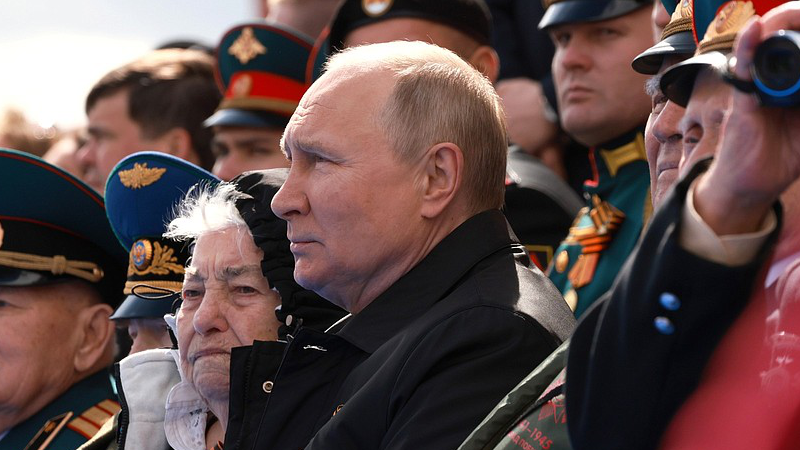
By Kirill Shamiev
“On a freezing winter dawn, a column of Russian troops moved through what the leadership in Moscow considered to be Russian territory. By midday, commanders were receiving alarming reports. In one town at the border, local fighters had stopped the column and burned and overturned 16 trucks. Later, another convoy was ambushed. Heavy casualties began to appear in the reports of military commanders. Soon, a special military operation that was supposed to be small and aimed at crushing an unfriendly political leadership turned into a long, bloody war with thousands of casualties that would change the Russian nation for years to come.”[1]
This story sounds remarkably familiar. But it is not from an early memoir of Russia’s invasion of Ukraine. It is how Russian general Gennady Troshev described the beginning of the first Chechen war in December 1994.
But past is apparently prologue. In 2022, Russian forces invaded Ukraine, a country that Russian president Vladimir Putin often implies is part of Russia. The plan was for the Russian military, supported by Russian intelligence agents, to quickly decapitate the government and occupy the Ukrainian capital of Kyiv. Within hours of crossing the frontier, the first reports of military setbacks and casualties began to roll in. In just a few days, it became clear that the most recent special military operation would in fact be yet another long, bloody war.
Nearly thirty years have passed, and yet the Russian government seems to have repeated the same old mistakes in its most recent war. Prior to the war, many analysts thought that the Russian military had finally reformed itself and put its past failures behind it. Yet, the Russian military significantly underperformed in Ukraine in almost every domain – strategic, operational, and tactical. It failed to achieve its objectives and demonstrated remarkably little progress in planning since the Chechen wars. The extent of its struggles and failures took many analysts, including some Ukrainians, by surprise.
The Russian leadership was no doubt somewhat perplexed as well. In 2000, Putin’s long reign began with military tragedy. Just three months after his taking office as president, the Russian nuclear submarine Kursk exploded and sank in the Barents Sea, killing the crew of 118 sailors. The outcry was so massive that Putin himself had to take part in a clearly uncomfortable conversation with the families of the dead sailors. He promised the grieving relatives a smaller, better-equipped, more technologically advanced military. He has since devoted great effort throughout his tenure to improving the Russian military.
The effects of this effort are clear. From the beginning of 2000 to the end of 2021, the Russian defence budget almost tripled, from $22.84 billion to $65.91 billion (in 2020 US dollars). In those 22 years, Russia spent over $1.1 trillion on the military, had three full-term ministers of defence and four chiefs of the general staff who oversaw three military reforms, a short war with Georgia, an intervention in Syria, and several smaller deployments in former Yugoslavia and the former Soviet republics. Yet, when that military was finally tested in a full-scale conflict, almost nothing appeared to have changed.
Both Russian government and external military analysts have struggled to understand this persistent Russian military failure. Arguably, the issue is that analysts have paid too much attention to measurable factors – weapons, technology, doctrine, and training – and have neglected the more intangible factors such as morale, skills and leadership, which defy easy measurement.
This paper seeks to fill that gap. It starts from the idea that an adequate assessment of Russian military effectiveness must involve two interdependent aspects: material capabilities and the more difficult to quantify factors that lie at the interface between the civilian authorities and the military. These include Russia’s political and administrative institutions, the social norms that regulate military conduct, and military culture, all of which enable the development and use of military force. The paper seeks to explain the role of intangible factors in the Russian military’s failures and to derive lessons from the Russian military’s experience in Ukraine.
The essence of Russia’s military problems stem from the imbalances in Russian civil-military relations and the dysfunctional system of civilian control of the Russian military. Under Putin, the Russian administrative state has ensured the political compliance of the military but, far from enabling better training and equipping of the Russian armed forces, it has often hampered their development and deployment.
During his first eight years in power, Putin was reluctant to argue with the military and failed to support and enforce the reform measures he announced. Later, however, the Kremlin over-centralised political and military decision-making and installed intrusive monitoring and flawed evaluation mechanisms. Such mechanisms only work when the civilians have sufficient expertise to judge the military activities, yet Russian civilian leaders have rarely possessed the necessary skills.
Worse, the civilian reforms failed to break up the competing institutional silos within the Russian security sector, nor did they improve the skills of servicemembers. The reforms undermined Russia’s pre-war material advantages and played a significant role in preventing Russia from achieving success in Ukraine. Even Putin’s complete backing could not save Russian defence policies from the influence of stakeholders in the Ministry of Defence who sought to protect their various institutional interests, nor was Putin’s support sufficient to improve the quality of civilian leadership in the development of the military.
Russia’s poor battlefield performance in Georgia triggered a series of radical reforms in 2008-2012. These changes did improve the Russian military, as demonstrated in the seizure of Crimea in 2014, the hybrid war in eastern Ukraine after 2014, and the operation in Syria after 2015.
But Russian civil-military relations, the all-important interface between the Russian military and the civil authorities did not see effective reform and glaring problems remained. Before the war with Ukraine, for example, the Kremlin and the Russian Ministry of Defence were not able to improve the human resource component of the military. Military officers lacked adequate training, including leadership and command skills, which undermined the adoption of innovative changes and the battlefield value of modern equipment. Ministry of Defence policies simply could not solve the military’s long-standing quality problems, such as unsatisfactory service conditions, intra-military brutality, corruption, waste, and poor tactical command and control skills.
A similar reform effort is likely after the war in Ukraine, given assessment of the Russian military emanating from a variety of voices, including pro-government Russian ones. Since 2022, many Russian servicemembers, military propagandists (voenkory), retired officers, and Russian analysts have published critical analyses and opinions on the state of the Russian armed forces. The technological revolution in open-source intelligence has provided valuable evidence of Russian battlefield performance, making a mockery of official Russian Ministry of Defence press briefings. Moreover, the sheer number of personnel and amount of equipment lost in Ukraine leaves little room for business as usual after the end of hostilities in Ukraine.
Such a mass of criticism on Russia’s war failures is unlikely to be dismissed by the political leadership in the Kremlin. They will attempt a reform. Previous experience demonstrates, however, that the ultimate outcome of any military reform will depend on improvements in Russian civil-military relations.
In fact, a few days before this report was released, the Kremlin appointed a new minister of defence, Andrei Belousov, dismissing Sergei Shoigu, who became the secretary of the Russian Security Council. Belousov has spent years in the Russian government and presidential administration overseeing the economic portfolio and before this he was an academic economist. Putin’s spokesman said Belousov was right for the job as the security services spend almost 7 per cent of Russia’s GDP, the military and civilian economies need to be better integrated. In the past, Moscow has appointed two previous ministers, Serdyukov and Shoigu, on a similar public pretext, but both of them simply implemented military reforms.
This paper seeks to understand how that reform might proceed. The first section examines Russian military effectiveness in Ukraine and proposes a framework for assessing the military’s performance. The second section explains how civil-military relations have affected Russia’s military effectiveness since 2000 and why so many challenges remain. Finally, the report concludes with the identification of key reforms in Russian civil-military relations.
Russian military effectiveness in Ukraine
“I couldn’t quite figure out what was going on, are we firing on the advancing Ukrainians? Maybe NATO? Or are we attacking? Who’s being shelled like hell? Where did the rocket artillery come from? The referendum in the LDNR? The seizure of Kherson? Is Ukraine attacking us? Is NATO helping it? Either way, we must have some kind of plan.” – Russian paratrooper Pavel Filatiev, a Russian army deserter describing the first day of the invasion.[2]
The full-scale invasion of Ukraine began on 24 February 2022. Russian forces entering Ukraine along four main routes: north, north-east, east, and south. The northern group invaded from Belarus and Russia, with the goal of taking over Hostomel airport and the city of Chernihiv. Possession of Hostomel and Chernihiv would have allowed Russian forces to surround Kyiv. The north-eastern group targeted Ukraine’s second largest city, Kharkiv. That city was supposed to be encircled, forcing Ukrainian troops to surrender. In the east, Russian forces and their Donetsk and Luhansk Republic proxies were to advance on the Donbas front. In the south, Russian forces would have split, occupying Kherson in the south-west and encircling Mariupol in the south-east.
So, there was a plan, but Filatiev was not alone in failing to understand it. The original strategy for the invasion was a high-risk operation and ended in failure. So profound was that failure that it effectively destroyed the pre-invasion Russian ground forces, forcing the Russian military to do what it has not done since the second world war: to reconstitute its forces with mobilised draftees, convicts, mercenaries, volunteers, foreign fighters, and to ban servicemembers from leaving the force.
Of course, a complex invasion of Europe’s second largest country could only be a monumentally difficult task. But it seems as if the Russian leadership did not really think it would be. Ukraine is about one-and-half times the size and population of Iraq (in 2003), Russia amassed at most 190,000 troops, compared to a US-led coalition force of 170,000 in the opening stage of the Iraqi invasion. Coalition ground forces advanced along a single major axis from Kuwait supported by 863 aircraft in the first month alone. Russia did it along five routes, without bothering to first achieve air superiority.
Ukrainian forces successfully halted the Russian advance, forced them to retreat from the north of the country, and by the end of October 2022, had liberated a large swathe of territory in the Kharkiv, Kherson, and Sumy regions. In response, Russia announced mobilisation, drafting up to 300,000 men, and formally annexed the Donetsk, Kherson, Luhansk, and Zaporizhzhia regions of Ukraine. The special military operation transitioned from there into a long war of attrition. Mobilisation soon created a new Russian military that had little to do with the pre-war Russian military Moscow sought to develop. From a semi-professional military force, Russia shifted to a mobilised structure with a complex mix of hundreds of thousands of personnel from a wide variety of different backgrounds and experience – professionals, draftees, volunteers, and convicts – all supporting the war effort.
This paper examines Russian military development before the full-scale invasion and its influence on the Russian performance in the first, pre-mobilisation, stage of the war. It seeks to understand why that pre-war Russian military development failed so spectacularly to create a military force and a military plan that could achieve the goals that Russian political leaders set.
Understanding military effectiveness
There are several analytical challenges in understanding military effectiveness. The first is that the effectiveness of armed forces is dependent on the context in which they are deployed. For example, the Russian operation in Syria was seen as relatively successful because the Russian military was able to achieve the military objectives of defeating terrorist groups and the Syrian rebels. The Russian contingent operated in a specific Syrian context in which its opponents had no air defence capabilities and the Syrian military, Russian mercenaries, military police, and special forces conducted ground operations. The lessons learned from the Syrian operation are thus not necessarily applicable to the war in Ukraine.
This paper adopts Risa Brooks’s approach to assessing military effectiveness, which does not depend on the specific battlefield context and focuses on the state’s capacity to use available resources for military development.Brooks defines military effectiveness as the ability of armed forces to generate military power using the resources of the state, such as wealth, technology, population size, and human capital.
In Brook’s definition, military effectiveness consists of four main attributes: integration, responsiveness, skill, and quality. An effective military is one that demonstrates high levels of these four qualities. The more integrated, responsive, and skilled a military is, and the higher the quality of its hardware, the greater its ability to leverage its basic resources for warfare.

Brooks’s framework recognises that the extent to which the government can develop its military effectiveness is determined in part by the nation’s institutions, cultural and societal norms, and social structure. Those societal features condition the influence of foreign and defence ministries, intelligence agencies, and military services, as well as the relations between those entities and political leaders in the policy process. The relations between those civil entities and the military or civil-military relations are, in Brooks’s schema a key determinant of military effectiveness.

The figure above represents the links between some of the elements of Russian military effectiveness. A lack of operational and tactical skills and necessary enabling equipment undermined Russian military performance in several key areas. The uneven level of organisational knowledge sharing and poor individual commander skills meant that Russian forces lacked the quality and organisational cohesion necessary to build a powerful military. This lack of cohesion in turn meant that Russian forces lacked the capacity to use their modern equipment effectively and led to the underdevelopment of intelligence, surveillance, and reconnaissance (ISR) capabilities.
The practical inability to organise complex high-intensity military operations (in contrast to scripted exercises), the lack of proper tactical training, and serious procurement difficulties at the first stage of the war led Russia to poorly integrate its operational plan and combat tactics with the Russian government’s loosely defined strategic objectives. The Russian military also struggled to conduct combined arms operations and integrate different levels of military activity. The lack of knowledge sharing and learning within the military about the Ukrainian armed forces, combined with the limited reconnaissance and delivery of information about Ukrainian positions, undermined Russian responsiveness. However, on the individual level, Russian forces demonstrated the capacity for improvisation on multiple occasions and a notable integration with Russian civil society.
The following section examines each of Brooks’s elements of military effective in greater detail.
Skill
In Ukraine, the Russian military demonstrated that often it had incoherent skills and use of equipment. Accordingly, to increase its military effectiveness, the Russian military is currently focusing on increasing its skills, its ability to respond and to adapt to its opponent’s revealed strengths and its own weaknesses, and replenishing military equipment. The effectiveness of this development depends in large part on Russia’s civil-military relations that can either enable the necessary changes or undermine the reform process.
One of the reasons why Western analysts tended to overestimate Russian military capabilities is the performance of the Russian military in yearly strategic exercises showcased to foreign observers and the media. Many observers saw mechanised combined arms warfare in large formations as a strength of the Russian armed forces, especially when compared to Western armies that had focused on counter-insurgency. In the war with Ukraine, however, the Russian army did not demonstrate this capacity.
The Russian military showed an uneven level of organisational readiness and individual commander’s preparedness. In the Russian military, it is the diligence and competence of commanders that determine the level of readiness of their units. The quality of Russian tactical command during the first year of the invasion was inadequate. Tactical command is typically the responsibility of junior officers and non-commissioned officers (NCOs), but it is also heavily influenced by the availability of support and signal capabilities. During the initial stages of the invasion, Russian soldiers often seemed unprepared and unprofessional, while their vehicles frequently broke down.
Most interviewees for the author’s research agreed that the problem of tactical command stems from the system of education and training in the Russian military. That system consists of two pillars: (1) command structure training and (2) service and unit combat training. Command structure training is aimed at all headquarters as well as individual commanders responsible for command and control and specialised functions. The combat (tactical) training system targets battalions and smaller units down to the individual soldier (individual combat training). The Minister of Defence signs the annual military training plan, which is a key planning document for all the levels of the Russian command and control system (services, formations, units, including companies and platoons). As a rule, commanders assess the results of the training from the annual exercises, examinations, and control inspections.
This system therefore depends on the willingness and ability of the officer commanding a unit to organise training, obtain the necessary equipment and look after the welfare of his soldiers. However, the system of military higher education institutions (HEIs) is largely outdated and controlled by service headquarters, undermining the skills of junior officers and the overall integration of the Russian armed forces. There is often a lack of merit-based appointments in the higher education system, and service headquarters often appoint senior officers as heads of departments and research labs simply because they have a few years left before retirement and are on good terms with service headquarters or the leadership of the HEI. Teaching practices are outdated and often result in the written handbook being read as a lecture and the cadets having to memorise the slides. There is no independent assessment system for either the faculty or the cadets, as the military has had a shortage of junior officers for many years and accepted everyone who passed the minimal fitness exams.[3]
When a cadet becomes an officer, they find the same or an even worse system of training in the troops. In some units, it is easier to falsify the training system and manipulate control exercises due to enormous red tape or bribe inspectors than to run a functional system of military combat training. This also undermines the morale of the soldiers, as honest and personally committed commanders may face inertia or even hostility from their fellow officers. Less honest officers who fail to provide the necessary support (for example, ammunition and medicine) may then shift the blame for a more realistic but, on paper, imperfect exercise result onto these committed officers. The Russian education and training systems and hence command and control systems lack what the Russians call fool proofing (zashita ot duraka) – the systems cannot detect and remove intellectually unfit servicemembers.
“For three and a half months there have been no training sessions, unless you count the pre-jump additional training. There is an atmosphere of apathy among the contract servicemen and 90% of them discuss in the smoking rooms how fast the contract would end. Conscripts do not understand why contractors serve at all. I also heard from a number of officers that they do not want to serve here.”– Paratrooper Filatiev about peacetime training in a Russian Airborne (VDV) regiment.[4]

The Russian military lacks monitoring and accountability mechanisms in combat as well, as the case of the commander of the 205th brigade demonstrates. In that unit, the brigade’s leadership made several serious mistakes and harassed lower-level officers, but the Ministry of Defence initially launched an investigation against the whistle-blowers who had revealed the problems. Only after several waves of criticism from pro-Kremlin military bloggers did the Ministry of Defence decide to move the commander to a non-command post in the general staff.
The poor quality of education in Russian military HEIs and generally near absent continuous training or knowledge sharing with acting servicemembers effectively halted any exchange of knowledge and learning about the Ukrainian armed forces within the Russian military. This was despite the fact that hundreds of Russian servicemen had already had combat experience in Ukraine prior to the full-scale invasion.
Moreover, for reasons of operational security, officers and soldiers were kept in the dark until just days or even hours before the operation. This secrecy may have achieved a degree of surprise, but it also undermined the readiness of Russian troops to go to war. Unlike in military exercises, Russian troops did not know the terrain, the real-time location of friendly forces, or the status of the adversary, including a hostile civilian population. The decision to keep knowledge of the special military operation so closely held led to a series of avoidable command and control errors, deconfliction problems, and logistical challenges for the Russian military.
As a result, when Russian forces faced resistance for the first time, they simply fell apart. Then, to compensate for tactical losses, Russian forces began to rely on their massive artillery capabilities, which criminally devastated urban areas and inflicted massive damage on the Ukrainian military and civilian population.
Responsiveness
Failing to anticipate the war they had begun, the Russians showed varying degrees of responsiveness. Overall, the Russian government and military demonstrated a limited awareness of Ukrainian strengths and weaknesses as well as Russia’s own internal limitations.
Strategic responsiveness depended on Putin’s willingness to adjust his political priorities. In the first six months of the invasion, the Kremlin seemed to hope to defeat the Ukrainian military and avoid a politically costly mobilisation. When this failed, Moscow did adjust its priorities and allow the military to change its plans, but only after many costly mistakes and delays.
In the first six months of the war, despite retreating from northern Ukraine and sustaining casualties, the Kremlin opted for a costly and protracted assault in five regions of Ukraine. It resulted in devastating losses. The Ukrainians successfully exploited the lack of manpower on the Russian side and quickly recaptured a large part of their territory in the Kharkiv and Sumy counter-offensives. In Kherson, the Ukrainians forced the Russian military to retreat across the Dnieper River.
On 21 September 2022, the Kremlin made, rather late, a decisive strategic move and partially mobilised Russian society. The situation was so dire for the Russian military that some mobilised personnel were quickly sent to the front with little or no military training. These draftees were untrained and suffered high casualties, but they helped the military stabilise the front and prevent further Ukrainian counter-offensives.
The Russian military also adapted its tactics and unit structure, reflecting manpower issues and the strengths of Ukrainian defences. Instead of heavy battalion tactical groups, Russian forces began to use adaptable assault units and detachments designed for fortified defences and urban warfare. The assault detachments rely on downscaled assault platoons supported by mortar and artillery fire. Moreover, the Russian military better integrated tactical drones and quadcopters into its companies and battalions, including mortar batteries and artillery divisions. This innovation improved Russia’s situational awareness and allowed its commanders to conduct better integrated operations.
The Battalion Tactical Group (BTG) was Russia’s main combat formation, based on a reinforced motor rifle battalion, prior to the all-out invasion of Ukraine. It comprises about 500-700 servicemembers with three to four motorised companies, tanks, air defence, artillery, reconnaissance, and support units. The conceptual idea behind the BTG was to create a fully self-sufficient formation capable of acting autonomously. It proved ineffective in Ukraine due to consistent manpower shortages, equipment losses, and communication problems.
An assault detachment is a small light infantry unit designed to conduct assaults on enemy positions. It is heavily equipped but lightly armored to prevent early detection and catastrophic losses due to anti-tank mines, artillery strikes, and missiles. The detachment can vary in size (from as little as three people to a squad of about 20 service members) but generally all of them are supported by artillery, mortar and fires from the rear during assaults.
Moreover, Russian military theorists now acknowledge that lightly armoured airborne forces are highly vulnerable to Ukrainian attacks that can negate any advantage in speed and lethality that the airborne forces are supposed to bring to the battlefield. They accordingly proposed a set of organisational and equipment changes. One is the experimental reintroduction of amphibious assault brigades within the combined arms armies, which the Soviet Union used extensively in Afghanistan for helicopter assaults into the enemy’s rear. Their role is to break the enemy’s defences in coordination with the frontal assault of the traditional motor rifle units.
Russian military commanders have also improved the military’s electronic warfare equipment, which jams Ukrainian military communications, missiles, and drones, including using civilian and privately made equipment. The Russian logistics support made adjustments, such as streamlining supply chains and relocating depots, which improved the delivery of basic critical resources, including the supply of artillery ammunition at the later stages of the war.
Russian volunteers and professional soldiers self-organised training in small unit tactics and tactical medicine for the mobilised personnel. The lack of institutional tactical medical preparation and the scarcity of official first-aid kits encouraged soldiers to seek support from civil society and organise knowledge-sharing within the unit. Even before the war, the Russian military had a poor reputation for medical care, with hundreds of soldiers contracting pneumonia every year.
Unable to provide the draftees with equipment, the Kremlin encouraged regional administrations and pro-government civil society organisations to purchase and supply non-lethal and dual-use equipment, such as tactical drones, night vision scopes, assault stocks, electric generators, radio stations, wheels, civilian 4×4 cars, combat apparel, and medical and personal protection equipment. Russian regional leadership and pro-war activists supported their mobilised compatriots (including via crowdfunding) and delivered the equipment to individual units on the frontline (see figure 3 below).
 Screenshot
The Russian civilian government reacted swiftly to the crisis overall. In response to the collapse of tactical medicine in the first months of the invasion, the Duma amended the federal laws “On Defence” and “On the Fundamentals of Public Health Protection in the Russian Federation” in July 2022. In particular, the amendment focused on improving the efficiency and effectiveness of first aid provided to the servicemembers in combat and ensuring their health and safety during the war. It formalised first aid procedures and made the Russian Ministry of Defence responsible for developing and approving the list of conditions requiring first aid, the rules for its provision, and the standards for equipping first aid kits, bags, and sets of medical equipment. It also delegated the power to develop and approve first aid training programmes to the Russian Ministry of Defence.
In the same month, the Duma amended several laws regulating military mobilisation, including economic mobilisation, as well as in the sphere of demining. The Russian government was authorised to take special economic measures, including temporarily activating mobilisation capacities and private sector facilities, unsealing the banks of reserve equipment and materials, and changing legal regulations governing labour relations in certain organisations, such as rules on overtime, overnight, and holiday work, and the granting of annual paid leave. The amendment obliged enterprises to execute government orders on the procurement of goods and services required for the special military operation, potentially improving the speed of equipment production.
To support the war effort and restore Russia’s defence sector, the Russian federal government also launched the Coordination Council for meeting the needs of the Armed Forces of the Russian Federation, other troops, military formations and bodies on 21 October 2022. Prime minister Mikhail Mishustin, the chairman of the council, claimed that it would deal with the issues related to meeting the needs of the military during the war, including setting performance indicators for the supply of weapons and equipment, budgeting, selection of suppliers and contractors, and the creation of specialised infrastructure. The main objective of the Council is to improve civil-military cohesion, by enhancing the co-operation between the healthcare system, industry, construction, transport and other spheres and to increase coordination between federal executive authorities, regions, and special services during the war with Ukraine.
One of the most consequential changes is the set of changes relating to the integration of volunteer soldiers and units. In November 2022, new amendments to the federal law on defence regulated the use of volunteer formations for specific defence tasks. They allowed the Russian president to integrate volunteer formations into the Russian Ministry of Defence and the national guard, including changing the composition, organisation, areas of operation, objectives, leadership, duration, and other operational aspects of volunteer units, which could eventually include both Russian volunteers and servicemen. Volunteers were required to take the military oath upon joining the formation.
The amendments provided volunteers with the same welfare benefits as the rest of the armed forces. It includes provisions for welfare guarantees and compensation for volunteers and their family members not less than that of servicemen of similar rank.These amendments integrated volunteer formations into the Russian defence sector, providing them with legal, financial, and social support similar to that of regular military personnel. Volunteer formations played an important role in supporting the war effort, as they employed ideologically committed individuals who were usually better trained and equipped than the Russian Ministry of Defence rank and file.
Finally, in June 2023, new amendments to the law on education expanded the scope of vocational education and training (VET) and higher education (HE) for mobilised servicemembers. They establish a framework for the development of additional VET programmes and allowed mobilised servicemembers to enrol in the VET and military HE programmes. The bill regulates the training of mobilised servicemembers in basic and supplementary VET and HE programmes in educational institutions operating under the Russian Ministry of Defence, the Prosecutor General’s Office, the Investigative Committee, the Foreign Intelligence Service, the Federal Security Service (FSB), and other federal executive bodies. These amendments will have lasting effects on the improvement of Russian military skills.
The legal developments in the Russian defence sector are, on the one hand, a symptom of how unprepared the Russian legal base was for a protracted military campaign. On the other hand, it shows that the defence system’s ability to react to the limitations and institutional problems is relatively functional.
Integration
Overall, the Russian military failed to integrate its strategic, tactics, forces, and intelligence. It struggled to maintain consistency in its operations and to create synergies between different levels of military activity. In terms of capabilities, the uneven levels of organisational and individual commander readiness indicate a lack of the organisational cohesion required to build a capable military, which is a critical aspect of military development.
Russia’s Achilles heel is the integration of intelligence and strategic assessment. Russia’s own doctrine has identified NATO as the primary adversary, emphasising the importance of rapid and widespread offensive action to overcome NATO’s superior combat capability. Russian planners have adopted a more focused approach to regional and local warfare, relying on targeted strikes rather than the large-scale ground operations typically carried out by the Soviet military. Russia’s doctrine holds that contemporary conflicts will involve:
- Massive use of weapon systems and military equipment, including high-precision, hypersonic weapons; weapons on new physical principles comparable in effectiveness to nuclear weapons (allegedly including non-nuclear electromagnetic pulse weapons); electronic warfare systems; information and control systems, as well as unmanned aerial and autonomous naval vehicles and guided robotic weapons.
- The ability to hit the enemy simultaneously in the global information space, in the air, in space, at sea, and throughout the entire depth of the enemy’s territory.
- Large-scale attacks on multiple, selected targets; rapid maneuver of troops and lethal weapons systems; and the use of various mobile groupings of troops.
Therefore, some analysts, including the author of this report, expected that Moscow would conduct an overwhelming artillery and missile bombardment of command centres, air defences, airfields, and critical infrastructure, such as grids and power stations, before launching the combined arms operation.
In the event, however, none of this happened. Russian strategic planners appear to have believed that the Ukrainian government would retreat or be betrayed by its own population, that resistance would swiftly collapse, and that Russian troops would be welcomed as liberators. In the leading Russian Ministry of Defence journal, Military Thought (Военная мысль), Colonel O.G. Tukmakov, a lecturer at the Russian general staff academy, acknowledged the poor quality of Russian intelligence in the war strategy. The available data, according to Tukmakov, “assessing the socio-political situation in Ukraine” did not fully correspond to reality:
“Instead of flowers and bread, as we expected, local residents of Russian-speaking areas met the rear columns of our troops with civil resistance. Additionally, information about the moral and psychological state of the Ukrainian Armed Forces proved to be incorrect. The supposed expectations of their unpreparedness for armed resistance and mass surrender were unjustified.”[5]
As the Chechnya vignette that opened this paper demonstrates, it is not the first time Russia has made this mistake.
In the case of Ukraine, investigative reporters claim that a small group of Putin’s trusted advisers and government leaders side-lined the general staff and drew up the invasion plan based on faulty assumptions and arbitrary political guidance. This may partly explain why the initial operation deviated from established principles of Russian military strategy and previous experience in eastern Ukraine, Syria, and annual combined arms exercises.
Both Chechnya and Ukraine illustrate the systemic problem with Russian intelligence and strategic assessment. In both cases, the political leadership in Moscow failed to read the adversary and Russia’s own limitations, which contributed to the unrealistic strategy and flawed launch of both wars.
The Russian intelligence services are critical to Putin’s hold on power, but they also control the president’s information flow. That position allows them to manipulate the evidence he receives. Various agencies such as the FSB, the foreign intelligence service, the federal protective service, and the main directorate of the general staff regularly report to the president and use this access to pursue their individual agendas, often tailoring their reports to Putin’s preferences. This manipulation of information serves as a powerful tool in shaping Putin’s decisions.
This problem is not uniquely Russian. Political decision-makers always need to critically assess incoming analysis and create institutions that reduce bias and improve the reliability of intelligence assessments. But in the Russian case, Putin’s politicisation of the intelligence services to ensure the security of his regime limits his capacity to improve the system.
Russian military integration also extended down into the initial forces that invaded Ukraine in February 2022. Despite the problems with intelligence and strategic assessment, the Russian military still vastly outnumbered and outgunned Ukrainian forces around Kyiv during the first stage of the invasion. However, the quantity of Russian forces did not transform into quality due to the problems with integrating ground and air operations in a mutually supportive way. Russian airborne forces spearheaded the first stage of the invasion by launching an air assault on Hostomel airport near Kyiv. However, the operation stalled due to the Russian inability to suppress Ukrainian air defences and artillery systems.
On several occasions, Russian ground forces shot down friendly attack helicopters and fixed-wing aircraft. Russian pro-war telegram channels complained about the lack of ability of the ground forces to “clear the corridor” for the air force by targeting and destroying Ukrainian SAM systems, such as Soviet-made Buk and S-300 systems, and then later Western-supplied equipment.
Early in the operation, Russian forces also had difficulty establishing effective logistical arrangements in a highly mobile offensive operation. This was exacerbated by a lack of trucks, which particularly affected units far from railways. The complexity of the campaign, involving multiple axes of advance, initially overwhelmed Russian logistics, leading to severe resource shortages for combat units.
During the retreat from northern Ukraine back into Russia and Belarus, hundreds of soldiers refused to return to the battlefield. The problem began to be felt in the spring and summer of 2022 when some officers began to put insubordinate soldiers in homemade cages next to the front line. Combined with high attrition, Russian units had only about 20 per cent of their expected manpower by September before the stunning Ukrainian counter-offensive in the Kharkiv region. With the announcement of mobilisation in September 2022, the Kremlin banned soldiers from leaving the military.
Symbolically, Putin appointed the head of the Main Human Resources Directorate General Viktor Goremykin as the head of the main Political-Military Directorate of the Russian Ministry of Defence in July 2022. He replaced General Andrey Kartapolov who had led the directorate from its inception in July 2018 to October 2021, when he became the Russian Ministry of Defence representative in the Duma. Neither Kartapolov nor Goremykin are specialists in military psychology, information warfare, or any other political-military related tasks. Goremykin, however, is a leading FSB representative (he graduated from the FSB Academy) in the armed forces, responsible for one of the pillars of civilian control – military education, recruitment, promotions, and appointments.
Goremykin served in the Main Human Resources Directorate from 2000 to 2022. Over the course of 20 years, he did not make any significant improvements to the education, recruitment, training, and appointment system in the Russian military, but he willingly carried out the wishes of all Russian defence ministers. He was replaced by General Yuri Kuznetsov, who had served in the security clearance directorate (the 8th Directorate, closely linked to the FSB) for many years.
Quality
The quality of equipment is also an endemic problem for the Russian military. Russia can design and develop modern equipment, but scaling up production is a daunting task for its government. Despite Russia’s military modernisation and improved capabilities, many technological advances, such as the T-14 Main Battle Tank or the Kurganets-25 Infantry Fighting Vehicle (IFV), have not been seen in combat. The Russian military had also lost key hardware, including anti-battery radars, T-90 tanks, and BMP-4 IFVs, which Russia is struggling to replace.
Yet, the key problem with the quality and availability of equipment was the lack of enablers used at the tactical and operational levels, such as night-vision and thermal imagers, intelligence, surveillance, target acquisition and reconnaissance equipment, encrypted and reliable communications systems, navigation equipment, mine-resistant and armoured recovery vehicles, and trucks with armoured cabins. Russian military scholars argue that reconnaissance was a crucial deficit given the high mobility and tactical autonomy of Ukrainian forces. Russian forces lacked awareness of the battlefield and the ability to quickly self-organise in a changing environment. The low quality of command at the first stage of the invasion that the report described above made the equipment shortage effects even more acute.
Despite Russia’s military modernisation and improved capabilities, most Russian soldiers used obsolete Soviet-era equipment. For example, Russian war-bloggers claimed that before the war, a Russian reconnaissance unit within a regiment on average had a few surveillance radars, binoculars, Soviet-era BRM-1k Korshun, and laser rangefinders. The Ukrainians also gradually shot down or jammed division- and regiment-level drones, such as the Orlan or Supercam, leaving the over-centralised Russian command structure practically blind. This blindness led to devastating tactical losses when Russian troops were ambushed by assaults as they attacked concealed Ukrainian positions.
Russian missile and cyber-attacks were not significant enough to have a strategic impact on the course of the war. The Main Computing Centre, a special unit of the general staff, determines cruise missile targets based on multiple sources of information, including satellite reconnaissance. However, space satellites are a weak spot of the Russian military. Their utility has been very limited, especially in terms of detecting moving objects and movements of the Ukrainian forces. Therefore, the accuracy of missile and air strikes remained limited due to poor reconnaissance, Ukrainian air defence, and technical malfunctioning.
On the other hand, the Russian (and Ukrainian) militaries quickly adapted to each other’s technological advantages on the battlefield. Russia dispersed its command posts and logistical hubs to avoid being hit by long-range precision strikes, and began producing guidance modules for its air-dropped munitions (UMPK), modernized its long-range missiles with electronic countermeasures and flares, began production of first-person view (FPV) drones, and procured Chinese tactical drones, radios, tactical vehicles and personal protection equipment.
As described above in the responsiveness section, thanks to crowdfunding and civilian donations, Russian forces received more rangefinders, including thermal scopes, fixed video cameras with night and thermal vision, listening devices, digital navigation tools, and tactical radars. Russian civil society also supported frontline units with first aid kits, cars, scopes, body armour, communications equipment, and anything else that could be bought on the civilian market.
However, the Russian government has yet to make systemic changes to improve its military procurement system and integrate the needed equipment into the official composition and training of the armed forces. As usual, a lot hinges on individual commanders and specialists in the Russian military while the Ministry of Defence and its subordinate organisations can hardly catch up with the adversary’s and its own field-level innovations.
Civil-military relations in Russia
This review shows that Russian military effectiveness remained quite low during the all-out invasion of Ukraine, especially during the initial stages. The obvious next question is why did a general awareness of persistent problems and serial reforms to solve them fail to improve Russian military effectiveness?
The answer is that Russia’s lack of military effectiveness in Ukraine is, to a large degree, the product of unbalanced civil-military relations. At the heart of civil-military relations is the need to ensure that the military, as an organisation designed to “break things and kill people,” remains under civilian control while retaining the autonomy necessary for making professional military judgement and improving military effectiveness.
Russian civil-military relations have been complicated since the fall of the Soviet Union. There was no coup, or even a military coup attempt in that period despite a fairly autonomous military. Throughout the post-Soviet period, the civilian leader, be it Yeltsin or Putin, has maintained full political control of the armed forces, but that did not always translate into effective civilian leadership.
Russia’s lack of strong civilian leadership of the military is at the root of its military effectiveness problem. Strong civilian leadership does not guarantee successful reform, but it is a necessary condition for reform to happen. The quality of political leadership defines as the extent of committed support among key decision makers for a particular policy solution to a specific problem. In the Russian case, the president needs to appoint key decision-makers such as the defence minister and his deputies, including the chief of the general staff. These officials should share a common understanding of a problem, have incentives and sufficient resources to act, and sign off on official reform programmes, including monitoring and evaluation criteria for assessing results.
Sometimes, strong civilian leadership has to reduce the autonomy of its armed forces to force through necessary changes, other times it needs to increase it. Regardless, an autonomous military under weak civilian leadership will protect its institutional preferences too effectively, undermining military responsiveness to internal constraints and the dynamic external environment, as happened during the first eight years of Putin’s rule. A subservient military under weak civilian leadership is a stagnant force but if it doesn’t experience the test of combat, it can still satisfy the needs of the civilian leadership.
As the shown below, over this period the various Russian defence ministers oscillated between creating an autonomous military and more a subservient model. But in all cases the persistent lack of civilian leadership ensured that reform could not succeed.
Russian civil-military reform challenges
A prime example of a consistent problem with civilian leadership is the inability of the Russian government to solve the persistent problems in the Russian defence sector that revealed themselves yet again during the first year of the invasion. The tactical command of the Russian military was always deficient, mainly due to the limited skills and number of junior officers and NCOs, but also hampered by inadequate support and signal capabilities. Military officers and external analysis frequently criticised Russian poor situational awareness and organisational adaptability in the post-Soviet period. The lack of skills limited the military’s ability to maintain operational consistency and synergy between different units and undermined military cohesion.
Russia struggled to produce and integrate advanced military equipment and technologies, such as night vision goggles, battlefield integration systems and encrypted communication devices, due to limitations in its manufacturing infrastructure and electronics supply. The Russian military industrial complex and its lobbyists in the government actively resisted any attempts to import this equipment from abroad before the full-scale invasion. These deficiencies contributed to low morale and a general inability to engage effectively in the conflict.
However, the military was neither able to reform itself for most of its years, nor was it eager to give away its prerogatives in defence matters. Despite Putin’s success in building a personalist autocracy and crushing any dissent, the Russian armed forces have successfully protected themselves from what they see as excessive civilian influence.
In part because his presidency began with the Kursk disaster, Putin made military reform a key part of his overall effort to reform Russian governance. The Russian Defence Ministry initiated military reform in 2001, with the aim of improving Russia’s military capabilities in two main phases over the next eight years.
“We would always like more,” Putin said, disagreeing with the Ministry of Defence at his annual press conference, December 2003, “because today there are still many problems in the organisation of this work. Imagine: agreements on military contracts are usually signed in June, and only at the end of the year they start to disperse money under these contracts. Shipyards have already felt these injections, the Navy has given orders, but I don’t understand about aviation. Modern warfare is primarily about aircrafts, and the Ministry of Defence has put aviation in eighth place in its list of priorities.”
The original reform goals sound remarkably similar to what Russian officials will need today. Reform was supposed to improve the quality of combined arms operations, optimise command and control structures, and overhaul recruitment and mobilisation processes. However, there was a lack of consensus between the military leadership and the defence minister on reform priorities, with the former preferring rearmament and improving the socio-economic conditions of the troops before addressing structural changes within the armed forces.
Ultimately, the government lacked the capacity and resources to implement the necessary changes. The reform faced serious setbacks, including bureaucratic resistance, limited resources and resistance from the military elite. The then defence minister Sergei Ivanov was reportedly indecisive and reluctant to actively push the reform process. In addition, Putin avoided expending his political capital on radical reforms that risked alienating conservative segments of Russian society.
In response to the challenges of the first attempt at reform, the Kremlin shifted its strategy to increase civilian control and reduce military autonomy. During the 2004-2008 period, political authority over the military was increasingly centralised, fostering a culture of political compliance within the officer corps. Putin initiated the practice of appointing civilian defence ministers, thereby strengthening civil-military coordination and distancing the general staff from the presidential administration. These measures laid the groundwork for more comprehensive military reforms in the next phase. On the other hand, the reduction of military autonomy contributed to the decline of the Russian Ministry of Defence’s organisational evolution and increased the important of civilian expertise and skills in defence affairs.
Radical reform in the 2007-2012 period
The 2007-2012 reform implemented radical structural changes that made future investment in military equipment more fruitful. It was driven by the deteriorating condition of the armed forces, lessons learned from the conflicts in Chechnya and Georgia, and previous unsuccessful attempts at reform since the collapse of the Soviet Union. The reform generated unprecedented opposition from the officer corps. Service members resigned en masse, and some retired officers even dared to criticise the defence minister and the president.
In late 2007, for example, defence minister Anatoly Serdyukov and President Dmitri Medvedev decided to move the headquarters of the Russian Navy from Moscow to St Petersburg. The move was actively opposed by former chief of the general staff Yuri Baluyevsky (2004-2007) and many naval officers. In early 2008, a group of former navy chiefs, their deputies, and fleet commanders wrote a letter to Putin opposing the move. They argued that the move would cost at least 40-50 billion roubles (circa $1.5 billion), deprive the fleet of funds to build ships, and destroy the command system, including the strategic nuclear forces of the fleet. In April 2008, navy chief of staff Vladimir Vysotsky said the move had been postponed indefinitely. The “indefinite” period lasted until April 2011, when the move to St Petersburg began. But the civilian leadership wasted three years trying to overcome military opposition.
The reform included a mix of important achievements and shortcomings that has had lasting effects on Russia’s military effectiveness, including in Ukraine. The decision to downsize the military from a Soviet-style mobilisation-based model to a leaner, more agile and permanently ready force was aimed at enhancing the operational effectiveness of the armed forces and making them more responsive to the fast-paced nature of modern warfare. In addition, by strengthening the role of the general staff in operational and strategic planning while at the same time reorienting service headquarters towards force development and peacekeeping roles, the reform aimed to create a more efficient command and control system. The reorganisation of military districts into joint commands further supported an integrated approach to military command across the services.
However, the ambitious reform of the military HEI, designed to modernise curriculums and align officer training with modern combat requirements stalled. The next defence minister, Sergei Shoigu, ultimately partially rolled back some of the changes. The HEI failed to adopt an evidence-based methodology for assessing the effectiveness of training. Serdyukov’s attempt to bring more civilians in the military HEI also failed as former military faculty members simply resigned and re-applied as civilians. Moreover, social and welfare reforms fell short of fully fulfilling housing promises and eradicating the systemic problem of toxic military culture, abuse, and hazing.
The Russian Ministry of Defence failed to implement some changes because of the opposition inside the military and other security agencies that ultimately led to Serdyukov’s resignation. Yet Serdyukov’s commitment to making changes in the military and the strong administrative power of the minister of defence in Russian civil-military relations did enable a partial success of the reforms. The minister was still the main decision-maker in the military and Serdyukov appointed an obedient but administratively savvy chief of the general staff general, Nikolay Makarov, who willingly executed the Russian Ministry of Defence’s decisions. However, Serdyukov’s coalition of reformers was too small and consisted only of very high-level officers and ideological supporters of the minister in the public council that made his position weaker as the mistakes with the military reform accumulated.
The façade of reform under Shoigu
Serdyukov’s successor, Sergei Shoigu, took over in 2012 and changed the style of the civilian relationships with the military. That change included the allocation of significant responsibilities to the new chief of the general staff Valery Gerasimov, while the Ministry of Defence focused on managing large financial investments and improving oversight mechanisms. Gerasimov’s task was to work towards achieving reform objectives within the military as he saw fit.
Still, Shoigu represented the armed forces in the broader government structure, lobbied for the necessary decisions and resources, and enhanced his oversight mechanisms. The realities of better pay for the troops and a successful operation in Syria provided convincing arguments that conditions had indeed improved in the military.
During Shoigu’s tenure, the Russian Ministry of Defence’s investments efforts included programs to improve command and control mechanisms, spur rearmament and advance military science. Shoigu created the National Defence Management Centre, under the leadership of army general Mikhail Misintsev, for the purpose of centralising operational command and streamlining decision-making processes within the armed forces. At the same time, major rearmament initiatives poured billions of roubles into procuring new equipment, particularly in the air force and the navy. In addition, Shoigu directed that military science efforts should focus on research and development in high-tech military equipment. General Oleg Ostapenko (the former space forces commander) became the first deputy minister for this sector. A year later he was replaced by Shoigu’s colleague General Ivan Popov from EMERCOM, the Russian emergency response ministry.
The current military doctrine, adopted in 2014, has redirected Russian military development towards greater centralisation of control over the military. As noted, it emphasises the need for the integration of information operations and strikes throughout the depth of the enemy’s territory, including in the aerospace and information domains and with the use of externally funded political forces and social movements.
To do that, the Russian Ministry of Defence opted for costly police control-style oversight of the military. As public reports on the manning of units and hiring of all-volunteer soldiers showed, the intrusive oversight failed to solve internal military problems. Despite growing salaries and better service conditions, the Russian military struggled to fill open positions and to increase the size of the all-volunteer force. The pace of changes has slowed down under Shoigu. And, years after Shoigu became minister of defence, the Russian Ministry of Defence still has not improved military discipline and eradicated hazing and abuse.
For example, private Ramil Shamsutdinov shot and killed eight fellow soldiers in 2019 because, he alleged, they had hazed him and threatened him with sexual violence. The crime sparked outrage in Russia, but the military and members of the Russian parliament were quick to blameprivate citizens and even video games for the shooting. The armed forces have not publicly discussed the systemic causes of the crime, and the story has gradually faded away.
The authorities tend to blame such crimes, as well as poor performance in exercises and other incidents on the failure of an individual soldier, rather than a problem worthy of systemic review. Commanders tend to quickly find a scapegoat, who may or may not be objectively responsible for the incident and close the case.
The unreformed and outdated military education and training system is ill-equipped to (re-)educate young Russian conscripts and improve their command skills and behaviour. The brightest and the fittest young Russians do not tend to join the military. The richer sections of society from Russia’s largest cities could avoid service with the military, while the poorer social classes had to serve and were usually more dependent on defence-related procurement and industries. However, the official response of the armed forces has always been to scapegoat civilian officials for failing to raise and educate patriotic young Russians who would then willingly join the military.The Russian military has struggled to adapt itself to the nation it supposedly serves by moving away from the conservative, overly centralised organisational culture inherited from the USSR.
Old versus New
The Russian military has for years been locked in this competition between a more horizontal and networked approach to military development and the conservative tradition of centralised control and the use of mass force. Part of the problem stems from the organisational concept of the Russian military which has as its cornerstone obedience to the commanding officer and his orders. Russian officers have the unilateral power to determine the future of their subordinates, from the general staff down to the platoon level of command. They are the ultimate decision-makers on promotions, bonuses, days off, and duties.
On the one hand, this tradition ensures strict adherence to orders, leaving little room for subordinates to appeal. On the other hand, the Russian military fosters toxic obedience, where the commander is always right. It encourages superficial compliance and flattering behaviour, undermines thoughtful leadership, unit cohesion and ultimately the quality of command. It creates a snowball effect in the assessment of capabilities in which soldiers, from first sergeants all the way up to senior generals, will only provide positive reports to superiors rather than real, objective, and sometimes critical information. The culture of personalised obedience ultimately also inhibits organisational learning and institutional development in the Russian military.
Excessive obedience also undermines the ability of civilians to control Russian soldiers’ behaviour on the battlefield. Since the war in Chechnya, there have been numerous reports of indiscriminate bombing, artillery attacks and human rights abuses in the areas of Russian military operations. Every military commits human rights abuses at times, but the military in Russia has never been seriously reprimanded for its behaviour. The rule of law means little in Russian public affairs, but it has been particularly weak in holding military personnel accountable for their crimes, including against civilians and their own comrades. The Russian military still has considerable capacity to protect its own from being held accountable for crimes and abuses.
Russia and its military state
Most of the problems exposed by the Russian military in Ukraine are not new. They have been visible and discussed since the collapse of the Soviet Union, but the Russian state has made little progress in solving them. Russia frequently demonstrated poor integration of its operational plan and combat tactics with loosely defined strategic objectives, failed to properly train and prepare its troops for war, and suffered serious procurement difficulties. These problems were widely recognised and discussed by Russian military theorists in the Russian Ministry of Defence official magazines.
One of the main reasons for Russia’s slow military development is civil-military relations. On the one hand, Russian politicians have found it difficult to get the military to do what they want. Despite the growing power of the regime, Putin has been unable to overcome the military’s objections to the reforms he has initiated over the past 22 years. For the first eight years, the Russian military enjoyed substantial military autonomy and disagreed on the priority and sequencing of changes. A brief period of intrusive and forceful imposition of orders in 2008-2012 brought much resistance, criticism, and avoidable mistakes that ultimately removed an unpopular defence minister from office.
Developments since 2012 appear to have improved the balance of power between civilians and the military. However, the lack of functional monitoring and evaluation mechanisms (as opposed to intrusive oversight), the lack of civilian expertise in defence sector development, coupled with the lack of investment in military education and training, and the early successes in eastern Ukraine and Syria, blinded Russian military reform.
The appointment of the new minister of defence will not make this task easier. To implement the necessary changes, Belousov will have to build his own team by appointing new deputy minsters of defence. The positions of first deputy for financial and economic work, state secretary for government relations, and deputies for the logistical support, will be crucial for streamlining his work and ultimately delivering the results. These officials will be spearheading the management of the military’s gigantic financial flows and adapting the Russian legal system to the military’s needs. They will also have to establish positive working relationships with the general staff and military-industrial representatives who may lack either the skills or willingness to reform the system.
As an outsider to the military world, Belousov is likely to rely on the chief of the general staff to enforce his reform aspirations among the military. It is difficult to find a suitable candidate for this position as this general should be highly experienced in managing (in headquarters) and commanding (in the field) the military and possess little political ambition. The current chief, Valery Gerasimov, has already spent more than a decade serving as the chief of the general staff, which is a record in Russia’s post-Soviet history. He may not be up to the scale and quality of the tasks that Belousov will have to undertake. To curtail military autonomy, Belousov may need a younger and obedient chief with war experience.

The level of military autonomy determines how loyal the military is in implementing civilian decisions. Too much military autonomy creates the need for a very capable and professional civilian leadership, otherwise autonomy may produce a disloyal military that threatens the reform efforts and can potentially endanger the entire state.
The quest for loyalty in Russia has a cascading effect. If the Kremlin wants a loyal minister and chief of the general staff that would limit the military autonomy, they will seek to surround themselves with loyal senior military officers and Russian Ministry of Defence officials. That high command then prefers reliable subordinates who will always carry out its decisions, who then logically look for similarly obedient more junior officers and officials. In the end, the natural desire to surround oneself with trustworthy supporters contributes to the vicious circle of finger-pointing and false reporting as everything depends on the decision of the ultimate commander.
On the other hand, a completely autonomous force under weak civilian leadership can potentially threaten the state, as Yevgeny Prigozhin’s mutiny demonstrated. Prigozhin’s private military company, Wagner, developed informally and outside the official defence sector and its regulations. It became a highly autonomous paramilitary group whose leadership challenged the Russian state. Clearly, the correct balance of military autonomy is crucial for ensuring a loyal but functioning military.
The war with Ukraine has naturally produced thousands of highly experienced soldiers and commanders in the Russian military. This means that the Kremlin now has a large pool of qualified military personnel who can potentially significantly improve the Russian military. The level of expertise in the Russian high command and Russian Ministry of Defence leadership will determine whether the next reform addresses the key components of military effectiveness. However, improving the education and training system in the Russian military will require decisive institutional changes, a radical overhaul of the personnel system, and decades of stable military development to improve Russian military culture. Even if the veterans of the war in Ukraine can replace some commanders at several levels, institutional changes without a chance of civilian leadership would be a challenge for Russia.
Even experienced military commanders need reliable information about adversaries and new military developments, as well as evidence of their own troops’ readiness. The quality of monitoring and evaluation determines how well the Russian Ministry of Defence can identify problems, monitor implementation, and evaluate the results of reforms. The proliferation of information about the Russian military partially solves this problem, but the outcome of the war with Ukraine will determine whether this evidence will be about a defeated or victorious military.
A Russian defeat in Ukraine without regime change in Moscow would make radical reform more likely, while a success would more probably postpone significant changes in the military again. Regardless, Russia will require strong and effective civilian leadership that can tolerate but also control military autonomy to find balance in civil-military relations and improve its military effectiveness. Will Putin’s new term bring this?
Russia has never had that type of civilian leadership in the post-Soviet period. Paraphrasing a Russian idiom, Russian leaders speak with Suvorov’s flair, but their actions rarely match his daring.
- About the Author: Kirill Shamiev is a visiting fellow with the Wider Europe programme at the European Council on Foreign Relations. He focuses on Russia’s civil-military relations and domestic politics and policymaking. Shamiev left Russia in 2017 and completed his MA and PhD at the Central European University. He currently also works as a senior research consultant with European Commission tenders related to public administration and security topics.
- Source: This article was published by ECFR
- Acknowledgments: The author would like to acknowledge the support of the ECFR Wider Europe programme, Jeremy Shapiro, the editors, and Nastassia Zenovich for their invaluable help in preparing the report. The author is grateful to the participants (in chronological order) of the BASEES conference (Cambridge, United Kingdom), the PONARS online conference, the Biennial Conference of the Inter-University Seminar on Armed Forces and Society (Reston, Virginia), and the guests and hosts of the many seminars and workshops in Europe and the United States.
- Methodology: The report relies on interviews, memoirs, laws, and public speeches of military and civilian elites. In three waves of interviews in 2018-2021, the author spoke to 36 former politicians, officers, and officials, as well as civil society activists. The majority of interviewees were born in the 1960-70s, while most civilians represented the 1970-80s generation. Some civil society members interviewed were involved in the political process during the 2000-2012 period. However, the interviews themselves have limited explanatory power for current events because the interviewees were expressing their views on events that happened in the past. Therefore, the author used memoirs, media articles, and laws to supplement the interview data.
[1] Author’s translation
[2] Author’s translation
[3] Author’s interviews with civilian and military officials involved in defence policymaking in 2018-2021, Moscow, Russia
[4] Author’s translation
[5] Author’s translation
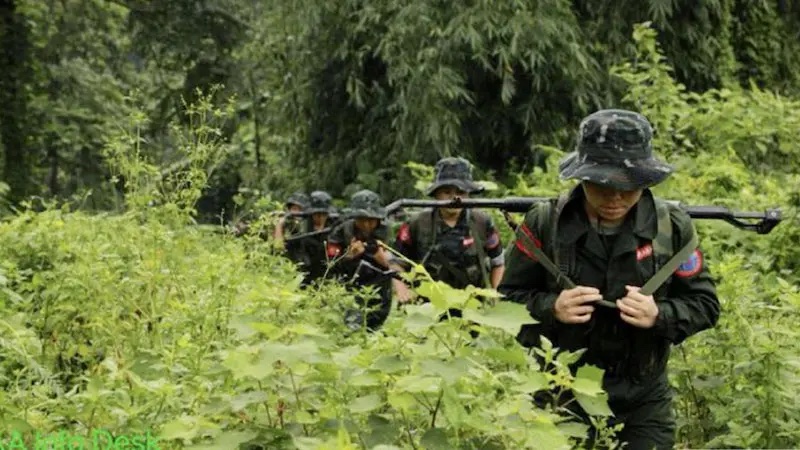
By Nicola Williams
Australia’s former foreign minister Julie Bishop takes on a challenging role as the recently appointed UN Secretary-General’s Special Envoy on Myanmar. To avoid joining the high-level graveyard of UN envoys, diplomats and ASEAN leaders who have tried and failed to negotiate with the junta, she must remember the lessons learnt from over a decade of international peacebuilding and failed mediation efforts.
Bishop should avoid advocating for high-level track-one negotiations to solve Myanmar’s civil war. There is no bargaining range for talks between the junta and the broad resistance, as both sides seek decisive military outcomes and have entirely different visions for the country. Considering Myanmar’s experience with multi-stakeholder peace negotiations with the junta involved, this approach is unviable, even in more ‘ripe’ times for bargains. Track-one negotiations are generally only feasible at the tail end of many track-two peace processes across multiple years and different issues or, potentially, for a victor’s peace when the military is significantly weakened.
Focussing on the subnational conflicts within Myanmar’s national conflict and ethnic relationships within the broad federal democracy movement embedded within the resistance will be more effective. This could involve looking at contests over territory and identities in the hotly contested Shan State and workshopping what the federalism puzzle could look like in one of Myanmar’s most complex ethnic landscapes. The approach may also tackle challenges among political stakeholders with legitimacy claims and ‘turf’ contests. In any strategy, it is wise to go bottom-up rather than top-down.
Another lesson Bishop should keep in mind is the importance of sequencing initial meetings to build trust and multiple stakeholder engagement strategies. Learning from recent efforts by ASEAN leaders, it is crucial that the UN Special Envoy does not rush to meet the junta in Myanmar. First, she should meet with leading Myanmar and regional stakeholders outside the country. This includes the exiled National Unity Government, Myanmar civil society and political leaders, ASEAN leaders, Western counterparts, the Chinese and Japanese Special Envoys and refugees. There is also a suggestion to avoid pictures with all parties to the conflict, but particularly the junta, to prevent being used in propaganda campaigns. Setting up flexible back channels will also be key for managing relationships and the risks of disinformation around the UN Special Envoy’s office.
Bishop should also work behind the scenes to improve Myanmar’s humanitarian response system, including through local non-government aid delivery. The conflict is not ending anytime soon and may only worsen as strategic sites are fought over, as was the case with the Myawaddy border town capture and recapture in April 2024. Addressing the bureaucratic challenges and politics surrounding the UN’s humanitarian role requires decisive senior leadership and new approaches to reaching conflict-affected communities through local aid providers, including elements of the resistance and ethnic armed groups that provide services where the government no longer holds territory.
The UN’s new envoy should work in concert with ASEAN while pursuing a separate approach that goes beyond standing on the sidelines to offer mediation to the junta. It is also vital that the UN Special Envoy provides something different to China’s illiberal peace efforts, which narrowly targets stability along the China–Myanmar border through opaque ceasefires with limited peace dividends. Convincing ASEAN and Chinese partners that Myanmar’s junta offers no path towards stability is critical for building better region-wide strategies that involve the federal democracy movement and move beyond crisis mitigation.
The Special Envoy must not blow any oxygen into the junta’s pretence that the previous peace process between Myanmar’s centre and its ethnic armed organisations (known as EAOs) is still progressing. This process is dead. Even before the 2021 military coup, it spent years on life support. Nothing could be more symbolic of the death of a peace process than the military ousting one of the parties to the peace negotiations — the democratically-elected government — and then jailing, exiling or executing elected officials. There is simply no junta-led peace process to continue building on and assuming otherwise is a strategic pitfall and will likely lead to political backlash.
Bishop should not push all conflict parties toward a multilateral ceasefire agreement as a pathway to initiate dialogue. This approach has not worked given the recent failed attempts at a nationwide ceasefire and scores of broken bilateral ceasefires. It is important to get a handle on Myanmar’s long history of ceasefires and how the junta has historically used and abused these instruments. Beyond temporary subnational pauses negotiated since the 2021 coup, discussing a substantive ceasefire instrument among conflict parties is likely best placed if and when the military is significantly weakened and once there is political agreement for a transition.
Finally, the new Special Envoy should ambitiously and cautiously carve out a new role as a third-party actor in Myanmar’s civil war, distinct from regional leaders and even former UN Special Envoys on Myanmar. Powerholders within the federal democracy movement and the military have previously struggled to effectively use external support, managing their issues with limited and cherry-picked interventions. But the war and multiple crises since the coup, including the Rohingya genocide, have spilled into the region and are far beyond internal management.
A new approach is needed that learns from years of failed peacebuilding and mediation interventions and works diligently in the interests of the Myanmar people, the significant majority of whom crave a bright future without brutal military rule.
- About the author: Nicola S Williams is PhD Candidate at the Crawford School of Public Policy and Board Member at the Myanmar Research Centre, The Australian National University. Nicola is an international development professional with experience in conflict resolution and governance.
- Source: This article was published by East Asia Forum
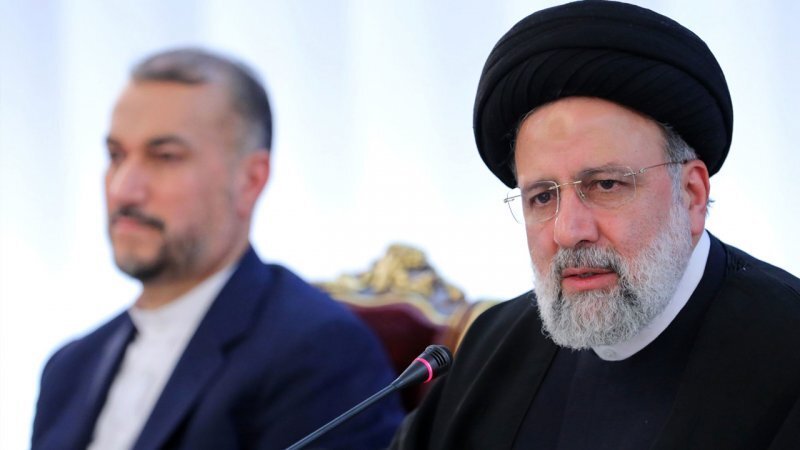
(RFE/RL) — Even as Iran declared a period of mourning following the deaths of President Ebrahim Raisi, Foreign Minister Hossein Amir-Abdollahian, and others in a helicopter crash, the country moved forward and set June 28 as the date for an election to determine Raisi’s successor.
Iranian authorities also said the funeral procession for Raisi will be held in Tehran on May 22.
The announcements came as Iranian Supreme Leader Ayatollah Ali Khamenei declared five days of mourning after the bodies of Raisi and Amir-Abdollahian were found at the site of a helicopter crash in northwest Iran.
Meanwhile, Washington said for the first time that Tehran had asked for U.S. help in the helicopter incident but that it was unable to provide assistance, mainly due to logistical reasons.
State Department spokesman Matthew Miller did not specify how the request was made or the nature of it. The United States and Iran do not have diplomatic relations.
Iranian state television on May 20 said the helicopter had crashed due to poor weather conditions. It was unclear how many people were on board the helicopter when it went down.
Khamenei also named First Vice President Mohammad Mokhber as interim president. Iranian law stipulates that if the president dies, power is transferred to the first vice president.
A council consisting of the speaker of parliament, the head of the judiciary, and the first vice president must arrange for a new president to be elected within 50 days.
Deputy Foreign Minister Ali Baqeri Kani was appointed acting foreign minister, Iranian state media reported.
Iran’s state-run IRNA news agency said the governor of East Azerbaijan Province and other unspecified officials and bodyguards were aboard the ill-fated aircraft.
Foreign governments on May 20 issued expressions of condolence and solidarity. Lebanon announced three days of mourning to honor Raisi. Russian Foreign Minister Sergei Lavrov said Raisi and Amir-Abdollahian were both “true, reliable friends of our country.”
Hamas, which has been designated a terrorist organization by the United States and the European Union, issued a statement of condolence and thanked Raisi for his “tireless efforts in solidarity” with the Palestinian people.
The United States, a bitter rival of Iran – and which had imposed financial sanctions on Raisi when he was head of Iran’s judiciary in 2019 – also offered its condolences.
“The United States expresses its official condolences for the death of Iranian President Ebrahim Raisi, Foreign Minister Amir-Abdollahian, and other members of their delegation in a helicopter crash in northwest Iran,” the State Department said in a statement.
“As Iran selects a new president, we reaffirm our support for the Iranian people and their struggle for human rights and fundamental freedoms.”
The White House, meanwhile, had harsh words for Raisi, saying he had “blood on his hands” for supporting extremist groups in the Middle East.
U.S. national-security spokesman John Kirby told reporters that “no question, this was a man who had a lot of blood on his hands.”
European Council President Charles Michel issued a statement of “sincere condolences,” adding “our thoughts go to the families.”
Search-and-rescue teams, aided by several foreign governments, had been frantically searching for the helicopter after it went down in bad weather conditions in a mountainous area of the country late on May 19.
Some activists criticized the EU for assisting in the rescue operation of a leader who has been accused of overseeing major human rights abuses.
But EU Commissioner for Crisis Management Janez Lenarcic defended the move on May 20, saying that by providing satellite mapping services to Tehran, Brussels was acting “upon request for facilitating a search and rescue operation” and was not “an act of political support to any regime or establishment.”
“It is simply an expression of the most basic humanity,” he added in a post on X.
Raisi’s helicopter was on its way to the city of Tabriz when it went down near the city of Jolfa in what state television said was a “hard landing,” but several news reports quoted government sources as saying the helicopter crashed as it crossed a mountainous and forested area.
The bodies from the helicopter that crashed were severely burned, but not beyond recognition, according to the head of Iran’s Crisis Management Organization, Mohammad Hassan Nami. He said DNA tests were not needed to confirm the identities of those killed in the crash.
He added that Ayatollah Mohammad Ali Al-e Hashem, who served as Khamenei’s representative in East Azerbaijan Province, survived the crash initially and remained alive for about an hour before he died.
Nami said that, during that time, Al-e Hashem had made contact with Raisi’s chief of staff by phone. He did not reveal any further details.
The Iranian government said the helicopter was one of three flying in a convoy, and the other two reportedly landed safely in Tabriz.
The ultraconservative Raisi and Amir-Abdollahian had been in Azerbaijan earlier on May 19 to inaugurate a dam with Azerbaijani President Ilham Aliyev, who said on X that Azerbaijan was “profoundly troubled” by the news that Raisi’s helicopter had gone down.
Raisi was elected president in 2021 and has since tightened many restrictions on Iranians through enforcement of morality laws and a bloody crackdown on anti-government protests spurred by the death of Mahsa Amini while in police custody for allegedly violating the code on head scarves.
He has also pushed hard in nuclear talks with world powers while also allowing the country to markedly increase its uranium enrichment program.
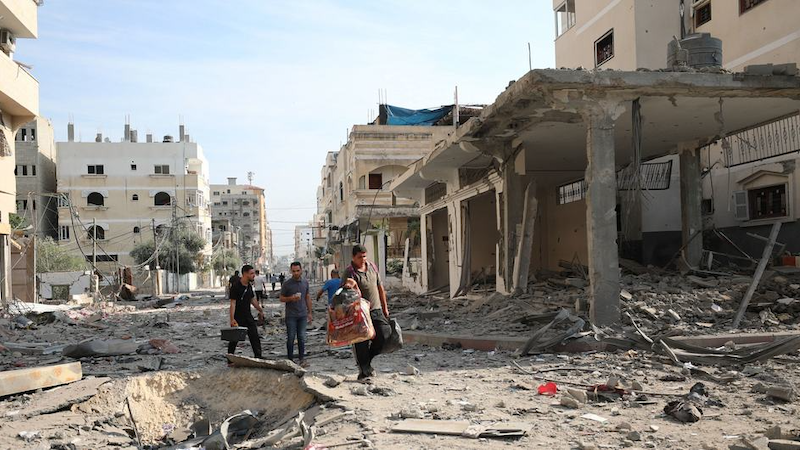
This is part two of a two-part series that explores developments autocratic Arab rulers and US policymakers ignore at their peril. This two-part series explores developments autocratic Arab rulers and US policymakers ignore at their peril. This two-part series explores developments autocratic Arab rulers and US policymakers ignore at their peril. The series is based on an essay published in Horizons. Part 1 looked at the region as a whole as well as Hamas’ standing in Gaza eight months into the war. Part 2 focuses on the war’s potential fallout in Jordan, Saudi Arabia, and Egypt.
******
US President Joe Biden doesn’t fit the mould of a high-risk gambler.
Yet, gambling is the crux of his velvet glove dealings with Israel. With one eye on Israeli politics and the other on presidential elections in the United States in six months, Mr. Biden is walking a tightrope.
It goes without saying that the Palestinian issue touches many across the Greater Middle East.
Israel and the world’s inability or unwillingness to help Palestinians secure their rights and Palestinians’ sense of not being accorded the dignity and respect accorded to others mirrors a quest for recognition and dignity across the region.
Take Syria.
Returning this year to her home country for the first time in more than a decade, BBC journalist Lina Sinjab noted that Syria “is sinking into poverty, and many ordinary people are desperate. ‘There is no light at the end of the tunnel,’ they say. It has become normal to see families sleeping in the street and others digging food out of rubbish bins, while in other areas, a high-class lifestyle reminiscent of the swankiest parts of London or Paris continues unchanged.”
Grinding poverty keeps thousands of children out of school and forced to work in northwestern Syria. Across Syria, more than 43 per cent of children do not go to school, raising the spectre of a generation left behind.
Eleven-year-old Ahmad Amro and his family of ten fled the city of Aleppo in 2016. Since then, their home has been a tent in Syria’s northwestern Idlib countryside, a region with an 88.74 per cent unemployment rate ravaged by war and a 2023 earthquake.
Ahmad dreams of “wearing school clothes to go to school.” Instead, he and his older brother, Abdo, who has never attended school, struggle to make ends meet by helping their father sell daffodils.
With children like Ahmad and Abdo across the Greater Middle East staring at a bottomless abyss of despair and hopelessness, the question is not if but when and how simmering frustration and anger will boil over.
“The Gaza war is stirring up every radical movement across the Middle East. Its recruitment potential against the US and Israel is enormous & will have repercussions for decades,” tweeted Middle East scholar Joshua Landis.
Mr. Landis noted that Osama Bin Laden first conceived of the 11 September 2001 Al Qaeda attacks on New York and Washington in 1982 when he watched US-built F-16 fighter jets carpet bomb Beirut during the Israeli invasion of Lebanon.
For now, much of the threat of renewed revolts and militancy may be more bluster than real.
Iranian-backed Iraqi militants asserted in April that they stood ready to arm 12,000 fighters of the Islamic Resistance in Jordan that would open a new front against Israel.
Abu Ali al-Askari, a Kataib Hezbollah security official, suggested Hamas and Palestinian Islamic Jihad’s assessment that all Jordanian militants needed was access to weapons inspired the offer.
There is no evidence of an Islamic fighting force in tightly controlled Jordan despite mounting
public anger at the Gaza war, a limited number of border incidents, and indications of attempts by Jordan’s Muslim Brotherhood affiliate, Hamas, and Iran to exploit the fury, and in some cases smuggle arms from Jordan into the West Bank.
Against the backdrop of 22 per cent unemployment, Jordan’s Brotherhood affiliate, the Islamic Action Front, hopes escalating pro-Hamas protests in Jordan will favour it in general elections scheduled for later this year.
Earlier, Kataib Hezbollah said it would work with partners in Bahrain and Saudi Arabia to enable militants to strike at “any point in West Asia where the Americans exist.”
A close US ally dependent on American economic and financial aid with a peace treaty with Israel, Jordan walks a tightrope with more than half of its population of Palestinian descent. Jordanian participation in the shooting down in April of a barrage of Iranian drones and missiles fired by Iran at Israel has increased the tightrope’s tension.
Similarly, Hamas leaders have sought to capitalise on pro-Palestinian sentiment and Jordan’s vulnerability.
“We call on our brothers in Jordan, in particular, to escalate all forms of popular, mass, and resistance action. You, our people in Jordan, are the nightmare of the occupation that fears your movement and strives tirelessly to neutralize and isolate you from your cause.,” said Hamas military spokesman Abu Obeida.
Senior Doha-based Hamas official Khaled Mishaal, who survived an Israeli assassination attempt in Amman in 1997, told a women’s gathering in Jordan in a video address that “Jordan is a beloved country, and it is the closest to Palestine, so its men and women are expected to take more supportive roles than any other people towards the land of resistance and resilience.”
While Jordan is unlikely to emerge as a significant venue for militant resistance against Israel, escalating Baloch and Islamic State violence in Iran, a country in which widespread discontent regularly spills into the streets, and the adjacent Pakistani province of Balochistan is an indication of potential explosions of popular discontent and/or militancy.
Wealthy Gulf states see the writing on the wall. They worry that simmering public frustration and anger in much of the Middle East threaten regional stability, and, with it their economic diversification and development plans.
“Islamist groups want to benefit from (the ongoing protests in Jordan) …and reproduce the ‘Arab Spring’ revolutions again,” warned Saudi journalist Hassan al-Mustafa. “Volatility in Jordan would pose a direct threat to Saudi Arabia’s own national security,” said Abdulaziz Sager, head of the Gulf Research Council and a scholar with close ties to the Saudi government.
Signalling Gulf concerns, Salah Al Budair, the Medina Grand Mosque’s imam, asked God in a Ramadan prayer to protect Muslim countries “from revolutions and protest.”
Wealthy Gulf states may be better positioned to pacify their populations but are not immune to the region’s undercurrents.
Saudi Crown Prince Mohammed bin Salman has sought to bolster Saudi national identity to cushion the impact of rapid social change that has sparked concern among some conservatives and those who fear they may be left behind.
“Whilst there is widespread support for the Vision, there are concerns about the pace of change, as well as the perception that to date, there has been an over-emphasis on elite interests,” said Mark C. Thompson, a Saudi-based social scientist and recent convert to Islam, who has long tracked the evolution of Saudi youth attitudes towards Bin Salman’s Vision 2030 economic diversification and development plan.
Mr. Thompson noted that “the significance of Saudi Arabia’s two primary identity narratives, namely, Islam and family, have only changed incrementally regardless of post-2030 transformations… The danger is that Vision-related transformations might be weak in the face of much stronger traditional values, and, consequently, the rapid social changes could vanish just as quickly precisely because they have not become deep-rooted within Saudi communities.”
The social scientist cautioned that most foreign Saudi watchers based their analysis and conclusions on interactions with members of the Saudi elite who would have the most to lose if social change were to falter.
Mr. Thompson quoted a Western-educated Saudi consultant saying that most Saudis “would not be affected greatly” if the entertainment sector failed.
The fact that Saudi elites are the greatest beneficiaries of Mr. Bin Salman’s reforms means that most Saudis, concerned primarily about jobs, cost of living, affordable housing, and healthcare, often only benefit at best partially. To benefit more fully, they would have to have what the elite has: wasta or clout and connections.
The risk for Mr. Bin Salman is that the reforms widen the kingdom’s already yawning income gap, cast further doubt on the integrity of the crown prince’s anti-corruption campaign, and undermine widespread support for his vision.
In addition, small and medium-sized enterprises and their employees feel they are often excluded from participation in Vision-related projects favouring large and well-known family enterprises. As a result, young Saudis with lesser family backgrounds and education become drivers rather than executives when they migrate from the provinces to the cities.
Saudi Arabia and the United Arab Emirates may be one-man-ruled autocracies, yet their leaders are sensitive to public opinion to varying degrees. “I know that the Saudi government under MbS (Mohammed bin Salman) has put in a lot of effort to actually do its own public opinion polls… They pay attention to it… They are very well aware of which way the winds are blowing on the street. They take that pretty much to heart on what to do and what not to do… On some issues, they are going to make a kind of executive decision… On this one, we’re going to ignore it; on the other one, we’re going to…try to curry favour with the public in some unexpected way,” said the late David Pollock, a Middle East scholar who until recently oversaw the Washington Institute for Near East Policy’s polling in the region.
The problem for rulers like Messrs. Bin Salman and Bin Zayed is that their rule’s moorings could be called into question by a failure to deliver public goods and services that offer economic prospects. At the same time, social reforms needed to bolster development go hand in hand with undermining the authority of religious establishments. Increased autocracy that turns clerics and scholars into regime parrots has fuelled youth scepticism toward political elites and religious institutions.
For rulers like the Saudi crown prince, the loosening of social restrictions – including the disempowerment of the kingdom’s religious police, the lifting of a ban on women’s driving, less strict implementation of gender segregation, the introduction of Western-style entertainment, and greater professional opportunities for women, and, in the UAE a degree of genuine religious pluralism – are only the first steps in responding to youth aspirations.
Determined to contain public sentiment, Saudi authorities, in contrast to the UAE and Qatar and despite official condemnations of Israel’s Gaza war conduct, have cracked down on expressions of solidarity such as the donning of keffiyehs, the chequered head scarf symbolizing Palestinian identity, T-shirts with Palestine emblazoned on them, and the waving of Palestinian flags.
In the same vein, Egypt, a nation that perennially pulls back from the brink of economic disaster with the help of band-aid foreign financial injections, has largely banned public protests and criticism of the country’s ties with Israel.
Egyptian general-turned-president Abdel Fattah Al-Sisi fears that pro-Palestinian demonstrations could expand into domestic protest as has happened in the past.
The ban was imposed after pro-Palestinian demonstrators gathered In Cairo’s Tahrir Square, an icon of the 2011 popular Arab revolts that toppled four leaders, including Egypt’s Hosni Mubarak, reverted to chanting the uprisings’ common slogan, ‘Bread, freedom, social justice!’
“The Palestinian cause has always been a politicizing factor for Egyptian youth across generations,” noted Hossam el-Hamalawy, a prominent Egyptian journalist, photographer, activist, and author of a weekly newsletter.
“In fact, for many Egyptian political activists — whether those who led the (2011) revolution or were involved in earlier protests — their gateway into politics was the Palestinian cause. The 2011 uprising in Egypt was literally the climax of a process that started with the second Palestinian intifada a decade earlier… The more this war (in Gaza) drags on, the more likely it is that something might happen,” Mr. El-Hamalawy added.
An end to the war may lower the temperature and take the immediate sting out of public anger, but the drivers of discontent, including the quest for dignity, remain unaltered.
Even worse, the fault lines have hardened. The Middle East and North Africa are populated by the harshest rulers the region has witnessed since its various constituents became independent. Repression in countries like Egypt, Saudi Arabia, and the United Arab Emirates is at an all-time high. The Gulf states go to great lengths to ensure that others in the region mirror their suppression of any form of dissent.
Despite a worldwide clamour for a two-state resolution of the Israeli-Palestinian conflict with the establishment of an independent Palestinian state alongside the Jewish state, hardened Israeli attitudes towards the Palestinians mirror Arab crackdowns on dissent.
Israel has moved from de facto recognition of Palestinian rights to outright denial but was for decades willing to go through the motions of a peace process.
Storied former Israeli Defence Minister Moshe Dayan was brutally honest when he spoke in 1956 at the funeral of an Israeli farmer, brutally murdered by Palestinian militants.
“Let us not cast blame on the murderers. For eight years, they have been sitting in the refugee camps in Gaza, and before their eyes, we have been transforming the lands and the villages where they and their fathers dwelt into our estate,” Dayan said.
“Let us not be deterred from seeing the loathing that is inflaming and filling the lives of hundreds of thousands of Arabs living around us. This is our life’s choice—to be prepared and armed, strong, and determined, lest the sword be stricken from our fist and our lives cut down,” Dayan added.
Dayan’s comments frame United Nations Secretary-General Antonio Guterrez’s statement seven decades later that Hamas’ October 7 attack on Israel did not happen “in a vacuum,” particularly with Israel’s occupation of Palestinian lands since 1967.
They also frame the disregard for the lives of others and their own that have been put on public display in Hamas’ targeting of civilians and brutality on October 7 and its risking of the lives of innocent Palestinian civilians during the war as well as Israel’s relentless devastation of Gaza at enormous human cost and its failure to prioritise the release of hostages held by Hamas.
Said an Arab human rights activist: “Gaza is the pinnacle of the Middle East’s disdain for life and the dignity of individuals. It’s disregard on a massive and unprecedented scale. It’s disregard that underwrites autocracy in the region. It’s disregard that ultimately will spark an explosion, even if it’s impossible to predict when, where, and how.”