Categories
South Caucasus News

India And Russia In Central Asia: Opening The Doors Of Perception – Analysis


India And Russia In Central Asia: Opening The Doors Of Perception – Analysis

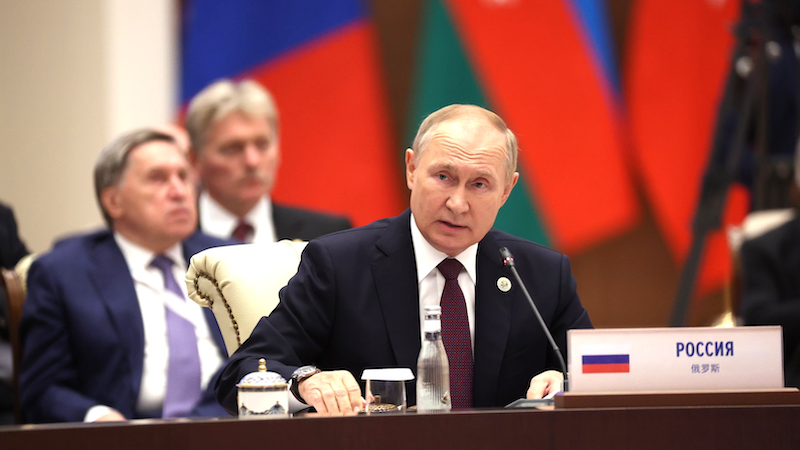
Russia's President Vladimir Putin at meeting of the Shanghai Cooperation Organization (SCO) Heads of State Council. Photo Credit: Kremlin.ru

By Ivan Shchedrov

Political pundits while analysing India’s foreign policy tend to examine its implementation in the Indo-Pacific region, where after the economic liberalization, the traditional cultural sphere of influence has been supplemented with economic imperatives. However, the keen interest in the Indo-Pacific maritime spaces may lead to a state of myopia, since other regions of the “extended neighbourhood” may often be overlooked.

One of them is Central Asia, which is of strategic importance for India’s security. In recent years, we witnessed an augmented political engagement in Central Asia’s political process by India, driven by the withdrawal of the American troops from Afghanistan in 2021. The increased interest is evidenced by the India-Central Asia Dialogue and the recently conducted First India-Central Asia Summit in 2022. The second meeting is anticipated to be held this year.

The intertwined political structure 

In 1995, an Indian-born Professor at Columbia University, Jagdish Bhagwati, coined the term “spaghetti bowl” while depicting the framework of US preferential trading arrangements. It means interweaving and complexity of economic preferences between its trade partners.

Similarly, today’s political and economic landscape in Central Asia is marked by the existence of numerous formats in political and economic spheres—the Shanghai Cooperation Organization (SCO), Eurasian Economic Union (EAEU), Commonwealth of Independent States (CIS), Collective Security Treaty Organization (CSTO), Organization of Turkic states (OTS), Central Asia + formats, and some of specific mechanisms such as Regional Security Dialogue of Afghanistan and Quadrilateral and Coordination Mechanism (QCCM). At the same time, there is no mechanism which unites the five Central Asian states— Kazakhstan, Kyrgyzstan, Tajikistan, Turkmenistan, and Uzbekistan—as a single political entity.

The socio-economic conflicts between regional countries condition the existence of the numerous formats, which precludes them from acting as pioneers for regional integration. Moreover, the current political structure confirms the enduring interest from big powers, which recognise the strategic role of Central Asia as a source of energy resources, transit routes, or culturalhub.

Russia perceives the region as a natural sphere ofinfluence.. The Concept of foreign policy of the Russian Federation of 2023 highlighted the strategic role and importance of CA states, especially in the context of regional integration and collective security—the CIS was proclaimed to be of paramount importance for security, stability, and territorial integrity of the Russian Federation. The document pays considerable attention to cooperation with India, especially focusing on expanding trade, investment, and technological ties between the two countries. In light of the prevailing geopolitical dynamics, it can be asserted that the partnership between India and Russia will be focused on several tracks—a) engagement in SCO; b). development of INSTC; c). collaboration in digital development and energy partnership; d) engagement in Afghanistan-related issues.

Nevertheless, today’s cooperation between India and Russia in Central Asia can be called “high-echelon” as it concentrates only on engagement within multilateral structures while leaving out joint economic projects.

Political factors: The Shanghai Cooperation Organisation  

Russia advocates for the bolstering of SCO influence, both in terms of its geographical reach through its membership expansion and its political stature by broadening the number of topics under discussion. Thus, the country supported the inclusion of India (and Pakistan) in 2017 despite China’s apprehensions and reluctance. India and Russia uphold similar ideas regarding the role of the SCO as a dialogue platform and a tool for enhancing security but at the same time, the importance of the structure in the foreign policy calculations of the two countries varies.

Russia perceives the SCO as an important platform in terms of security, whereas India sees it as a tool for maintaining a political presence in the Eurasia region. The discrepancy derives from the confines of political manoeuvres in the organisation faced by India and caused by a political confrontation with China and Pakistan. Russia does not share India’s apprehensions regarding China’s dominant role in the SCO. Furthermore, some fears were voiced regarding the possible diminishment of the organisation’s efficacy, especially within the Regional Anti-Terrorist Structure (RATS), due to existential disagreements between India and Pakistan.

It is widely acknowledged that China sees the SCO as a mechanism for extending its economic influence in Central Asia, but for both India and Russia, security concerns prevail. Things may change in the near future. India is now viewed as a potential counterweight to China’s economic expansion, and the inclusion of Iran as a ninth member of the SCO could potentially broaden its economic agenda, particularly concerning the development of infrastructure projects within the INSTC. In this regard, the 10-year contract to develop and equip the strategic Chabahar port inspires some optimism.

Economic cooperation: EAEU and INSTC 

The Asian vector of Russia’s foreign policy is deeply intertwined with the formulation of a so-called “Greater Eurasian” partnership. Although the essence of the term remains somewhat opaque, particularly concerning the mechanisms of its implementation. The objectives are still articulated in an aspirational manner—to “transform Eurasia into a cohesive intercontinental realm characterized by peace, stability, mutual trust, development, and prosperity”. The concept primarily pursues economic objectives, representing a consistent advancement towards a network of free trade zones and international trade-economic alliances.

In trade and economic matters, Russia and India have two main points of convergence—collaboration within the framework of EAEU trade cooperation agreements and the development of the INSTC.

India’s trade policy exhibits a marked level of protectionism, both in terms of tariffs and non-tariff barriers. The average customs duty under the Most Favoured Nations (MFN) regime has increased from 13.4 percent to 18.1 percent from 2016 to 2022. A reduction of India’s import duty due to the FTA agreement with EAEU could serve as a pivotal lever to enhance Russian exports of chemical industry products, sunflower oil, coal. India, on the other hand, can increase exports of pharmaceuticals, agricultural products, leather goods, machinery and equipment, and textile.

However, the lofty expectations are tempered by practical realities. Firstly, amidst international pressures, the negotiations may undergo protracted delays and the outlook could be clouded by apprehensions from the Indian business community. Secondly, the trade deficit will likely increase. Thirdly, the primary concern of the inefficiency of extant trade and logistical routes. Without the solution to logistics problems, the impact of the agreement may be nominal. Moreover, the sabotage on the Nord Stream gas pipeline in September 2022 underscored the vulnerability of critical transport infrastructure, prompting calls for enhanced security assurances.

Conversely, it’s plausible that it could lead to concluding an FTA that would catalyse the development of the INSTC. Put differently, the imperatives of business interests in expanding trade volumes would propel logistical advancements, with mutual benefits serving as the linchpin for long-term project efficacy. An example of this perception may be found in the signing of the FTA between EAEU and Iran in late 2023. After the Ukrainian conflict, the interest in the projects remained unabated, displayed by the visit of India’s Foreign Minister S. Jaishankar to Iran this January and Russia’s signing of some tangible agreements with the Islamic Republic. Furthermore, the question of concluding a free trade agreement between India and the EAEU has received a new impetus as the parties have announced the resumption of talks.

Russia views the INSTC as instrumental in advancing Central, Volga, and Caspian regions, while integrating Russian ports with major international trade arteries. The corridor is poised to emerge as a viable alternative to the Suez Canal, potentially reducing delivery times and transportation costs by 30-40 percent. Politically, Russia aims to sideline non-regional actors in the Caspian region and forge a strategic counterbalance to competing projects like the Middle Corridor (TMTM) and the Transport Corridor Europe-Caucasus-Asia (TRACECA), to offset the logistic endeavors under the Belt and Road Initiative (BRI).

Conclusion 

Russia views India’s burgeoning role in Eurasia with optimism, both politically and economically. Despite reservations surrounding India’s QUAD participation, Russia acknowledged India as a crucial partner within the SCO and a significant player in the Greater Eurasian Partnership. The deepening political ties between India and Central Asian nations are mostly unnoticed by Russian political elites, while the expert community allocates relatively scant attention to India’s Central Asian stance. This is attributed to India’s modest trade and economic clout and a narrow pool of Russian specialists on India. Nonetheless, India’s potential to fortify its trade and economic foothold in both Russian and Central Asian region is recognised. Should this materialise, it could ignite discussions on India’s role as a favourable alternative to Chinese economic expansion, albeit the scale and the pattern will be determined by several factors.


  • About the author: Ivan Shchedrov is a Visiting Fellow at the Observer Research Foundation
  • Source: This article was published by the Observer Research Foundation

Categories
South Caucasus News

Economics As A Universal Science – OpEd


Economics As A Universal Science – OpEd

people crowd culture

By Wanjiru Njoya

It is often argued in “decolonization” debates that each culture must find its own path to economic progress. In this context, the idea of inclusive economics is that building a diverse society requires economics to take account of “power relations, oppression, qualitative changes in social relations and . . . most importantly, the role of colonialism and the slave trade.” It is claimed that unless those factors are considered, economics will remain mired in a “thoroughly Eurocentric understanding of economic laws [seen to] operate in a universal manner across the world.”

This should be understood in the broader context of multiculturalism and the idea that all cultures are equal: “The central premise of the multiculturalist credo, after all, is that all cultures are created equal. To judge other cultures by Western standards is unforgivably ethnocentric.” From this, multiculturalists deduce that all civilizations are equal, and no economic principles are better than any others. For example, development economists like Peter Bauer who defend private property and argue that certain cultural attitudes impede economic progress are said to have no lessons applicable to the third world.

In presuming that economic principles vary from one culture to another, multiculturalists reject the idea that economic principles are universal. In Human Action, Ludwig von Mises argues that economics should be understood as “a part, although the hitherto best elaborated part, of a more universal science, praxeology.” Mises asserts that all human beings are guided by the same human motives, namely “to struggle successfully for survival and to use reason as the foremost weapon in these endeavors.” He gives the example of the struggle against illness and suffering: cultures that lack the advances of Western medicine would not “renounce the aid of a European doctor because their mentality or their world view led them to believe that it is better to suffer than to be relieved of pain.” If people fail to achieve their goals—in this example, where they lack advances in medicine—that failure does not signify that they have different motives from those making such advances but simply indicates that they have failed to achieve important goals to which they aspire. Mises therefore views praxeology as “a general theory of human action” rather than being narrowly applicable to certain cultures in specific historical and cultural conditions.

As David Gordon points out in “Hermeneutics versus Austrian Economics,” this understanding of economics as a set of general universally applicable principles is not confined to Austrian economics: “But Austrians are of course not the only economists who believe in the external world: the neoclassicals, however freely they allow unrealistic hypotheses, have no doubt that a real world exists outside their equations, against which they propose to measure the predictions ensuing from their version of economic theory.”

The Errors of Polylogism

One importance of holding economic principles to be universally applicable in understanding the external world lies in avoiding the pitfalls of polylogism. Pierre Perrin defines polylogism as follows: “Polylogism is an epistemological view based on the proposition that the logical structure of the mind is substantially different between human groups. It thus implies that the logical laws of thought (i.e., the law of noncontradiction, modus ponens, etc.) are different between groups to which individuals belong.”

For example, polylogism holds that logic varies according to race, sex, culture, or class. It treats economic reasoning as dependent on a thinker’s personal identity, from which it follows that economic principles are a matter of choice or preference that vary from one identity group to the next. Perrin observes that although progressive thinkers may not explicitly describe their theories as polylogistic, nevertheless they implicitly adopt that worldview in treating scientific theories as entirely socially and culturally constructed: “The relativist variant involves the impossibility of any universal social science (i.e., explanations of principles independent from particular circumstances of time and place).”

Identity politics builds further on these polylogistic theories by insisting that “your truth” varies from “my truth” based on our personal identities and that this ought to influence the construction of diverse and inclusive economies.

In Defense of Science

Identity politics and progressive “all cultures are equal” relativism are part of a wider denial of the universal nature of science. The idea now prevails in academic circles that the natural sciences are Eurocentric and ought to be deconstructed to permit “other ways of knowing.” The “decolonize the curriculum” movement denies the existence of science as a set of objective and universal principles or facts.

For example, biological sex is now treated as a mere preference or philosophical belief that one can choose to believe in or not. Hence, the so-called gender-critical feminists declare that they believe women exist. In a recent survey of two hundred scientists at British universities, 29 percent “agreed with the statement sex is not binary”—on a poll, they chose what they believed to be best rather than what is scientifically correct in an objective sense. That implies that the existence of women is not an objective fact but a subjective belief, or as some feminists frame it, it implies that “objective facts” are optional notions that anyone is free to “believe” in or not. It would be the equivalent of saying “I believe in gravity” or “I agree with gravity,” a fallacy that Thomas Sowell exposes in Is Reality Optional?.

These examples illustrate that Mises is right to place the denial of the universal nature of praxeology, the science of human action, in the wider context of the revolt against science. This means that the defense of praxeology is part of a philosophical defense of science itself. He argues:

Such [polylogistic] doctrines go far beyond the limits of economics. They question not only economics and praxeology but all other human knowledge and human reasoning in general. They refer to mathematics and physics as well as to economics. It seems therefore that the task of refuting them does not fall to any single branch of knowledge but to epistemology and philosophy.

  • About the author: Dr. Wanjiru Njoya is a Scholar-in-Residence for the Mises Institute. She is the author of Economic Freedom and Social Justice (Palgrave Macmillan, 2021), Redressing Historical Injustice (Palgrave Macmillan, 2023, with David Gordon) and “A Critique of Equality Legislation in Liberal Market Economies” (Journal of Libertarian Studies, 2021).
  • Source: This article was published by the Mises Institute

Categories
South Caucasus News

How Resilient Is China’s ‘World’s Factory’ To Supply Chain Shifts? – Analysis


How Resilient Is China’s ‘World’s Factory’ To Supply Chain Shifts? – Analysis

By Marina Yue Zhang

The Yiwu International Trade Market in Zhejiang, China, is a sprawling 4 million square metre housing complex over 75,000 shops. As the 2024 Paris Olympics approach, it has been a hive of international trade, with merchants rushing to fulfil Olympic-related orders.

The market is currently abuzz with French-themed products catering to the Olympic fever. Yiwu’s exports to France soared by 42 per cent in the first two months of 2024 compared to the previous year, reaching nearly 75 million euros. Sports goods exports surged by 70 per cent. This reflects China’s robust manufacturing capabilities and pivotal role in global supply chains.

Most products traded in Yiwu’s market belong to labour-intensive light industries, such as textiles and consumer goods manufacturing. In 2023, these products accounted for over 40 per cent of Yiwu’s export value and 52 per cent of its export growth. Despite global supply chains shifting towards countries like Vietnam, the share of labour-intensive goods in China’s total exports has only slightly decreased, from 18 per cent in late 2017 to17 per cent in 2023.

Yiwu’s robust production performance reflects China’s broader shift from real estate to manufacturing investment. In the first quarter of 2024, China’s industrial production rose by 6.1 per cent and manufacturing investment increased by nearly 10 per cent against a 5.3 per cent GDP growth rate.

While China delivers affordable products globally, overcapacity has increased geopolitical risks and trade tensions, highlighted by Xi Jinping’s recent European trip, aimed at mitigating these tensions. China’s industrial utilisation ratio dipped below 75 per cent in early 2024, the lowest since 2016 — excluding 2020 at the outbreak of COVID-19 — revealing potential resource waste.

Yiwu’s export resilience is fuelled not just by its low-cost products but also by a sophisticated network of information exchanges and collaborative production across enterprise boundaries. Its rapid production and delivery capabilities allow it to handle small orders efficiently. This flexibility starkly contrasts with large manufacturers, which rely on highly organised, large-scale production. As the nexus for foreign buyers and a wide range of suppliers, mainly small- and medium-sized enterprises, Yiwu demonstrates unique organisational skills that enable quick and cost-effective production tailored to specific orders.

Yiwu’s production and delivery capabilities are anchored in its extensive industrial clusters, which foster both cooperation and competition among closely located enterprises. These clusters are organised around Yiwu’s 78 industrial parks, which are home to over 4500 small and medium enterprises (SMEs). These SMEs are bolstered by the local government provisions of digital tools, flexible production technologies and support services, complemented by the application of production standards by industrial associations.

Yiwu demonstrates China’s capacity for large-scale collaborative production involving multi-layered supply chains. Though export revenues from products like lighters may seem modest, their production is underpinned by complex supply chains incorporating over 30 components, including materials, precision moulds and electrical automation. With rising labour and material costs, maintaining cost competitiveness requires innovation. This necessitates not only high-precision machine tools but also robust coordination to meet diverse production and safety standards.

Large-scale coproduction also has application in other industries. Companies like SHEIN, an emerging fast fashion brand, have revolutionised the sector, outpacing traditional players like Zara. Unlike Zara, which relies on in-house production, SHEIN depends on thousands of SMEs and organises a flexible ‘small-batch’ production approach that caters to rapid product design, manufacturing and delivery. By harnessing big data and AI algorithms, SHEIN quickly adapts to market trends. SHEIN introduces between 700 and 1000 new products daily, and updates around 50,000 new items weekly, compared to Zara — which introduces 25,000 new products annually.

While China’s industrial prowess benefits global consumers by providing affordable products such as clothing, electronics and smartphones, it is also a double-edged sword. Overcapacity has not only stirred geopolitical risk for Chinese manufacturers but also escalated trade tensions. While SHEIN’s data-driven approach has been a key driver of its success, it has also raised questions about data privacy. As a company with roots in China, SHEIN’s handling of user data has come under scrutiny, particularly in the United States and Europe.

Supply chains for labour-intensive production are shifting from China to counties in Southeast Asia, India, Mexico and Hungary. The relocation of production has been driven partly by rising costs in China but also by geopolitical tensions between the United States and China, and the proactive efforts of Chinese manufacturers to expand their global presence.

Unlike the relocation of capital or information, supply chain shifts involve complex, interdependent actions. Among the different motivations for these shifts, China’s manufacturers have to contend with the rise of the ‘China Plus One’ strategy — a parallel supply chain model. The growth of these parallel supply chains depends on establishing efficient connections within decentralised networks across national borders, which requires considerable time and effort.

In an interconnected world, the resilience of China’s supply chains serves as a reminder of the importance of global specialisation and the need for collaborative efforts to address shared challenges. Just as it is impractical for multinational corporations to entirely exclude Chinese suppliers, China cannot afford to fully localise production, risking the loss of knowledge exchange and capacity upgrading from foreign enterprises. As global supply chains evolve, a balanced approach that fosters fair competition, regulates market entry and promotes global standards is essential for sustainable growth and mutually beneficial trade relationships.

  • About the author: Marina Yue Zhang is Associate Professor at the Australia–China Relations Institute, University of Technology Sydney.
  • Source: This article was published by East Asia Forum

Categories
South Caucasus News

In 2024, Democracy Is On The Ballot – OpEd


In 2024, Democracy Is On The Ballot – OpEd

patriot flag United States use

By Marc R. Pacheco

In 2024, when half of the world’s population is heading to the polls, democracy is on the ballot.

More than ever before, American voters face an existential choice about the direction of our country this November, a choice that will have implications for the future of our republic’s representative democracy.

The outcome of this year’s election will also define the future of America and whether we continue to lead democracy in the world.

The two major candidates in the presidential election, President Joe Biden and former President Donald Trump, have very different views about the future of governance in America and of America’s role in the world.

President Joe Biden is running a campaign based on upholding American values of freedom and opportunity for all by supporting the foundational institutions and rule of law that have made America a model for the rest of the world on how to implement and uphold core democratic principles. Biden has also continued his strong advocacy for the expansion of democracy throughout the world.

Biden has had the most productive first term of any president in my lifetime with the passage of legislation that has strengthened America’s economy, including the American Rescue Plan, the Inflation Reduction Act, the CHIPS and Science Act, and the Bipartisan Infrastructure Law.

These and other policies have spurred historic economic growth across the United States, with nearly 11 million jobs created since Biden took office. The unemployment rate is at a more than 50-year low, with 2021 and 2022 being the two strongest years of job growth in American history. A record number of small businesses have also been started since Biden took office and over 750,000 new manufacturing jobs have been created in the United States.

Biden has also made historic progress on civil rights and social issues, including expanding benefits for American veterans with the PACT Act, passing the Respect for Marriage Act, signing executive orders to advance equity and racial justice and protect reproductive rights, providing student debt relief for middle- and working-class families, and enrolling more Americans in health insurance than ever before. President Biden also made the historic nomination of Justice Ketanji Brown Jackson, the first Black woman and first public defender to serve on the Supreme Court.

On the international stage, President Biden has continued to support Ukraine amid Russia’s aggression, strengthened NATO by welcoming the additions of Finland and Sweden to the alliance, and most importantly, taken aggressive action on climate change by rejoining the Paris Climate Agreement and funding, through the Inflation Reduction Act, the most significant investment in climate solutions in world history.

Many of these accomplishments have been overlooked in favor of headline-grabbing issues and the ongoing legal troubles of his opponent in November, former President Donald Trump.

Trump is running a campaign on revenge and retribution and has alluded to using the power of the presidency in an unprecedented way that threatens to dismantle America’s system of government and abandon America’s long-standing support of democracies around the world.

In office, Trump pulled America out of the Paris Climate Agreement and weakened the country’s relationships with its closest allies.

Should he be elected to a second term, Trump has said he would be a dictator “only on day one.” He has also promised to double down on his isolationist approach, including abandoning NATO, which would almost certainly lead to the collapse of the alliance, leaving Europe and our allies vulnerable to a variety of threats.

Included in those threats are those posed by major authoritarian countries that are looking to bring the same anti-democratic rule they impose on their own people to those beyond their borders. Many are also threatened by fringe political movements that seek an upheaval of their country’s democratic system, much like what happened in the wake of the 2020 U.S. election when Trump and his supporters attempted, on January 6th, to overturn the results of a free and fair election.

In and out of office, Trump has also cozied up to authoritarian leaders whom he has often praised publicly and shown a willingness to mirror many of the tactics employed by continuously eroding people’s confidence in vital institutions, from the federal government to experts in the academic and scientific communities and even the press, the most important of all institutions in a democracy.

America’s third president, Thomas Jefferson, affirmed the importance of a free and independent press as part of a democracy when he said: “Were it left to me to decide whether we should have a government without newspapers or newspapers without a government, I should not hesitate a moment to prefer the latter. But I should mean that every man should receive those papers and be capable of reading them.

In authoritarian countries, the free and independent press is often suppressed and even banned in favor of state-run media that distorts facts and keeps citizens uninformed or disinformed on issues and events, foreign and domestic.

In the digital age, social media has grown to play a major role in the spread of information. However, it lacks the journalistic standards followed by the legitimate press, making it a minefield of misinformation and disinformation from both governments and outside political forces, in the form of everything from fake news to AI-produced deepfakes.

When it comes to elections, the media’s role in delivering facts play an important role in ensuring an informed citizenry, one that can make electoral decisions based on accurate information about candidates’ actions, viewpoints, and rhetoric.

One of the major points overlooked by the press and the discourse on social media is that the president is not the only person who will define the future direction of American democracy this November.

34 U.S. Senate and all 435 U.S. House of Representatives races will be decided at the ballot box, with each of those elected playing an essential role in preserving our republic.

American voters must be engaged in these races to make sure that we elect people who will keep their oath to the constitution held high above their allegiance to a person or party and who will be willing to do the right thing for the country and its leadership internationally, as opposed to what is best for their political and personal future.

Our leaders must adhere to the sacred system of checks and balances America was founded on, a system that is paramount to shielding the country from the erosion of the democratic system and ensuring the protection of essential freedoms.

For generations, the United States watched foreign democracies toppled in coups and the rise of one authoritarian regime after another, each stripping away freedoms—from subverting free speech, limiting a free and fair press, quelling political opposition, and other foundational aspects of democracies.

During that time, Americans often said it would never happen here and that our government, the longest continuously running experiment in democracy, is strong enough to deflect that type of turmoil.

But, since the country’s founding, citizen participation has been crucial in preserving our republic’s representative democracy.

This notion was shared by one of America’s founding fathers, Benjamin Franklin, who was asked after the Constitutional Convention of 1787 what type of government America would have, to which he answered: “A republic, if you can keep it.”

American voters must understand that we are the ones who must keep our system intact while also keeping in mind the impacts these elections will have beyond our borders as the great advocates and defenders of democracy in the world.

We have the power, and that power is in our vote.

Americans must be engaged in this election and understand that, unequivocally, in 2024 democracy is on the ballot.

  • About the author: Marc R. Pacheco, Dean of the Massachusetts Senate and member of IFIMES Advisory Board
  • Source: The views expressed in this article are the author’s own and do not necessarily reflect IFIMES official position.

Categories
South Caucasus News

Prosecution gears up for week 2 of Sen. Bob Menendez’s bribery trial – News 12 Long Island


Prosecution gears up for week 2 of Sen. Bob Menendez’s bribery trial  News 12 Long Island

Categories
Audio Review - South Caucasus News

@mikenov: Helicopter Carrying Iran’s President Has Crashed, State Media Reports – The New York Times nytimes.com/2024/05/19/wor…


Helicopter Carrying Iran’s President Has Crashed, State Media Reports – The New York Times https://t.co/8zLhqw2fYh

— Michael Novakhov (@mikenov) May 19, 2024


Categories
Audio Review - South Caucasus News

@frstint: RT by @mikenov: #BREAKING: Iranian State television officially confirms the death of President Raisi


#BREAKING: Iranian State television officially confirms the death of President Raisi

pic.twitter.com/XzzQP2GbCT

— Frost Intel (@frstint) May 19, 2024


Categories
Audio Review - South Caucasus News

@officejjsmart: RT by @mikenov: It was raining Raisi & now it is official: Ebrahim Raisi is no more!! A great day for humanity: The sadistic President of Iran, the tyrannical butcher of his own people, no longer can spread his terror around the world! May Iran be free! 💚🤍❤️


It was raining Raisi & now it is official:

Ebrahim Raisi is no more!!

A great day for humanity: The sadistic President of Iran, the tyrannical butcher of his own people, no longer can spread his terror around the world!

May Iran be free! 💚🤍❤️ pic.twitter.com/66zFkLc9Mn

— Jason Jay Smart (@officejjsmart) May 19, 2024


Categories
Audio Review - South Caucasus News

@Newsweek: RT by @mikenov: Iranian president’s helicopter crash: Analysts warn of “turmoil” newsweek.com/iranian-presid…


Iranian president’s helicopter crash: Analysts warn of “turmoil” https://t.co/TtSTqMvbES pic.twitter.com/U7IHeYumTz

— Newsweek (@Newsweek) May 19, 2024


Categories
Audio Review - South Caucasus News

@TheMossadIL: RT by @mikenov: This is going on a shirt.


This is going on a shirt. pic.twitter.com/4ew6IWJAui

— The Mossad: Satirical, Yet Awesome (@TheMossadIL) May 19, 2024