
Iran to Send Experts to Ally Venezuela to Help With Medical Accelerators U.S. News & World Report
Day: May 18, 2024
Categories
NPR News: 05-18-2024 7PM EDT

Search inside image
Tweets – The News And Times Review – TheNewsAndTimes.Blogspot.com
Michael Novakhov on X: “Recent Searches – 5.18.24 https://t.co/QTItpjtUIF-The News And Times Review#NewsAndTimes #NT #TNT #News #Times#World #USA #POTUS #DOJ #FBI #CIA #DIA #ODNI#Israel #Mossad #Netanyahu#Ukraine #NewAbwehr #OSINT#Putin #Russia #GRU #Путин, #Россия… pic.twitter.com/gS6LQD7b8v— Michael Novakhov (@mikenov) May 18, 2024
Recent Searches – 5.18.24 https://t.co/QTItpjtUIF Aurora Borealis: The God’s (aka The Absolute, Hashem, Allah, etc.) response to the Putin’s – ROC crazy, ridiculous, ignorant FASCIST HOMOPHOBIA: THE RAINBOW PEOPLE ARE MY PEOPLE TOO, AND THE MOST BELOVED ONES! KEEP YOUR HANDS OFF… pic.twitter.com/vyvVLfGudP— Michael Novakhov (@mikenov) May 18, 2024
Michael Novakhov on X: “Recent Searches – 5.18.24 https://t.co/QTItpjtUIF-The News And Times Review#NewsAndTimes #NT #TNT #News #Times#World #USA #POTUS #DOJ #FBI #CIA #DIA #ODNI#Israel #Mossad #Netanyahu#Ukraine #NewAbwehr #OSINT#Putin #Russia #GRU #Путин, #Россия… pic.twitter.com/R1hx4QCiUU— Michael Novakhov (@mikenov) May 18, 2024
Recent Searches – 5.18.24 https://t.co/QTItpjtUIF moscow crocus city hall attack investigation – Google Searchputin – Google SearchRussian MOD – Google Searchmoscow crocus city hall attack investigation – Google Searchnovorossiysk – Google SearchNovorossiysk hit in massive drone… pic.twitter.com/IxayUaqevU— Michael Novakhov (@mikenov) May 18, 2024
BREAKING Israeli Prime Minister Netanyahu states that he rejects the establishment of a Palestinian state as part of a normalization agreement with Saudi Arabia. pic.twitter.com/GlXDu2QqdF— Open Source Intel (@Osint613) May 18, 2024
LIVE UPDATES: Gantz says his party will resign from Netanyahu’s wartime government if post-war plan for Gaza isn’t presented by June 8 https://t.co/2tEaE6AgFc— Haaretz.com (@haaretzcom) May 18, 2024
Gantz to Netanyahu: If you lead the nation to the abyss, we will withdraw from the government. Giving Netanyahu until June 8 to come up with a more clear war program or he will leave the government.https://t.co/2S5CcKbBVa— The Jerusalem Post (@Jerusalem_Post) May 18, 2024
🔥 Russia: Massive industrial fire in Saint Petersburg. pic.twitter.com/vrIpdobQDw— Igor Sushko (@igorsushko) May 18, 2024
⚡️ Georgian President Salome Zourabichvili said she vetoed the law on “foreign agents””This law in its essence, in its spirit is a Russian law that contradicts our Constitution and all European standards and thus represents an obstacle on our European path,” Zourabichvili said… pic.twitter.com/kr9RXaf4ad— NEXTA (@nexta_tv) May 18, 2024
Starlink отключились при наступлении РФ под Харьковом, и это помешало украинцам отслеживать перемещение сил РФ, пишет The Washington Post. Спутниковые системы вышли из строя в первый день российского наступления в области, говорится в материале. По данным WP, такое отключение… pic.twitter.com/NjKHPVy4Wv— DW на русском (@dw_russian) May 17, 2024
💥 Russia: Massive attack on the port of Novorossiysk by Ukrainian drones from both sea and air. What remained of the Russian Black Sea fleet was largely stashed away in this port. The eyewitness yells “They blew up the port!” pic.twitter.com/aHKB5ApXiF— Igor Sushko (@igorsushko) May 17, 2024
❗️Президент Грузии Саломе Зурабишвили заявила, что наложила вето на закон об “иноагентах”. Ранее она упоминала о таком намерении в интервью DW. “Мы не хотим этого закона. Он не соответствует европейским ценностям и не приближает страну к Евросоюзу”, – сказала Саломе Зурабишвили.… pic.twitter.com/OLqMuW9FaM— DW на русском (@dw_russian) May 18, 2024
Russia seizes Deutsche Bank and UniCredit assetsThe Arbitration Court of St. Petersburg has seized real estate, securities, and accounts belonging to Deutsche Bank. In aggregate, the court blocked assets worth more than €238 million at the request of RusHimAlliance, a… pic.twitter.com/g53qrNbG6B— NEXTA (@nexta_tv) May 18, 2024
💥 Russia: Close-up of another Ukrainian drone striking the already burning Rosneft oil refinery in Tuapse. https://t.co/sZo2fTrM0J pic.twitter.com/1SQWhWxD4i— Igor Sushko (@igorsushko) May 17, 2024
“His mood recently has been delusional and dangerous,” one government minister tells Haaretz about Netanyahu. “He’s lost it, and we’re all going down with him. In his view, everyone can pay any price as long as he survives”https://t.co/rtS0Sec7Z5— Haaretz.com (@haaretzcom) May 18, 2024
💥Ukraine destroyed the entire jet fuel storage facility at Russia’s Belbek airbase in occupied Crimea. Capacity was reportedly 450,000 liters. The adjacent building housing fuel trucks also destroyed, incapacitating any near-term operations from this base. https://t.co/8h8yWIe45G pic.twitter.com/WzhhxDSUO8— Igor Sushko (@igorsushko) May 18, 2024
IDF UPDATE JABALIA: 200 terrorists dead Recent clashes in the northern Gaza town of Jabaliya are being characterized by military officials as some of the fiercest since the ongoing conflict began. Hxmas militants have been launching a significant number of RPGs at Israeli tanks… pic.twitter.com/mtJN2rGx9Z— Open Source Intel (@Osint613) May 17, 2024…
Israel’s ambassador to the UN Gilad Erdan told the UN Security Council that freeing the hostages held by Hamas in Gaza should be at the top of their agendas. https://t.co/CYm7DW7JlV— The Jerusalem Post (@Jerusalem_Post) May 17, 2024
Trump’s former chief of staff, John Kelly, on his former boss: “The depth of his dishonesty is just astounding to me. …He is the most flawed person I have ever met in my life.” pic.twitter.com/9YG9uVehR0— Republicans against Trump (@RpsAgainstTrump) May 16, 2024
По телеку в бараке иногда показывают Дмитрия Кисилёва, который в истеричной манере разъясняет те или иные государственные решения. Интересно послушать, если хочешь понять, какая именно сейчас картина мира в голове Путина. Очень показателен, например, комментарий Киселёва про… pic.twitter.com/P1lYwl0xcy— Илья Яшин (@IlyaYashin) May 16, 2024
Доклад вассала недоволному хозяину.Во время своего доклада #Си #Путин упомянул обо всех жопализаниях, которые он предпринимал только для того, чтобы задобрить своего хозяина. Кроме того, в своем докладе #Путин также упомянул послания, которые, скорее всего, были переданы… pic.twitter.com/Prr2B4D3Uj— gerry Karisson (@KarissonGerry) May 16, 2024
https://t.co/FyCJViKG6eThe News And Times Review#NewsAndTimes #NT #TNT #News #Times#World #USA #POTUS #DOJ #FBI #CIA #DIA #ODNI#Israel #Mossad #Netanyahu#Ukraine #NewAbwehr #OSINT#Putin #Russia #GRU #Путин, #Россия #SouthCaucasus #Bloggershttps://t.co/O0SIgLVWzM… pic.twitter.com/BtiWnctvmP— Michael Novakhov (@mikenov) May 16, 2024
https://t.co/FyCJViKG6eThe News And Times Review#NewsAndTimes #NT #TNT #News #Times#World #USA #POTUS #DOJ #FBI #CIA #DIA #ODNI#Israel #Mossad #Netanyahu#Ukraine #NewAbwehr #OSINT#Putin #Russia #GRU #Путин, #Россия #SouthCaucasus #Bloggershttps://t.co/O0SIgLVWzM…— Michael Novakhov (@mikenov) May 16, 2024
Putin in China 2024 – News Review In 100 Tweets https://t.co/TMQxeD3z09 https://t.co/MI5K7YeBkC— Michael Novakhov (@mikenov) May 16, 2024
Forged Red Cross Humanitarian Passport that allowed Nazi Adolf Eichman entry into Argentina where he lived until captured by #Mossad agents in 1960Taken back to Israel to face #Holocaust crimes he was sentenced to death and Executed in 1962 aged 56 pic.twitter.com/Doqfc0g7PK— leefer (@leefer3) May 16, 2024
https://t.co/2MCC9u5N8iThe News And Times Review#NewsAndTimes #NT #TNT #News #Times#World #USA #POTUS #DOJ #FBI #CIA #DIA #ODNI#Israel #Mossad #Netanyahu#Ukraine #NewAbwehr #OSINT#Putin #Russia #GRU #Путин, #Россия #SouthCaucasus #Bloggershttps://t.co/O0SIgLVWzM…— Michael Novakhov (@mikenov) May 16, 2024
https://t.co/TgoJe29srnThe News And Times Review#NewsAndTimes #NT #TNT #News #Times#World #USA #POTUS #DOJ #FBI #CIA #DIA #ODNI#Israel #Mossad #Netanyahu#Ukraine #NewAbwehr #OSINT#Putin #Russia #GRU #Путин, #Россия #SouthCaucasus #Bloggershttps://t.co/O0SIgLVWzM…— Michael Novakhov (@mikenov) May 16, 2024
https://t.co/MI5K7YeBkCThe News And Times Review#NewsAndTimes #NT #TNT #News #Times#World #USA #POTUS #DOJ #FBI #CIA #DIA #ODNI#Israel #Mossad #Netanyahu#Ukraine #NewAbwehr #OSINT#Putin #Russia #GRU #Путин, #Россия #SouthCaucasus #Bloggershttps://t.co/O0SIgLVWzM…— Michael Novakhov (@mikenov) May 16, 2024
Putin in China 2024 – Google Search https://t.co/uYtpTXApiS pic.twitter.com/07AMVEtbCR— Michael Novakhov (@mikenov) May 16, 2024
U.S Intelligence Is Under Assault from Left and Right https://t.co/aTqFfPGe5z— Michael Novakhov (@mikenov) May 16, 2024
gallant vs netanyahu – Google Search https://t.co/rrtyNx3KkS— Michael Novakhov (@mikenov) May 16, 2024
gallant, israel and netanyahu – Google Search https://t.co/kU3LsE9Inz – https://t.co/yCgGdTszkx— Michael Novakhov (@mikenov) May 16, 2024
Зеленский приехал в Харьков, на который пытается наступать Россия https://t.co/FbQKaStt9y— Голос Америки (@GolosAmeriki) May 16, 2024
Украинские радикальные националисты не угрожают миру в Украине, уверены в МИД Германии.”Именно российский империализм лежит в основе агрессивной войны России против Украины, нарушающей международное право, и угрожает безопасности в Европе”, – говорится в ответе министерства… pic.twitter.com/55FEGyVRel— DW на русском (@dw_russian) May 16, 2024
A strong show of unity on display in Beijing https://t.co/LGf2AAe0JE via @BBCNews— Michael Novakhov (@mikenov) May 16, 2024
putin and xi – Google Search https://t.co/1SJeADuDTh— Michael Novakhov (@mikenov) May 16, 2024
Российско-китайские переговоры • Президент России https://t.co/yEwMmjggu3 pic.twitter.com/Xv4hGZuylo— Michael Novakhov (@mikenov) May 16, 2024
Российско-китайские переговоры • Президент России https://t.co/cQR7YGPiLF pic.twitter.com/4I7jUJvsXc— Michael Novakhov (@mikenov) May 16, 2024
Россия продолжает экспортировать нефть в ЕС через Турцию, утверждает Politico. Как выяснило издание, Греция вывозит из Турции российскую нефть, несмотря на уверения Афин, что грузы с российской маркировкой не принимаются. Расследователи пришли к выводу, что формально схема… pic.twitter.com/HaKKrxInVU— DW на русском (@dw_russian) May 16, 2024
Заявления для прессы по итогам российско-китайских переговоров • Президент России https://t.co/dLWAZRTC3H pic.twitter.com/cWQxxPIXaM— Michael Novakhov (@mikenov) May 16, 2024
Note two paper clips: a signal of close Intelligence Services Cooperation?-Заявления для прессы по итогам российско-китайских переговоров • Президент России https://t.co/Z9ixm4GsEx pic.twitter.com/sIB8co04qA— Michael Novakhov (@mikenov) May 16, 2024
⚡️Volodymyr #Zelensky said that the funds allocated by the U.S. for #Kyiv are not sent to #Ukraine but instead invested in the U.S. economy.”These funds are spent on U.S. factories. We are fighting not only for our freedom,” he told ABC News. pic.twitter.com/RAg2Pu7BSo— KyivPost (@KyivPost) May 16, 2024
For the sake of Israel’s future, listen to Gallant. Again | Haaretz Editorial https://t.co/cn0UlBjaD2— Haaretz.com (@haaretzcom) May 16, 2024
Jordan king says militant groups smuggling drugs, arms should be confronted.https://t.co/LCzYqfceli— The Jerusalem Post (@Jerusalem_Post) May 16, 2024
Israeli defense chief’s message to Netanyahu, the artful fraudster: You’re to blame / Yossi Verter https://t.co/xn5920NqtD— Haaretz.com (@haaretzcom) May 16, 2024
Blood libel against Jews never went away; they just evolved. Here are the forms they’ve taken in the modern-day.Analysis by @MOhadIsrael Full story > >https://t.co/D8D3IJJ8jv— The Jerusalem Post (@Jerusalem_Post) May 16, 2024
Решение Евросоюза о начале переговоров о вступлении Грузии в блок, скорее всего, будет отложено на неопределенный срок, если закон об “иноагентах” в стране вступит в силу. Об этом сообщает издание Financial Times со ссылкой на трех европейских чиновников.Как рассказал один из… pic.twitter.com/C2HRITIVvx— DW на русском (@dw_russian) May 16, 2024
Ukraine’s ex-president Yushchenko has asserted that no Ukrainian politician would give up territory in order to end the war. It would be a “big mistake” for the U.S. & Europe to expect such a deal. It would only embolden Putin to attack againhttps://t.co/oZu7EKqsrZ pic.twitter.com/ymeIM0S6Qg— Tat Atfender 🇺🇦🇨🇦🇫🇷🇺🇸🌻 (@TatAtfender) May 16, 2024
From the grave, Prigozhin gets his revenge. Here’s what we know about Putin’s new defense minister and what it means for the war in Ukraine. 🧵1/14 pic.twitter.com/9WGzI3O0iI— Mikhail Khodorkovsky (@khodorkovsky_en) May 15, 2024
Putin in China LIVE: Russia’s Vladimir Putin meets with China’s Xi Jinpi… https://t.co/dXzLm4GKPZ via @YouTube— Michael Novakhov (@mikenov) May 16, 2024
https://t.co/562CaWXbNyThe News And Times Review#NewsAndTimes #NT #TNT #News #Times#World #USA #POTUS #DOJ #FBI #CIA #DIA #ODNI#Israel #Mossad #Netanyahu#Ukraine #NewAbwehr #OSINT#Putin #Russia #GRU #Путин, #Россия #SouthCaucasus #Bloggershttps://t.co/O0SIgLVWzM…— Michael Novakhov (@mikenov) May 16, 2024
Vladimir Putin meets Xi Jinping in China: cartoons – Google Search https://t.co/5xInlqsmmS pic.twitter.com/hjQHLRd0g5— Michael Novakhov (@mikenov) May 16, 2024
Putin and Xi Jinping https://t.co/ez4J5LOkYT— Michael Novakhov (@mikenov) May 16, 2024
Putin-Xi Summit – The New York Times https://t.co/uFBomegAgl— Michael Novakhov (@mikenov) May 16, 2024
https://t.co/woFeEzHDzk— Michael Novakhov (@mikenov) May 16, 2024
Not sure if I’m this pessimistic, but please read this op-ed entitled “Putin could now defeat Ukraine within months”. A real wake up call. https://t.co/uX2GNEW95l— Bill Browder (@Billbrowder) May 15, 2024
The Imam of the Grand Mosque of Mecca and the Patriarch of Constantinople were among the speakers at an interreligious convention in Portugal.https://t.co/PmoApfXPcz— Vatican News (@VaticanNews) May 15, 2024
‘We must power forward’ says Chief of Staff Halevi to IDF soldiers in RafahRead more >> https://t.co/sg6eU6eVdk— The Jerusalem Post (@Jerusalem_Post) May 15, 2024
WATCH LIVE: Intelligence agencies testify in Senate hearing on foreign threats to 2024 election https://t.co/zhxiNWzelS— PBS NewsHour (@NewsHour) May 15, 2024
Совещание по вопросам развития оборонно-промышленного комплекса • Президент России https://t.co/QYITPWROXk pic.twitter.com/Sp0zXvion3— Michael Novakhov (@mikenov) May 15, 2024
Совещание по вопросам развития оборонно-промышленного комплекса • Президент России https://t.co/PMF5dJ3Obw pic.twitter.com/fKHxy5Dfb1— Michael Novakhov (@mikenov) May 15, 2024
Совещание по вопросам развития оборонно-промышленного комплекса • Президент России https://t.co/GMJtffteYB pic.twitter.com/Mbvfu2GFpx— Michael Novakhov (@mikenov) May 15, 2024
Совещание по вопросам развития оборонно-промышленного комплекса • Президент России https://t.co/i5kXNDpTeb pic.twitter.com/1hYXEZLUj8— Michael Novakhov (@mikenov) May 15, 2024
Совещание по вопросам развития оборонно-промышленного комплекса • Президент России https://t.co/ZwLgMSxfeC pic.twitter.com/728bU8rx6d— Michael Novakhov (@mikenov) May 15, 2024
Russian oil, it seems, is arriving en masse to the EU via Turkey.And it’s all legal. 🔗 https://t.co/XL9OBEPDxX pic.twitter.com/Z39xId3P2f— POLITICOEurope (@POLITICOEurope) May 15, 2024
Президент Грузии Саломе Зурабишвили в интервью DW подтвердила свое намерение наложить вето на принятый парламентом в третьем чтении закон об “иноагентах”. “Мы не хотим этого закона. Он не соответствует европейским ценностям и не приближает страну к Евросоюзу”, – подчеркнула она… pic.twitter.com/w12ojxwwcs— DW на русском (@dw_russian) May 15, 2024
Владимир Путин едет в Китай на встречу с Си Цзиньпином. Карикатура DW – о распределении ролей в тандеме Москва – Пекин pic.twitter.com/EMvoPfhFTz— DW на русском (@dw_russian) May 15, 2024
Парламент Эстонии принял закон, позволяющий передать Киеву замороженные активы РФ. Эстония стала первой страной, принявшей такой правовой акт. “Россия – государство-агрессор. Возмещение нанесенного им в ходе военных действий ущерба не должно лечь на плечи Украины и ее… pic.twitter.com/1uKdVPR24K— DW на русском (@dw_russian) May 15, 2024
#Putin backs #China’s ‘plan’ for peace in #Ukraine https://t.co/8UI9nYlPGR @POLITICOEurope— Helen Dee 🏴 (@helendee70) May 15, 2024
Putin reveals why he replaced Russia’s defense minister https://t.co/rk5PPmUSkD#USA #trump #ukraine #russia #election #war #news #2024 #DRC #Rwanda #uk #immigration #world #ai #chatgpt #gpt #india #kenya— Udev (@BagorikundaD) May 15, 2024
#TNT #TANG NETWORK OA – 0x528A8986aD0BbF67B92A9Df48023Efe3b27e4f98https://t.co/utwvf3kmYX pic.twitter.com/beehOn5yZU— r0b1n🇬🇧uk (@r0b1nuk1) May 15, 2024
Vladimir Putin tells Chinese media he is prepared to negotiate an end to the Ukraine conflict – Google Search https://t.co/dg8cxPKxQZ— Michael Novakhov (@mikenov) May 15, 2024
Президент Зурабишвили и оппозиция объединят усилия для победы прозападных сил на выборах https://t.co/dOA9KKyg0a— Голос Америки (@GolosAmeriki) May 15, 2024
Putin’s Kremlin rivals – Google Search https://t.co/AvTkqeuEs0— Michael Novakhov (@mikenov) May 15, 2024
Putin’s war machine reshuffle – Google Search https://t.co/DACxgi22UP— Michael Novakhov (@mikenov) May 15, 2024
Putin’s war machine reshuffle – Google Search https://t.co/DACxgi22UP https://t.co/b8DzGHlv7P— Michael Novakhov (@mikenov) May 15, 2024
https://t.co/fkNP44aouMGood, common sense ANALYSIS!#NewsAndTimes #NT #TNT #News #Times#World #USA #POTUS #DOJ #FBI #CIA #DIA #ODNI#Israel #Mossad #Netanyahu#Ukraine #NewAbwehr #OSINT#Putin #Russia #GRU #Путин, #Россия #SouthCaucasus #Bloggershttps://t.co/O0SIgLVWzM…— Michael Novakhov (@mikenov) May 15, 2024
The question of what Shoigu’s removal will mean is a bit trickier, but it may also be a case of Putin neutralising an ally who has become too powerful. The Kremlin reshuffle was initially interpreted as a much-needed anti-corruption clean-up within Russia’s security apparatus.… pic.twitter.com/KeER7yoyu2— Michael Novakhov (@mikenov) May 15, 2024
https://t.co/fkNP44aouMThe News And Times Review#NewsAndTimes #NT #TNT #News #Times#World #USA #POTUS #DOJ #FBI #CIA #DIA #ODNI#Israel #Mossad #Netanyahu#Ukraine #NewAbwehr #OSINT#Putin #Russia #GRU #Путин, #Россия #SouthCaucasus #Bloggershttps://t.co/O0SIgLVWzM…— Michael Novakhov (@mikenov) May 15, 2024
Vladimir Putin | World | The Guardian https://t.co/0j0EsVoyHU— Michael Novakhov (@mikenov) May 15, 2024
В СМИ рассказали о получении начальником кадрового главка МО взятки в виде коттеджа | Новости общества | Известия | 15.05.2024 https://t.co/7HcMIpQI36— Michael Novakhov (@mikenov) May 15, 2024
«Коммерсантъ» узнал размер взятки, которую вменяют генералу Кузнецову — РБК https://t.co/lZlYSDEpbA pic.twitter.com/V1SxAOAFGF— Michael Novakhov (@mikenov) May 15, 2024
Генерал-лейтенант Кузнецов и его «необыкновенная» взятка в 1 миллион долларов – Google Search https://t.co/2YcLSnh6wZ— Michael Novakhov (@mikenov) May 15, 2024
https://t.co/rF53XqpvLoThe News And Times Review #NewsAndTimes #NT #TNT #News #Times#World #USA #POTUS #DOJ #FBI #CIA #DIA #ODNI#Israel #Mossad #Netanyahu#Ukraine #NewAbwehr #OSINT#Putin #Russia #GRU #Путин, #Россия #SouthCaucasus #Bloggershttps://t.co/O0SIgLVWzM…— Michael Novakhov (@mikenov) May 15, 2024
US 🇺🇸 is working to send a 2nd Patriot Air Defense Battery to Ukraine 🇺🇦 with radars, reports BloombergUkraine will have 2x Patriots from US, 3x Patriots from Germany 🇩🇪 and 1-2x SAMP-Ts from France 🇫🇷 and Italy 🇮🇹 pic.twitter.com/u05VjvhRTI— Ukraine Battle Map (@ukraine_map) May 15, 2024
Michael Cohen: “Mr. Trump claimed [his medical deferment] was because of a bone spur, but when I asked for medical records, he gave me none and said there was no surgery…He finished the conversation with the following comment: ‘You think I’m stupid, I wasn’t going to Vietnam.’”… pic.twitter.com/Wjfcy7DxLl— Republicans against Trump (@RpsAgainstTrump)…
Белый дом: если закон об «иноагентах» пройдет, то США пересмотрят отношения с Грузией https://t.co/3JL4T5Fpk9— Голос Америки (@GolosAmeriki) May 14, 2024
@Osint613: RT by @mikenov: 100 Hxmas terrorists were eliminated today, on Israel’s Independence Day.
100 Hxmas terrorists were eliminated today, on Israel’s Independence Day. pic.twitter.com/sFqpMQNC2o— Open Source Intel (@Osint613) May 14, 2024
https://t.co/rF53XqpvLoThe News And Times Review #NewsAndTimes #NT #TNT #News #Times#World #USA #POTUS #DOJ #FBI #CIA #DIA #ODNI#Israel #Mossad #Netanyahu#Ukraine #NewAbwehr #OSINT#Putin #Russia #GRU #Путин, #Россия #SouthCaucasus #Bloggershttps://t.co/O0SIgLVWzM…— Michael Novakhov (@mikenov) May 15, 2024
https://t.co/rF53XqpvLoThe News And Times Review #NewsAndTimes #NT #TNT #News #Times#World #USA #POTUS #DOJ #FBI #CIA #DIA #ODNI#Israel #Mossad #Netanyahu#Ukraine #NewAbwehr #OSINT#Putin #Russia #GRU #Путин, #Россия #SouthCaucasus #Bloggershttps://t.co/O0SIgLVWzM…— Michael Novakhov (@mikenov) May 15, 2024
Lt Gen Kuznetsov and his “extraordinary” $1M bribe – GS – https://t.co/gQ63zDQLPC Another top Russian Defense Ministry official is arrested on … WSYRhttps://t.co/89mh9efXfo › news › international › ap-ru…23 hours ago — Lt. Gen. Yury Kuznetsov, the 55-year-old chief of… pic.twitter.com/MAXZsGNWuH— Michael Novakhov (@mikenov) May 15, 2024
Lt Gen Kuznetsov and his “extraordinary” 1 million dollars bribe – Google Search https://t.co/gQ63zDQLPC— Michael Novakhov (@mikenov) May 15, 2024
Блинкен объявил о выделении Украине военной помощи на $2 млрд. Об этом госсекретарь США сообщил во время пресс-конференции с участием министра иностранных дел Украины Дмитрия Кулебы в Киеве.Украинские войска противостоят наступлению в Харьковской области, и США спешно… pic.twitter.com/lMxDTaDhrF— DW на русском (@dw_russian) May 15, 2024
Вскоре после инаугурации Путина и утверждения Федеральным собранием нового правительства, был запланирован первый официальный визит в Китай. В первую официальную делегацию войдут сам Путин и другие ключевые политические и деловые фигуры его двора. По старой традиции, новое… pic.twitter.com/hIBfS7kkb5— gerry Karisson (@KarissonGerry) May 15, 2024
Live update: Erdogan claims Israel will seek to occupy parts of Turkey if it defeats Hamas https://t.co/5xSef8ZkWP— ToI ALERTS (@TOIAlerts) May 15, 2024
The apparent reason for the arrest: When he came to this post just last year, Lt Gen Kuznetsov removed an FSB counterintelligence officer who traditionally served as the deputy of the position. Conflict between FSB & MoD ensued. Now that Shoigu is gone, the FSB pounced. Turf war. https://t.co/Vnk1q02Kcu— Igor Sushko (@igorsushko) May 15, 2024
Блинкен в Киеве: Россия должна заплатить за разрушения в Украине. “За восстановление того, что разрушил Путин, Россия должна – обязана – заплатить. Этого требует международное право. И этого заслуживает украинский народ. Наш Конгресс дал нам полномочия конфисковывать российские… pic.twitter.com/uYHtn8c7X5— DW на русском (@dw_russian) May 14, 2024
putin – Google Search https://t.co/xfKEIkbZuQ – https://t.co/RV7y7V4rJI— Michael Novakhov (@mikenov) May 15, 2024
Check out this article: https://t.co/fXXjkdn6k0— Michael Novakhov (@mikenov) May 15, 2024
זה מה שאיש דת מוסלמי בריטי כותב על הבוגדים מפנים שלנו ומה שאנחנו צריכים לעשות איתם 👇הוא צודק במאה אחוז. https://t.co/SgbeMnV2H2— Dr. Eli David (@DrEliDavid) May 15, 2024
The News And Times Information Network – Blogs By Michael Novakhov – thenewsandtimes.blogspot.com
North Korean leader: “We need to prepare for a nuclear war”
#Kanal13 #likekanal13 #subscribekanal13 #warinukraine
https://www.youtube.com/user/kanal13az?sub_confirmation=1 – SUBSCRIBE TO US!
North Korea is preparing for nuclear war by intensively building up its strategic deterrent. It is obliged to do this by the recent situation in the sphere of global security.
According to the local news agency KCNA, this statement was made by North Korean leader Kim Jong-un during a visit to the North Korean defense industry enterprise, which is considered the leading one.
“Kim Jong-un noted that the need to build up overwhelming forces to deter nuclear war will have to be even more seriously recognized in response to the state security situation that has arisen due to the reckless machinations of military confrontation on the part of enemies”, – said in a media report.
According to the North Korean leader, Pyongyang needs to prepare for a nuclear war so that the enemy does not dare to play with fire. He believes that, having made sure of the full combat readiness of the North Korean Armed Forces, the enemy will fear a direct military clash with them. Kim Jong-un notes that nuclear weapon is an effective deterrent to war.
During his visit to the defense enterprise, the North Korean leader carefully examined its production activities.
The North Korean military also test-launched a ballistic missile equipped with a new navigation system. It was its test that was the purpose of the launch, which was organized by the country’s Main Rocket Directorate. The launch of the missile was observed by Chairman of State Affairs of the North Korea Kim Jong-un.
The situation on the Korean Peninsula is more dangerous than it has been at any time since early June 1950. That may sound overly dramatic, but it is believed that, like his grandfather in 1950, Kim Jong Un has made a strategic decision to go to war. We do not know when or how Kim plans to pull the trigger, but the danger is already far beyond the routine warnings in Washington, Seoul and Tokyo about Pyongyang’s “provocations.”
Selected Articles – Michael Novakhov’s favorite articles on Inoreader – The News And Times
#Kanal13 #likekanal13 #subscribekanal13 #warinukraine https://www.youtube.com/user/kanal13az?sub_confirmation=1 – SUBSCRIBE TO US! North Korea is preparing for nuclear war by intensively building up its strategic deterrent. It is obliged to do this by the recent situation in the sphere of global security. According to the local news agency KCNA,…
Estonian Prime Minister explains why Ukraine has not received sufficient support Ukrainska Pravda
“Russians never leave,” or how Azerbaijan proved the opposite – Aze.Media Aze Media
In our news wrap Saturday, a member of Israel’s war cabinet threatens to quit if the government does not adopt a new Gaza strategy, dangerous heat poses new risk, with widespread power outages in Houston flash flooding kills at least 68 people in Afghanistan, and the suspect in the Slovakian prime minister’s assassination attempt is ordered to stay…
At the Minnesota GOP Lincoln-Reagan Dinner in St Paul, Minnesota, former President Trump celebrated the graduation of his son Barron. Fuel your success with Forbes. Gain unlimited access to premium journalism, including breaking news, groundbreaking in-depth reported stories, daily digests and more. Plus, members get a front-row seat at members-only…
BREAKING NEWS: Gazans Intercept Trucks Carrying Food Aid Coming From Floating US-Built Floating Pier
Gazans intercept trucks carrying food aid that is coming from the U.S.-built floating pier. Fuel your success with Forbes. Gain unlimited access to premium journalism, including breaking news, groundbreaking in-depth reported stories, daily digests and more. Plus, members get a front-row seat at members-only events with leading thinkers and doers,…
The number of people killed in the latest airstrike on Kharkiv has risen to four, as Russia focuses its efforts on the region. Meanwhile, Ukrainian forces on the ground call for more ammunition and support. Sky News’ Deborah Haynes reports from Vovchansk, a town on the frontlines near the Russian border. Read more: https://news.sky.com/story/ukraine-war-latest-putin-wraps-up-china-trip-with-subtle-message-for-west-one-dead-in-airstrike-on-odesa-12541713…
Hundreds of people have attended the pro-Palestine demonstrations in London, with date marking 76th anniversary of ‘Nakba’. They demand a ceasefire, defying political pressure and increased crackdowns across the continent. Despite accusations of antisemitism, demonstrators, including Holocaust survivors, emphasize the movement’s message of solidarity…
#Kanal13 #likekanal13 #subscribekanal13 #warinukraine https://www.youtube.com/user/kanal13az?sub_confirmation=1 – SUBSCRIBE TO US! Teams of Tor-M2 anti-aircraft missile systems of Russia’s Battlegroup East shield troops at the first defensive line and successfully destroy Storm Shadow cruise missiles, the Defense Ministry of Russia reported. “Storm…
#Kanal13 #likekanal13 #subscribekanal13 #warinukraine https://www.youtube.com/user/kanal13az?sub_confirmation=1 – SUBSCRIBE TO US! Hundreds of French police reinforcements have arrived in New Caledonia amid rioting that has left five people dead in the Pacific Ocean territory. French High Commissioner Louis Le Franc said officers had been deployed…
#Kanal13 #likekanal13 #subscribekanal13 #warinukraine https://www.youtube.com/user/kanal13az?sub_confirmation=1 – SUBSCRIBE TO US! http://youtube.com/kanal13az/join – click here and support Kanal13 monthly for distributing more videos and independent journalism http://t.me/kanal13tv & https://bit.ly/37BVMqU https://www.youtube.com/user/kanal13az?sub_confirmation=1…
Since April 2024 Russians took control of more territories than Ukrainian counteroffensive last year
#Kanal13 #likekanal13 #subscribekanal13 #warinukraine https://www.youtube.com/user/kanal13az?sub_confirmation=1 – SUBSCRIBE TO US! The American press comments on the progress of the Russian army on the battlefield. At the same time, American journalists are dejected by the fact that this progress not only virtually nullified the successes of the…
#Kanal13 #likekanal13 #subscribekanal13 #warinukraine https://www.youtube.com/user/kanal13az?sub_confirmation=1 – SUBSCRIBE TO US! The rise of FPV drones on the frontlines has revolutionized electronic warfare tactics, making the jamming of the drone-operator connection a crucial aspect of survival in modern combat. A key development is portable,…
The Irish Times
The Associated Press
The Jerusalem Post
The Daily Beast
Fearing disaster for Israel, Gantz issues an ultimatum, but he doesn’t have the votes The Times of Israel
Al Mayadeen English
The New York Times
Benny Gantz votes during Israel’s last elections in November 2022. Photo: Jalaa Marey/AFP via Getty ImagesMinister Benny Gantz, a notable member of Israel’s war cabinet, gave an ultimatum to Prime Minister Benjamin Netanyahu on Saturday and said his party will leave the government if the cabinet doesn’t approve a strategy for the war in Gaza by June…
FBI warns of possible threats to LGBTQ+ events during Pride Month Daily Kos
On Monday, May 20, the Contact Group on Defense Assistance to Ukraine will hold its 22nd meeting, which will take place in virtual mode.
President Volodymyr Zelenskyy believes that Ukraine has prospects for a new counteroffensive, but first it is necessary to stabilize the situation at the front.
Strikes by Ukrainian drones on Russian energy infrastructure at the beginning of this year disabled 14% of Russia’s oil refining capacity and led to an increase in domestic fuel prices.
President Volodymyr Zelenskyy said that after deoccupation, Crimea will become one of the best places to live in Europe.
Sinister declassified CIA operations MSN
Xi and Putin: A far from self-evident friendship Le Monde
President Biden rejects additional debates against Trump New York Post
If Putin wins in Ukraine, the British economy will be in the firing line The Guardian
Pope Francis visited Verona on Saturday for a one-day pastoral visit to an event that calls to prayer and for peace in the world. (AP video shot by Luigi Navarra and Veronica Andrea Sauchelli) Subscribe: http://smarturl.it/AssociatedPress Read more: https://apnews.comThis video may be available for archive licensing via https://newsroom.ap.org/home
The 1959 Castro-led revolution installed an atheist, Communist government that sought to replace the Catholic Church as the guiding force in the lives of Cubans. But 65 years later, religion seems omnipresent in Cuba, in dazzling diversity. #shorts #Cuba #AfroCuban #religion #Catholicism #Judaism
“His mood recently has been delusional and dangerous,” one government minister tells Haaretz about Netanyahu. “He’s lost it, and we’re all going down with him. In his view, everyone can pay any price as long as he survives”https://t.co/rtS0Sec7Z5— Haaretz.com (@haaretzcom) May 18, 2024
💥 Russia: Close-up of another Ukrainian drone striking the already burning Rosneft oil refinery in Tuapse. https://t.co/sZo2fTrM0J pic.twitter.com/1SQWhWxD4i— Igor Sushko (@igorsushko) May 17, 2024
❗️Президент Грузии Саломе Зурабишвили заявила, что наложила вето на закон об “иноагентах”. Ранее она упоминала о таком намерении в интервью DW. “Мы не хотим этого закона. Он не соответствует европейским ценностям и не приближает страну к Евросоюзу”, – сказала Саломе Зурабишвили.… pic.twitter.com/OLqMuW9FaM— DW на русском (@dw_russian) May 18, 2024
Georgia’s president vetoes media legislation that has provoked weeks of protests The Associated Press
AP correspondent Julie Walker reports on the storm that hit Texas with two EF1 tornadoes Friday, leaving at least 7 people dead.
💥 Russia: Massive attack on the port of Novorossiysk by Ukrainian drones from both sea and air. What remained of the Russian Black Sea fleet was largely stashed away in this port. The eyewitness yells “They blew up the port!” pic.twitter.com/aHKB5ApXiF— Igor Sushko (@igorsushko) May 17, 2024
Journalist Viv Groskop argues the West bears some responsibility for the rise of Putin. 📻 Listen to Times Radio – https://www.thetimes.co.uk/radio 📍 Subscribe to our channel – http://www.youtube.com/channel/UCTjDhFuGXlhx9Us0gq0VK2w?sub_confirmation=1 🗞 Subscribe to The Times https://www.thetimes.co.uk/subscribe/radio-3for3/ 📲 Get the free…
South Brooklyn stands for Israel; electeds & community leaders rally for release of hostages held by Hamas this Sunday Brooklyn Daily Eagle
Автор фото, Dmitry Feoktistov/TASSПодпись к фото, Новороссийск. Архивное фотоНовороссийск в Краснодарском крае и Севастополь в аннексированном Крыму подверглись массированной атаке дронов, заявили российские власти. Кроме того, в Туапсе беспилотники ударили по НПЗ, а под Белгородом под удар попал автомобиль, в результате чего погибла женщина и ее четырехлетний…
Новороссийск и Туапсе в Краснодарском крае РФ, а также аннексированный Крым подверглись массированной атаке беспилотных летательных аппаратов и морских дронов ВСУ в ночь на пятницу, 17 мая, сообщают украинские СМИ и русскоязычные СМИ и Telegram-каналы. Как сообщило Минобороны РФ, за ночь над Краснодарским краем было перехвачено 44 беспилотника. По…
US views of Ukraine aid, Zelenskyy and the Russia-Ukraine war Pew Research Center
Владимир Путин на этой неделе прибыл в Пекин — это был первый после инаугурации международный визит первая поездка Путина Китай за шесть лет. В первый день визита Путин поговорил с Си Цзиньпином и выслушал поздравления с новым президентским сроком. Путин дал пресс-конференцию по итогам встреч с политиками КНР, там он упомянул назначение Белоусова и…
– Владимир Путин перетасовал местами свое ближайшее окружение. Сергей Шойгу отправился в совет безопасности, Николай Патрушев стал советником, экономист Андрей Белоусов стал Министром обороны. Повышения получили сыновья друзей Путина – Патрушева и Ковальчука. – Сразу после инаугурации и перестановок в правительстве Путин со своими новыми министрами…
Armenian, German Foreign Ministers discuss security situation in South Caucasus ARMENPRESS
In early 2019, Tate, who was stationed at the American embassy in Cairo, did a road trip across the American heartland with Egyptian officials. He hoped to get them to help expand the number of American companies who could certify meat exported to Egypt as halal, which means permitted for consumption by Muslims. But those plans came to halt when…
Hug between Putin and Xi comes as ‘no surprise’ to John Kirby Colorado Springs Gazette
Ukrainian attacks disrupt 14% of Russia’s oil refining capacity – Pentagon Ukrainska Pravda
Armenia to build new highway leading to Iran News.Az
Сегодня в программе Дипломатия с Тофиком Зульфугаровым: 00:00 Путин в Пекине – обманул нас Фукуяма, нет истории конца 05:20 Эл Гор, Евгений Примаков и Гейдар Алиев на Лиссабонском саммите ОБСЕ 20:00 история и сегодняшний день, путь Левона Липаретяна от дашнакского пионера до главы МИД 27:20 в каких вопросах Азербайджан надеялся на Россию 30:50…
Fighting rages in Gaza’s Rafah after first aid delivery via pier Voice of America – VOA News
Reporter’s Notebook: What’s up with Rafah offensive Washington Examiner
Israel’s war on Gaza live: 40 killed in multiple Israeli attacks | Israel War on Gaza News Al Jazeera English
Film director Mohammad Rasoulof fled Iran on foot: Guardian FOX 28 Spokane
Deep Dispute Over Rafah Border Crossing Poses Dilemma for Biden Administration Watan
May 16 (Reuters) – Pope Francis said his conservative critics within the Roman Catholic Church in the United States are trapped in a “suicidal attitude,” according to an interview with CBS.During the April 24 interview with “60 Minutes” that will air this Sunday, Pope Francis was asked his thoughts on the conservative backlash against his papacy, with…
Friends are disgusted after his corruption trial defense threw her under the bus. One said they fear for her survival as she battles breast cancer.
New York was always a city known for being impersonal, but the situation has recently become far, far worse.
The country’s health minister says there is a ‘positive prognosis’ for the Prime Minister’s health his condition is classified as stable, but still serious. Slovakia’s Prime Minister has undergone another operation and remains in intensive care at a hospital in central Slovakia. Robert Fico was shot multiple times on Wednesday by a 71 year-old-man…
“The resistance thought she might be useful. They were operating a system of girls who would become friendly with Nazi targets.” Martin Sixsmith details the story of how Anna-Maria van der Vaart sheltered Allied pilots, gave refuge to persecuted Jews and participated in audacious acts of sabotage during the Nazi occupation of the Netherlands. 📻…
King Charles met David Beckham last week, but not Prince Harry 📻 Listen to Times Radio – https://www.thetimes.co.uk/radio 📍 Subscribe to our channel – http://www.youtube.com/channel/UCTjDhFuGXlhx9Us0gq0VK2w?sub_confirmation=1 🗞 Subscribe to The Times https://www.thetimes.co.uk/subscribe/radio-3for3/ 📲 Get the free Times Radio app https://www.thetimes.co.uk/radio/how-to-listen-to-times-radio/app
Give Ukraine long-range missiles to hit Russian targets, German minister says – POLITICO https://t.co/BUCsCSYTEa— Michael Weiss (@michaeldweiss) May 18, 2024
Doctors treating Slovakia’s Prime Minister Robert Fico now say they will not be able to move him to the country’s capital in the coming days. But they say he is in a serious but stable condition. Mr Fico is being treated in a small town hospital close to where he was shot on Wednesday. The man charged with attempting to murder Mr Fico has been in court…
Sen. Bob Menendez traded power for gold, cash, prosecutor alleges KNOP
Дело Майдана: ГБР объявило подозрение главе ФСБ и 20 генералам, планировавшим разгон протестов 24 Канал
Michael_Novakhov shared this story . Search settingsSearch historySavingSafeSearchBlurring onLanguageEnglishDark themeDevice defaultMore settingsSend feedbackHelp • Privacy • Terms Search ResultsTrump Is Unlikely…
Michael_Novakhov shared this story . MeduzaПатрушева называли самым влиятельным силовиком России, а теперь он — помощник Путина по «кораблестроению». Похожую должность получил Дюмин, хотя ему прочили пост министра обороны. Что…
Michael_Novakhov shared this story . Search settingsSearch historySavingSafeSearchBlurring onLanguageEnglishDark themeDevice defaultMore settingsSend feedbackHelp • Privacy • Terms Search ResultsTrump Is Unlikely to Abandon…
Michael_Novakhov shared this story . Search settingsSearch historySavingSafeSearchBlurring onLanguageEnglishDark themeDevice defaultMore settingsHow News WorksSend feedbackHelp • Privacy • Terms Search ResultsBulgarianMilitary.comRussia…
Putin appoints Belousov as Russia’s defence minister Ukrinform
Gov. Abbott pardons Daniel Perry who was convicted of killing BLM protester The Associated Press
Baku Rejects Paris’ Accusations of Meddling in New Caledonia Protests Caspian News
Xi Jinping Embracing Vladimir Putin in Defiance of the West The New York Times
The suspect in the attack on Slovak PM is to appear in a Special Court for hearing. #fico #slovakia #livenews #englishnews n18oc_world n18oc_crux CRUX is your daily video news guide to the big events that are shaping our world. We track news, geopolitics, diplomacy and defence strategies and explain how they shape national policies. Crux…
RU – Владимир Путин боится толпы, протестов и свободных народов не просто так, а из-за случая, который произошел с ним в Дрездене в 1989 году. Тогда еще молодой агент Штази и КГБ Путин был свидетелем “Осени народов”. Более того, к нему за ответом пришел народ. Подробнее о событиях в Дрездене и том, как они повлияли на будущего диктатора, смотрите в…
#Kanal13 #likekanal13 #subscribekanal13 #warinukraine https://www.youtube.com/user/kanal13az?sub_confirmation=1 – SUBSCRIBE TO US! http://youtube.com/kanal13az/join – click here and support Kanal13 monthly for distributing more videos and independent journalism http://t.me/kanal13tv & https://bit.ly/37BVMqU https://www.youtube.com/user/kanal13az?sub_confirmation=1…
Al Mayadeen English
Observer Research Foundation
Руслан Цаликов подал в отставку, в МинОбороне РФ обыски и задержания, задержан генерал Юрий Кузнецов
Ч.т.д. Генерал Кузнецов взят под стражу за взятку в особо крупном размере: “Главным следственным управлением СК России возбуждено уголовное дело в отношении начальника управления кадров Министерства обороны РФ Юрия Кузнецова. Он подозревается в получении взятки в особо крупном размере (ч.6 ст. 290 УК РФ). По данным следствия, в 2021 – 2023 годах,…
Подписывайтесь на канал Сергея Жирнова – @SergueiJirnov RU – Кто стоит за покушением на премьера Словакии? Почему визит Путина в Китай обернулся позорным провалом дипломатии Кремля? Сколько протянет в должности новый министр обороны РФ Белоусов? Эти вопросы обсудили в эфире программы “Тайны с Жирновым” Алексей Лихман и писатель, бывший разведчик…
RU – Визит Путина в Китай стал катастрофой для России. Мало того, что всех кремлевских гостей унизительно пометили, так еще и самого деда нарекли “ишаком”. Масло в огонь подлило и то, что ВСУ обломали “блицкриг” армии РФ на Харьков. Подробности показал и рассказал на своем канале журналист Роман Цимбалюк @RomanTsymbaliuk До сих пор не подписаны…
Putin Says Russia Is Carving Out Buffer Zones Around Kharkiv Russia’s President Vladimir Putin said that Russian forces are carving out buffer zones around Ukraine’s Kharkiv. He said this during his state visit to China. Putin has turned to China and its leader, Xi Jinping, to get support for his war economy. He also said that Russia is not looking…
Канал засновника правозахисного проекту Gulagu.net Володимира Осєчкіна @MrGulagunet Gulagu.net в Telegram – https://t.me/NetGulagu Підписатися на Інстаграм Володимира Осєчкіна можна тут https://www.instagram.com/osechkinvladimir ❗ Друзі, обов’язково підписуйтесь на канал Даші Щасливої @dashaschastlivaya 👉 https://bit.ly/3G81L9c…
Смена министра обороны и коррупционные дела против членов военного руководства стали сенсацией для россиян. Какие громкие дела запущены против верхушки военного ведомства, что сейчас происходит с Минобороны РФ по мнению экспертов, кто может уйти в отставку после назначения нового министра обороны Андрей Белоусов? =========================================…
Суд в Москве арестовал начальника управления кадров Минобороны России Юрия Кузнецова. Следственный комитет обвиняет его во взятке в особо крупном размере. При обыске дома у чиновника нашли более 100 миллионов рублей наличными. При Шойгу Юрий Кузнецов руководил управлением кадров Минобороны России и занимал должность начальника 8-го управления Генерального…
POLITICO Europe
The Washington Post
Protesters attend a daily demonstration of solidarity with Ukraine at the Main Square in Krakow, Poland on August 13, 2023.NurPhoto | Getty ImagesGermany is showing cross-party support for defending Ukraine’s border regions from NATO territories.NATO is currently focused on providing additional defense aid to Kyiv.A German politician said the Western…
Orthodox patriarch anticipates Pope Francis visit to Turkey for Council of Nicea anniversary Catholic News Agency
CBS Evening News Anchor Norah O’Donnell Interviews Pope Francis Inside Edition
What You Need to Know About New Vatican Norms on Supernatural Phenomena – National Catholic Register
What You Need to Know About New Vatican Norms on Supernatural Phenomena National Catholic Register
Also, Francis Ford Coppola has no regrets about his new film.
By Illia Novikov | Associated Press KYIV, Ukraine — Russian President Vladimir Putin said on Friday during a visit to China that Moscow’s offensive in Ukraine’s northeastern Kharkiv region aims to create a buffer zone but that there are no plans to capture the city. The remarks were Putin’s first on the offensive launched May 10, which opened a new…
On 17 May, as part of his state visit to Azerbaijan, Belarusian President Aleksandr Lukashenko together with Azerbaijan President Ilham Aliyev visited the country’s territories, being rebuilt after the conflict.In the morning, Aleksandr Lukashenko flew to Fuzuli. He was met by Ilham Aliyev at the airport. The President of Azerbaijan briefed his Belarusian…
By Margaret Brennan, Andres Triay, Nicole Sganga, Olivia Gazis, Camilla Schick, Sam Vinograd May 17, 2024 / 6:11 PM EDT / CBS News The State Department on Friday issued a worldwide caution security alert, warning of “the potential for terrorist attacks, demonstrations, or violent actions against U.S. citizens and interests.” The threat warning…
This past week was an eventful one for Russia at war with the West. On May 7, Vladimir Putin was inaugurated for the fifth time as president of Russia in an elaborate ceremony that ended with Patriarch Kirill of the Russian Orthodox Church intoning “God willing, the end of the century will mean the end of your stay in power.” (In the year 2100, Putin…
WASHINGTON (AP) — President Joe Biden and former President Donald Trump on Wednesday agreed to hold two campaign debates — the first on June 27 hosted by CNN and the second on Sept. 10 hosted by ABC — setting the stage for their first presidential face-off to play out in just over a month.The quick agreement on the timetable followed the Democrat’s…
The Washington Post
Секс-работница из Нью-Йорка откровенно рассказала, как попала в индустрию “для взрослых” и с какими страшными ситуациями она сталкивалась. Сьюзи, которая жила в Бушуике, а после перебралась в Филадельфию, дала интервью Мэтту Каллену, ведущему YouTube-шоу Our Queer Life. Она рассказала ему…
Nancy Pelosi described ongoing security threats and DePape’s resonance with the Jan. 6, 2021, attack on the U.S. Capitol. Sponsored. “Reports …
Dick Durbin called for Supreme Court Justice Samuel Alito to recuse himself from cases related to the 2020 election and the Jan. 6 Capitol attack.
6, 2021, Capitol attack and lied at trial to cover up his actions. Bozell broke through police lines guarding a northwest staircase, smashed …
4 dead as severe storms hit Houston area; hundreds of thousands lose power in Texas NBC NewsHouston-area power outages: Hundreds of thousands of CenterPoint Energy customers without electricity following damaging storms KTRK-TVTornado Caught On Surveillance Camera – Videos from The Weather Channel The Weather ChannelPowerful Winds From Houston Storms…
The Israeli military says the bodies of three hostages killed during the Oct. 7 terrorist raid have been discovered in Gaza. CBS New York political reporter Marcia Kramer has the story.
U.S. offers aid as Zelensky drops foreign trip due to Russian advance The Washington Post
Russian President Vladimir Putin says that Moscow’s offensive in Ukraine’s Kharkiv region aims to create a buffer zone but has no plans to capture the city. Videos Putin says Russia wants buffer zone in Ukraine’s Kharkiv but has no plans to capture the city Russian President Vladimir Putin says that Moscow’s offensive in Ukraine’s…
Amid a flurry of changes in the Russian government this week as Vladimir Putin carries out his post-inaugural reshuffle, something strange and potentially dangerous happened in Chechnya: Ramzan Kadyrov’s longtime righthand man, Magomed Daudov, suddenly up and quit.“After a meeting with the head of the Chechen Republic Ramzan Kadyrov, I decided to resign…
Russia and China to sign Power of Siberia-2 gas pipeline contract ‘in near future’, says Novak Reuters
Russian President Vladimir Putin’s post-inauguration cabinet reshuffle and military purge has raised speculation that he’s looking to consolidate power as he prepares for a much longer war in Ukraine. Putin named economist Andrei Belousov as Moscow’s defense chief, replacing long-serving Sergei Shoigu. Shoigu, in turn, was made secretary of…
US says sending military “trainers” to Ukraine is “inevitable” bne IntelliNews
The prosecution in the Trump hush money trial apparently plans to rest its case on Friday after the testimony of Michael Cohen. The news is surprising. It’s highly unusual for prosecutors to rest without introducing at least some evidence showing that the charges against the defendant are valid. Former President Donald Trump apparently is an…
User reports indicate problems at X (Twitter) X (previously Twitter) is a microblog that allows users to publish shorter, less text messages. Twitter users can post their tweets across multiple devices and platforms. This includes iPhone, Android, Blackberry or Windows Phone devices and traditional computers. This heat map shows where user-submitted…
Russian President Vladimir Putin’s post-inauguration cabinet reshuffle and military purge has raised speculation that he’s looking to consolidate power as he prepares for a much longer war in Ukraine. Putin named economist Andrei Belousov as Moscow’s defense chief, replacing long-serving Sergei Shoigu. Shoigu, in turn, was made secretary of Russia’s…
With reports that the infamous private military company Wagner was attempting to recruit Serbian volunteers to fight for Russia in Ukraine, Serbia’s controversial relationship with Russia is once again making international headlines. The news sparked alarm in Western capitals, which pressured Serbian President Aleksandar Vucic to put an immediate end…
What the Wagner Mercenaries’ Row Reveals About Serbia’s Relations with Russia Carnegie Endowment for International Peace
LIVE Zвизец мангусту с Михаилом Самусем 00:00 имитация наступления на Харьков, цель Волчанск 06:50 откуда вопли – все украли, линию обороны не построили, ничего не сделали 09:50 где можно стрелять оккупантов – гитарист Блинкен и странное заявление минобороны 17:20 Харьков Путин больше не хочет и про кадровые изменения в РФ 21:10 Путин в Китае…
Mirzoyan: Armenia reaffirms its commitment to stable peace in the South Caucasus APA
Putin in China: Xi Jinping Calls for Deeper Ties with Russia Against US Firstpost
Владимир Путин ответил на вопросы представителей российских СМИ по итогам своего двухдневного государственного визита в Китайскую Народную Республику. Часть встречи была посвящена вопросам войны в Украине. Путин заявил, что до острой фазы конфликта на Украине был в постоянном контакте с Зеленским. А на вопрос о легитимности Зеленского должна…
Ex-Albanian president warns Biden that Russia seeks to ‘undermine European values and foundations’ in region Yahoo! Voices
WASHINGTON, May 17 (Reuters) – Some of Donald Trump’s allies are assembling proposals to curtail the Justice Department’s independence and turn the nation’s top law enforcement body into an attack dog for conservative causes, nine people involved in the effort told Reuters.If successful, the overhaul could represent one of the most consequential actions…
BEIJING/MOSCOW, May 16 (Reuters) – China’s Xi Jinping and Russia’s Vladimir Putin on Thursday pledged a “new era” of partnership between the two most powerful rivals of the United States, which they cast as an aggressive Cold War hegemon sowing chaos across the world.Xi greeted Putin on a red carpet outside the Great Hall of the People in Beijing, where…
SKIP ADVERTISEMENTThe LatestOpening StatementsKey PlayersThe ChargesMenendez’s Political FutureAn F.B.I. agent, testifying for the government, described his search of Senator Robert Menendez’s house in New Jersey.Listen to this article · 5:31 min Learn moreJurors in the corruption trial of Senator Robert Menendez on Thursday were handed plastic bags…
Russian President Vladimir Putin and Chinese President Xi Jinping have issued a one-sentence statement about nuclear war as part of their “new era” strategic partnership.Putin and Xi announced plans to deepen their partnership on Thursday, issuing a statement addressing their position on a number of issues facing the world, ranging from questions about…
Moscow says it will keep pushing its offensive in Ukraine, though NATO doubts Russia has the resources to make a significant breakthrough. ADVERTISEMENTNATO’s top military officer has said Russia’s armed forces are incapable of any major advance.“The Russians don’t have the numbers necessary to do a strategic breakthrough,” NATO’s Supreme Allied Commander…
The need for good intelligence has never been more visible. The failure of the Israeli security services to anticipate the brutal surprise attack carried out by Hamas on Oct. 7, 2023 reveals what happens when intelligence goes wrong. In contrast, in late February 2022, Russian President Vladimir Putin’s planned three-day “special military operation”…
Former FBI agent: ‘We have to want to have less firearms violence, or we won’t have it.’ WILX
Ukraine says it has checked Russia’s offensive in a key town, but Moscow says it will keep pushing Yahoo! Voices
Russian President Vladimir Putin’s order for nuclear weapon drills went public on May 6, the day after Orthodox Easter—a bitter irony since he styles himself a fervent guardian of Christian values, which do not include the simulation of nuclear annihilation the last time I checked. I wonder whether he signed the order before or after his much-publicized…
When Yoav Gallant recorded a televised statement criticising Israel’s judicial reforms in March 2023, Benjamin Netanyahu sacked him. A few days later, after massive street protests, the defence minister was reinstated.Mr Gallant has again taken to the television to criticise the Israel Prime Minister, this time over the lack of a ‘day-after plan’ for…
Watch top headlines of the hour: – New Caledonia: France sends troops – Xi & Putin condemn US – UK to ban gender identity teaching – Microsoft asks some China staff to relocate – Toshiba to cut up to 4,000 jobs in Japan #beijing #putin #jinping About Channel: WION The World is One News examines global issues with in-depth analysis….
On Wednesday, Israeli Prime Minister Benjamin Netanyahu was openly questioned regarding post-war plans for the Gaza Strip by his own Defense Chief, who vowed to resist Israel’s long-term military rule over the wrecked Palestinian enclave. Watch to know more. #israelhamaswar #gaza #netanyahu About Channel: WION The World is One News examines…
Russian President Vladimir Putin is in the China on his first foreign visit after being re-elected and sworn in as Russia’s president. The Russian president has brought a large delegation consisting of five deputy prime ministers, heads of economic, diplomatic and security agencies – along with a number of CEO’s. There will also be a closed door meeting…
Barge Slams Into Texas Bridge, Triggering Oil Spill | Subscribe to Firstpost A barge collided with the Pelican Island Bridge in Galveston, Texas, causing an oil spill in the water. The crash damaged the only bridge connecting Pelican Island to Galveston city. Aerial footage shows part of the bridge collapsed onto the barge, with oil leaking into…
U.S.WorldBusinessArtsLifestyleOpinionAudioGamesCookingWirecutterThe AthleticSKIP ADVERTISEMENTVideoCreditCredit…Charles DesmaraisBy Alexander GabuevVladimir Putin’s trip to Beijing this week, where he will meet with Xi Jinping and top Chinese officials, is another clear demonstration of the current closeness between Russia and China.Yet many in the…
Haaretz | Israel NewsAnalysis | Hoping to ensure the survival of his government until November, the prime minister once again pulled out the ‘conscription law’ ploy. In desperation, Defense Minister Yoav Gallant gave the public a glimpse of the most sensitive strategic discussions and made it clear to Netanyahu: You better come to your senses – and…
AnalysisLaura BickerChina correspondent in BeijingReutersCopyright: ReutersThe Chinese President Xi Jinping and his guest President Vladimir Putin will enjoy a concert together as they end their day of warm words about “deepening their partnership”. But the language from Beijing has not reached the lofty heights of Moscow’s initial statement, which…
BEIJING/MOSCOW, May 16 (Reuters) – Chinese President Xi Jinping and Russian President Vladimir Putin condemned what they cast as increasingly aggressive U.S. behaviour on Thursday and pledged to deepen their countries’ already close defence and military ties.In a clear snub to Washington, whose top diplomat flew into China last month to try to persuade…
Joe Biden and Donald Trump agree to debate twice, with round one less than six weeks away on CNN. Michael Cohen returns to the witness stand, ready to be branded a liar again by Trump’s defense team. Vladimir Putin and Xi Jinping are together in Beijing, pledging to deepen their partnership. Learn more about your ad choices. Visit podcastchoices.com/adchoices
Updated on: May 16, 2024 / 7:51 AM EDT / CBS/AP Beijing — Russian President Vladimir Putin thanked Chinese leader Xi Jinping for his efforts to resolve the war in Ukraine at a Beijing summit on Thursday, where the two leaders reaffirmed a “no-limits” partnership that has grown as both countries face rising tension with the West. Putin’s two-day…
SKIP ADVERTISEMENTThe LatestPhotosMaps: Russia’s OffensivePutin’s ‘Victory’ MessageA Crack in Ukraine’s LineUkraine’s Air DefensesChina’s backing will be crucial to President Vladimir V. Putin as he intensifies his offensive in Ukraine. But his host, Xi Jinping, has other competing priorities.Listen to this article · 7:25 min Learn moreVideoXi Jinping…
Russian President Vladimir Putin shakes hands with Chinese President Xi Jinping during a meeting at the Belt and Road Forum in Beijing, China, October 18, 2023. Sputnik/Sergei Guneev/Pool via REUTERS/File Photo Purchase Licensing Rights, opens new tabMOSCOW, May 16 (Reuters) – Russian President Vladimir Putin arrived in Beijing early on Thursday for…
NPR News: 05-15-2024 4PM EDT Learn more about sponsor message choices: podcastchoices.com/adchoices NPR Privacy Policy
Mass deportations, expanded presidential power and a civil service that emphasizes loyalty to the chief executive: here are the things Donald Trump hopes to pursue in a second term. This episode: White House correspondent Asma Khalid, White House correspondent Franco Ordoñez, and political reporter Stephen Fowler. This podcast was produced by…
As trust in institutions plummets and as many people search for shared values, what is the state of American identity? Today, in a special episode of “Post Reports,” we feature a live discussion about the importance of identity in a changing world. Read more: In a live podcast taping, “Post Reports” hosts Martine Powers and Elahe Izadi sit…
FBI, Homeland Security warn of possible threats to LGBTQ events, including Pride Month activities The Associated Press
Terror Groups May Be Targeting Pride Events, FBI Warns Lavender Magazine
Honoring the fallen: Over 100,000 officers attacked in line of duty, FBI says News3LV
Almost 1,700 Ukrainian civilians are currently being held in places of detention across the Russian Federation, while approximately 14,000 others are considered to be missing.
Stormy Daniels’ husband says they’ll likely leave the US if Trump is acquitted The Guardian US
Putin replaces Shoigu as Russia’s defense minister as he starts his 5th term WGAU
Putin replaces Shoigu as Russia’s defense minister as he starts his 5th term Torrington Register Citizen
Ukrainian forces have managed to stabilize the situation in Kharkiv Oblast over the past day amid Russia’s attempts to break through and repelled attacks in the Vovchansk direction; and more.https://t.co/MhuyV2Ohb9— The Kyiv Independent (@KyivIndependent) May 15, 2024
CBS New York’s Christine Sloan has the latest from Manhattan.
The summit, which will take place on Sept. 18 and 19, will bring together a wide range of experts and leaders from across the country to better understand urban rats and how to lower their populations. CBS New York’s Chris Wragge reports.
(NewsNation) — President Joe Biden and former President Donald Trump have both agreed to a debate on June 27, 2024, on CNN and one on Sept. 10, 2024, on ABC. Biden first announced he had agreed to the debate on X, formerly known as Twitter, and Trump told Fox News digital reporter Brooke Singman he also agreed. CNN then officially announced…
Ukrainian intelligence disrupts Tatarstan’s networks in major cyber attack — NV source Yahoo News Canada
However, inside, the home has been masterfully redefined as a contemporary residence by New York-based architecture firm Leroy Street Studio.
Germany’s far-right AfD under mounting pressure – DW – 05/14/2024 DW (English)
Iranian Man Facing Execution Did Not Kill IRGC Colonel, Sources Reveal ایران اینترنشنال
Transportation Secretary Pete Buttigieg tells CBS News there will be a lot to learn about infrastructure and vessel traffic from the National Transportation Safety Board’s preliminary report on the collapse of the Francis Scott Key Bridge. Buttigieg also said the Biden administration will defend itself in a lawsuit filed by several airlines over fee…
U.S. does not encourage strikes on Russian soil but it’s Ukraine that decides, Blinken says Ukrinform
There was an expectation that the appointment of Vladimir Putin’s new government would see some change in the Russian security apparatus, but few predicted that Russia’s defence minister Sergei Shoigu would be replaced by an economist, Andrey Belousov, with Shoigu becoming secretary of the Security Council. With an economist taking over the defence…
When the Russian defence minister, Sergei Shoigu, was removed from his post and appointed head of the security council this week, there were two big questions on everyone’s mind. What would his successor, Andrei Belousov, bring to the table, and what would happen to the former head of the security council, Nikolai Patrushev – reputed to be the second…
Главный кадровик Минобороны получил взятку огромным коттеджем в Краснодаре. Генерал-лейтенант принял подарок в обмен на «общее покровительство» и помощь с заключением госконтрактов на проживание военнослужащих Юрий Кузнецов (Фото: Минобороны РФ) Начальника главного управления кадров Минобороны генерал-лейтенанта Юрия…
Russian President Vladimir Putin’s meeting with Chinese leader Xi Jinping in China this week is the latest sign of deepening strategic ties between both sides. Putin will make a two-day state visit to China from Thursday at the invitation of Xi, it was announced on Tuesday. This will be the Russian leader’s first overseas trip since Putin kicked off…
Chinese leader Xi Jinping will welcome Vladimir Putin to China on Thursday for the Russian president’s second visit in less than a year – the latest sign of their growing alignment amid hardening global fault lines as conflict devastates Gaza and Russia makes advances in Ukraine. …
The Biden administration’s transfer of long-range weaponry to Ukraine came with the stipulation that these arms not be used against targets within Russia.
Russia says it downed 10 US-supplied missiles over Crimea as Blinken visits Kyiv Moneycontrol
Russia says it downed 10 US-supplied missiles over Crimea as Blinken visits Kyiv New York Post
By moving Sergei Shoigu and promoting key allies, Russia’s leader is shoring up the military-industrial complex that justifies his survivalWhen the Russian defence minister, Sergei Shoigu, was removed from his post and appointed head of the security council this week, there were two big questions on everyone’s mind. What would his successor, Andrei…
Different Fates With Shoigu, Foreign Minister Lavrov To Head Of Intelligence Naryshkin Detained By President Putin VOI English
Putin to Discuss Ukraine and Energy With Xi in China U.S. News & World Report
Putin meeting Xi after UK warns China and Russia pose ‘immediate threats’ to world Express
Plea deals for men charged in James “Whitey” Bulger’s prison killing Yahoo! Voices
Three prisoners accused of killing Boston mob boss James ‘Whitey’ Bulger agree to plea deals, prosecutors say AOL
Lt. Gen. Yuri Kuznetsov became the second senior defense official to be detained on an accusation of corruption in the past month.
Cohen details Trump ‘pressure campaign’ during FBI investigation: ‘Don’t flip’ NewsNation Now
Ministers Of Azerbaijan And Malta Hold A Press Conference After Meeting In Baku
Legal issues aside, the glimpses into how he conducts his personal life may be sending their own message to voters.
Poland to boost intelligence services amid rising Russian threat Al Arabiya English
Fraught relations with Tehran, which faces sanctions over its atomic programme, appear to be easing

The News And Times Information Network – Blogs By Michael Novakhov – thenewsandtimes.blogspot.com

By Marco Respinti and Aaron Rhodes
There is no border between India and the People’s Republic of China (PRC). In the northwest and northeast, India adjoins Tibet. It is not necessary for your Indian interlocutor to be a die-hard nationalist to think this way.
As a matter of fact, this is what a large number of Indians have believed since 1949, when the Chinese Communist Party (CCP) took power in Beijing. Their reasoning is that Tibet is a sovereign political entity occupied by the People’s Republic of China, and that it should regain independence within its historical borders.
On the other hand, the CCP claims that Tibet has always been a part of China.
Powered by this claim, one of the weapons of the PRC’s foreign offensive are geographical maps where boundary disputes are used as tools for sinicization of Tibet. In this pursuit, the CCP is indefatigable.
On March 30, the Ministry of Civil Affairs of the PRC committed its latest misappropriation of Indian toponyms, changing 30 placenames in the northeastern Indian state of Arunachal Pradesh.
Eleven residential areas, 12 mountains, four rivers, one lake, one mountain pass and a piece of land were given new Chinese names in simplified Chinese ideograms, Tibetan script and pinyin rendering as well as in the Roman alphabet.
Chinese names
For each of those places, geographical coordinates are also duly furnished as well as a high-resolution map. The CCP ceremoniously celebrated the event with all the technicalities needed to make it seem an important and legitimate operation..
The sinicization of toponyms in Arunachal Pradesh is only the latest offensive in an ongoing campaign that Beijing has launched in recent years.
The inaugural step of the campaign took place on April 13, 2017, when the ministry officialized the change of six place names. The second move was made official on Dec. 29, 2021, and it included the change of 15 toponyms . The third came on April 2, 2023, when 11 place nameswere sinicized as well.
It is noteworthy that the official announcement of the first change explicitly defines it as the “first batch,” implying there was more to come. However, nowhere is it written that the new March 2024 fourth batch in this series should be constructed as being the last one.
It is a bit like playing a board game. None of the newly renamed real places in Arunachal Pradesh came under the PRC’s sovereignty as a result of the contrived Chinese maps, and the occupation of sovereign Indian territory that the new toponyms seem to indicate has not happened.
Chinese logic
But the CCP’s move is consciously aiming to achieve a clear psychological effect – achieved by presenting the change of names as the direct consequence of a specific logic.
The territory that India calls Arunachal Pradesh doesn’t exist as such, the CCP asserts. It is just a portion of the PRC’s sovereign territory, it maintains. So, it concludes, place names can’t be Indian and must be Chinese, and new maps must show this to the entire world.
The CCP’s claim that Arunachal Pradesh doesn’t exist is based on the view that the Indian state by that name is simply a part of Tibet, which, the CCP underlines, has always been an integral part of China.
According to CCP propaganda, that part of “China’s Tibet” that Delhi Indianizes under the “fake” name of Arunachal Pradesh is simply a portion of Southern Tibet, or “Zangnan,” as the Chinese regime calls it.
This assertion has been continuously perpetrated by the PRC since 1950, with the annexation and then military occupation of Tibet, which was in fact, a different, independent country.
Cultural genocide
The Chinese invasion of Tibet, completed with the Battle of Lhasa in 1959 and its suppression of Tibetan identity, harsh religious persecution and other serious encroachments on liberty amount to a cultural genocide, as Tibetan leaders in exile have repeatedly asserted.
Playing chess with the lives of millions of people has always been the policy of the Chinese regime in Tibet. This war of maps is rooted in the disputed border lines that separate India and PRC, where de facto, agreed-upon, and legal borders have not coincided since the time of British India.
This dispute was complicated by the emergence of a highly ideological and aggressive regime in China in 1949. The game of maps that the CCP plays is quite sophisticated: It alternates its claim that some Indian territories are Tibetan – therefore belonging to China – with the dismemberment of “ethnic Tibet.”
Thus, the sinicizing of Arunachal Pradesh is a cynical attempt to legitimize the permanent subjugation of an entire people as a fait accompli confirmed by an international border.
This curtailment and disrespect of India’s sovereignty shows that what the PRC wants, the PRC gets – even if it comes at the price of culturally and politically attacking a foreign nation.
For its part, India rebukes this aggression, repeating that any boundary dispute regarding Arunachal Pradesh or other bordering lines, these must be discussed with Tibet, not the PRC – because Tibet is not the PRC, and will never be.
Totalitarian arrogance may pretend to change history and reality. It devastates societies, traditions and individual freedom, but it will ultimately fail.
Marco Respinti is director-in-charge of Bitter Winter, an online publication that promotes religious freedom and human rights. Aaron Rhodes is president of the Forum for Religious Freedom-Europe, and author of The Debasement of Human Rights. The views expressed here are their own and do not reflect the position of Radio Free Asia.

In the BBC’s continuing China series, the latest story is titled: “Domestic tourism soars in China but foreigners stay away.” See https://www.bbc.com/news/world-asia-china-68982645
So why are foreigners staying away?
Tucked away in the story is the observation that most individuals in Western nations hold unfavourable views towards China. Further it argues that the Chinese government’s tightening grip on societal regulations could potentially cause discomfort for foreign travellers in China.
However, nowhere in the article is there evidence provided of foreign travellers being worried about or discomforted by this allegation of “tightening grip”.
Instead the article goes to lengths to inform that foreign travellers are turned off by the country’s state of the art phone app payment and booking system. Quoting an expatriate authority on the economics of tourism in China, the article relates:
“Technologies such as social network websites, online maps, payment apps, among others, which foreigners have long been accustomed to using, are either unavailable or inaccessible when they travel to China.
On the other hand, there are Chinese alternatives to these technologies that remain inaccessible to foreigners due to language barriers and differences in user habits.”
The reporter has added the observation that an Italian couple found the process of using China’s payment apps a challenge and informed that it is “much, much, much easier” if you have a Chinese friend to help you. Any discerning reader will be wondering whether the quotation with its unnamed informant and triple “much” has been inserted to sex up the storyline to make it appear insurmountable for foreigners to travel in China.
It may be that the reporter has not been embellishing the story but has been talking to the wrong people. However, a quick visit to the numerous youtube and tik tok videos put out now by what is now a small army of foreign vloggers travelling in China reveals a reality that contradicts the allegations of foreign travellers being put off by China’s social regulations and government – the latter as implied – or by China’s homegrown apps.
It is not only the videos running into many viewing hours that depict a safe nation with a largely happy and contented people throughout all the provinces of the country including in Xinjiang where the BBC has been a main channel for the lies, falsehoods and duplicity with regard to the alleged genocide inflicted upon the Uyghur community and the groundless slanders about the ‘pervasve’ prison camps, detention centers and absence of civil liberties and human rights in China.
It is also the comments from the multitude of commentators in the unfiltered and uncensored China exchange – some are visitors from past and more recent trips – which provide opposed views to the propaganda cranked out by western media on China. The commentators also contrast what is taking place in their own countries with what they have discovered in China. More than a few write to lament about how they have lost faith in their own leaders and societal development and how impressed they are with developments in China.
These two comments typify much of the feedback from independent recent travellers to China coming from countries around the world, some of which relate to geopolitics and which, for obvious reasons, are not available from the BBC.
I visited China last year to see if they are collapsing in the last 20yrs, they are still moving along nicely. Beautiful infrastructure, amazing landscapes, transport efficiency, people are rich, high tech, all the cars on the road are brand new, high end vehicles. Seeing is believing. Don’t listen to all the BS lies in Australia or America. Go visit yourself, very safe and clean.
Fear is the only reason the U.S. wanted to contain China. When tariffs failed, technology sanctions followed. When both tariffs and sanctions failed, de-coupling became the buzzword. And when de-coupling was found to hurt the U.S. economy more than China’s, it was changed to de-risking which in effect means a “slow de-coupling” until a more appropriate time. And now, fear has invaded European minds and the Europeans want to adopt the American low-life tactics.
To its credit, the BBC article has identified one important reason for the slow return of foreign travellers to China though it failed to discuss this more. Thus it noted
Washington warns potential travellers to “reconsider travel to Mainland China due to the arbitrary enforcement of local laws, including in relation to exit bans, and the risk of wrongful detentions”.
Australia advises “a high degree of caution” warning that “Australians may be at risk of arbitrary detention or harsh enforcement of local laws, including broadly defined National Security Laws“.
Why even the better BBC reporters engage in slanted writing and why we cannot expect fair reporting from western media organisations has been identified succinctly by a recent commentator in Foreign Policy in an article subtitled, “Why are China hawks exaggerating the threat from Beijing”.
See https://foreignpolicy.com/2024/05/07/cold-war-cold-peace-united-states-china-xi-decoupling-trade/
Over the past few years, the Pundit Industrial Complex has gone into high gear on China. A new generation of scholarly, governmental, and journalistic reputations is being built on the idea that the United States has entered a new cold war, with China in the role of the Soviet Union and a reduced Russia as its eager helpmate. Scores of books and articles are being sold, weapons systems developed (including the United States’ first new nuclear warheads in decades), promotions and tenure awarded, and so forth.
Next anti-China target for the BBC’s version of fair and independent news:
The Paris Olympics
By Andrew Hammond
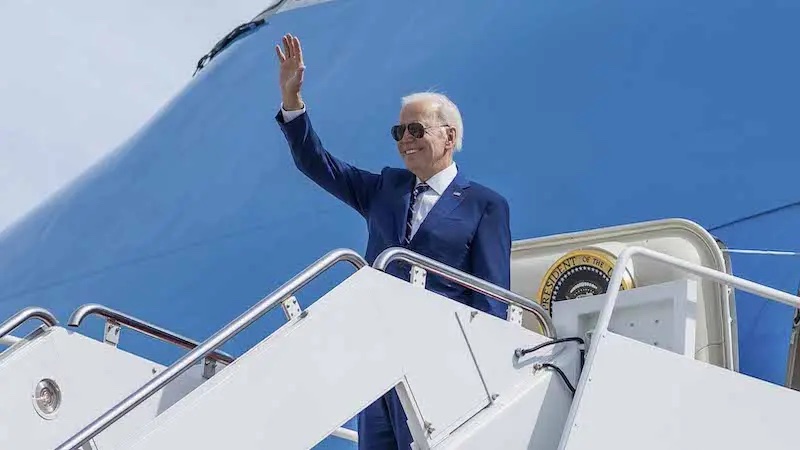
US President Joe Biden has faced criticism for making “revitalizing democracy the world over” a key goal of his administration. Yet his agenda might be taking stronger root across much of the West and beyond, and could outlive his administration, whether it ends in 2025 or 2029.
An illustration of the appealing nature of his message was on display on Tuesday and Wednesday this week at the Copenhagen Democracy Summit. This global event, the brainchild of Anders Fogh Rasmussen, a former NATO secretary-general and Danish prime minister, featured keynote speakers from around the world, from the Asia Pacific to the Americas.
The speakers included Republican US Senate Minority Leader Mitch McConnell, former US Secretary of State Hillary Clinton, Taiwan’s President Tsai Ing-wen and President-elect Lai Ching-te, and European Commission President Ursula von der Leyen.
The event coincided with the publication of research based on interviews with almost 70,000 people worldwide, which found that faith in democracy remains high around the globe, with 85 percent of those polled agreeing that democracy is important to their country.
This is a timely reminder, given that 2024 is a banner year for elections, during which an estimated 2 billion people in dozens of nations will go to the polls.
The research also found, however, that governments generally were not seen to be living up to the democratic expectations of their citizens; only a little more than half of those polled were satisfied with the state of democracy in their country. This dissatisfaction was not limited to nondemocratic nations; it was also prevalent in several Western countries with long democratic traditions.
A good example was the US, where former President Donald Trump will once again be on the ballot for the Republican Party in the presidential election in November. Still tarred by the assault on the Capitol by his supporters on Jan. 6, 2021, he has openly stated that should he win, he will be a dictator on the first day of his second term.
The consequences of a Trump victory are not only important domestically but internationally. During his first term, foes of the US around the world, from Venezuela to Iran and Russia, relished the disorder he brought to Washington. In particular, the Jan. 6 debacle was watched with glee by those nationalist populists around the world who try to defy calls for the rule of law and democratic norms to be respected.
Other think tanks, such as the US-based Freedom House, in recent years have also regularly highlighted the hostile environment democratic governance faces around the globe. A key challenge, especially following Russia’s invasion of Ukraine, is the growing concern about the increasing influence of Moscow and other authoritarian and/or autocratic states.
According to Rasmussen, there is a “trend which shows we risk losing the Global South to the autocracies. We are witnessing an axis of autocracies forming, from China to Russia to Iran. We must act now to make freedom more attractive than dictatorship, and unite through an alliance of democracies to push back against the emboldened autocrats.”
Yet there are some in the US, and beyond, who would prefer Biden not to overemphasize democracy-based political rhetoric. They argue, for example, that such ideas sometimes make a simplistic, binary distinction between “good” and “bad” that can sit awkwardly in a fast-changing, complex world of ambiguity and uncertainty, where there is frequently a need to work with states that lack democratic traditions but with which the US has shared interests.
Some critics instead favor an international approach by Washington based more on classic, quantifiable national interests. They argue that other states, especially developing ones, might be more likely to aspire to emulate the US because of its material prosperity, rather than any appeals based on its democratic virtues.
Economic modernization and liberalism, it is suggested, will be the impulse for future democratic reforms and help counteract the appeal of alternative, authoritarian models of development that have brought significant indebtedness to key US allies.
The implication is that Biden’s agenda might best be delivered by putting significantly more emphasis on new economic-reform and infrastructure packages for Africa, Asia, and the Americas, including signature initiatives such as the G7-backed Build Back Better World initiative, to demonstrate in a practical way the US intent to invest in low and middle income countries.
Yet, as important as this economic agenda is, it is not incompatible with an agenda for democracy. Indeed, value-driven, high-standard, and transparent partnership schemes that address the developing world’s huge infrastructure-funding challenges, such as Build Back Better World, can reinforce Biden’s wider agenda.
This is important because there is recognition that a broad, multifaceted approach is needed to ensure that freedom and democracy flourish. This is why it is so important that Biden now embeds in his agenda for the remainder of his presidency the need to make democracy “more responsive and resilient.”
The truth behind Biden’s assertion that “proving democracy is durable and strong” is a central challenge of our age is highlighted in the important book “How Democracies Die” by Steven Levitsky and Daniel Ziblatt.
Its core concept is that in recent generations democracies have not, generally speaking, collapsed as a result of a military coup or armed revolution. Rather, they have broken down gradually as public institutions and political norms have been weakened from within.
This is why, during his time as vice president between 2009 and 2017, Biden was given an active role in issues relating to several countries, including NATO and EU ally Hungary, in which he spoke out against corruption and in support of the consolidation of democratic institutions, with an emphasis on the independence of the judiciary.
In this key election year, a boost to the US promotion of democracy around the world is to be welcomed. Biden’s support for this long-standing agenda will outlast his administration in what might be a long battle for fresh ideas in the field of international relations.
• Andrew Hammond is an associate at LSE IDEAS at the London School of Economics.
(RFE/RL) — The situation in Bishkek was stable late on May 18, police said, after mob violence against foreign students injured at least 29 people, including several foreigners, and triggered diplomatic tensions with Pakistan and India.
RFE/RL correspondents reported that the situation near the dormitory where foreigners live at Kyrgyz International University in the eastern part of Bishkek was calm on the evening of May 18 and said security measures had been strengthened.
Kyrgyz authorities said the Pakistani Embassy and a dormitory where foreigners live were put under strict security.
The Health Ministry said on May 18 that 15 of the 29 people injured in a brawl the night before were taken to the Bishkek City Emergency Hospital and the National Hospital and the rest were treated on the spot.
Health Minister Alymkadyr Beishenaliev said three foreign students were hospitalized, one in the maxillofacial department and two in the trauma department.
The nationality of the injured students was not released, but students confirmed to RFE/RL’s Radio Mashaal that Pakistani students were involved in the incident and some of them were injured.
Indian media reported that Indian and Pakistani students were injured, and Indian Foreign Minister Subramanyam Jaishankar said he was monitoring the situation.
About 140 students and 40 other Pakistanis flew out of Bishkek late on May 18. The students were received by Interior Minister Mohsin Naqvi at Lahore International Airport, Civil Aviation Authority (CAA) officials told RFE/RL’s Radio Mashaal. A second flight is arriving on May 19, the CAA officials said.
Pakistani Deputy Prime Minister Ishaq Dar, who is also foreign minister, and Minister for Kashmir Affairs Amir Muqam, will leave for Bishkek from Islamabad on May 19 at the direction of Prime Minister Shehbaz Sharif to accelerate the evacuation of the students, officials told RFE/RL.
The Kyrgyz government said earlier that four foreign nationals born between 1993 and 2003 had been arrested following the violence. It said they were placed in a temporary detention facility as part of a criminal case for hooliganism without stating their nationalities or the circumstances of their arrests.
Those found guilty will be punished, the Kyrgyz government said in a statement, rejecting what it said were “insinuations aimed at inciting intolerance toward foreign students.” But it appeared to lay the blame for the violence on illegal migrants, saying authorities had been taking “decisive measures to suppress illegal migration and expel undesirable persons from Kyrgyzstan.”
The Kyrgyz Interior Ministry said in a statement on May 18 that the violence was triggered by the appearance on social media of a video purportedly showing a group of “persons of Asian appearance” harassing foreign students on the night of May 13 and then pursuing them to their dormitory, where at least one foreign student was assaulted by several men and dragged on the floor.
The ministry claimed security forces cordoned off the area where people had gathered at the intersection of Kurmanjan-Datka Street and Chui Avenue. “Explanatory work was carried out onsite, and after some time, the crowd dispersed,” the statement said.
However, the statement does not explain how dozens of people were injured on the night of May 17, while the official account was contradicted by video footage appearing to show attackers ransacking a student hostel and beating up people, as well as riotous crowds in different parts of the city.
It also did not clarify why authorities took four days to intervene and identify the alleged suspects.
Muhammad Ihtisham Latif, a Pakistani medical student in Bishkek, told RFE/RL’s Radio Mashaal, “The situation is bad here. The situation started when Egyptian students clashed with locals here. The locals are now protesting and they are beating Indian and Pakistani students…. They chase them in their hostels and houses…hostel [doors] were broken. I am locked up in the university along with other students since yesterday and I am sharing my voice with you.”
Syed Shah Rukh Khan, a medical student in his final year, told Radio Mashaal the past night had been “living hell.”
“Our hostel and many other hostels were attacked. The locals beat whoever came their way, boys or girls, and they were dragged to the ground. Even outside the universities, they went after the Pakistani and Indian students and beat them,” Khan said.
Pakistani Prime Minister Shehbaz Sharif expressed “deep concern” over the situation of Pakistani students in Kyrgyzstan, saying in a statement that he directed Pakistan’s ambassador to provide all necessary help and assistance to the students.
Pakistani Foreign Minister Ishaq Dar said on X, formerly Twitter, that the reports of mob attacks on students in Kyrgyzstan are extremely concerning.
“We have established contact with the Kyrgyz authorities to ensure protection of Pakistani students. I have instructed our ambassador to Kyrgyzstan to fully facilitate them,” Dar said.
In a separate statement, Pakistan’s Foreign Ministry said the charge d’affaires of the Kyrgyz Embassy to Islamabad, Melis Moldaliev, was summoned to the ministry, where he “was conveyed the deep concerns of the government of Pakistan about the reports of last night’s incidents against Pakistani students studying in the Kyrgyz Republic.”
Moldaliev was told that Islamabad expects the Kyrgyz government to take all possible measures to ensure the safety and security of Pakistani students and citizens in Kyrgyzstan.
The head of Kyrgyzstan’s State Committee on National Security (UKMK), Kamchybek Tashiev, appeared to try and lay the blame for the violence on illegal migrants, saying protesters were demonstrating against migration.
Tashiev claimed Kyrgyzstan has been grappling with an influx of illegal migrants coming to the country, mostly from Pakistan and Bangladesh, many of whom “break the law.”
“We identify at least 20-30 or 50 illegal migrants per day and try to expel them from the country. Based on official statistics, most of the foreigners who break the law are citizens of Pakistan and Bangladesh. Of these, we returned about 1,500 people from Pakistan and about 1,000 people from Bangladesh to their countries.”
The incident comes amid a drive by Kyrgyz authorities to expel foreign workers. On May 16, the UKMK announced the arrest of 28 alleged illegal Pakistani workers from a sweatshop. On May 15, Bishkek police shut down delivery services conducted by more than 400 foreign students on motorcycles and scooters, citing traffic safety concerns.