
Türkiye has recorded the highest average temperature for the month of April in the past 53 years, as stated by the Minister of Ecology and Urban Planning, Mehmet Ozhaseki, Report informs, citing TRT Haber.
Day: May 15, 2024

Russia and the West’s goals in the South Caucasus
“Since the early 1990s, Armenia has been creating conditions to strengthen Russia’s presence in the South Caucasus. Now, however, Armenia is facilitating conditions for the West to pursue its geopolitical objectives,” believes Azerbaijani political analyst Farhad Mammadov.
He analyzed how the situation in the region could change due to the influence of external actors, and how the actions of the region’s countries themselves – Azerbaijan, Armenia, and Georgia – could impact events.
- “Our Voice to Europe” – the large-scale March for Europe in Tbilisi. Photo/video
- Clerical uprising or political interference in the country: what is happening in Yerevan? Opinions
- Eastern European Strategy of Azerbaijan: View from Baku
The US and EU have become highly engaged
The United States and the European Union have kept a keen eye on the South Caucasus region for the last three years, since November 2020, following the Second Karabakh War. During this time, they have been molding both their resources and their strategic outlook.
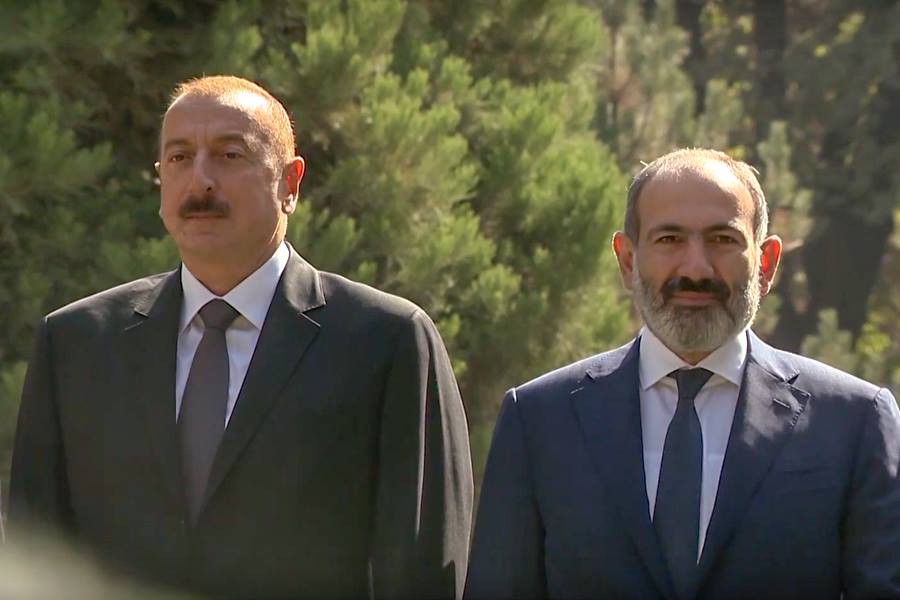
Since December 2023, they have sprung into action. This was underscored by a remarkable development: the administrations of both Azerbaijan and Armenia issued joint, identical statements.
For the first time: a joint statement by Armenia and Azerbaijan “to achieve long-awaited peace in the region”
Baku will release 32 Armenian military personnel, while Yerevan – two Azerbaijani military personnel
In a series of strategic moves, the West, represented by the United States and the European Union, has taken decisive steps:
● Georgia was granted candidate status for EU membership.
● A US/EU summit on April 5 laid the groundwork for their enhanced partnership with Armenia, focusing on economic cooperation and security matters.
● Following the collapse of negotiation platforms in Washington and Brussels, the US and EU intensified efforts to regain momentum. Despite limited success, Germany stepped in to mitigate France’s influence, facilitating a bilateral meeting in Berlin.
Russia’s response
In response to the West’s prioritization of the Georgia-Armenia tandem, Moscow took a pragmatic step: withdrawing its peacekeeping contingent from Azerbaijan (from Karabakh).
Subsequently, following a meeting between Putin and Pashinyan, the decision was made to withdraw Russian border guards from the conditional (undemarcated) border between Azerbaijan and Armenia and along the Zangezur corridor.
This move signals Russia’s decision to pull back its troops, which had been deployed to the region after the 44-day war. Moscow made concessions to the leadership of Azerbaijan and Armenia, nullifying its advantages gained after the 2020 war.
However, Russia has not relinquished its initial positions:
● Armenia, regardless, remains a member of the CSTO,
● Relations within the framework of the Eurasian Union under Russia’s leadership are further strengthening,
● Pashinyan has not raised the issue of withdrawing the Russian military base in Gyumri, nor has he addressed Armenia’s borders with Iran and Turkey.
Thus, the competition among external players in the region is directly linked to the opportunities afforded to them by the region’s own countries.
The role of the South Caucasus countries
Events unfolding in Georgia are poised to have a significant impact on the entire region.
Georgia could not remain aloof from the aftermath of the 44-day war: the normalization between Armenia and Azerbaijan, and Armenia and Turkey, alongside the unblocking of communications. The granting of candidate status to Georgia by the EU has set in motion external actors not keen on the establishment of a “western axis” in the region.
Meanwhile, the ruling party in the country seeks to capitalize on the situation for its own advantage.
For Azerbaijan, a predictable, independent, and assertive Georgia is of paramount importance.
Armenia had been shaping conditions favoring Russia in the region since the early 1990s, but it now facilitates conditions for the West to advance its geopolitical objectives.
However, the stark reality remains that severing ties with Russia could lead Armenia into significant economic turmoil. Armenian leadership is compelled to acknowledge Russia’s interests in the region. Simultaneously, the country focuses on building its own resources to enhance its sovereignty.
Azerbaijan has established its own framework of relations with external actors and neighbors. At this stage, Baku’s primary goal is to reduce geopolitical tensions around the region, foster a stable environment, and develop a joint regional approach with its three neighboring countries.
Russia and the West’s goals in the South Caucasus
Georgia’s ruling party adopted the controversial foreign agents’ law in its third and final reading by 84 votes against 30 on May 14, amid widespread local protests and despite fierce opposition from the West. President Salome Zurabishvili has promised to veto the bill despite passing the final reading. While the Georgian Dream majority can easily override it, the measure is expected to prolong the bill’s signing process for several weeks.
The foreign agents’ law was adopted amid arrests and beatings of peaceful protesters who were gathered near the parliament building. Lawyers and human rights activists claim that almost all the detainees are beaten. Allegedly, the notorious Zviad Kharazisvili special force unit, infamous for its brutality, took part in the arrests of peaceful protesters. Reportedly, Lazare Grigoriadis who was pardoned by the President a couple of weeks ago is among those arrested and beaten.
One of the detainees was David Katsarava, the leader of the anti-occupation movement Power is in Unity which regularly patrols the occupation line and reports on the situation on the ground. Katsarava was standing peacefully on Rustaveli Avenue when, as the footage shows, he was grabbed by the special forces, severely beaten and later hospitalized in serious condition. Later, responding to the question of a journalist about the severe beating of Katsarava, PM Kobakhidze said that police acted fully in line with the EU and US standards.
After the adoption by the ruling majority of the foreign agents law, several opposition parties, notably the United National Movement (UNM), Strategy Aghmashenebeli, Lelo for Georgia, Citizens as well as independent MPs Tamar Kordzaia and Tariel Nakaidze, announced a boycott of parliamentary work.
Several opposition parties said they are ready to put aside their differences and work in partnership with President Salome Zurabishvili to remove the Georgian Dream from power through elections slated for October 2024. This comes after the Georgian Dream majority rammed through the parliament the controversial legislation likely to curb civil society and media activities while ignoring the massive protest and resorting to violent repression.
President Salome Zurabishvili spoke to CNN’s Christian Amanpour and said she would be “leading the pro-European front” of the opposition parties and civil society in upcoming elections. She clarified that she does not intend to run for a seat but will “act as a guarantor” for this pro-Western and pro-European front. The president’s statement follows announcements by several parties that they wish to create a “European Platform of National Resistance.”
Following the meetings with PM Irakli Kobakhidze, CSOs, and the opposition, the US Assistant Secretary of State for European and Eurasian State Jim O’Brien held a press briefing, publicly regretting that “for such an influential individual (meaning Bidzina Ivanishvili) to be so misinformed is shocking.” Speaking about the foreign agents’ law, the Assistant Secretary touched upon the possibility of its amendment and stressed there would be consequences, including travel bans and financial restrictions if it is enacted in its current form.
Later in the evening, PM Irakli Kobakhidze also held a press conference in which he addressed, among other things, developments regarding the foreign agents’ law, the visit of Assistant Secretary of State Jim O’Brien, and the possibility of U.S. sanctions against Bidzina Ivanishvili. Kobakhidze started the press conference by praising the foreign agents’ law and said that “nobody can be against transparency,” further thanking the GD MPs for voting for the bill, as well as the Interior Ministry’s law-enforcement officials for handling the violence at the rallies “according to EU standards.”
During her daily press briefing, Press Secretary Karine Jean-Pierre said the White House was “deeply troubled by Georgia’s Kremlin style foreign agents legislation,” adding that “if this legislation passes it would compel us to fundamentally reassess our relationship our relations with Georgia.”
U.S. Senators Jim Risch (R-Idaho), ranking member of the Senate Foreign Relations Committee, and Jeanne Shaheen (D-N.H.), chair of the Subcommittee on Europe and Regional Security Cooperation, along with U.S. Senate Foreign Relations Committee Chair Ben Cardin (D-Md.), and eight other senators from both parties, expressed their “profound disappointment” with passing of the foreign agents’ law by the Georgian parliament.”
The adoption of foreign agents’ law by the GD majority in its third and final reading prompted strong international criticism and disappointment in Georgia’s long-time partners. In this material, Civil.ge has compiled some of the international reactions.
Categories
The Daily Beat: 14 May
Georgia’s ruling party adopted the controversial foreign agents’ law in its third and final reading by 84 votes against 30 on May 14, amid widespread local protests and despite fierce opposition from the West. President Salome Zurabishvili has promised to veto the bill despite passing the final reading. While the Georgian Dream majority can easily override it, the measure is expected to prolong the bill’s signing process for several weeks.
The foreign agents’ law was adopted amid arrests and beatings of peaceful protesters who were gathered near the parliament building. Lawyers and human rights activists claim that almost all the detainees are beaten. Allegedly, the notorious Zviad Kharazisvili special force unit, infamous for its brutality, took part in the arrests of peaceful protesters. Reportedly, Lazare Grigoriadis who was pardoned by the President a couple of weeks ago is among those arrested and beaten.
One of the detainees was David Katsarava, the leader of the anti-occupation movement Power is in Unity which regularly patrols the occupation line and reports on the situation on the ground. Katsarava was standing peacefully on Rustaveli Avenue when, as the footage shows, he was grabbed by the special forces, severely beaten and later hospitalized in serious condition. Later, responding to the question of a journalist about the severe beating of Katsarava, PM Kobakhidze said that police acted fully in line with the EU and US standards.
After the adoption by the ruling majority of the foreign agents law, several opposition parties, notably the United National Movement (UNM), Strategy Aghmashenebeli, Lelo for Georgia, Citizens as well as independent MPs Tamar Kordzaia and Tariel Nakaidze, announced a boycott of parliamentary work.
Several opposition parties said they are ready to put aside their differences and work in partnership with President Salome Zurabishvili to remove the Georgian Dream from power through elections slated for October 2024. This comes after the Georgian Dream majority rammed through the parliament the controversial legislation likely to curb civil society and media activities while ignoring the massive protest and resorting to violent repression.
President Salome Zurabishvili spoke to CNN’s Christian Amanpour and said she would be “leading the pro-European front” of the opposition parties and civil society in upcoming elections. She clarified that she does not intend to run for a seat but will “act as a guarantor” for this pro-Western and pro-European front. The president’s statement follows announcements by several parties that they wish to create a “European Platform of National Resistance.”
Following the meetings with PM Irakli Kobakhidze, CSOs, and the opposition, the US Assistant Secretary of State for European and Eurasian State Jim O’Brien held a press briefing, publicly regretting that “for such an influential individual (meaning Bidzina Ivanishvili) to be so misinformed is shocking.” Speaking about the foreign agents’ law, the Assistant Secretary touched upon the possibility of its amendment and stressed there would be consequences, including travel bans and financial restrictions if it is enacted in its current form.
Later in the evening, PM Irakli Kobakhidze also held a press conference in which he addressed, among other things, developments regarding the foreign agents’ law, the visit of Assistant Secretary of State Jim O’Brien, and the possibility of U.S. sanctions against Bidzina Ivanishvili. Kobakhidze started the press conference by praising the foreign agents’ law and said that “nobody can be against transparency,” further thanking the GD MPs for voting for the bill, as well as the Interior Ministry’s law-enforcement officials for handling the violence at the rallies “according to EU standards.”
During her daily press briefing, Press Secretary Karine Jean-Pierre said the White House was “deeply troubled by Georgia’s Kremlin style foreign agents legislation,” adding that “if this legislation passes it would compel us to fundamentally reassess our relationship our relations with Georgia.”
U.S. Senators Jim Risch (R-Idaho), ranking member of the Senate Foreign Relations Committee, and Jeanne Shaheen (D-N.H.), chair of the Subcommittee on Europe and Regional Security Cooperation, along with U.S. Senate Foreign Relations Committee Chair Ben Cardin (D-Md.), and eight other senators from both parties, expressed their “profound disappointment” with passing of the foreign agents’ law by the Georgian parliament.”
The adoption of foreign agents’ law by the GD majority in its third and final reading prompted strong international criticism and disappointment in Georgia’s long-time partners. In this material, Civil.ge has compiled some of the international reactions.