
Day: May 14, 2024
 DILIJAN, Armenia—Adam Armanski, director of Dilijan International School of Armenia (DISA) Foundation and head of UWC Dilijan, recently gave the following question and answer session.
Q: What is the significance of Dilijan International School of Armenia (DISA) receiving a Cambridge International School accreditation for UWC Dilijan?
A: Dilijan International School of Armenia was first started to provide education for children of UWC Dilijan staff. It was especially important for our international staff, as they could not send their children to local schools due to the language barrier and their educational preferences. For our Armenian staff with young children, kindergarten was an attraction as a daycare facility. Families from outside the school then started contacting, and having expanded, accreditation became a logical step.
Q: What is the significance of this accreditation for Armenia?
A: Along with another accredited school, Cambridge International School of Armenia, which is based in Yerevan, DISA will help promote Armenia as a center of international education. Options for education are an important factor for Armenian diasporans and for foreigners moving to Armenia on assignment or to create businesses. In that sense our school will contribute to the development of Armenia.
Q: What is the significance of this accreditation for you and for your staff?
A: Receiving accreditation as a Cambridge International school for primary, middle and high school students has empowered our staff and validates our commitment to provide world-class education for our diverse student base.
Q: How many pupils do you have, and what grades are they?
A: We now have over 70 pupils from nine countries. 22 of them are children of our staff. Next year we will have pupils from kindergarten all the way to grade 10.
Q: What about your teaching staff? Are they also an international group?
A: We have 16 teaching staff from nine countries. We are delighted that we have excellent Armenian teachers among them. And, of course, practically all our administration and support staff are Armenian. Thus, we are creating employment opportunities for local people.
Q: How does it change in teaching and learning, if anything at all?
A: The accreditation provides validation of what we do already. External benchmarks push us to keep up the educational excellence we pride ourselves on. Our school is co-located with UWC Dilijan on the magnificent campus. We have access to all the facilities and have tremendous opportunities as a diverse community of learners and teachers.
Q: How does your school differ from other local or specialized schools, including the ones that offer the Cambridge curriculum and/or IB?
A: First of all, all education is in English, though we have emphasis on local culture and language. Many of our children are learning two or three languages simultaneously. Another difference is that we have a truly international cohort of students and teachers on campus. Our children are exposed to the UWC Dilijan communities with 80 nationalities. And of course, what sets us apart from any school in Armenia and most schools around the world is our magnificent campus. Our campus is on eight hectares of sloping and wooded countryside, located in the Dilijan National Park.
Q: What are the age groups of the children you accept?
A: Children can start kindergarten if they turn three and primary school if they turn five correspondingly by August 31 of the year of enrollment.
Q: What are the fees?
A: Fees are comparable to the ones charged by private schools.
Kindergarten – 2,700 USD
Primary (Grades 0-5) – 6,000 USD
Middle (Grades 6-8) – 7,000 USD
High (Grades 9-10) – 9,000 USD
The fee includes meals, learning materials, exam fees, etc.
Q: Will a school bus be provided and if so, is it included in the fees?
A: If there is interest from nearby cities we will consider providing transportation, but it will be at an additional cost to the families.
Q: How was DISA established?
A: Dilijan International School of Armenia Foundation is a legal nonprofit body that governs DISA and UWC Dilijan. It is the brain child of Ruben Vardanyan and Veronika Zonabend.
Q: Why did they decide to invest this money into international education rather than local schools?
A: Ruben Vardanyan and Veronika Zonabend have a vision to make Armenia a center of world-class international education and a cultural hub, which will contribute to raising the country’s profile and reputation globally. International schools will create a cohort of people from around the world who will grow up with an understanding and appreciation of Armenia and will have a lifelong interest in it. This, in its turn, contributes to cultural, educational and scientific international exchanges as well as development of tourism in Armenia. The founders and their partners have ambitions that go beyond thinking about Armenia today—they are contributing to tomorrow’s Armenia.
Q: How is the DISA Foundation funded?
A: It is funded through a combination of fees and philanthropic donations. Since its establishment in 2011, philanthropic contributions in the region of $210 million have been made by over 600 donors from 20 countries to fund capital expenditure and scholarships for the UWC Dilijan students.
Q: How much did the founders personally contribute to DISA?
A: Ruben Vardanyan and Veronika Zonabend contributed $149.7 million to the DISA construction themselves, and founding partners Noubar and Anna Afeyan, Gagik Adibekyan, Vladimir and Anna Avetissian donated another $17.99 million.
Q: There is an opinion that UWC Dilijan is an elite institution for international students.
A: It is a misconception that UWC Dilijan is an elite institution. As a school with students of 80 nationalities representing different walks of life, we have a unique and diverse community, giving students an opportunity to interact with their counterparts not only from other nations and cultures but from mixed socio-economic backgrounds. For students from disadvantaged families—80-percent of students are on scholarships—this represents a social lift, a chance to receive an excellent education opening further opportunities. For the rest it is also an opportunity to broaden their horizons and develop relationships with young people they usually would not be exposed to and to become more compassionate and motivated to cross barriers in society.
Q: Is the Armenian government supportive of DISA?
A: DISA has been supported by the Armenian government all along since the establishment of UWC Dilijan. It is evident that Armenia places a big emphasis on education. With UWC Dilijan being part of the global network of 18 United World Colleges around the world with a mission “to make education a force to unite people, nations and cultures for peace and a sustainable future,” and now DISA for pupils starting from kindergarten through grade 10, the educational cluster in Dilijan is growing fast. UWC Dilijan has been in existence for 10 years, and DISA solidifies its position. We are proud to have the Armenian flag at the entrance to our campus and are committed to continuing to work for the benefit and, essentially, on behalf of our host country.
About Dilijan International School Armenia (DISA)
Co-located on the UWC Dilijan campus, Dilijan International School is a primary, middle and high school section for students from kindergarten to grade 10 with Cambridge International accreditation. It has over 70 pupils of nine nationalities, and 16 full and part-time staff of nine nationalities. Originally established as a teaching facility for the children of UWCD staff, it developed into a fully-fledged school for all ages based on the principles of Cambridge International Education. It is a nonprofit organization governed by the Dilijan International School of Armenian Foundation.
Author information

Guest Contributor
Guest contributions to the Armenian Weekly are informative articles or press releases written and submitted by members of the community.
|
The post A Q&A with Adam Armanski of Dilijan International School of Armenia Foundation appeared first on The Armenian Weekly.
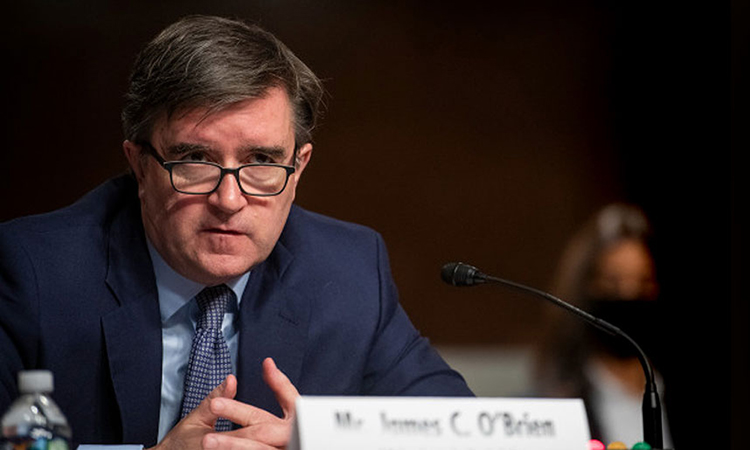
US Assistant Secretary of State in Georgia
Assistant Secretary of State for European and Eurasian Affairs James O’Brien held a briefing following meetings with the prime minister of Georgia, the minister of Foreign Affairs, the president, the speaker of Parliament, the opposition, and civil society. O’Brien discussed the law “On Transparency of Foreign Influence,” approved by the Georgian parliament on May 14, its non-compliance with EU standards, and possible sanctions.
O’Brien stated that if the level of democracy in the country declines and violence is used against peaceful demonstrators, financial restrictions will be imposed. This includes travel restrictions on individuals and their family members who are responsible for destructive actions.
According to O’Brien, if protests against the “foreign agents” bill continue, they should be peaceful, and those who intimidate peaceful demonstrators should be held accountable.
- Freedom House condemns repression of peaceful demonstrators in Georgia
- Georgian Parliament approved the “foreign agents bill” in the third and final reading
- Opponents of ‘foreign agents bill’ detained near Parliament amid heavy police presence
According to O’Brien, if the current rhetoric towards the United States and other partners persists, the relationship between the countries will be at risk.
“I’ll give you a few examples – the United States is ready to provide approximately $319 million in aid, which we plan to spend together with the Georgian authorities.
Half of this is military aid, and a third we plan to spend on projects necessary for economic development, as well as for building institutions for civil society. However, all of this needs to be reassessed if we are now viewed as adversaries rather than partners. And if this law continues to operate in this way, if the law remains in its current form, and is not brought into line with EU standards, we will see a weakening and undermining of democracy and violence against peaceful demonstrators, naturally, there will be certain restrictions from the US in response to these actions,” O’Brien said.
According to him, the US wants Georgia to have a continuous peaceful path to the European Union and NATO, and for Georgia to adhere to the standards in regulating foreign financing that exist in the European Union and the Transatlantic community.
“Georgia’s desire is to move towards the European Union and NATO. And in these communities, there are certain rules and standards. This law must comply with these rules and standards,” O’Brien said, noting that he hoped to see such a discussion of this issue that would meet EU requirements.
“There are no sanctions against Ivanishvili, and it’s surprising that such an influential person is misinformed”
O’Brien also responded to a statement by Georgian prime minister Irakli Kobakhidze [that Bidzina Ivanishvili refused to meet with O’Brien because, according to Kobakhidze, Ivanishvili is already de facto under sanctions]. According to the Assistant Secretary of State, at this stage, there are no sanctions against Bidzina Ivanishvili, and “it’s really surprising and sad that such an influential person is misinformed.”
O’Brien also said that debates and discussions about the “foreign agents” bill are only one direction. However, the parties should try not to change the productive and constructive cooperation that exists between the two countries.
“The main purpose of my visit is for us, America and Americans, to value our relationship with Georgia and our strategic partnership.
As you know, our strategic partnership has lasted for many years, and we have supported Georgia since 1992. We have made investments, provided assistance totaling six billion dollars. This was supposed to go towards the development of many different areas – defense, development of various branches of government, etc. For over 30 years, America has been a very strong partner of Georgia, and we hope to continue this cooperation,” O’Brien said.
He spoke about the importance of Georgia’s decision to integrate into the European Union and the Transatlantic Alliance:
“I am very proud that we support Georgia, including in terms of granting it candidate status [for EU membership], and we are proud to continue this support and assistance on the path to Georgia’s future.
I want Georgia to have a continuous peaceful path to the European Union and NATO. We hope that today the movement along this path will begin again. And if this does not happen, then we will quickly consider all the issues mentioned,” he said.
Categories
