Day: May 14, 2024
ottawa — Nobel Prize-winning Canadian writer Alice Munro, whose exquisitely crafted tales of the loves, ambitions and travails of small-town women in her native land made her a globally acclaimed master of the short story, has died at the age of 92, her publisher said on Tuesday.
Munro died at her home in Port Hope, Ontario, said Kristin Cochrane, chief executive officer of McClelland & Stewart.
“Alice’s writing inspired countless writers … and her work leaves an indelible mark on our literary landscape,” she said in a statement.
The Globe and Mail newspaper, citing family members, said Munro had died on Monday after suffering from dementia for at least a decade.
Munro published more than a dozen collections of short stories and was honored with the Nobel Prize in Literature in 2013.
Her stories explored sex, yearning, discontent, aging, moral conflict and other themes in rural settings with which she was intimately familiar, the villages and farms in the Canadian province of Ontario. She was adept at fully developing complex characters within the limited pages of a short story.
“Alice Munro was a Canadian literary icon. For six decades, her short stories captivated hearts around Canada and the world,” Canadian Heritage Minister Pascale St-Onge said on the X social media network.
Munro, who wrote about ordinary people with clarity and realism, was often likened to Anton Chekhov, the 19th century Russian known for his brilliant short stories, a comparison the Swedish Academy cited in honoring her with the Nobel Prize.
Calling her a “master of the contemporary short story,” the Academy also said: “Her texts often feature depictions of everyday but decisive events, epiphanies of a kind, that illuminate the surrounding story and let existential questions appear in a flash of lightning.”
In an interview with the Canadian Broadcasting Corporation after winning the Nobel, Munro said, “I think my stories have gotten around quite remarkably for short stories, and I would really hope that this would make people see the short story as an important art, not just something that you played around with until you’d got a novel written.”
Munro’s works included “Dance of the Happy Shades” (1968), “Lives of Girls and Women” (1971), “Who Do You Think You Are?” (1978), “The Moons of Jupiter” (1982), “Hateship, Friendship, Courtship, Loveship, Marriage” (2001), “Runaway” (2004), “The View from Castle Rock” (2006), “Too Much Happiness” (2009) and “Dear Life” (2012).
The characters in her stories were often girls and women who lead seemingly unexceptional lives but struggle with tribulations ranging from sexual abuse and stifling marriages to repressed love and the ravages of aging.
“Last month I reread all of Alice Munro’s books. I felt the need to be close to her. Every time I read her is a new experience. Every time changes me. She will live forever,” Canadian author Heather O’Neill said in a post on X.
Munro’s story of a woman who starts losing her memory and agrees to enter a nursing home titled “The Bear Came Over the Mountain,” from “Hateship, Friendship, Courtship, Loveship, Marriage,” was adapted into the Oscar-nominated 2006 film “Away From Her,” directed by fellow Canadian Sarah Polley.
‘Shame’ a driving force of characters
Canadian novelist Margaret Atwood, writing in The Guardian after Munro won the Nobel, summarized her work by saying: “Shame and embarrassment are driving forces for Munro’s characters, just as perfectionism in the writing has been a driving force for her: getting it down, getting it right, but also the impossibility of that. Munro chronicles failure much more often than she chronicles success, because the task of the writer has failure built in.”
American novelist Jonathan Franzen wrote in 2005, “Reading Munro puts me in that state of quiet reflection in which I think about my own life: about the decisions I’ve made, the things I’ve done and haven’t done, the kind of person I am, the prospect of death.”
The short story, a style more popular in the 19th and early 20th century, has long taken a back seat to the novel in popular tastes and in attracting awards. But Munro was able to infuse her short stories with a richness of plot and depth of detail usually more characteristic of full-length novels.
“For years and years, I thought that stories were just practice, ’til I got time to write a novel. Then I found that they were all I could do and so I faced that. I suppose that my trying to get so much into stories has been a compensation,” Munro told the New Yorker magazine in 2012.
Second Canadian to win Nobel
Munro was the second Canadian-born writer to win the Nobel literature prize but the first with a distinctly Canadian identity. Saul Bellow, who won in 1976, was born in Quebec but raised in the U.S. city of Chicago, Illinois, and was widely seen as an American writer.
Munro also won the Man Booker International Prize in 2009 and the Giller Prize — Canada’s most high-profile literary award — twice.
Alice Laidlaw was born to a hard-pressed family of farmers on July 10, 1931, in Wingham, a small town in the region of southwestern Ontario that serves as the setting for many of her stories, and started writing in her teens.
She married James Munro in 1951 and moved to Victoria, British Columbia, where the two ran a bookstore. They had four daughters, one died just hours old, before divorcing in 1972. Afterward, Munro moved back to Ontario. Her second husband, geographer Gerald Fremlin, died in April 2013.
ottawa — Nobel Prize-winning Canadian writer Alice Munro, whose exquisitely crafted tales of the loves, ambitions and travails of small-town women in her native land made her a globally acclaimed master of the short story, has died at the age of 92, her publisher said on Tuesday.
Munro died at her home in Port Hope, Ontario, said Kristin Cochrane, chief executive officer of McClelland & Stewart.
“Alice’s writing inspired countless writers … and her work leaves an indelible mark on our literary landscape,” she said in a statement.
The Globe and Mail newspaper, citing family members, said Munro had died on Monday after suffering from dementia for at least a decade.
Munro published more than a dozen collections of short stories and was honored with the Nobel Prize in Literature in 2013.
Her stories explored sex, yearning, discontent, aging, moral conflict and other themes in rural settings with which she was intimately familiar, the villages and farms in the Canadian province of Ontario. She was adept at fully developing complex characters within the limited pages of a short story.
“Alice Munro was a Canadian literary icon. For six decades, her short stories captivated hearts around Canada and the world,” Canadian Heritage Minister Pascale St-Onge said on the X social media network.
Munro, who wrote about ordinary people with clarity and realism, was often likened to Anton Chekhov, the 19th century Russian known for his brilliant short stories, a comparison the Swedish Academy cited in honoring her with the Nobel Prize.
Calling her a “master of the contemporary short story,” the Academy also said: “Her texts often feature depictions of everyday but decisive events, epiphanies of a kind, that illuminate the surrounding story and let existential questions appear in a flash of lightning.”
In an interview with the Canadian Broadcasting Corporation after winning the Nobel, Munro said, “I think my stories have gotten around quite remarkably for short stories, and I would really hope that this would make people see the short story as an important art, not just something that you played around with until you’d got a novel written.”
Munro’s works included “Dance of the Happy Shades” (1968), “Lives of Girls and Women” (1971), “Who Do You Think You Are?” (1978), “The Moons of Jupiter” (1982), “Hateship, Friendship, Courtship, Loveship, Marriage” (2001), “Runaway” (2004), “The View from Castle Rock” (2006), “Too Much Happiness” (2009) and “Dear Life” (2012).
The characters in her stories were often girls and women who lead seemingly unexceptional lives but struggle with tribulations ranging from sexual abuse and stifling marriages to repressed love and the ravages of aging.
“Last month I reread all of Alice Munro’s books. I felt the need to be close to her. Every time I read her is a new experience. Every time changes me. She will live forever,” Canadian author Heather O’Neill said in a post on X.
Munro’s story of a woman who starts losing her memory and agrees to enter a nursing home titled “The Bear Came Over the Mountain,” from “Hateship, Friendship, Courtship, Loveship, Marriage,” was adapted into the Oscar-nominated 2006 film “Away From Her,” directed by fellow Canadian Sarah Polley.
‘Shame’ a driving force of characters
Canadian novelist Margaret Atwood, writing in The Guardian after Munro won the Nobel, summarized her work by saying: “Shame and embarrassment are driving forces for Munro’s characters, just as perfectionism in the writing has been a driving force for her: getting it down, getting it right, but also the impossibility of that. Munro chronicles failure much more often than she chronicles success, because the task of the writer has failure built in.”
American novelist Jonathan Franzen wrote in 2005, “Reading Munro puts me in that state of quiet reflection in which I think about my own life: about the decisions I’ve made, the things I’ve done and haven’t done, the kind of person I am, the prospect of death.”
The short story, a style more popular in the 19th and early 20th century, has long taken a back seat to the novel in popular tastes and in attracting awards. But Munro was able to infuse her short stories with a richness of plot and depth of detail usually more characteristic of full-length novels.
“For years and years, I thought that stories were just practice, ’til I got time to write a novel. Then I found that they were all I could do and so I faced that. I suppose that my trying to get so much into stories has been a compensation,” Munro told the New Yorker magazine in 2012.
Second Canadian to win Nobel
Munro was the second Canadian-born writer to win the Nobel literature prize but the first with a distinctly Canadian identity. Saul Bellow, who won in 1976, was born in Quebec but raised in the U.S. city of Chicago, Illinois, and was widely seen as an American writer.
Munro also won the Man Booker International Prize in 2009 and the Giller Prize — Canada’s most high-profile literary award — twice.
Alice Laidlaw was born to a hard-pressed family of farmers on July 10, 1931, in Wingham, a small town in the region of southwestern Ontario that serves as the setting for many of her stories, and started writing in her teens.
She married James Munro in 1951 and moved to Victoria, British Columbia, where the two ran a bookstore. They had four daughters, one died just hours old, before divorcing in 1972. Afterward, Munro moved back to Ontario. Her second husband, geographer Gerald Fremlin, died in April 2013.
Categories
NPR News: 05-14-2024 10PM EDT
NPR News: 05-14-2024 10PM EDT
Learn more about sponsor message choices: podcastchoices.com/adchoices
Openings expected Wednesday in Menendez corruption trial | National | bgdailynews.com Bowling Green Daily News
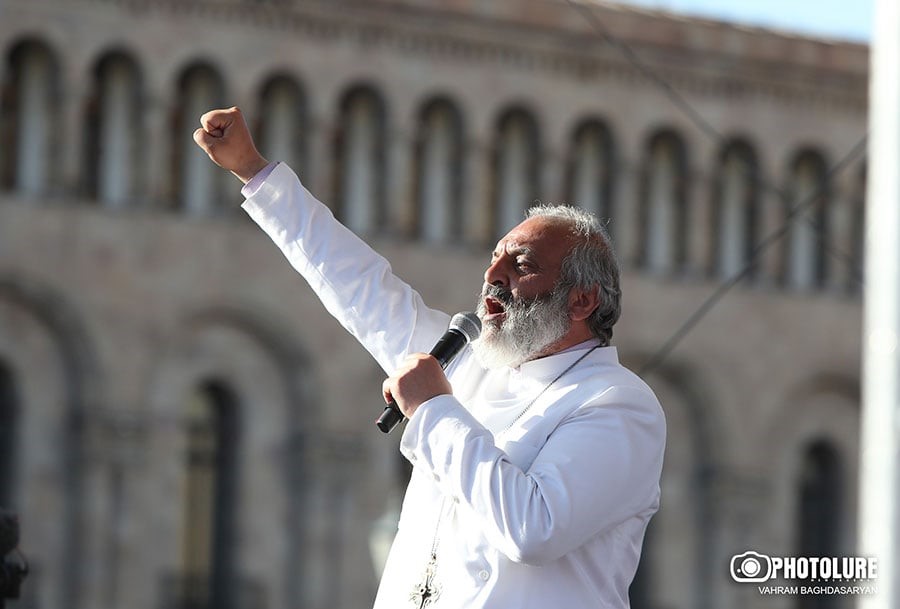
Opinions on Galstanyan`s movement in Armenia
In Yerevan, disobedience actions continue. The movement “Tavush for the Sake of the Homeland,” initially aimed at stopping the “illegal demarcation of borders,” is now demanding the resignation of Armenian prime minister Nikol Pashinyan.
The movement is led by Archbishop Bagrat Galstanyan, the head of the Tavush Diocese. The fact that a high-ranking clergyman is intervening in the country’s political life is actively discussed by politicians and analysts. They question whether the catholicos supports the mission undertaken by the archbishop. Most believe that the involvement of the Armenian Apostolic Church in politics is unacceptable.
Catholicos Karekin II has not yet expressed his personal opinion. Before the protests began in Yerevan, the Supreme Spiritual Council issued a statement emphasizing that “the church does not claim” political power in Armenia.
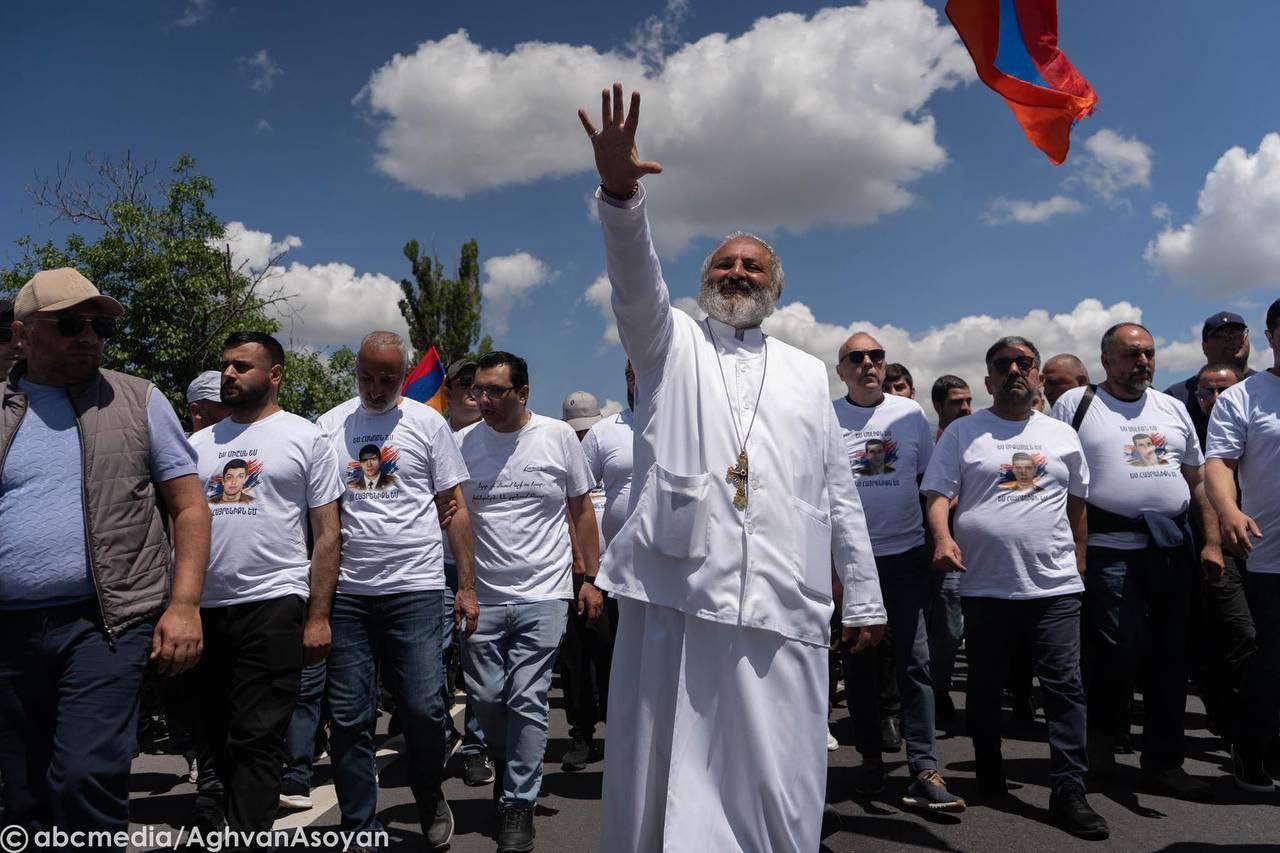
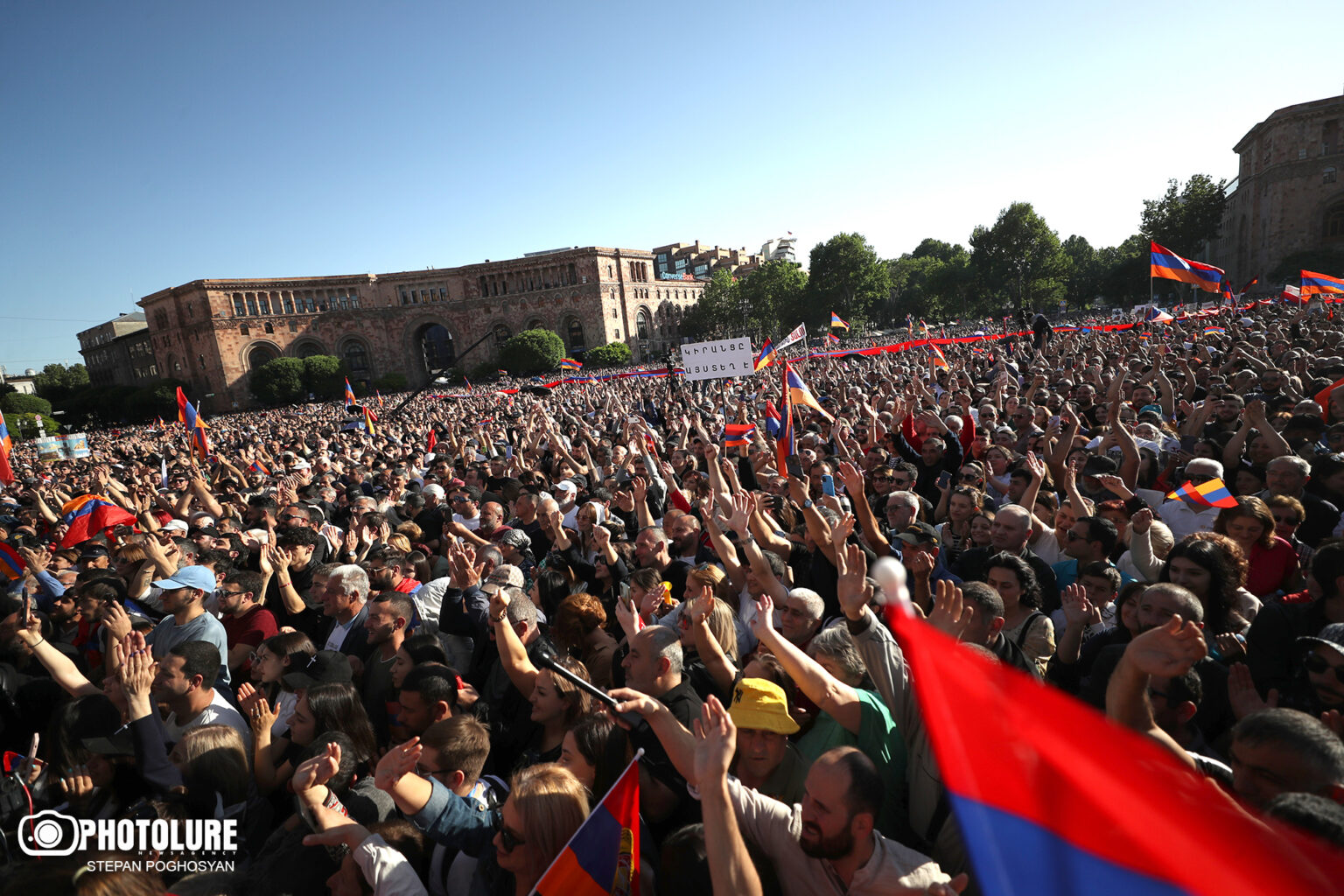
The “Tavush for the Homeland” movement started a march from the Tavush region to Yerevan in protest against the ongoing process of border demarcation and delimitation with Azerbaijan in northern Armenia. The movement participants arrived in Yerevan on May 9. Here, they changed their initial demand to stop the demarcation/delimitation process. Now, they are demanding the resignation of the prime minister.
The movement organizes acts of disobedience, marches, and rallies. At the same time, consultations are ongoing with opposition factions in parliament about initiating the impeachment process against Pashinyan. However, the protesters have not yet announced their candidate for the prime minister’s post.
To initiate the impeachment process in parliament, the signatures of at least 36 deputies are required. Opposition factions “Hayastan” (29 deputies) and “I Have Honor” (six deputies) are one signature short. Additionally, they will need at least 54 votes in the National Assembly to pass the desired decision. Armenian analysts believe that the opposition will not be able to persuade deputies from the ruling faction to join them.
Details of the statement issued by the Supreme Spiritual Council, what the leader of the protest movement, Archbishop Bagrat Galstanyan, said about the possibility of assuming the post of prime minister himself, comments from Nikol Pashinyan on the situation, as well as the opinions of Armenian politicians.
- “Behind the movement against the borders demarcation – Russia and the 5th column of Armenia.” Opinion
- “Baku used the issue of returning four villages as a trump card,” says Pashinyan
- Territory in exchange for peace: Will Azerbaijan refrain from a new war?
“Clergymen submitted an application to participate in politics”
During his latest press conference, the prime minister of Armenia spoke about “the application submitted by some clergymen” to intervene in the country’s political life. According to Nikol Pashinyan, this indicates that “they acknowledge their incompetence or inability to exercise spiritual leadership.” He also stated that the senior clergy “failed in their mission to connect people with God”:
“In conversations with them, you can learn a lot about imports, exports, customs procedures, but you won’t hear anything about the Bible, the New Testament, and the Gospels, or religious matters. I am not surprised that they are making a political statement because they have nothing to do in the spiritual sphere. I listen to some people and understand that perhaps they have not read the Bible from beginning to end.“
Pashinyan stated: “We are not in conflict with the church. Is the church in conflict with us? It should answer this question.”
Concluding the discussion on this topic, the prime minister emphasized that the ultimate authority in Armenia lies with the people:
“And I am convinced that the people want peace. But some have come out and openly preach war. In whose name are they preaching war?“
Before the start of the demarcation and delimitation process in the Tavush region, Nikol Pashinyan stated that if border clarification did not begin immediately, war with Azerbaijan would ensue.

“My struggle is not for the position of prime minister”
The leader of the “Tavush in the Name of the Homeland” movement, Archbishop Bagrat Galstanyan, stated in the early days of the protest that his struggle is not at all “for the position of prime minister.” He emphasized that his rank is higher.
From 2003 to 2015, Galstanyan was the primate of the Canadian diocese of the Armenian Apostolic Church. He holds dual citizenship – of Canada and Armenia. According to the Armenian constitution, this makes it impossible for him to be elected prime minister of Armenia.
However, recently the archbishop made the following statement:
“Now, if the people decide to amend the constitution and say that a person with dual citizenship can hold it, then what concern is it to you? If the people desire it and if it is God’s will, if the Patriarch of Armenia blesses it, then who am I to refuse?“
“This is a righteous uprising”
On May 7, the Supreme Spiritual Council announced that the reason for the protests and the start of the civil movement “Tavush in the Name of the Homeland” was the situation that had arisen. In their statement, council members emphasized that the unacceptable position of the Armenian authorities in negotiations with Azerbaijan was to blame:
“The territories of the Tavush region are unilaterally being transferred to Azerbaijan. We consider the actions in the border Tavush region without comprehensive and guaranteed solutions, which are called delimitation and demarcation, to be very dangerous and to create new threats to our people.”
The statement also reads that “in response to the existing existential threats, the clergy of the Tavush diocese, led by its leader, true to their spiritual mission and calling,” cannot remain indifferent to the concerns and needs of the people entrusted to their care:
“We call on the authorities to comply with the legitimate demands of the people and to be guided in processes aimed at peace by approaches that will not increase security threats, deepen the sense of vulnerability and uncertainty in our society.
Emphasizing the importance of delimitation and demarcation processes, we at the same time affirm that these works must be carried out in conditions of the exclusion of war, the return of occupied territories from Armenia, the presence of guarantees for a safe and peaceful life of the population.
The Church, not claiming political power, must continue to make efforts with a sense of historical responsibility for strengthening the Homeland and statehood, protecting the identity and rights of our people, strengthening unity and brotherhood in national life, contributing to the establishment and strengthening of peace in the region.”
Opinions on Galstanyan`s movement in Armenia
Comments
Styopa Safaryan, Head of Armenian Institute of International and Security Affairs:
“We may joke about this squabble with an external instigator, but when the church crosses red lines, it’s no laughing matter. According to the Armenian constitution, the church has no right to engage in politics.
It is now undisputed that the leader of the movement, donning ecclesiastical robes and wielding a cross, blessed by the highest clergy, is spearheading the political process in the heart of the capital, making statements on behalf of the Catholicos, issuing ultimatums, and calling for political disobedience. And yet, there have been no statements from the Catholicos or decisions regarding the stripping of his ecclesiastical rank. It appears that the Catholicos is taking responsibility for all of this.
Since lower-ranking clergy, for some reason, are restrained from addressing internal issues, the state itself must support constitutional order and assist faithful clergymen in saving our church and reforming it.
We are witnessing the consequences of delayed, failed reforms [of the government] in all spheres, including the spiritual one, where thousands of citizens, manipulated by their discontent, may be drawn into the whirlpool of legal nihilism, led by the Catholicos and a well-known group of clergy. I could not convince myself before, but now it is obvious that the Catholicos must voluntarily relinquish his rank.”
Arman Babajanyan, chairman of the “In the Name of the Republic” party:
“Failing to accumulate the internal reserves necessary to seize power, they have decided to create legitimate grounds for Azerbaijan’s attack on Armenia.
What I previously warned about has now been proven true: certain leaders, disguised under the guise of religious authority, along with individuals linked to Russian intelligence networks, diplomats, and political allies of [former president] Kocharyan, are determined to sabotage the signing of a crucial demarcation protocol between Armenia and Azerbaijan on May 15. This protocol needs to be approved by the National Assembly.
If the ‘sacred’ movement somehow succeeds in achieving its goal, we can be sure that Azerbaijan, at Russia’s instigation, will obtain the legal right to attack Armenia from any point on the border. Azerbaijan will justify its actions by Armenia’s unilateral withdrawal from the widely supported process of border demarcation based on the Alma-Ata Declaration.
There is no doubt that this group, using any means necessary, has decided to achieve its goal – the liquidation of Armenian statehood from within. I hope that the church and the Supreme Patriarch understand their responsibility to the state and the people and take the necessary steps to smother this goal in its cradle.”
David Stepanyan, political analyst:
“The ‘fifth column,’ long discredited and mired in deep political mud, is dragging our church into this dirty swamp in the form of individual clergymen, thereby undermining and compromising one of the important pillars of our country.
There are many political parties, but only one church. Cleansing the church of political filth will be very difficult. And the ‘fifth column’ has long been accustomed to the swamp and mud. We need to think, think hard [before taking any action].”
Stepan Danielyan, political analyst:
“The conspiracy of 2018 was a belated ‘revolution’ that brought only destruction, yet the circles of pseudo-artists and intellectuals in Armenia continue to cling to the liberalism of the past, for the sake of which they sacrificed part of their homeland, cast doubt on the existence of another part, and now fear the establishment of a theocracy.
Establishing a theocracy in Armenia is impossible because our church lacks intellectual, material, energetic, and, frankly speaking, moral resources for establishing religious rule.
The temporary involvement of the church in politics is merely a symbolic act, declaring that the period of liberalism in Armenia is over, and the era of progressive conservatism has begun, which corresponds to the modern stage of civilization. The rest is not the church’s business; it should happen in the political field.”
Boris Navasardyan, political analyst:
“I am not against any clergyman deciding to engage in politics. But the mixing of these roles is unacceptable. A specific individual demanding the resignation of the prime minister has made a choice. Consequently, he should be perceived as a politician.
And if he talks about blessings, periodically repeats that Etchmiadzin [the administrative center of the Armenian Apostolic Church, the city where the throne of the Catholicos of All Armenians is located] has given its blessing, yes, Etchmiadzin can bless any clergyman to change his status. And that’s normal.
But in that case, we should consider all of this as an act of implementing political programs. Otherwise, it is difficult to perceive what is happening. I think that the mixing of these statuses and roles cannot be considered normal in any country.”