
Gold bars, wads of cash and a halal meat company: The case against Bob Menendez explained The Independent
Day: May 12, 2024
Categories
NPR News: 05-12-2024 1PM EDT
By Niranjan Sahoo
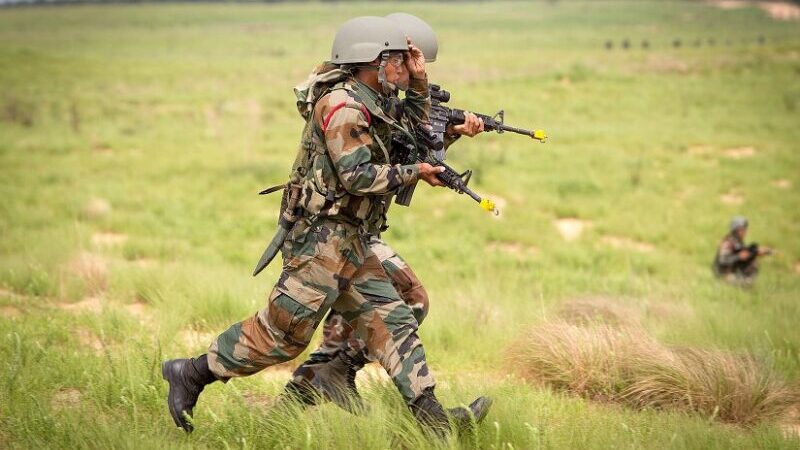
On 16 April, security forces neutralised 29 alleged Maoists in the forests of Kanker district (Bastar division) in Chhattisgarh. The Kanker joint operation led by the Border Security Force and District Reserve Guard (DRG) of Kanker has become billed as the most successful security operation since the formation of Chhattisgarh in 2000. Out of 29 casualties, two of the top Maoists, Lalita and Shankar belonging to Bastar divisional committee, were neutralised by the security forces. It is also speculated that the entire Partapur Area Committee of CPI-Maoist has been eliminated in the encounter.
A fortnight later (30 April), a team of DRG and Special Task Force launched another successful encountereliminating 10 more Maoists near the borders of Narayanpur and Kanker districts. Among the slain Maoists, there were two prominent divisional committee members. It may be recalled that in another successful joint operation on 3 April, DRG, Special Task Force, the elite CoBRA unit and the Central Reserve Police Force (CRPF) neutralised as many as 13 alleged Maoists in Bijapur, Chhattisgarh. A week before (27 March), a joint security operation involving DRG, CRPF and CoBRA unit neutralised 6 insurgents near Chipurbhatti area of Bijapur. Thus, in 2024 itself (January-April), the once dreaded CPI-Maoist organisation has suffered massive blows in the hands of security forces.
In the span of four months, a record 91 Maoists including some of the top commandoes have been killed by the Chhattisgarh state. Compare this figure with 2023. In the entire year, only 23 casualties incurred among the Maoists. In short, there is every indication that 2024 will surpass the records of past years as far as the security forces’ domination over CPI-Maoist is concerned. Thus, can we say that Chhattisgarh has turned the corner on Maoists? Has the state gained the upper hand over Maoists, which may remain irreversible?
At last Chhattisgarh has an upper hand
While the violent incidents related to left-wing extremism have come down to manageable levels in most of the affected states (see figure) in the last decade, Chhattisgarh still remains one of the key bastions of the CPI-Maoists. Not long ago, as many as 18 (out of a total of 27) districts of the state were under the influence of extremist organisations. Dantewada, Bijapur, Narayanpur, Bastar and Kanker among others remain some of the most affected districts as far as Maoist insurgency is concerned. It may be recalled that not too long ago, Maoists launched some major attacks, particularly the massacre of 76 CRPF soldiers in 2010 and the killing of the entire top leadership of the Congress Party in Chhattisgarh in 2013.
However, after years of dithering and policy ambivalence, particularly over the controversial Salwa Judam (local vigilante initiative), the state leadership in recent years has shown major determination while fighting the Maoists and checkmating their spatial spread and growing influence. To begin with, the state government has gone for a massive scaling up of its police force and followed the Andhra Greyhound model to create its new battalion of Special Forces (popularly called CoBRA unit). Importantly, successive governments in Chhattisgarh have shown a common purpose to tackle the menace of Maoism by investing in crucial human development indicators (notable example is the public distribution scheme to enhance food security among tribal populations).
However, the game changer in the counterinsurgency strategy has been the special emphasis on improving road connectivity. The state has successfully executed 11 key road projects in the crucial Sukma, Bijapur and Jagdalpur districts. In 2021, the state government with active support from the Centre, constructed the critical Palli-Barsur axis road, which has facilitated movement of security forces to inaccessible areas in Bodli and Kedameta. The enhanced combat capability of the local police through police modernisation (Bastariya Battalion), fortified police stations, and improved coordination between the Centre and state, including intelligence and paramilitary support, is beginning to pay off.
Further, the improved road connectivity has enabled the state to open more security camps in the interior areas once considered to be Maoist strongholds. For instance, between December 2023 and April 2024, the CRPF has opened 20 new camps in the Sukma-Bijapur region, whereas the Border Security Force (BSF) has opened three new camps in Kanker district. Notably, in February, the security forces have able to set up a police camp in Puvarti village (Sukma district), a stronghold of dreaded Maoist commander Hidma. Such has been the confidence of the security forces that they have taken the battle into Abujhmad (considered a major safe haven for Maoists) by establishing new police camps on the two main entry points of Kanker and Narayanpur. In recent weeks, central forces have successfully crossed the Kotri river to establish a new base camp in Abujhmad. Officials claim that it is the new camp that facilitated the execution of the recent encounter at Kanker.
In short, a slew of security and developmental measures along with the overall decline of the CPI-Maoist organisation nationally has given Chhattisgarh state an upper hand over the rebels. The proof lies in the numbers. For example, between 2018 and 2024 (up to 06 May), as many as 465 Maoists have succumbed due to increased security measures. In the same period, about 206 security forces have lost their lives while taking on the rebels. While the fatalities ratio is heavily in favour of the security forces, what is significant is the drastic reduction in violent incidents and, more importantly, civilian casualties in the same period (See graph 1). What is even more noteworthy is that under pressure, there is a growing trend of surrender from the Maoist cadres. Recently, as many as 35 Maoists surrendered before the Dantewada police. A combination of an attractive rehabilitation policy, Maoism’s loss of ideological attraction, and mounting pressure generated through security operations have led to the surrender of more than 800 Maoists since 2020.
Too early to declare victory?
As seen from the above discussions, Chhattisgarh state has made significant inroads against the Maoists. Having inflicted heavy casualties on the rebels, as clearly demonstrated from the recent security operations and growing confidence in setting up security camps next to Abujhmad, it would prompt many to declare victory over the CPI-Maoists. However, it would be prudent for the state leadership and the security establishment overseeing crucial counterinsurgency operations to remain cautious and not fall prey to false bravado. Despite ceding control over major districts and losing many fighters to the security forces, the Maoists still remain a strong force in Abujhmad and key districts of Narayanpur, Bijapur, Bastar and Dantewada.
Moreover, as per the latest categorisation of districts affected by Maoist activities, as many as 15 districts from 58 are from Chhattisgarh alone. The hilly and forested region of Bastar is heavily mined (with landmines) making it extremely difficult for security forces to move freely and launch combing operations. Further, as past incidents have proven, the CPI-Maoists still retain the capability to launch daring attacks on security forces. Not so long ago, (26 April 2023), the Maoists conducted a major ambush leading to the deaths of 10 DRG personnel in Dantewada. The insurgents launched such a daring attack despite significant improvement in road connectivity and security preparedness.
However, as indicated in this article, the series of operations by security forces in imposing massive casualties for the Maoists indicate that his incident will unlikely be repeated. This is largely because of the security forces’ recent success in setting up police camps in Maoist strongholds including areas close to Abujhmad.Yet, lessons from counterinsurgency success stories indicate that the state and its security forces have to stay where they are for the long haul, while opening a line for peace dialogue with the rebels at the same time. Mere elimination of Maoist fighters will not end the more than 50 years of protracted insurgency.
- About the author: Niranjan Sahoo is a Senior Fellow at the Observer Research Foundation
- Source: This article was published by Observer Research Foundation
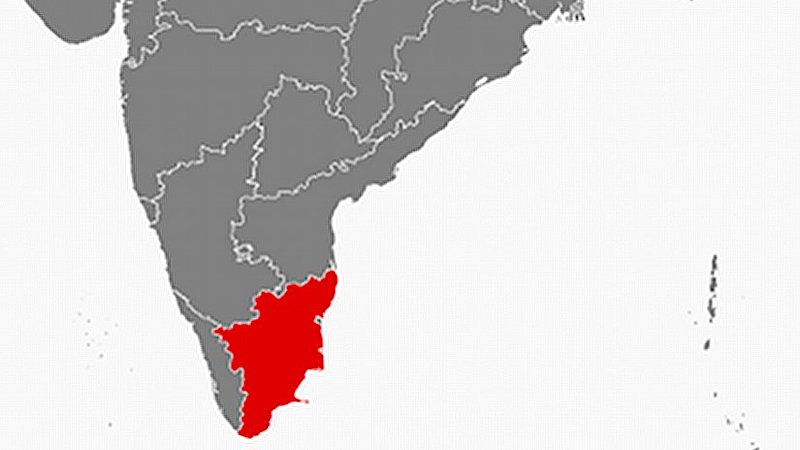
The North-South and Brahmin-non Brahmin divides have again come to the fore but Tamils hope that the INDIA alliance will blunt the BJP’s brutal centralization and divisive Hindu nationalism.
The on-going elections to the Indian parliament are being fought in various States and Union Territories of the country on the basis of a multiplicity of issues varying from State to State.
These issues could be caste, farmers’ problems, unemployment, oppressive taxation, political malfeasance, dictatorial tendencies, excessive centralization, financial discrimination against the better performing States, social justice and communalism, especially persecution of Muslims.
In Tamil Nadu, where polling for all the 39 seats was held in the very first phase on April 19, the over-riding issue has been the danger posed to the time honoured values of the Dravidian movement which stands for federalism, secularism, equalitarianism and justice for the socially and educationally backward classes, Dalits and tribals.
All parties in Tamil Nadu, barring the Bharatiya Janata Party (BJP) led by Narendra Modi, are sworn to protect and foster the ideology of the Dravidian movement which is under an unprecedented threat posed by the BJP which is identified with brutal centralization and an extremist brand of political Hinduism encapsulated in the term Hindutva.
Not all parties in Tamil Nadu brand themselves as “Dravidian”. The Congress and the Muslim League in Tamil Nadu are not Dravidian parties per se, but they are as committed to the ideals and goals of the Dravidian movement as the branded ones. In fact, no party which is not committed to the ideals of the Davidian movement can strike roots in Tamil Nadu’s soil.
Indeed, some outstanding leaders of the Congress and the Muslim League are considered as part of the Dravidian pantheon. The outstanding examples are K. Kamaraj of the Congress and Mohammad Ismail of the Muslim League.
Kamaraj is hailed by the Dravidian movement as Perun Thalaivar or the Great Leader of the Tamils. In return, the Tamil Nadu Congress Committee recognises the founder of the Dravidian Movement Periyar E.V.Ramaswamy Naicker as one of its earliest State level Presidents, and has a portrait of his in the party office in Chennai.
Mohammad Ismail is recognised as a votary of the Tamil language. In fact, in the Constituent Assembly in 1947, Ismail had advocated the recognition of Tamil as one of the official languages of the Union of India. After partition in 1947, Ismail became an ally of the Congress but later shifted to the Dravidian parties as these were more accommodative of the Muslims. The Tamil Nadu Muslim League has since been promoting the Muslim interest within the Dravidian ideological framework.
The BJP, on the other hand, is seen as the quintessential anti-thesis of Dravidian ideals, a representative of the upper caste and upper class Hindus. More precisely, it seen as representing the Brahmins, against whose historic hegemony the Dravidian movement has been fighting since the 1920s. No wonder then that today, the staunchest supporters of the BJP and the RSS both in Tamil Nadu and among Non-Resident Indian Tamils are Brahmins.
While the Dravidian movement considers Sanatan Dharm as an ideological justification of the caste system, the Brahmins and North Indian Hindus see Sanatan Dharm as a set of liberal values even considering caste as division of labour rather than a system of invidious social system of discrimination based on birth. But the Dravidian movement thinks that this interpretation is utterly false.
When the Tamil Nadu Sports Minister Udhayanidhi Stalin said that Sanatan Dharm has to be eradicated, Hindus in the North and Brahmins in the South condemned him. The Congress party’s silence on the issue was exploited fully to show the Congress and the DMK as anti-Hindu.
However such a portrayal did not wash in Tamil Nadu because Tamils do not identify Hinduism with the Sanatan Dharm. Tamil Hinduism, which is what is practiced in Tamil Nadu by the masses, is egalitarian, based as it is on the Bhakti cult.
The North-South and Brahmin-non Brahmin divide came into the open when a leading Carnatic vocalist, T.M.Krishna, was given the Madras Music Academy’s top award of Sangeetha Kalanidhi and was to preside over the next annual session of the Academy. Through his concerts, speeches and writings, Krishna had been castigating the caste biases in the Carnatic music echo-system. He has been including Islamic and Christian themes in his concerts. But the Brahmin lobby saw Carnatic music as Hindu music.
While the non-Brahmins hailed Krishna’s efforts, the Brahmin lobby which has a stranglehold over the Music Academy, flew into a rage. Musicians Ranjani and Gayatri withdrew from the December Music concerts. They accusing Krishna of singing the praise of Dravidian movement’s founder, Periyar Ramaswamy Naicker, who, according to them, proposed the “genocide” of Brahmins repeatedly and referred to Brahmin women using “profanity”.
Other Brahmin artistes followed suit with condemnation of Krishna. North Indian BJP leaders and North Indian Youtubers interviewed the dissenters to portray Krishna, the DMK and even the Congress as anti-Hindu.
Issues such as Sanatan Dharm and T.N. Krishna were incubating in a climate of a Centre-State/North-South conflict over the devolution of finances from the Centre to the States. Tamil Nadu and other Southern States had been protesting against the Central government’s policy of punishing them for performing well on the population control and economic fronts. The finances devolved to them did not at all match their contribution to the Centre’s kitty, while it was the other way round in the case of the poorly performing North Indian States. Leaders of the Southern States even sat on a dharna in New Delhi to draw the attention of the Modi regime.
The other issue that was bothering Tamil Nadu and other South Indian States was the proposal to redefine parliamentary constituencies based on a new population count. That could lead to the further dilution of the South’s representation in parliament as the Southern States’ populations are under control in contrast to those of the Northern States.
The explosion of Youtube news and discussion outlets have made all these issues, including the ones thrown up in the on-going elections, subjects of comment and debate involving the common man, experts and politicians. These programs have started getting lakhs if not millions of viewers of all classes as the smart phone is ubiquitous these days.
So far, these Youtube outlets have been encouraging only sober debate not slanging matches which are standard fare in the mainstream TV channels.
What one observes in the new media in Tamil Nadu is the attempt to highlight the history and culture of the Tamils with the help of scholars and litterateurs. A new pride in being a Tamil is being instilled, pride which had dimmed in the balmy era of Gandhi and Nehru. The secular nationalism and the accommodative ethos of Gandhi and Nehru had eroded aggressive Tamil nationalism.
In the face of the challenge from the intolerant and oppressive nationalism based on Hindutva, promoted by Modi’s BJP, there is a revival of aggressive Tamil nationalism on the Youtube
However, the new Tamil nationalism is not separatist. It is based on an explicitly stated hope that under the Congress-led INDIA alliance, the ideals of the Indian constitution will be reinstalled as the guiding star of modern India and that India’s unity will be re-established and strengthened.
Hence the wish in Tamil Nadu that the DMK-led INDIA alliance will sweep the current elections winning all the 39 seats and help rein in or replace Modi’s BJP at the Centre.
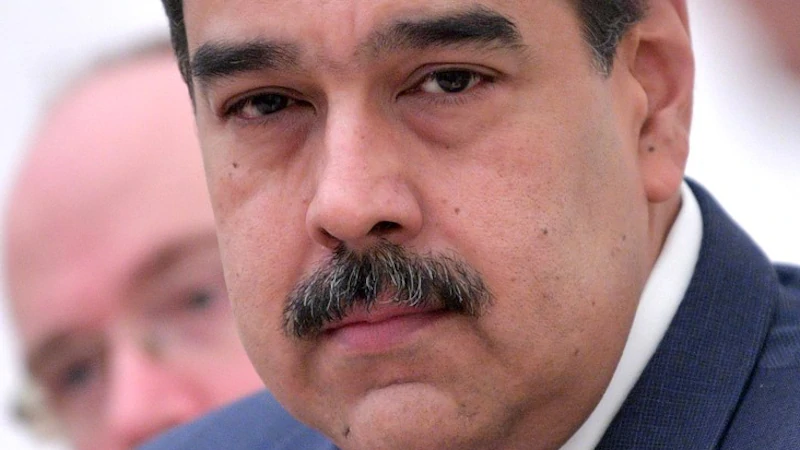
The Bolivarian Republic of Venezuela is shaking with fever ahead of the presidential elections at the end of July. Although the elections seem to be quite far away, the pre-election drama has been going on constantly for a year and a half. The question is whether the elections will be held under fair rules and who will be the opponents to the current socialist president Nicolas Maduro.
Namely, on October 18 last year in Bridgetown under the auspices of Norway, the Barbados Agreement was signed between the Venezuelan government and the strongest opposition group, the Unitary Platform. The agreement is an integral part of broader international efforts to speed up dialogue between the government and the opposition to reach an agreement on free elections.
The agreement provided for the expansion of voter lists, allowing a freer press during the campaign, auditing the electoral process and allowing the presence of foreign observation missions. Already a day later, five people were released from prison, including journalist Rolando Carren and former MP Juan Requesens. The agreement was welcomed by Western powers such as the USA and the European Union, as well as human rights organizations. In a goodwill gesture, the United States eased sanctions on Venezuela’s oil, gas and gold sectors, stressing that it could reinstate the sanctions after six months if the deal collapses.
Maduro cheated the Barbados agreement
In three months of the current year, slowly but surely Maduro’s government stopped pretending to respect the introduction of democratic and political freedoms. Moreover, it has clearly shown that it does not intend to give up authoritarianism and the use of coercive means in order to retain power by all means. The Barbados deal has largely become a dead letter and the Venezuelan government has no intention of holding free presidential elections scheduled for July 28.
In fact, analysts say that this could be one of the most unfree elections in the last 25 years of the rule of Chavista presidents – the late Hugo Chavez and Nicolas Maduro. Besides the regime-controlled National Electoral Council (CNE) disqualifying the main opponents in the elections, María Corina Machado and Corina Yoris, the government carries out open repression against all persons and organizations that considers a political threat. There have been the imprisonment of prominent representatives of civil society (lawyer Rocío San Miguel), the expulsion of members of the Office of the United Nations High Commissioner for Human Rights in Venezuela (OHCHR), the imprisonment of ordinary prominent citizens such as Youtuber Oscar Alejandro Pérez, and there is also the mysterious murder of Ronald Ojeda.
The sudden death of Ronald Ojeda
The murder of a former lieutenant in the Venezuelan army, 32-year-old Ronald Ojedo, in Chile at the end of February raised doubts about the involvement of the Venezuelan secret services. The main suspect is the Venezuelan criminal group Tren de Aragua. Ojeda has been in Chile since fleeing Venezuela, where authorities detained and tortured him over an alleged failed attempt to oust President Maduro.
In January, the Venezuelan Ministry of Defense claimed that Ojeda was planning “criminal and terrorist actions” against the government. At least three people dressed as police officers abducted Ojeda from his 14th-floor apartment in northern Santiago de Chile shortly after 3 a.m. on February 21. Kidnappers put him in a car that was later found abandoned with police uniforms. On March 1, police officers discovered Ojeda’s body in a coffin buried under cement in Maipú, the southwestern part of Santiago where multiple Tren de Aragua torture facilities were previously discovered. On the same day, the police arrested a 17-year-old Venezuelan for kidnapping and murder. Interpol warrants issued against two more suspects who are believed to have fled to Bolivia and Peru.
On March 11, Chilean President Gabriel Borić promised to destroy the organization. Borić’s statement came after Chilean state prosecutor Héctor Barros accused the group of kidnapping and murdering Ojeda. He said the crime may have been ordered by someone outside Chile and did not rule out political motives. Before the kidnapping, Ojeda had not received any threats from criminal groups, but he felt that he was in danger. Although there is no evidence so far, one of the suspects worked for the former vice president of Venezuela, Tareck El Aissami, when he was the governor of the Venezuelan federal state of Aragua. During El Assaimi’s mandate, Tren de Aragua grew stronger and received the support of the government. It is the largest organized crime group in Venezuela that can be labeled as “mafia”. The organization has spread throughout Latin America and conducts illegal activities of trafficking in people, weapons, drugs and organizes prostitution. The Venezuelan government, of course, rejects links to the Tren de Aragua.
Appearance of Machado
Regarding the election match, María Corina Machado was definitely the most serious opponent to Maduro. In August 2022, she confirmed her participation in the primaries of the Unitary Platform. In March 2023, she started her pre-election tour. She criticized the leadership of the traditional parties, Democratic Action, Justice in the First Place, New Era and People’s Will. On June 30, 2023, the State Comptroller General disqualified her candidacy for 15 years for supporting the self-proclaimed government of Juan Guaido and for supporting international sanctions against Venezuela.
Organizations such as the UN, the Organization of American States (OAS), the EU and numerous Latin American countries have condemned the ban on Machado’s candidacy. This did not prevent her from participating in the primaries. On October 26, 2023, after a convincing victory (93% of the vote), she was declared the sole presidential candidate of the Unitary Platform. Machado’s 15-year disqualification was confirmed by the Supreme Court in January. She appointed Corina Yoris as her replacement. And Yoris was prevented from registering by the Maduro regime, and she appointed Edmundo González Urrutia as a temporary replacement.
Machado was and remains the opposition’s best candidate because she united the disunited opposition groups in the idea that change can truly happen. She remained composed in the campaign even though her associates were persecuted by the Maduro regime. The regime even declared Vente Venezuela, Machado’s party, a terrorist group. The former Colombian president, Ivan Duque, has warned the international community of the risk that Venezuela’s Bolivarian Intelligence Service (SEBIN) will attempt to carry out an assassination. Given her many years of political experience and knowledge of foreign policy, Machado has good connections with American political circles and in 2005 she had a meeting with President George W. Bush. Those connections could help her if she comes to power for the eventual serious involvement of American investors in the faltering Venezuelan economy.
Manuel Rosales – the regime’s “Trojan horse”?
In the final hours of candidate filing, the government-controlled National Electoral Council (CNE) continued to register candidates for the election except for Machado and Yoris. In the end, there are 13 of them. Many of these candidates are actually “Trojan horses” of the regime, – fake opposition parties who serve Maduro as a democratic decoration for the elections. There are assumptions that one of them is Manuel Rosales, the current governor of the state of Zulia. He was nominated by the New Time party, which at the last moment broke away from the Single Platform. Back in 2006, Rosales faced the late Chávez in the elections. Due to accusations of corruption, he went into exile in Peru in 2009, and returned to Venezuela in 2015. After his return, he was soon sent to prison and then to house arrest. The following year, he was released from prison and his ban on running in elections was suddenly lifted. That is why many observers believe that Rosales sold out to the regime. He served twice as the governor of the state of Zulia and is a recognizable politician at the national level.
Machado attacked Rosales as a hidden regime candidate who divides the opposition. The more candidates there are, especially the less popular ones, it’s better for Maduro. Rosales denied the accusations and promised to support Machado if the CNE ultimately approves her candidacy. Such a scenario is very unlikely and possible only as a result of great international pressure. There is international pressure, not only from the Chavismo-averse West, but also from the left-wing governments of Brazil, Colombia, and Chile, as well as the right-wing or centrist governments of Uruguay, Paraguay, and Ecuador. Current progressive Colombian President Gustavo Petro went so far as to call Maduro an “anti-democratic coup” due to Machado’s disqualification. Lula recently said that there is no “legal or political explanation for the ban” of her candidacy.
New US sanctions
On April 18, the US government reimposed oil sanctions on the Venezuelan government for not complying with the Barbados Agreement. Considering the widespread electoral irregularities and relentless political repression, this is not a surprise. According to UNHCR estimates, currently 7,7 million Venezuelan citizens have left their homeland. About 10% of them arrived in the USA. If the regime rigs the elections, it is possible that this will further encourage migrant waves ahead of the US elections in November.
The ICC indictment – the nightmare of Maduro and associates
If any of the presidential candidates gets more votes than Maduro, there is no doubt that the Chavista regime will do everything to challenge the results. A socialist leader would not be able to enjoy retirement like presidents in democratic countries after losing the elections. The majority of his own people do not like him because of the introduction of repression and economic collapse, and he could easily become a victim of assassination.
In addition to avoiding such a scenario, Maduro will do everything to remain in the Miraflores presidential palace as this is his best protection against the very likely prosecution and extradition to the International Criminal Court (ICC). In February 2018, the ICC opened a preliminary investigation against the Venezuelan authorities led by Maduro for crimes against humanity. In 2020, the ICC Prosecutor’s Office stated that it believed there were “reasonable grounds” to believe that “since at least April 2017, crimes against humanity have been committed by civilian authorities, members of the armed forces, and pro-government individuals,” and in 2021, ICC Prosecutor Karim Khan announced the opening of an investigation into the situation in the country.
Maduro and his associates are safe in power as they are guarded and protected by Venezuela’s powerful military-police apparatus. However, if they lose power, they could face the same scenario as Serbian President Slobodan Milošević and other high-ranking Serbian officials who were extradited to the International Criminal Tribunal for the former Yugoslavia (ICTY). How Milošević and most of the defendants fared in that court is well known, and it is hard to believe that the defendants from Venezuela would have fared differently since there are political motives behind the ICC. More precisely, the indictment was initiated in May 2018 by a panel of “independent experts” appointed by the multilateral Organization of American States (OAS) under American influence.
Maduro uses old communist tactics in new times
If the elections in Venezuela were held according to the high democratic standards of Norway, Denmark, and UK, there is no chance that Maduro would win. According to polls, he enjoys 15% to a maximum of 20% of voter support – more than miserable figures. In the same polls, Machado gets 55 to 70% of voter support. And any other even serious candidate who could freely compete with Maduro would easily win the elections. However, as a grandmaster of political survival, Maduro has found ways to combat poor approval ratings. During his decade in power, he became recognizable by the fact that he received the nickname of “tropical Stalin”.
Although Maduro’s socialist government is not capable of running an economy that has not been solved in 10 years (including the problem of consumer goods shortages), it has proven to be extremely skilled in electoral rigging, including taking control of the formally independent CNE. The Chavista regime not only wins all elections but also decides who will lose because it disqualifies all relevant political opponents before the elections (Henrique Capriles, María Machado…) or faces indictments, prison and exile (Leopoldo Lopez, Juan Guaidó). At the beginning of March, the NCE sent an invitation to observers from the EU and the USA to come to the elections, but their schedules are too busy and they cannot monitor the process properly. The Venezuelan diaspora of over 7 million people, which is predominantly anti-socialist, is excluded from the electoral process and cannot register to vote. The local population voting for the first time was given a deadline of April 16. Since the beginning of this year, the government has shut down nine radio stations that criticized the government. Thus, Maduro has truly taken over the old communist tactics.
A replay of the Cuban scenario
It would be correct to say that Maduro has turned Venezuela into a new Cuba and that he is the Venezuelan Fidel Castro without the charisma. Like Cuba, Venezuela has become a “socialist paradise” that everyone is abandoning despite the promotion of socialist ideals.
Admittedly, the situation has improved somewhat in recent years with the introduction of transactions in dollars and certain liberal steps, but the country is still an economic warehouse and recovery is not in sight. Statistics show everything. Although the national GDP grew by 5% last year, inflation in March was slightly less than a whopping 68%. In 2023, unemployment was 5,9%, and the rate of extreme poverty was 59%. Venezuela is the worst in corruption in the competition of 15 Latin American countries, the rate of democratic freedom is 15 out of 100.
Pre-election fever
Maduro’s victory in the elections on July 28 (Hugo Chavez’s birthday) is likely when repression and election rigging are taken into account. It is hard to believe that an even more serious election process could be allowed because elections are by their very nature uncertain and a spontaneous. Mass participation of the people can change everything. For example, in the 1988 referendum, the regime of the Chilean dictator Augusto Pinochet fell. However, if election theft due to poor organization becomes more than obvious to the public, large violent street protests appear in Caracas and elsewhere with increased international pressure, it could happen that Chavista elites reject Maduro to save their political idea and movement.
What Maduro should fear most is the betrayal of his own political circle within the United Socialist Party of Venezuela (PSUV). There are indications that palace intrigues are being conducted in Miraflores, that is, factions within Chavismo want to find a way to end the decade of Venezuelan political-economic crisis. Due to the lack of money in the state budget, the government has fewer opportunities to buy the support of the poorest sections of the population, which are the foundation of the Chavista electoral base. It is certain that the Bolivarian Republic of Venezuela is shaken by pre-election fever, and the future of the country after the elections is more than uncertain.
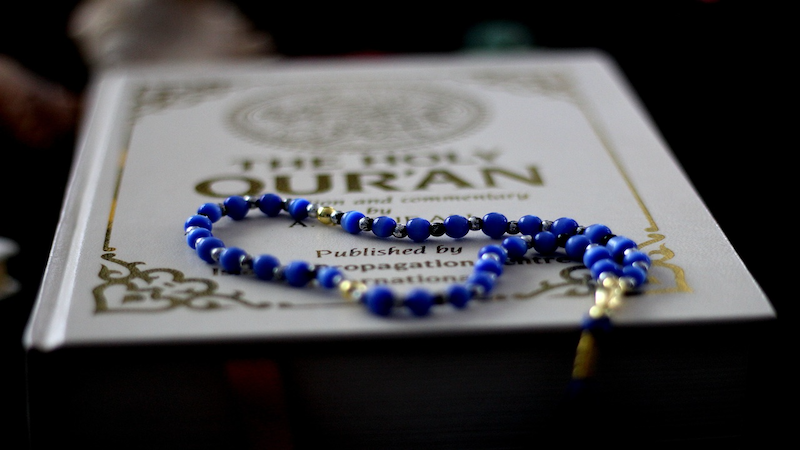
Has Islam been the one religion acceptable to God since the days of Prophet Muhammad? Does Islam claim to replace Christianity and Judaism, the way Christianity claimed (until recently) to have replaced Old Testament Judaism?
One does frequently hear extremist, and even some non-extremist Muslims, quote the Qur’anic verse: “And whoever seeks a religion other than Islam, it will never be accepted of him, and in the hereafter he will be one of the losers.” (Qur’an 3:85) That sounds pretty exclusive.
But the Qur’an also states, and then repeats: “Verily, those who believe, and those who are Jews and Christians, and Sabians; whoever believes in Allah and the Last Day and does righteous deeds; shall have their reward with their Lord. On them shall be no fear, nor shall they grieve.” (Quran 2:62 & 5:69)
And the Qur’an goes even further, proclaiming that religious pluralism is the will of Allah. “If Allah had so willed, He would have made you a single people, but (God’s plan is) to test (each group of) you in what He has given you: so compete in all virtues as in a race. The goal of you all is to (please) Allah who will show you on judgment day the truth of the matters which you dispute.” (Qur’an 5:48)
This means that religious pluralism is the will of God. Thus, we will never know “the truth of the matters which you dispute” until judgement day. What we can know is who is the kindest and most charitable among us.Yet for centuries many believers in one God have chided and depreciated each other’s religions, and some believers have even resorted to forced conversions, expulsions, inquisitions and massacres to spread their faith even though monotheists all pray to the same God, and all prophets of monotheistic faiths are inspired by the same God.
The two Quran verses above (Quran 2:62 & 5:69) place Jews, Christians, and Sabians alongside Muslims; and say that any one among them who “believes in Allah and the Last Day and does righteous deeds shall have their reward with their Lord, on them shall be no fear, nor shall they grieve”.
Although these two verses (Quran 2:62 & 5:69) seem to be completely contradictory to the first verse (Qur’an 3:85), and it is possible that one view abrogates the other, there is a much simpler explanation.
There are two meanings for the word “Islam”. First, there is basic, fundamental, Islam (submission to God) which was the religion of all the prophets from Adam to Muhammad.
Second, there is the special and unique religion, or more accurate, way of life of Islam taught by Prophet Muhammad.
The two verses quoted above refer to basic, fundamental, Islam and not to the special and unique religion of Islam. In today’s terms; basic Islam should be spelled ‘islam’ without a capital letter ‘I’, and special and unique Islam should be spelled with a capital ‘I’. The same is true for Muslim, a member of a special and unique community, and ‘muslim’ referring to one who follows the fundamental “religion” of living in obedience to the commandments of the one God as taught by Moses, Jesus, or any other prophet of the one God.
Thus, “And whoever seeks a religion other than (monotheistic) islam, it will never be accepted of him, and in the hereafter he will be one of the losers.” (Qur’an 3:85) includes Jews, Christians, and Sabians (whoever they are) but does not include atheists on one hand, and polytheists on the other hand.
The Qur’an and Judaism by Reuven Firestone 2020, Oxford Handbook of Qur’anic Studies says: The Qur’an itself reflects a consciousness of association with Jewish and Christian scripture, thought, and practice. The Qur’an states: ‘Surely it (the Qur’an) is a communication sent down from the Lord of the worlds (God), which the trustworthy spirit (Gabriel) has brought down on your heart (Prophet Muḥammad) so you will be one of the warners (Prophets) in a clear Arabic tongue. It is most certainly in the scriptures (Torah and Gospels) of the ancients. Is it not a sign for them that the learned among the Children of Israel (Rabbis) know it?’ (26:192–7)
Religious pluralism as the will of God is very different from religious, moral or cultural relativism. Relativism teaches that all values and standards are subjective, and therefore there is no higher spiritual authority available for setting ethical standards or making moral judgements. Thus, issues of justice, truth or human rights are, like beauty, just in the eye of the beholder. Most people, especially those who believe that One God created all of us, refuse to believe that ethics and human rights are simply a matter of taste. Religious pluralism as the will of God is the opposite of cultural or philosophical relativism.
The fundamental idea supporting religious pluralism is that religious people need to embrace humility in many areas of religion. All religions have always taught a traditional anti self centered personal egoism type of humility. Religious pluralism also opposes a religious, philosophical, and self righteous intellectual egoism that promotes a tendency to turn our legitimate love for our own prophet and Divine revelation into universal truths that we fully understand and know how to apply.
Religious pluralism teaches that finite humans, even the most intelligent and pious of them, can not fully understand everything the way the infinite One does. This is true, for every human being, even for God’s messengers themselves. When prophet Moses.”who God spoke with face to face, as a person speaks with a friend” (Exodus 33:11) asks to see God face to face, he is told, “You cannot see My face, for no man can see My face and live.” (33:20)
Similarly, in the Qur’an prophet Jesus admits to God, “You know everything that is within myself, whereas I do not know what is within Yourself”. (7:116) In the New Testament when prophet Jesus is asked, in private, by his disciples, “What will be the sign for your coming (back) and the end of the age?” (Matthew 24:3) Jesus warns his disciples about all kinds of upheavals and false Messiahs that will come. Then Jesus concludes by saying, “But about that day and hour no one knows, not even the angels in heaven, not even the son: only the Father”. (24:36)
A similar statement was made by prophet Muhammad when he was asked, “Tell me about the Hour”. Muhammad replied: “The one questioned about it knows no better than the questioner.” (Muslim book 1:1&4) Prophet Muhammad taught the general principle of epistemological humility to his followers when he said, “I am no novelty among the messengers. I do not know what will be done to me, or to you.” (Qur’an 46:9)
The famous Qur’an verse (2:255) called Ayat Al-Kursi, the “Throne verse” is known for its profound meaning and its inspiring message. Allah is well described, and we are informed that the knowledge of Allah is incomparable to our own humble efforts. The Throne verse begins: “Allah! There is no god but He, the Living, the Self-Subsisting, Supporter of all.” and ends: “They shall not encompass any of His knowledge except as He wills. His Throne/dominion extends over the heavens and the earth, and He feels no fatigue in guarding and preserving them. For He is the Most High, the Supreme in glory.” And the very next verse states: “There shall be no compulsion in (acceptance of) the religion (Islam).” (2:256) because all humans have limited knowledge and no one should force anyone else to believe what is knowable only to Allah.
The Qur’an refers to Prophet Abraham as a community or a nation: “Abraham was a nation/community [Ummah]; dutiful to God, a monotheist [hanif], not one of the polytheists.” (16:120) If Prophet Abraham is an Ummah then fighting between the descendants of Prophets Ishmael and Isaac is a civil war and should always be avoided.
If all Arabs and Jews can live up to the ideal that ‘the descendants of Abraham’s sons should never make war against each other’ is the will of God; we will help fulfill the 2700 year old vision of Prophet Isaiah: “In that day there will be a highway from Egypt to Assyria. The Assyrians will go to Egypt, and the Egyptians to Assyria. Egyptians and Assyrians will worship together. On that day Israel will join a three-party alliance with Egypt and Assyria, a blessing upon the heart. The LORD of Hosts will bless them saying, “Blessed be Egypt My people, Assyria My handiwork, and Israel My inheritance.”…(Isaiah 19:23-5)
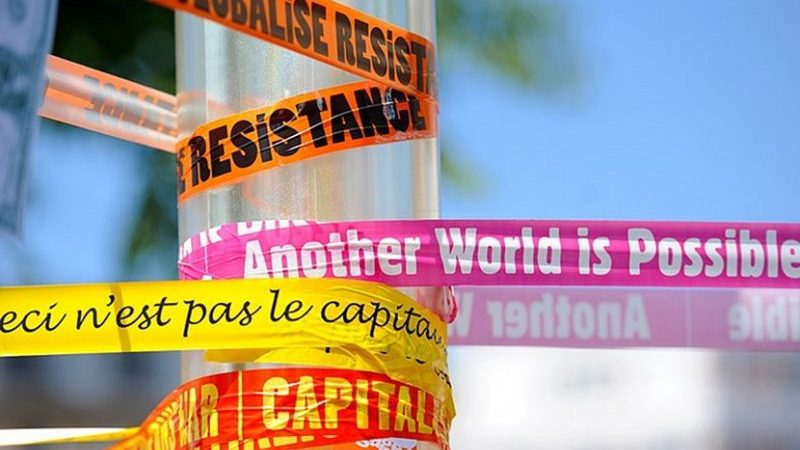
Capitalism operates as a system that many argue is akin to a criminal enterprise, one that exploits both labour and nature in pursuit of ever-increasing profits. This economic model thrives on a hierarchical structure, resembling a pyramid, where those at the top reap the most benefits while those at the bottom bear the heaviest burdens. Laborers often find themselves subjected to low wages, precarious working conditions, and limited rights, all to fuel the relentless capitalist pursuit of profit. Similarly, nature is treated merely as a monetised commodity or resource to be exploited for financial gain, leading to environmental degradation and ecological imbalance. The insatiable demand for profit drives this capitalist cycle of exploitation, creating a perpetual cycle of inequality and environmental destruction.
Capitalism fosters various forms of criminal behaviour to establish a securitised state that primarily safeguards property interests. Under this system, there exists a legal framework that disproportionately criminalises individuals for minor acts of survival, such as shoplifting, while simultaneously shielding systematic crimes, such as wars justified under the guise of exporting democracy or combating terrorism. The real intensions are to capture the natural resources for the corporate plunder. This dichotomy underscores a fundamental injustice within the legal system, where the pursuit of profit and the protection of property rights take precedence over the well-being and survival strategies of marginalised individuals. In essence, capitalism perpetuates a skewed notion of justice that serves to reinforce existing power structures and inequalities, further entrenching the cycle of exploitation and oppression.
Capitalism has not only given rise to crime syndicates but has also legitimised them under the guise of credit-led banking systems and insurance industries. These sectors, which are integral to the capitalist economy, often wield significant power and influence, shaping the economic landscape to their advantage. In doing so, they effectively domesticate labour and control the distribution of wages. The banking system, through mechanisms like predatory lending and debt bondage, exploits individuals and communities, trapping them in cycles of financial dependence and vulnerability. Similarly, insurance industries capitalize on fear and uncertainty, profiting from the misfortunes of others while offering limited protection to those in need. This intertwining of capitalism with criminal enterprises not only perpetuates inequality but also erodes the fabric of social trust and solidarity, further entrenching the dominance of corporate interests over the well-being of individuals and communities.
The privatisation of healthcare services has led to the emergence of what can be characterised as a crime syndicate, consisting of pharmaceutical corporations, private healthcare providers, and health insurance companies. Under this system, the pursuit of profit takes precedence over the provision of quality care, resulting in a business model that thrives on business of sickness rather than wellness. Pharmaceutical companies, driven by profit motives, often prioritise the development and marketing of profitable drugs over addressing genuine health needs. This pursuit of profit can lead to practices such as price gouging and the suppression of cheaper, generic alternatives, further exacerbating healthcare inequalities. Private healthcare corporations, similarly, motivated by financial gain, prioritise treatments and procedures that yield the highest returns, sometimes at the expense of patient well-being. This profit-driven approach can result in overdiagnosis, overtreatment, and unnecessary medical interventions, all of which contribute to rising healthcare costs and patient harm.
Health insurance businesses, operating within this framework, seek to maximise profits by minimising pay-outs and restricting access to care. This can manifest in practices such as denying coverage for pre-existing conditions, imposing high deductibles and co-payments, and excluding certain treatments or providers from coverage. As a result, many individuals are left underinsured or uninsured, unable to afford necessary medical care, while others face financial ruin due to exorbitant medical bills. Together, these agencies, processes, institutions, and structures form a powerful alliance that perpetuates a system of healthcare injustice, prioritising corporate profits over the health and well-being of individuals and communities. This arrangement not only exacerbates existing health disparities but also undermines the fundamental principles of healthcare as a human right.
The military-industrial complex led by defence corporations are undeniably intertwined with the criminal enterprises of capitalism and its securitised state, as they often promote and perpetuate conflicts in pursuit of accumulating wealth, regardless of the human cost. These industries thrive on the production and sale of weapons and military equipment, which are utilised in conflicts around the world. In the pursuit of profit, defence contractors frequently lobby governments to engage in military interventions and wars, sometimes fabricating or exaggerating threats to justify increased defence spending. The consequences of these actions are dire, as conflicts fuelled by the defence industry result in immense human suffering, loss of life, and displacement of populations. Civilians bear the brunt of these conflicts, facing violence, destruction of infrastructure, and the breakdown of societal systems. Meanwhile, the defence contractors responsible for supplying weapons often profit handsomely from these conflicts, further incentivising their continuation. Furthermore, the defence industry’s influence extends beyond direct conflict, as it also plays a role in shaping foreign policy and perpetuating geopolitical tensions. Arms sales to authoritarian regimes and conflict zones perpetuate instability and human rights abuses, all in the pursuit of profit. In essence, the defence industry represents a particularly egregious example of capitalism’s capacity to prioritize financial gain over human lives and global stability. It underscores the urgent need to reassess our priorities and advocate for a world where peace and diplomacy, rather than war and violence, are the primary means of resolving conflicts.
The pursuit of peace, cooperation, solidarity, the recognition of health as a universal and fundamental human right, the role of states and governments, the importance of just laws, impartial courts, and ethical banking systems for the benefit of people, as well as the utilisation of science for the welfare of humanity and the planet, all constitute a collective struggle against capitalism. Anti-capitalist struggles based on scientific and secular consciousness can only ensure peace and prosperity in the world.
#Armenia protests are also being closely covered by Azeri social media channels almost the same way as Armenian channels are covering them.
— Nagorno Karabakh Observer (@NKobserver) May 12, 2024