
A Guide to False Flag Operations
Become a Subscriber Today and Be Part of A Modern Day Intelligence Community!#FalseFlag #Intelligence #Security #CovertAction
Click on the link to find out more!https://t.co/rpMWcGP6eE pic.twitter.com/kTALh194QK
— Grey Dynamics (@GreyDynamics) May 11, 2024
Day: May 11, 2024
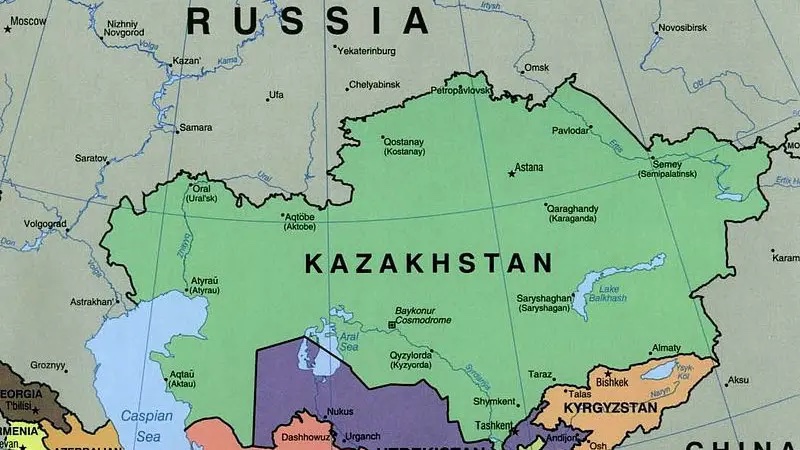
Dr. Stephen Blank, a senior fellow at the Foreign Policy Research Institute’s Eurasia Program, in his piece entitled “Is Kazakhstan Russia’s Next Target?” and published by Real Clear Defense, raises the question in the following way: “Is Kazakhstan, rather than another European state, Russia’s next target?”. Further, he explains what he in particular means as follows: “This is not an idle or frivolous question, quite the contrary. Admittedly many NATO members and NATO’s senior leaders have recently warned that Russia has designs on their territory and within 3-8 years (depending on the speaker) might attack them. Those warnings are certainly well founded. Nevertheless, and although the European situation is certainly alarming and a rightful U.S. priority; we cannot, however, exclude alternative threats from Russia to other neighbors.
Indeed, in the last year the most consistent barrage of Russian threats has targeted Kazakhstan in Central Asia as a possible candidate for Moscow’s territorial aggrandizement and invasion. Presumably such threats are directed at least at Kazakhstan’s northern territory that adjoins the Russian Federation and which many Russian nationalists, not least Aleksandr’ Solzhenitsyn, claim should be or is actually part of Russia proper”.
The position, from which Stephen Blank here speaks, appears to be not only interesting, but also illustrative for understanding where the Western expert community exactly is in terms of grasping the way relations between Russia and Kazakhstan now are being unfolded. He says: “When we remember that the long-standing Tsarist justification of invasions of neighbors dating back to Peter the Great is Russia’s self-ordained role as protector of Orthodox Christians and now, in Ukraine, of Russians, these threats must be seen as laying the groundwork for a Casus Belli (cause of war) against Kazakhstan. Moreover, this threat is now regularly reinforced on a weekly basis by prominent members of the Russian media”.
Merely to pose this threat, according to him, “raises a host of questions that have not even been considered let alone answered”. He then lists those questions: “For example, why would Russia, especially with the lessons of Ukraine in mind consider such an adventuresome if not adventurist option? Second, what does it hope to gain thereby? Third, how would it strike at Kazakhstan and with what objectives in mind? Fourth, would Kazakhstan adopt policies that would increase the risk to itself given what it already knows about Russia’s imperialist proclivities? And, if so and fifth, why would it do so? Furthermore, how would Kazakhstan either prepare for this war or defend itself?”.
“Obviously, nobody has even pondered these issues in print. But it is also all too likely that too few foreign analysts have even remotely considered this issue”, Stephen Blank notes. He next refers to the inadmissibility not only for Kazakhstan but also for foreign governments (including those who are seriously involved with the Central Asian country in one or another form) of “the luxury of ignoring this potential scenario and others that may derive from or be linked to it”.
Two more important questions, raised by Stephen Blank, are: How both Washington and/or NATO would react, and not only in the military domain, to any threat to Kazakhstan let alone a genuine act of war?; If China would oppose a Russian invasion of Kazakhstan, how Chinese opposition might manifest itself?
This author as one who sees matters in hand from the Kazakhstani perspective would like to express his point of view on the topic and some questions raised by Stephen Blank in his piece.
Here’s what is to be said first in this regard. Yes, Ukraine and Kazakhstan are indeed the two most important post-Soviet countries for Moscow. But the tendency to see Kazakhstan as a country that potentially may be directly attacked by Russia under the pretext of protecting the Russian minority in the country strictly in the way that was the case with Ukraine in 2022 seems rather inappropriate. And this is why. Ukraine is a European country, and the Ukrainians strive to become a full-fledged European nation by joining the European Union and NATO. Russia wants to impede Kyiv’s progress in Euro-Atlantic integrations. Outside the West, the current Russian-Ukrainian war launched by Putin is seen rather as a kind of intra-European war. Kazakhstan the population of which is made up of 80 percent non-Europeans, is a non-White nation. A deliberate Russian attack on that country, if this happens, will be seen in the so-called Global South (i.e. outside the West) as subjecting it to colonial aggression by a European power aimed at grabbing its most fertile lands (in Northern Kazakhstan) and its plentiful oil (in Western Kazakhstan). And this is not to mention the possibility that Russia’s outright annexation of Northern Kazakhstan, or any part of it, should this occur, would likely be seen by the Islamic world as an open incursion into the Kazakh territory, that is, as an aggression against their fellow Muslims, as a kind of the Orthodox Christian Reconquista or Crusade.
Yes, indeed, the adherents of the idea first publicly expressed by Alexander Solzhenitsyn are again and again demanding Russia take over Northern Kazakhstan. This did not start yesterday, of course, and most probably will not end tomorrow. As Casey Michel, an American investigative journalist, noted, in the early post-Soviet period, “there were four regions Moscow eyed for potential border revision. The first, Georgia’s Abkhazia region, Russia invaded in 2008. The second and third – Ukraine’s Crimea and Donbas regions – Russia invaded in 2014. The fourth is the only region Russia hasn’t yet seized: northern Kazakhstan”. Here, however, is an important point to note: the Kremlin decision-makers, who at one time supported the ‘Russian separatism’ in Transnistria (Moldova province partly populated by Russians), and in Crimea and Donbas, as well as the ‘anti-Georgian’ separatism in the Southern Caucasus, did not even once express their readiness to afford to take real similar actions concerning Kazakhstan.
In the event of the repetition of the Russian experience with, say, Crimea and Donbas in Northern Kazakhstan, [the rest of] Kazakhstan, which the Russian leadership has been used to consider as the foothold they need to sustain the other four countries of the Central Asian region under its control, hardly will remain friendly and constructive concerning Moscow. This may, therefore, suggest that a Russian thrust through to Northern Kazakhstan and/or the Kazakh Altai (a part of Eastern Kazakhstan), should this happen, would cut off overland access from Russia to Kyrgyzstan, Uzbekistan, Tajikistan, and Turkmenistan. In other words, the costs of pursuing that path may far outweigh the gains.
But that hardly has to mean that Moscow is not inclined to do with Kazakhstan what it did with Georgia, Ukraine, and Moldova. Here the matter seems to be different. As Vladimir Pozner, a French-born Russian-American journalist and presenter, said a short while ago, ‘President Vladimir Putin is anything, but crazy’. And the Kremlin master’s endgame concerning Kazakhstan seems to lie in his intention to capitalize on the specifics of the traditional Kazakh society and to create between the groups of which it is composed such dividing lines as the ones that, say, arose between Georgians and Abkhazians in late Soviet and post-Soviet Georgia, and are arising between Moldovans and Gagauzians in nowadays Moldova.
The true nature of the relationship between policy and decision makers belonging to three different traditional tribal groups – the Senior, Middle and Junior zhuzes – is a side of Kazakh society that is incomprehensible to outsiders, even to those who have long been living and working in Kazakhstan. But this is precisely the environment where Kazakh intra-elite relations are being formed. And it’s a very conservative environment. In close acquaintance with this environment, one comes to realize that little has changed there in the last 100 years. Testimony of this is what the Kazakh ex-Deputy-Prime Minister, Galym Abilsiitov, once said, ‘in Kazakhstan, the only form of the division [of society] that runs through force fields are the zhuzes; only on this basis – the fact of belonging to one or another zhuz – people identify each other’.
It may be assumed that there can be internal contradictions in the kind of society to which Galym Abilsiitov referred.
Here is how Wikipedia assesses the situation in question: At the top of the Olympus of State power, ‘representatives of the Middle [Northern, Central and Eastern Kazakhstan] and Junior [Western Kazakhstan] zhuzes, taken together, are much inferior in quantitative terms to those of the Senior zhuz [Southern Kazakhstan]’. This information might be somewhat out of date. And here is why. Since the January 2022 unrest, decisions have been and are being adopted to make the above kinds of imbalances become even more striking. Representatives from Southern Kazakhstan now hold four of the five highest State leadership positions. These are: Kassym-Jomart Tokayev (President), Maulen Ashimbayev (Chair of Parliament’s upper chamber), Olzhas Bektenov (Prime Minister) and Erlan Karin (State Secretary, State Counselor). The fifth, that of the Speaker of Parliament’s lower chamber, is now occupied by Yerlan Koshanov, a representative from Northern, Central and Eastern Kazakhstan (the Middle zhuz). For the first time since independence, Western Kazakhstan, which, due to its oil and gas industry, constitutes the cornerstone of the State’s economy and subsidizes all other regions of the country as the main donor, remains totally unrepresented in State leadership positions.
But some people claim that Erlan Karin, although he is a native of Southern Kazakhstan, is a member of the Junior zhuz. There is no documentary evidence for this, as that kind of information about a citizen is not subject to documentary fixation in Kazakhstan. In one of the interviews, Rakhat Aliyev, Nursultan Nazarbayev’s late former son-in-law, who had earlier been deputy chief of the KNB State security service (Kazakhstan’s successor to the Soviet KGB), said: “Dosym Satpayev once worked at the Central Asian Agency for Political Research, opened and funded by the National Security Committee [KNB]. It was headed by KNB agent Erlan Karin (archival materials, denunciations, and receipts are available). It is impossible to trust the opinion of “independent” experts both in the West and in Kazakhstan”.
Kassym-Jomart Tokayev came to power as Nursultan Nazarbayev’s appointee, who had allegedly been hand-picked as such because, apart from other reasons, of his coming from the Jalaiyr clan, which is considered to have the status of senior member in the Senior zhuz tribal union.
Moscow, having come to his aid in January 2022, not only helped him retain and consolidate his power, but also reinforced its own ‘king-making’ role in Kazakhstan so much that there now were persistent talks that the Kazakh regime ‘actually rests on the CSTO bayonets’. On the other hand, Russia, while reviewing its attitudes towards Northern Kazakhstan, is shifting increasingly from the model proposed by the writer Aleksandr Solzhenitsyn in 1989, to the model put into effect by the Governor-General of Siberia Mikhail Speransky back in 1822. Recall that the first one proposed taking away Kazakhstan’s northern region, along with the Russians living there; the second offered abolishing the border between the Middle zhuz and Siberia as a political frontier and accept the so-called Siberian Kazakhs into Russian citizenship. Such a transformation means that the Russians are already casting the shadow of a ‘second Donbas’ over the northeast of Kazakhstan through provoking a split between the two main groups of Kazakhs – the Senior zhuz and the Middle zhuz. Here and here and here are just some evidences of that.
The above said can be supplemented by the following information. At the very end of last year, Russian President Vladimir Putin signed an executive order on granting Russian citizenship to citizens of the Republic of Belarus, the Republic of Kazakhstan, and the Republic of Moldova. It is meant to simplify the procedure for granting Russian citizenship to citizens of the Republic of Belarus, the Republic of Kazakhstan, and the Republic of Moldova. Then it was announced that Russia decided to open a general consulate in Aktau (the Mangystau province of Western Kazakhstan) – in addition to the four existing ones in Astana (Northern Kazakhstan), in Almaty (Southern Kazakhstan), in Oskemen (Eastern Kazakhstan), and in Oral (Western Kazakhstan). This will be the second Russian general consulate in Western Kazakhstan. This is even though the number of ethnic Russians in Western Kazakhstan is very much less than in the other three regions -Northern Kazakhstan, Southern Kazakhstan, and Eastern Kazakhstan. However, on the other hand, in the Mangystau province of Western Kazakhstan, the level of protest potential is, judging by the reports in the media, very high. And is it not an explanation of Russia’s decision to open a general consulate in Aktau?
What’s next? A rather direct has been State Duma deputy Mikhail Delyagin, when speaking on this matter: “Unless Northern Kazakhstan, along with Central and Western Kazakhstan, rejoins their Homeland [Russia] as a result of the upcoming events, it will be … well, like ditching Donbas [non-admission of the Donetsk People’s Republic and the Luhansk People’s Republic to Russia]”.
Anyway, Moscow’s plan for splitting up Kazakhstan is most probably already working, but very few people notice this.
Dr. Stephen Blank, a senior fellow at the Foreign Policy Research Institute’s Eurasia Program, in his piece entitled “Is Kazakhstan Russia’s Next Target?” and published by Real Clear Defense, raises the question in the following way: “Is Kazakhstan, rather than another European state, Russia’s next target?”. Further, he explains what he in particular means as follows: “This is not an idle or frivolous question, quite the contrary. Admittedly many NATO members and NATO’s senior leaders have recently warned that Russia has designs on their territory and within 3-8 years (depending on the speaker) might attack them. Those warnings are certainly well founded. Nevertheless, and although the European situation is certainly alarming and a rightful U.S. priority; we cannot, however, exclude alternative threats from Russia to other neighbors.
Indeed, in the last year the most consistent barrage of Russian threats has targeted Kazakhstan in Central Asia as a possible candidate for Moscow’s territorial aggrandizement and invasion. Presumably such threats are directed at least at Kazakhstan’s northern territory that adjoins the Russian Federation and which many Russian nationalists, not least Aleksandr’ Solzhenitsyn, claim should be or is actually part of Russia proper”.
The position, from which Stephen Blank here speaks, appears to be not only interesting, but also illustrative for understanding where the Western expert community exactly is in terms of grasping the way relations between Russia and Kazakhstan now are being unfolded. He says: “When we remember that the long-standing Tsarist justification of invasions of neighbors dating back to Peter the Great is Russia’s self-ordained role as protector of Orthodox Christians and now, in Ukraine, of Russians, these threats must be seen as laying the groundwork for a Casus Belli (cause of war) against Kazakhstan. Moreover, this threat is now regularly reinforced on a weekly basis by prominent members of the Russian media”.
Merely to pose this threat, according to him, “raises a host of questions that have not even been considered let alone answered”. He then lists those questions: “For example, why would Russia, especially with the lessons of Ukraine in mind consider such an adventuresome if not adventurist option? Second, what does it hope to gain thereby? Third, how would it strike at Kazakhstan and with what objectives in mind? Fourth, would Kazakhstan adopt policies that would increase the risk to itself given what it already knows about Russia’s imperialist proclivities? And, if so and fifth, why would it do so? Furthermore, how would Kazakhstan either prepare for this war or defend itself?”.
“Obviously, nobody has even pondered these issues in print. But it is also all too likely that too few foreign analysts have even remotely considered this issue”, Stephen Blank notes. He next refers to the inadmissibility not only for Kazakhstan but also for foreign governments (including those who are seriously involved with the Central Asian country in one or another form) of “the luxury of ignoring this potential scenario and others that may derive from or be linked to it”.
Two more important questions, raised by Stephen Blank, are: How both Washington and/or NATO would react, and not only in the military domain, to any threat to Kazakhstan let alone a genuine act of war?; If China would oppose a Russian invasion of Kazakhstan, how Chinese opposition might manifest itself?
This author as one who sees matters in hand from the Kazakhstani perspective would like to express his point of view on the topic and some questions raised by Stephen Blank in his piece.
Here’s what is to be said first in this regard. Yes, Ukraine and Kazakhstan are indeed the two most important post-Soviet countries for Moscow. But the tendency to see Kazakhstan as a country that potentially may be directly attacked by Russia under the pretext of protecting the Russian minority in the country strictly in the way that was the case with Ukraine in 2022 seems rather inappropriate. And this is why. Ukraine is a European country, and the Ukrainians strive to become a full-fledged European nation by joining the European Union and NATO. Russia wants to impede Kyiv’s progress in Euro-Atlantic integrations. Outside the West, the current Russian-Ukrainian war launched by Putin is seen rather as a kind of intra-European war. Kazakhstan the population of which is made up of 80 percent non-Europeans, is a non-White nation. A deliberate Russian attack on that country, if this happens, will be seen in the so-called Global South (i.e. outside the West) as subjecting it to colonial aggression by a European power aimed at grabbing its most fertile lands (in Northern Kazakhstan) and its plentiful oil (in Western Kazakhstan). And this is not to mention the possibility that Russia’s outright annexation of Northern Kazakhstan, or any part of it, should this occur, would likely be seen by the Islamic world as an open incursion into the Kazakh territory, that is, as an aggression against their fellow Muslims, as a kind of the Orthodox Christian Reconquista or Crusade.
Yes, indeed, the adherents of the idea first publicly expressed by Alexander Solzhenitsyn are again and again demanding Russia take over Northern Kazakhstan. This did not start yesterday, of course, and most probably will not end tomorrow. As Casey Michel, an American investigative journalist, noted, in the early post-Soviet period, “there were four regions Moscow eyed for potential border revision. The first, Georgia’s Abkhazia region, Russia invaded in 2008. The second and third – Ukraine’s Crimea and Donbas regions – Russia invaded in 2014. The fourth is the only region Russia hasn’t yet seized: northern Kazakhstan”. Here, however, is an important point to note: the Kremlin decision-makers, who at one time supported the ‘Russian separatism’ in Transnistria (Moldova province partly populated by Russians), and in Crimea and Donbas, as well as the ‘anti-Georgian’ separatism in the Southern Caucasus, did not even once express their readiness to afford to take real similar actions concerning Kazakhstan.
In the event of the repetition of the Russian experience with, say, Crimea and Donbas in Northern Kazakhstan, [the rest of] Kazakhstan, which the Russian leadership has been used to consider as the foothold they need to sustain the other four countries of the Central Asian region under its control, hardly will remain friendly and constructive concerning Moscow. This may, therefore, suggest that a Russian thrust through to Northern Kazakhstan and/or the Kazakh Altai (a part of Eastern Kazakhstan), should this happen, would cut off overland access from Russia to Kyrgyzstan, Uzbekistan, Tajikistan, and Turkmenistan. In other words, the costs of pursuing that path may far outweigh the gains.
But that hardly has to mean that Moscow is not inclined to do with Kazakhstan what it did with Georgia, Ukraine, and Moldova. Here the matter seems to be different. As Vladimir Pozner, a French-born Russian-American journalist and presenter, said a short while ago, ‘President Vladimir Putin is anything, but crazy’. And the Kremlin master’s endgame concerning Kazakhstan seems to lie in his intention to capitalize on the specifics of the traditional Kazakh society and to create between the groups of which it is composed such dividing lines as the ones that, say, arose between Georgians and Abkhazians in late Soviet and post-Soviet Georgia, and are arising between Moldovans and Gagauzians in nowadays Moldova.
The true nature of the relationship between policy and decision makers belonging to three different traditional tribal groups – the Senior, Middle and Junior zhuzes – is a side of Kazakh society that is incomprehensible to outsiders, even to those who have long been living and working in Kazakhstan. But this is precisely the environment where Kazakh intra-elite relations are being formed. And it’s a very conservative environment. In close acquaintance with this environment, one comes to realize that little has changed there in the last 100 years. Testimony of this is what the Kazakh ex-Deputy-Prime Minister, Galym Abilsiitov, once said, ‘in Kazakhstan, the only form of the division [of society] that runs through force fields are the zhuzes; only on this basis – the fact of belonging to one or another zhuz – people identify each other’.
It may be assumed that there can be internal contradictions in the kind of society to which Galym Abilsiitov referred.
Here is how Wikipedia assesses the situation in question: At the top of the Olympus of State power, ‘representatives of the Middle [Northern, Central and Eastern Kazakhstan] and Junior [Western Kazakhstan] zhuzes, taken together, are much inferior in quantitative terms to those of the Senior zhuz [Southern Kazakhstan]’. This information might be somewhat out of date. And here is why. Since the January 2022 unrest, decisions have been and are being adopted to make the above kinds of imbalances become even more striking. Representatives from Southern Kazakhstan now hold four of the five highest State leadership positions. These are: Kassym-Jomart Tokayev (President), Maulen Ashimbayev (Chair of Parliament’s upper chamber), Olzhas Bektenov (Prime Minister) and Erlan Karin (State Secretary, State Counselor). The fifth, that of the Speaker of Parliament’s lower chamber, is now occupied by Yerlan Koshanov, a representative from Northern, Central and Eastern Kazakhstan (the Middle zhuz). For the first time since independence, Western Kazakhstan, which, due to its oil and gas industry, constitutes the cornerstone of the State’s economy and subsidizes all other regions of the country as the main donor, remains totally unrepresented in State leadership positions.
But some people claim that Erlan Karin, although he is a native of Southern Kazakhstan, is a member of the Junior zhuz. There is no documentary evidence for this, as that kind of information about a citizen is not subject to documentary fixation in Kazakhstan. In one of the interviews, Rakhat Aliyev, Nursultan Nazarbayev’s late former son-in-law, who had earlier been deputy chief of the KNB State security service (Kazakhstan’s successor to the Soviet KGB), said: “Dosym Satpayev once worked at the Central Asian Agency for Political Research, opened and funded by the National Security Committee [KNB]. It was headed by KNB agent Erlan Karin (archival materials, denunciations, and receipts are available). It is impossible to trust the opinion of “independent” experts both in the West and in Kazakhstan”.
Kassym-Jomart Tokayev came to power as Nursultan Nazarbayev’s appointee, who had allegedly been hand-picked as such because, apart from other reasons, of his coming from the Jalaiyr clan, which is considered to have the status of senior member in the Senior zhuz tribal union.
Moscow, having come to his aid in January 2022, not only helped him retain and consolidate his power, but also reinforced its own ‘king-making’ role in Kazakhstan so much that there now were persistent talks that the Kazakh regime ‘actually rests on the CSTO bayonets’. On the other hand, Russia, while reviewing its attitudes towards Northern Kazakhstan, is shifting increasingly from the model proposed by the writer Aleksandr Solzhenitsyn in 1989, to the model put into effect by the Governor-General of Siberia Mikhail Speransky back in 1822. Recall that the first one proposed taking away Kazakhstan’s northern region, along with the Russians living there; the second offered abolishing the border between the Middle zhuz and Siberia as a political frontier and accept the so-called Siberian Kazakhs into Russian citizenship. Such a transformation means that the Russians are already casting the shadow of a ‘second Donbas’ over the northeast of Kazakhstan through provoking a split between the two main groups of Kazakhs – the Senior zhuz and the Middle zhuz. Here and here and here are just some evidences of that.
The above said can be supplemented by the following information. At the very end of last year, Russian President Vladimir Putin signed an executive order on granting Russian citizenship to citizens of the Republic of Belarus, the Republic of Kazakhstan, and the Republic of Moldova. It is meant to simplify the procedure for granting Russian citizenship to citizens of the Republic of Belarus, the Republic of Kazakhstan, and the Republic of Moldova. Then it was announced that Russia decided to open a general consulate in Aktau (the Mangystau province of Western Kazakhstan) – in addition to the four existing ones in Astana (Northern Kazakhstan), in Almaty (Southern Kazakhstan), in Oskemen (Eastern Kazakhstan), and in Oral (Western Kazakhstan). This will be the second Russian general consulate in Western Kazakhstan. This is even though the number of ethnic Russians in Western Kazakhstan is very much less than in the other three regions -Northern Kazakhstan, Southern Kazakhstan, and Eastern Kazakhstan. However, on the other hand, in the Mangystau province of Western Kazakhstan, the level of protest potential is, judging by the reports in the media, very high. And is it not an explanation of Russia’s decision to open a general consulate in Aktau?
What’s next? A rather direct has been State Duma deputy Mikhail Delyagin, when speaking on this matter: “Unless Northern Kazakhstan, along with Central and Western Kazakhstan, rejoins their Homeland [Russia] as a result of the upcoming events, it will be … well, like ditching Donbas [non-admission of the Donetsk People’s Republic and the Luhansk People’s Republic to Russia]”.
Anyway, Moscow’s plan for splitting up Kazakhstan is most probably already working, but very few people notice this.
Within the context of rapidly geopolitical changes and the Russia-Ukraine crisis, African leaders have to absolutely rethink and take strategies to save their straddling economy. Both situations have created increasing problems across the world. The underlying causes are well-known and therefore allowing its possible effects to largely influence the already-stressed economic development processes will spell disaster and tragedy for Africa and its 1.4 billion population.
Several years have elapsed after the United Nations declared Africa’s political independence. Archival records show that Russia not only supported African countries in liberating themselves from the yoke of colonialism and attaining political independence but also facilitated in the UN General Assembly adopting in 1960 the Declaration on the Granting of Independence to Colonial Countries and Peoples. It was precisely May 25, now more 60 years ago, but still Africa is far away from attaining its economic freedom despite the huge natural and human resources there. The resources are untapped, development remains shabby while about 60% of the population impoverished.
Some say leadership attitudes and approach are holding back development in Africa, others blame external factors including the opaque relations adopted by foreign players. Without an effort to negotiate and identify development priorities, without an effort to cut off self-centered attitudes we will be prolonging our economic development and growth for another century. If we attribute our under-development to imperialism and colonialism, why not then primarily blame African leaders, their executive cabinets and the legislative organs. Does Africa need these weak public institutions and civil society, and leaders with obsolete and parochial ways of managing our economy?
At this stage of Africa’s development, is it necessary to examine thoroughly how the geopolitical changes are influencing Africa’s unity and development, how it is impacting on African countries across the continent. In practical terms, the time has arrived to look at the development processes and review obstacles, control and monitor the participation of foreign players and now think of our role in the emerging new world order, as well as the implications for Africa.
On the other hand, a number of external players are swiftly dividing Africa and its desire for sustaining unity that has already been attained these several years by using anti-Western slogans and rhetoric, using political confrontation and consistently urging African countries to employ hatred for some foreign entities’ participation in Africa’s economy. There are glaring indications that Africa is sharply divided, diverse conflicts are taking its heavy toll on developments there.
African Union simply lacks a unified approach to the continent’s development. Strengthening African unity has long been a sought-after goal that has never been fully achieved. As the need for regional integration and the reasons for past failures become better understood, new efforts are being made to hold economic and political ties between countries. In order to foster an integrated development, regional organizations have been created in different parts of Africa. But on the whole, they have done little to improve developments in their respective regions. In many cases, African leaders continue to have most extensive bilateral relationships with their former colonial powers. On the opposite direction, Russia and China are critical of Western and European connections to Africa. At least, China has given appreciably huge support especially upgrading infrastructure. Russia has now embarked on fighting “neo-colonialism” which it considers a barrier on its way to regain part of Soviet-era influence in Africa.
In terms of working with Africa, Foreign Ministry Spokeswoman Maria Zakharova, during her weekly media briefing on March 23, indicated that African countries need to consolidate their political independence and sovereignty while overcoming acute socioeconomic issues and development. She expressed appreciation and respect for the sovereign equality of states and non-interference in their internal affairs. But on the other side, lashed at the aggressive policies of the United States, its approach towards Africa. She also blamed African leaders for their inability to employ “common sense” and in their own interests and, most importantly, within the principles of the supremacy of international law, especially in the current geopolitical changes rapidly shifting from the unipolar system to multipolar world order.
She said: “Russia’s active work on the African track is a significant part of the entire scope of measures to develop constructive cooperation with a great number of countries that pursue an open and balanced foreign policy guided by common sense and their own interests and, most importantly, within the principles of the supremacy of international law and indivisible security with the central and coordinating role of the United Nations.”
According to her explanation, Russia advocates for a more equitable and democratic international order that will promote reliable security, the preservation of unique cultural-civilizational identity and equal opportunities for the development of all states. This can only be guaranteed within the framework of a multipolar system of international relations and cooperation based on a balance of interests of developing world. In a nutshell, Africa’s future has to be in line with this overall global development.
Due to its Western and European dreams which it has pursued for the past three decades following the collapse of the Soviet era, Russia is shifting while charting multipolar configuration and now moving to Africa. It is consistently expressing the desire to fight growing neo-colonial tendencies, obviously the most difficult task reminiscent of the Cold War times, in the continent to win support and sympathy from African leaders and among the 1.4 billion people, while Russia has invested little in the development of infrastructures, in the industrial sector and other employment-generating sectors across Africa.
In the context of development processes, African leaders are aware of the necessity to prevent the revival of neo-colonialism, the destructive attitude towards resources. The fight against neo-colonial tendencies should remain exclusively as a challenging task for African leaders, the regional organizations and the African Union. Russia should focus on what it could concretely do in the various economic sectors rather than continue accusing the United States and Europe for the under-development, economic obstacles and political problems across Africa. Experts say African leaders, with the political mandates from their electorates, should take the sole responsibility for African problems and find African solutions within their professional skills and competencies.
It implies that Russia is under-rating, down-grading African leaders and their development policies for allowing the growth of neo-colonialism. By advising African leaders what political direction is necessary to adopt, Russia is directly interfering in the internal politics of Africa. In practical terms, African leaders are answerable to their electorate, and the electorates have the duty of making objective assessment of their governments’ performance. It is widely acknowledged that state institutions are weak, and most high-level decisions relating to mega-projects first have to be discussed by parliament, or get the necessary approval from the cabinet. The system of checks and balances are still questionable in many African countries.
Some experts say the world needs cooperation rather than fragmentation. Cooperation rather than confrontation is the basis for emerging multipolar world. For instance, Ivan Timofeev, Russian International Affairs Council’s Director of Programs and also Head of “Contemporary State” program at Valdai Discussion Club, writing under the headline “Can Russia Really Break Away from the West?” argued that long before relations between Russia and the West spiralled into a comprehensive political crisis, Russian leadership and officials were enthusiastically voicing ideas about developing ties with the rest of the world.
After the Soviet collapse, especially from the 1990s, former Foreign Minister Evgeny Primakov pursued most activities within the framework of a multi-vector foreign policy. The gradual growth of contradictions with the West accelerated the formation of ‘pivot to the East’ ideas, although their implementation was slow. However, the current crisis in relations between Russia and the West, for all its appearances, is irreversible, and has driven an increase in the number and quality of ties with countries which are outside the control of the United States. Nevertheless, Russia itself is unlikely to be able to cement and consolidate them alone. However, it exemplifies the very possibility of challenging the political West on fundamental issues. Not everyone is ready to follow the same path, but the very fact of its presence is an event which has a global dimension.
The task is to create reliable opportunities for modernisation through interaction with the non-Western world. Here, success is far from guaranteed. The ‘world majority’ is closely embedded in Western-centric globalization, although the existing system has its own problems. Russia’s links with its Western neighbours have been accumulating for centuries. Even such a powerful crisis like today’s cannot cut them overnight. Within the West itself, there is both an ideological and a purely material stratification. Behind the facade of general political slogans lies an extremely heterogeneous political and mental space.
According to Ivan Timofeev, it is necessary to take into account the fact that the countries of the world majority which are friendly to Russia, still have their own national interests. They are unlikely to sacrifice them simply for the sake of friendship with Russia. Many non-Western countries maintain close relations with the West. A considerable number of them still benefit from Western-centric globalization. Moreover, many use a modernising process according to the Western model, preserving their cultural identity, and if possible, political sovereignty, but do not hesitate to use Western standards in the fields of economics, production, management, education, science, technology, et cetera. Rather, Russia will have to engage with a variety of cultures and ways of life.
Last year, I attempted to have an insightful understanding of the geopolitical changes, the emerging multipolar configuration and its implications for Africa. Whether it means Africa has to break away from the United States and Europe? During the discussions with Dr. Mohamed Chtatou, an experienced professor of Middle Eastern politics at the International University of Rabat (IUR) and Mohammed V University in Rabat, Morocco, told me how Africa can develop itself away from the greed of some developed nations and still maintain contacts with them. He clearly underscored the system of approach, noting further that there is no easy answer to this question, as it is a complex issue that involves many different factors. However, there are some steps that Africa can take to promote sustainable development and reduce the influence of developed nations.
Here are a few of the steps Dr. Mohamed Chtatou suggested:
Promote good governance: African nations should work to establish transparent and accountable systems of governance that promote the rule of law, protect human rights, and combat corruption.
Invest in education and human capital: Developing the skills and knowledge of the African people is crucial to building a sustainable and prosperous future for the continent. Investing in education, health care, and other social services can help to build a strong and healthy workforce.
Support local industries: African nations can promote economic development by investing in local industries, rather than relying solely on exports of raw materials. This can create jobs, generate income, and promote sustainable growth.
Foster regional integration: African nations can work together to promote regional integration and reduce dependency on external actors. This can involve developing common trade policies, investing in regional infrastructure, and promoting cooperation on issues of mutual interest.
Encourage foreign investment on African terms: African nations should strive to attract foreign investment on their own terms, by negotiating fair and equitable deals that benefit both the investor and the host country. This can help to promote economic development and reduce dependency on aid.
In view of its abundant resources, its ambitious youth, its vibrant society, and its geo-strategic potential, Africa needs to achieve unity and full integration, at once, to face the immense greed of the developed world and to defend its interest in the best possible ways.
Dr. Mohamed Chtatou further discussed the question of increasingly growing neo-colonialism and related tendencies in Africa. The use of the term neo-colonialism first became widespread, particularly in reference to Africa, shortly after the decolonization process following the end of World War II, which came after the struggle of several national independence movements in the colonies. Colonialism is a policy of occupation and economic, political or social exploitation of a territory by a foreign state. Neo-colonialism refers to a situation of dependence of one state on another. This dependence is not official, as is the case between a colony and a metropolis.
The brutal exploitation of the populations as well as the appropriation of the resources of the continent by the countries of the North are at issue. This is what justifies that today, France and other Western countries are implementing actions, notably by helping the development that colonization had slowed down. Neo-colonialism in Africa refers to the indirect and continued domination of African countries by former colonial powers, or by other external powers, through economic, political, and cultural means.
Some aspects of neo-colonialism in Africa include:
Economic exploitation: African countries are often forced to rely on exports of raw materials, while importing manufactured goods at higher prices, leading to a one-sided economic relationship.
Political interference: External powers often interfere in the political affairs of African countries, supporting leaders who are favorable to their interests, and opposing those who are not.
Cultural domination: The cultural influence of former colonial powers can still be felt in Africa, as Western cultural values and norms are often seen as superior to traditional African values.
Debt dependency: Many African countries are burdened by debt, which often originated from loans given by external powers. These debts can lead to dependency and compromise their sovereignty.
Land and resource grabbing: External powers or corporations often acquire large amounts of land or resources in African countries, often displacing local populations and leading to environmental degradation.
There may be some contradictions and complexities when discussing and analysing Africa within the context of geopolitical changes. In terms of business, the United States and Europe stand as the traditional markets for Africa’s exports, earn significant revenues fro these markets, and therefore difficult to abandon over night. Most of the European capitals and the cities in the United States are popular holiday destinations for the African elites and the middle-class and business people. The diaspora is closely knitted by family culture. These are the essential features that unite them. The relationships were distinctively different during the political independence struggle, and now much relates to economy.
In most cases, it is further argued that Africans speak most European languages, more or less understand the Western and European culture, with all the diversity of the West. This is one greatest ultimate advantage for preserving their cultural identity, and if possible, political sovereignty. It simply facilitate establishing and maintaining ties with friendly ties with Western and European countries.
The design for an alternative has to significantly address development concerns and the population’s living standards, these are the primary task of African leaders. Obviously, Africans are making fundamental decisions in the areas of economic development, thus external players with investment capital and entrepreneurial partnership are seen likely able to cement and consolidate their desires for strong society in the global dimension. These have to be located within the frame of the African Union concept.
In other words, the African Union is far from its objectives and, contrary to its reference model, is not prospering. This sad fact raises several questions, both about African integration and about the legitimacy and usefulness of the African Union. The topic seems all the more relevant as African nations see regional integration as an important opportunity to introduce political stability and increase trade. In this regard, Kwame Nkrumah, the first president of Ghana and one of the founding fathers of African unity said: “There can be no real independence and economic independence and true economic, social, political and cultural development of Africa without the unification of the continent”. But how should this unification take place? Is the African Union, based on the European Union model the only solution for Africa? Is it capable of curing Africa of all its ills? What if regional integration under the European model is not adapted to Africa?
Most African experts believe that for Africa global stability is a necessary factor for growth, but it must first take control over its own growth agenda. Of course, Africa has to forge an intra-African trade and investment, modern agriculture and focus on industrialising as basis for the newly created single market. As Jakkie Cilliers, Head, African Futures and Innovation, ISS Pretoria, in April 2023 argued “the continent will suffer if current efforts to instrumentalize Africans in this divided world continue.”
In his view, especially at this new stage, “Africa needs debt relief, Chinese trade and investment, expanded relations with the EU, capital from the US and more trade with the rest of the global south. It needs an agricultural revolution to ensure food security and accelerate trade integration to provide a larger, more attractive domestic and foreign capital market. Fully implementing the African Continental Free Trade Area agreement can unlock more rapid growth than any other scenario.” Meanwhile, as the elephants fight, the grass suffers, according to Jakkie Cilliers, Head of African Futures and Innovation at the Institute of Security Studies, Pretoria in South Africa.
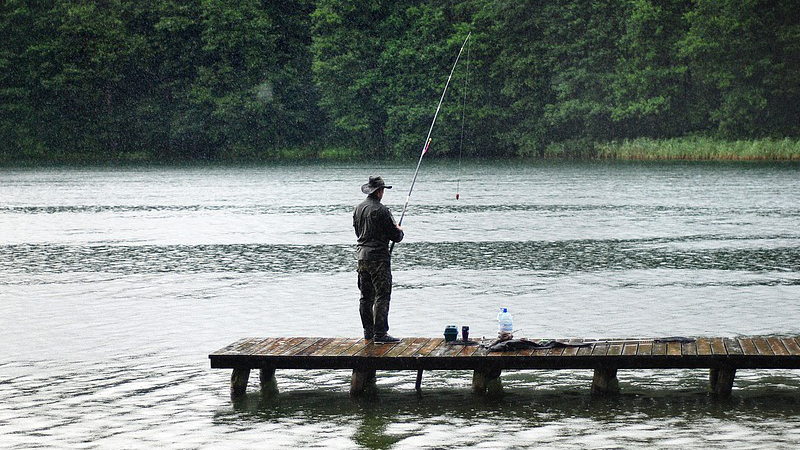
After nearly a century of people building dams on most of the world’s major rivers, artificial reservoirs now represent an immense freshwater footprint across the landscape. Yet, these reservoirs are understudied and overlooked for their fisheries production and management potential, indicates a study from the University of California, Davis.
The study, published in the journal Scientific Reports, estimates that U.S. reservoirs hold 3.5 billion kilograms (7.7 billion pounds) of fish. Properly managed, these existing reservoir ecosystems could play major roles in food security and fisheries conservation.
“There is a large amount of fish mass in U.S. reservoirs that are being overlooked, despite the value being comparable to fish harvest from fisheries around the world,” said lead author Christine Parisek, a Ph.D. candidate in the UC Davis Ecology Graduate Group and the Department of Wildlife, Fish and Conservation Biology.
States with most reservoir fish
For the study, the authors analyzed, digitized, ranked and classified reservoir data collected by the U.S. Army Corps of Engineers between the 1970s and 1990s, after dam construction had tapered off from its heyday of the 1940s to 1960s. The data include fish biomass and production rates from 301 reservoirs in the United States.
Southern U.S. reservoirs contained 1.92 billion kilograms (4.2 billion pounds) of fish. Reservoirs across the entire U.S. were estimated to contain 3.43 billion kilograms (7.6 billion pounds) of fish.
Most states show reservoir stock of at least 100 million kilograms (220 million pounds). The top five states with the most standing stock, or total weight, of reservoir fish are Texas, Arkansas, Oklahoma, Florida and South Dakota.
When total weight is adjusted for how much reservoir surface area is available in the state — similar to a per capita measure — Louisiana, Indiana, Alabama, Maryland and Illinois ranked highest.
The study also said the large mass of fish in U.S. reservoirs is significant for the global carbon cycle, as fish play important roles in carbon flux, food webs, nutrient cycling and energy transfer.
Managing amid challenging realities
The authors emphasize the study is not making an argument for prioritizing building reservoirs over protecting and restoring natural-flowing rivers. The study states: “Ecological effects of dams have been overwhelmingly negative and represent one of the principal drivers of freshwater biodiversity loss at all scales.”
The study does suggest unrealized opportunities to better manage both natural and built ecosystems, given the realities of reservoirs’ continued existence, climate change, and the dire challenges facing native fish.
“We should be able to walk and chew gum,” said fish ecologist and senior author Andrew Rypel, director of the UC Davis Center for Watershed Sciences and professor in the Department of Wildlife, Fish and Conservation Biology. “We should be able to decommission and remove some dams, and manage others for food and as important habitats.
“In a worst-case scenario where salmon go extinct and native fishes go away, these fisheries may be all we have left. It’s worth having some foresight about how to make them well managed and how to use these ecosystems to deliver value for the environment and for people.”
New research by the University of East Anglia (UEA) reveals what countries think will be their most difficult to decarbonise sectors when they reach net zero, with agriculture expected to be responsible for the largest remaining emissions.
Once countries have taken the ‘easy’ steps to get to net zero – such as switching to more renewable electricity, electric cars, and heat pumps for homes – they are still left with some sources of emissions.
These ‘residual’ emissions continue to be emitted at the point of net zero – but their effect is cancelled out or moved elsewhere, for example by taking carbon dioxide out of the atmosphere using methods of carbon dioxide removal, or to other countries via international offsets.
Harder to decarbonise areas include aviation, agriculture, and industry, with fewer alternatives to fossil fuels. Residual emissions are expected to come from these ‘hard-to-abate’ sources, which face technical barriers to reducing them beyond a certain level.
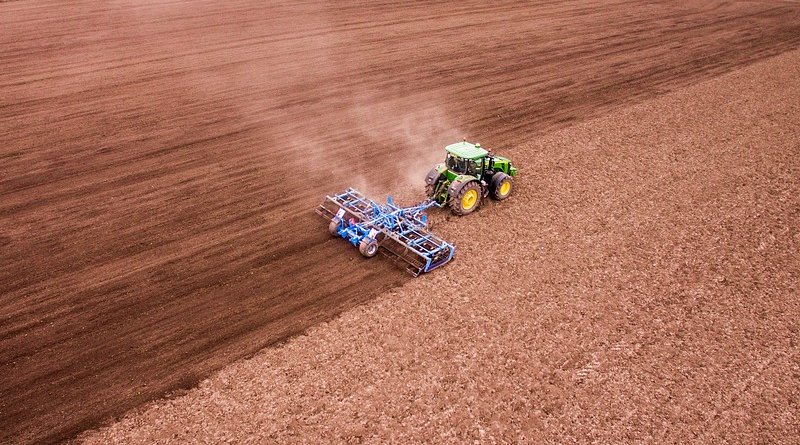
By sector, emissions from agriculture, mainly from livestock, are anticipated to be the largest contributor – on average 36% of the total for developed countries. The findings are published in the journal One Earth.
The team, from the Schools of Environmental Sciences, Global Development and Tyndall Centre for Climate Change Research at UEA, analysed national climate strategies for 71 countries. Only 26 quantify residual emissions, with most aiming to reach net zero by 2050.
The researchers mapped the reasons why a country claims a certain emission source is residual or otherwise hard-to-abate, finding that many see residual emissions as an inevitability, instead of a focus of further climate policy efforts, innovating further solutions or exploring other policy options, such as reducing demand.
Lead author Harry Smith, a Leverhulme Trust Doctoral Scholar at UEA, said current plans showed limited ambition in dealing with residual emissions: “Net zero targets have rapidly become the new norm of national climate policy. They imply a need to compensate for the remaining residual emissions through the deployment of carbon dioxide removal methods. Yet governments are only now exploring what this balance could or should be.
“High residual emissions, paired with greater deployment of carbon dioxide removal, may allow countries to retain or expand fossil fuel use and production. Given the limits of carbon dioxide removal, this risks the credibility of their target and may jeopardise global climate goals.
“Similarly, treating residual emissions as an inevitability, risks de-emphasising these emissions, locking-in high emitting activities and infrastructure, and locking-out other ways to reduce emissions.”
The study is the first to look in this level of detail, and for this number of net zero plans that describe what countries think will be their difficult to decarbonise sectors, and how low they aim to get their emissions before cancelling out the remainder with carbon dioxide removal.
The authors found that some countries, such as the UK and Spain, are ambitious, including scenarios that reduce their emissions by upwards of 90% compared to when their emissions started falling, leaving less than 10% of their emissions as residual and cancelled out by carbon dioxide removal.
However, others, such as Canada, are less ambitious and have drawn up scenarios that retain greater fossil fuel use and production, reducing their emissions by just over a half before cancelling out the remainder.
For developed countries, residual emissions are sizeable, on average 21% when compared to when their greenhouse gas emissions started falling. This average hides a large range, however: they could be as low as 5% or as high as 52%.
As well as making up the majority of residual emissions, agriculture represents the sector which sees the least progress between now and net zero, with a reduction of only 37% on average for the same countries. Meanwhile industrial emissions from the manufacturing of goods, emissions commonly discussed as residual and hard-to-abate, are reduced by 70% on average.
“Our study shows that countries vary greatly in how they envision what getting to net zero means for them,” said co-author Dr Naomi Vaughan. “Some use the reporting of emission and carbon removals together to hide their weaker emissions reduction ambition by betting on currently very niche carbon removal methods. We suggest that strengthening the reporting requirements would improve transparency.
“This work highlights that what emissions remain when countries aim to reach net zero should be put under more scrutiny. A better understanding is needed of which emissions are truly ‘difficult to decarbonise’ and which could be addressed through changes to demand, for example dietary changes, reducing flying, the circular economy, alongside more investment in research and innovation.”
The study examined all national climate strategies submitted to the UN Framework Convention on Climate Change before October 2023, as well as similar strategies submitted to the European Commission.
Categories
Double-Edged Business
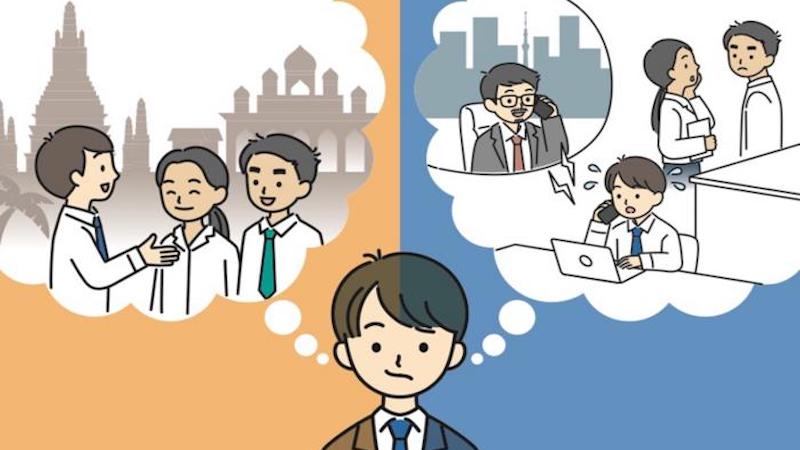
In international business, companies frequently dispatch their employees overseas as expatriates. They are crucial for linking the headquarters with foreign branches and their subsidiaries and bridging cultural, language, and business practice gaps.
Traditionally, the focus has been on these positive effects of expatriates engaging in boundary-spanning activities. These include formal and informal communication, coordination across diverse cultures and organizational practices, and building business networks and trust within and outside the companies.
However, the risk of excessive workload and stress, for example, has often been ignored.
Now, a recent study by Kyoto University and Hunan University, analyzing data from expatriates and local employees at Chinese multinational subsidiaries, has revealed that expatriates’ boundary-spanning activities could also have adverse effects.
“Our findings suggest that while boundary-spanning is beneficial to the company for building valuable social capital, such as fostering trust and a sense of belonging and loyalty among expatriates and local employees, it can also lead to role stress,” says leading author Ting Liu of KyotoU’s Graduate School of Management.
This stress may cause emotional exhaustion for expatriates, leading to local employees viewing them as outsiders. The study highlights the risks of boundary-spanning and calls to action the need for careful management.
This research included three datasets collected in 2022, with the initial two datasets used to develop a scale to measure expatriates’ boundary-spanning activities. The third dataset–the main focus–consisted of 177 pairs of expatriates and local coworkers from the energy engineering sector in various Asian countries.
“Our study sparks an essential dialogue about the trade-offs between the gains for organizations and the costs borne by individuals,” adds co-author Tomoki Sekiguchi, also of KyotoU’s Graduate School of Management.
It highlights the contrast between the benefits organizations receive from expatriates, such as creating international networks, and the personal toll these roles take, including stress and exhaustion.
“Therefore, it is crucial for multinational companies and global managers overseeing overseas subsidiaries to grasp not only the positive outcomes but also the potential drawbacks of expatriate boundary-spanning activities,” says co-author Jiayin Qin of KyotoU’s Graduate School of Economics.
“By understanding these dynamics, the companies can strive to amplify the benefits while mitigating the negative impacts, ensuring a healthier balance for all involved,” concludes co-author Yaxi Shen of Hunan University’s School of Business.
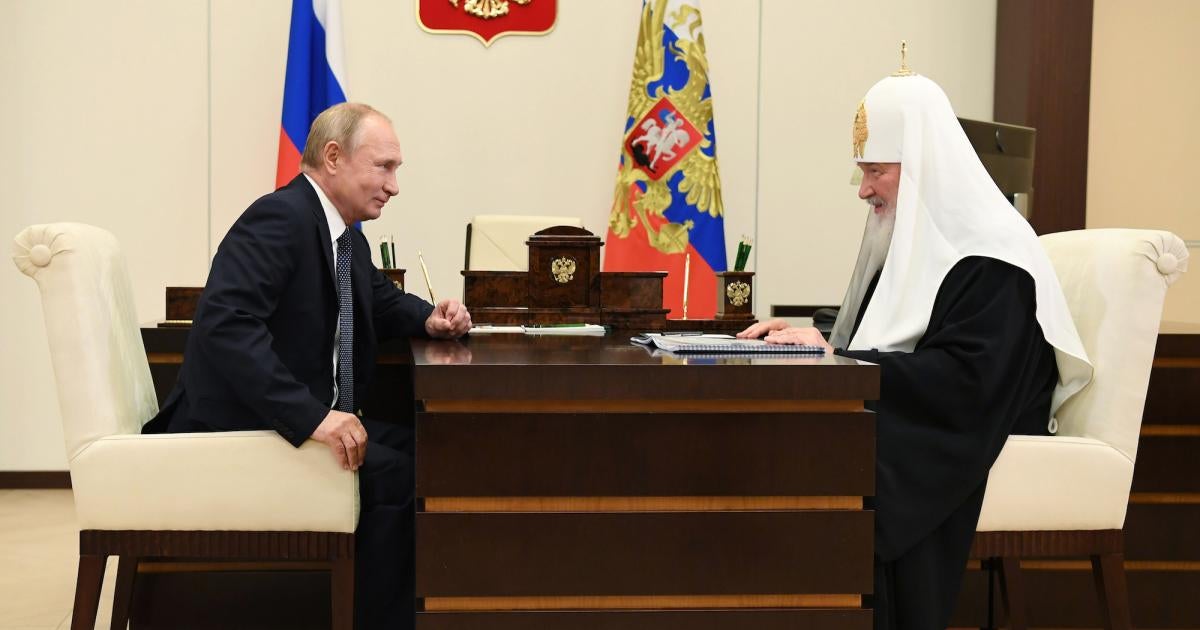
In December 2022, ten months into the full-scale military invasion of Ukraine, the Duma extended the scope of Russia’s ‘gay propaganda’ law forbidding the public portrayal of ‘non-traditional sexual relations’. Previously focused on minors, the prohibited exposure would now apply to any age group. Why would Russia’s parliament do this in the middle of a war?
The amendment might appear to have been a trivial effort to distract the public from Russian military losses in Ukraine. But the restrictions, which render life precarious for LGBT+ individuals in Russia, have a much more ambitious purpose—to consolidate conservative support at home and position Russia as the defender of ‘traditional values’, in opposition to ‘the west’.
The ‘gay propaganda’ law has been at the heart of Russia’s domestic politics and foreign engagement—a symbol of its wholesale rejection of universal human rights. Its extension is but one further step in representing LGBT+ rights as a foreign threat and a Trojan-horse ‘enemy within’.
In 2020, lawmakers went so far as to include an explicit ban on same-sex marriage in Russia’s constitution. And the following year they designated several LGBT+ organisations, including the Russian LGBT Network, an umbrella group, as ‘foreign agents’—a term which in Russian has connotations of spying—accused of undermining the social order.
Galvanising issues
It is at face value extraordinary that the rights of members of a small minority, in this case LGBT+ individuals, should come to hold such symbolic resonance. Yet as the anthropologist Gayle Rubin has observed, ‘Disputes over sexual behaviour often become the vehicles for displacing social anxieties and discharging their attendant emotional intensity. Consequently, sexuality should be treated with special respect in times of great social stress.’
Contestations around gender and sexuality are thus galvanising issues of our time, intersecting with broader geopolitical conflicts in novel and unlikely ways. And the Russian president, Vladimir Putin, and the Orthodox patriarch, Kirill I, have mobilised the rhetoric of ‘traditional values’ to legitimise the war in Ukraine.
In a televised address announcing the invasion in February last year, Putin represented the ‘so-called collective West’ as a neo-colonial, existential threat:
‘They sought to destroy our traditional values and force on us their false values that would erode us, our people from within, the attitudes they have been aggressively imposing on their countries, attitudes that are directly leading to degradation and degeneration, because they are contrary to human nature.’
In endorsing the invasion, the patriarch was still more explicit:
‘Donbas has fundamentally refused to accept the so-called values that are being offered by those aspiring for worldwide power. There is a specific test of loyalty to these powers, a requirement for being permitted into the happy world of excessive consuming and apparent freedom. This test is very straightforward and at the same time horrifying—the gay parade … It is about something different and much more important than politics. It is about human salvation, about on which side of God the Saviour humankind will end up.’
‘Marker of modernity’
To every action there is an equal and opposite reaction. And when the Ukrainian lawmaker Inna Sovsun introduced a bill to legalise same-sex civil partnerships in March, she explained the rationale thus: ‘Because Putin made homophobia such a big part of his political agenda and [Russian] national ideology, people automatically associate him with homophobia. So, if we are different from him, then we should be different in that area as well.’
For better or worse, the rights of LGBT+ people have become what the Australian scholar Dennis Altman has described as a ‘marker of modernity’, increasingly framed as a litmus-test for liberal democracy. This has negative as well as positive implications.
On the one hand—if we take a long view—in many regions of the world there has been rapid progress in recent decades, consolidating rights based on sexual orientation and gender identity. The flipside of a symbolic association with modernity and progress, as in liberal democracies, is that LGBT+ rights can be misrepresented elsewhere as the antithesis of ‘family’ values.
Authoritarian populists
Russia has been most adept at adopting the mantle of protector of such ‘traditions’, building alliances with like-minded rulers to extend its sphere of influence globally. Elsewhere in Europe, the spectre of LGBT+ rights has become central to the playbook of authoritarian populists.
Viktor Orbán in Hungary and Andrzej Duda in Poland have attacked the rights of LGBT+ individuals, as part of a strategy to build political support on the foundation of conservative sexual politics and undermine democratic institutions. In Poland local authorities have declared themselves ‘LGBT-ideology-free zones’, excluding the Other in an attempt to produce a particular version of Polish society aligned with the vision of the ruling party.
In Hungary Orbán has rallied against LGBT+ rights as a ‘foreign’ and supposedly destructive influence, successfully mobilising a moral crusade, while distracting attention from the erosion of democratic norms, as part of his strategy for re-election last year. LGBT+ rights thus readily become shorthand for broader geopolitical contestations which, while rooted in questions of gender or sexuality, have much wider implications.
Competing visions
At the heart of these acrimonious conflicts is individual autonomy and the relationship of the self to society. At play are different visions of society and the world, and the place of individual rights within them.
On one side is the vision of a social order in which the individual is subordinated to a static notion of ‘culture’ and tradition, brooking no dissent. The competing vision is rights-based and accommodating of diversity.
What proponents of ‘traditional values’ are calling for is a world in which individual freedoms—including bodily autonomy and freedoms of expression and association—are curtailed by the state. In this scenario LGBT+ issues are relegated to the domain of moral stigmas, not elevated as human rights. Hence authoritarian regimes seek to restrict reproductive rights, sexuality education, domestic-violence legislation, legal gender recognition, and innovations in family structures and sexual mores. Those who fall outside gender and sexual norms then become symbolic shorthand.
When Russian lawmakers doubled down on attacking the rights of LGBT+ individuals, that symbolism was primary. Advancing ‘traditional values’ is central to Russia’s ideological justification for its war in Ukraine and activities beyond. Its systemic attacks on the rights of LGBT+ people have proved the canary in the coalmine, portending a much more dangerous global agenda.
Putin’s – ROC crazy, ridiculous, ignorant FASCIST HOMOPHOBIA – Google Search https://t.co/zyWFDTN6o2 – https://t.co/L4L5UFBZBz
— Michael Novakhov (@mikenov) May 11, 2024
Putin’s – ROC crazy, ridiculous, ignorant FASCIST HOMOPHOBIA – Google Search https://t.co/zyWFDTN6o2 pic.twitter.com/orBoFd327t
— Michael Novakhov (@mikenov) May 11, 2024