Categories
Selected Articles

Putin reappoints Mishustin as Russia’s prime minister


wirestory_5915b06308d722e17a875892a6d1bd

Russian President Vladimir Putin has reappointed Mikhail Mishustin as the country’s prime minister

MOSCOW — Russian President Vladimir Putin reappointed Mikhail Mishustin as the country’s prime minister on Friday, a widely anticipated move to keep on a technocrat who has maintained a low political profile.

Mishustin and other technocrats in the Cabinet have been credited with maintaining a relatively stable economic performance despite bruising Western sanctions for Russia’s role in Ukraine. Most other Cabinet members are expected to keep their jobs, though the fate of Defense Minister Sergei Shoigu appeared uncertain.

In line with Russian law, Mishustin, 58, who held the job for the past four years, submitted his Cabinet’s resignation on Tuesday when Putin began his fifth presidential term at a glittering Kremlin inauguration.

Mishustin, the former head of Russia’s tax service, steered clear of political statements and avoided media interviews during his previous tenure.

The speaker of the parliament’s lower house, Vyacheslav Volodin, announced that Putin submitted Mishustin’s candidacy to the State Duma, which will hold a session later Friday to consider it.

Under the constitutional changes approved in 2020, the lower house approves the candidacy of the prime minister, who then submits Cabinet members for approval. The changes were ostensibly meant to grant parliament broader power, but the procedure is widely seen as pro forma given Kremlin control over the body.

Most Cabinet members are expected to keep their jobs, but it was not clear if Shoigu, the defense minister, would be among them after last month’s arrest of his top associate, Timur Ivanov.

Ivanov, who served as deputy defense minister in charge of massive military construction projects, was arrested on bribery charges and was ordered to stay in custody pending official investigation.

The arrest of Ivanov was widely interpreted as an attack on Shoigu and a possible precursor of his dismissal despite his close personal ties with Putin.

Shoigu was broadly criticized for Russian military’s setbacks in the early stage of the fighting in Ukraine. He faced scathing attacks from mercenary chief Yevgeny Prigozhin, who marched on Moscow nearly a year ago to demand the ouster of Shoigu and the chief of the General Staff, Gen. Valery Gerasimov.

After Prigozhin’s death in a suspicious plane crash two months after the rebellion — widely seen as the Kremlin’s revenge — Shoigu appeared to shore up his position. But Ivanov’s arrest, interpreted by many as part of Kremlin’s political infighting, again exposed Shoigu’s vulnerability.


Categories
South Caucasus News

Armenia ex-MP Karen Saribekyan dies aged 61


default.jpg


Categories
Audio Review - South Caucasus News

Resigned Georgian Ambassador to France Calls for Withdrawal of Foreign Agents Law


In an interview with the French publication Le Monde, the resigned Georgian Ambassador to France and Monaco, Gotcha Javakhishvili, called for the withdrawal of the foreign agents law.

Javakhishvili said his decision to resign was a matter of “honor” and that he could no longer carry the country’s European message amid the reintroduction of the agents law. He also said that he does not rule out the possibility that other diplomats will follow his example and resign as well. The processes that have been unfolding since the reintroduction of the law, including the increase in harsh criticism from Brussels and the praise from Moscow toward the Georgian government, could not be tolerated, said the Ambassador.

Resignation Was A Matter of Principle and Honor

In explaining his resignation, Javakhishvili said “it was a matter of principle and honor.” Stressing that he does not want to get involved in domestic political debates and is not trying to “score points with the opposition” and that as a civil servant, he has “no preference for any political party,” the Ambassador praised the “dynamism” of Georgian civil society and expressed his disagreement with the plan to label them as foreign agents.

The Ambassador said he had already expressed his disagreement on this law in 2023, when it was first introduced in the Georgian Parliament. The situation created by its reintroduction in 2024, he said, “no longer allowed me to carry my country’s European message.” “I was afraid of being a hypocrite, so I couldn’t imagine continuing my duties,” he added.

Javakhishvili said he wrote a letter of resignation to the Ministry of Foreign Affairs on April 17, when the bill was passed in its first reading.

Will Other Diplomats Resign ?

Although the Ambassador said that he had not discussed the issue of resignation with his colleagues, he noted that he believes that other Georgian diplomats are “deeply pro-European”. He did not rule out the possibility that his example might encourage others to resign but also noted that it was not his intention.

“Everyone will make [a decision to resign] according to their conscience,” he said.

Why did GD Reintroduce the Controversial Law ?

The decision of Georgia’s ruling party to reintroduce the Russian-style law was incomprehensible to Javakhishvili, who believes that without it, the Georgian Dream would win the next parliamentary elections in October against what he sees as a “fragmented opposition.” But he found this decision even more puzzling in light of Georgia’s aspirations to join the EU.

“Today, our European friends criticize us and Moscow compliments us. This is unbearable for me,” he said, adding: “I don’t see how we can be friends with a country that has occupied 20 percent of our territory.”

However, he said he does not see the government as pro-Russian “to the point of putting the sovereignty of the country in the hands of Russia”. He attributed the government’s cautious stance towards Russia to “a very strong fear of reigniting war in Georgia,” characterizing it as “a strategic prudence.” He asserted that the government’s objective is to “safeguard peace and our already fragile economy.” However, the choice for such a policy is leaving Javakhishvili uncertain of its cost.


Gocha Javakhishvili’s decision to resign from his post as Georgian Ambassador to France and Monaco over the foreign agents law was met with scathing statements from Foreign Minister Ilia Darchiashvili and Culture Minister Tea Tsulukiani, who both called Javakhishvili’s decision an “insult.”


Categories
South Caucasus News

Iran Election | World News | postregister.com – Post Register


Iran Election | World News | postregister.com  Post Register

Categories
South Caucasus News

Armenia News – news.am


Armenia News  news.am

Categories
South Caucasus News

Armenia ex-MP Karen Saribekyan dies aged 61 – news.am


Armenia ex-MP Karen Saribekyan dies aged 61  news.am

Categories
South Caucasus News

UN Assistant Secretary-General, UNDP Assistant Administrator and Director of the Regional Bureau for Europe and the … – undp.org


UN Assistant Secretary-General, UNDP Assistant Administrator and Director of the Regional Bureau for Europe and the …  undp.org

Categories
South Caucasus News

Armenia and Azerbaijan agree on ‘historic’ return of villages – Al Jazeera English


Armenia and Azerbaijan agree on ‘historic’ return of villages  Al Jazeera English

Categories
Audio Review - South Caucasus News

Threats, insults, beatings. Why has the ruling party of Georgia declared war on activists? Expert commentary


“Georgian Dream” against activists

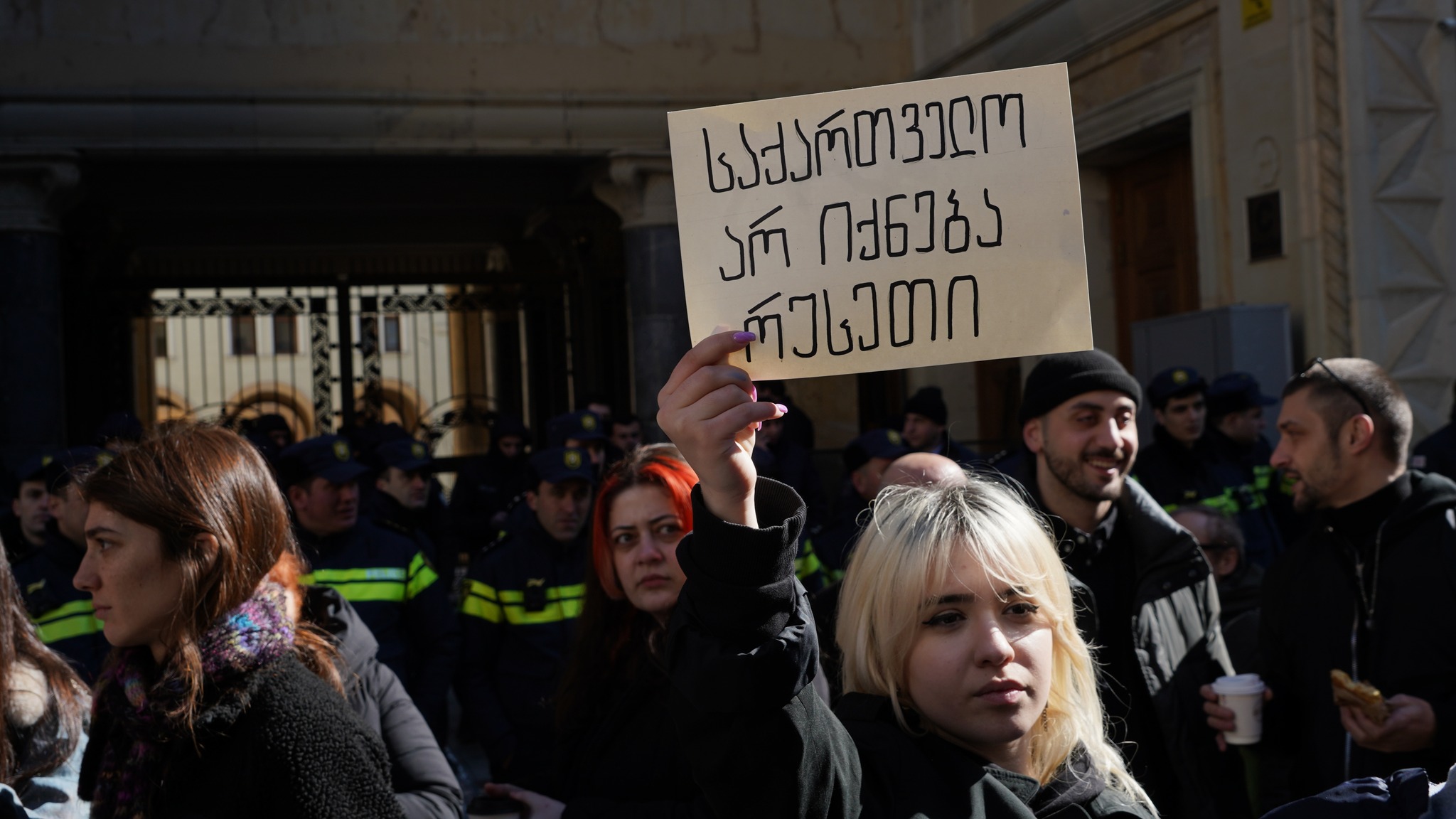
A widespread campaign of intimidation has been launched against people actively protesting against the “foreign agents” bill in Georgia. Political figures, activists, and journalists are being attacked and beaten, with offensive graffiti appearing on their cars, homes, and offices. They are also receiving threats via phone calls.

For example, on the morning of May 9th, offensive leaflets such as “Enemies,” “Agents,” and “Sellouts” were hung on the walls of offices belonging to non-governmental organizations and political parties, near the homes of civil activists and journalists who oppose the bill.

During the night of May 8th in Tbilisi, unknown individuals brutally beat three opponents of the bill. Among them was Dimitri Chikovani, a member of the most prominent opposition party, the “United National Movement,” who was attacked near his home. Also, near his home, international relations expert Giorgi Japaridze was assaulted. That same night, biker Lasha Gvinianidze, an active participant in protest biker rallies, was also attacked.

On May 7th, an unknown assailant attacked the Executive Director of the Institute for Development of Freedom of Information (IDFI), Giorgi Kldiashvili, and a filming crew from the “Formula” channel.

On May 5th, a well-known teacher and recipient of the national award, Lado Apkhazava, was assaulted in the hallway of his home.

On May 1st, during a rally, the leader of the “National Movement,” Levan Khabeishvili, was arrested and brutally beaten.

JAMnews asked experts to assess the phase the ruling party, “Georgian Dream,” has entered.


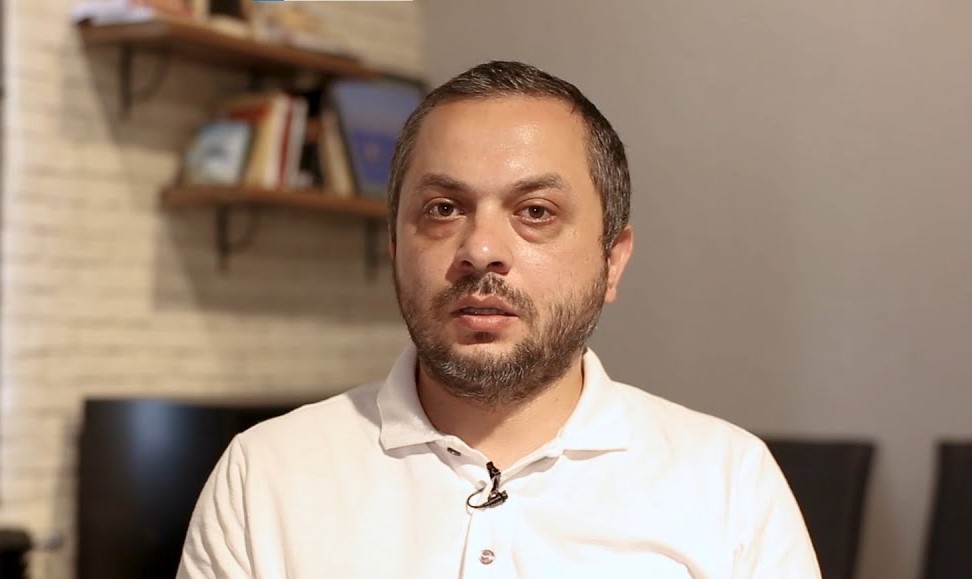
Ghia Nodia, a political analyst. "Georgian Dream" against activists

Ghia Nodia, a political analyst:

“The government has escalated terror against its own population to a new level and has abandoned even minimal requirements of legality.

Bidzina Ivanishvili’s (oligarch, founder of “Georgian Dream” – JAMnews) mind is boiling over. Ivanishvili sees conspiracy in everything. He also views protests as a conspiracy and apparently thought that intimidating the organizers (those he perceives as organizers) would quell the wave of protests.

This demonstrates a certain inadequacy and confusion within the government. No one will believe that random people spontaneously gather to beat others. And this will not achieve the goal for which he is doing this.”


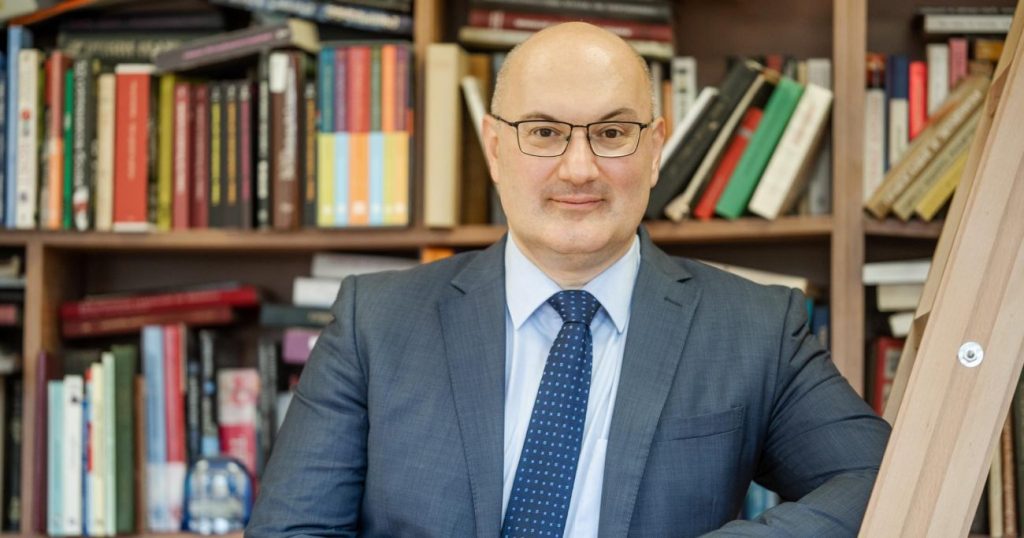
Giorgi Rukhadze. "Georgian Dream" against activists

Giorgi Rukhadze, an international relations specialist:

“For a government to maintain its power, it needs both internal and external legitimacy.

“Georgian Dream” is rapidly losing external legitimacy. It has declared Western partners as enemies. We are already receiving responses to this verbally, and further measures will be taken. This will mark the end of external legitimization. According to research and social media, internal legitimacy is also reaching its final phase.

What is happening today indicates only one thing – “Georgian Dream” no longer knows what to do and is struggling in agony. When a regime takes such steps, it shows that it is weak and powerless.

But this will not work. Fortunately, Georgia is not yet like Russia or Belarus. It’s just sad that we are going through the same cycle again, as we have so many times before. It’s regrettable that we are losing a very important opportunity on the path to Euro-integration.

“Georgian Dream” must remember that the stronger the action, the stronger the reaction to it. History, including Georgian history, has many examples of how quickly power ends in such a state.”


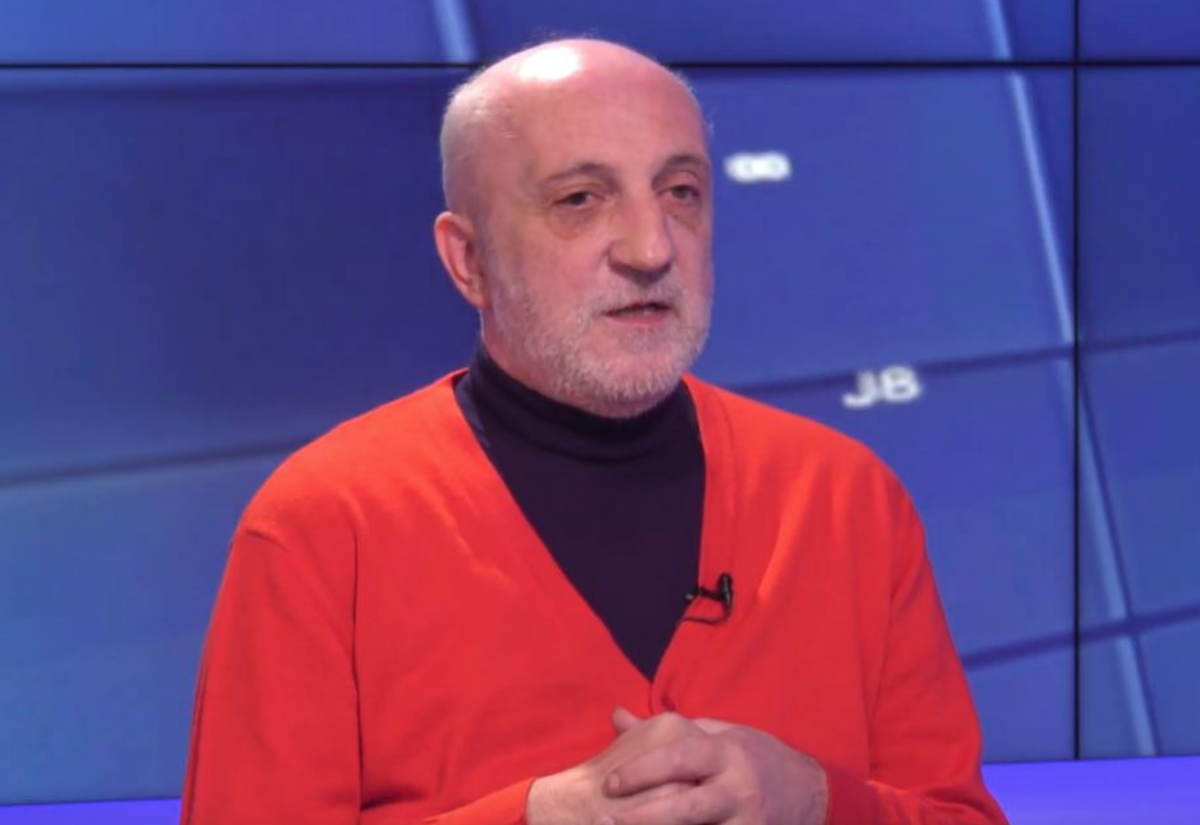
Tamta Mikeladze from the "Social Justice Center. "Georgian Dream" against activists

Tamta Mikeladze from the “Social Justice Center”:

“The dispersal of rallies, cases of police and special forces violence, organized discreditation, violence against individuals directly show that the goal of this bill is not transparency, as claimed by the “Georgian Dream,” but the destruction of a critically-minded, self-organized, and active civil society.

“Georgian Dream” has managed to fully consolidate power. It controls all state institutions and the church. Only civil society has managed to maintain its autonomy.

In the end, it turned out that civil society is not only about organizations. It has proven to be highly self-organized. Citizens, youth, students, mothers, women, various groups organize and fight for Georgia’s democratic future completely autonomously, without a leader. The authorities’ goal is to weaken this civil self-organization so that mass protests cease.

This is a war against its own people. The “party of peace,” as they called themselves, has become a declared party of war. The only force remaining for the “Georgian Dream” amid moral and political delegitimization is the Russian factor.

Indeed, there are concerns that the “Georgian Dream” may more openly integrate the Russian factor into its domestic politics. A demoralized, aggressive oligarch who eats up billions and feeds his subjects, while the country is doomed to poverty and migration.

I am confident that this will have unpleasant consequences.”


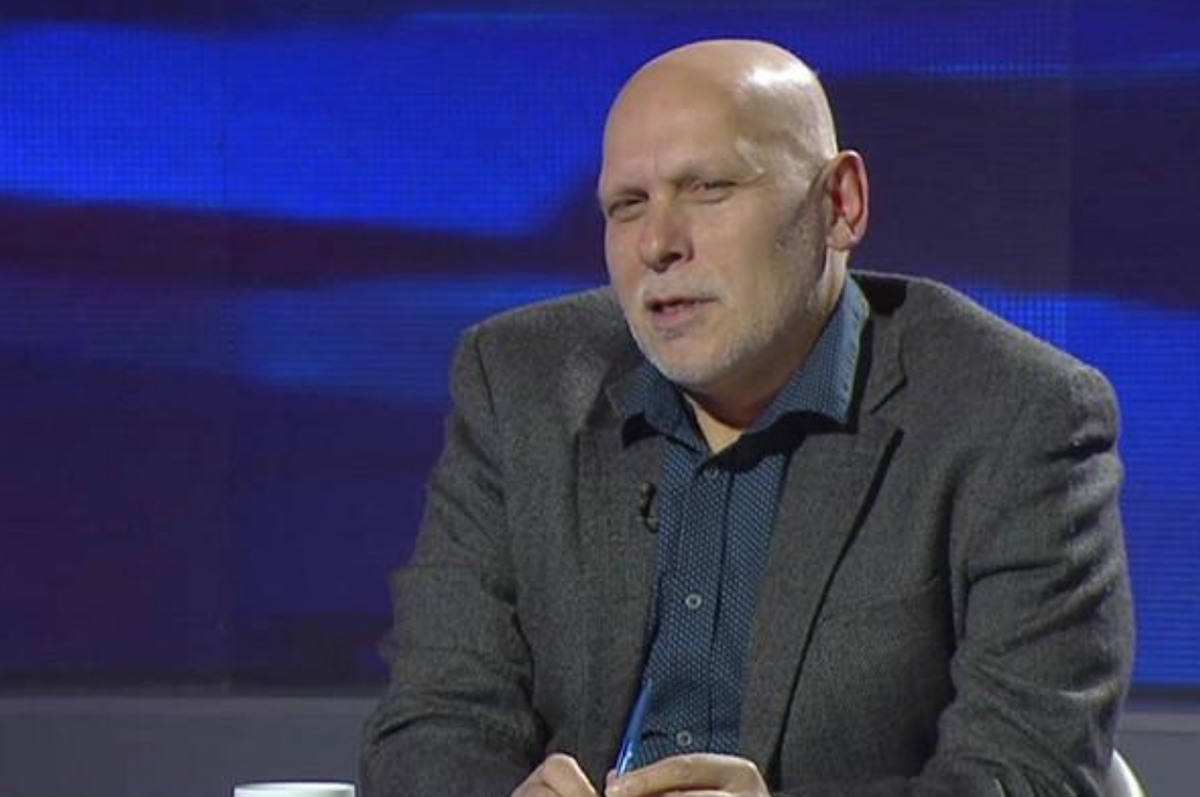
Beka Kobakhidze, a historian. "Georgian Dream" against activists

Beka Kobakhidze, a historian:

“The ‘Georgian Dream’ has struck a deal with Russia that demands incredible results in the shortest possible time. The authorities of a country where anti-Russian and pro-Western sentiments exceed 80 percent want to turn to Russia. At the same time, they must secure a constitutional majority through elections to later proclaim neutrality and exclude Euro-Atlantic aspirations from the constitution. This cannot be done without violence.

Therefore, the government has a four-point plan: to pass the “foreign agents” bill through fear and terror. Then – continue terror so that protest actions are no longer held. After that, they will start arresting people one by one; they have already announced that lists will be compiled. And then, on this cleared field, they will peacefully hold elections [parliamentary elections in Georgia are scheduled for October 2024 – JAMnews].


According to these four points, they want to formalize an authoritarian regime in Georgia and achieve a result that will facilitate their commitments to Russia.

This is their plan. But this plan is based on a single calculation – that we will be afraid. However, if people do not fear and take to the streets, this plan will fail, and I think it will”.


Giga Zedania, a philosopher. "Georgian Dream" against activists

Giga Zedania, a philosopher:

“It is absolutely obvious that the government is trying to use any means to maintain power – including changing the country’s foreign course, as well as maximum repression against representatives of opposition parties and citizens.

The aim of this intimidation is to soften the accusations of the opposition, but we must take into account that this is the first government facing such a problem. If these methods could solve problems, many other governments would have done the same. This is not a sustainable method for solving problems for either the country or even the government itself.”


Gia Khukhashvili, a political analyst. "Georgian Dream" against activists

Gia Khukhashvili, a political analyst:

“This is synchronization with what is happening in Russia. There is a well-founded suspicion that Georgia is being governed from the Kremlin. This is no longer imitation but action directly following the instructions for establishing a totalitarian regime, as in Russia.

But this government does not have the resources to create the system that exists in Russia.

They want to sow fear in society. There are different types of fear, but the biggest fear is the fear of what will happen tomorrow if society turns a blind eye today.

We must understand that the power lies in the people, and it is impossible to defeat the people.”


Iago Kachkachishvili, a sociologist. "Georgian Dream" against activists

Iago Kachkachishvili, a sociologist:

“This is the banal logic of authoritarianism, the logic of maintaining power by authoritarian means. This is how authoritarian leaders behave when they want to retain power at any cost. When the government no longer has natural support, when it cannot remain in power through democratic means, it resorts to psychological and physical terror.

To maintain power, the government declares anyone who stands against authoritarianism as an enemy. This includes primarily the European Union, Western institutions, followed by civil society organizations and critical media.

Accordingly, the attack is directed towards Europe and the two great pillars of democracy in the country. None of them support the government and they threaten its authoritarianism.

We are now witnessing a complete turn towards authoritarianism.”


Categories
Selected Articles

Russian elites scramble for power in Putin’s ‘last’ Cabinet


Kremlin officials are reported to be on edge ahead of a planned government reshuffle that will follow the inauguration of President Vladimir Putin on Tuesday.

Putin will be sworn in to begin his fifth term in a lavish inauguration ceremony in Moscow, cementing his position as the longest-serving leader in the Kremlin since Josef Stalin. His term will expire in 2030, and under constitutional changes made prior to the war in Ukraine, he may remain in power until 2036.

His inauguration will be aired at noon Moscow time on Tuesday, state TV channel Russia-1 said.

On the eve of the ceremony, Kremlin officials began to discuss among themselves who may be affected by Putin’s planned government shake-up, independent Russian news outlet Meduza reported, citing sources close to the Russian presidential administration.

Russian President Vladimir Putin

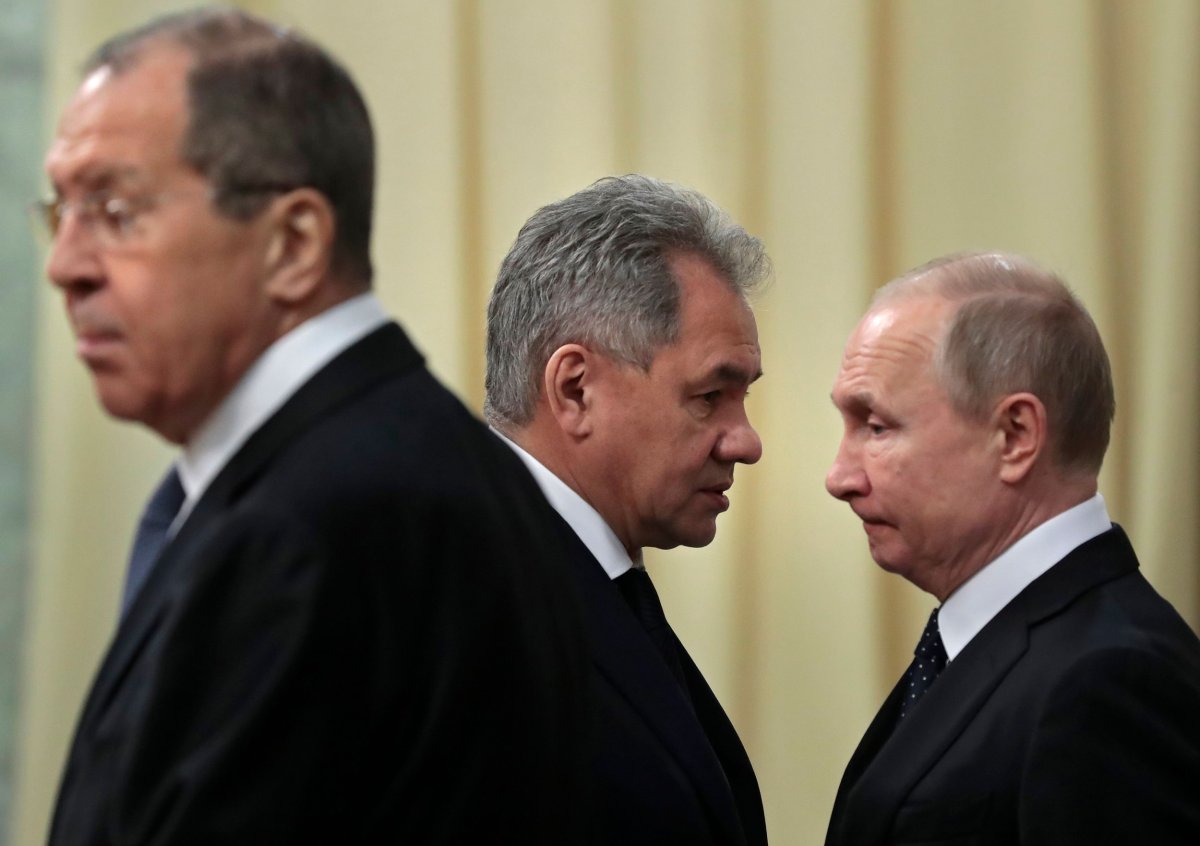
Russian President Vladimir Putin, right, Defense Minister Sergei Shoigu, center, and Foreign Minister Sergei Lavrov, are seen in Russia’s Black Sea resort of Sochi on February 14, 2019. Kremlin officials are reported to be on…
Russian President Vladimir Putin, right, Defense Minister Sergei Shoigu, center, and Foreign Minister Sergei Lavrov, are seen in Russia’s Black Sea resort of Sochi on February 14, 2019. Kremlin officials are reported to be on edge ahead of a planned government reshuffle that will follow Putin’s inauguration on Tuesday. SERGEI CHIRIKOV/AFP/Getty Images

Valentina Matvienko, a Russian politician and Speaker of Russia’s Federation Council, told Russia’s state-run news agency RIA Novosti on April 24 that there will likely be personnel changes in the government, but that the “backbone” of the Cabinet will remain. Newsweek has contacted Russia’s Foreign Ministry via email for comment.

“The mood of many is not just nervous, but tense. Some are hoping [for a promotion], others are worried about being moved [to a lower status position]. In general, many miss [changes], they want movement,” one source told Meduza.

The publication said its sources say some officials are vying to secure better positions within the Kremlin.

“Such applicants want to get as close to the throne as possible, as they believe that this presidential term could be the last for 71-year-old Putin,” Meduza reported.

“[In their opinion], changes in the hierarchy line are inevitable. And this means that you need to be closer to the place where decisions are made,” one source said.

Russian media has touted a number of officials as potential candidates for a promotion in Putin’s forthcoming reshuffle. RTVI published a story on May 2, which asked: “Will [Defense Minister Sergei] Shoigu and [Foreign Minister Sergei] Lavrov remain in the government after the inauguration?”

Former Kremlin speechwriter Abbas Gallyamov has suggested that Shoigu’s chances of retaining his position decreased following the arrest of his deputy, Timur Ivanov, last month.

Weighing in on the Kremlin reshuffle, Anton Gerashchenko, a former adviser to Ukraine’s minister of internal affairs, said on X, formerly Twitter, that Russian military correspondents are speculating that Shoigu might be replaced as defense minster by Aleksey Dyumin, a former Kremlin security agent.

Born in Kursk, in western Russia, Dyumin is a former agent of the Federal Guard Service (FSO) that provides security for the president and other state officials, and was appointed as governor of Tula region by Putin in February 2016. He previously served as Shoigu’s deputy in the Russian Ministry of Defense, and several analysts—Western and Russian—have said in the past that they believe he has his eyes set on returning to the department as its head.

Dyumin served in Putin’s guard when he was president from 2000 to 2008 as well as when Putin headed the government from 2008 to 2012.

RTVI said, citing two sources in Russia’s parliament, that Lavrov’s future as foreign minister is also being discussed.

“The leadership of the two factions of the State Duma believe that it is possible that Lavrov will work in the Foreign Ministry for another year or a year and a half, and leave his post after the US presidential elections, since until this moment a change in the head of the foreign policy department is regarded as undesirable for political and opportunistic reasons,” the publication reported.

Do you have a tip on a world news story that Newsweek should be covering? Do you have a question about the Russia-Ukraine war? Let us know via worldnews@newsweek.com.

Newsweek is committed to challenging conventional wisdom and finding connections in the search for common ground.

Newsweek is committed to challenging conventional wisdom and finding connections in the search for common ground.