
https://t.co/1n1zXkZZEC
Hostages Agreement Reached! #NewsAndTimes #NT #TNT #News #Times#World #USA #POTUS #DOJ #FBI #CIA #DIA #ODNI#Israel #Mossad #Netanyahu#Ukraine #NewAbwehr #OSINT#Putin #Russia #GRU #Путин, #Россия #SouthCaucasus #Bloggershttps://t.co/O0SIgLVWzM…— Michael Novakhov (@mikenov) May 6, 2024
Day: May 6, 2024
Netanyahu & Hamas Chief In War Of Words – News Review In 100 Tweets https://t.co/ENdUlqaXRG – https://t.co/wlqoiNmXDv
— Michael Novakhov (@mikenov) May 6, 2024
To keep his far-right partners on board and prevent an election, in which Likud will be decimated and he will be turfed out of office, Netanyahu needs to keep the “total victory” myth alive. That’s only possible by avoiding a deal / @AnshelPfeffer https://t.co/O1H7HowOeL
— Haaretz.com (@haaretzcom) May 6, 2024
Hamas says it has accepted a ceasefire deal proposed by Egypt and Qatar which seeks to halt the seven-month war with Israel in Gaza.
In a statement Monday, Hamas said the head of its political bureau, Ismail Haniyeh, told the Qatari prime minister and Egyptian intelligence minister that the militant group had accepted their proposal.
The Israeli government is now reviewing the Hamas response, CNN has learned. The Israeli prime minister’s office has declined to comment at this stage.
It’s unclear whether Hamas has agreed to the most recent ceasefire proposal, as outlined last week, or a revised version of it.
The most recent framework, which Israel helped craft but has not fully agreed to, calls for the release of between 20 and 33 hostages over several weeks in exchange for a temporary ceasefire and the release of Palestinian prisoners.
After the initial exchange, according to that framework, there would follow what sources describe as the “restoration of sustainable calm” during which the remaining hostages, captive Israeli soldiers and the bodies of hostages would be exchanged for more Palestinian prisoners.
A diplomatic source familiar with the talks told CNN that after a day-long meeting in Doha, Qatar’s capital, between CIA Director William Burns and Qatari Prime Minister Sheikh Mohammed bin Abdulrahman Al Thani, mediators convinced Hamas to accept a three-part deal.
“The bill is now firmly in (Israeli Prime Minister) Benjamin Netanyahu’s court,” the source said.
The United States is also reviewing Hamas’ response and “discussing it with our partners in the region,” State Department Matthew Miller said.
“We continue to believe that a hostage deal is in the best interests of the Israeli people. It’s in the best interest of the Palestinian people. It would bring an immediate ceasefire, it would allow increased movement of humanitarian assistance and so we’re going to continue to work to try to reach one,” he said.
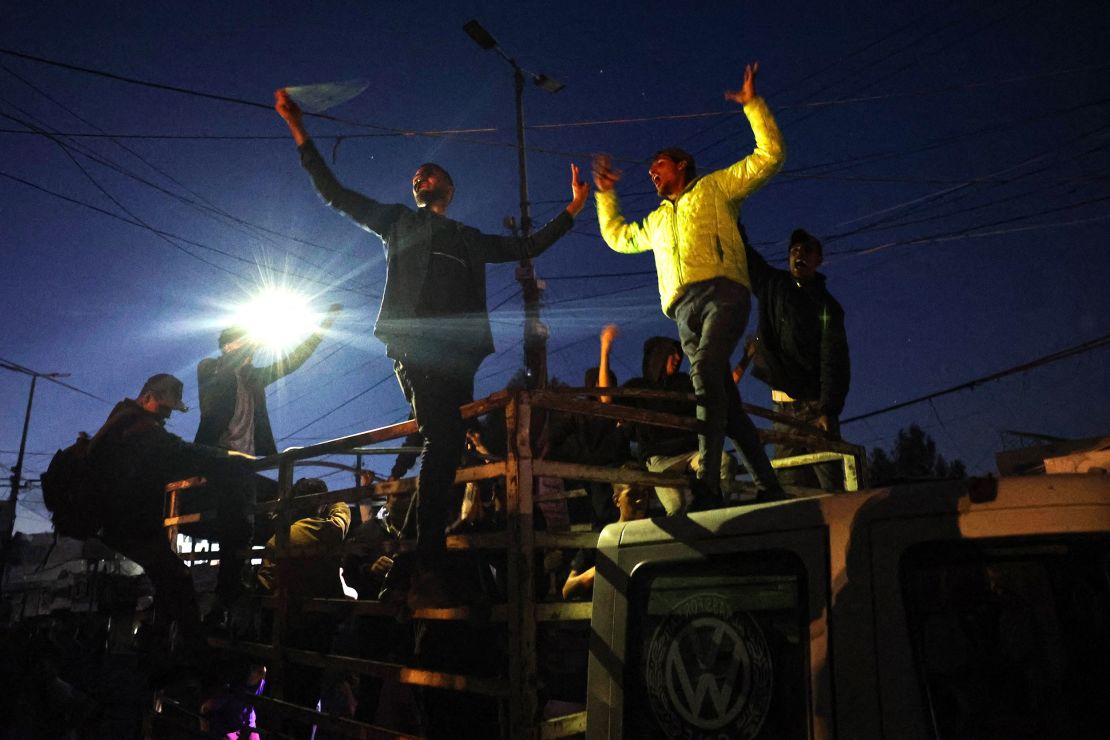
As news spread in Gaza of Hamas’ announcement, Palestinians began to celebrate in the street in Deir al-Balah, in the center of the Strip, and Gaza City in the north.
The news comes just hours after Israel ordered Palestinians living in Rafah, a city in southern Gaza, to “evacuate immediately.”
The order raised fears that Israel’s long-threatened assault on the city could be imminent. More than 1 million Palestinians have fled to Rafah, where Hamas is believed to have regrouped after Israel’s destruction of much of the north of Gaza.
A source familiar with Israeli plans told CNN that a limited incursion into Rafah was intended to keep pressure on Hamas to agree a deal that would bring about a ceasefire and a hostage release.
Asked whether Hamas’ acceptance of a deal could change Israel’s plans for Rafah, Israel Defense Forces (IDF) spokesperson Daniel Hagari said the military would continue to operate in Gaza. He said operations are ongoing, but that the IDF is making every effort in the negotiations to bring the hostages home as “fast as possible.”
Netanyahu has come under fierce pressure from the more extreme wing of his coalition not to accept the ceasefire proposal outlined last week, and to focus instead on destroying Hamas in Rafah.
Orit Strook, Israel’s settlements minister and a member of the far-right Religious Zionism party, said last week that accepting the deal would “throw” Israel’s military progress “in the trash.”
Itamar Ben Gvir, Israel’s national security minister, said Netanyahu had “promised that Israel would enter Rafah, assured that the war would not end, and pledged that there would be no reckless deal.”
But large parts of the Israeli public have demanded Netanyahu accept a deal. Families and supporters of the hostages blocked the Ayalon Highway in Tel Aviv last week, holding a banner reading: “Rafah or the hostages – choose life.”
Benny Gantz, a member of Israel’s war cabinet but seen as a rival and possible successor to Netanyahu, said the return of hostages was more urgent that entering Rafah.
Responding to Monday’s announcement, the Hostages Families Forum said: “Now is the time for all that are involved, to fulfil their commitment and turn this opportunity into a deal for the return of all the hostages.”
This is a developing story and will be updated.
CNN’s Oren Liebermann, Jennifer Hansler and Lauren Izso contributed reporting.
Hamas says it has accepted a ceasefire deal proposed by Egypt and Qatar which seeks to halt the seven-month war with Israel in Gaza.
In a statement Monday, Hamas said the head of its political bureau, Ismail Haniyeh, told the Qatari prime minister and Egyptian intelligence minister that the militant group had accepted their proposal.
The Israeli government is now reviewing the Hamas response, CNN has learned. The Israeli prime minister’s office has declined to comment at this stage.
It’s unclear whether Hamas has agreed to the most recent ceasefire proposal, as outlined last week, or a revised version of it.
The most recent framework, which Israel helped craft but has not fully agreed to, calls for the release of between 20 and 33 hostages over several weeks in exchange for a temporary ceasefire and the release of Palestinian prisoners.
After the initial exchange, according to that framework, there would follow what sources describe as the “restoration of sustainable calm” during which the remaining hostages, captive Israeli soldiers and the bodies of hostages would be exchanged for more Palestinian prisoners.
A diplomatic source familiar with the talks told CNN that after a day-long meeting in Doha, Qatar’s capital, between CIA Director William Burns and Qatari Prime Minister Sheikh Mohammed bin Abdulrahman Al Thani, mediators convinced Hamas to accept a three-part deal.
“The bill is now firmly in (Israeli Prime Minister) Benjamin Netanyahu’s court,” the source said.
The United States is also reviewing Hamas’ response and “discussing it with our partners in the region,” State Department Matthew Miller said.
“We continue to believe that a hostage deal is in the best interests of the Israeli people. It’s in the best interest of the Palestinian people. It would bring an immediate ceasefire, it would allow increased movement of humanitarian assistance and so we’re going to continue to work to try to reach one,” he said.
As news spread in Gaza of Hamas’ announcement, Palestinians began to celebrate in the street in Deir al-Balah, in the center of the Strip, and Gaza City in the north.
The news comes just hours after Israel ordered Palestinians living in Rafah, a city in southern Gaza, to “evacuate immediately.”
The order raised fears that Israel’s long-threatened assault on the city could be imminent. More than 1 million Palestinians have fled to Rafah, where Hamas is believed to have regrouped after Israel’s destruction of much of the north of Gaza.
A source familiar with Israeli plans told CNN that a limited incursion into Rafah was intended to keep pressure on Hamas to agree a deal that would bring about a ceasefire and a hostage release.
Asked whether Hamas’ acceptance of a deal could change Israel’s plans for Rafah, Israel Defense Forces (IDF) spokesperson Daniel Hagari said the military would continue to operate in Gaza. He said operations are ongoing, but that the IDF is making every effort in the negotiations to bring the hostages home as “fast as possible.”
Netanyahu has come under fierce pressure from the more extreme wing of his coalition not to accept the ceasefire proposal outlined last week, and to focus instead on destroying Hamas in Rafah.
Orit Strook, Israel’s settlements minister and a member of the far-right Religious Zionism party, said last week that accepting the deal would “throw” Israel’s military progress “in the trash.”
Itamar Ben Gvir, Israel’s national security minister, said Netanyahu had “promised that Israel would enter Rafah, assured that the war would not end, and pledged that there would be no reckless deal.”
But large parts of the Israeli public have demanded Netanyahu accept a deal. Families and supporters of the hostages blocked the Ayalon Highway in Tel Aviv last week, holding a banner reading: “Rafah or the hostages – choose life.”
Benny Gantz, a member of Israel’s war cabinet but seen as a rival and possible successor to Netanyahu, said the return of hostages was more urgent that entering Rafah.
Responding to Monday’s announcement, the Hostages Families Forum said: “Now is the time for all that are involved, to fulfil their commitment and turn this opportunity into a deal for the return of all the hostages.”
This is a developing story and will be updated.
CNN’s Oren Liebermann, Jennifer Hansler and Lauren Izso contributed reporting.
Abzas media arrests in Azerbaijan
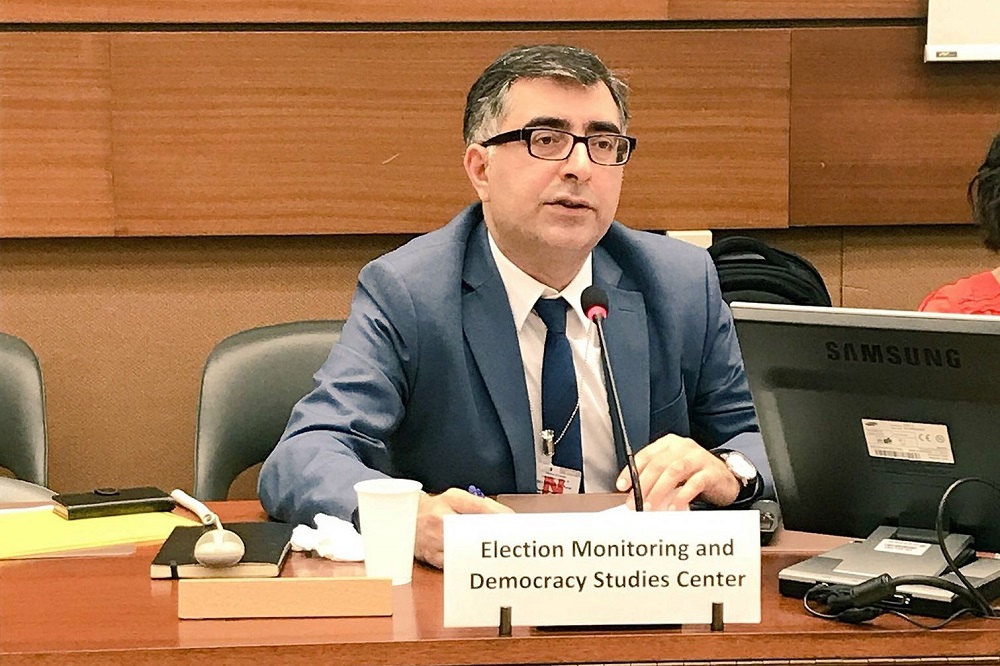
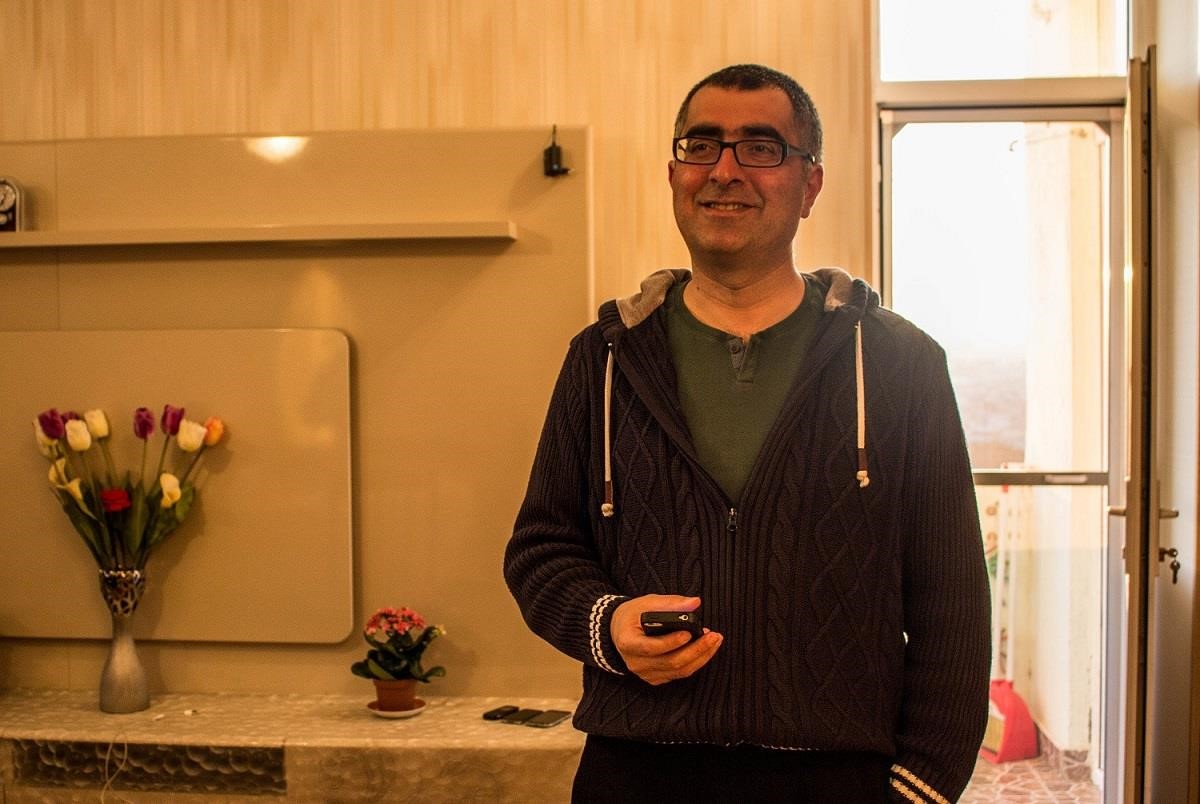
In Azerbaijan, the Baku Appellate Court on May 6 considered the appeal against the arrest of Anar Mammadli, the head of the Election Monitoring and Democracy Studies Center (EMDS). The court did not grant the appeal, as reported by lawyer Elmar Suleymanov.
The lawyer pointed out that the first-instance court committed several violations.
“In particular, in violation of criminal procedural legislation, the court did not ensure the audio recording of the proceedings,” the lawyer told the Turan news agency.
Furthermore, the court decision did not specify the lawyer’s motions. The court also did not grant the lawyer’s request for access to the case materials.
Regarding these violations, lawyer Suleymanov filed a written complaint to the Judicial-Legal Council, the chairman of the Baku Appellate Court, and the Khatai District Court.
The defense once again highlighted the lack of grounds for Mammadli’s detention and the violation of Articles 5 (right to liberty and security) and 18 (limits on the use of restrictions on rights) of the European Convention on Human Rights.
Mammadli himself also protested, stating that the true reason for his arrest is his public activism.

Mammadli was detained on April 29. The next day, he was charged under Article 206.3.2 (smuggling by a group of individuals by prior conspiracy) of the Criminal Code.
He is implicated in the Abzas Media case. Currently, 8 people, including Mammadli, are arrested in connection with this case.
Abzas media arrests in Azerbaijan
.@StateDeptSpox confirms a response from Hamas has been submitted, but says U.S. is still reviewing its contents and discussing with partners. CIA Director Burns remains in the region.
— Olivia Gazis (@Olivia_Gazis) May 6, 2024
If so, I think I know who Mr. Burns is based after. https://t.co/8iUx0p2STs
— 𝙰𝚕𝚎𝚡 𝙱𝚕𝚊𝚌𝚔𝚠𝚎𝚕𝚕 (@alexrblackwell) May 6, 2024