Categories
South Caucasus News

The Great American Divide – Analysis


The Great American Divide – Analysis

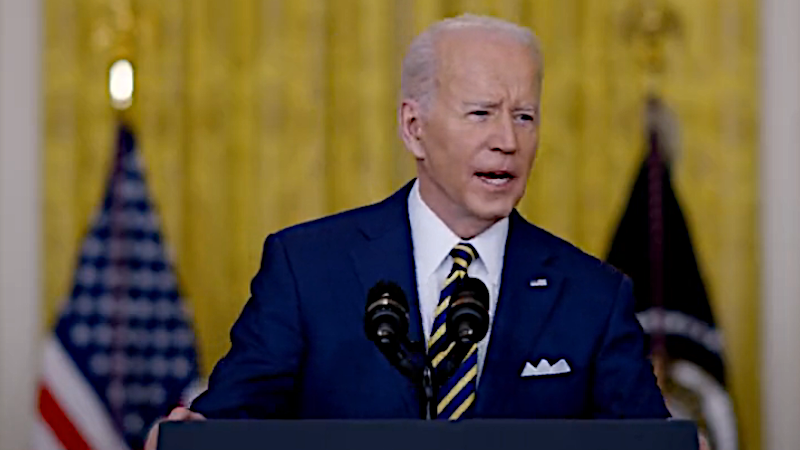
US President Joe Biden. Photo Credit: White House video screenshot

By Vivek Mishra

University campuses across the country are ablaze with protests, reminiscent of the anti-war demonstrations during the Vietnam War era. The scenes emerging from America’s leading universities, and increasingly from smaller institutions nationwide, reflect a profound ideological and political chasm that permeates American society across educational, business, trade, political, and even entertainment spheres.

However, a notable distinction arises between the sentiments stirred during the Vietnam War and those in the current context of the Gaza conflict. The former sought a disengagement of the United States (US) from the war, while the latter seeks a change in the US’s approach to the ongoing conflict in the Middle East and the use of its financial and political clout to bring the war to a halt. 

Arguably the most significant difference lies in the generational gap between older Americans, particularly those born in the 1960s, and their relatively younger counterparts, specifically Millennials and GenZ. Today’s younger American populace finds itself distanced from the complexities of Israel’s challenges in its region, often viewing it solely as an ‘occupier’ of Palestinian land. Conversely, the older generation, including President Biden’s cohort, holds a different perspective on Israel, shaped by America’s historical commitments to safeguarding a homeland for persecuted Jewish people. They are deeply influenced by the foundational assurances America provided to Israel, pledging to prevent the recurrence of historical injustices against the Jewish community. This contrast underscores a fundamental divergence in how different generations perceive and relate to the ongoing conflicts involving Israel, reflecting broader societal shifts and historical contexts.

The political and ideological currents sweeping across the US, including its premier universities, signal a notable shift in the nation’s sociocultural landscape. There has been a resurgence of the American New Left, propelled by new wars and changes in the country’s demographic makeup. This transformation is largely fuelled by nearly continuous waves of migration since the turn of the century, with a pronounced surge in the last decade. While America has a long history of immigration, the past decade has witnessed an unprecedented increase in illegal migration, driven primarily by factors such as conflict, climate change, and economic and democratic aspirations.

These changes unfolding in the American political landscape have at least two significant implications. The first is the political divide. The Biden administration and the broader Democratic party perceive immigration as both an opportunity and a challenge. However, in recent years, there has been a disproportionate emphasis on the challenges, exacerbated by the influx of approximately 7.2 million illegal immigrants during the Biden administration. This presents an opportunity for Republicans to exert pressure on Democrats regarding immigration, potentially making it a central issue in the upcoming November 2024 presidential election.

On the conservative end of the political spectrum, immigration has served as a catalyst for the “rise of the right” worldwide, and America is no exception to this. If anything, it is representative of the apex of that shift. Indeed, anti-immigration sentiments in the West first, and then the economic downturn during the COVID-19 pandemic, have contributed to the sustained popularity of Donald Trump and the Republican party in the US. 

The second issue is geopolitical in nature and revolves around the level of political support the US should extend to Israel amid the ongoing Gaza counteroffensive led by the Netanyahu government. The pressure on the Biden administration is multi-pronged: providing military and financial support to Israel, extending aid to Gaza, preventing Israel from going ahead with the Rafah offensive, ensuring freedom of speech back home and perhaps most importantly, achieving a ceasefire in Gaza. If any of these constraints go out of the orbit for the US, the repercussions could significantly impact the political fortunes of the Biden administration. Enmeshed in a spiralling maze of tunnel networks in Gaza, Israel has been unable to find closure to a war that is now in its sixth month with mounting civilian death tolls. Biden faces opposition to his Gaza policy and support for Israel by his own party members such as those on the progressive end.

Biden’s dilemma regarding Israel has been exacerbated by a growing blurred distinction between peace movements and antisemitism within the country. The constitutional mandate of ‘freedom of speech’ in the US sometimes fails to fully consider the complexities of the Middle East and appears discordant with regional realities on the ground, when nations like Saudi Arabia and Egypt have themselves suppressed pro-Palestinian protests domestically.

The US is inevitably encountering situations where its liberal principles clash with a conservative coalition that now unites several countries globally, particularly notable in the Global South. The expansion of democratic rights stemming from the American Constitution now encompasses a population with a higher representation from the Middle East than ever before. Consequently, the complex regional politics of the Middle East are finding expressions within the US. 

Internationally, these tensions are evident in the efforts of the Democratic Biden administration to manage or restrain politically conservative governments whose policies frequently diverge from theirs. The global rise of the political right, mirrored in governments worldwide and shifting demographics, has consistently presented challenges for the Biden administration, which finds itself positioned on the opposite side of the political spectrum. Handling Israel under the leadership of a deeply conservative Netanyahu government represents the ultimate test for the Biden administration’s ability to navigate competing interests at home, many of which converge in the Middle East. 

Worldwide, the spectrum of democracies may have broadened; however, America remains steadfast in its adherence to and implementation of democratic ideals, often leading to discord with other democratic nations. Canada, originally modelled on the ideals established by the American constitution, now finds itself potentially influencing a trend reversal, wherein America risks mirroring Canada’s role as a platform for global discontent. Consequently, elite American universities today serve as mere microcosms of the broader American society. It is probable that in the next decade, the shifting demographic landscape of America will deepen divisions not only within the electorate but also across cultures, traditions, and norms.


Categories
South Caucasus News

Strategic Use Of Migration: The View From Cuba, Nicaragua, And Venezuela – Analysis


Strategic Use Of Migration: The View From Cuba, Nicaragua, And Venezuela – Analysis

Fence Men Refugee Integration Deportation Stay

By Giacomo Mattei and Luis Campos

Countries can strategically employ emigration as a means to economic development, political stability, and geopolitical leverage. However, such strategies can carry risks and prove unsustainable. The United States should tailor its regional policies to the considerations of sending countries to maximize regional cooperation on migration management.

Emigration as Economic Alleviation

Some countries actively encourage emigration as a strategy for development. Migrant laborers send back a portion of their earnings – remittances – which can have multiplier effects on the home economy.

For many countries, remittances make up a larger portion of gross domestic product (GDP) than foreign direct investment (FDI). The World Bank’s data shows that Nicaragua’s 2022 GDP was over 20% remittances and just over 8% FDI. In 2023, remittances to Nicaragua were nearly 50% higher than the year before, standing at $4.24 billion, an estimated 28% of GDP.

Venezuela, on the other hand, has consistently received fewer remittances and very little FDI between 2000-2022 (both remaining largely below 2% of GDP according to World Bank data), though the Inter-American Dialogue estimates that remittances reached 5% of GDP in 2023. Interesting hypotheses can be considered to explain this behavior, such as the migration of entire family households, and/or a lack of confidence in the country’s future as a destination for personal and family investment.

While there is not sufficient data about the amount of remittances and their weight in Cuba’s economy, indirect evidence suggests that the chronic economic crisis was aggravated further after an estimated decrease of 3.31% in remittances since 2022, despite an amendment to the limit approved by the US government. Thus, in Cuba, migration appears to be an asset for political stability rather than a path for economic alleviation, given other structural factors that exert a more significant effect on the national economy.

However, the inherent risk is that overreliance on remittances does not constitute a sustainable economic development model. Remittances present an “easy” lifeline for governments, which may disincentivize diversification and state-sponsored investment in the economy. As Manuel Orozco observes in Nicaragua, remittances are unsustainably shouldering the responsibility of supporting private investment, providing access to credit, and reducing debt. Nicaragua taxes the added income from remittances, which supports the regime. Nicaragua is not reinvesting such taxes in the country.

Overreliance on remittances can also increase the vulnerability of governments antagonistic to the United States. For example, as Nicaragua increasingly relies on remittances, future policy pressure from Washington may significantly tamper growth and increase the prospect for new civil unrest crises. This is also echoed in previous debates in the U.S. about using the Patriot Act antiterrorism law to cut off remittances to hostile governments.

Emigration as a Political Stabilizer

Allowing or encouraging emigration can politically stabilize countries with high labor surplus or political dissatisfaction. Emigration reduces unemployment, which can reduce economic grievances, known as the “safety valve” effect. Relatedly, the emigration of political dissidents or economically dissatisfied citizens leaves only the more satisfied, passively dissatisfied, and regime-supporting citizens in the country, which translates to reduced risks of political violence and protest.

This safety valve effect was well understood by Fidel Castro. Over his decades-long rule, he repeatedly allowed political dissidents or economically disaffected Cubans to emigrate to the United States, with the most salient example being the 1980 Mariel Boatlift. Cuba continued to use the emigration safety valve while the US’ “wet foot, dry foot” policy was in place.

In Cuba, after the mass protests of July 11, 2021 the regime developed major legal disincentives for future protests. The penal code approved in September 2022 included more severe penalties for individuals who commit acts against the socialist constitutional order. Similarly, Nicaragua and Venezuela have approved legislation such as Nicaragua’s 977, 1042, and 1055 laws, and Venezuela’s laws against organized crime and financing of terrorism, and against hate, for peaceful coexistence and tolerance. These new pieces of legislation along with high discretionary application deter many from further engaging in domestic political life and incentivize greater emigration.

Emigration, however, also creates chances for the potential formation of external diaspora opposition or internal opposition groups supported by diasporas. For example, diasporas can “remit” democratic values and opposition back home. In Venezuela, the diaspora has represented opportunities for increased engagement from the opposition with international organizations, foreign governments, and even the formation of a contending parallel government (as in the appointment of Juan Guaidó as interim president and a series of congress members in exile). For this reason, some diasporas have faced measures to restrict the entry of funding into the home country. For example, Nicaragua has approved a foreign agent law, increased monitoring and restriction of remittances, awardsfrom abroad, and cryptocurrency transactions.

Emigration for Geopolitical Leverage

Internationally, countries can leverage emigration crises to destabilize or extract concessions from neighboring countries. This is a form of “reputational blackmail” often directed at more liberal destination countries, which highlights liberal countries’ inconsistent commitments to championing life and liberty while simultaneously attempting to keep asylum seekers out.

The central historical example of this strategy is Cuba’s 1980 Mariel Boatlift, when Castro sent thousands of “socially undesirable” migrants to the U.S., turning up the political heat on President Jimmy Carter in the hope of reducing criticism of the Castro regime.

Migration, not only from but also through Nicaragua, has allegedly been used as an attempt by the Ortega-Murillo regime to exert geopolitical leverage by increasing the weight of migration on the U.S., presumably in exchange for sanction relief. Charter and scheduled flights from several migration origins have been reported to arrive in Managua as part of global migrant trafficking networks, as Nicaragua represents an attractive “shortcut” to alternatives like the Darien Gap. Flights with Cuban, Haitian, Indian, Moroccan, and Senegalese migrants among several others, have been reported to arrive regularly in Managua, from where migrants travel by land to the U.S.

Similarly, in 2024, facing the prospect of US sanctions on Venezuelan oil, Venezuelan Vice President Delcy Rodríguez told the United States: “If they carry out the false step of intensifying economic aggression against Venezuela, at the request of extremist lackeys in the country, from Feb. 13 the repatriation flights of Venezuelan migrants will be immediately revoked.” The logic behind these strategies is to threaten Washington with more migrants (or to be stuck with migrants presently on US territory) to deter the US government from levying sanctions.

However, this strategy can invite retaliation. For example, Washington imposed sanctions on “flight operators facilitating irregular migration” from Nicaragua in November 2023February 2024, and March 2024, which have been also addressed by the governments of Haiti and Belize.

Policy Recommendations for the United States

The diversity of strategic interests related to migration in the surveyed Latin American countries highlights the necessity of tailor-made policies rather than one-size approaches to migration from Latin America. The US government should reward more cooperation with more economic support.

In terms of carrots, along with developmental aid, the United States should implement incentives for governments in the region to cooperate with the enforcement of regular migration, thus creating a buffer zone that distributes the weight of temporary migrant assistance across several countries. This assistance is something Washington should be directly involved in.

The U.S. should also consider the implementation of incentives for local companies to nearshore business processes to disincentivize economic emigration. This is the underlying motivation for the 2021 “Root Causes Strategy,” which the U.S. should continue and also expand to include the countries discussed above.

To address political emigration, the United States has often promoted democracy and good governance. While the long-term impact of such policies may reduce emigration by political dissidents, democratizing pressures may antagonize autocratic governments, which may then weaponize migration against the U.S. An alternative is to build countries’ migration management capacity, but this effectively strengthens autocratic governments’ repressive apparatus. Short-term emigration may decline at the cost of greater future political emigration.

In addressing both root causes, the United States could expand its avenues for “regular” migration, while investing in its processing capacity to ensure its own security. Increased opportunities for safe and regular migration would disincentivize irregular crossings, while simultaneously allowing the U.S. to vet incoming migrants. Allowing vetted migrants would help the U.S. address its own labor shortages and help Latin American countries reduce unemployment and increase remittances.

In terms of sticks, Washington can use economic and selective sanctions against countries being actively uncooperative on (i.e. weaponizing) migration. This has been the response to Nicaragua. The U.S. should mitigate any expected backlash by increasing regional multilateral efforts at migration management.

Overall, the United States must match its policies to the emigration countries’ motivations, crafting a holistic approach that acknowledges the interrelated impacts of diplomatic, security, economic, and migration management policies.

About the authors:

  • Giacomo Mattei is a PhD student at The George Washington University studying migration geopolitics and security.
  • Luis Campos is chief analyst and editor for the Americas at Horizon Intelligence and author of Puentes y Cercos: La Geopolítica de la Integración Centroamericana published by Glasstree Academic Publishing.

Source: This article was published by Geopolitical Monitor.com


Categories
South Caucasus News

Ethiopia Beyond Pretoria: Is Another War Imminent? – OpEd


Ethiopia Beyond Pretoria: Is Another War Imminent? – OpEd

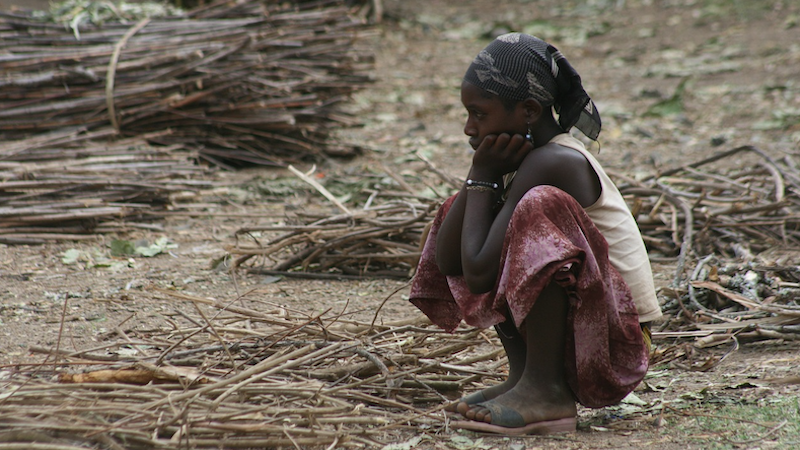
Ethiopia Travel Africa Child Ethiopian Culture Girl

As Western governments and partisan media concentrate on the genocide in Gaza and war in Ukraine, the Amhara genocide in Ethiopia and the simmering conflicts in the Amhara region remain largely ignored.

The Ethiopian government, led by Prime-Minister Abiy Ahmed is, directly or indirectly, behind virtually every act of ethnic violence in the country.

Within the Amhara region of the country fighting, which many believe constitutes war, between the Ethiopian National Defence Force (ENDF) and the Fano, has been raging with varying degrees of intensity since April 2023.

Fano is an Amhara armed (often poorly armed) group, made up of men and women of various ages and backgrounds from within the community. Historically a youth movement, a volunteer force, charged with defending their village/town/city from attack.

In the current conflict the malign forces come in the uniformed shape of the ENDF and recently, TPLF (Tigray People Liberation Front) forces. The same TPLF that in November 2020 went to war with the Ethiopian State and tried to violently overthrow the government.

The United Nations estimate 600,000 were killed in two years of fighting (making it the deadliest war of the 21 Century), however Ethiopian sources believe the figure is over 1 million; in addition millions were displaced. Much of the fighting occurred in the Amhara and Afar regions, which border Tigray, to the south and east respectively.

Under the auspices of the African Union and with American meddlers close at hand, on 3 November 2022 the waring parties signed The Cessation of Hostilities Agreement (CoHA) in Pretoria, South Africa. The CoHA was hailed as a peace treaty and the country breathed a collective sigh of relief.

The CoHA is littered with noble intentions, most of which have not been realised. For example, the commitment to “respect fundamental human rights and democratic norms and principles”. Human rights in Ethiopia are trampled on, as for democratic norms and principles, there is no democracy in Ethiopia, and no observation of democratic principles.

Over and above the basic agreement to stop fighting, the TPLF promised to disarm, to “refrain from conscription, training, deployment, mobilisation, or preparation for conflict and hostilities”, and to stop “aiding and abetting, supporting or collaborating with, any armed or subversive group in any parts of the country.’

The government, for its part, agreed to remove the terrorist designation of the TPLF. Thereby welcoming the enemy back into the political space.

Unsurprisingly perhaps, the TPLF has retained its guns, and it is widely reported that they recently took delivery of heavy weaponry from the very same government they tried to overthrow.

TPLF Join the Party

While war between the TPLF and the government may have stopped, in the 18 months since Pretoria, for Amhara communities living in Oromia and parts of Amhara there has been no peace, far from it.

The Amhara ethnic group is the largest or second largest (depending on who you believe) in the country. Amhara communities have been oppressed for generations, but since Abiy Ahmed came to power in 2018, persecution of Amhara people living in Oromia specifically, has morphed into genocide.

Tens of thousands of Amhara men, women and children, have been killed (estimates range between 30 – 50,000), hundreds of thousands arrested, over three million displaced. Oromo extremists (Oromo Liberation Army or Shene), Oromo Special Forces under the control of the Oromo Regional Authority (ORA), and the ENDF are carrying out the ethnic slaughter. Behind all of these various armed groups sits the federal government and Abiy Ahmed, himself an Oromo.

In recent months the TPLF, with the backing of the ENDF, have attacked towns in Northern Amhara. The area, which the TPLF are claiming to be part of Tigray, was ‘colonised’ by Tigray settlements during the TPLF’s time in power, but historically sits with Amhara. The attacks, described by the Amhara Regional Authority as an “invasion”, are a clear breach of the CoHA by the TPLF.

In this latest act of aggression against Amhara, the Abiy regime is accused of colluding with the TPLF; an organisation that despite having the terrorist label removed, remains a terrorist group through and through.

The Amhara regional government has called on the TPLF and its supporters to… “fully adhere to the Pretoria agreement and swiftly vacate from the areas it currently controls”, and is demanding all troops (TPLF and ENDF) be withdrawn from the Raya Alamata (occupied by TPLF forces during the 2020 -2022 war), Raya Bala, Ofla, Korem, and Zata areas.

According to the UN, over 50,000 civilians have been displaced as a result of the incursions. “The humanitarian situation is dire, with thousands…in need of broad humanitarian support to survive”. The majority of those forced from their homes are women, children/youth and elderly.

The African Union (AU) has called on both sides “to urgently halt hostilities….ensure the safety of civilians to end the renewed displacement of the local population”, “ and to fully implement the CoHA.

Despite the fact that much of the fighting during the 2020-2022 war took place within the Amhara region, the Amhara authority was excluded from the Pretoria talks, as a result the Amhara people feel betrayed by the Abiy government.

The details of the CoHA are widely known, what isn’t clear is what was agreed in private. In exchange for the TPLF agreeing to stop making trouble, did the government for example, commit to stand aside when TPLF forces marched into Amhara; and, did Abiy commit to disarm the Amhara Special Forces in order to remove any military obstacle to TPLF regional ambitions?

Speculation perhaps; what is not in doubt is Abiy’s duplicity, the depth of his political weakness and his reliance on extremist forces within Ethiopia; whether they be Tigray expansionists or Oromo nationalists.

The TPLF were in power for 28 years, Abiy Ahmed was a member of the ‘coalition’, through which they ruled. They are old friends then – Dictators in Arms we could say; partners in suppression and profiteering, with it seems a common enemy – the Amhara people.

Geographically the Amhara region is sandwiched between Oromia in the South-West, where the ethnic slaughter of Amhara people has been taking place, and TPLF thugs to the North keen to expand their kingdom, and politically Amhara politicians are being pushed to the fringes by the weight of Oromo extremists, Tigray tribal nationalists and an insipid duplicitous government led by a narcissist.

As the country hovers on the brink of another internal war, as millions wander homeless, displaced by fighting, and millions more live in utter destitution, Abiy is embellishing his genocidal reign by building a national palace (estimated $10 – $15 billion) – for himself, and luxury villas for his mates, and destroying cherished landmarks in the centre of Addis Ababa. It is sickening; he clearly cares not for the people or the country, is driven only by personal ambition and vanity and is not fit for political office of any kind.

Ethiopia is a diverse nation with dozens of ethnic groups, which for generations lived side by side in harmony. The internal conflicts taking place are not the result of community hatred and division, but flow from the hands of ambitious manipulative politicians, including Abiy and his Prosperity Party. Far from working for peace and social cohesion as they should be, the government are either perpetrating ethnic violence themselves, or due to political weakness and indifference to the suffering of Amhara civilians, are enabling the perpetrators.


Categories
South Caucasus News

Iran Changes Its Route, Not Its Destination – OpEd


Iran Changes Its Route, Not Its Destination – OpEd

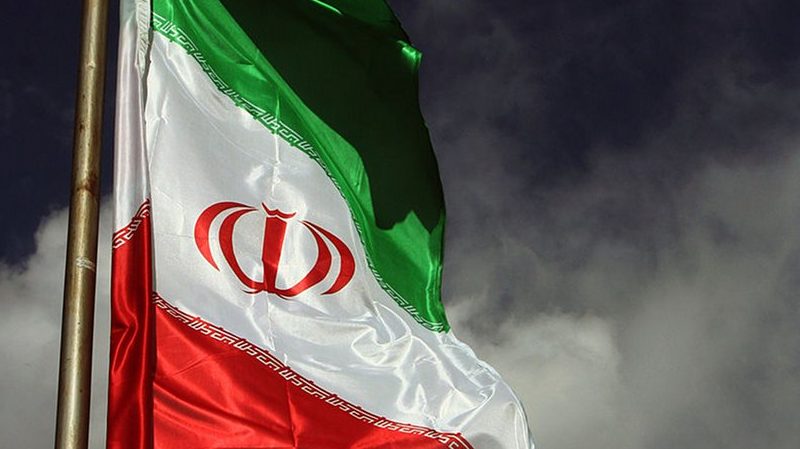
Flag of Iran. Photo by Farzaaaad2000, Wikipedia Commons.

The massive armada of 350 drones, ballistic and cruise missiles, launched by Iran toward Israel in the early hours of April 14, marked a sea-change in the anti-Israel approach the Iranian regime has pursued since its foundation in 1979.  Its anti-Israel policy was embedded in the broad strategy known originally as the Shia Crescent, and later – when Sunni Hamas was embraced as an effective ally – as the Axis of Resistance, and now dubbed the Ring of Fire.  The objective has been to acquire as much power and influence as possible across the Middle East in pursuit of its aim to become dominant, both politically and spiritually, in the region. 

Its purpose is not to achieve power for power’s sake.  Its intention was expressed by the regime’s original Supreme Leader, Ayatollah Ruhollah Khomeini.  He affirmed repeatedly that the foundation stone of his philosophy, the very purpose of his revolution, was to destroy Western-style democracy and its way of life, and to impose Shia Islam on the whole world.  He identified the United States and Israel as his prime targets, but included what was then the USSR.

“We wish to cause the corrupt roots of Zionism, Capitalism and Communism to wither throughout the world,” said Khomeini.  “We wish, as does God almighty, to destroy the systems which are based on these three foundations, and to promote the Islamic order of the Prophet.”  By this he meant his strict Shia interpretation of Islam, for elsewhere he had declared that the holy cities of Mecca and Medina, situated in the heart of Sunni Saudi Arabia, were in the hands of “a band of heretics”.

Over the past 45 years the regime has gone about its mission by funding, arming and supporting organizations, groups and militias prepared to take military action against Iran’s primary enemy, Israel.  On April 14 Iran’s Supreme Leader decided that the moment had arrived to change tack.  Intense analysis and calculation must have gone into the determination to break the principle that has guided Iran’s foreign policy strategy for 45 years and, for the very first time, to launch a direct attack on Israel.

“Israel has never been weaker,” the figuring must have gone. “It is mired in its war in Gaza. It hasn’t succeeded in eliminating Hamas or recovering its remaining hostages.  It’s being condemned on all sides for vast numbers of civilian deaths.  It is the subject of an investigation by the International Court of Justice on a charge of plausible genocide.  Imagine the effect on the Arab world, and indeed on the West, of Israel succumbing to a direct Iranian attack.  Think of bombs falling on Israeli cities.  Think of Israelis slaughtered and injured.  Israel will be humbled, the Abraham Accords will disintegrate, and any hope of their extension will be snuffed out.”  The thinking must have been something along those lines.

As for the appropriate strategy to launch his historic change of direction, the assumption must have been that an unprecedently massive fleet of kamikaze UAVs (unmanned aerial vehicles) would overwhelm Israel’s defenses, and at least some 50% of the missiles would get through.  Of course they didn’t, and Iran’s military strategists could surely never have foreseen the total and humiliating failure of the enterprise.  What they perhaps did not reckon on was Iran’s own unpopularity in the Arab world, nor the united support of Israel’s allies.  They surely did not count on Jordan and Saudi Arabia helping to block Iran’s UAVs from reaching Israel, nor that the UK and France would join the US in backing Israel’s Iron Dome in shooting down the Iranian missiles.  In the event only 1% reached Israel.  So, far from the triumph that the ayatollahs anticipated, they have ended up with egg on their faces.  Perhaps direct armed attack on targets 2000 kilometers (1250 miles) away is not such a good idea.

For 45 years world leaders have been unable, or perhaps unwilling, to acknowledge the fundamental purposes that motivated the leader of Iran’s Islamic revolution of 1979, or to appreciate that these same objectives have driven the regime ever since and continue to be its raison d’être.

Ever since 1979 the world could have recognized, if it had had a mind to, that the Iranian regime was engaged in a focused pursuit of these objectives, quite impervious to any other considerations – and, indeed, that it is still doing so.  If post-revolution Iranian actions had been interpreted in the light of religious zeal on the one hand, and realpolitik on the other, the threat that Iran now poses to the Middle East could have been averted.  Instead wishful thinking has governed the approach of many of the world’s leaders to Iran, and continues to do so.

“We shall export our revolution to the whole world,” declared Khomeini. “Until the cry ‘There is no god but Allah’ resounds over the whole world, there will be struggle.”

Iran’s leaders want to destroy the world as we know it.  They want to achieve political dominance in the Middle East, overthrow Western-style democracy of which America is the prime exponent, wipe out the state of Israel, and impose Shia Islam first on the Muslim world, and then on the world entire.

For some time the Sunni Arab world has recognized who its main enemy was.  The Abraham Accords are one outcome, perhaps to be expanded.  Some Western leaders still want to believe in an accommodation with the regime.  A clear-eyed look at the facts shows that this is simply not possible. This Iranian regime is not, and has no intention of ever becoming, one of the comity of civilized nations. That would be to negate the fundamental purposes underlying the revolution, purposes to which the ayatollahs and its IRGC (Islamic Revolutionary Guard Corps) remain unshakably committed. 

 As for their primary aim, the annihilation of Israel, the plan until April 14 had been to surround it with hostile entities and sponsor military skirmishes, but never to engage direct, thus triggering a direct armed response from Israel.  Not, at least, until Iran had acquired a nuclear arsenal.  They jumped the gun – and failed.  

The perhaps unpalatable truth is that, short of the civilized world combining to constrain it, the Iranian regime is intent on pursuing what it conceives as its God-given mission, set out by Ayatollah Khomeini as the rationale for his Islamic revolution.  Is there sufficient will in the West to prevent the regime reaching its destination?


Categories
South Caucasus News

ASEAN Drives Cross-Strait Cooperation – Analysis


ASEAN Drives Cross-Strait Cooperation – Analysis

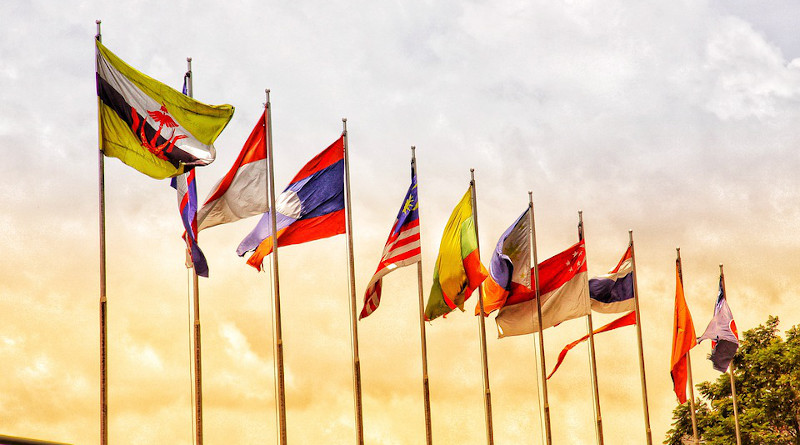
flags Asean Indo Vietnam Ensign Federal Southeast Asia

By Patrick Kurniawan

The Association of Southeast Asian Nations (ASEAN), a key player in the Indo-Pacific region, has traditionally upheld the principles of non-interference and non-alignment. Despite all ASEAN member states adhering to the one-China policy, when the threat of invasion and military conflict looms in the Taiwan Strait, ASEAN consistently advocates for ‘maximum restraint’ and urges all parties to refrain from ‘provocative actions’.

Tensions between China and Taiwan have risen since the start of 2024. The Chinese Communist Party has adopted ‘firmer’ rhetoric on reunification, even dropping the mention of ‘peaceful reunification’. The Taiwan Ministry of National Defence has reported increased Chinese military activities in the months before and after the Taiwanese presidential elections.

This uptick in aggression can be attributed to two things. One factor is the victory of Lai Ching-te from the Democratic Progressive Party, whom Beijing despises, in the January 2023 election. Another important factor is the heightened activity and presence of the United Statesand Japanese military in islands near Taiwan. ASEAN fears being drawn into a military conflict and is concerned about the implications of such escalation for its member states.

There are approximately 700,000 Southeast Asian migrants and 30,000 Southeast Asian students residing in Taiwan. ASEAN member states are most concerned with the prospect of a full-scale military conflict, which could complicate the repatriation process of these Southeast Asian nationals.

Taiwan is also a major source of electronic components and integrated circuits imported by ASEAN member states. Plus, a military conflict between Beijing and Taipei would disrupt air and maritime shipping routes to Southeast Asia, resulting in adverse economic consequences. The Taiwan Strait is geographically connected to the South China Sea — a key regional issue for China, Taiwan and four ASEAN member states.

Under the new Enhanced Defense Cooperation Agreement, the United States has gained access to strategic military bases in the Philippines, which could be critical if conflict occurs in the Taiwan Strait or South China Sea. ASEAN is now a key stakeholder in the cross-Strait conflict.

All these concerns have uncharacteristically forced ASEAN to respond to the growing tension in the Taiwan Strait. In August 2022, ASEAN released a Foreign Ministers’ Statement on cross-Strait development, calling on all actors to exercise maximum restraint and refrain from provocative actions. This statement was made right after US House Speaker Nancy Pelosi visited Taiwan.

During the 32nd ASEAN Coordinating Council Meeting and ASEAN Foreign Ministers’ Retreat, ASEAN reaffirmed its readiness to play a constructive role in facilitating peaceful dialogue between all parties. Taiwan has expressed delight over the association’s involvement in the issue.

These two instances mark the first time ASEAN has displayed interest in playing an active role in cross-Strait development, diverging from its traditional reactive approach to external conflicts. Considering China’s economic influence in the region, ASEAN’s willingness to address concerns related to cross-Strait tensions underscores the gravity of the situation. It highlights the potential impacts a military conflict could have on the Indo-Pacific.

Though the specific actions ASEAN might take remain uncertain, it will likely attempt to play a constructive role through two ASEAN-led mechanisms.

One mechanism might involve facilitating constructive dialogue through the ASEAN Regional Forum (ARF). ASEAN’s success in maintaining a semblance of neutrality positions it as a preferred dialogue partner for conflicting states. The ARF can act as a neutral ground for dialogue. The biggest challenge is to bring Taiwan to the discussion table, since all ASEAN member states fully embrace the one-China policy and do not recognise Taiwan as a sovereign state. China’s Belt and Road Initiative will be a pivotal bargaining chip for Beijing to incentivise or dissuade ASEAN states from involvement in its ‘domestic affairs’.

China, a member of the ARF, will likely oppose any effort to invite Taiwan, even as an observer. Taiwan must rely on its key allies in the United States, the European Union, Australia and Japan to protect its interests and to issue statements aimed at reducing tensions in the Taiwan Strait. But achieving output within the ARF, which operates on a consensus-based decision-making model, will prove challenging, as statements favouring Taiwan will likely be blocked by Beijing.

Another mechanism could involve constructive dialogue through the ASEAN Defence Ministers’ Meeting Plus (ADMM+). The ADMM+ convenes defence ministers from ASEAN and eight dialogue partners to strengthen security and defence cooperation, aiming to provide a more effective platform to discuss sensitive issues. ADMM+ has been one of the primary ASEAN-led mechanisms for negotiating South China Sea issues with Beijing.

As ASEAN has expressed its interest in playing a constructive role in cross-Strait development, Taiwan Strait issues could be discussed under the maritime security dimension of ADMM+. Yet, ADMM+ is not an international dispute settlement instrument. It is a forum to establish mutual understanding and promote long-term defence cooperation to ensure regional stability. Even if the mechanism is successful, it could take a long time to see any real impact.

ASEAN is neither willing nor capable of taking on the role of primary mediator. Instead, it offers to facilitate a neutral forum for dialogue and promote multilateral defence cooperation aimed at reducing tension between conflicting parties in the long term. It seems improbable that ASEAN’s involvement will significantly contribute to conflict resolution — rather, it appears more geared towards maintaining the status quo.

  • About the author: Patrick Kurniawan is Researcher at the Habibie Center and Research Associate at the Center for Southeast Asian Studies, National Chengchi University.
  • Source: This article was published by East Asia Forum

Categories
(@mikenov) / Twitter

@mikenov: War and Feast. The Glamorous Life of Deputy Defense Minister Timur Ivanov youtu.be/dSHMow8Ijl8?si… via @YouTube


Categories
South Caucasus News

Хвича Кварацхелия: Мы заслуживаем быть частью Европы и ничто не должно нам в этом помешать


«Я всегда стою и всегда буду стоять там, где моя Грузия», — написал в Facebook игрок сборной Грузии и «Наполи» Хвича Кварацхелия. «Я очень переживаю из-за того, что сегодня происходит в моей стране, мне сложно смотреть на все это. Я хочу четко зафиксировать мою позицию и сказать, что мы заслуживаем быть частью Европы и в […]

Categories
South Caucasus News

Kazakhstan extends restrictions on export of liquefied gas


The Energy Ministry of Kazakhstan has extended restrictions on the export of liquefied gas for another 6 months, Report informs via Kazakh media.

Categories
South Caucasus News

Nine Azerbaijani wrestlers to compete at World Olympic Qualifier in Istanbul


Nine Azerbaijani wrestlers will demonstrate their prowess at the World Olympic Qualifier to be held in Istanbul, Türkiye from May 9-12, to earn a spot for the Paris 2024 Games, Report informs via AZERTAC.

Categories
South Caucasus News

Masatsugu Asakawa: Global trade and supply chains are vulnerable


This meeting invites us to consider how we can work together to build a bridge to the future, ADB President Masatsugu Asakawa said at the opening of the session of the Asian Development Bank Board of Governors in Tbilisi, Report informs.