
Iran files charges over BBC report on teen girl allegedly killed by security forces in 2022 protests Houston Chronicle
Day: May 1, 2024
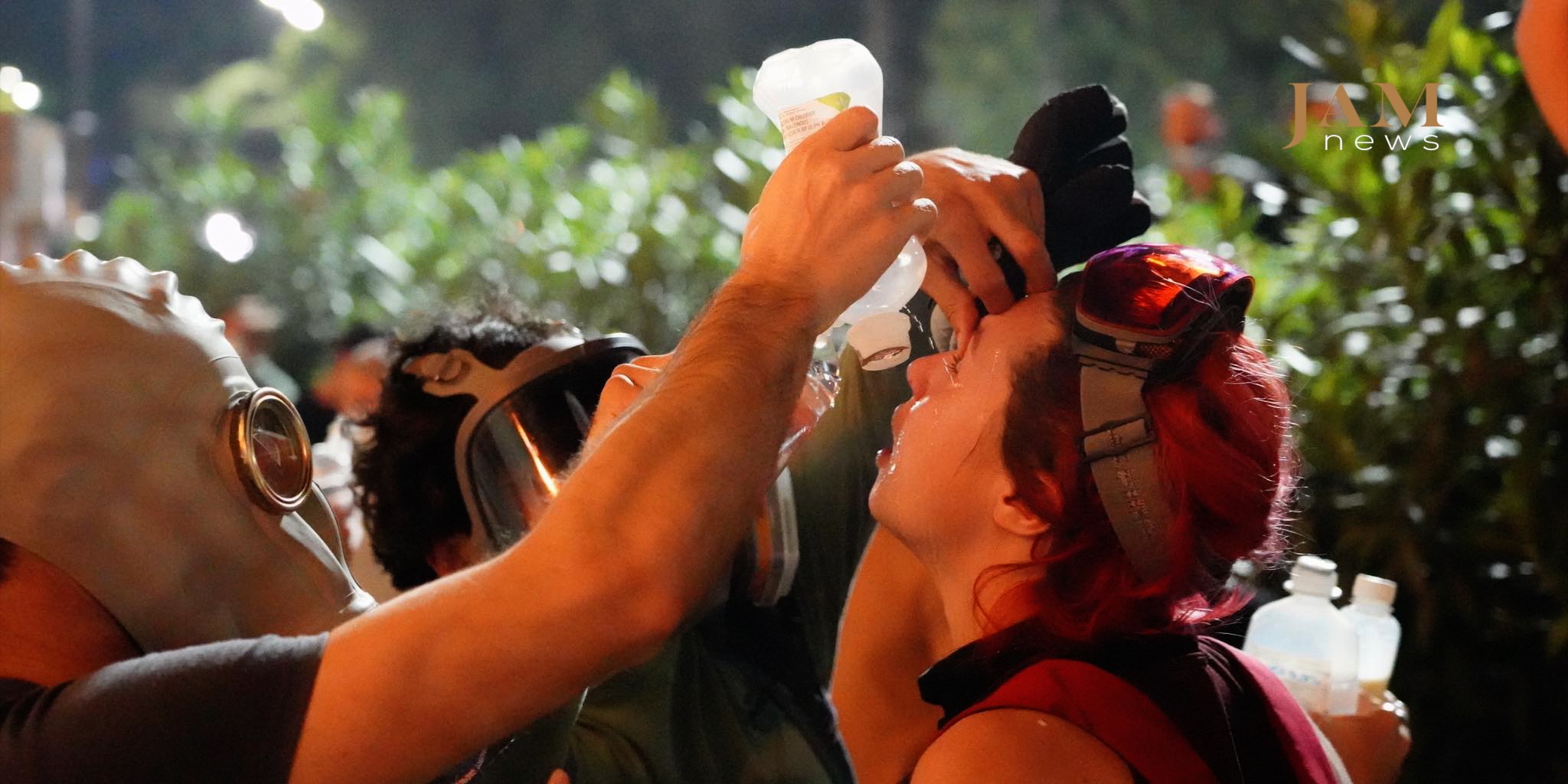
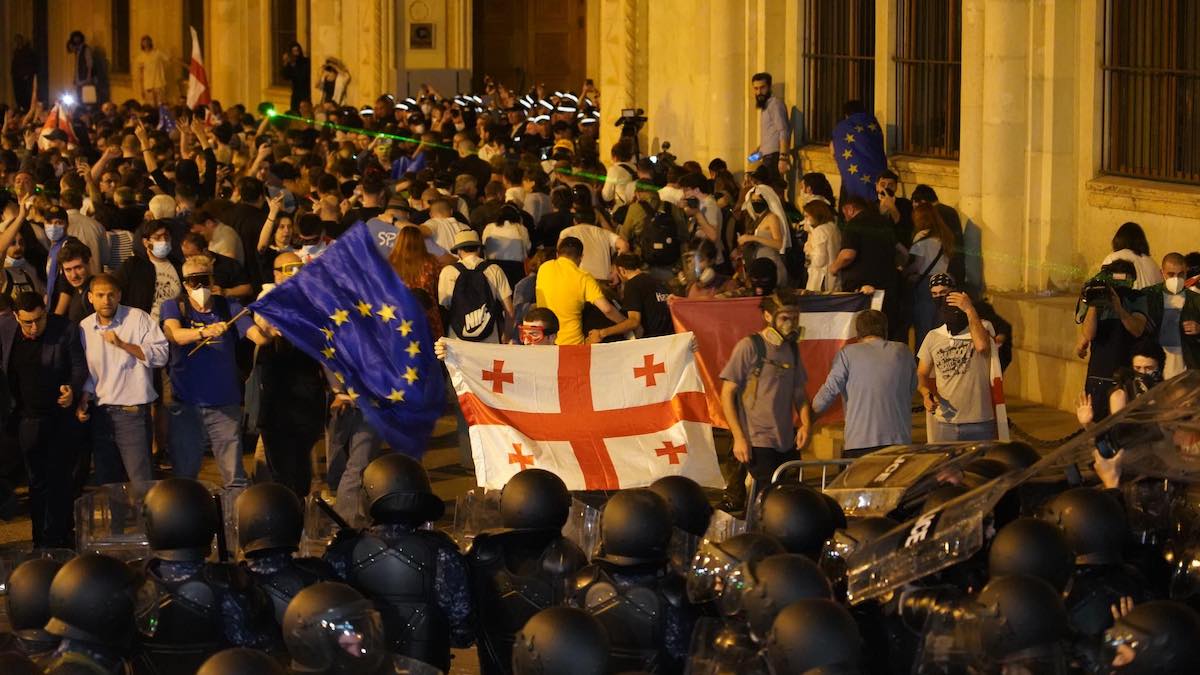
How the May 1 protest in Tbilisi was dispersed
During the protests against the foreign agents bill in downtown Tbilisi on May 1-2, riot police units extensively used water cannons and tear gas.
While Rustaveli Avenue in #Tbilisi is crowded with people, tension persists on 9 Aprili Street, where riot police continue to confront protesters.
People are grabbing tear gas grenades with their hands and throwing them back at the special forces.#TbilisiProtests… pic.twitter.com/kij2HqQD1Q
— JAMnews (@JAMnewsCaucasus) May 1, 2024
According to unconfirmed reports, riot police also fired rubber bullets at the protesters. Photos and videos of the injured are being shared on social media.
Still in Tbilisi. Protesters against the foreign agents bill attempted to enter the parliament and lit fires on the street near the side entrance. Foam is the result of extinguishing them. Special forces have been dispersing protesters for several hours now with blasts of water,… pic.twitter.com/pD00pfXyxb
— JAMnews (@JAMnewsCaucasus) May 1, 2024
One of those injured by rubber bullets is opposition politician Tsotne Koberidze. He shared a video on social media clearly showing wounds from two bullets on his body.
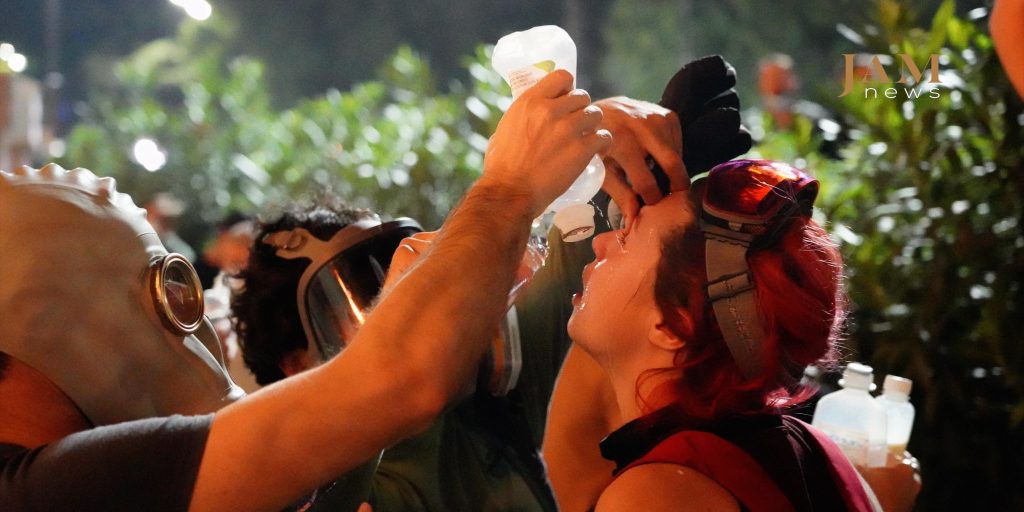 Suppression of protests against the foreign agents law in Tbilisi on May 1-2. May 1st. Photo: David Pipia/JAMnews
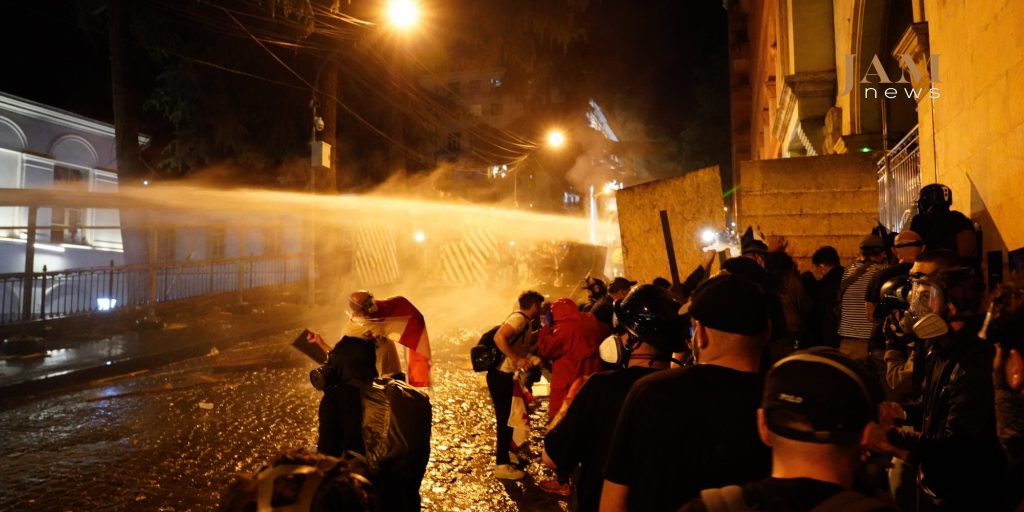
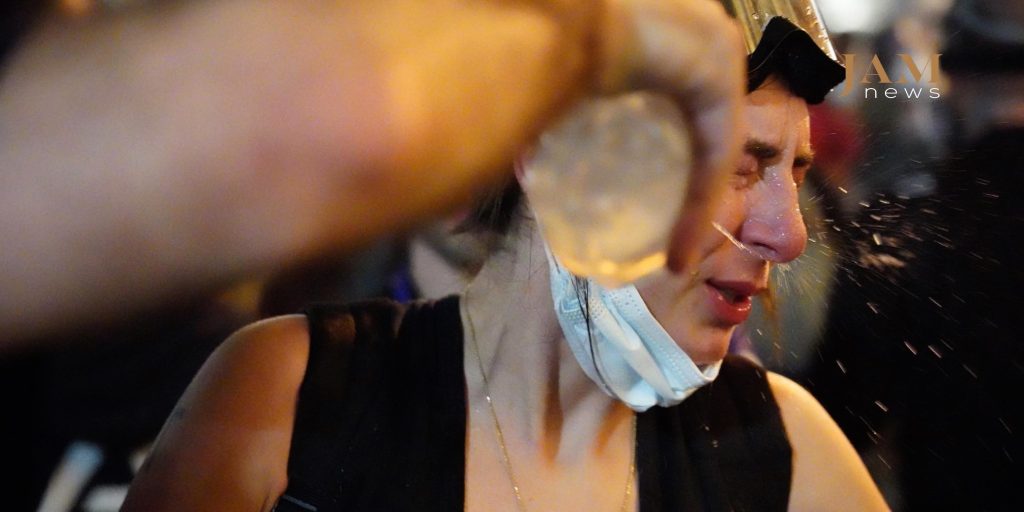
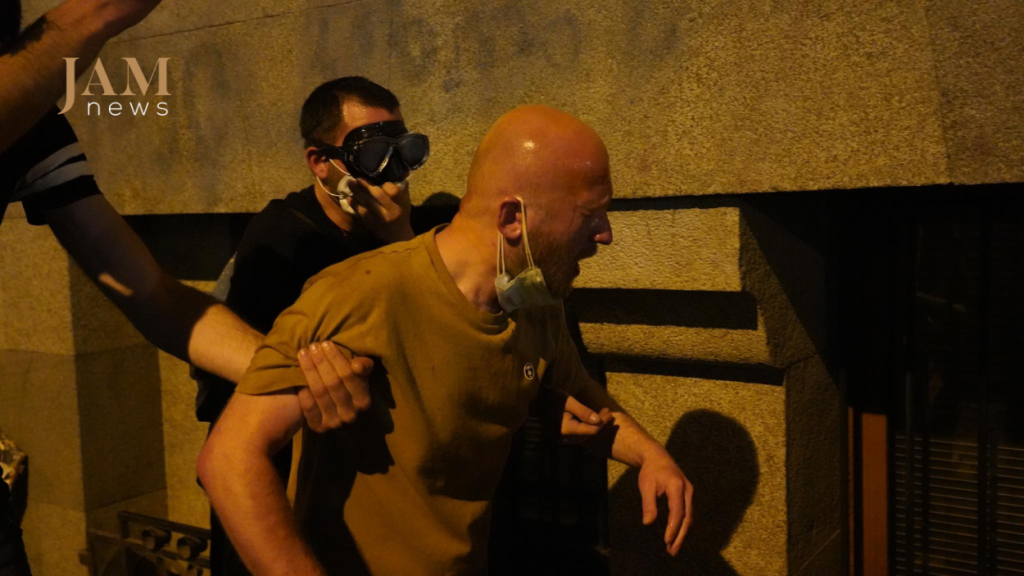
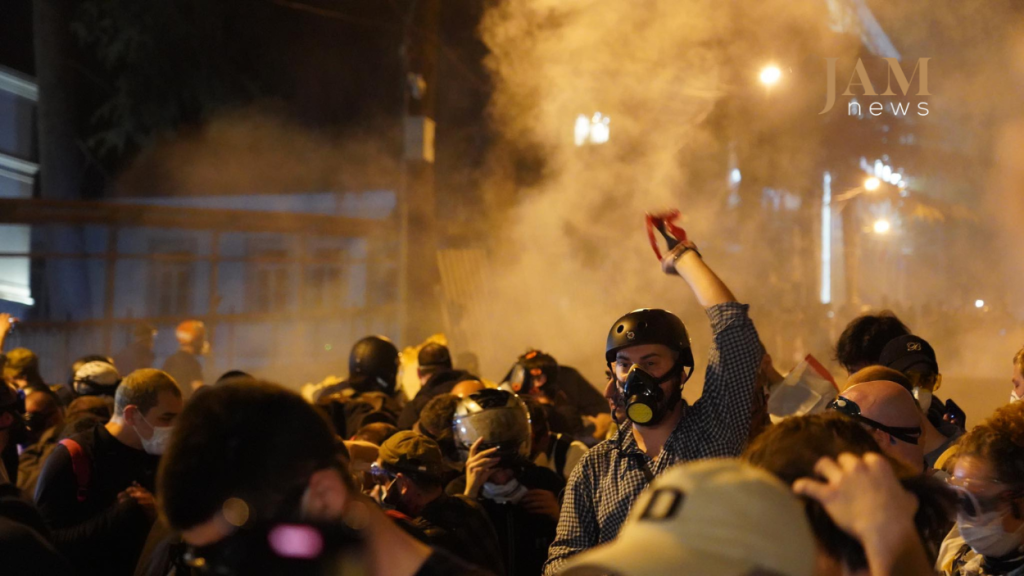
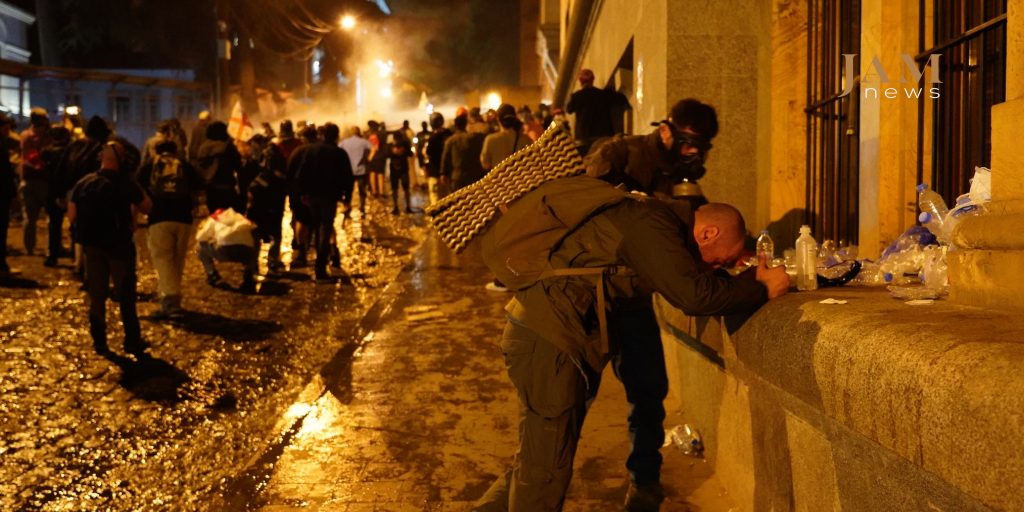
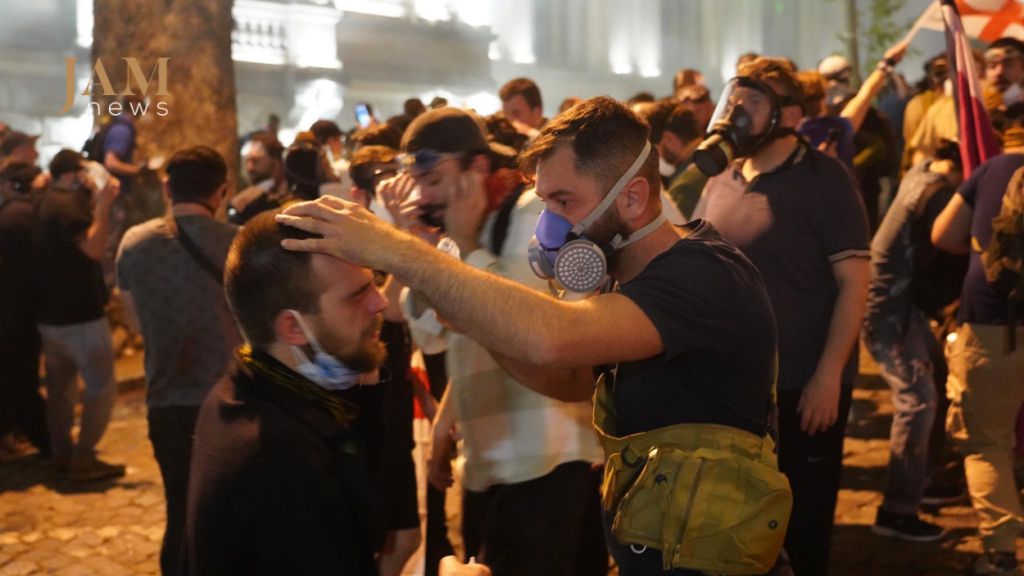
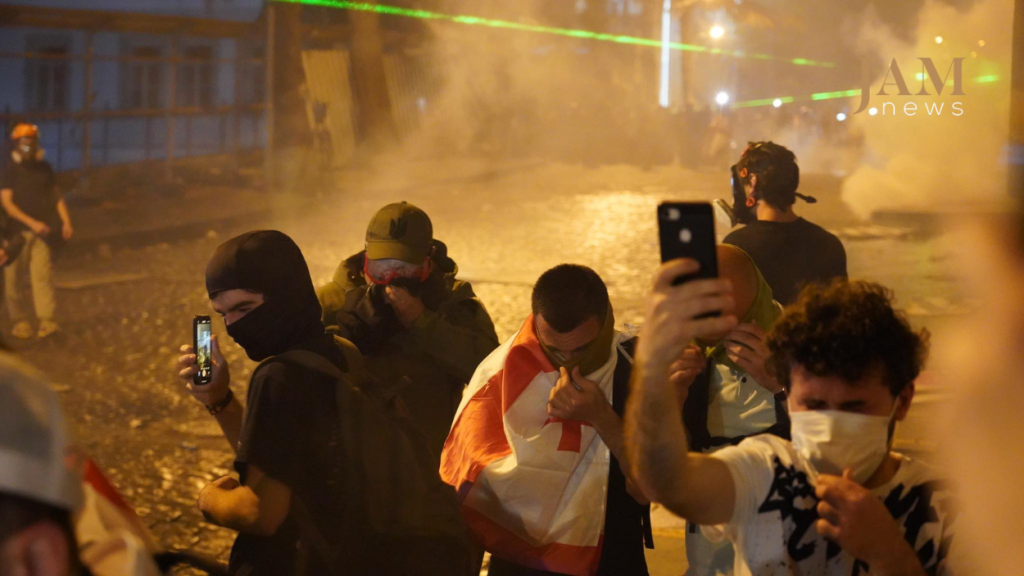
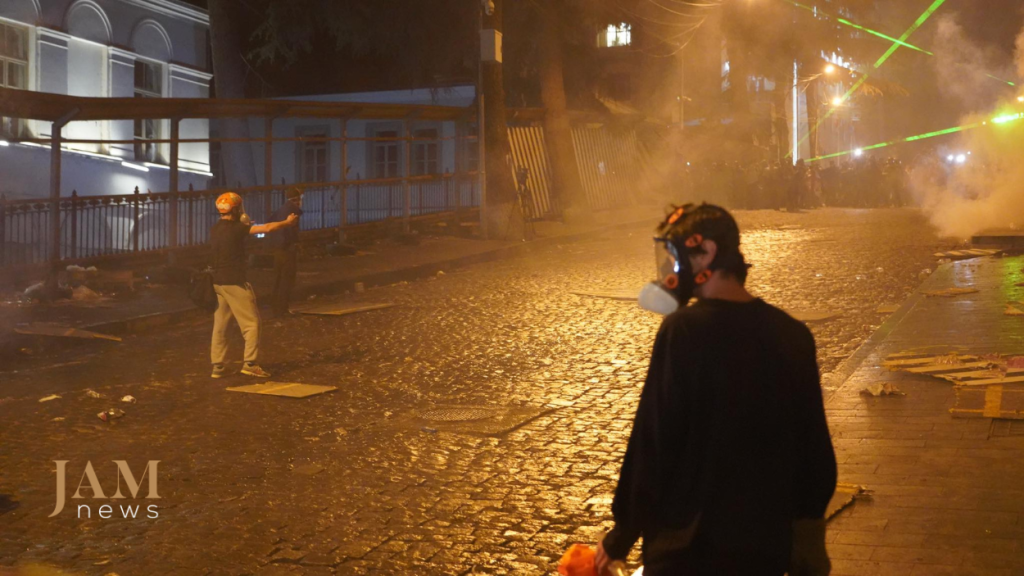
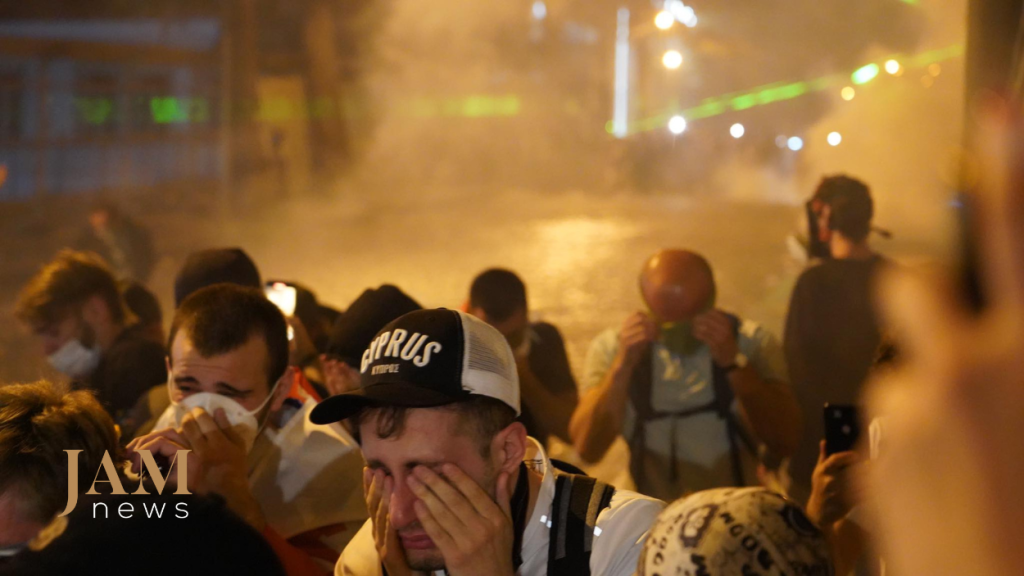
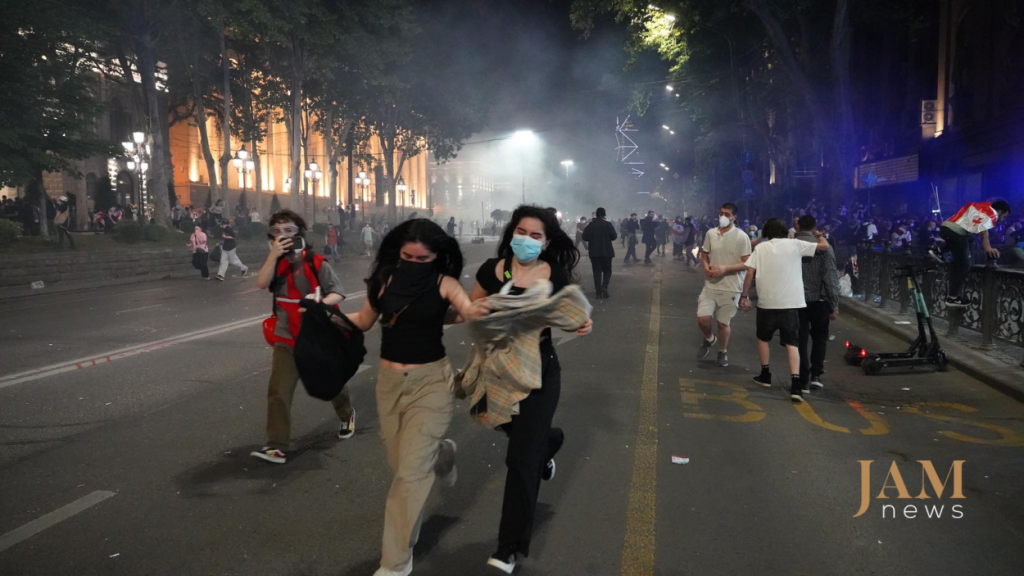
On May 1st, 83 parliament members from the ruling party “Georgian Dream” supported the “foreign agents law” in the second reading, against which tens of thousands have been protesting at mass rallies for several weeks.
The consideration of the bill in parliament took place against the backdrop of a major scandal. Speaker Shalva Papuashvili eventually expelled four deputies from the chamber: Tina Bokuchava, Salome Samadashvili, Tako Charkviani, and Giorgi Botkoveli.
Today, Prime Minister Irakli Kobakhidze announced that the “Russian law,” as the foreign agents law is referred to in the local community, will be passed in the third reading in two weeks.
Georgia’s EU partners on the protests dispersal
International partners of Georgia reacted to the dispersal of peaceful demonstrators by riot police in Tbilisi on April 30, opposing the “foreign agents” law. Representatives of the ruling party “Georgian Dream” are pushing the country towards Russian-style authoritarianism, stated EU officials, urging Georgian authorities to ensure freedom of expression for citizens.
Gas, water cannons, beatings of tens of thousands of protesters in Tbilisi. How did the night go and what’s next?
Opponents of the “agents” bill plan to hold a larger rally on May 1. Regions are joining Tbilisi
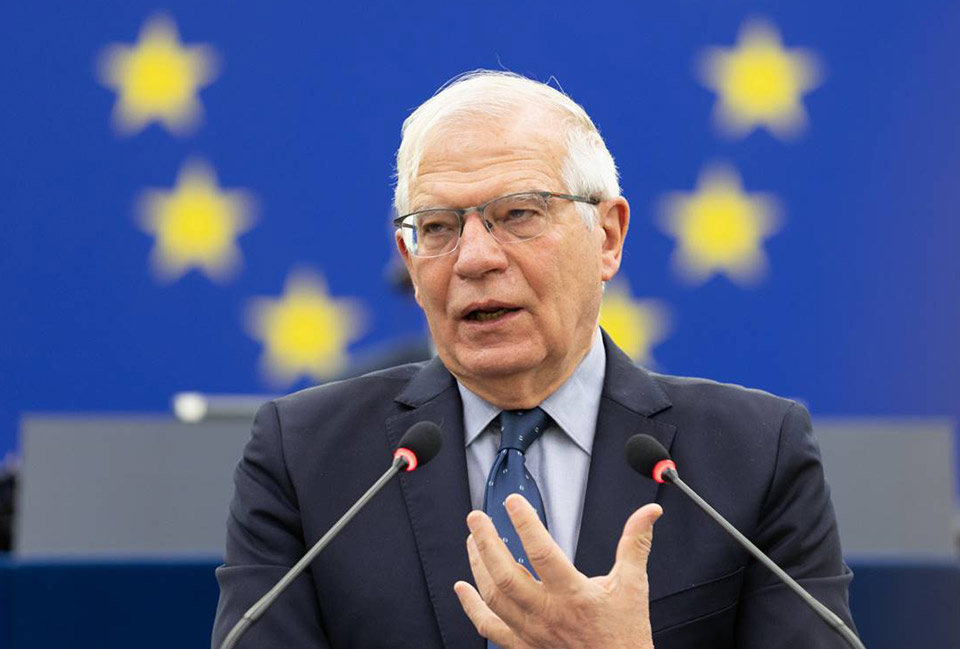
Josep Borrell, the EU High Representative for Foreign Affairs and Security Policy, stated: “I strongly condemn the violence in Georgia against demonstrators peacefully protesting the foreign influence law. Georgia is a candidate country for the European Union, and I urge the authorities to ensure citizens’ right to peaceful assembly. The use of force to suppress protests is unacceptable.”
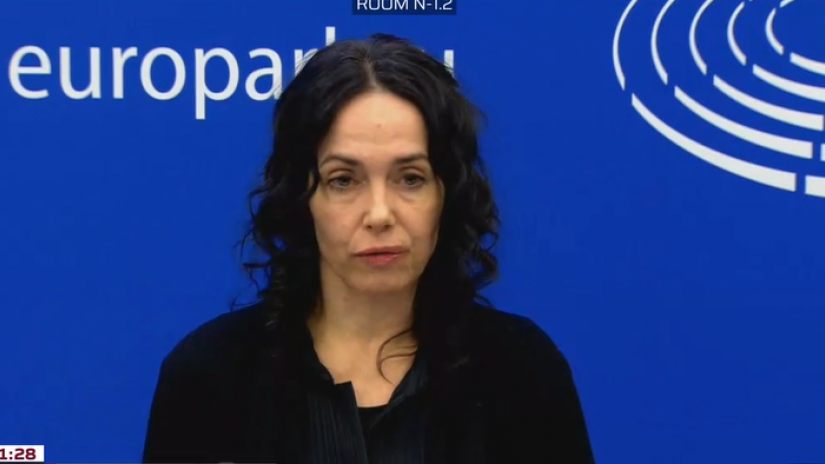
Miriam Lexmann, a Member of the European Parliament, said: “I am shocked by the police brutality against demonstrators in Tbilisi. This is not how law enforcement should operate. Instead of calming the situation, the ‘Georgian Dream’ government is fueling tension and polarization, pushing Georgia towards authoritarianism in the Russian style.”
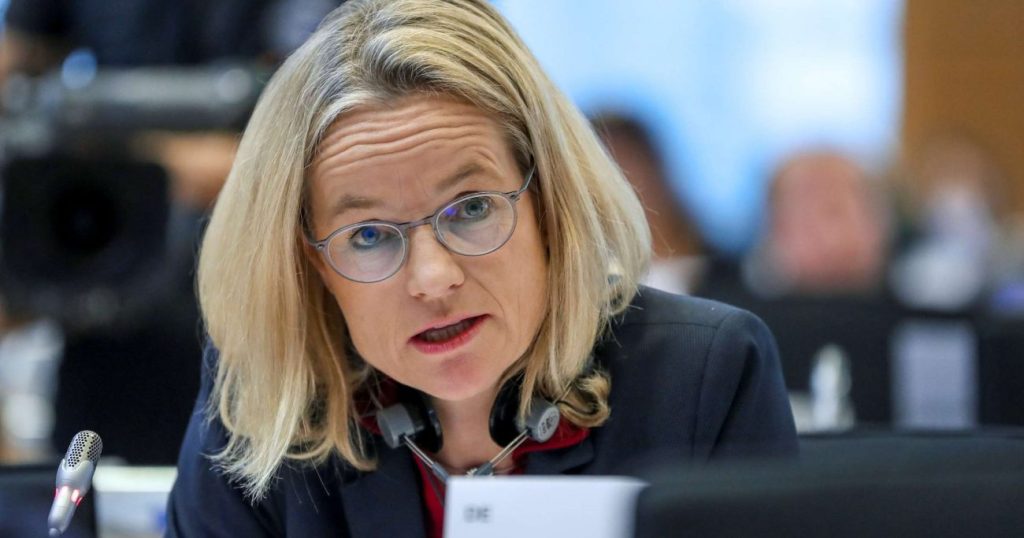
Viola von Cramon, a Member of the European Parliament, stated: “Please tell the Georgian authorities to stop beating their own people. No more violence against peaceful civilians. Tell them to repeal the ‘Russian law’ [referring to the foreign agents bill]. No more joint projects and happy photos with senior Georgian officials.
These photos look utterly absurd after what is happening in Georgia right now and what has been happening in recent weeks. I urge the European Commission to develop sanctions against Bidzina Ivanishvili. The EU is interested in supporting and rescuing democratic partners in Georgia.”
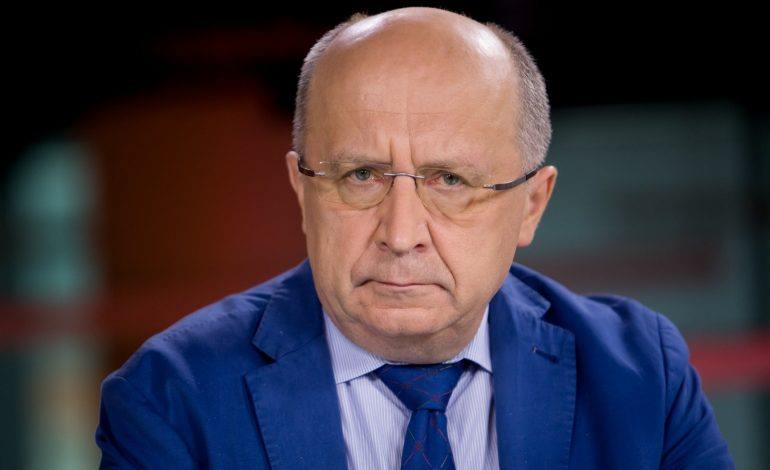
Andrius Kubilius, a Member of the European Parliament, remarked: “Putin, Lukashenko, and Ivanishvili are all following the same path: first, they use brute force against peaceful demonstrators, then they establish dictatorship, opposing the democratic future of the country. And dictatorship always leads to the same future: sanctions, downfall, and tribunals.”
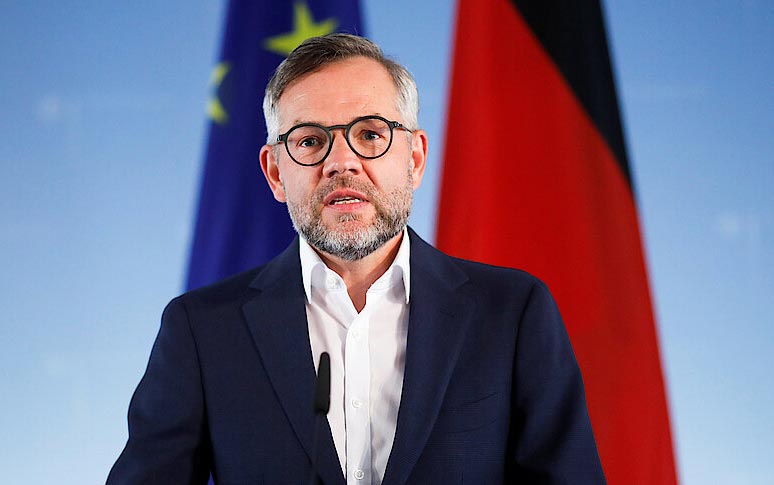
Michael Roth, Chairman of the Committee on Foreign Affairs of the Bundestag in Germany, stated: “Dear Irakli Kobakhidze, immediately cease the violence against your citizens who are organizing peaceful demonstrations in defense of European values. Repeal the law ‘on foreign agents’! Do not destroy the future of Georgia, which is at the heart of Europe!”
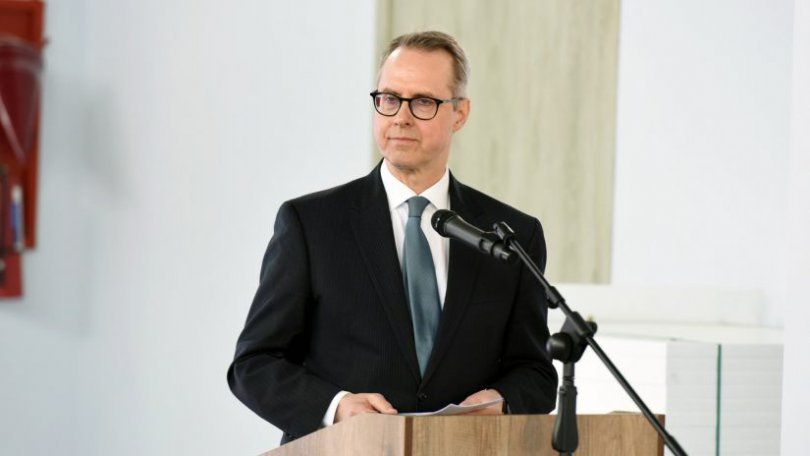
Peter Fischer, the Ambassador of Germany to Georgia, stated: “The violence must stop. It is never a solution. Germany and the European Union are closely monitoring and assessing these events. We are partners and friends of Georgia in building peace, freedom, and development.”
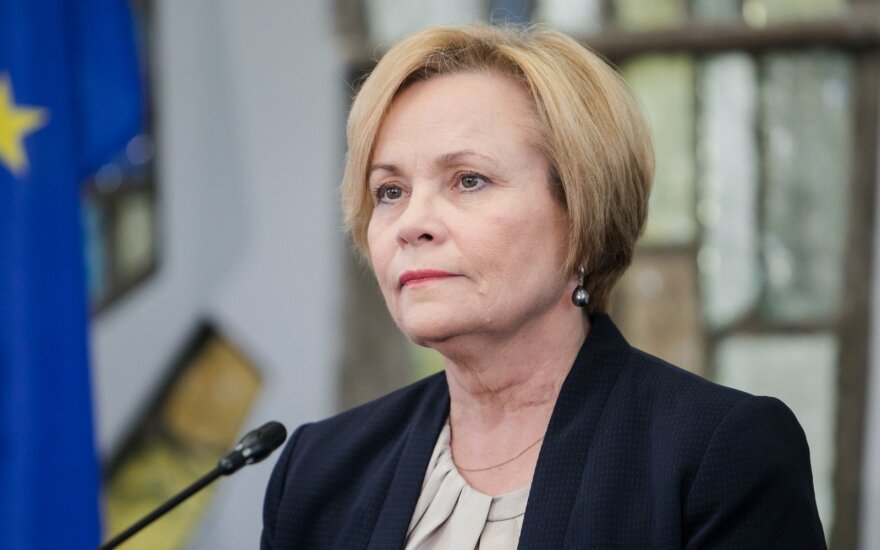
Rasa Juknevičienė, Member of the European Parliament, stated: “The masks are off – Bidzina Ivanishvili has shown his true colors, demonstrating that he is against Georgia’s European future. He has never been a supporter of this path. Now is a decisive moment for Georgia’s future. I believe in the Georgian people; they will defend the country’s European path.”
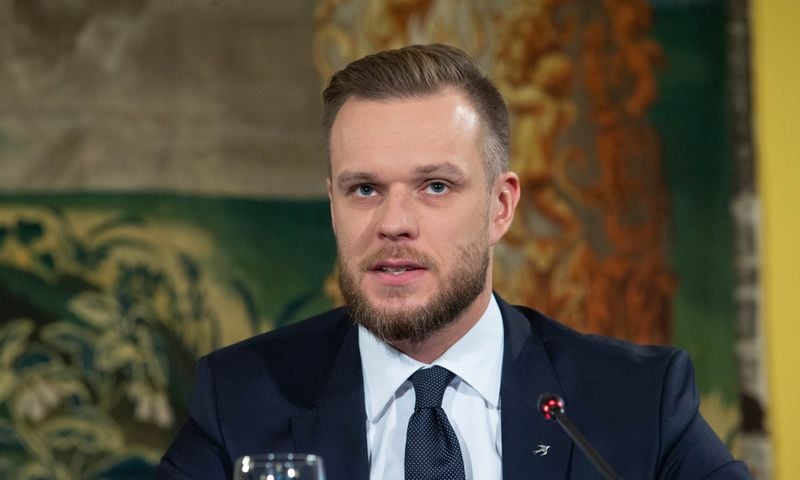
Gabrielius Landsbergis, the Minister of Foreign Affairs of Lithuania, stated: “Twenty years ago, joining the European Union did not require clashes with the police, tear gas, loss of lives, and territories. This is today’s reality. However, the decision of the people to become part of the European Union only strengthens our resolve to extend a helping hand to Georgia.”
Categories
NPR News: 05-01-2024 7PM EDT
On 1 May, Georgian President Salome Zurabishvili gave an interview to France 24 in which she discussed developments regarding the Foreign Agents Law, Georgia’s EU bid, the anti-Western rhetoric and leanings of the ruling Georgian Dream, and other issues.
When asked to articulate her position on the controversial Foreign Agents Law, she said: “I think we are in a way beyond the controversial law,” which she said was a “duplicate” of the Russian law passed under President Putin, and which had been used in recent years “to suppress civil society, non-governmental organisations”. She called the reintroduction of the bill “a provocation to civil society”, which rejected the law last year. She stressed that the bill was seen by the Georgian population and the CSO community “as an attempt to really suppress critical voices”.
However, the President stressed that the biggest concern today is not so much the Russian law, but the Russian government, because the statements, “the statement” that we heard just two days ago from the honorary president of the Georgian Dream, the ruling party, Mr Ivanishvili was “a declaration of war against our partners, against the United States and the European Union.”
She particularly recalled the GD officials call U.S. , EU “the [global] party of war”, “calling them all agents, calling me an agent of the party of war”, as well as calling the agents of “revolution and subversion” all the civil society organizations and all the parties in Georgia, as well as the youth who are on the streets.” She stressed that “these are the very terms” that President Putin uses against his own civil society.
Asked what will happen if the bill is adopted in its third hearing and whether the violence could get worse and whether Georgia is on the brink of instability Salome Zurabishvili said that she does not think it’s instability. She said that the youths that are taking to the streets “to defend their European future” are “are very reasonable and very conscious of the fact that the country that has two occupied territories by Russia cannot afford instability. She stressed that the demonstrators “protesting very peacefully” and that the “provocations come from police and special forces.” She said she is sure the restraint will be exercised “because the way is long until the elections.”
The President said the elections will herald the end of “this Russian law” and “to many other laws that have been passed in recent months”.
President Zurabishvili stressed that the aim and the objective are very clear: “It’s to keep Georgia in line with its European future, with what is written in the constitution of Georgia, that European integration is an obligation for all the institutions of Georgia to work toward.” “And that is something that the Georgian population understands very well and is going to defend very well,” she concluded.
Asked whether she thinks Russia is in a position to somehow to exploit the issue of occupied Georgian territories Salome Zurabishvili said that “Russia is seeing that the European pass of Georgia is something very real” and that Armenia “is taking the same path” and that Azerbaijan “is leaning towards a partnership with Turkey”, and thus “the Caucasus and the Black Sea is going out of the influence of Russia.” Salome Zurabishvili said in her view “it’s an attempt by Russia to leverage the Georgian Dream and “its honorary president” [Bidzina Ivanishvili] as the European future for Georgia has become very real.
She emphasized this is unacceptable for a country with more than two centuries experience of Russian imperialism.
When asked whether the Georgian Dream is trying to push the country towards Moscow the President said that there were indeed question marks about why GD was not taking more direct measures towards EU integration and was not implementing the EC recommendations. She said however, that the speech by Bidizna Ivanishvili two days ago, was an “anti-Western, anti-European declaration.” That’s unacceptable to the Georgian people, she stressed.
Asked whether there is anything that the EU could do to help Salome Zurabishvili said that she expects from the EU “very clear attention.” She said that although there are many global crises all over the world and Georgia is not necessarily in the center of attention, as a EU candidate country that is on the verge of getting to the accession negotiations, with population very enthusiastic about EU integration, needs “the attention and we need clarity from the European Union that they understand that the population wants the EU” and that “the governing forces today are not doing all the necessary for that.”
“The clarity of the messages is what we need,” Salome Zurabishvili adding: “the rest is to be done by us.”