
There are closed roads in Armenia ARMENPRESS
Day: May 1, 2024
On May 1, the European Commission’s Director General for Neighborhood and Enlargement Negotiations, Gert Jan Koopman, arrived in Georgia. He has already met with the President of Georgia, Salome Zurabishvili.
During his two-day visit, Director General Koopman is scheduled to meet with Prime Minister Irakli Kobakhidze, Minister of Economy and Vice Prime Minister Levan Davitashvili, Foreign Minister Ilia Darchiashvili, Speaker of Parliament Shalva Papuashvili, representatives of various political parties, civil society organizations and the investment community.
Just arrived in Tbilisi.
Looking forward to meeting with President, Government, Parliament & civil society. Georgians worked hard to get candidate status.
Current challenges need to be tackled and we are here to help to address them. pic.twitter.com/mDpciOmBSt
— Gert Jan Koopman (@GertJanEU) May 1, 2024
Meeting with the President
The European Commission’s Director General for Neighborhood and Enlargement Negotiations, Gert Jan Koopman, and the President of Georgia, Salome Zurabishvili, held a meeting to discuss the situation in the country midst the ongoing developments around the Foreign Agents Law and noted that the visit comes at a crucial time for Georgia’s European integration.
According to the press release of the President’s Administration, the President emphasized to Director General Koopman that the EU’s granting of candidate status to Georgia has given great impetus and hope to Georgians who are now defending their European future and need the help of European friends and partners. “It is clear that Russia is using all means to stop Georgia’s progress towards Europe,” – the President emphasized.
The President underlined the crucial importance of the October elections and spoke about the importance of holding the elections in a stable and peaceful environment, as “the Georgian people should once again choose the European future of Georgia”. She also spoke about the importance of the “Unity Platform for Europe“, which is a place for political parties to come together and draw up a concrete joint plan on the reforms to be implemented after the elections for EU integration.
The discussions also focused on the Russia’s war in Ukraine, the situation in the region and in the occupied territories of Georgia.
Gert Jan Koopman expressed the EU’s “extreme concern” about current events in Georgia and the government’s decisions. According to the press release, the Director General stressed that “the adoption of the law “On Transparency of Foreign Influence” is a great threat to Georgia’s European integration and will undoubtedly hinder this process. According to him, in June the European Union will discuss a new stage of expansion, and therefore it is extremely important for the Georgian government to become constructive and not to damage the country’s European integration process”.
More to follow…
On May 1, the European Commission’s Director General for Neighborhood and Enlargement Negotiations, Gert Jan Koopman, arrived in Georgia. He has already met with the President of Georgia, Salome Zurabishvili.
During his two-day visit, Director General Koopman is scheduled to meet with Prime Minister Irakli Kobakhidze, Minister of Economy and Vice Prime Minister Levan Davitashvili, Foreign Minister Ilia Darchiashvili, Speaker of Parliament Shalva Papuashvili, representatives of various political parties, civil society organizations and the investment community.
Just arrived in Tbilisi.
Looking forward to meeting with President, Government, Parliament & civil society. Georgians worked hard to get candidate status.
Current challenges need to be tackled and we are here to help to address them. pic.twitter.com/mDpciOmBSt
— Gert Jan Koopman (@GertJanEU) May 1, 2024
Meeting with the President
The European Commission’s Director General for Neighborhood and Enlargement Negotiations, Gert Jan Koopman, and the President of Georgia, Salome Zurabishvili, held a meeting to discuss the situation in the country midst the ongoing developments around the Foreign Agents Law and noted that the visit comes at a crucial time for Georgia’s European integration.
According to the press release of the President’s Administration, the President emphasized to Director General Koopman that the EU’s granting of candidate status to Georgia has given great impetus and hope to Georgians who are now defending their European future and need the help of European friends and partners. “It is clear that Russia is using all means to stop Georgia’s progress towards Europe,” – the President emphasized.
The President underlined the crucial importance of the October elections and spoke about the importance of holding the elections in a stable and peaceful environment, as “the Georgian people should once again choose the European future of Georgia”. She also spoke about the importance of the “Unity Platform for Europe“, which is a place for political parties to come together and draw up a concrete joint plan on the reforms to be implemented after the elections for EU integration.
The discussions also focused on the Russia’s war in Ukraine, the situation in the region and in the occupied territories of Georgia.
Gert Jan Koopman expressed the EU’s “extreme concern” about current events in Georgia and the government’s decisions. According to the press release, the Director General stressed that “the adoption of the law “On Transparency of Foreign Influence” is a great threat to Georgia’s European integration and will undoubtedly hinder this process. According to him, in June the European Union will discuss a new stage of expansion, and therefore it is extremely important for the Georgian government to become constructive and not to damage the country’s European integration process”.
More to follow…
TBILISI — Georgian lawmakers tussled in parliament on Wednesday as lawmakers resumed debating the second reading of a bill on “foreign agents” that has sparked weeks of protest, and a violent police crackdown on Tuesday.
Georgian television showed commotion in the chamber. One pro-government deputy was seen throwing a book at opposition legislators, while others shouted and physically confronted opponents. The foreign agent bill has prompted an upsurge of violence in Georgia’s often-rowdy parliament.
Georgian security forces used water cannon, tear gas and stun grenades against protesters outside parliament late on Tuesday, sharply escalating the crackdown after lawmakers debated the “foreign agents” bill viewed by the opposition and Western nations as authoritarian and Russian-inspired.
During the protests in Tbilisi Tuesday, police detained 63 people and six police officers were injured, Deputy Interior Minister Aleksandre Darakhvelidze said.
Levan Khabeishvili, leader of the United National Movement party, Georgia’s largest opposition bloc, spoke in parliament on Wednesday with his face heavily bandaged. His party said he was badly beaten by police at the protest, leaving him with concussion, broken facial bones, and missing four teeth.
European Union foreign policy chief Josep Borrell wrote in a post on X on Wednesday: “I strongly condemn the violence against protesters in Georgia who were peacefully demonstrating against the law on foreign influence.”
The EU, which gave Georgia candidate status in December, has said the bill could derail Tbilisi’s hopes of European integration if passed.
Supporters of the bill, including Bidzina Ivanishvili, the billionaire founder of the ruling Georgian Dream party and former prime minister, say the foreign agent law would bolster national sovereignty amid what he said were Western attempts to lead Georgia into a confrontation with Russia.
TBILISI — Georgian lawmakers tussled in parliament on Wednesday as lawmakers resumed debating the second reading of a bill on “foreign agents” that has sparked weeks of protest, and a violent police crackdown on Tuesday.
Georgian television showed commotion in the chamber. One pro-government deputy was seen throwing a book at opposition legislators, while others shouted and physically confronted opponents. The foreign agent bill has prompted an upsurge of violence in Georgia’s often-rowdy parliament.
Georgian security forces used water cannon, tear gas and stun grenades against protesters outside parliament late on Tuesday, sharply escalating the crackdown after lawmakers debated the “foreign agents” bill viewed by the opposition and Western nations as authoritarian and Russian-inspired.
During the protests in Tbilisi Tuesday, police detained 63 people and six police officers were injured, Deputy Interior Minister Aleksandre Darakhvelidze said.
Levan Khabeishvili, leader of the United National Movement party, Georgia’s largest opposition bloc, spoke in parliament on Wednesday with his face heavily bandaged. His party said he was badly beaten by police at the protest, leaving him with concussion, broken facial bones, and missing four teeth.
European Union foreign policy chief Josep Borrell wrote in a post on X on Wednesday: “I strongly condemn the violence against protesters in Georgia who were peacefully demonstrating against the law on foreign influence.”
The EU, which gave Georgia candidate status in December, has said the bill could derail Tbilisi’s hopes of European integration if passed.
Supporters of the bill, including Bidzina Ivanishvili, the billionaire founder of the ruling Georgian Dream party and former prime minister, say the foreign agent law would bolster national sovereignty amid what he said were Western attempts to lead Georgia into a confrontation with Russia.
Reuters: Rival Palestinian groups Hamas and Fatah have expressed the will to seek reconciliation through dialogue at unity talks in Beijing, China’s foreign ministry said on Tuesday.
The two factions have not managed to heal political disputes since Hamas fighters expelled Fatah from the Gaza Strip in a short…
Armenian and Azerbaijani enclaves
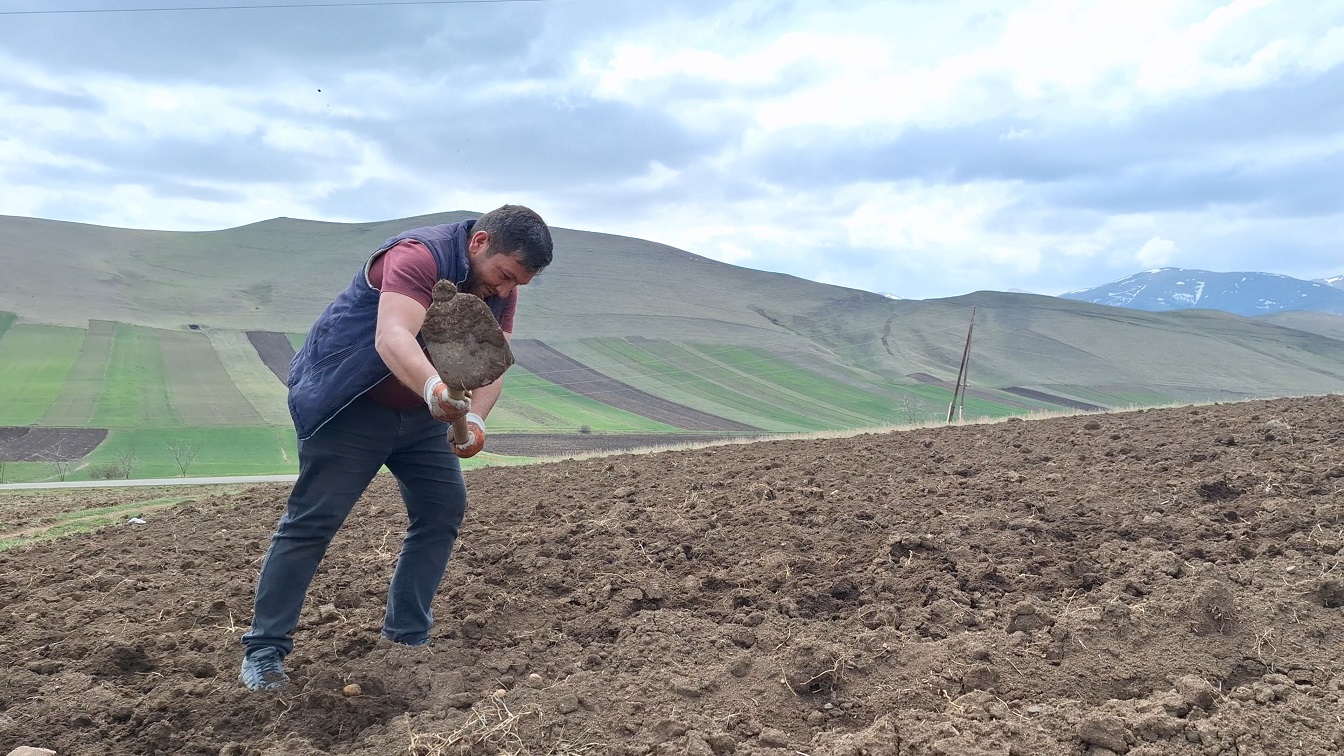
“If Bashkend is given to the Armenians, it’s the end for us. We make our living here, and these places will no longer be safe,” says 53-year-old Vali (last name not provided), a resident of the village of Shynykh in the Gedabek district. He engages in animal husbandry in neighboring Bashkend. He explains that since Bashkend, which Armenia considers its enclave, came under Azerbaijani control, he has been supporting his family by raising livestock there.
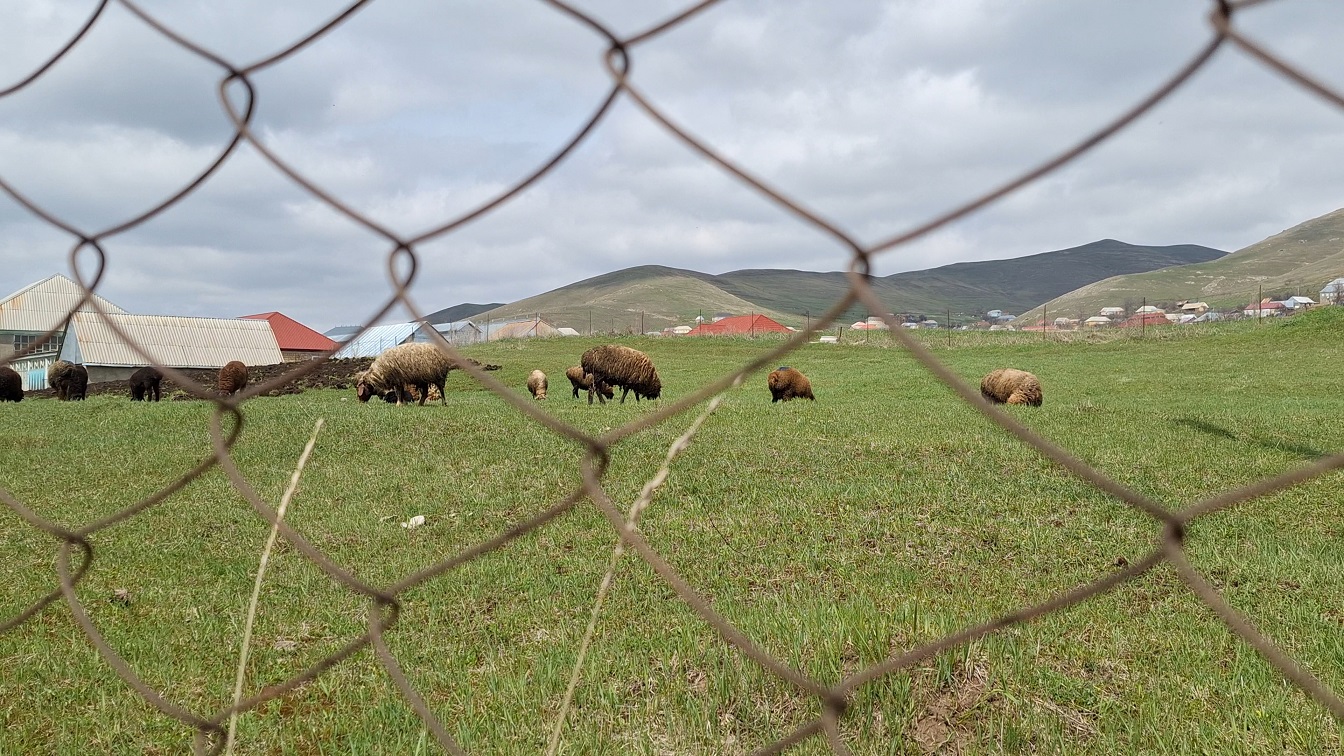
“I’m not alone in this; people from surrounding villages do the same. We keep animals here. None of us have jobs. Unemployment is everywhere. We raise sheep, then sell them, buy feed for the animals, and live off the proceeds. With such difficulties and hardships, we earn our bread. If this village is gone, we’ll be forced to take our families and leave,” Vali says.
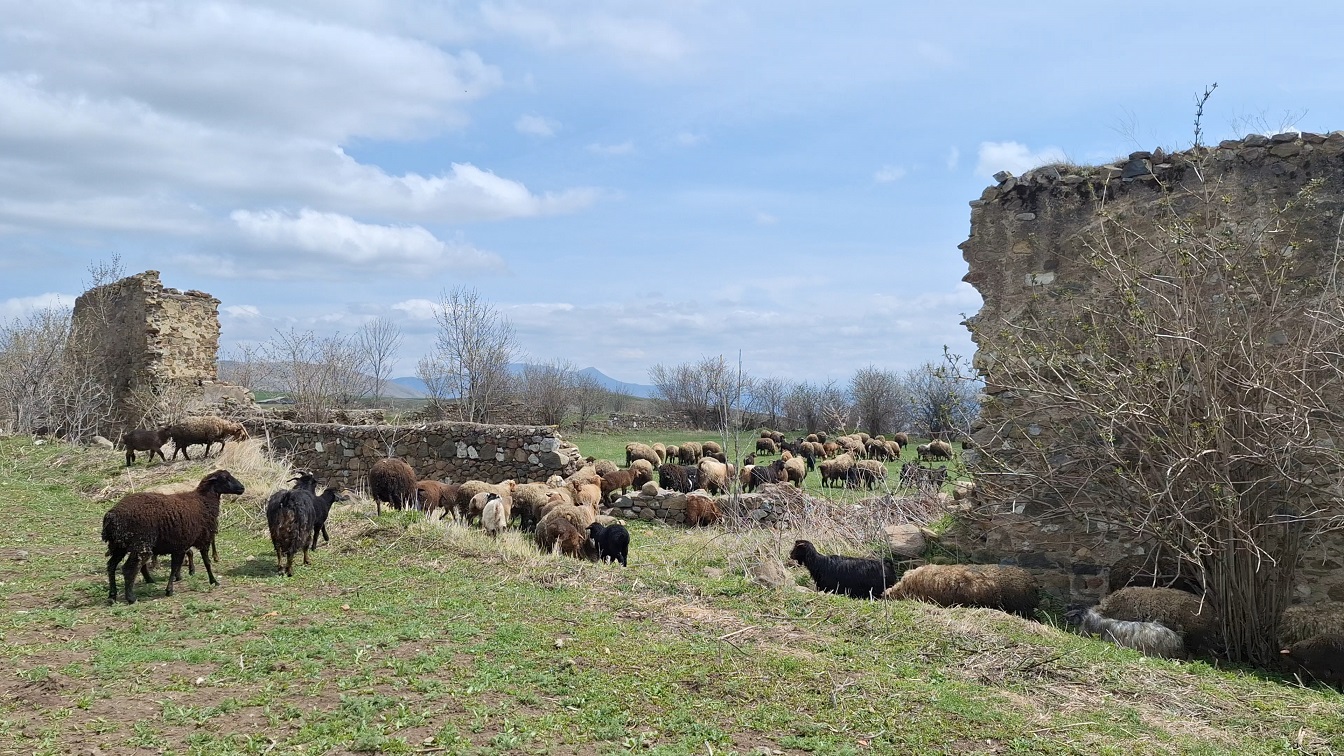
Bashkend as a pasture
Several military checkpoints are set up at the entrance to the village of Bashkend. While local residents are not strictly checked upon entry and exit, there seems to be some level of control. According to locals, these checkpoints usually scrutinize “outsiders” – people not from nearby villages.
I wasn’t checked either, as I was taken for a local thanks to my guide from the nearest village. Additionally, there is constant surveillance from a distance, with military vehicles frequently passing by.
All the houses in the village are deserted, with most of them falling into disrepair due to neglect.
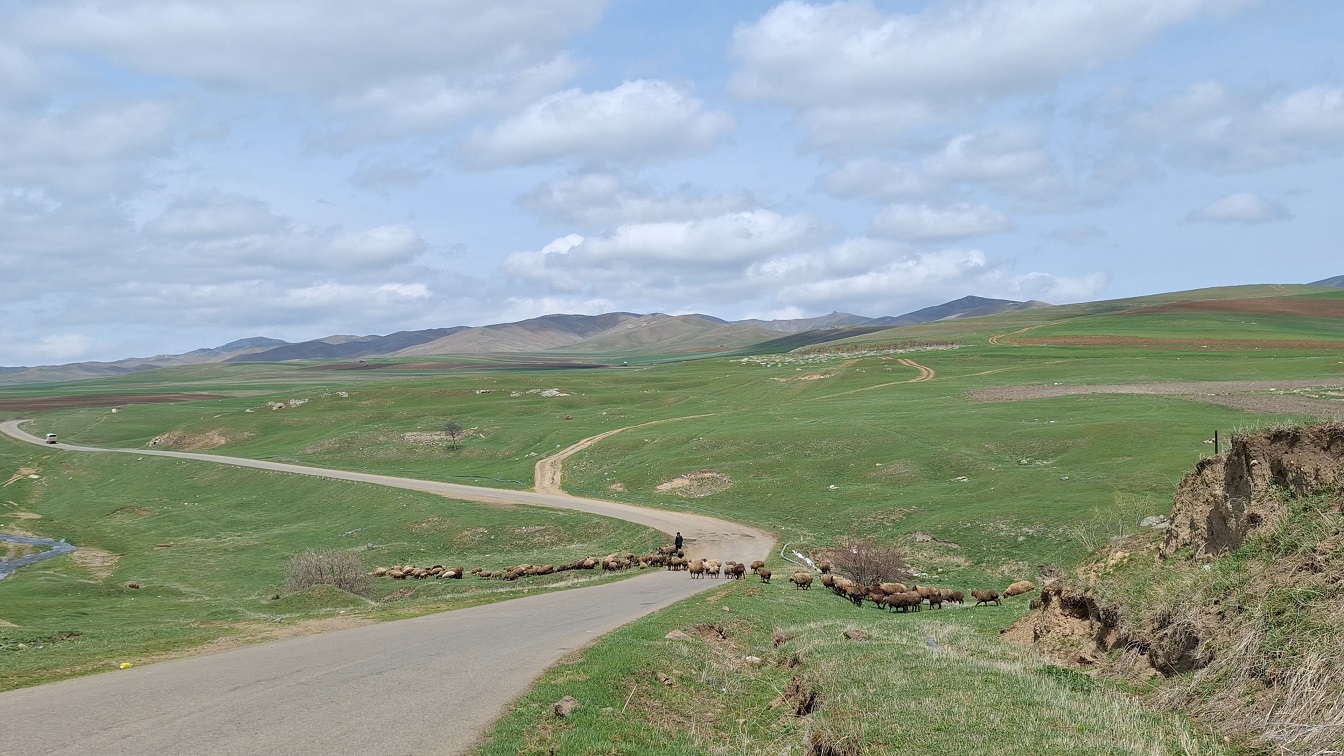
There aren’t many people around. Right now, you can only see residents from nearby villages like Vali, who are either herding cattle to pasture or cultivating the land.
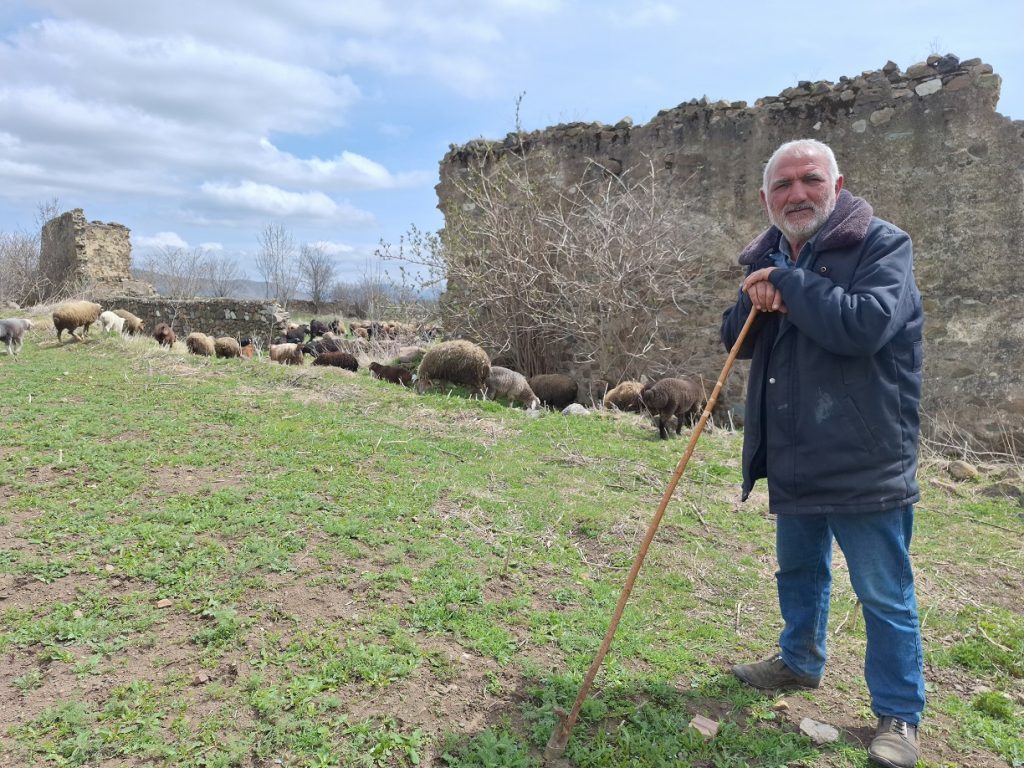 “If they give Bashkend to the Armenians, it’s the end for us,” says Vali, a resident of the neighboring village of Shynykh. Photo: Fatima Movlamli/JAMnews
Vali says that because the neighboring villages are situated below Armenian military posts, the residents of these settlements cannot cultivate the land or keep livestock there. The geographical position of Bashkend is safer, so they manage their farms here instead of in their own village.
“Moreover, the soil in Bashkend is more suitable for grazing livestock and agriculture,” says Vali.
Both sides’ positions: enclaves must be returned
As a result of the Second Nagorno-Karabakh War in 2020 and the anti-terrorism operation conducted by the armed forces of Azerbaijan in September 2023, the territory of the former Nagorno-Karabakh Autonomous Oblast and seven adjacent districts, which had been under Armenian control for over 30 years, returned to Azerbaijani control. However, the only unresolved issue regarding territorial disputes between Azerbaijan and Armenia is enclaves.
Azerbaijan has eight enclave villages on the territory of Armenia – Yukhari Askipara, Ashaghi Askipara, Barkhudarli, Sofulu, Baghanis Ayrim, Gizilhajili, and Khairimli of the Gazakh region, as well as the village of Karki in the Nakhchivan Autonomous Republic. The first four of them are considered non-enclave villages by the Azerbaijani side because these villages are located on territory adjacent to Azerbaijan, on the border with Armenia. The rest are completely surrounded by Armenian territory.
 In Armenia, there are 8 Azerbaijani enclaves, while in Azerbaijan, there is one Armenian enclave – Bashkend
Armenia has one enclave in the territory of Azerbaijan – Bashkend (Armenians call this village Artsvashen).
The Azerbaijani side strongly demands the return of its villages, which it considers enclaves and non-enclaves.
“There are enclave and non-enclave villages there. Those villages that are not enclaves, these four villages must be unconditionally returned to Azerbaijan. As for those villages that are enclaves, since the Armenian enclave village is also located on the territory of Azerbaijan – a separate expert group should be created for these villages, and discussions should be started.
We believe that all enclaves must be returned. Conditions should be provided on the roads leading to these enclaves, and the people living there should be accommodated in these enclaves,” said president of Azerbaijan Ilham Aliyev at a meeting with journalists in January this year.
Just recently, on April 19, at the 8th meeting of state commissions on the delimitation of the state border between Azerbaijan and Armenia, an agreement was reached on the return of four Azerbaijani villages – Baghanis Ayrim, Ashagi Askipara, Kheyrimli, and Gizilhajili.
Armenian prime minister Nikol Pashinyan, speaking about enclaves some time ago, said: “Our logic is as follows: an enclave should be replaced by an enclave. What is under their control remains under their control. What we control remains with us.”
But recently, he expressed a completely different opinion.
During a meeting with residents of border villages of Armenia with Azerbaijan, Pashinyan, in response to a question, stated that “Artsvashen is part of the independent Republic of Armenia.”
He then added:
“Our goal is for you to say, ‘Azerbaijan is 50 meters away’ not with concern, but to say, ‘How good that Azerbaijan is 50 meters away, we will engage in trade there, build the economy.’ A checkpoint can be built through which cars will pass and pay for it to the Republic of Armenia.”
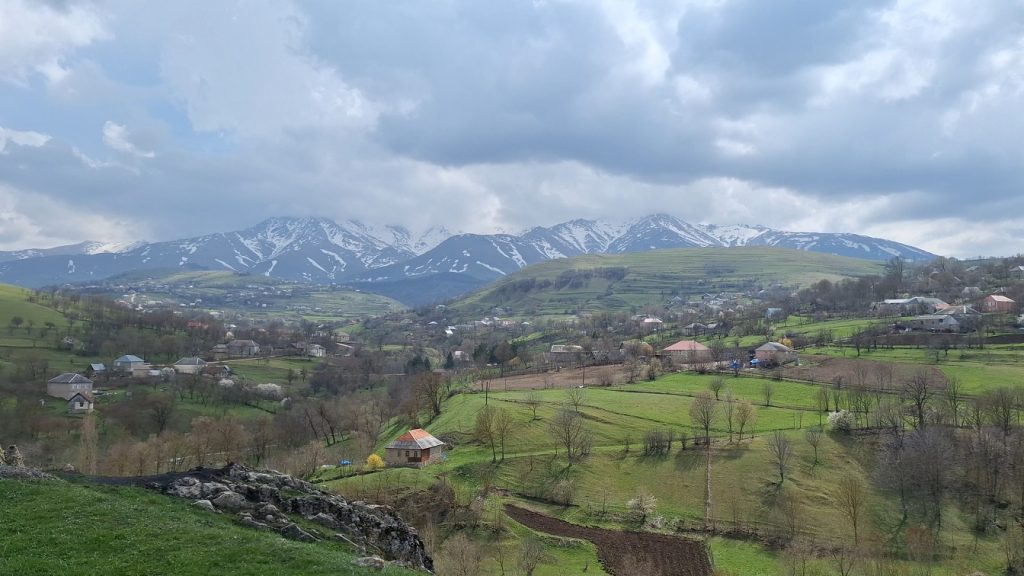
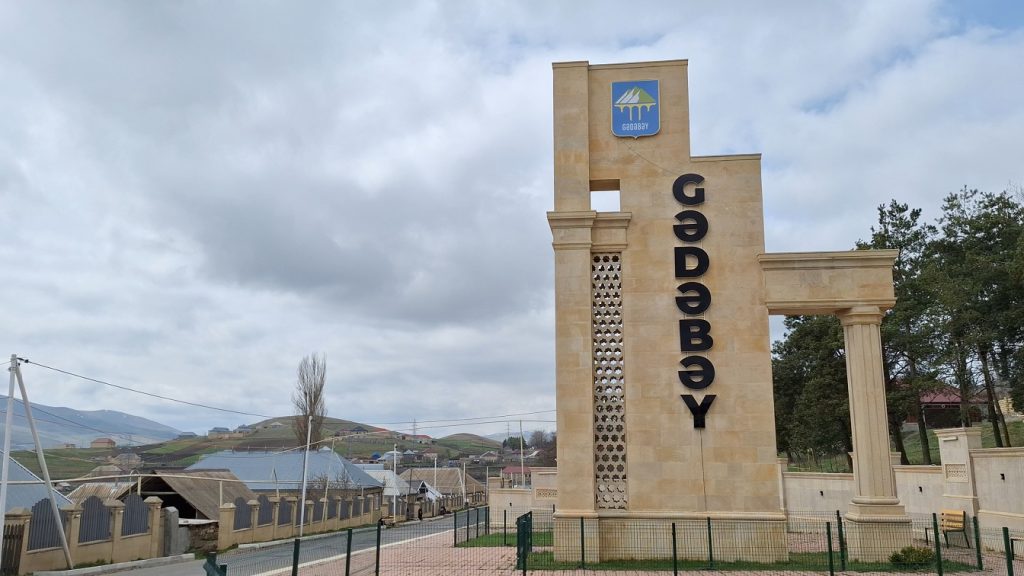 Bashkend is located in the Gadabay district of Azerbaijan. Photo: Fatima Movlamli/JAMnews
The settlement of Bashkend, located in the Gadabay district, was transferred under the control of the Armenian SSR by the decision of the Soviet leadership in connection with agricultural needs. At that time, the population of the village was mainly Armenian.
The name of the village, with an area of 61 square kilometers, was changed in 1978 to Artsvashen (which translates from Armenian as “Eagle’s Village”).
As a result of a military operation conducted on August 6-8, 1992, during the First Nagorno-Karabakh War, the territory of the village came under the control of Azerbaijan.
After the departure of Armenians from the village, Bashkend remained uninhabited. Residents of nearby villages are engaged in agriculture in these territories.
“If we hadn’t taken Bashkend, we could have lost the entire Shynykh region”
Saleh Rustamli, who headed the executive authority of the Gadabay district at the time of the “Bashkend operation,” says that initially they negotiated with representatives of the village and tried to reach an agreement.
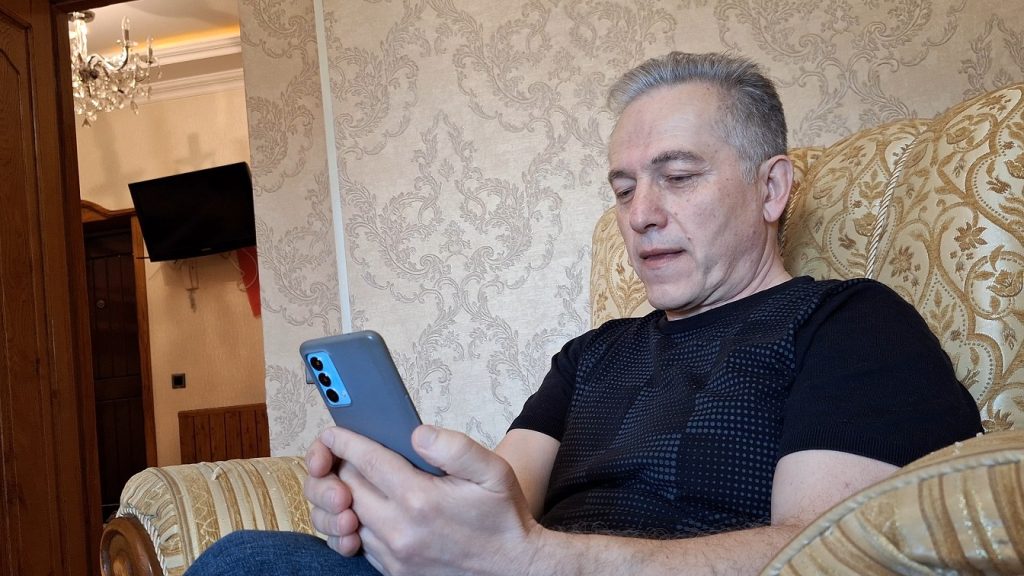 Saleh Rustamli, former head of the executive authority of the Gadabay district. Photo: Fatima Movlamli/JAMnews
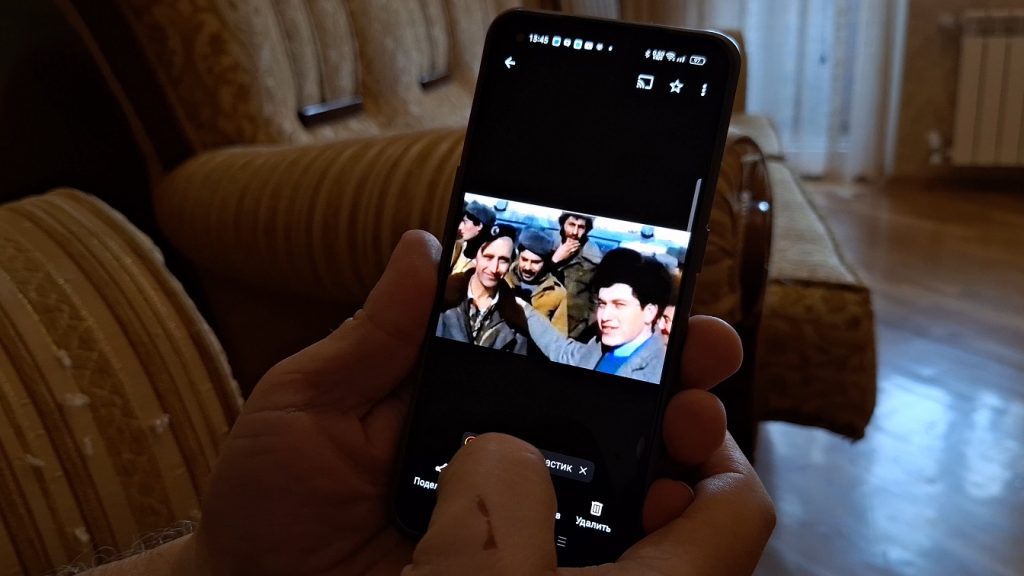 Photo from the time of the Bashkend operation. Photo: Fatima Movlamli/JAMnews
“The chairman of the village council and the executive head of the Krasnoselsky (Chambarak) district arrived with their representatives. There were also military personnel from both our side and theirs. We agreed not to obstruct each other’s movements, as spring was beginning, and it was time for sowing. Indeed, this continued for some time. People went to the fields, cultivated the land, and sowed.
But after some time, clashes began. The first casualties were from our side. It was in 1991. Six postal workers were killed on their way home from work, and their bodies were then burned.
Armenians in the village started arming themselves. Then our scouts brought information that they were preparing for an attack. We also began to build up military strength and fortifications in this area. The scouts’ information turned out to be correct. On the night of August 5, 1992, they attacked and seized two of our villages. Apparently, they wanted to open a corridor for themselves and connect Bashkend to Armenia.
But the Armenians were stopped in the village of Gasimalilar, we pushed them back and took Bashkend. Shynykh was completely besieged, and if we hadn’t taken Bashkend, we could have lost the entire Shynykh region,” Saleh Rustamli says about the “Bashkend operation.”
Why is Bashkend deserted?
After the “Bashkend operation,” the Armenian population left the village. Since then, the settlement has been completely abandoned.
“Neither then nor later was there any settlement there. This shows that we did not take the village with the aim of occupation. It was necessary for security. We don’t need anything foreign, and we adhere to international law,” says Saleh Rustamli.
Natig Jafarli, one of the leaders of the Republican Alternative Party (ReAl), says that there are two reasons why no one was resettled in Bashkend.
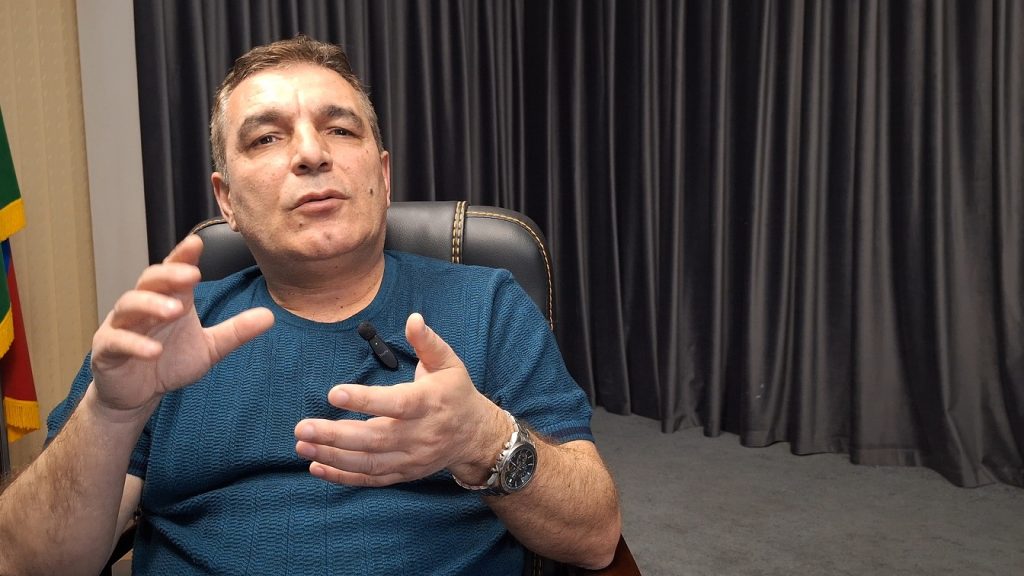 Natig Jafarli, one of the leaders of the Republican Alternative Party. Photo: Fatima Movlamli/JAMnews
“One of them is a legal reason. Armenia could claim that it’s their territory, and would demand a compensation for it.
There are other economic and social constraints. Are there any well-developed settlements on the remaining 80 percent of Azerbaijan’s territory that is not under occupation? This is why people have been moving to Baku for over 30 years.
If there were normal economic and social policies in place, there wouldn’t be this influx to Baku. Building social infrastructure and creating economic opportunities in Bashkend is not such an easy task. Due to natural conditions,” says Jafarli.
“Referendum needed for enclave exchange”
According to Natig Jafarli, both countries need to hold a referendum for mutual exchange of enclaves.
“I don’t think Azerbaijan would agree to return Bashkend to the Armenian side, which is more than 30 kilometers away from the Armenian territory. Because it would cause additional problems in the future. Even leaving aside the additional issues, logistically, movement between Armenia and this village could cause a lot of difficulties.
If this issue is to be resolved within the framework of territorial exchange, which is quite possible, it cannot be implemented without constitutional reform. Because both the Azerbaijani constitution and the Armenian constitution imply the possibility of territorial change only through a referendum. Therefore, I think this is a question that can be addressed at the very end,” says Jafarli.
“The remaining four villages and Bashkend can be exchanged”
Bashkend is surrounded by Azerbaijani villages from all four sides. In this scenario, even if Azerbaijan hands over this settlement to the Armenian side, it’s unclear how the lives of people can be settled here. For this reason, according to Natig Jafarli, this is not a very convincing scenario.
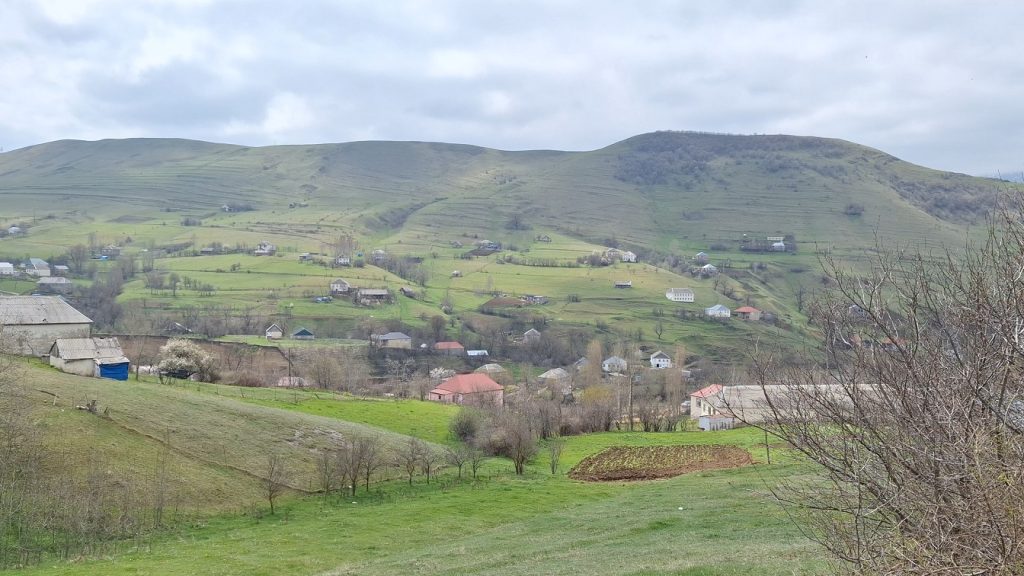 Surrounded by Azerbaijani villages from all four sides, Bashkend. Photo: Fatima Movlamli/JAMnews
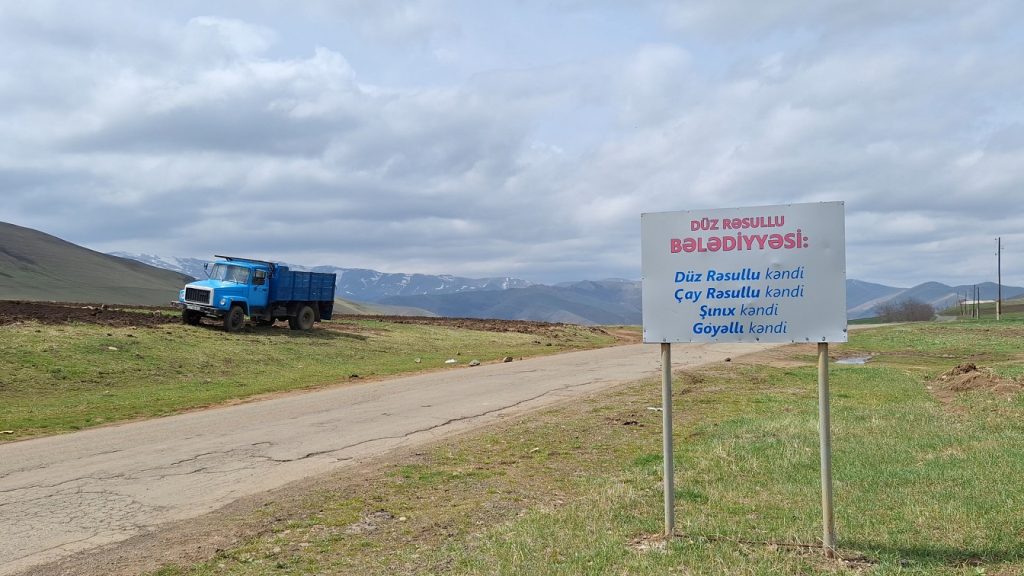 The residents of neighboring villages cannot conduct agriculture on their territory due to the unfavorable geographical location. Photo: Fatima Movlamli/JAMnews
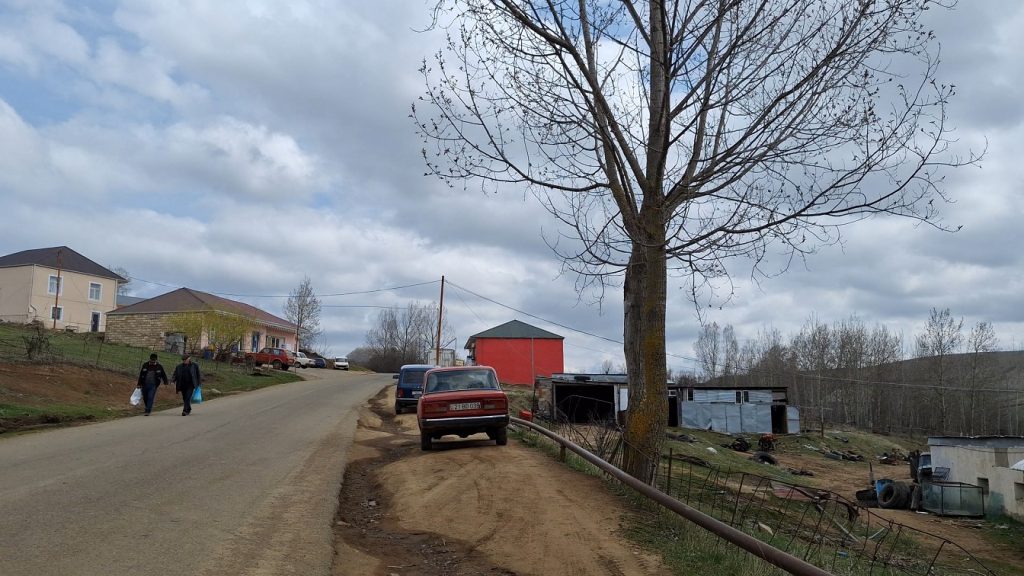 The residents of nearby villages do not want Bashkend to be returned to Armenia. Photo: Fatima Movlamli/JAMnews
“How can you imagine Armenian police, army, and officials casually passing through Azerbaijani territory for about 30 kilometers, heading towards Bashkend, as if nothing happened? Frankly, it sounds unconvincing.
The same goes for Azerbaijani villages inside Armenia. Yes, they are close to our border, about 5-15 kilometers away. But in any case, we would have to travel through these 5-15 kilometers through Armenia and provide residents with food, banking services, communication services, gas, electricity, and water. This seems very difficult or even impossible,” says Natig Jafarli.
At the initial stage, it’s only about the return of four villages, which the Azerbaijani side calls “non-enclave,” believes Elkhan Shahinoglu, the head of the Atlas Research Center. At the next stage, the question regarding the remaining four Azerbaijani villages and the Armenian village of Bashkend could be resolved through a territorial exchange between the parties.
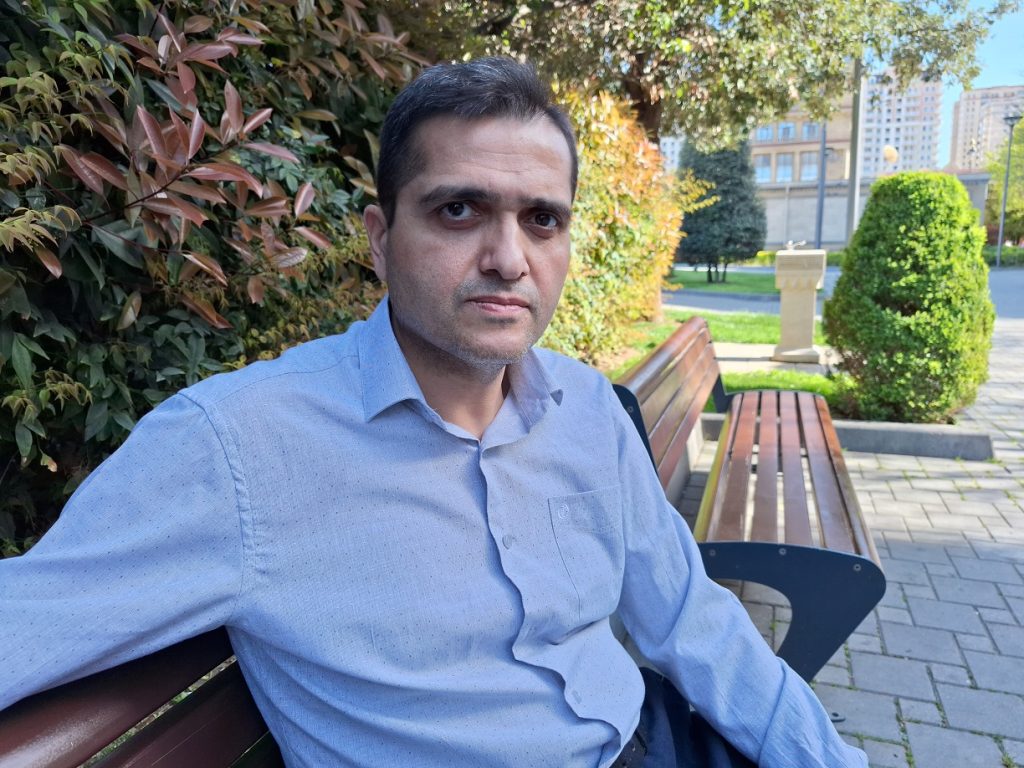 Political analyst Elkhan Shahinoglu. Photo: Fatima Movlamli/JAMnews
“Even if the other four villages we demand are returned to us, it will be problematic for Azerbaijanis to live there. Because we will have to travel back and forth through Armenia. Similarly, even if hypothetically Bashkend is handed over to Armenia, Armenians will have to travel through Azerbaijan. Therefore, in the future, the solution to this issue may be through a territorial exchange, I believe,” says Elkhan Shahinoglu.
“The return of the four villages will expedite the signing of a framework agreement”
There has often been an opinion that recent military incidents on the Armenian-Azerbaijani border are also related to the inability to reach an agreement on enclaves. Society is discussing the possibility of new large-scale military operations based on this.
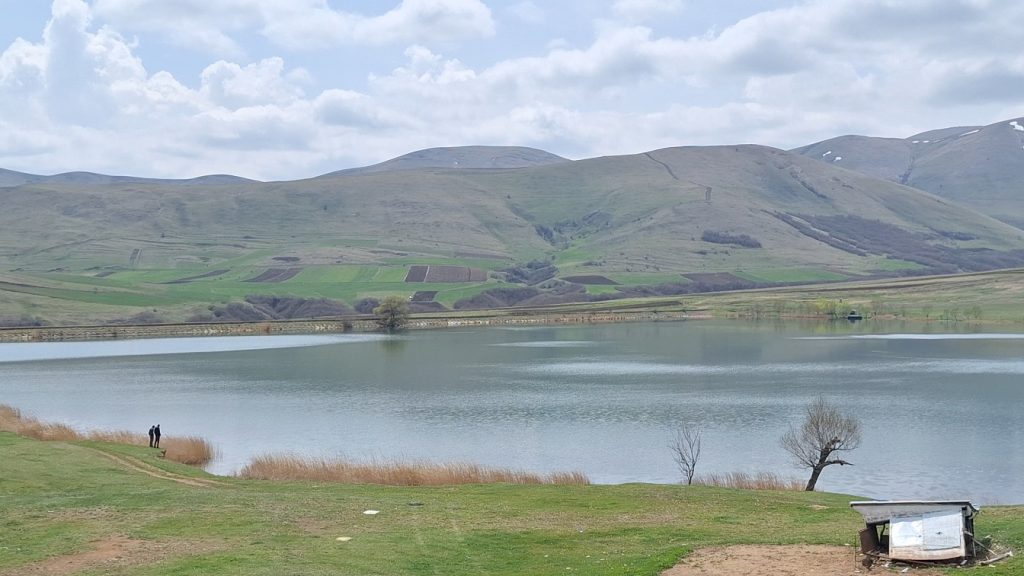 The lake in the village of Bashkend. Photo by Fatima Movlamli/JAMnews
Elkhan Shahinoglu doesn’t believe that a major war will occur.
“You see what’s happening in the region. The war between Russia and Ukraine in the north, tension between Israel and Iran in the south could escalate into a war. The South Caucasus needs peace and stability. Azerbaijan is prepared for this. But Azerbaijan’s main condition is to sign a peace or framework agreement in exchange for Armenia’s recognition of Azerbaijan’s territorial integrity.
I believe that even Pashinyan is internally prepared for this. He’s just hesitating a bit, afraid of local radicals. He also understands that Armenia won’t have a happy future without normalizing relations with Azerbaijan and Turkey. Preparation for this is underway.
He’s already keeping a distance in relations with Russia. Although America and the European Union support Pashinyan, they don’t want a conflict between Armenia and Azerbaijan.”
The political analyst disagrees with the common opinion among his colleagues that the US and Europe want war in the region:
“On the contrary, Western countries, except for France, need calmness here. So, I don’t think there will be a major war.
After the return of the four villages, the signing of a framework agreement will accelerate. We need peace and cooperation. I think this is beneficial for Armenia too.“
“Everyone who hears about Armenians won’t come here”
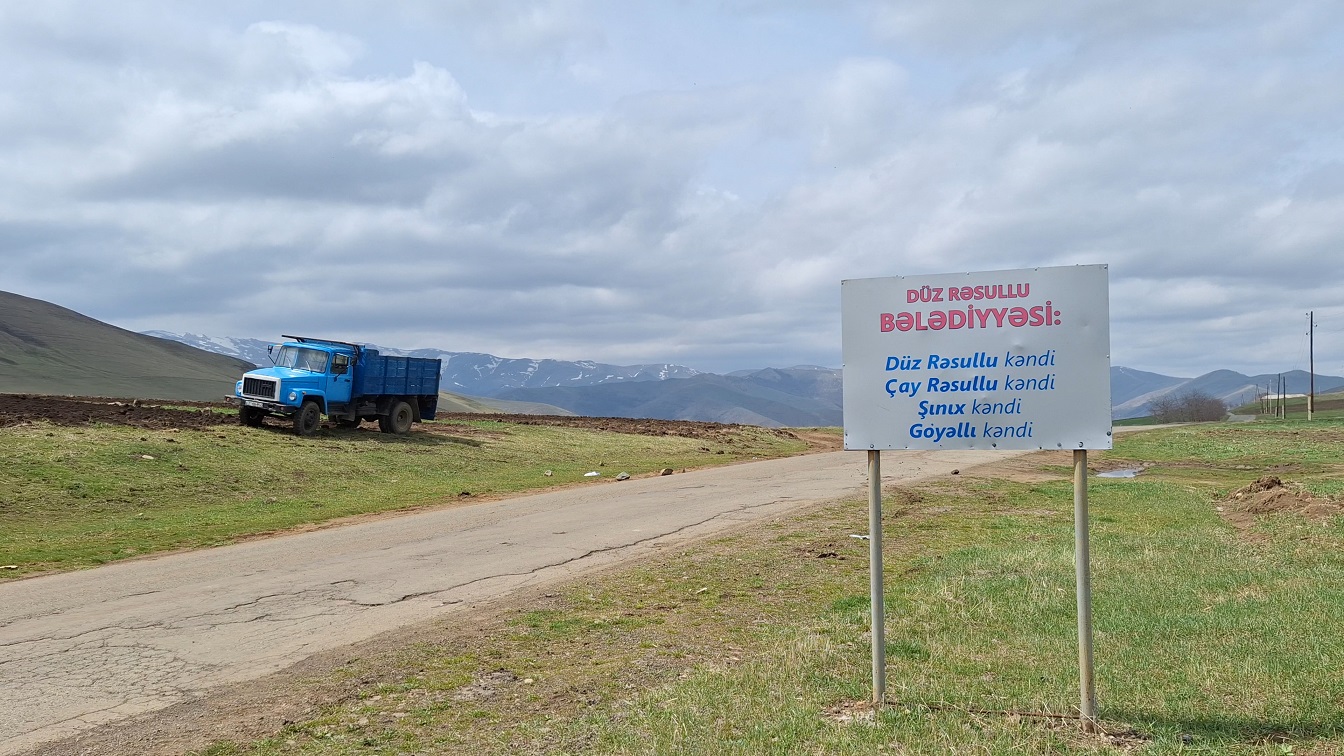
The road from Bashkend to the village of Dyuzrasullu is almost empty. Nothing disturbs the silence here, except for the occasional noise of passing cars.
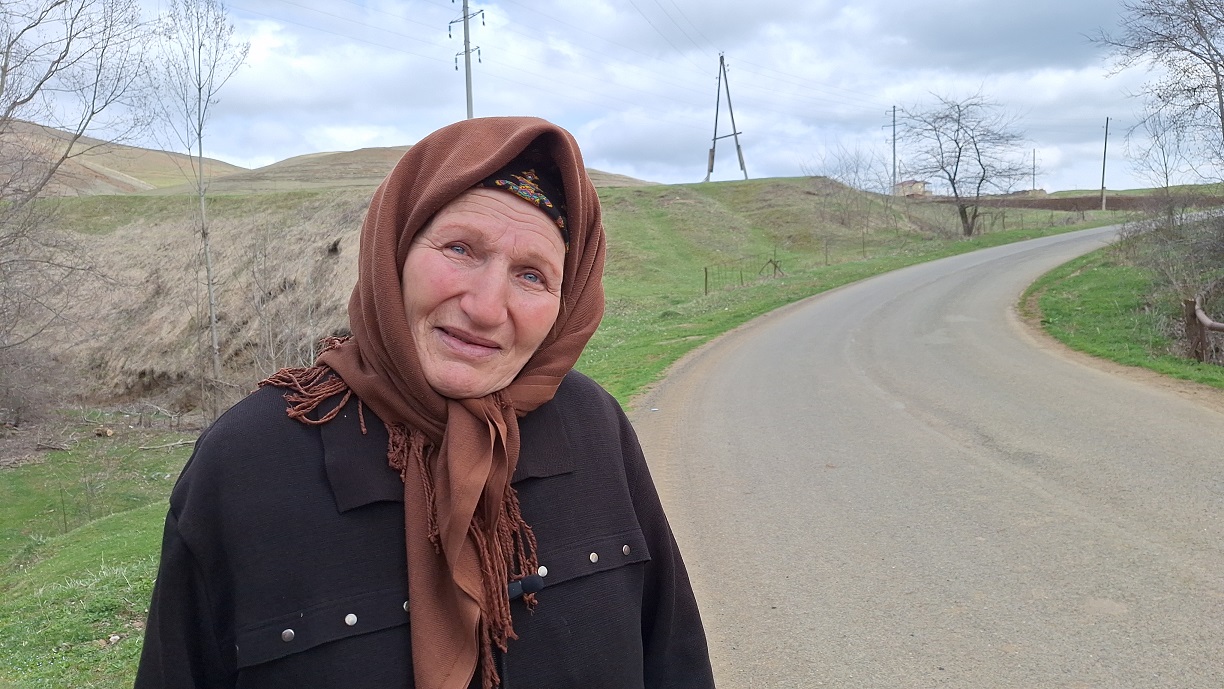
I notice an elderly woman walking along the side of the road. I approach her and strike up a conversation.
Taliya Mammadova, a resident of the village of Dyuzrasullu, once worked as a nurse at a medical center in Bashkend. She says she still remembers the wounded soldiers whose lives she tried to save during the “Bashkend operation.” That’s why she doesn’t want Bashkend to be handed over to the Armenian side. She fears that all these events will repeat themselves:
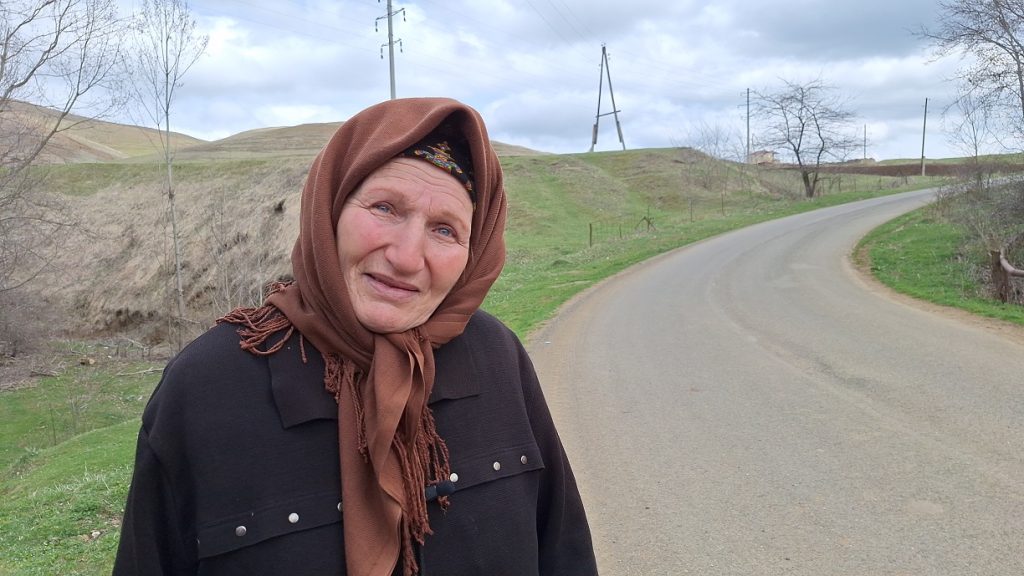 Taliya Mammadova worked as a nurse at a medical center in Bashkend in the early 1990s. Photo by Fatima Movlamli/JAMnews
“During the war, when Bashkend was under Armenian control, we faced great persecution. The entire community found various ways to transport their sick to Tovuz and Shamkir. They shelled the surrounding areas from Bashkend. If Armenians return here, nothing good will come of it. They will resort to provocations again. This place connects Shynykh and Ganja. Shall we let the Armenians stand in the middle again? To torment our children again?
I am 65 years old, soon we will be gone, and generations that come after us will live here. If that’s the case, then grandchildren and great-grandchildren may not come to this village out of fear. Everyone who hears about Armenians will not come here.”
Armenian and Azerbaijani enclaves
With the support of “Medianetwork”