NPR News: 05-01-2024 1PM EDT
Learn more about sponsor message choices: podcastchoices.com/adchoices
 The South Caucasus News - SouthCaucasusNews.com
Trump, Putin, Aras Agalarov – Google Search https://t.co/DfrKi36SJi
— Michael Novakhov (@mikenov) May 1, 2024
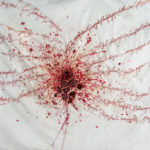
 Catalog cover by Alysse Stepanian for Creative Action Coalition’s first, online exhibition titled ‘Cogs in the Machine: Breaking the Mechanisms of Oppression,’ launched on Apr. 11, featuring 22 artists
Creative Action Coalition’s Global Call for Armenian Artists
BY ALYSSE STEPANIAN
“Language, Symbolism, and Unsettling Acts of De-Erasure” is the title of a new global-scale, year-long arts initiative by the Creative Action Coalition artist group. Phase I of this project, “Ayb-Ben Այբ-Բեն” is addressed to the Armenian artists around the world.Other manifestations that may happen simultaneously, will include artists from other Indigenous communities.
Over a year ago, CAC was launched in response to the destruction of Armenian heritage and the violence that Armenians continue to face since the 2020 invasion of Artsakh. Realizing that the Armenian predicament is not unique, CAC has expanded its mission to include non-Armenian indigenous communities, those who have been struggling with social invisibility, and cultures whose identities have suffered the consequences of imperialism, invasions, settler societies, and colonization. Our goal is to help build international solidarities for global resistance to systemic oppressions through art.




“Armenia, situated in the crossroads of East and West, has survived centuries of invasions and massacres. Yet an uncanny absence of Armenian ancient cultural heritage permeates world art history textbooks, which serves the devaluation, destruction, recontextualization, appropriation, and negative stereotyping of Armenian culture.” [1] The mainstream arts communities must understand that Armenian heritage is part of world heritage.
Dreams are shaped by language, the essence of every culture. Recently, I completed “Ayb-Ben Այբ-Բեն,” a surreal video art piece in which a defiant woman loudly and vigorously recites the Armenian alphabet in an insistent pulse. Intermingled are cultural symbols, symbolic flowers, and letters from the Persian and English alphabets denoting her diasporic identity. The recognition of the interconnectedness of oppressions and the necessity of solidarities is symbolized by the fusion of Armenian forget-me-not flowers and Palestinian poppies. The process and research that led to this work has inspired me to reach out to other artists to manifest a new global project. I am calling on Armenian artists to join me to present our culture to the world and help put an end to the destruction of Armenian cultural heritage by making it part of mainstream consciousness.
This initiative will have multiple iterations, enriched by individual voices and collective concerns that defy cultural erasure throughout centuries of colonization, tragedies, and violence.
Possible manifestations of this project include one or more of the following:
Participating artists and project leaders for regional actions will be chosen from the responses to this call. Artists will be encouraged to propose their own ideas. Each regional iteration of “Ayb-Ben Այբ-Բեն” will have its own secondary title.
 Najwan Darwish’s poem, ‘Who Remembers the Armenians?’
 Poetry by Zaven Ovian, written after Najwan Darwish’s ‘Who Remembers the Armenians?’
Armenians and other Indigenous Peoples have suffered from the tragic erasure of identity. While we hope to harness the power of collective action, the identity of each artist and the creative voice and input of the individual will be respected and acknowledged. All participating artists will be promoted to the press and will be given visibility on our website and in any other documentation.
Phase I of this initiative is open to Armenian artists from all disciplines, of all genders and sexual identities and orientations, over the age of 18. Prior performance experience is not required.
At the 2015 memorial lectures for the Armenian journalist, Hrant Dink, the renowned American scholar and civil rights activist, Angela Davis stated, “Ongoing efforts to create a popular intellectual environment within which to explore the contemporary impact of the Armenian genocide are central, I think, to global resistance to racism, genocide, and settler colonialism.”
Join our project and follow Creative Action Coalition on Instagram to help us build the international solidarity needed to put an end to the continued Armenian Genocide by bringing the plight of Armenians to the center of popular intellectual discourses.
If you are a reader and would like to support our project, please send us a note via our contact form.
If you are an artist and would like to participate in this project, please send the following information using the link above. In the subject box write: <<Ayb-Ben: Your full name>>. Respond to the following questions in the message box:
The deadline to submit proposals is May 31. Selected artists and project leaders will be announced on June 14.
[1]: Source: See my introductory essay for Creative Action Coalition’s “Cogs in the Machine” exhibition catalog. 2014. Page 11.
Alysse Stepanian is a cross-media artist, independent curator, and Creative Action Coalition’s Organizer. Find out more about her online.
GATES TO GHETTO, GATES TO HELL: Israel reopens Erez crossing for Gaza aid trucks https://t.co/WqmbJitsqP #NewsAndTimes #NT #TNT #News #Times#World #USA #POTUS #DOJ #FBI #CIA #DIA #ODNI#Israel #Mossad #Netanyahu#Ukraine #NewAbwehr #OSINT#Putin #Russia #GRU #Путин, #Россия… pic.twitter.com/k5tOAqKgfg
— Michael Novakhov (@mikenov) May 1, 2024
https://t.co/WqmbJitsqP #NewsAndTimes #NT #TNT #News #Times#World #USA #POTUS #DOJ #FBI #CIA #DIA #ODNI#Israel #Mossad #Netanyahu#Ukraine #NewAbwehr #OSINT#Putin #Russia #GRU #Путин, #Россия #SouthCaucasus #Bloggershttps://t.co/O0SIgLVWzMhttps://t.co/DO5LG3PY4T… pic.twitter.com/tU4ciAvGkD
— Michael Novakhov (@mikenov) May 1, 2024
GATES TO GHETTO, GATES TO HELL
Israel reopens Erez crossing for Gaza aid trucks 7 months after it was destroyed by Hamas https://t.co/svsCzDVoxQ via @timesofisrael— Michael Novakhov (@mikenov) May 1, 2024
YEREVAN—Following the launch of the widely criticized border delimitation and demarcation process between Armenia and Azerbaijan, on Tuesday, April 30, Ararat Mirzoyan, the Minister of Foreign Affairs of the Republic of Armenia, sat down for an interview with Al-Jazeera, shedding light on the administration’s diplomatic viewpoints.
Mirzoyan hinted at Armenia’s diminishing confidence in the efficacy of mechanisms within the Russian-led Collective Security Treaty Organization (CSTO), suggesting skepticism about its ability to safeguard member states’ collective security interests. Within the context of Armenian-Russian relations, Mirzoyan said they are in dialogue over “some issues and some questions.” His comments point to lingering tensions and strained diplomatic ties between the two nations.
Mirzoyan’s willingness to engage in regional connectivity initiatives, particularly with Azerbaijan and Turkey, raised eyebrows, with critics interpreting such overtures as potentially compromising Armenia’s national interests and sovereignty.
While advocating for peaceful conflict resolution, Mirzoyan’s references to historical grievances and displacement of Armenians evoked somber reminders of past traumas and a lingering sense of vulnerability and insecurity. Mirzoyan’s interview paints a picture of Armenia navigating diplomatic waters fraught with challenges and uncertainties, raising concerns about the nation’s geopolitical positioning and diplomatic efficacy.
Mirzoyan highlighted persistent challenges in the peace process between Armenia and Azerbaijan. Despite past affirmations that the nations will recognize each other’s territorial integrity, Mirzoyan said that Azerbaijan is still reluctant to incorporate the Alma-Ata Declaration into the proposed peace treaty, a critical document for solidifying bilateral relations.
Mirzoyan’s interview coincides with the decision of the “Civil Contract” majority in the National Assembly to reject the proposal put forward by the opposition “Hayastan” faction for a parliamentary debate regarding the demarcation and delimitation of the Armenia-Azerbaijan border, with 27 MPs voting in favor and 51 against.
Artur Khachatryan, a deputy representing the “Hayastan” faction, passionately presented the project during a plenary session. While the opposition expressed support for demarcation, it insisted that it must adhere to the actual borders established since 1993.
Khachatryan also referenced the agreement reached on April 19 by the border demarcation commissions of Armenia and Azerbaijan. The commissions agreed that Armenia would cede four border regions in the Tavush province to Azerbaijan, without any land concessions from Azerbaijan to Armenia. The opposition contends that demarcation should be guided by international norms, citing the U.N. Charter, the Vienna Convention and the Helsinki Final Act. They advocate for utilizing a demarcation document developed by the OSCE Secretariat as a framework.
Maria Karapetyan, an MP from the “Civil Agreement” faction and a correspondent on the matter, said that adopting the border as of September 24, 1993, as the basis for demarcation would effectively relinquish Armenia’s state border, reverting to a framework centered on military action.
On April 29, PM Pashinyan convened with residents of the Kirants village in Tavush at the RA government building. Residents of border villages Kirants, Baghanis and Voskepar have been protesting the government’s decision to cede adjacent territories, asserting that it would expose them to attacks by Azerbaijan. The meeting unfolded amidst a somber atmosphere and failed to assuage the concerns of the attendees. According to the “Tavush for the Homeland” civil movement, crucial inquiries remained unanswered, underscoring a lack of clarity and a political strategy by the government to ensure the safety and security of its citizens, safeguarding their lives, property and rights.
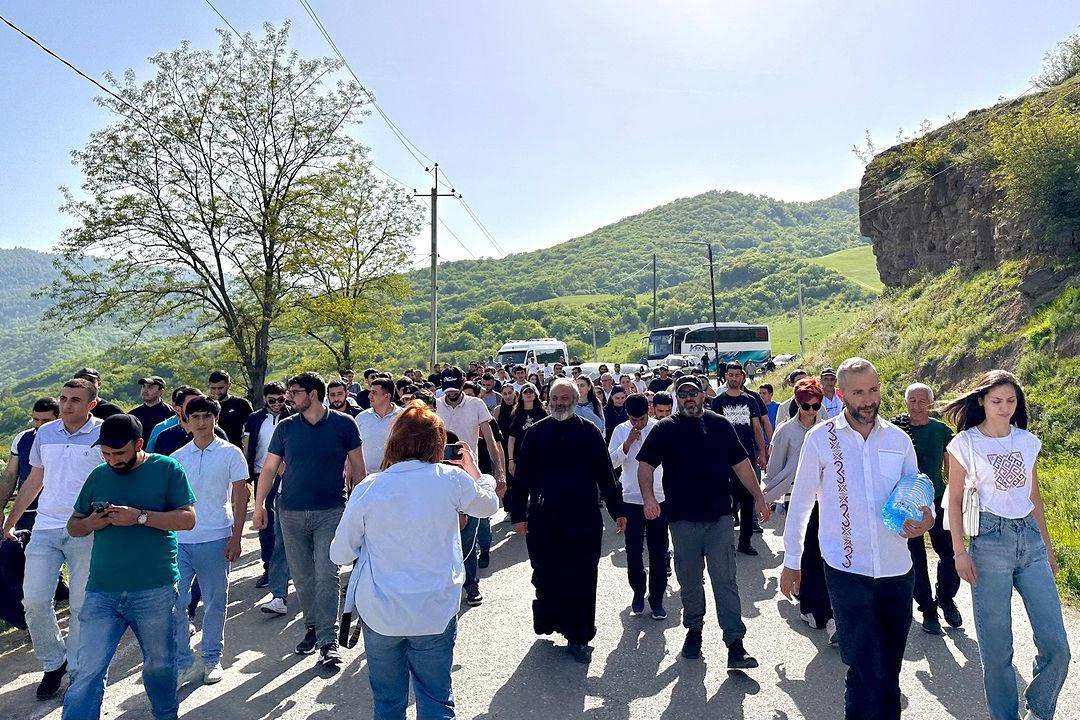 Kirants residents protest the Armenian government’s decision to cede four villages in Tavush (Photo: ABC Media)
In an interview with the Armenian Weekly, MP Garnik Danielyan of the “Hayastan” faction shared insights regarding the meeting. Six villagers and the village’s administrative head convened with Pashinyan, who addressed the looming concerns surrounding the village’s fate.
According to Danielyan, Pashinyan’s remarks during the meeting indicated a stark reality: the potential division of the village, with a significant portion falling under Azerbaijani control. A proposed road would traverse through essential community institutions, including a newly constructed school and a revered church.
While the villagers sought reassurances regarding their safety and livelihoods post-transfer, Pashinyan’s response fell short of expectations. He suggested erecting a wall to deter Azerbaijani encroachment, which was deemed impractical and failed to address the villagers’ fears.
MP Danielyan echoed the villagers’ dismay, who he said possess over 50 cadastre documents validating their rightful ownership of homes and lands. He said that there are no historical border delineations through the village, in contrast to Azerbaijani territorial claims.
“Pashinyan issued veiled threats of utilizing force to quell dissent among villagers, akin to the heavy-handed tactics employed by the red and black beret units,” Danielyan said. Such coercive measures, aimed at stifling peaceful protest, raise concerns about the government’s commitment to democratic principles, which have been scrutinized by Freedom House.
MP Danielyan shed light on the ongoing support rallying around Kirants. “Protests are emerging in different corners of Armenia, as individuals and various organizations are converging to express solidarity with the movement,” said Danielyan. He emphasized the growing momentum of the resistance movement, asserting that the collective efforts of the Armenian populace will prevail against external pressures.
Danielyan said that the ramifications of the border delimitation process extend beyond the confines of a single village. He warned against the perilous consequences of PM Pashinyan’s concessions, citing the imminent threat posed by Azerbaijan’s militarized border guards.
Highlighting the disparity in military preparedness between Armenian and Azerbaijani border forces, Danielyan lamented the lack of adequate defenses to safeguard strategic heights and border villages. He cautioned against complacency, asserting that no corner of Armenia remains immune to the encroaching threat.
In a call to action, Danielyan urged widespread participation in protest activities. Drawing parallels to historic battles, he invoked the spirit of Sardarabad, rallying Armenians worldwide to unite in defense of their homeland.
Condemning Pashinyan’s approach as reminiscent of past failures in Artsakh, Danielyan denounced the absence of security guarantees amid territorial concessions. He urged a collective stance against the government’s unilateral actions, stressing the imperative of halting the current, detrimental trajectory.
A video circulating online depicts distraught Tavush residents leaving the April 29 meeting with PM Pashinyan. In response, Archbishop Bagrat Galstanyan, head of the Diocese of Tavush, issued a statement expressing solidarity with the affected residents and demanding accountability from the government. “Those who have valiantly defended the border for years have been rendered powerless,” Archbishop Galstanyan said.
In a stern message to the authorities, Archbishop Galstanyan said that they will be held accountable for their actions. Calling for transparency and justice, he pledged unwavering support for the affected residents upon their return from the meeting. He extended gratitude to all those who have joined the movement for Tavush, stressing the importance of continued advocacy in the face of adversity.
“Tavush for the Motherland” also issued a scathing statement, condemning the government’s inability to guarantee the safety of residents in the demarcated territory of the “Armenian part.” The statement lamented the government’s failure to provide essential security assurances to Kirants village and other affected communities in the Tavush region, and by extension, across other demarcated regions.
Highlighting concerns over creeping Azerbaijani ambitions, the statement emphasized the detrimental impact of the government’s concessions in favor of Azerbaijan, warning of potential ramifications in the Syunik, Ararat and Gegharkunik border provinces. It criticized the government for squandering Armenia’s military, political and diplomatic resources, alleging incompetence and dissemination of false information to justify its actions at the expense of national interests.
The statement said that the government has lost its credibility through its failure to fulfill constitutional and moral obligations to protect citizens. Asserting the illegality of the demarcation process and its contravention of Armenia’s constitution and laws, the movement called for its immediate cessation.

Hoory Minoyan was an active member of the Armenian community in Los Angeles until she moved to Armenia prior to the 44-day war. She graduated with a master’s in International Affairs from Boston University, where she was also the recipient of the William R. Keylor Travel Grant. The research and interviews she conducted while in Armenia later became the foundation of her Master’s thesis, “Shaping Identity Through Conflict: The Armenian Experience.” Hoory continues to follow her passion for research and writing by contributing to the Armenian Weekly.
The post Mirzoyan says Azerbaijan unwilling to recognize Armenia’s territorial integrity appeared first on The Armenian Weekly.
