
Of protests and protests Armenian Weekly
Month: April 2024
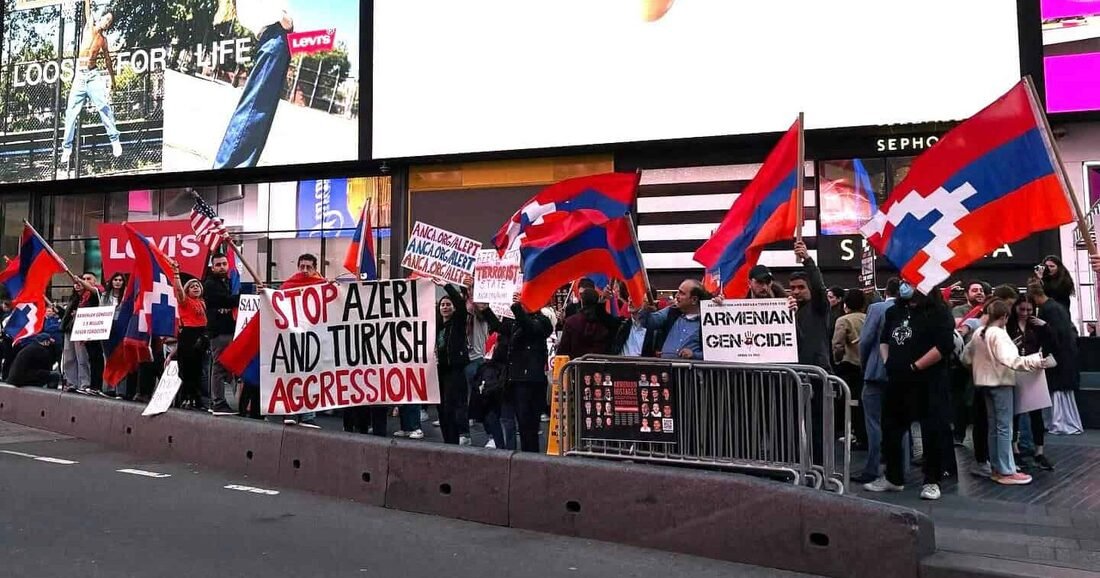 Protesting and remembering in New York
Public gatherings and demonstrations, such as protests, candlelight vigils and marches, have become a symbol of Armenian Genocide commemorations in both the Republic of Armenia and Armenian communities in the diaspora. Many people may question the importance of such events, as the media often does not provide enough coverage, politicians do not do much beyond giving lip service, and the perpetrators do not accept responsibility for the Genocide. However, these public events, from the streets of Yerevan to Times Square and beyond, send a strong message that we have not forgotten what happened to us 109 years ago, and we demand justice and accountability for the Genocide committed against our people.
Internally, organizing and participating in these events is equally important, because it strengthens our communal identity. Every young person who takes the podium to speak has done their homework and has learned the history of what happened to their ancestors, which then becomes their own history. In this age of virtual reality, A.I. and social media, in which young people can easily find a counterfeit sense of identity behind the locked doors of their bedrooms, it is crucial to forge our communal identity through events like these, which connect us to our real world, real people and real issues.
However, there are currently different types of protests taking place across Armenia. We continue to watch disturbing scenes of police subduing protestors in the Republic of Armenia. The protestors are demonstrating against the decision by Armenia’s Prime Minister Nikol Pashinyan to give away four villages in the Tavush region to Azerbaijan. This situation is alarming on multiple levels. First, the freedom of speech and expression of the protesters is being brutally suppressed. Second, the democratically elected prime minister is going against the will of his own people and serving the interests of Azerbaijan and Turkey. According to The Guardian, Pashinyan urged Armenians to recognize that the way this issue (i.e. surrendering four villages) is handled will determine the viability of the future peace process with Azerbaijan. Lastly, the lack of real and credible opposition within the government of the Republic of Armenia is a matter of concern.
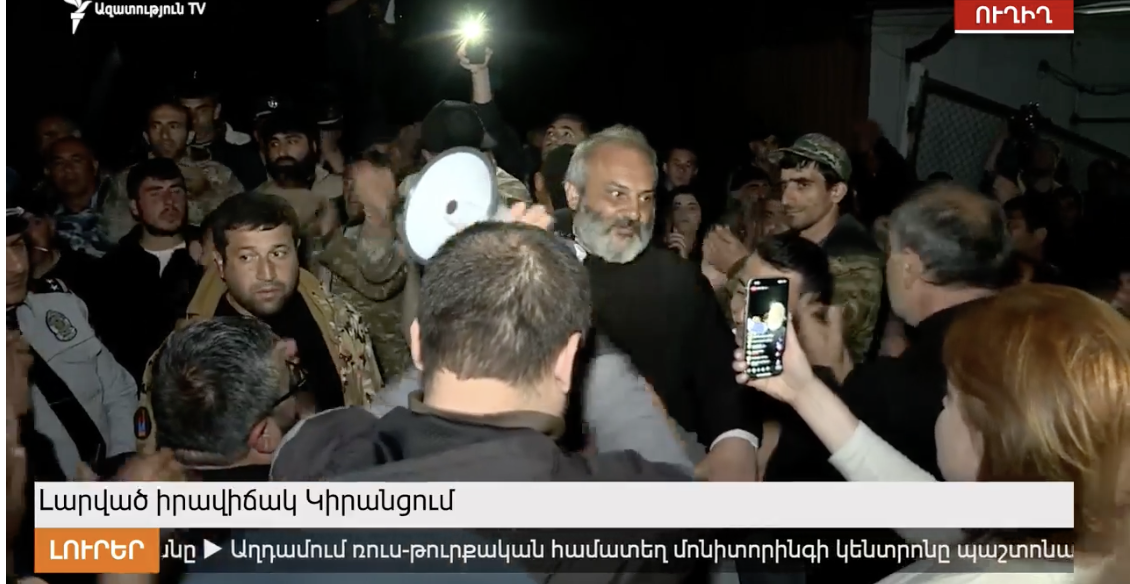 Protesting in Tavush (screenshot)
As a clergyman, it is not my place to be heavily involved in politics, but as a concerned Armenian, it is extremely difficult to watch the degradation of Armenian nationalism under the pretext of securing peace in the region.
The attempts made by the Armenian government to suppress the protestors are futile and will never succeed. As diasporan Armenians, we must continue to strengthen our Armenian national identity, which constitutes our shared identity.
In an article titled “Why Isn’t Anyone Talking About the Exodus of Christians in Nagorno-Karabakh?” published in America Magazine on April 25, 2024, Kevin Clarke summarized Azeri politics by quoting a statement from President Ilham Aliyev: “Azerbaijan would not stand by while Armenia restores its defensive capacity…Now the Armenians appear willing to accept the loss of Nagorno-Karabakh, but maybe in five years’ time, when they are supplied with deadly weapons, they will say again, ‘Karabakh is Armenia,’ and what should we do? We cannot wait.”
Aliyev’s sentiments suggest two things: first, no concession from the Armenian side will be enough to establish peace in the region, and second, Aliyev is well aware that the Artsakh case is not closed.
The attempts made by the Armenian government to suppress the protestors are futile and will never succeed. As diasporan Armenians, we must continue to strengthen our Armenian national identity, which constitutes our shared identity. It is imperative that everyone understands that no part of our homeland should be used as a bargaining tool. The Armenian Genocide is a documented historical fact, and those responsible must take full responsibility. Our collective identity as Armenians is not an outdated notion or a liability; rather, it is our moral compass, built on the values of the Armenian church and the communal consciousness of our forefathers.
I believe that this year’s Armenian Genocide commemoration carries a clear message. The feelings of despair and hopelessness that we have all experienced since the Artsakh War of 2020 and the mass exodus of Armenians from Artsakh in 2023 need to be replaced with a renewed commitment to pursuing justice and safeguarding Armenia. The input of every Armenian is extremely important in this matter.
Author information
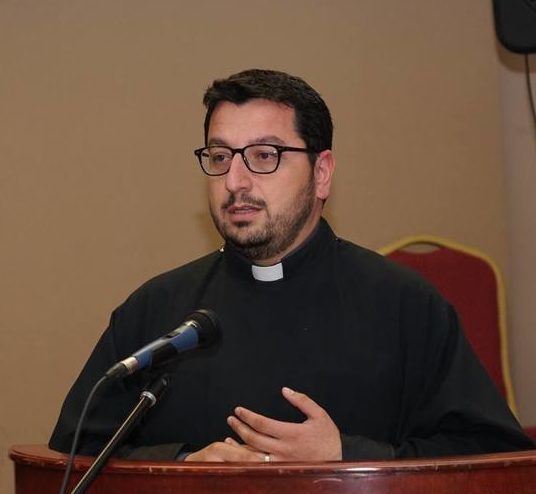
Rev. Fr. Nareg Terterian
Fr. Nareg is a graduate of the Armenian Theological Seminary of the Great House of Cilicia in Antelias and has an MA in Pastoral Theology and an M.S.Ed in Clinical Mental Health Counseling from St John’s University of New York. He was ordained to the rank of priesthood on 2004. In 2005 he was assigned as the pastor of St. Sarkis Armenian Apostolic Church in Douglaston, NY. Fr. Terterian is married to Yeretsgin Annie and blessed with three children: Hovsep, Laurie and Avedis.
Fr. Nareg is a Licensed Mental Health Counselor.
|
The post Of protests and protests appeared first on The Armenian Weekly.
Over the past year, I have had the opportunity to be a part of the Armenian National Committee of America (ANCA) Rising Leaders seminar and Advocacy Days.
Rising Leaders is a three-day program for people 17-years-old and above to learn important career tips, such as conducting an elevator pitch, building a strong resume and networking, while also learning how to be an advocate for Armenian issues. The program occurs twice in March to provide flexibility to interested college students.
On the first day of the program, I met with other Rising Leaders at the ANCA building in Washington, D.C. upon arriving early in the day. The presentations on Sunday were primarily centered around career building. During the presentations, I learned how to deliver elevator pitches, utilize LinkedIn to network with people in my field and build a strong resume. Although I had been exposed to these topics before, the presentations allowed me to gain another perspective on how to improve what I had done previously to better myself for the future. Something I found particularly helpful was how the lecturers took the time to look at our resumes and LinkedIn profiles and hear our elevator pitches. The insight they provided was helpful for us to continue to develop our career-building skills. After the presentations, one of the ANCA ungers took us on a tour at night, when we were able to see many monuments in Washington.
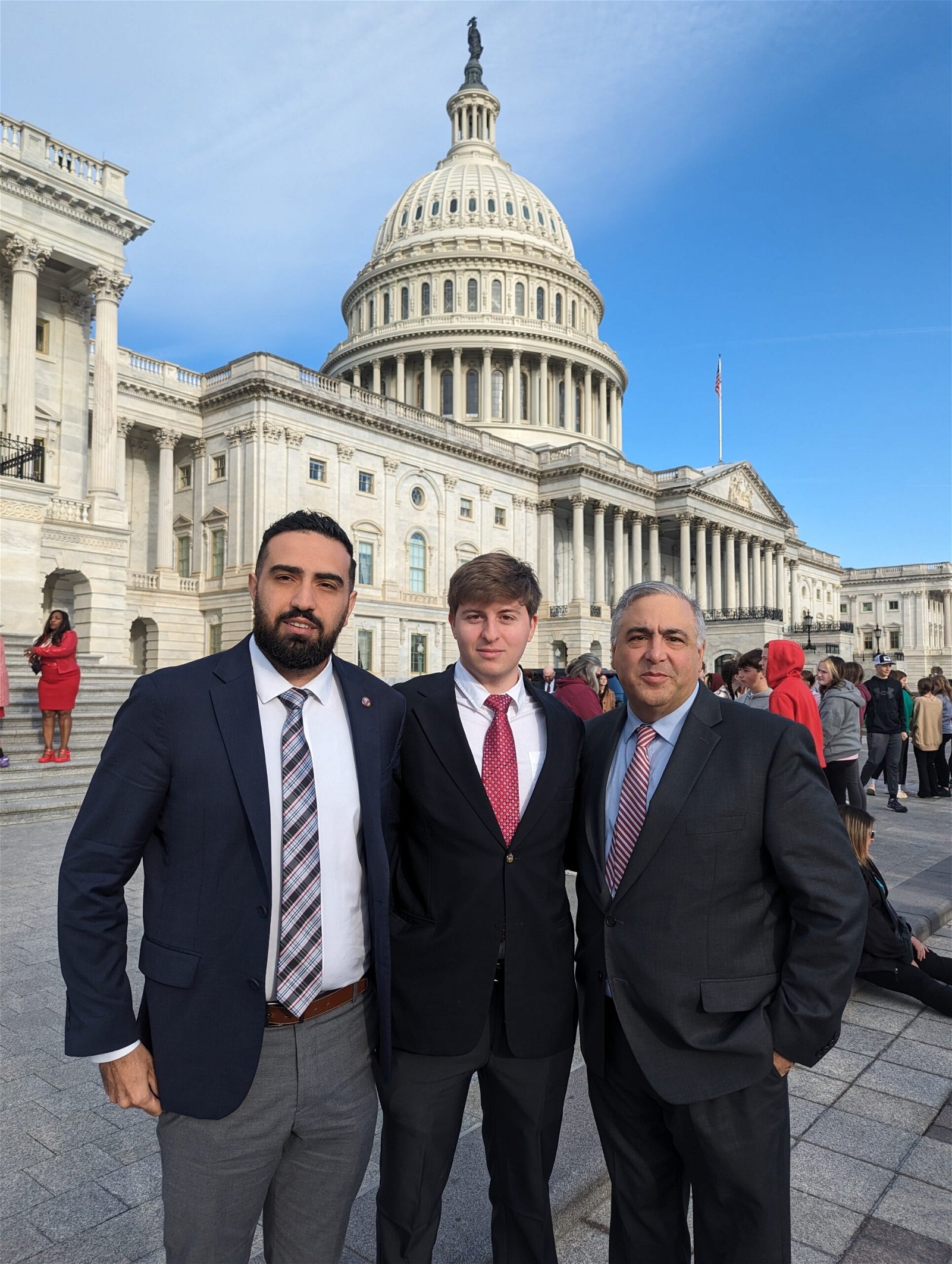 Raffi Sarrafian with ANCA national grassroots director Gev Iskajyan and ANCA Executive Director Aram Hamparian
Monday was focused on learning how to become an advocate in Washington and our local communities. One part of the day that I learned a lot from was the advocacy simulation. This was done by splitting us into smaller groups, and members of the ANCA acted as different representatives in Congress. Some were very pro-Armenian, while others were not. I learned a lot about how to convey important information about Armenia and Artsakh while being confident and persuasive with what I was saying. The primary purpose of this was to prepare us for Tuesday, when we would head to Capitol Hill.
On Tuesday, we took what we had learned and applied it in a real-life situation. I had the opportunity to meet with a staffer for my congressman, Brad Schneider, discuss the situation in Artsakh and Armenia and ask him to continue to support Armenian issues and resolutions. Throughout the rest of the day I, along with my fellow Rising Leaders, went to congressional offices to drop off folders containing important information about Artsakh and Armenia. I was able to apply the elevator pitch lecture from Sunday during the drop offs, as I only had a few minutes to talk to staffers about the ongoing situation in Artsakh and Armenia and ask for support for several drafted resolutions.
Overall, this experience taught me how to build my network and learn important skills for my career. I also learned more about the ANCA and advocacy for Armenian issues and became motivated to become involved with my local ANC in Illinois along with the ANCA as a whole.
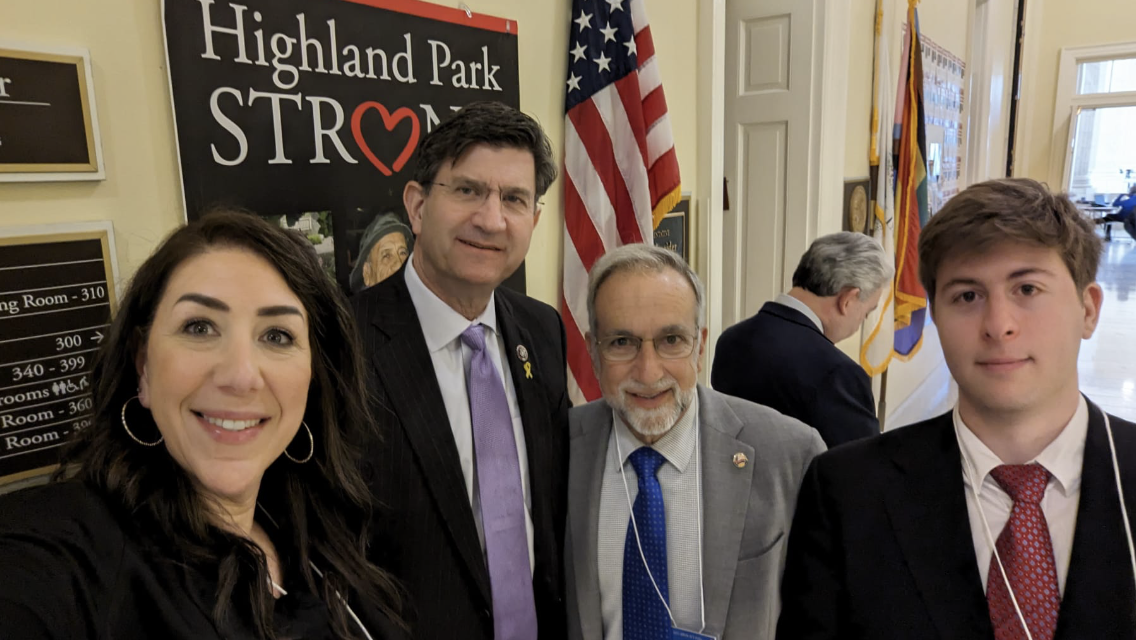 ANC of Illinois at ANCA Advocacy Days
This program also motivated me to attend ANCA Advocacy Days, where I met with many representatives in Illinois and used my voice and what I had learned from the Rising Leaders seminar to convey my concerns as an Armenian and as a resident of Illinois.
ANCA Advocacy Days is a three-day program centered on advocacy. Many ANC advocates throughout the United States traveled to Washington to meet with congresspeople in their respective states and express concerns about Azeri aggression towards Armenia and the genocide that occurred in Artsakh in 2023. This was also a great opportunity to develop my skills as an advocate on Armenian issues.
I felt that there were some positives to take away from many of the meetings, but it does not mean our job is done. We must all continue to fulfill our duties as Armenians in the United States to make sure our voices are heard and push our congresspeople to sponsor and support resolutions that will help Armenia. I enjoyed my experiences with both programs, and I encourage other college and high school students to attend future Advocacy Days and participate in the Rising Leaders program.
Author information

Raffi Sarrafian
Raffi Sarrafian is an undergraduate student at the University of Illinois Urbana-Champaign in Chemical Engineering. He is active in the Chicago AYF “Ararat” Chapter and the University of Illinois Student Cultural Association.
|
The post Becoming an advocate with ANCA Rising Leaders appeared first on The Armenian Weekly.