
The COP29 team had a productive discussion with the OECD Deputy Secretary-General, Mary Beth, Goodman at the G7, Report informs, citing the official X account of COP29.
Day: April 30, 2024
Categories
European Stocks – 29-04-24
Categories
US stocks up – 29-04-24
Categories
Oil Prices Down – 29-04-24
An article on CNN’s website says that Donald Trump’s criticism of the deep state is “a declaration of war on the federal government…” that will transform federal government employees into “an army of suck-ups.” It goes on to say, “Trump seeks to sweep away civil service protections that have been in place for more than 140 years. … His plans would eliminate or dismantle entire departments.”
The article relies on a 900-page “Project 2025 document,” even though it quotes a Trump spokesperson who says, “None of these groups or individuals speak for President Trump or his campaign… Policy recommendations from external allies are just that—recommendations.” But let’s consider those recommendations.
Readers of The Beacon will likely be sympathetic to dismantling entire departments within the federal government. The article is also critical of Trump’s suggestion that federal agencies be moved away from Washington.
Much of that criticism of moving agencies focused on the hardship it would put on agency employees who would have to move or be out of a job. But employers do this all the time. The federal government’s military personnel come to mind. From my own experience, my father worked for the General Electric Company when I was growing up and was frequently transferred. (I lived in five different states by the time I had reached 15 years of age.) I think that asking employees to move is a minor point, but the article made a big deal out of it, so it’s worth a comment.
The bigger issue is doing away with civil service job protections for federal employees. Those at the tops of agency hierarchies are already political appointees, and should Trump win the November 2024 election and follow through on what the article says are his plans, fewer federal employees would have the job security that comes with civil service employment–the job security that enables them to outlast presidential administrations that are term-limited.
One interesting aspect regarding the policies the CNN article says Trump favors is that they echo policies proposed by President Andrew Jackson, who was elected to the first of his two terms in 1828. I discuss this in Chapter 5 of my book, Liberty in Peril (all quotes from page 87). Jackson wanted to reduce the size of the federal government and “did away with the fledgling civil service system that existed when he was elected.”
Jackson’s reasoning for eliminating federal civil service jobs was two-fold. First, “He believed that the jobs were not so demanding that people of reasonable intelligence could not perform them and argued that more was lost by giving people a guarantee of continuing employment than was gained by retaining and experienced workforce.”
Second, Jackson thought that “Political appointments have a certain logic behind them, because if government workers perform poorly then incumbent politicians are more likely to lose the next election and those workers are likely to lose their jobs. Thus, political appointees have an incentive to make government look good.”
The CNN article is more conjecture than fact about Trump’s plans should he win the election. Looking at those conjectures about Trump’s attacks on the deep state, it is interesting to see how they parallel President Jackson’s views from two centuries ago. The CNN article is critical of the ideas it attributes to Trump, but two centuries ago, those ideas were political winners.
This article was published at The Beacon
On April 25, along Melbourne’s arterial Swanston Street, the military parade can be witnessed with its bannered, medalled upholstery, crowds lost in metals, ribbons and commemorative decor. Many, up on their feet since the dawn service, keen to show the decorations that say: “I turned up”. Service personnel, marked by a sprig of rosemary.
The greater the pageantry, the greater the coloured, crimson deception. In the giddy disruptions caused by war, this tendency can be all too readily found. The dead are remembered on the appointed day, but the deskbound planners responsible for sending them to their fate, including the bunglers and the zealous, are rarely called out. The memorial statements crow with amnesiac sweetness, and all the time, those same planners will be happy to add to the numbers of the fallen.
The events of April 25, known in Australia as Anzac Day, are saccharine and tinged about sacrifice, a way of explicating the unmentionable and the barely forgivable. But make no mistake about it: this was the occasion when Australians, with their counterparts from New Zealand as part of the Australian New Zealand Corps, foolishly bled on Turkish soil in a doomed campaign. Modern Australia, a country rarely threatened historically, has found itself in wars aplenty since the 19th century.
The Dardanelles campaign was conceived by the then First Lord of the Admiralty, Winston Churchill, and, like many of his military ventures, ended in calamitous failure. The Australian officers and politicians extolling the virtues of the Anzac soldiers tend to ignore that fact – alongside the inconvenient truth that Australians were responsible for a pre-emptive attack on the Ottoman Empire to supposedly shorten a war that lasted in murderous goriness till November 1918. To this day, the Turks have been cunning enough to treat the defeated invaders with reverence, tending to the graves of the fallen Anzacs and raking in tourist cash every April.
For the Australian public, it was far better to focus on such words as those of British war correspondent Ellis Ashmead-Bartlett written on the occasion of the Gallipoli landings: “There has been no finer feat in this war than this sudden landing in the dark and the storming of the heights.” Ashmead-Bartlett went on to note the views of General William Birdwood, British commander of the Anzac forces at Gallipoli: “he couldn’t sufficiently praise the courage, endurance and the soldierly qualities of the Colonials”. They “where happy because they had tried for the first time and not found wanting.”
In March 2003, these same “colonials” would again participate in the invasion of a sovereign state, claiming, spuriously, that they were ridding the world of a terrorist threat in the form of Iraq’s Saddam Hussein, whose weapons of mass destruction were never found, and whose subsequent overthrow led to the fracturing of the Middle East. Far from being an act of bravery, the measure, in alliance with the United States and the United Kingdom, was a thuggish measure of gang violence against a country weakened by years of sanctions.
When options to pursue peace or diplomacy were there, Australian governments have been slavish and supine before the dictates and wishes of other powers keen on war. War, in this context, is affirmation, assertion, cleansing. War is also an admission to a certain chronic lack of imagination, and an admission to inferiority.
The occasion of Anzac Day in 2024 is one acrid with future conflict. Australia has become, and is becoming increasingly, an armed camp for US interests for a war that will be waged by dunderheads over such island entities as Taiwan, or over patches of land that will signify which big power remains primary and ascendant in the Indo- and Asia-Pacific. It is a view promoted with sickly enthusiasm by press outlets and thinktank enclaves across the country, funded by the Pentagon and military contractors who keep lining their pockets and bulking their accounts.
Central to this is the AUKUS security pact between Australia, the UK and the United States, which features a focus on nuclear powered submarines and technology exchange that further subordinates Australia, and its tax paying citizens, to the steering wishes of Washington. Kurt Campbell, US Deputy Secretary of State, cast light on the role of the pact and what it is intended for in early April. Such “additional capacity” was intended to play a deterrent role, always code for the capacity to wage war. Having such “submarines from a number of countries operating in close coordination that could deliver conventional ordinance from long distances [would have] enormous implications in a variety of scenarios, including in cross-strait circumstances”. That’s Taiwan sorted.
Ultimately, the Australian role in aiding and abetting empires has been impressive, long and dismal. If it was not throwing in one’s lot with the British empire in its efforts to subjugate the Boer republics in South Africa, where many fought farmers not unlike their own, then it was in the paddy fields and jungles of Vietnam, doing much the same for the United States in its global quest to beat off atheistic communism. Australians fought in countries they barely knew, in battles they barely understood, in countries they could barely name.
This occasion is often seen as one to commemorate the loss of life and the integrity of often needless sacrifice, when it should be one to understand that a country with choices in war and peace decided to neglect them. The pattern risks repeating itself.
For more than 50 years, Title IX has promised an equal opportunity to learn and thrive in our nation’s schools free from sex discrimination,” proclaimed U.S. Secretary of Education Miguel Cardona on April 19. “These final regulations build on the legacy of Title IX by clarifying that all our nation’s students can access schools that are safe, welcoming, and respect their rights.”
According the federal Department of Education, the new rules clarify: “the steps a school must take to protect students, employees, and applicants from discrimination based on pregnancy or related conditions. And the rule protects against discrimination based on sex stereotypes, sexual orientation, gender identity, and sex characteristics.”
NCAA swimmer Riley Gaines, recently attacked by a trans mob, has a different take.
“The Biden Admin has just officially abolished Title IX as we knew it,” Gaines contends. “Now, sex = gender identity. In a nutshell, the new rewrite means:—men can take academic AND athletic scholarships from women—men will have FULL access to bathrooms, locker rooms, etc—men could be housed in dorm rooms with women—students and faculty MUST compel their speech by requiring the use of preferred pronouns If the guidelines above are ignored or even questioned, then YOU can be charged with harassment.” That calls for a look at Title IX “as we knew it.”
As the law explains, “No person in the United States shall, on the basis of sex, be excluded from participation in, be denied the benefits of, or be subjected to discrimination under any education program or activity receiving Federal financial assistance.” The measure was first introduced in Congress by Rep. Patsy Mink of Hawaii and signed into law by President Richard Nixon on June 23, 1972. At the time, there was no federal Department of Education because education is the purview of the states.
President Jimmy Carter established the new federal agency as a payoff to the National Education Association (NEA), which endorsed his run for president in 1976. President Ronald Reagan failed to eliminate the department, which expanded the federal payroll but did nothing for student achievement. In 1983, four years after the new department was established, the “A Nation at Risk” report warned that “the educational foundations of our society are presently being eroded by a rising tide of mediocrity that threatens our very future as a Nation and a people.”
Despite the warning, all subsequent presidents have maintained the department. Rewriting Title IX is not the Education Department’s only crusade.
In an April 10 House Appropriations Committee hearing, Connecticut Democrat Rosa DeLauro asked Cardona what he was doing to shut down Grand Canyon University, which is in her view a “predatory for-profit school.” Cardona replied that the Education Department was aiming “not only to shut them down, but to send a message to not prey on students.” Biden’s Education Department would hit Grand Canyon University for $37.7 million, according to Cardona, the “largest fine in history against a school that lied about costs,” and so on.
“Mr. Cardona’s inflammatory comments, which are legally and factually incorrect, are so reckless that GCU has no choice but to demand an immediate retraction,” Grand Canyon University said in an April 18 statement. “He is either confused, misinformed or does not understand the actions taken by his own agency.” While this tangle plays out, there are a few things students, parents, and legislators should know.
“For-profit school” is code for an independent school that students want to attend. As defenders of Grand Canyon University note, the school serves more than 100,000 students through online and in-person programs, has not raised its tuitionin more than a decade, and offers an affordable program that helps students avoid excessive debt from student loans. Yet Cardona wants to shut it down.
Miguel Cardona “earned a bachelor’s degree from Central Connecticut State University, and a master’s degree and PhD from the University of Connecticut.” The degrees are all in “education,” a non-discipline most useful as a bureaucratic credential.
Nobody voted for “doctor” Miguel Cardona, who now commands a predatory agency that rewrites laws such as Title IX and aims to shut down a thriving independent university. At the first opportunity, legislators should shut down the federal Department of Education, which never should have existed in the first place. That will save taxpayer dollars and advance the causes of liberty and limited government moving forward.
This article was also published in The American Spectator
By EAF Editors
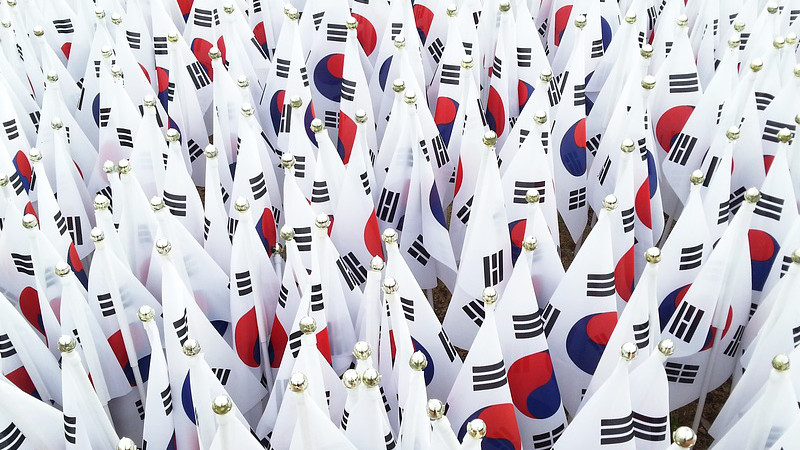
South Korea’s national elections earlier this month resulted in a historic win for the Democratic Party and the rest of the opposition. The conservative People Power Party (PPP) did even worse in 2024 than they did in 2020, the first parliamentary elections after Park Geun-hye’s impeachment.
Much of the blame for the electoral disaster lies at the feet of President Yoon Suk Yeol. While he and his conservatives have avoided a Democratic veto-proof majority, there’s now almost no incentive for bipartisan cooperation. Yoon’s approval rating cratered to an historic low after the election and members of his family and close confidantes are under immense scrutiny over alleged illegal behaviour and improprieties.
The Democratic Party and its allies made investigating these individuals a major wedge issue during the campaign and will have the seats — 187 to the PPP’s 108 — necessary to initiate special investigations into Yoon administration officials and others, including First Lady Kim Keon-hee.
Kim is a lightning rod for public opinion in South Korea and has become a poster child for the corruption, graft and nepotism voters suspect elites in the country use to their advantage. Han Dong-hoon, the former leader of the PPP, and Lee Jong-sup, the very brief ambassador to Australia, are also in line for special investigations launched by the National Assembly.
President Yoon has been a largely ineffective president at home. An outsider who never held an elected office before becoming president, Yoon made enemies on both sides of the aisle from the very beginning of his administration and does not have the connections, relationships and leverage that typically comes with a lifelong career in politics. The administration has been able to pass less than one-third of all legislation it sent to parliament, far below the 61 per cent mark of past presidencies.
As Hannah June Kim observes in her review of the post-election scene, ‘[t]he electoral landscape was difficult and unfavourable for the ruling party from the beginning’. But the results are poor enough that South Korea’s conservatives now face a major reckoning. Yoon himself is quickly becoming a lame duck, unable to address major domestic issues that voters care most about.
But as Karl Friedhoff points out in the first of our two lead articles this week, South Korea’s foreign policy will likely remain unchanged. In Yoon’s first two years he has reset relations with Japan through a series of meetings, summits and institutional arrangements, doubled down on the alliance with the United States by welcoming strategic assets to the peninsula and ‘friend-shoring’ semiconductors and car manufacturing, and has expressed no interest in engaging North Korea.
These foreign policy decisions ‘took place under almost identical conditions with opposition parties controlling 181 seats’, Friedhoff explains. ‘His engagement with Japan was never popular with the public outside of his base’ and ‘Yoon has shown a willingness to ignore public opinion and soak up criticism from the opposition.’
As domestic political turmoil increases, ‘the president will be encouraged to intensify his efforts abroad now that it is clear there’s no chance to advance a domestic reform agenda.’
Being impervious to public opinion and embracing executive authority in foreign policy probably helps explain why Yoon dispatched Trade Minister Ahn Duk-geun to Japan less than two weeks after the election to ink an investment deal with Toray Industries. The Japanese chip company plans to expand manufacturing in South Korea over the next two years, demonstrating confidence that the government in Seoul will continue friendly relations with Tokyo.
Trips abroad like this one ‘will be rapidly rescheduled and perhaps even expanded as the president resumes his role as the country’s number one cheerleader’, Friedhoff says. The upshot is that pressing issues in South Korea — the demographic crisis, consumer prices, inequality — will continue to fester without attention from the president.
Seoul hosted the third Summit for Democracy in March, will host a South Korea-Japan-Chinasummit in late May and the first-ever Korea-Africa summit the month after, as the administration continues to gaze abroad. Yoon will also likely reschedule visits to Europe he postponed due to the election, and may seek a greater role for Seoul with NATO or the Ukraine war. Nothing suggests a departure from the pro-West, pro-alliance foreign policy and security posture Yoon has championed since 2022.
As the election results demonstrate, these moves resonate little with voters. And as Daniel Sneider highlights in our second lead this week, Yoon remains well out in front of public opinion in his pursuit of more pragmatic relations with Japan, and has been criticised for sacrificing South Korea’s commercial interests to the extent that he ‘draws South Korea into a de facto China containment strategy’ by participating in the Biden administration’s ‘friend-shoring’ push. Alongside this, North Korea policy is ‘certain to be an ongoing point of contention between the opposition and the Yoon administration’.
Amid these structural hazards to the political sustainability of his foreign policy agenda, Yoon may increasingly lack legitimacy in the eyes of the South Korean public as the opposition investigates the administration and stonewalls legislation. This may ultimately undermine the stickiness of Seoul’s efforts to reset ties with Tokyo and fortify the US alliance to withstand another Trump presidency. In these circumstances, Korean nationalism on the left, the sort that is ambivalent about US leadership and wary of cleaving too strongly to one larger power over another, could reassert itself.
Yoon must learn how to build bridges both within his own party and across the aisle. If he chooses to muddle through, South Korea’s domestic issues will worsen, his party will abandon him, and he may face calls to resign.
- About the author: The EAF Editorial Board is located in the Crawford School of Public Policy, College of Asia and the Pacific, The Australian National University.
- Source: This article was published by East Asia Forum
By Zhao Zhijiang
The war between Israel and Hamas has been going on for six months, causing a massive humanitarian crisis with its large-scale armed conflicts. Since mid-April this year, Iran has launched high-profile symbolic retaliation against Israel through missile attacks, and Israel has responded accordingly. The Middle East tension seems to be constantly on the brink. The whole world is focusing on the progress of the war, paying attention to the missiles and drones launched in the region.
Assessing the future situation in the Middle East has hence become a crucial task. According to ANBOUND’s founder Kung Chan, while monitoring the war situation is essential, observing a particular market indicator will be able to provide more forward-looking insights about the future. This distinctive “window” he refers to is the real estate market in Tel Aviv.
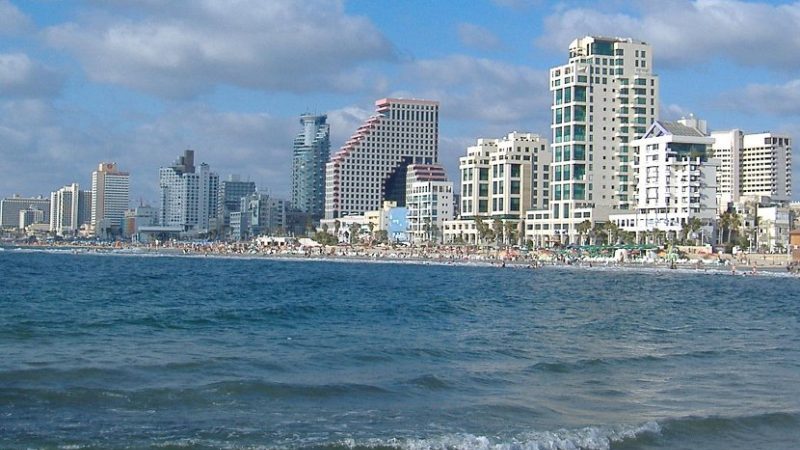
Tel Aviv, located on the eastern Mediterranean coast, is internationally recognized as the capital of Israel. Founded in 1909, this city has evolved over the past century into a bustling modern metropolis, and sometimes it is touted as the “New York of the Middle East”. Not only is Tel Aviv the most densely populated area in Israel, but it is also the country’s economic hub that is gradually emerging as a world-class city. According to a 2021 survey by The Economist Intelligence Unit on the global cost of living index for 173 cities worldwide, Tel Aviv has surpassed major international cities like Paris, Zurich, New York, and Los Angeles as the “most expensive city” globally. Notably, the Tel Aviv metropolitan area, including satellite cities like Herzliya, Ramat Gan, and Ashdod, is dubbed “Silicon Wadi”, serving as Israel’s entrepreneurial epicenter. Statistics reveal that Tel Aviv hosts approximately 77% of Israel’s startups, 81% of investment firms, and 85% of the high-tech industry, attracting global tech giants such as Intel, Microsoft, and Google. Chinese companies also have a presence in Tel Aviv, with Huawei, Xiaomi, and Fosun establishing research centers and offices, while Kuang-Chi is also investing in the city.
The robust development of the tech sector has brought a large number of talents to Tel Aviv and propelled the rise of the local real estate and luxury housing market. According to a report from the international luxury real estate website Mansion Global, in 2019, significant gentrification occurred in what used to be slum areas of the city. The rent for a brand-new one-bedroom apartment was approximately 7,000 shekels per month, and the selling price could reach up to 2.4 million shekels. Around 2009, apartments of similar quality may have sold for only 1.3 million shekels, with a monthly rent of around 4,000 shekels. This is mainly due to the influx of a large number of young tech talents into such areas. Additionally, various new development projects can be seen in the coastal areas of Tel Aviv, with well-equipped facilities comparable to high-end properties in the United States. Industry insiders indicate that tech talents working tirelessly in Tel Aviv are willing to generously invest in luxury properties and have higher expectations for quality of life, thus developers strive to meet their needs.
It should be noted that the tech sector is only a partial factor driving the real estate market in Tel Aviv, and indeed in the country. Another major force comes from the influx of Jewish immigrants. In the 1990s, Israel experienced an explosive influx of over three million high-quality immigrants, with a significant portion coming from the former Soviet Union. After the collapse of the Soviet Union, a large number of Jewish scientists, engineers, and technical personnel immigrated to Israel. Tel Aviv, as a hub for the technology industry, became their primary destination. In recent years, with the resurgence of global anti-Semitism, Jews from Europe, the U.S., and other regions have started paying attention to the real estate market in Tel Aviv in general and in Israel as a whole. Some analysts point out that many Jews see purchasing Israeli real estate as a form of “insurance” because they can have a refuge in case political conflicts and rising anti-Semitism in their own countries reach a critical point. It is understood that compared to cities like Vancouver or Sydney, luxury home prices in Tel Aviv are relatively affordable for foreign buyers. It is worth mentioning that in recent years, as Israel-China economic and trade relations have deepened, many Chinese companies have sent executives to Tel Aviv, leading to increased demand for local real estate. It has been reported that Chinese buyers not only purchase vacation homes but also spend between 3.8 million to 15 million shekels to buy apartments for rental income or future resale.
In October 2023, the conflict between Israel and Hamas erupted. Data from the real estate website Properstar shows that the prices of apartments in Tel Aviv dropped from 63,865 shekels per square meter in September 2023 to 61,963 shekels per square meter at the beginning of the conflict. However, apartment prices began to rebound from November 2023, reaching 63,155 shekels per square meter in March of this year. Meanwhile, due to the sudden outbreak of war, the prices of detached houses in Tel Aviv dropped from 53,835 shekels per square meter in October 2023 to 52,100 shekels per square meter in March of this year. However, looking at the data from January 2021, the overall trend of detached house prices in the city still shows an upward trajectory. In January 2021, detached houses were priced at only 39,991 shekels per square meter. In other words, the Israel-Hamas conflict did not completely impact the real estate market in Tel Aviv but rather the property sector shows signs of “prospering as it may”.
As such market economy is a desensitized economic model, it can be used to observe and assess the future situation in the Middle East.
Despite the unrest in the Middle East, global investors remain unconvinced that the war will cause the Israeli economy to collapse or that Tel Aviv’s real estate market will crumble. Even amidst the ongoing conflict, the city continues to attract investment from the technology industry and other sectors, leading to an increase in property prices rather than a decline. This resilience suggests that the global market and the international community have significant confidence in the prospects of Tel Aviv and Israel. All in all, various predictions of Israel’s downfall are likely baseless in reality.
Historical crises have shown that regardless of war or economic issues, the Israeli economy has been able to recover quickly. In all likelihood, once the Israel-Hamas conflict approaches its conclusion and tensions in the Israel-Iran region begin to ease, Tel Aviv’s real estate will experience a renewed and even higher peak of development, becoming even more prosperous. Israel’s robust tech sector provided an essential development logic that continuously brings in substantial investments and talent resources. Coupled with the possibility of more Jewish immigration to Israel, the future will undoubtedly see the Tel Aviv real estate market thriving even more, making this “window” even more attractive.
Final Analysis Conclusion:
Despite the ongoing turmoil and conflict, Israel will not witness its decline. Instead, there will be sustained growth. Continuous global support ensures Israel’s enduring presence as a regional hegemon in the Middle East, where it will assert even greater regional dominance.
Zhao Zhijiang is a researcher at ANBOUND