
“Brest is a rainy industrial port…that is home to the French navy and its submarine nuclear deterrent. It has also witnessed a remarkable number of weddings in recent years between female Chinese students and the seamen who work at its naval bases” https://t.co/MKpdW7RU8x
— Shashank Joshi (@shashj) April 29, 2024
Day: April 30, 2024
⚡️The UN sanctions monitors have confirmed that the Russian army hit #Kharkiv with a North Korean Hwasong-11 ballistic missile on January 2, 2024, in direct violation of Security Council sanctions, Reuters reported.
📷: AFP pic.twitter.com/XqfuXJXPht
— KyivPost (@KyivPost) April 30, 2024
The concert program ‘Echo of 20 Years’ celebrating the anniversary of the Heydar Aliyev Foundation will be staged at the Heydar Aliyev Center in Baku on May 4, according to Azerbaijan in Focus, reporting Trend.
The concert holds symbolic significance through its participants and repertoire.
The Heydar Aliyev Foundation, celebrating its 20th anniversary this year, has consistently supported young talents, in the sphere of culture and arts, and implemented projects aimed at the broad popularization of Azerbaijani culture.
Besides, the foundation has supported both the education of youth and their participation in international competitions and festivals.
The foundation’s projects in various fields, including mugham competitions, projects related to national, classical, and jazz music, and various music festivals, have contributed to the discovery and development of new talents.
The concert program will feature artists whose creative path has been influenced by the Heydar Aliyev Foundation, helping make a difference, supporting them, and facilitating their development, including Azer Zade (tenor), Azer Zeynalov (tenor), Jeyla Seyidova (violin), Elchin Azizov (baritone), Emil Afrasiab (baritone), Elvin Goja Ganiyev (violin), Farhad Badalbayli (piano), Isfar Sarabski (piano), Miralam Miralamov (khanende), Murad Adigozalzade (piano), Samir Jafarov (tenor), Tayyar Bayramov (khanende), and other participants.
Under the leadership of the First Vice President of Azerbaijan, Mehriban Aliyeva, and grounded in the ideas of the great leader Heydar Aliyev, the foundation has achieved significant success over its 20 years of activity through important projects in the fields of science and education, healthcare, social, and other areas. Its main achievement lies in gaining the love and trust of the people, and its special importance lies in preserving national-cultural and spiritual values and promoting them.
In recent years, the Heydar Aliyev Foundation has made a significant contribution to the development of the cultural sphere, and the concert, which will be held on the eve of the foundation’s 20th anniversary, can also be considered a demonstration of a small part of these achievements.
The post Baku to stage concert celebrating Heydar Aliyev Foundation’s anniversary appeared first on Azerbaijan In Focus.
The first “International Energy Agency (IEA) – COP29” high-level dialogue will be held in Paris on May 15, said Fatih Birol, IEA Executive Director, according to Azerbaijan in Focus, reporting Trend.
“Looking forward to hosting our 1st IEA-COP29 High-Level Dialogue on 15 May in Paris,” he wrote on his page on X, following the meeting with COP29 President-Designate Mukhtar Babayev.
Birol once again reiterated IEA’s support for countries on new Nationally Determined Contributions, as well as ensuring successful outcomes of COP29 in Baku this year.
Azerbaijan will host the 29th session of the Conference of the Parties to the UN Framework Convention on Climate Change (COP29) in November this year. The decision was made at the plenary meeting of COP28 held in Dubai on December 11 last year. Within two weeks, Baku, having become the center of the world, will host about 70,000–80,000 foreign guests.
The UN Framework Convention on Climate Change is an agreement signed at the Rio Earth Summit in June 1992 to prevent dangerous human interference in the climate system. The acronym COP (Conference of Parties) stands for Conference of Parties, which is the highest legislative body overseeing the implementation of the Framework Convention on Climate Change.
The parties to the convention are 198 countries. Unless the parties have decided otherwise, COP is held annually. The first COP event was held in March 1995 in Germany’s Berlin, and its secretariat is located in Bonn.
The post Paris to host 1st IEA – COP29 high-level dialogue appeared first on Azerbaijan In Focus.
In the current geopolitical environment, the world’s top countries, particularly the United States and the European Union, are facing serious challenges in obtaining critical raw materials. The European Union has already begun deepening cooperation with some governments in this area, and one of those governments is Uzbekistan, according to Azerbaijan in Focus, reporting Trend.
On April 5, 2024, Uzbekistan and the European Union signed a memorandum of understanding to create sustainable value chains for vital raw commodities. The agreement is intended to have an impact on the development of Uzbekistan’s mining industry as well as provide the European Union with minerals like copper and molybdenum. In the following step, the parties will collaborate to develop an operating strategy.
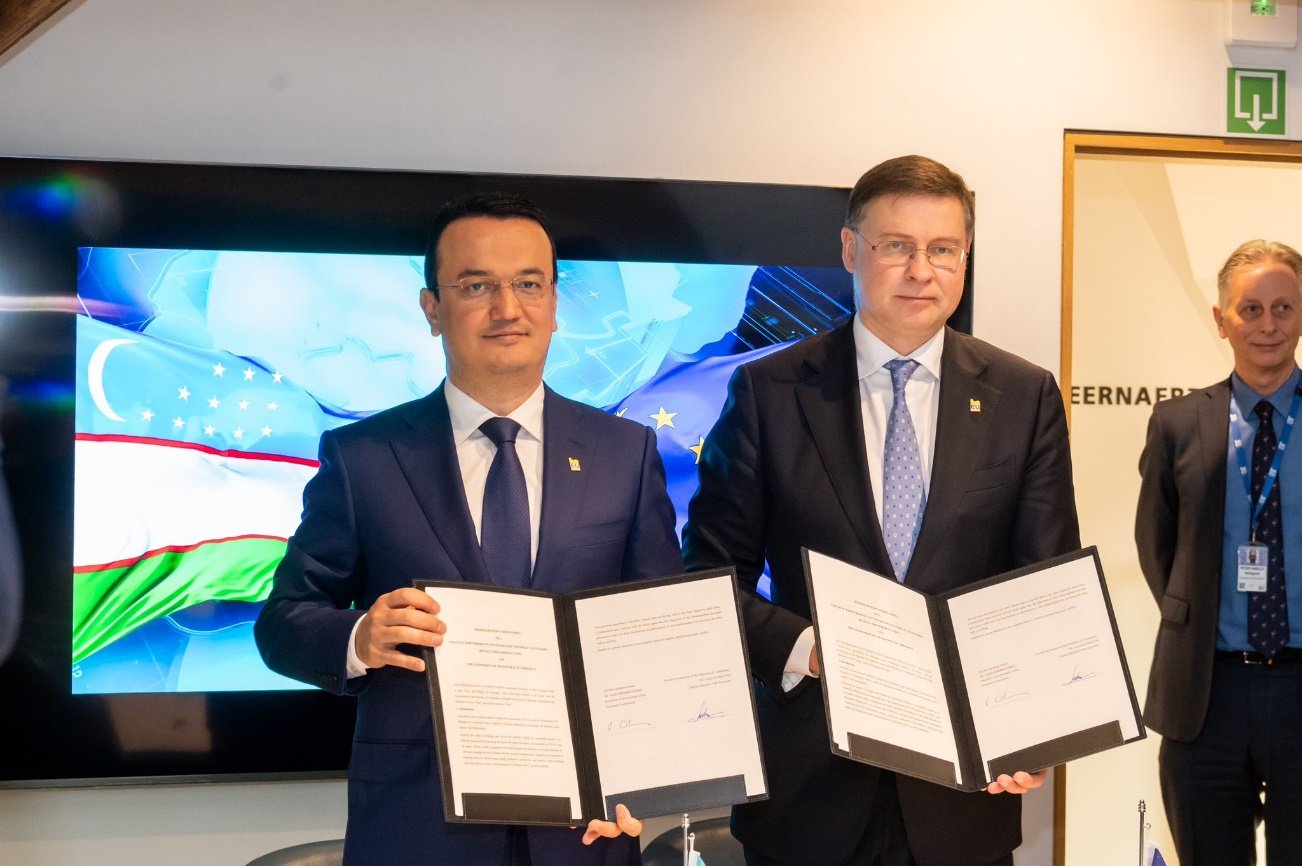
Laziz Kudratov, Minister of Investment, Industry, and Trade of Uzbekistan, and Valdis Dombrovskis, Executive Vice President of the European Commission.
In recent years, European state representatives, particularly those from France and Germany, have paid increasing visits to Central Asian countries, particularly Uzbekistan. For example, French President Emmanuel Macron’s visit to Uzbekistan on November 2, 2023, addressed strategic problems. Meanwhile, Germany’s economic objectives include boosting the number of multinational corporations operating in Uzbekistan and expanding new investment opportunities. The recent meeting between Olaf Scholz and Shavkat Mirziyoyev resulted in the signing of a $9 billion trade, investment, and technology deal.
For the Central Asian countries, which this time became independent participants in the historic “Great Game,” there are now ample opportunities. However, since the interests of the powers in the region are different, this also poses additional risks for independent states. Here, one of the factors affecting the geopolitical balance is the availability of critical raw materials reserves. There is a serious confrontation between major powers over critical raw materials, and this situation is predicted to continue in the future. Europe’s attempts to reduce its dependence on critical raw materials from Russia, which is in conflict, and the fact that China is one of the world’s consumers in this area, are a challenge for official Brussels.
Why is Uzbekistan, which possesses critical raw materials, becoming a strategic partner of the EU?
Critical row materials, or raw resources metals, are used in many strategic and critical aircraft components, such as mercury lamps, lasers, microwave filters, battery electrodes, nuclear batteries, etc., as well as in the production of renewable energy equipment (solar panels, wind turbines, electric cars). It is more profitable for Europe to use the deposits that have already been explored and confirmed in Soviet times than to explore new deposits.
One of the reasons for the West’s increased attention to Uzbekistan is its rich copper deposits. At the same time, as the EU’s efforts to meet climate goals are threatened, Brussels is trying to find alternative ways out.
According to confirmed open-source information, deposits of raw resources are located in China, India, Russia, and Brazil. Based on Western press reports, China maintains its dominance in raw resources metal production and creates competition. Viewing this as a threat, the European Union is therefore focusing on new arrangements and projects with states located in the Central Asian region.

European Commission President Ursula von der Leyen stated in one of her speeches to Parliament: “Lithium and raw earth metals will soon become more important than oil and gas. Our demand for raw earth metals alone will increase fivefold by 2030. We must avoid re-dependence as we did with oil and gas.” Thus, Europe is certainly in search of a new and reliable supplier of these resources. Considering all this, Central Asia is attracting attention as a new global player, with Uzbekistan as well as Kazakhstan welcoming the influx of foreign investors into the country.
Transportation logistics are of strategic importance.
In the transportation of raw materials vital to the Western world, the topic of stable transportation directions naturally becomes particularly relevant. Therefore, the most suitable and safe option may be considered the realization of critical raw material supply from Central Asia to Europe via Azerbaijan. The sides have not yet made official statements in the press on this issue. If we take into account the ongoing global changes in Eurasia, it can be seen that the traditional line through the Russian Federation has already lost its relevance due to the ongoing war in Ukraine.
On the other hand, it is clear that a transportation corridor that could pass through Iran would not be sustainable, given the historically unpredictable nature of relations between official Tehran and the West. Therefore, the export of raw metals to the West is likely to be carried out within the framework of the Middle Corridor project, also known as the Trans-Caspian International Transport Route. Indeed, in this case, Azerbaijan’s role and importance as a transit country, stable, reliable, and possessing the necessary infrastructural capabilities, increase, and the official Baku supports this strategic project.
Thus, the sustainable export of raw materials vital for Europe from Central Asian countries to the West can be implemented precisely through Azerbaijan.
The post “Great Game” in Central Asia and Azerbaijan’s strategic role in exchange of critical raw materials appeared first on Azerbaijan In Focus.
The Brussels-based European multimedia news platform “EU Reporter” has published an article headlined “Azerbaijan: A key player in Europe’s energy Security”, according to Azerbaijan in Focus, reporting AzerTac.
The article reads: “The Old Continent stands on the brink of significant change. Current geopolitical instability compels European leaders to seek alternative energy sources. In these new realities, increasing attention is drawn to a reliable and ambitious country on the shores of the Caspian Sea – Azerbaijan.
A land of fire, ancient traditions, and vast prospects, Azerbaijan boasts not only a millennia-old history, unique nature, and rich culture but also immense reserves of various natural resources, including natural gas. With each passing day, the role of this small Caspian republic in ensuring Europe’s energy security becomes increasingly significant.
The oil and gas resources of the Caspian Sea have long attracted the attention of global powers. On September 20, 1994, the historic “Contract of the Century” marked a significant milestone in the region’s energy geopolitics. Initiated and led by the then-president of Azerbaijan, Heydar Aliyev, this contract stands as one of the most crucial agreements in terms of its political, economic, and strategic significance. The “Contract of the Century,” worth $7.4 billion, involved 13 major international oil companies from 8 countries – Azerbaijan, the United States, the United Kingdom, Russia, Türkiye, Norway, Saudi Arabia, and Japan.
Over the years, Azerbaijan has proven itself to be a reliable and honest partner, supplying not only oil but also gas to Europe. The Caspian blue fuel has become the key to stability for several European countries. Responding to the growing needs of the region, the parties agreed to increase gas supplies to Europe to 20 billion cubic meters per year by 2027. The corresponding memorandum was signed in the summer of 2022 by President Ilham Aliyev and President of the European Commission Ursula von der Leyen.

EU and Azerbaijan seal strategic partnership agreement on energy security
“You are indeed a crucial energy partner for us and you have always been reliable. You were a crucial partner not only for our security of supply, but also in our efforts to become climate neutral,” said Ursula von der Leyen at the signing of the memorandum.
Confirmed natural gas reserves in the country amount to 2.6 trillion cubic meters, with projected reserves estimated at around 3 trillion cubic meters. The main source of natural gas from Azerbaijan to Europe is the giant Shah Deniz field, but in the future, other fields such as Babek, Umid, Karabakh, and Absheron are also planned to be involved. The first gas and condensate from Absheron were obtained in July 2023, and gas production is set to begin this year as part of the project to develop the Azeri-Chirag-Deepwater Gunashli block. Initially, it is planned to produce about half a billion cubic meters, but volumes could increase fivefold in the future.
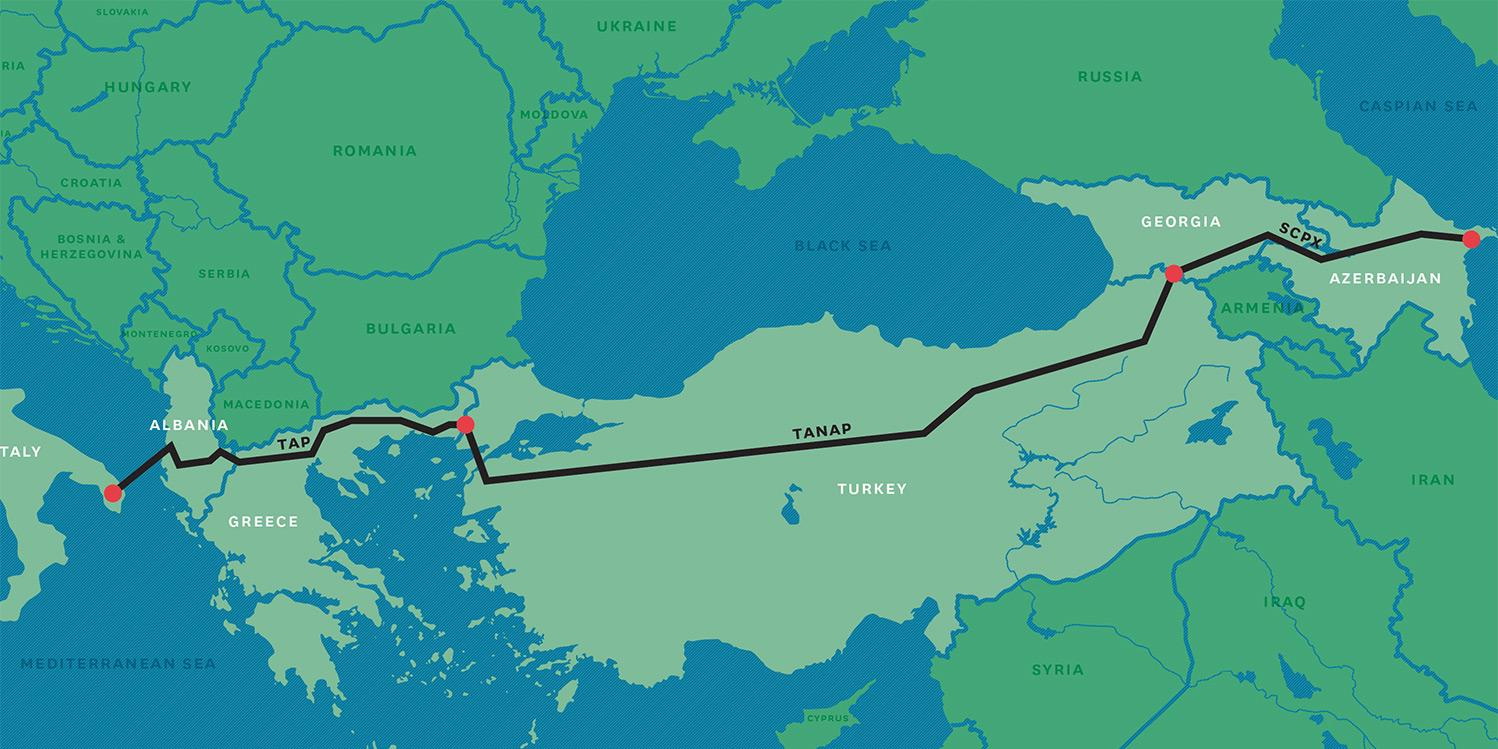
Today, Azerbaijani gas is received by Georgia, Türkiye, Greece, Bulgaria, Romania, Hungary, Serbia, and Italy, and through Italy – several major energy companies from Germany, the United Kingdom, France, and Switzerland. Albania, Bosnia and Herzegovina, Montenegro, Croatia, Slovakia, and North Macedonia are also interested in purchasing gas. Additionally, Romania is interested in purchasing liquefied natural gas (LNG) from Azerbaijan. This promising project involves the production of LNG at the SOCAR terminal in one of the Black Sea ports of Georgia and its delivery in liquefied form to the Romanian port of Constanta.
Such high demand for Azerbaijani gas is not surprising: investors are attracted by the reliability, stability, and developed infrastructure of Azerbaijan. Even during the pandemic, when trade and logistics chains were disrupted and some countries unilaterally terminated contracts, Azerbaijan fulfilled all its obligations. The policy of long-term contracts allows Azerbaijan to ensure predictability and reliability of supplies.
“So, today, we can all witness the Southern Gas Corridor has already changed many lives and made Europe safer. While Europe is ramping up its energy supplies, the Southern Gas Corridor by no doubt will remain one of the few stable and competitive sources of pipeline gas delivered to the EU,” said Albanian Prime Minister Edi Rama during the Southern Gas Corridor Advisory Council Ministerial Meeting in March of this year.
For years, Azerbaijan has invested in the development of oil and gas infrastructure, and the crown jewel of these efforts was the opening of the Southern Gas Corridor, stretching about 3500 km. The corridor consists of three parts – the South Caucasus Pipeline (SCP), the Trans-Anatolian Pipeline (TANAP), and the Trans-Adriatic Pipeline (TAP). Gas is pumped from the Shah Deniz field to the Georgia- Türkiye border via the South Caucasus Pipeline, and from there, one branch is supplied to Turkish consumers in Erzurum through the BOTAŞ system, while the other branch passes through TANAP to Turkish consumers in Eskisehir and then connects to TAP, through which gas flows to European countries – Greece, Bulgaria, and Italy.
The supply of Azerbaijani gas to Europe has also strengthened Italy’s role in this area. Adolfo Urso, Minister for Enterprise and Productivity of “Made in Italy,” noted in an interview with “Il Messaggero” that “in the future [Italy – ed.] will be able to become a gas hub, including through doubling the capacity of the TAP pipeline.” Azerbaijan has already become the second-largest gas supplier to Italy after Algeria.
Overall, the route for delivering Azerbaijani gas is becoming increasingly diversified. For example, in Greece, the IGB interconnector is connected to TAP with a capacity of 3 billion cubic meters (with the potential to expand to 5 billion cubic meters), through which 1 billion cubic meters are delivered to Bulgaria annually. There is also consideration for the construction of the Ionian-Adriatic pipeline – another interconnector with a capacity of 5 billion cubic meters per year. It is envisaged to pass through Albania, Montenegro, Bosnia and Herzegovina, and Croatia.
The stability and reliability of the Azerbaijani partnership are particularly valuable in today’s turbulent times. EU countries are increasingly interested in Azerbaijani gas as a long-term and stable source. Last year, deliveries reached 11.5 billion cubic meters compared to 8 billion in 2021.
Taking these factors into account, the EU and Azerbaijan are unlocking new facets of the potential for energy cooperation each year. After the signing of the Memorandum of Understanding on Strategic Partnership between the EU and Azerbaijan in the summer of 2022, in April 2023, a Memorandum of Understanding on Cooperation between the gas transmission operators of Bulgaria, Romania, Hungary, Slovakia, and the Azerbaijani state company SOCAR was signed. The initiative, called the “Solidarity Ring,” opens up new opportunities for cooperation for additional gas supplies to Europe through enhanced gas transmission systems.
The supply of Azerbaijani gas to Europe is a large-scale and long-term project. To constantly keep abreast of the energy pulse, annual meetings of ministers within the framework of the Advisory Council of the Southern Gas Corridor have been organized in Azerbaijan since 2015. The latest session, attended by representatives from 23 countries, 6 international organizations, and 44 companies, took place in early March of this year.
The Advisory Council plays a significant role not only in coordinating activities within the Southern Gas Corridor but also in discussing the further steps of participating countries in ensuring energy security. Being an essential mechanism, the Advisory Council helps to adequately respond to modern challenges, and for this reason, ministerial meetings on green energy have been held within the council for the past few years.
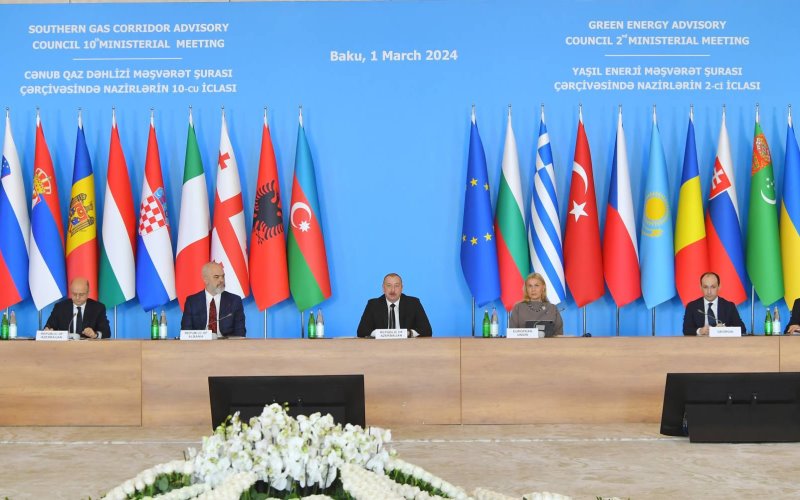
“The Southern Gas Corridor has evolved to become a forum for cooperation also on renewables and electrification. This is an extraordinary result and is proof of how this project is forward looking and open to the future. We have made clean energy a key part of EU-Azerbaijan bilateral relations”, – noted Kadri Simson, the European Commissioner for Energy Affairs and co-chair of the Advisory Council of the Southern Gas Corridor, during the latest session.
In December 2022, the governments of Azerbaijan, Hungary, Georgia, and Romania signed an agreement in Bucharest on strategic partnership in the development and delivery of green energy. The agreement entails laying a cable on the bottom of the Black Sea for transmitting electricity with a capacity of 1 GW. The cable is intended for supplying electricity produced in Azerbaijan through Georgia and the Black Sea to Romania for further transportation to Hungary and other European states.
In the near future, Azerbaijan will become not only a supplier but also a transit country for renewable energy sources to Europe from Central Asian countries. In November of last year, Azerbaijan, Kazakhstan, and Uzbekistan agreed to establish a joint venture for exporting green energy to Europe. The agreement was reached at a meeting of energy and economy ministers of the three countries held in Baku.
In this context, the Southern Gas Corridor can play an important role in the green energy transition. During the transitional period when renewable energy sources cannot fully replace fossil fuels, the Southern Gas Corridor can guarantee the stability of energy supplies. Additionally, natural gas is a cleaner fossil fuel compared to coal and oil, meaning its use leads to lower greenhouse gas emissions.
Azerbaijan’s contribution to diversifying energy sources and strengthening Europe’s energy security is significant. The strategic partnership between Azerbaijan and the EU in this area will continue to evolve, contributing to the stability and sustainable development of the entire region.
Azerbaijan is not just a gas exporter but also a potential exporter of energy from renewable sources. It is a country striving for economic diversification and investment in the future. Investments in the development of the oil and gas sector are accompanied by long-term strategic reforms aimed at increasing transparency and improving the business climate. Azerbaijan has proven itself to be a responsible player in the global energy market, ready for long-term cooperation and joint solutions to global challenges.
In the history of oil and gas diplomacy, Azerbaijan has already made its bright and significant mark. Today, its role in ensuring Europe’s energy security is becoming increasingly important. Caspian gas not only warms the homes of Europeans but also ignites the flame of hope for a stable and prosperous future.”
The post EU Reporter: Azerbaijan – a key player in Europe’s energy security appeared first on Azerbaijan In Focus.
Ilham Aliyev, President of the Republic of Azerbaijan, received Sahibzada Sultan Ahmad Ali, Chairman of MUSLIM Institute of the Islamic Republic of Pakistan and Prime Minister of Junagadh State, according to Azerbaijan in Focus, reporting AzerTac.
During the meeting, they highlighted the importance of the upcoming World Forum on Intercultural Dialogue in Baku, noting that this event contributes to establishing connections among representatives of various cultures.
Touching on Azerbaijan-Pakistan relations, both sides hailed the successful development of friendship and brotherhood between the two countries across all areas. They also emphasized the significance of Azerbaijan’s and Pakistan’s consistent support for each other on various issues.
The sides noted that Great Leader Heydar Aliyev’s visit to Pakistan laid the foundation for relations between the two countries, adding that the high-level reciprocal visits and meetings contributed to strengthening bilateral bonds.
The post President Ilham Aliyev received Chairman of MUSLIM Institute of Pakistan appeared first on Azerbaijan In Focus.