Day: April 30, 2024
Patrushev’s Fury: Stark Reality Check in Military Bloc Meeting
Dear subscribers and guests of the channel! Amidst twists and turns with the formation of the facade of power in #Russia, Nikolai Patrushev, Secretary of the Security Council of Russia, held an online meeting with… https://t.co/n1Q6vq7R5q pic.twitter.com/Qs09mJ80r9
— generalsvr_en (@generalsvr_en) April 30, 2024
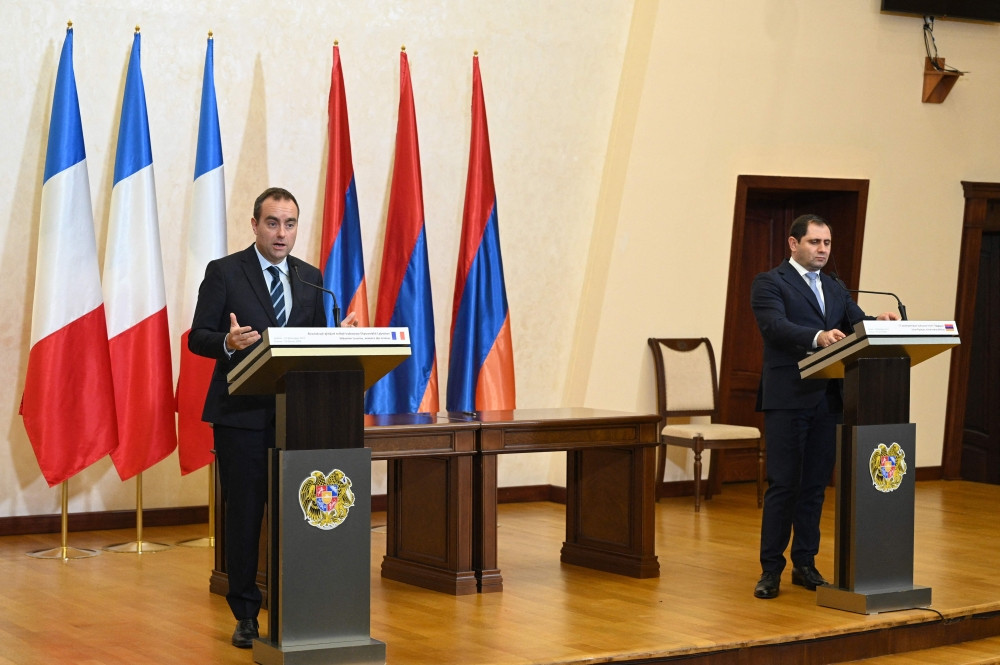
The evolving military-political alliance between Armenia and France has garnered significant attention, particularly in the context of its impacts on the security landscape of the South Caucasus—a region long characterized by its geopolitical sensitivities and strategic significance.
Introduction to the Alliance amidst Geopolitical Change
The Armenia-France partnership, especially post-Second Karabakh War, represents a profound shift in regional alignments. Traditionally, Armenia has relied heavily on Russia for security and military support, but recent developments indicate a significant pivot towards Western powers, spearheaded by France. This realignment is underscored by several high-profile agreements on defense cooperation which have included the sale of advanced weaponry and military equipment to Armenia.
The strengthening of military ties between Armenia and France is seen by many as a strategic move to diversify Armenia’s military alliances and to bolster its defense capabilities against any future regional uncertainties. However, the reasons for the deepening of military-political relations between Armenia and France are broader. For example, France, seeking to extend its geopolitical influence beyond its traditional sphere, views Armenia as a pivotal ally in a strategically volatile region. This partnership, however, is not just about military dealings but also involves deep political dialogues and economic engagements.
Armenia’s geopolitical position, bordered by Turkey, Iran, Azerbaijan, and politically, military and economic alliance with Russia, has certain significance for France. The historical conflicts, most notably with Azerbaijan over Karabakh, which Armenia occupied for almost thirty years, have necessitated a strong military stance from Armenia, supported by its allies. France’s entry as a major ally reflects a shift in Armenia’s foreign policy, which now increasingly looks westward in search of support that can balance traditional Russian influence.
Despite new partnerships, Armenia’s ties with Russia remain strong, characterized by mutual security agreements and the presence of Russian military bases within Armenian territory. Moreover, Armenia has increased the trade turnover with Russia, which many international experts believe is based on the re-export of sanctioned goods. This dichotomy presents Armenia with a complex balancing act: deepening ties with France and its European partners while maintaining a longstanding relationship with Russia, which has historically been Armenia’s most significant ally in the region.
France’s Geopolitical Ambitions and Implications for Regional Security
With Armenia and Azerbaijan yet to reach a comprehensive peace agreement following the recent conflicts, the region remains tense and prone to instability. Equipping a nation with its internal legislative frameworks, particularly one that has engaged in the protracted occupation of Azerbaijani territories for nearly three decades, pursued a policy of aggression, and continues to assert territorial claims against Azerbaijan, may potentially reinforce revanchist tendencies and aggressive inclinations within both the Armenian political elite and its broader society.
Consequently, France’s provision of arms to Armenia exacerbates military-political tensions in the region during a period when the prospects for reconciliation between Armenia and Azerbaijan appear feasible.At the same time, the infusion of advanced French military technology into Armenia can be seen as a bolstering of Armenia’s defensive posture. However, it also has the potential to be perceived as a threat by Azerbaijan, possibly provoking an arms race in the region. Such developments could undermine ongoing peace negotiations and lead to a further escalation of hostilities.
France’s active engagement in the South Caucasus is driven by multiple strategic objectives. It aims to reduce Russian influence in the region, act against Türkiye and project its power in a region that serves as a crucial juncture between Europe and Asia.
The Armenia-France military cooperation must be examined through the lens of regional security dynamics. While it strengthens Armenia’s military capabilities, it also changes the strategic calculus for other regional players like Azerbaijan, Turkey, and Iran, potentially leading to altered security postures and realignments. Here the most important factor remains Azerbaijan’s concern whose territory under Armenian occupation was pillaged and destroyed and the whole population ethnically cleansed.
Conclusion: complex geopolitical – security landscape
The France-Armenia alliance, while beneficial in bolstering Armenia’s military capabilities, introduces complexities into the already volatile South Caucasus region.
This analysis suggests that Armenia is employing a strategy of rapprochement with Western nations—a tactic previously utilized in its engagements with Russia—as a weapon against Azerbaijan. Moreover, in the context of the recent deterioration in Russian-Western relations, Armenia’s overtures towards the West, coupled with efforts by key Western nations, including France, to leverage Armenia in their strategic positioning against Russia, harbor the potential to transform the South Caucasus into a nascent zone of geopolitical contention.
Currently, Armenia’s gradual pivot from close ties with Russia in the quest for another patron who might reinforce its military posture may precipitate unstable geopolitical dynamics within the region, potentially culminating in significant ramifications for the security architecture of the South Caucasus.
At this juncture, the military collaboration between Armenia and France, specifically France’s provision of armaments to Armenia, engenders two detrimental outcomes for the regional security landscape. Firstly, it escalates the likelihood of renewed hostilities with Azerbaijan by bolstering revanchist sentiments within Armenia. Secondly, it repositions the South Caucasus as an arena for geopolitical rivalry between major powers, namely Russia and Western states.
The evolving military-political alliance between Armenia and France has garnered significant attention, particularly in the context of its impacts on the security landscape of the South Caucasus—a region long characterized by its geopolitical sensitivities and strategic significance.
Introduction to the Alliance amidst Geopolitical Change
The Armenia-France partnership, especially post-Second Karabakh War, represents a profound shift in regional alignments. Traditionally, Armenia has relied heavily on Russia for security and military support, but recent developments indicate a significant pivot towards Western powers, spearheaded by France. This realignment is underscored by several high-profile agreements on defense cooperation which have included the sale of advanced weaponry and military equipment to Armenia.
The strengthening of military ties between Armenia and France is seen by many as a strategic move to diversify Armenia’s military alliances and to bolster its defense capabilities against any future regional uncertainties. However, the reasons for the deepening of military-political relations between Armenia and France are broader. For example, France, seeking to extend its geopolitical influence beyond its traditional sphere, views Armenia as a pivotal ally in a strategically volatile region. This partnership, however, is not just about military dealings but also involves deep political dialogues and economic engagements.
Armenia’s geopolitical position, bordered by Turkey, Iran, Azerbaijan, and politically, military and economic alliance with Russia, has certain significance for France. The historical conflicts, most notably with Azerbaijan over Karabakh, which Armenia occupied for almost thirty years, have necessitated a strong military stance from Armenia, supported by its allies. France’s entry as a major ally reflects a shift in Armenia’s foreign policy, which now increasingly looks westward in search of support that can balance traditional Russian influence.
Despite new partnerships, Armenia’s ties with Russia remain strong, characterized by mutual security agreements and the presence of Russian military bases within Armenian territory. Moreover, Armenia has increased the trade turnover with Russia, which many international experts believe is based on the re-export of sanctioned goods. This dichotomy presents Armenia with a complex balancing act: deepening ties with France and its European partners while maintaining a longstanding relationship with Russia, which has historically been Armenia’s most significant ally in the region.
France’s Geopolitical Ambitions and Implications for Regional Security
With Armenia and Azerbaijan yet to reach a comprehensive peace agreement following the recent conflicts, the region remains tense and prone to instability. Equipping a nation with its internal legislative frameworks, particularly one that has engaged in the protracted occupation of Azerbaijani territories for nearly three decades, pursued a policy of aggression, and continues to assert territorial claims against Azerbaijan, may potentially reinforce revanchist tendencies and aggressive inclinations within both the Armenian political elite and its broader society.
Consequently, France’s provision of arms to Armenia exacerbates military-political tensions in the region during a period when the prospects for reconciliation between Armenia and Azerbaijan appear feasible.At the same time, the infusion of advanced French military technology into Armenia can be seen as a bolstering of Armenia’s defensive posture. However, it also has the potential to be perceived as a threat by Azerbaijan, possibly provoking an arms race in the region. Such developments could undermine ongoing peace negotiations and lead to a further escalation of hostilities.
France’s active engagement in the South Caucasus is driven by multiple strategic objectives. It aims to reduce Russian influence in the region, act against Türkiye and project its power in a region that serves as a crucial juncture between Europe and Asia.
The Armenia-France military cooperation must be examined through the lens of regional security dynamics. While it strengthens Armenia’s military capabilities, it also changes the strategic calculus for other regional players like Azerbaijan, Turkey, and Iran, potentially leading to altered security postures and realignments. Here the most important factor remains Azerbaijan’s concern whose territory under Armenian occupation was pillaged and destroyed and the whole population ethnically cleansed.
Conclusion: complex geopolitical – security landscape
The France-Armenia alliance, while beneficial in bolstering Armenia’s military capabilities, introduces complexities into the already volatile South Caucasus region.
This analysis suggests that Armenia is employing a strategy of rapprochement with Western nations—a tactic previously utilized in its engagements with Russia—as a weapon against Azerbaijan. Moreover, in the context of the recent deterioration in Russian-Western relations, Armenia’s overtures towards the West, coupled with efforts by key Western nations, including France, to leverage Armenia in their strategic positioning against Russia, harbor the potential to transform the South Caucasus into a nascent zone of geopolitical contention.
Currently, Armenia’s gradual pivot from close ties with Russia in the quest for another patron who might reinforce its military posture may precipitate unstable geopolitical dynamics within the region, potentially culminating in significant ramifications for the security architecture of the South Caucasus.
At this juncture, the military collaboration between Armenia and France, specifically France’s provision of armaments to Armenia, engenders two detrimental outcomes for the regional security landscape. Firstly, it escalates the likelihood of renewed hostilities with Azerbaijan by bolstering revanchist sentiments within Armenia. Secondly, it repositions the South Caucasus as an arena for geopolitical rivalry between major powers, namely Russia and Western states.
According to the National Statistic Office of Georgia, in the first quarter of 2024, Turkey emerged as the leading source of visitors to Georgia, amounting to 19.5% of the total number with 254.6 thousand visitors. The Russian Federation was on the second place with 19.2% share, followed by Armenia at third place with a 14.5% share.
Source: GeostatIn the reporting period, the number of international non-resident traveler arrivals in Georgia reached 1.3 million, marking a 7.6% increase from the corresponding period in the previous year. Most of the entries into Georgia were made by travelers of 31-50 age group (48.3%). Majority of them (64.1%) were male.
The National Statistics Office says the purpose of the majority of visits (44.8%) was holiday, leisure and recreation in the first quarter of 2024.
Also Read:
On April 29 and 30, Georgian Foreign Minister Ilia Darchiashvili is on a visit to Brussels to participate in European Council events dedicated to the 20th anniversary of the 2004 EU enlargement. He met with EU representatives and ministerial colleagues, including European Commission Vice President Věra Jourová and Acting Head of Cabinet of European Commission President Fernando Andresen Guimaraes.
Meeting with European Commission Vice-President
On April 29, FM Darchiashvili met with the Vice-President of the European Commission, Commissioner for Values and Transparency, Věra Jourová.
According to the official press release of the MFA, Darchiashvili spoke about the country’s “ongoing reforms aimed at aligning Georgia with EU standards,” including the nine steps set by the European Commission.
The parties also discussed the controversial Foreign Agents bill. “The Minister presented Georgia’s arguments, while the Vice President highlighted the pressing challenges prompting discussions about enacting similar mechanisms within the European Union,” the press-release reads.
The parties also discussed the security situation in the region and humanitarian conditions in the occupied Georgian territories.
“Had a very good meeting with Věra Jourová, where we discussed Georgia’s progress on the EU accession path, achieved through our government’s efforts, including the implementation of a number of essential reforms. We agreed to continue close cooperation,” FM Darchiashvili tweeted after the meeting.
Had a very good meeting with @VeraJourova, where we discussed Georgia’s progress on the EU accession path, achieved through our government’s efforts, including the implementation of a number of essential reforms. We agreed to continue close cooperation. pic.twitter.com/T8q4cWrCKU
— Ilia Darchiashvili (@iliadarch) April 29, 2024
Meeting with the Acting Head of Cabinet of the President of the European Commission
On April 29, FM Darchiashvili also met with the Acting Head of Cabinet of the President of the European Commission, Fernando Andresen Guimaraes.
During the meeting, the parties discussed the support of the President of the European Commission to Georgia’s European integration, emphasizing the involvement of various structures of the European Commission in reform initiatives.
According to the Foreign Ministry’s press release, FM Darchiashvili said that “EU integration remains the central goal of Georgia’s foreign policy,” adding that “the government reiterated its readiness to make significant progress and advance to the next phase of cooperation with the European Union.”
More to follow…
Georgia’s estimated real Gross Domestic Product (GDP) growth rate amounted to 8.2% for March 2024 compared to the corresponding period of the previous year, according to the rapid estimates released by the National Statistics Office of Georgia on April 30.
According to Geostat, the following activities contributed significantly to growth: manufacturing, construction, information and communication, professional scientific and technical activities, and real estate activities.
Declines were registered in construction, energy, transportation and storage.
Source: GeostatAccording to Geostat, the average real GDP growth for January-March 2024 equaled 7.8%.
Also Read:
- 29/03/2024 – Georgia’s GDP Up by 9.5% in February 2024
- 20/03/2024 – Georgia’s GDP Up by 7.5% in 2023
- 29/02/2024 – Georgia’s GDP Up by 5.8% in January 2024
- 31/01/2024 – Georgia’s GDP Up by 8.3% in December 2023