
In January-February this year, Azerbaijan imported 49 tons of green tea worth $289,000.
Day: April 29, 2024
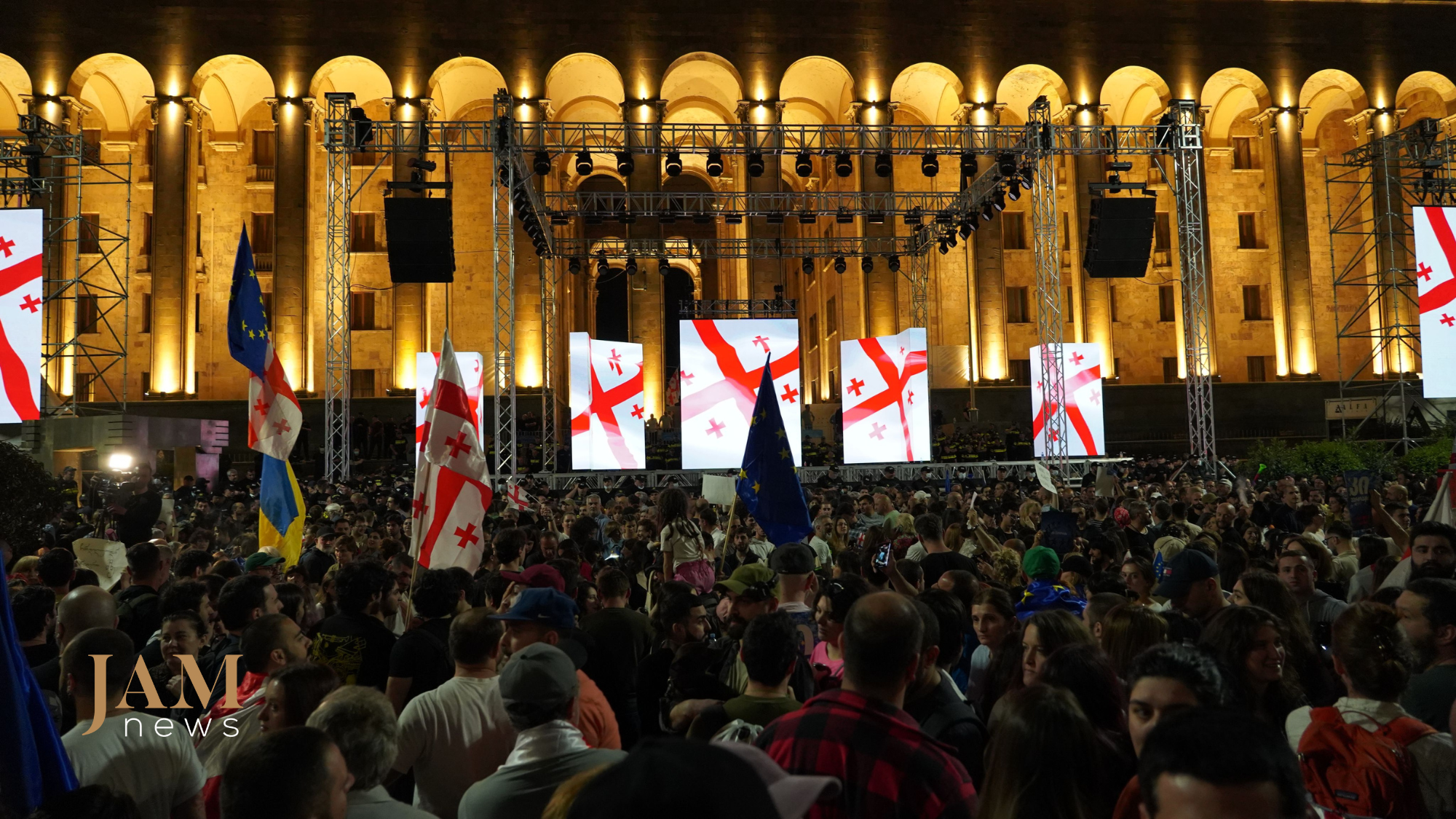
Georgia against “foreign agents” law
Tens of thousands of people gathered yesterday in Tbilisi for a protest rally with the slogan “Yes to Europe, no to the Russian law!”
Mass anti-government demonstrations in Tbilisi have been ongoing since early April, after the ruling party “Georgian Dream” announced on April 3 its intention to pass the “foreign agents Law,” which was withdrawn from parliament last year following massive protests.
Critics argue that the draft law proposed by the “Georgian Dream” closely resembles the Russian law on foreign agents and serves the same purpose — to suppress critical media and non-governmental organizations.
Concerning signals are also coming from Brussels. In December, the European Union granted Georgia official candidate status. However, EU representatives state that the draft law could halt Georgia’s integration into the European Union.
The protesters gathered yesterday at 7:00 PM at Republic Square and marched towards the parliament building.
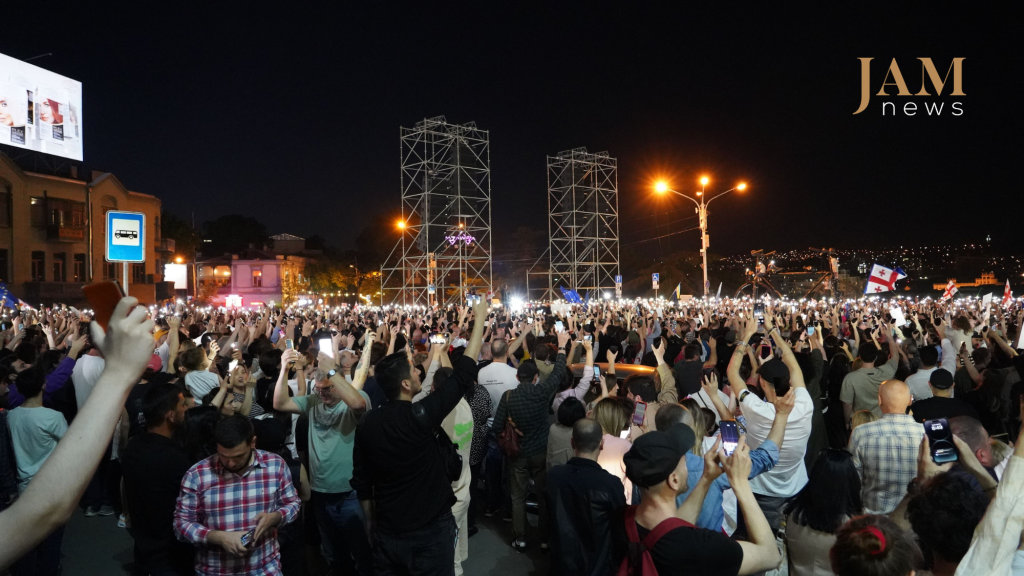 Photo: David Pipia/JAMnews
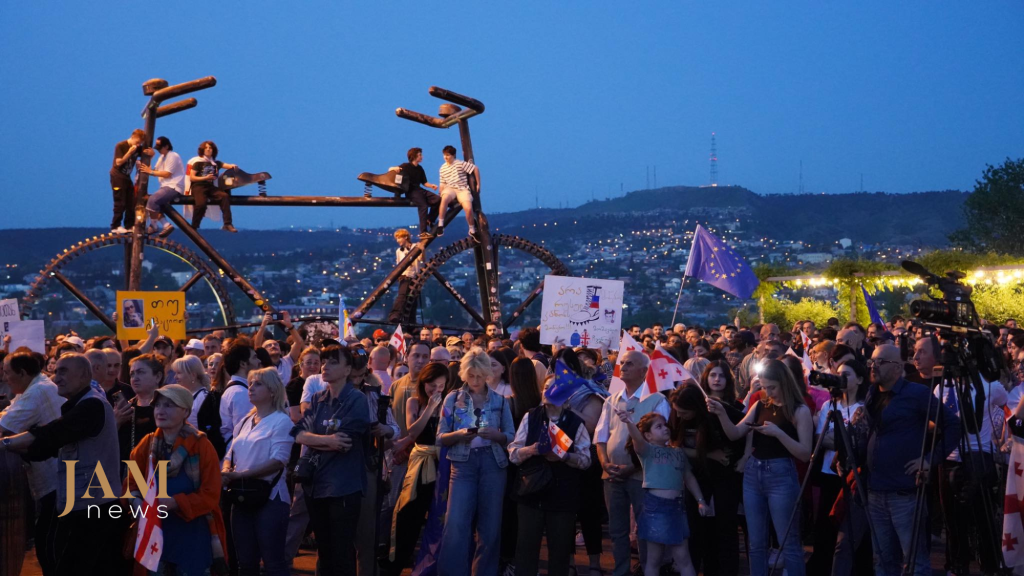 Photo: David Pipia/JAMnews
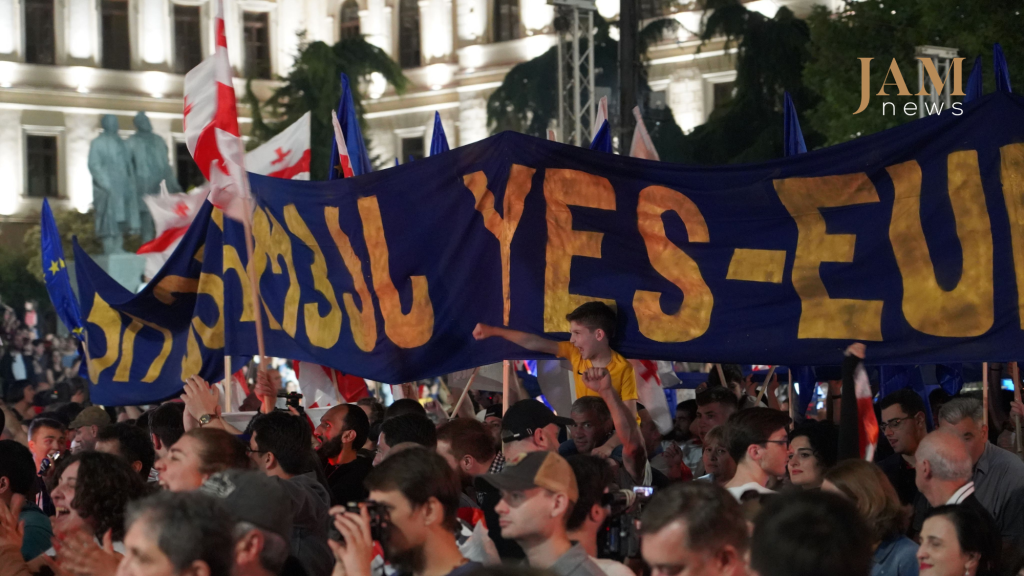 Photo: David Pipia/JAMnews
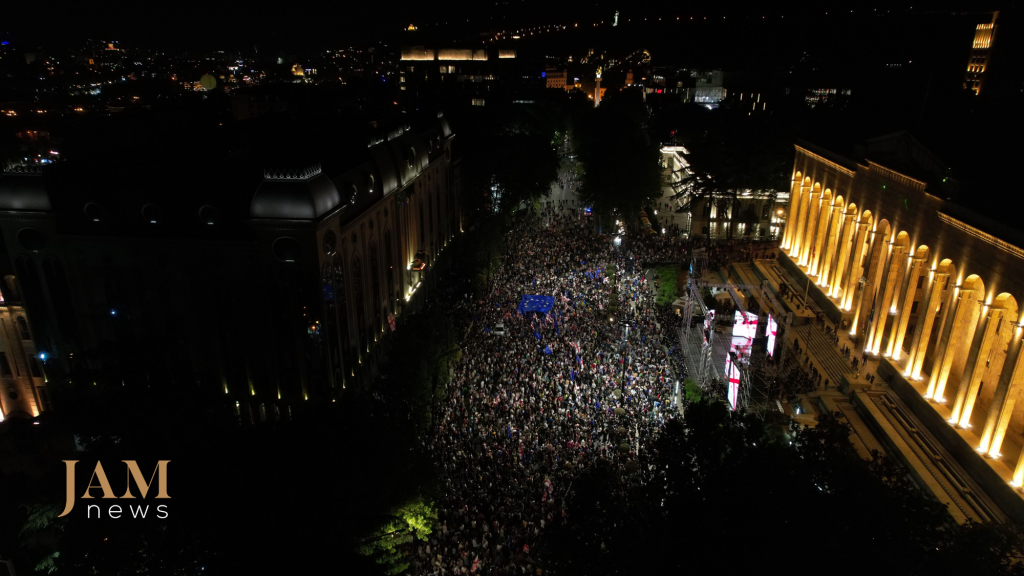 Photo: David Pipia/JAMnews
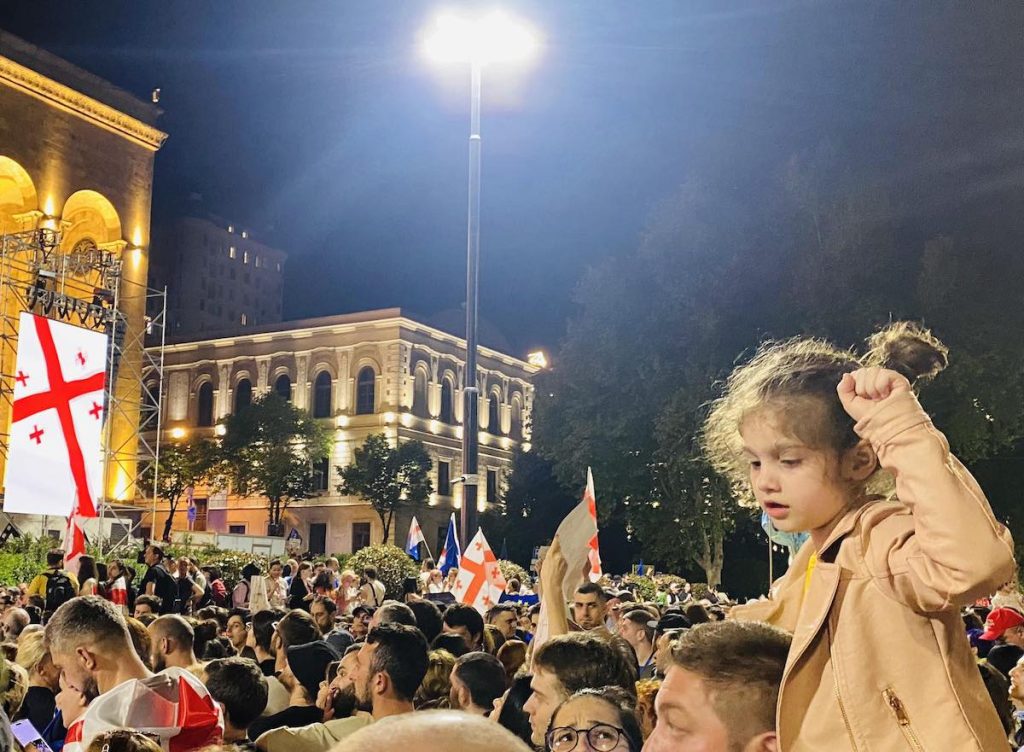 Photo: David Pipia/JAMnews

Just like in previous rallies, there were no politicians among the speakers at this rally. Addressing the audience with a microphone were writers, artists, students, doctors.
The rally on April 28, like the previous ones, was characterized by a large presence of young people.
People came with their families— with children, dogs, and cats.
There were tense moments —during the rally, former minister of Euro-Integration Alex Petriashvili was arrested.
Near Freedom Square, as well as on Chitadze and Chichinadze streets, special forces were mobilized, and a water cannon was brought in, but this time the police did not deploy the special equipment. Pepper spray was used several times.
- Georgia may lose its ‘safe country’ status if it passes the ‘foreign agent’ law – SPD Germany
- Why Georgia’s government seeks to reintroduce ‘foreign agents’ law: Expert views
By two o’clock in the morning, the special forces had left the area adjacent to the parliament.
Today, on April 29, there is still a crowd near the parliament. But this time, the government is gathering its supporters.
SYDNEY — Solomon Islands incumbent Prime Minister Manasseh Sogavare said he would not be a candidate when lawmakers vote next week for a new prime minister, and his political party would instead back former Foreign Minister Jeremiah Manele.
The two major opposition parties in the Solomon Islands struck a coalition deal on Saturday as they vie with Sogavare’s party to form a government after an election delivered no clear winner.
Last week’s election was the first since Sogavare struck a security pact with China in 2022, inviting Chinese police into the Pacific Islands archipelago and drawing the nation closer to Beijing.
The election is being watched by China, the U.S. and neighboring Australia because of the potential impact on regional security.
Sogavare announced he would not be a candidate for prime minister at a televised press conference on Monday evening.
Sogavare said his government had been “under pressure from the United States and western allies” and he had been “accused of many things.”
“Geopolitics is at play, after we made a very important decision in 2019,” he said, referring to his government’s decision to switch diplomatic recognition from Taiwan to Beijing.
Manele said that if he was elected as prime minister he would have the “same foreign policy basis – friends to all and enemies to none.”
Election results on Wednesday showed Sogavare’s OUR party won 15 of the 50 seats in parliament, while the opposition CARE coalition has 20. Independents and micro parties won 15 seats, and courting the independents will be the key to reaching the 26 seats needed to form a government. Sogavare said on Monday his party had support for 28 seats.
Lawmakers are expected to vote on May 8.
SYDNEY — Solomon Islands incumbent Prime Minister Manasseh Sogavare said he would not be a candidate when lawmakers vote next week for a new prime minister, and his political party would instead back former Foreign Minister Jeremiah Manele.
The two major opposition parties in the Solomon Islands struck a coalition deal on Saturday as they vie with Sogavare’s party to form a government after an election delivered no clear winner.
Last week’s election was the first since Sogavare struck a security pact with China in 2022, inviting Chinese police into the Pacific Islands archipelago and drawing the nation closer to Beijing.
The election is being watched by China, the U.S. and neighboring Australia because of the potential impact on regional security.
Sogavare announced he would not be a candidate for prime minister at a televised press conference on Monday evening.
Sogavare said his government had been “under pressure from the United States and western allies” and he had been “accused of many things.”
“Geopolitics is at play, after we made a very important decision in 2019,” he said, referring to his government’s decision to switch diplomatic recognition from Taiwan to Beijing.
Manele said that if he was elected as prime minister he would have the “same foreign policy basis – friends to all and enemies to none.”
Election results on Wednesday showed Sogavare’s OUR party won 15 of the 50 seats in parliament, while the opposition CARE coalition has 20. Independents and micro parties won 15 seats, and courting the independents will be the key to reaching the 26 seats needed to form a government. Sogavare said on Monday his party had support for 28 seats.
Lawmakers are expected to vote on May 8.
Categories