
Day: April 26, 2024
Categories
NPR News: 04-26-2024 5PM EDT

LONDON, April 26 (Reuters) – Sergei Shoigu, Russia’s defence minister, has tried to send a “business as usual” message since his deputy was arrested on a bribery charge. But the widening scandal looks bad for him too, and is seen as a push by a rival clan to dilute his power.
On the surface, the timing of the detention on Tuesday of Timur Ivanov, one of Shoigu’s 12 deputy ministers, was unexpected, coming when Russia is waging war in Ukraine and the authorities have made discrediting the army a jailable offence.
Allegations of graft funding a lifestyle way beyond his means made against 48-year-old Ivanov by the late opposition politician Alexei Navalny’s anti-corruption foundation had been in the public domain for more than a year with no apparent fallout.
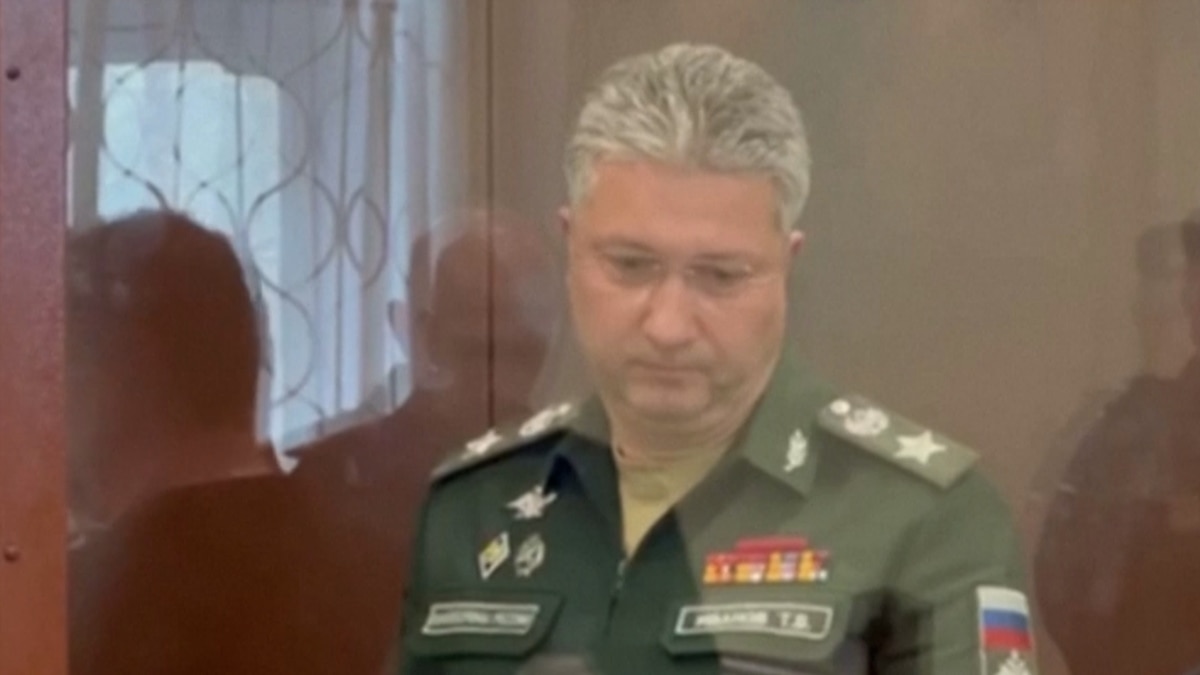
Yet this week state TV suddenly showed Russians a perplexed-looking Ivanov – who denies wrongdoing – dressed in full military uniform, standing in a clear plastic courtroom cage of the type that so many Kremlin foes have occupied before him.
His arrest, say Russian political analysts including some former insiders, shows how the war is shaping infighting between the “clans” that jostle for wealth and influence in Russia’s sharp-elbowed political system.
The clans – alliances of like-minded officials or business people – centre around the military, the intelligence and law enforcement agencies, the military-industrial complex and also include a group of people from President Vladimir Putin’s native St Petersburg who have known him personally for many years.
“Someone in the elite didn’t like the fact that Shoigu had grown stronger,” Tatiana Stanovaya, a senior fellow at the Carnegie Russia Eurasia Center, told Reuters.
“This doesn’t comes from Putin, but from people who are close to Putin who think that Shoigu has overplayed his hand. It’s simply a battle against someone and a ministry that has got too powerful and an attempt to balance the situation.”
Abbas Gallyamov, a former Kremlin speechwriter who is now designated as a “foreign agent” by the authorities, said he too saw the arrest as an attack on Shoigu that would weaken him.
“Ivanov is one of the closest people to Shoigu. His arrest on the eve of the appointment of a new government suggests that the current minister’s chances of staying in his chair are sharply declining,” he said.
Ivanov was arrested as a result of an investigation by the counterintelligence arm of the FSB security service, according to Russian state media.
Ivanov’s is the highest-profile corruption case since Putin sent troops into Ukraine in 2022. State media have reported that Shoigu has removed Ivanov from his post.
The scandal comes just two weeks before Putin is inaugurated for a fifth presidential term and before a government reshuffle expected next month at which Shoigu’s job will, in theory, be up for grabs.
Ivanov was in charge of lucrative army construction and procurement contracts and is accused of taking huge bribes in the form of services worth, according to Russian media reports, at least 1 billion roubles ($10.8 million) in return for handing out defence ministry contracts to certain companies.
While few are willing to bet Shoigu will lose his job because of the scandal, given his loyalty to Putin, Ivanov’s arrest is seen as a reversal for his boss, who’s influence and access to the Kremlin chief has been elevated by his key role in the Ukraine war.
The Moscow Times cited a senior government official as calling the arrest a serious blow to Shoigu’s camp and cited a source close to the defence ministry as saying that the arrest was more about politics and “Sergei Shoigu’s weakening position” than about Ivanov.
Shoigu and the top army brass have at times been the focus of vicious criticism from Russian war bloggers and nationalists who have accused him, particularly after a string of retreats in 2022, of incompetence.
Shoigu survived an abortive coup led by Wagner mercenary leader Yevgeny Prigozhin, since killed in a plane crash, who in June last year orchestrated a march on Moscow to try to topple him, but his authority was damaged. Putin said the events could have plunged Russia into civil war.
Shoigu had since managed to win back Putin’s trust, but the arrest of his deputy is a renewed setback.
“It indirectly damages Shoigu. Questions arise. How is it that a person who was close to him and who he brought on managed to steal so much under Shoigu’s own nose?” said Carnegie’s Stanovaya.
Sergei Markov, a former Kremlin adviser, has forecast that Shoigu, in post since 2012, will keep his job regardless.
“Everyone is wondering – could this be a signal to Shoigu that he will not be in the next government after 7 May?” Markov wrote on his official blog.
“Calm down. He will be. Shoigu has created a new army since the disastrous year of 2022 which repelled the offensive of the Ukrainian army in 2023. And in 2024, the army is already advancing.”
There is much about the background to Ivanov’s arrest that remains unknown. Multiple theories are circulating in Moscow about whether the bribery accusation is the whole story, with unconfirmed media reports that he may also be accused of state treason, something his lawyer has denied.
Some have suggested that it was perhaps his love of a Western lifestyle at a time when Putin says Russia is engaged in an existential struggle with the West that may have been his downfall.
Others believe his family’s fondness for luxury European holidays, yacht rentals, Rolls-Royce cars and opulent parties was fine before the war but was now seen as “feasting at a time of plague”, a Russian literary reference.
Shoigu has remained silent on the scandal, inspecting a space launch facility this week as if nothing had happened.
The Kremlin has told journalists to rely solely on official sources and has said that the often vast construction projects which Ivanov oversaw – such as the reconstruction of the Ukrainian port city of Mariupol – will not be affected.
($1 = 92.2705 roubles)
Sign up here.
Reporting by Andrew Osborn; Editing by Alex Richardson
Our Standards: The Thomson Reuters Trust Principles., opens new tab
As Russia Chief Political Correspondent, and former Moscow bureau chief, Andrew helps lead coverage of the world’s largest country, whose political, economic and social transformation under President Vladimir Putin he has reported on for much of the last two decades, along with its growing confrontation with the West and wars in Georgia and Ukraine. Andrew was part of a Wall Street Journal reporting team short-listed for a Pulitzer Prize for international reporting. He has also reported from Moscow for two British newspapers, The Telegraph and The Independent.
In the strongest U.S. response yet to developments surrounding the Georgian Dream’s reintroduction of the Foreign Agents law re-introduced by the Georgian Dream in the Parliament, U.S. Senators Jim Risch (R-Idaho), ranking member of the Senate Foreign Relations Committee, and Jeanne Shaheen (D-N.H.), Chair of the Europe and Regional Security Cooperation Subcommittee, joined by 12 of their colleagues wrote a bi-partisan letter to the Georgian Prime Minister Irakli Kobakhidze on April 26 expressing “profound concern” about the decision to re-table the law and warning him that if the legislation is passed the Senators “will be compelled to encourage a shift in U.S. policy toward Georgia.”
The undersigned senators say that the shift could entail “sanctions on those responsible for undermining Georgia’s democratic development or inhibiting its Euro-Atlantic trajectory, reconsideration of direct U.S. financial assistance and the expansion of visa bans to the United States.”
Noting that the law targets civil society, “the lifeblood of Georgian democracy” and “appears directed at assistance from the United States and Europe, which have invested hundreds of millions of dollars to support Georgia’s sovereignty and democratic transition”, the senators stress that it also contradicts the wishes of the Georgian people, whose huge majority consistently support the EU membership.
The undersigned Senators stress that the adoption of the legislation “could send a powerful message to the Georgian people that its government no longer reflects their wishes, is actively undermining its EU membership agenda, and refuses to uphold its constitution.” As a result, the Senators warn “this legislation would cast Georgia’s strongest partners, the United States and European Union, as malign actors.” They further state that “Such a shift would require U.S. policy toward Georgia to change and reflect the new state of Georgia’s politics.”
The Senators pledge “ never abandon the aspirations of the Georgian people who have made their voices heard, loud and clear, in support of a democratic and European future” while also noting that “the relationship between the U.S. and Georgia is based on mutual interests and shared values.” Noting that “the United States stands eager and ready to develop deeper ties that further support Georgia’s economic development and Western integration,” the letter concludes that “this cannot continue until this legislation is withdrawn.”
Joining Risch and Shaheen are U.S. Senators Ben Cardin (D-Md.), Lindsey Graham (R-S.C.), Chris Coons (D-Del.), Pete Ricketts (R-Neb.), Dick Durbin (D-Ill.), Roger Wicker (R-Miss.), Richard Blumenthal (D-Conn.), Thom Tillis (R-N.C.), Tim Kaine (D-Va.), Dan Sullivan (R-Alaska), Sheldon Whitehouse (D-R.I.), and Martin Heinrich (D-N.M).