Day: April 23, 2024
Объединение профсоюзов Грузии выступило с заявлением, в котором раскритиковало т.н. «российский закон», указав на неприемлемость его принятия, так как согласно этому закону, организации финансируемые иностранными донорами, будут считаться агентами иностранного влияния. «При поддержке партнерских организаций мы восстановили на должностях тысячи незаконно уволенных людей. Как известно, нанять квалифицированных юристов – это большая роскошь, а с наших […]
Abkhazia’s tax service has frozen the bank accounts of the Centre for Humanitarian Programmes (CHP) on the grounds that members of the organisation have deemed unjustified and illegal.
Abkhazia’s tax service blocked CHP’s bank accounts on 15 April on suspicion of tax evasion, two weeks after an official tax inspection found no violations by the organisation.
CHP is a charitable organisation that provides legal and material assistance to people in Abkhazia.
Lyudmila Achba, a lawyer from the centre, told journalists that their beneficiaries would be left without legal assistance if the accounts were still blocked by the end of April.
‘The closure occurred on 15 April, so employees may be left without wages next month’, said Achba. ‘We also receive a lot of requests from people who need financial assistance. Whenever possible, we provide food and other material assistance.’
She stated that the freezing of their assets was illegal and aimed at exerting pressure on the organisation’s employees. She noted that officially, an organisation can only be inspected once a year, with unscheduled inspections only justified if violations were found during a scheduled inspection.
The tax service has also singled out one of CHP’s employees, lawyer Said Gezerdaa, in an investigation into possible tax evasion through his entrepreneurial bank account, which he uses to receive payment for his work as a lawyer.
‘I have been expecting some action for a long time. And in this standard, well-known way, through the alleged non-payment of taxes, they began to apply pressure. This is all happening in the run-up to the [presidential] elections’, he said, speculating that his account was frozen because of his political views.
Abkhazia is scheduled to hold presidential elections in March 2025.
‘I always express my opinion critical of the processes that are happening today with Pitsunda, and with what is happening with democracy in Abkhazia, with this effectively authoritarian turn of ours’, he said.
Gezerdaa also accused their banks of violating confidentiality laws by providing the authorities access to his and CHP’s bank accounts.
‘These are standard ordinary fees, but they want to present that in addition to working activities, we are supposedly engaged in entrepreneurial activities, which is generally absurd’, he said.
Gezerdaa also said that the freezing of his and his organisation’s assets was politically motivated ahead of the Abkhaz Parliament’s discussion of the foreign agent law submitted by President Aslan Bzhaniya in February.
[Read more: Abkhazia proposes ‘foreign agent’ law]
‘The committee hearing of the bill on foreign agents still won’t pass, everything is being delayed. I think someone is simply putting together a folder for the MPs, where they will present this situation in a distorted form and put it on their desks’, he said.
‘They don’t have any evidence against us, on the contrary, if you look at what financial contribution we made to the country, it will override any of their attempts to accuse us of something illegal.’
Less than a week after the authorities froze CHP’s bank accounts, the Interior Ministry’s Investigation Department launched a criminal case against Azamat Bagatelia, the head of the Charitable Fund for Social and Cultural Initiatives, also on charges of tax evasion.
His organisation carries out projects to offer social protection for low-income and disadvantaged people in Abkhazia.
The ministry stated that the organisation’s legal classification as a charitable organisation expired in late February. The classification exempts charitable organisations from taxes, fees, and other payments.
They accused Bagatelia of intentionally evading taxes amounting to more than ₽1.5 million ($16,000), despite the latter having paid the amount since the Charitable Fund lost its charitable organisation status.
For ease of reading, we choose not to use qualifiers such as ‘de facto’, ‘unrecognised’, or ‘partially recognised’ when discussing institutions or political positions within Abkhazia, Nagorno-Karabakh, and South Ossetia. This does not imply a position on their status.
The post Abkhazia freezes assets of non-profit organisation citing tax evasion appeared first on OC Media.
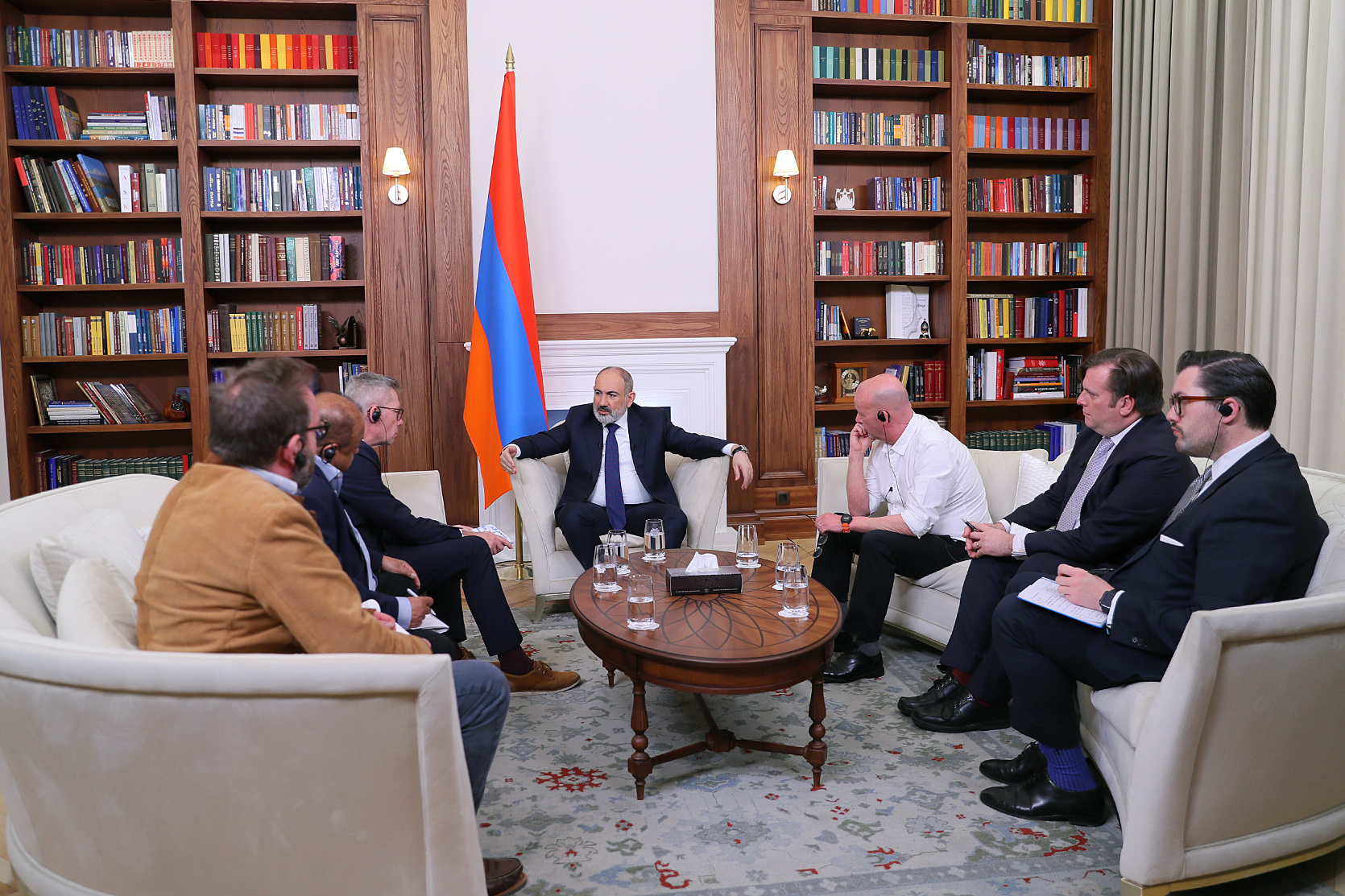
Pashinyan to British media
“In a certain sense, we see a convergence in relations with the European Union, but, in my estimation, nothing extraordinary is happening here because this is a course that the Republic of Armenia embarked on not today; it’s a longstanding process,” said Nikol Pashinyan.
In an interview with British journalists in Yerevan, he reminded that Armenia and the European Union began cooperation even before his government came to power. However, he emphasized that the country’s achievements in democracy in recent years have created “objective conditions for dynamic development of relations.”
During the interview, Pashinyan discussed relations with Russia and the West, as well as his policy of diversification. He responded to questions about whether the return of Armenians to Nagorno-Karabakh is realistic and whether he is interested in Britain using its leverage on Baku.
The interview with the prime minister – with slight reductions.
- Is Armenia making unilateral concessions? Yerevan and Baku agree on border delimitation
- Armenian billionaire has started a hunger strike in an Azerbaijani prison
- ‘Moscow knows the fire will be lit not in Yerevan, but in Baku’ – Armenian analysts
The Guardian: How concerned are you about taking a significant risk by seeking closer ties with the West? And is there a high likelihood of Armenia joining the European Union in the near decade?
Pashinyan: We have never been distant from the West to be seeking closeness now. Many point to the fact that after the non-violent Velvet Revolution of 2018, relations with the West became very close. But in fact, even before the revolution, Armenia and the EU signed a Comprehensive and Enhanced Partnership Agreement with each other. The responsibility for implementing this agreement has now fallen on our government.
Certainly, our achievements in democracy have also created and continue to create objective conditions for the dynamic development of our relations.
However, if we momentarily step beyond the current news cycle, nothing unpredictable is happening.
Moreover, if we note that after the 2018 revolution, we declared that democracy for us is not just a policy we adopted out of circumstance, but a strategy.
There is another significant aspect, and that is the diversification of external relations and security relationships.
Regarding our further integration with the European Union, in my address to the European Parliament, I stated that the Republic of Armenia is ready to be as close to the EU as the European Union deems possible.
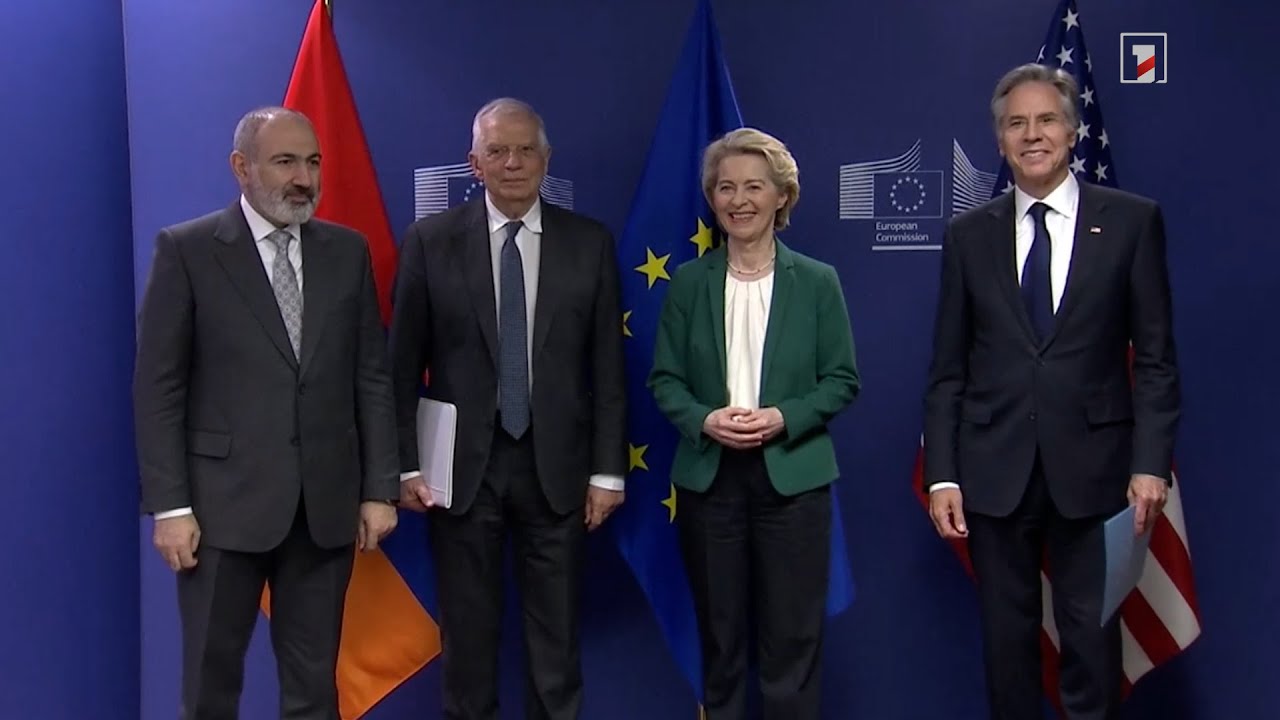
It seems we are now moving in that direction. And it’s crucial to say that we’re doing this in a public manner. Because there have been attributions of some “secret agreements” with the EU, especially after the trilateral meeting in Brussels on April 5th. Transparency is very important to us, and we have transparently stated the agenda and the outcomes.
The Independent: Britain holds certain levers of influence over Azerbaijan through British Petroleum. Would you like the UK to use them?
Pashinyan: I wouldn’t want to comment on business activities or investments taking place in neighboring countries.
Establishing peace serves the interests of the international community as well as investors. But, of course, Armenia and Azerbaijan are the primary beneficiaries of peace. And this theoretical thesis can gradually find objective expression.
The Independent: Azerbaijan receives a significant amount of armaments from Russia, Turkey, and Israel. Armenia, on the other hand, receives some weaponry from India and France. Would you like other countries to intervene so that Armenia can obtain means for self-defense?
Pashinyan: If we look at the ratio of military budgets between Azerbaijan and Armenia, there is a significant imbalance. And yes, this ratio is also shaped by Azerbaijan’s income from the deals you mentioned.
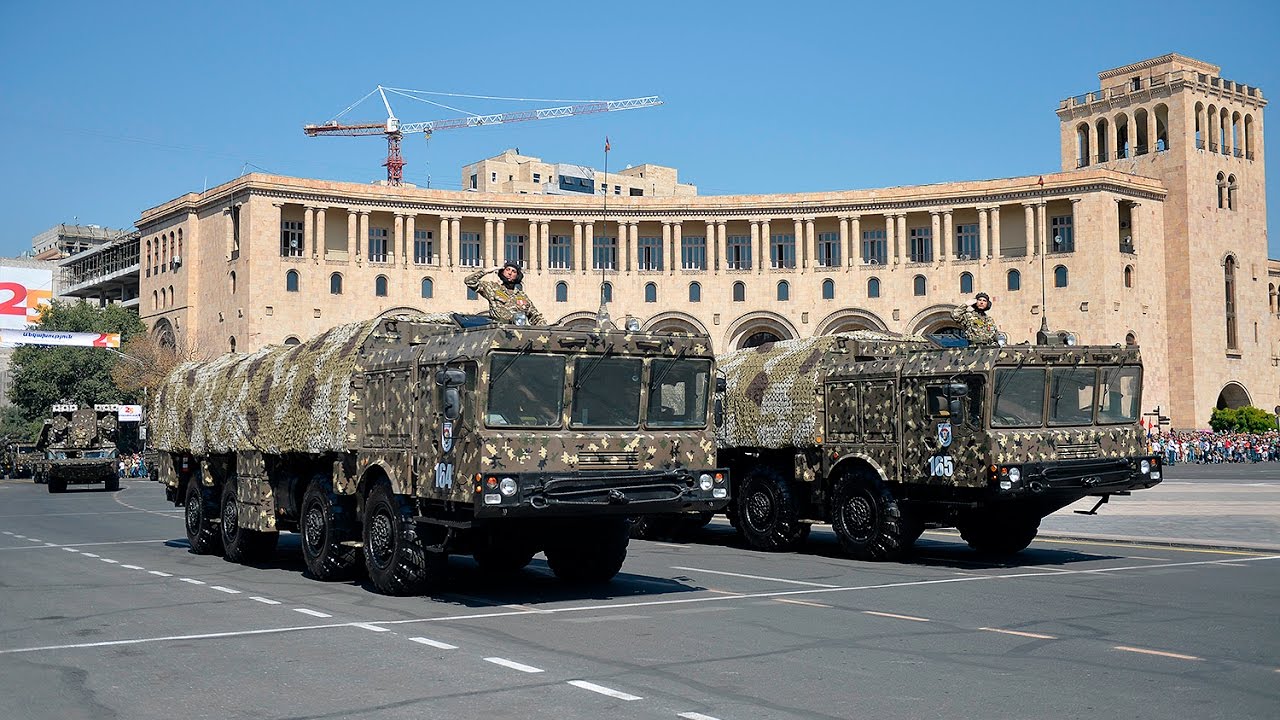
But what concerns us? That even in the face of this imbalance, Azerbaijan reacts very aggressively to the reforms in the Armed Forces of Armenia and the acquisition of weaponry and equipment. Although we all understand that these acquisitions are purely defensive in nature.
Furthermore, I have stated several times that no country can challenge another country’s right to have a capable army. I think we should acknowledge that a capable army might be used for war. But having a capable army is also important for peace, for forming the right balance of power.
And this is one of the reasons why when Azerbaijan raises these issues, particularly regarding our procurement of weapons, which represents no more than 15-20 percent of what Azerbaijan purchases both financially and in terms of volume, and is predominantly defensive in nature, we do not leave these statements unanswered.
We are not preparing for war; we are preparing for peace. But until we are confident that Armenia will not be attacked, naturally, we must strengthen our defense capabilities.
Beyond our territory of 29,743 square kilometers, the Republic of Armenia has no claims in any direction: neither in the south, nor in the west, nor in the north, nor in the east. And we believe that we should build and develop our sovereignty and independence precisely on this basis.
The Telegraph and The Critic: The current security system in Armenia is ineffective; the Collective Security Treaty Organization (CSTO) military bloc did not assist Armenia during the recent conflict with Azerbaijan. How will these relations continue, what benefits will Armenia derive from CSTO membership, and what will be the future of Russian military bases in your country?
Pashinyan: The administrative borders established by the Alma-Ata Declaration [of the former Armenian SSR] are the responsibility zone of the CSTO. What does this mean? It means that in case of a violation of these borders, the CSTO security mechanism should be activated.
What problem arose in our relations with the CSTO? The problem is as follows: when these borders were violated in May 2021, November 2021, September 2022, and Armenia activated the CSTO crisis response mechanisms in due course, these mechanisms were not activated on the basis that the borders are undelimited.
Recently, a similar statement came from Russia that the CSTO defense mechanism was not activated because there was no delimited border. However, our partners did not acknowledge the following important fact: if there is no delimited border, does this mean that there is no CSTO responsibility zone?
After all, the border exists, and everyone knows where this border is. And they say they cannot show the CSTO responsibility zone in Armenia. It turns out they are saying that the CSTO essentially does not exist because the border is undelimited.
Similarly, the border between Russia and Japan is undelimited. And if the troops of any country enter the territory of Russia where there are undelimited borders, does this mean that the CSTO should not react at all?
Our problem is as follows: we rely on an organization that should not be relied upon. And our society tells us: why do you continue to be a member of the CSTO? Frankly, I have no answer to that question.
Adam Smith Institute: How sincere are Azerbaijanis or even Russians in their desire to normalize relations? Or are they simply laying the groundwork for further hostile or aggressive actions?
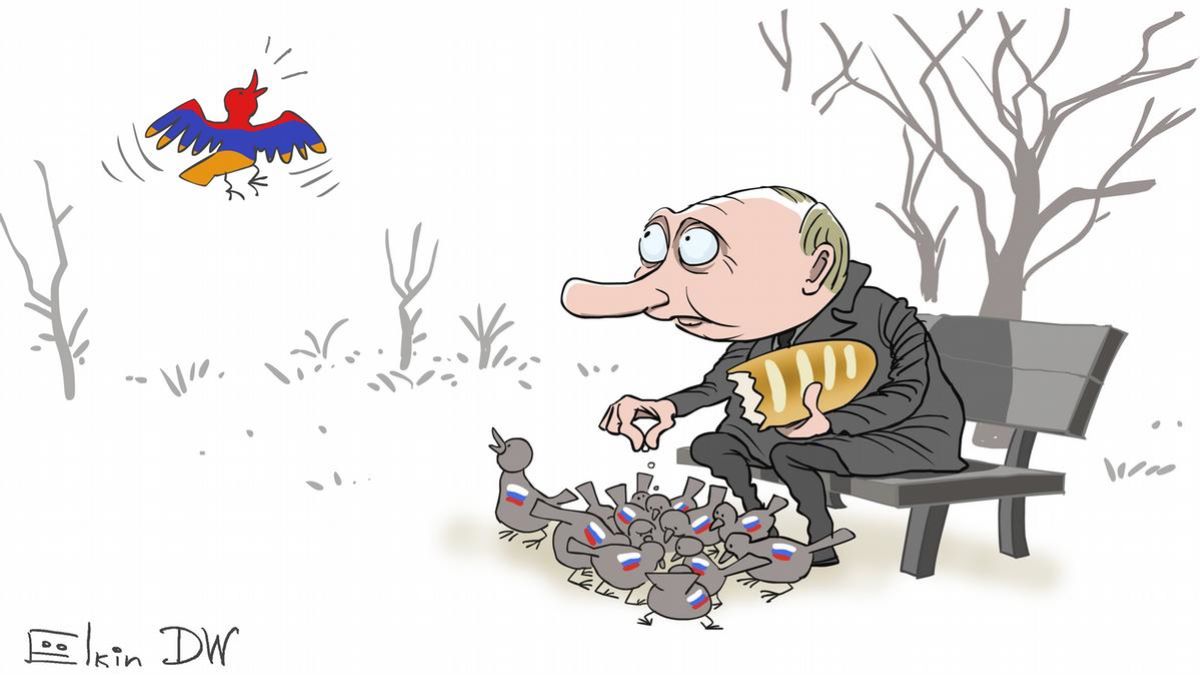
Pashinyan: Currently, Russia is diversifying its relations in the South Caucasus. It started this diversification before us. And, by the way, the issue with the CSTO also arose from this. Because for a long time, even before the 2020 war, Russia pursued a policy of equidistance with Azerbaijan and Armenia.
The policy of diversifying relations in our region was initiated by the Russian Federation, and it has a specific date of start.
Up until 2012-2013, Russia’s policy was that Armenia was Russia’s ally in the South Caucasus, while Azerbaijan was its partner. The same applied to the CSTO, the whole point of which was supposed to be guaranteeing Armenia’s security very specifically. However, in 2013, Russia signed a multi-billion dollar arms deal with Azerbaijan. That was the moment when Russia began to diversify its relations with Azerbaijan. And in February 2022, Russia and Azerbaijan signed a declaration of strategic partnership.
Recently, our colleagues from Russia said they proposed to deploy CSTO peacekeepers on the Armenian-Azerbaijani border. Excuse me, but this statement destroys the functionality of the CSTO itself. Because the organization was supposed to come to the Armenian-Azerbaijani border as Armenia’s ally, not as a peacekeeper.
Many say that Armenia said this about the CSTO, Armenia said that about the CSTO, Armenia did this, did that. But Armenia hasn’t done anything to the CSTO. Everything that has been done against the CSTO has been done by the CSTO itself through its statements, actions, and inaction.
We have almost frozen our participation in the CSTO. In my view, the point of impossibility of reviving our participation in the organization is not reached. But if this continues, speaking about the political stance they express, it’s obvious that this point will be reached. At least, re-engagement with the CSTO will become impossible.
The Guardian: Do you consider the right of displaced persons from Nagorno-Karabakh to return to their homes as part of a comprehensive settlement in the region, or is this chapter closed?
Pashinyan: Our policy is this: if our brothers and sisters forcibly displaced from Nagorno-Karabakh do not realistically have the opportunity or desire to return to Nagorno-Karabakh, we will do everything possible to ensure they stay in Armenia. During one of my recent visits to the region, a woman forcibly displaced from NK approached me and asked, “How realistic is it that we will have the opportunity to return to Nagorno-Karabakh?” She asked for a direct and honest answer.
I told her I would answer directly and honestly. In the conditions of the perceptions that exist in our region, the perceptions that exist in Azerbaijan, the perceptions that exist among the Armenians of Nagorno-Karabakh, and in the current situation, I do not consider it realistic. I said, “I cannot deceive you because if it were realistic, the evictions from Nagorno-Karabakh would not have happened.”
The Republic of Armenia does not intend to wage war for Nagorno-Karabakh. I said that Armenia has no claims beyond its internationally recognized borders.
And we hope that in the process of delimitation [of borders with Azerbaijan], the territorial integrity of the Republic of Armenia will be restored.