
Day: April 22, 2024
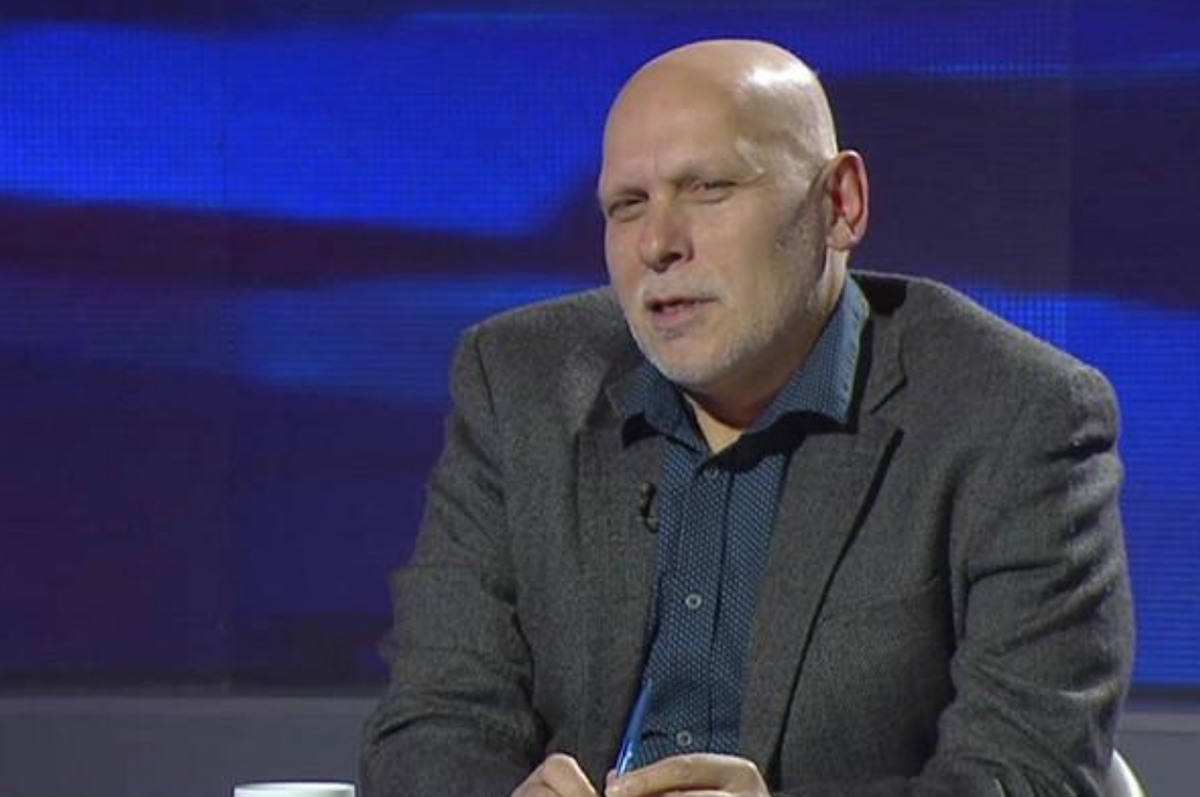
Georgian sociologist on foreign agents law
“Like they say, ‘You can’t hide a spear in a sack.’ Irakli Garibashvili straight up said, ‘We’re not ready for EU membership, let’s admit it,’ — commented Iago Kachkachishvili, a sociologist, on the statement made by the Georgian Dream party chairman.
On Saturday, April 20th, Georgian Dream chairman Irakli Garibashvili stated that Georgia is not ready to join the European Union.
‘First of all, let’s say that the country has reached its maximum, the peak was in December last year, we became a candidate country. The next stage is accession. Today, we are not ready to become a member country, don`t you agree with me?
There is no consensus on whether the country can become a member of the European Union today. There are so many problems right now, and you know it will take a lot of time. Today, the EU is not ready for expansion, and it will take time, and these next steps depend on many things, many factors.
I want to tell you very simply, if by the time the country is ready, they tell us that, well, tomorrow you will become a member of the European Union, this law [“On foreign influence”] can be very easily repealed, revised, changed, a new one adopted, so don’t worry, everything is very good,’ said Garibashvili.
Iago Kachkachishvili: ‘Georgian Dream does not want Georgia to join the European Union. This is how the government looks at the candidate status: candidacy doesn’t hurt anything, it’s a bone thrown to our pro-European (and misguided) voters, so we don’t lose a single vote in the elections.
Authorities have been “smearing” the EU for years now, official media, bribed “experts,” the judiciary, supposed clergy, troll-bots…
However, the fact remains: the government’s anti-European hysteria has not created a dominant public opinion, has not formed a paradigm, has not generated natural activism… Most importantly, the younger generation has essentially fallen out of the influence of the anti-European hysteria. This is what we are seeing now.’”
Geneva — More than 70% of the global workforce is exposed to risks linked to climate change that cause hundreds of thousands of deaths each year, the International Labour Organization (ILO) said on Monday, adding governments would need to act as the numbers rise.
Workers, especially the world’s poorest, are more vulnerable than the general population to the dangers of climate extremes such as heatwaves, droughts, wildfires, and hurricanes because they are often the first exposed, or exposed for longer periods and at greater intensity.
As climate change accelerates, governments and employers are struggling to protect employees, the ILO said in a report.
“A staggering number of workers are already being exposed to climate change-related hazards in the workplace, and these figures are only likely to get worse,” the report entitled “Ensuring safety and health at work in a changing climate” said in its conclusions.
“As [the hazards] evolve and intensify, it will be necessary to re-evaluate existing legislation or create new regulations and guidance.”
Some countries have improved heat protections for workers, such as Qatar, whose policies came under scrutiny ahead of the 2022 soccer World Cup.
However, rules to govern other dangers like growing pesticide use for agricultural workers are less common.
“We do have some [countries] that already limit exposure to high temperatures and also limit exposure to air pollution, but we rarely have occupational exposure limits set for the other hazards,” said Manal Azzi, ILO Senior Specialist on occupational safety and health.
The share of global workers exposed to the most widespread hazard, surging temperatures, has risen by around 5 percentage points over the last two decades to 70.9%, the report said.
Other climate dangers often co-exist, creating a “cocktail of hazards,” the report said, with UV radiation and air pollution each affecting 1.6 billion people.
Because a worker is likely to be exposed to multiple dangers at once, an ILO spokesperson said it was impossible to calculate exactly what portion of the 3.4 billion global workforce was at risk.
Climate-related hazards are being linked to a cancer, kidney dysfunction, and respiratory illnesses, leading to deaths or debilitating chronic conditions or disabilities.
Air pollution is the most deadly risk, causing some 860,000 work-related deaths among outdoor workers annually, the ILO report said. Excessive heat causes 18,970 occupational deaths each year and UV radiation kills 18,960 through non melanoma skin cancer, it said.
“The greatest impacts will be felt by the working poor, those working in the informal economy, seasonal workers and workers in micro and small enterprises,” the report said.
In some cases, the very technologies meant to slow climate change like solar panels and lithium-ion batteries for electric vehicles can end up producing new dangers since they contain toxic chemicals, it said.
The ILO plans a major meeting in 2025 of government, employer and worker representatives to provide policy guidance on climate hazards.
What risks do crypto and digital currencies pose? Interview with Rasmus S. Nielsen, Deloitte
The copyright for information published on this web site is owned exclusively by Armenian News-NEWS.am information-analytical agency. All information materials published on this website are intended solely for personal use. For full or partial reproduction of any material in other media it is required to acquire written permission from Armenian News-NEWS.am information-analytical agency. Those, who have committed copyright violations, will be prosecuted accordingly.