Brussels meeting outcomes for Armenia
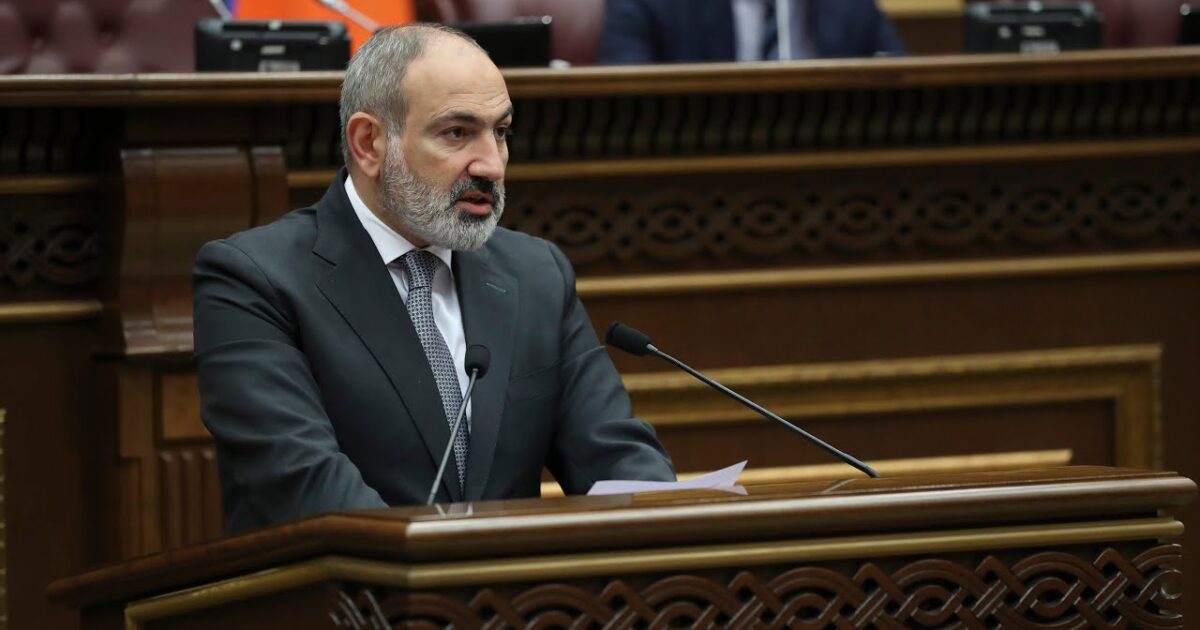
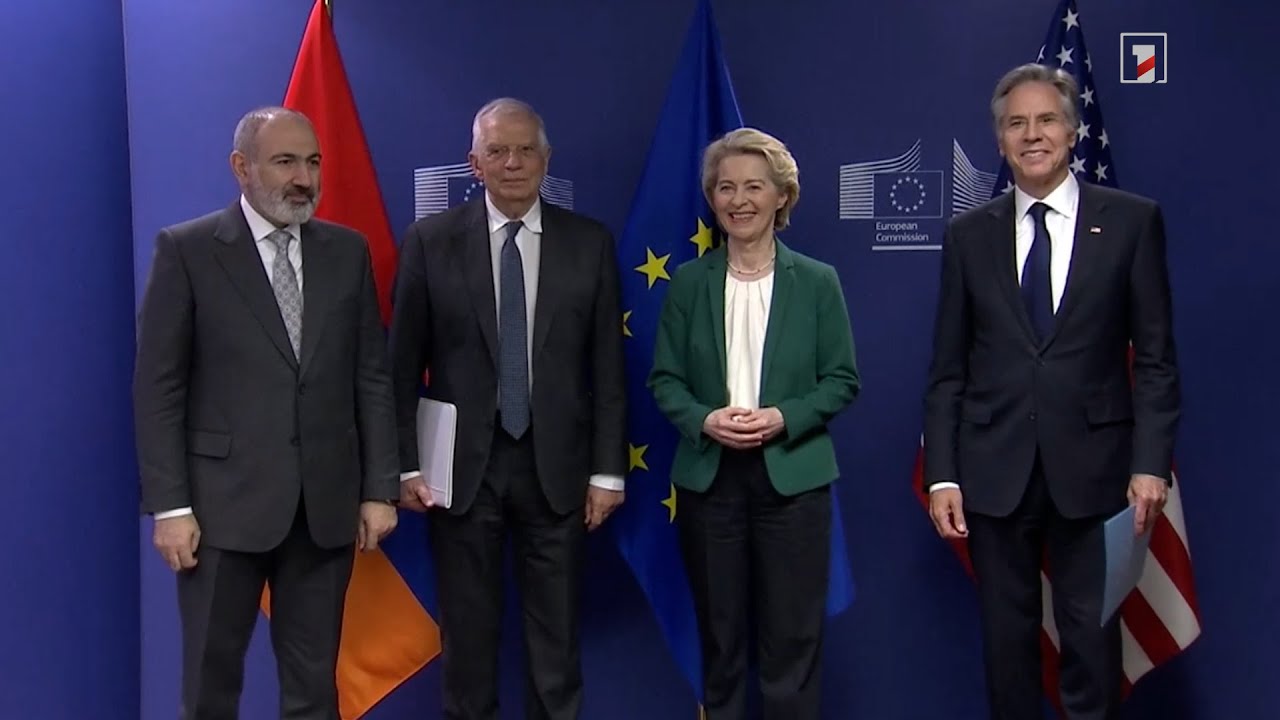
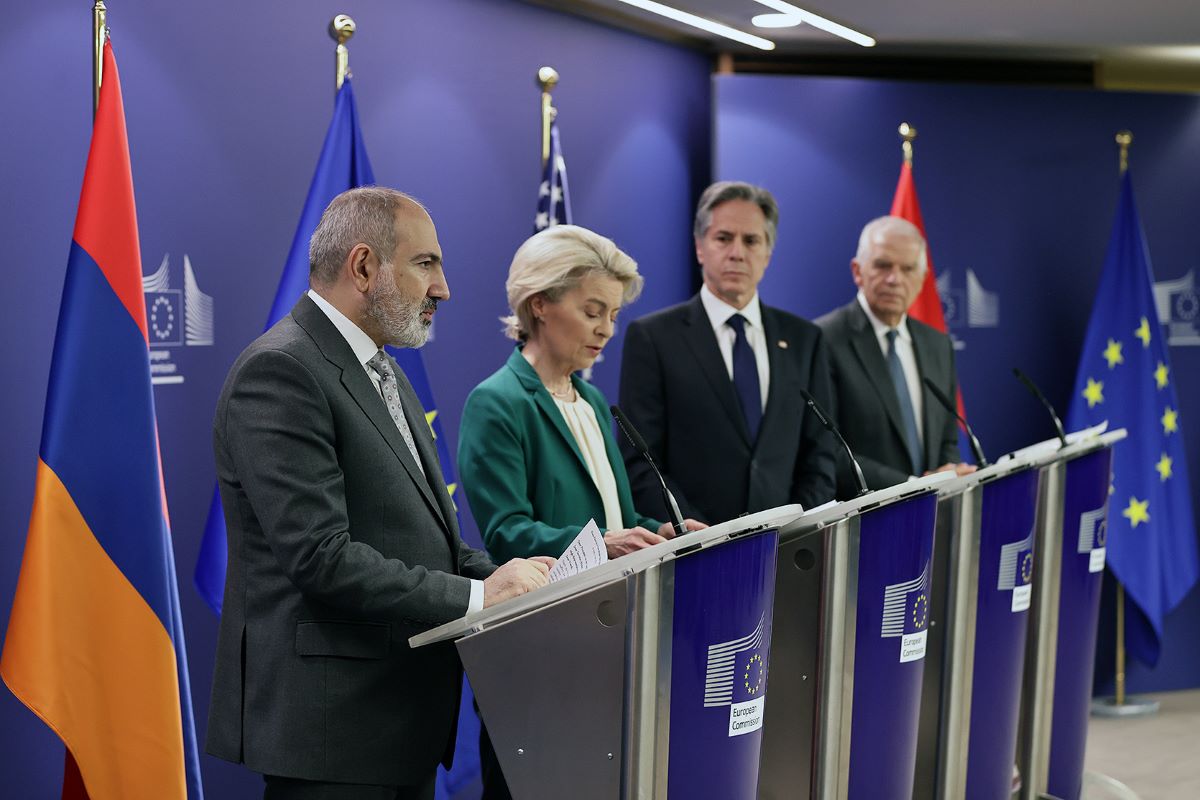
In Armenia, discussions continue regarding the meeting between the Armenian prime minister and the US secretary of state, along with the president of the European Commission, which took place a week ago. The prolonged discussion is driven by both the significance of these negotiations for Armenia and a flurry of conflicting preliminary assessments and expectations. Moreover, the meeting between Nikol Pashinyan and Antony Blinken and Ursula von der Leyen was preceded by a sharp negative reaction from Moscow and Baku, which was reiterated afterward.
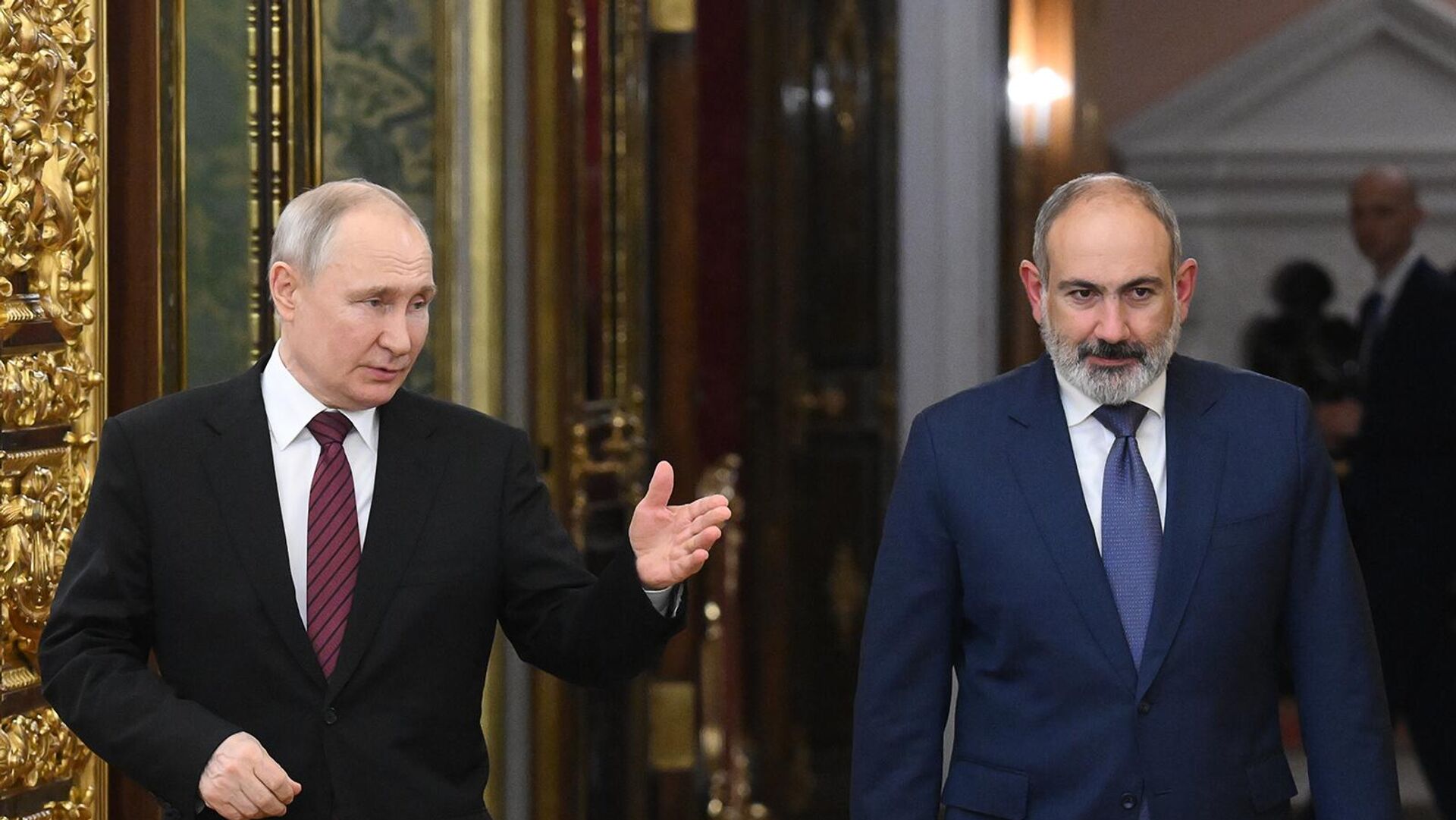
Such reactions have been consistent over time whenever the Armenian government attempts to deepen cooperation with the West. Yerevan explains its active dialogue with Western partners as a necessity to diversify the country’s economy and security system. Russia perceives this as Armenia’s attempt to change its foreign policy course and reacts sensitively to “Western intervention.”
Political analyst Boris Navasardyan comments on the misinformation preceding the meeting, what the participants ultimately agreed upon, as well as Yerevan’s steps to neutralize potential pressure and “sanctions” from Moscow.”
Boris Navasardyan, political analyst
Brussels expectations in the Armenian media field
“Prior to the meeting, there was quite a diverse media buzz in Armenia and a very uniform one – from Russia and Azerbaijan.
In Armenia, the main rhetoric revolved around three possible scenarios:
- Armenia breaks away from Russia and moves towards the West, particularly NATO and the EU. This thesis was promoted by a part of the media community and the political forces behind them, who advocated the assertion that “NATO in our region means Turkey.” For them, this meant further subordination of Armenia to Turkey and Azerbaijan. Essentially, its absorption into the Turkish component of our region.
- Armenia is expected to attain at least candidate status in the EU in the near future, and in a few years, membership. This thesis was spread by media, politicians, and political analysts considered radically pro-Western. These expectations were overly inflated. Here, it was more about making a loud statement on the political stage rather than expert assessment.
- The third direction was expert-driven. There were forecasts regarding the depth of the decisions and agreements that could be reached in Brussels. There were both modest and exaggerated expectations, but in harmony with reality.
Eventually, the third assessment of the prospects turned out to be the closest to reality.”
Moscow and Baku threaten Armenia with disappearance from the world map
“As for Russia and Azerbaijan, they mostly reacted by directing threats at Armenia. This included statements from Russian foreign minister Sergey Lavrov. It was suggested that Armenia’s move towards the West would strain relations with Russia, leading to a catastrophe – even to the point of Armenia disappearing as an independent state.
Phone calls from the US Secretary of State and the President of the European Commission to Aliyev were made, along with public assurances that only Armenia’s economic stability would be discussed. These actions clarified that the trilateral meeting in Brussels had nothing to do with peace talks or supporting Armenia in security matters and were responses to the aggression from Russia and Azerbaijan.
This was not a preconceived strategy, but rather an indirect response from Russia to prevent any undesirable actions and to Azerbaijan, indicating that it would not be excluded from the peace process.
The final communique expressed the idea that supporting Armenia socially and economically, in terms of development and strengthening resilience against adversity, would also contribute to the peace process between Yerevan and Baku. Usually, ‘resilience’ implies security as well.
Security has several components. It does not necessarily have to involve a military aspect. If a country is economically robust and socio-politically stable, it strengthens its security in any case.”
The ‘Mediterranean-Armenia-Central Asia’ trade corridor
“There is no doubt that this corridor will include a 42-kilometer stretch in southern Armenia. It is noteworthy that Nikol Pashinyan’s concept of a ‘crossroads of peace’ with a sufficiently branched network of communications received Western approval at the trilateral meeting. In an optimistic scenario, this network could be utilized for transportation between Europe and Central Asia.
It is important to note that the EU has already supported one of the routes of the Middle Corridor, which utilizes the Baku-Tbilisi-Kars railway.
In terms of communication development, with a sufficiently branched network in the respective region, the flow of goods increases manifold, as the diversity of routes is always attractive for both buyers and suppliers.”
Export to Europe
“The role of Armenia in this trade route depends on the level of further development of relations with the EU.
In principle, even the existing agreements between Yerevan and Brussels envisage standards control for goods, which would open the European market to Armenia. I presume that additional measures were discussed at the trilateral meeting, which are not provided for in the Comprehensive and Enhanced Partnership Agreement between Armenia and the EU.
I assume that consideration is being given to a new GSP+ scheme for Armenia, which would allow it, even as a member of the EAEU and lacking the ability to have a free trade regime with the European Union, to reduce or even eliminate some customs payments for its goods.
The Generalized System of Preferences (GSP) is a system of preferential customs tariffs applied by developed countries to goods exported from developing countries to promote their economic growth and enhance their export potential.
It cannot be GSP+ because it assumes a fairly low level of economic development in countries. Armenia has moved out of this category. Therefore, GSP+ does not apply to it, but something similar, specifically designed for Armenia or perhaps for a group of countries, could work.
But this does not mean that the volume of trade could be very large, considering Armenia’s economic potential. It will be a very small share of all the goods passing through our region.”
Excesses are expected from Russia
“For Armenia, economic ties with Russia continue to play a significant role. And if Yerevan does indeed pursue such deep engagement with the West, serious problems in relations with Moscow may arise. From the Russian side, certain excesses can be expected, such as the blocking of communications or other forms of economic sanctions.
Given this, compensation for such actions should be anticipated within the context of relations between Armenia, Brussels, and Washington. I believe this was an important part of the agenda for the trilateral meeting.
However, the factor of Armenian-Turkish relations comes into play here. Regardless of the topic discussed in Brussels, it will inevitably be linked to Armenia’s relations with Azerbaijan, Turkey, Iran, and so on.
Armenia’s own activity in relations directly with Russia should also play a significant role. Since this is an issue where the West is unlikely to act as a mediator, unlike its relations with Turkey and Azerbaijan.
Armenia should address its issues itself, much like how it manages its relations with Iran. It should find a form of interaction with Russia that could potentially include the country’s exit from the EAEU in the future. However, this should be done while maintaining certain ties, particularly a free trade regime with Russia.”
Back to 2013
“This is the scenario that was envisaged if Armenia and the EU had initialled the Association Agreement in 2013. The free trade regime with Russia would have remained intact, but at the same time, a free trade regime with the EU would have been established.
In 2013, the rhetoric in Russia was the same as it is now. Supposedly, Armenia was not diversifying its economy but turning away from Russia and shifting its focus to the West. At that time, the formula used for propaganda purposes was not ‘both-and’ but ‘either-or’. However, in reality, signing the agreement could have meant economic diversification for Armenia rather than a departure from cooperation with Russia.
I believe that even now, the most promising option for Armenia would be such a regime – with some elements of the new post-Eurasian situation. In the event of effective negotiations with Russia, I do not rule out the possibility of reaching certain agreements.
The geopolitical situation has changed dramatically in recent years. And maintaining the same level of Russian presence in Armenia as before 2022 is unnatural.”
No more obstacles?
“In 2013, pressure from Russia hindered the initialing of the agreement with the EU, primarily due to four main factors:
- Cooperation with Armenia in the field of armaments and security in general, including the Nagorno-Karabakh issue;
- Energy resource supplies from Russia;
- The presence of a large number of Armenian citizens in Russia, who could face various problems in that country;
- Russia’s refusal to politically support the Armenian authorities, which was a significant factor given their lack of legitimacy.
Russia possesses informational and other leverage to influence the political situation in Armenia.
Today, the first factor, which was crucial, no longer exists. The fourth factor is largely absent as well. Despite prime minister Pashinyan’s government now having a relatively low approval rating, the lack of a serious alternative strengthens its position for the foreseeable future. Moreover, Russia’s behavior in recent years has significantly eroded trust in it within Armenian society. Consequently, it can no longer influence political processes as effectively.
Only two factors remain to be addressed. And I believe they were thoroughly discussed in Brussels. These are ensuring Armenia’s energy security and addressing issues related to Armenian migrants in Russia. I believe these issues can be resolved. With intensive economic interaction between the EU and Armenia, if Turkey does not hinder this progress, through the creation of new jobs and the implementation of various economic programs, it will be possible to address the potential influx of migrants from Russia.”
Brussels meeting outcomes for Armenia