
Azernews reports that the International Monetary Fund (IMF) issued a statement on it.
Day: April 15, 2024
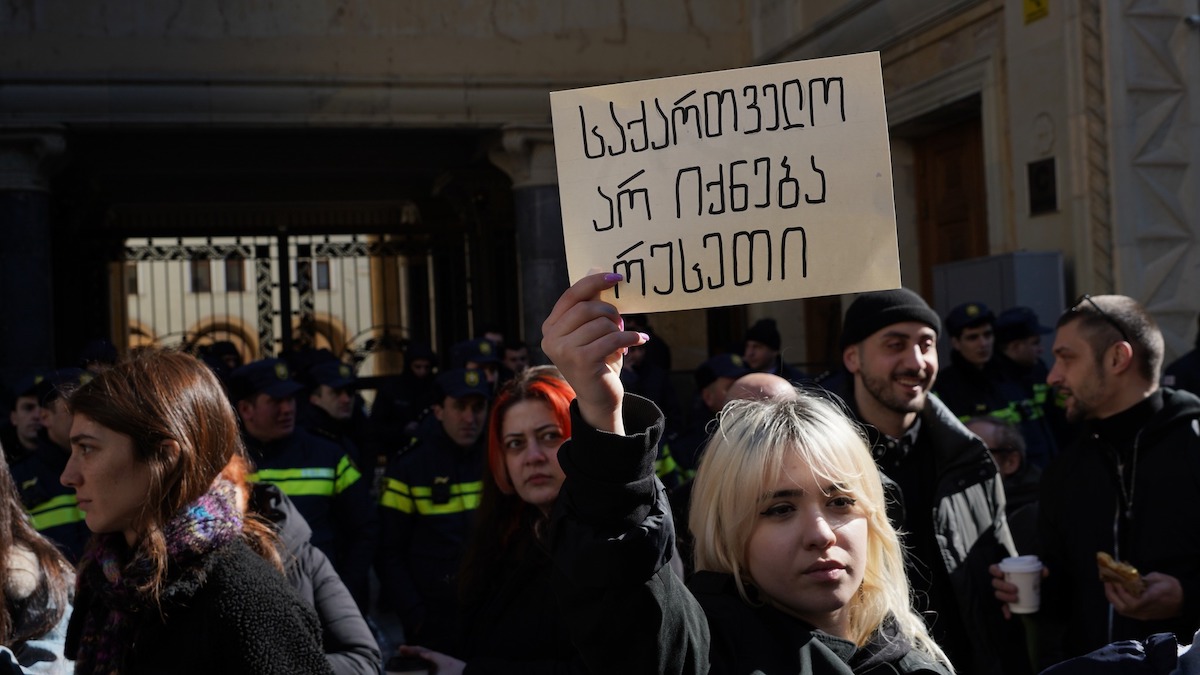
“Foreign agents” law discussed in Georgia
On April 15, the Georgian Parliament begins discussing the “foreign agents” law. Stringent restrictions are in place: most journalists are barred from entering, with only television channels allowed inside.
Even accredited journalists with parliamentary passes, including JAMnews correspondents, were denied entry.
The reason cited is to ensure safety and a conducive working environment, under the pretext of implementing security measures. No further justifications for these strict press limitations have been provided.
It’s announced that a “yellow security level” will be enforced in the Parliament starting April 15.
Concurrently, protest actions are planned outside the parliament building, starting at 10:00 in the morning and culminating in a large-scale rally at 19:00 in the evening.
The government asserts that this time the parliament will definitively pass the “agents” law.
Why Georgia’s government seeks to reintroduce ‘Foreign Agents’ law: Expert views
JAMnews asked local political analysts to assess this decision by the ruling party “Georgian Dream.”
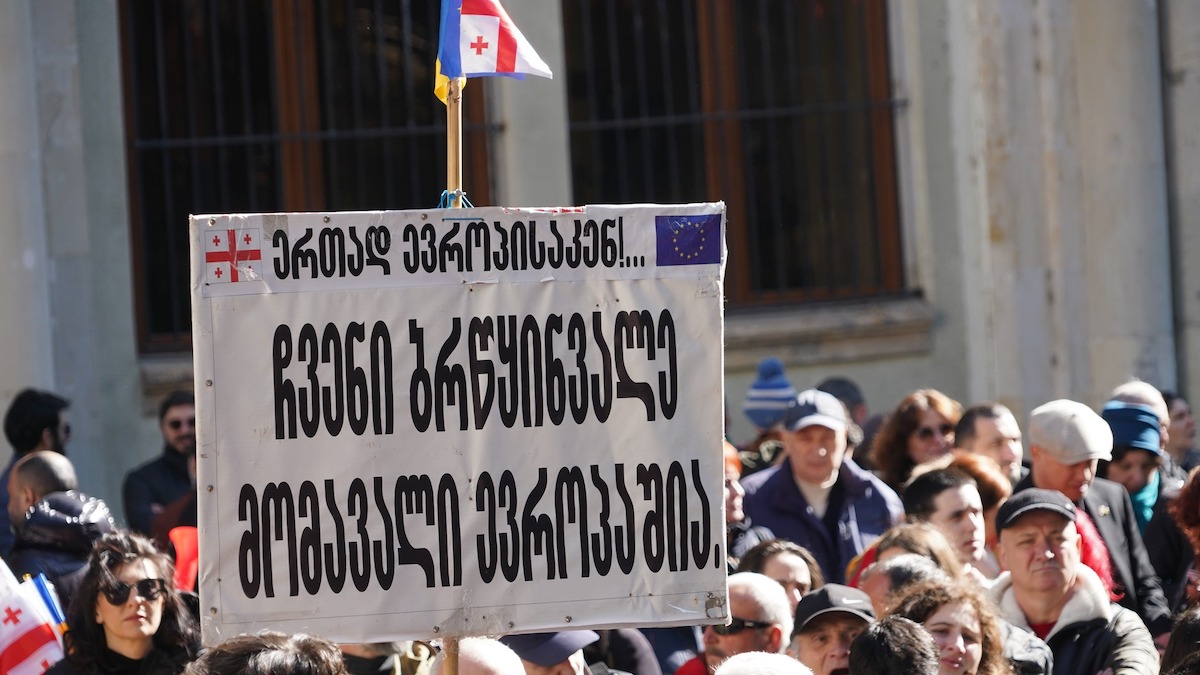
- On April 3, it became known that the ruling party “Georgian Dream” initiated the consideration of the draft law “On the Transparency of Foreign Influence” for the second time.
- The government’s main argument is that the transparency of non-governmental organizations operating in Georgia is in question, posing a threat to the country’s security. However, neither independent experts, nor the opposition, nor civil society believe this argument and consider that “Georgian Dream” is attempting to prolong its stay in power and laying the groundwork for the parliamentary elections in October 2024 to suppress alternative views in the country.
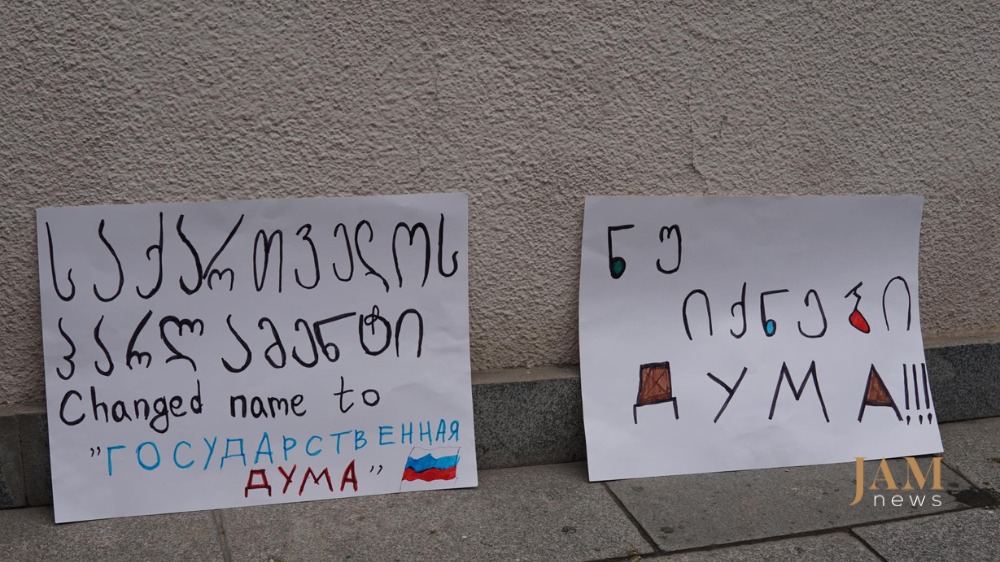
- Independent experts, the opposition, and civil society do not buy this argument. Experts note that the “Georgian Dream” is trying to extend its stay in power and pave the way for the parliamentary elections in October 2024 to suppress alternative voices in the country.
- More details on why the bill does not resemble either the American or French versions can be found here. In short, the arguments are as follows:
- the American law – FARA – was adopted in 1938 to protect the US from the influence of Nazi Germany and the Soviet Union (that is, from the influence of hostile countries, while in Georgia the main sponsors of non-governmental organizations represent friendly countries).
- Another significant difference is that American legislation applies only to lobbying organizations (while Georgian legislation, like Russian legislation, applies to the media and all non-governmental organizations).
- There is a radical difference between the law of the ruling “Georgian Dream” and the law “On Foreign Influence” in France. In the French version, countries against which this law applies are clearly listed, and this list includes those whose influence France considers a threat (not partner countries and friendly countries). In the case of France, these countries are Russia, China, Turkey, and Iran. French legislation has a clear provision that this law will not apply to EU countries. There is no such statement in the “Georgian Dream” law.
- The draft law on “foreign agents” was first initiated by the ruling party a year ago, in March 2023. At that time, it was passed by parliament in the first reading but was later withdrawn due to mass protests by citizens.
SYDNEY — The Solomon Islands holds a national election on Wednesday, the first since Prime Minister Manasseh Sogavare signed a security pact with China that prompted concern from the United States and South Pacific neighbors.
Sogavare has pledged closer ties with China, which has built infrastructure since Solomon Islands switched diplomatic recognition from Taiwan to Beijing in 2019, while opposition parties favor ties with Western aid donors including Australia, and pledge to fix a broken health system.
The national election was delayed from 2023, after Sogavare said he wanted to focus on the Pacific Games, hosted in stadiums donated by China.
Background
Located 1,600 km (900 miles) northeast of Australia, Solomon Islands has a population of around 700,000 across an archipelago of six main islands: Choiseul, Guadalcanal, Makira, Malaita, New Georgia and Santa Isabel.
Elections for the national parliament and provincial assemblies will be held on the same day.
Polling booths open at 7 a.m. and close at 4 p.m. with an alcohol ban in place for a week. A campaigning blackout starts Tuesday.
The 50 members of the national parliament are elected for a four-year term. The prime minister is selected after polling day by a vote of newly elected lawmakers, a process that can take several weeks.
Who is running?
Sogavare became prime minister at the 2019 election after being elected to his seat of East Choiseul as an independent candidate. This time, he is running as leader of the OUR (Ownership, Unity, Responsibility) party.
He has been prime minister four times, but no Solomon Islands prime minister has been re-elected for consecutive terms.
Historically, political party coalitions have been fluid. Independent candidates won 37% of the vote in 2019, more than the biggest party, the Solomon Islands Democratic Party on 14%.
Prominent opposition party figures include:
Peter Kenilorea Jr of the United Party, who wants the China security pact scrapped, and infrastructure help from Western countries favored. He is a former United Nations official and the son of Solomon Islands’ first prime minister after independence from Britain.
Matthew Wale of the Solomon Islands Democratic Party, and former prime minister Rick Hou of the Democratic Alliance Party, who have formed the CARE coalition, pledging to fix education and health, and a foreign policy that prioritizes Solomon Islands national interests.
Former Malaita premier Daniel Suidani, who previously banned Chinese companies in the nation’s biggest province, and is running for Malaita governor. His new party U4C (Umi For Change) will run candidates in the national election, including former government official Celsus Talifulu.
There are 20 women running as candidates. Only two women were elected in the previous election.
Security and other issues
An election observer report in 2019 noted the traditional role of vote buying, saying “Devil’s Night” cash handouts were likely driven underground by new laws banning it.
Solomon Islands Electoral Commission advertising this month urged voters to “Keep your votes secret and say NO to vote buying and selling”.
This is the second election since the 2017 departure of the decade-long Regional Assistance Mission to Solomon Islands (RAMSI), a multinational force of Australian, New Zealand, Papua New Guinea and Fiji police.
RAMSI was formed at the request of Solomon Islands government in 2003 to maintain civil order after inter-tribal violence.
When anti-government riots broke out in the capital Honiara in November 2021, Sogavare asked Australian police to return to restore order. Six months later, Solomon Islands signed the security pact with China.
Chinese police, and the Solomons International Assistance Force (comprised of Australia, New Zealand, Papua New Guinea and Fiji police and military) have a presence in Solomon Islands and operate separately, under the supervision of Royal Solomon Islands Police Force.
Election observer groups from Australia, New Zealand, the Pacific, Japan, Europe and the U.S. will monitor voting and counting, with national and provincial polls held on the same day.
HONG KONG — China’s top official on Hong Kong affairs said the city should focus on national security to protect development, in a speech coming weeks after the enactment of sweeping new security laws.
“To move towards governance and prosperity, we need to tightly hold onto the bottom line of national security in order to safeguard the high quality development of Hong Kong,” said the director of Beijing’s Hong Kong and Macau Affairs Office, Xia Baolong, in a speech to mark an annual national security day.
Hong Kong in March enacted a new national security law, also known as Article 23, that updates or introduces new laws to prohibit treason, sabotage, sedition, the theft of state secrets and espionage, with jail terms of up to life imprisonment.
Xia, however, sought to emphasize that the law posed no threat to investors, at a time when the city has faced Western criticism of a protracted crackdown on dissent, and has struggled economically and financially.
“For the general public of Hong Kong and foreign investors, this law is the protector of their rights, freedoms, property and investment,” Xia said.
“Investors from all over the world can come to Hong Kong to invest in new businesses bravely and without concerns,” he added. “Hong Kong remains the best place in the world to do business and make money and achieve your dreams.”
Some foreign governments including the United States and Britain, however, have criticized the new law as fresh tool for authorities to clamp down on dissent. The legislation adds to another national security law China directly imposed on Hong Kong in 2020 in response to mass pro-democracy protests.
Beijing, however, says the laws are necessary to safeguard the city’s stability and prosperity.
The U.S. Consulate General in Hong Kong said on Saturday that visitors to the city should “exercise increased caution” with the State Department updating its travel advisory given the new national security legislation.
Canada also updated its advisory recently, saying people needed to “exercise a high degree of caution in Hong Kong due to the risk of arbitrary enforcement of local laws.”
The security laws have so far been used to jail scores of leading Hong Kong democrats including Joshua Wong, while liberal media outlets and civil society groups have been shut down.
More than 290 people have been arrested under the Beijing imposed national security law so far. Of these, 174 people and five companies have been charged, including prominent China critic and businessman Jimmy Lai, who is currently on trial and could face life imprisonment.