
Day: April 15, 2024
Categories
NPR News: 04-15-2024 10PM EDT
NPR News: 04-15-2024 10PM EDT
Learn more about sponsor message choices: podcastchoices.com/adchoices
WASHINGTON — The U.S. House of Representatives will consider aid to Israel and Ukraine as separate legislation this week, Republican Speaker Mike Johnson said on Monday, more than two months after the Senate passed a bill combining the two.
Leaving a meeting of House Republicans on Monday evening, Johnson said the narrowly divided chamber would consider four bills altogether that would also include aid to Taiwan, U.S. allies in the Indo-Pacific and U.S. national security priorities.
“We know that the world is watching us to see how we react,” Johnson told reporters. “They’re watching to see if America will stand up for its allies and in our own interest around the globe. And we will.”
U.S. aid has been delayed by Johnson’s unwillingness to consider a $95 billion bipartisan bill the Senate passed in February, including $14 billion for Israel as well as $60 billion for Ukraine.
Also included were billions to strengthen allies in the Indo-Pacific, where China is becoming more assertive, and for international humanitarian aid.
Johnson said the new House bills provide roughly the same amount of foreign aid as the Senate bill but would include differences including some aid in the form of a loan.
Republicans aim to release legislative text as early as Tuesday morning but will observe a 72-hour review period before voting. Johnson said votes on passage could come late on Friday.
The push to pass the aid gained urgency after Iran’s weekend missile and drone attack on Israel despite fierce opposition in the deeply divided Congress.
Three of the four bills Johnson suggested would cover Ukraine, Israel and the Indo-Pacific. The makeup of the fourth was not immediately clear.
Backers had insisted the broad foreign aid measure passed with 70% support in the Senate would have received similar support in the House. However, Johnson had given a variety of reasons to delay, among them the need to focus taxpayer dollars on domestic issues and reluctance to take up a Senate measure without more information.
Johnson also faces a threat from a hard-right Republicans to oust him as speaker if he allows the Ukraine aid to move ahead. Many on the right, especially those closely allied with former President Donald Trump, who has been skeptical of assisting Kyiv in its fight against Russia, fiercely oppose sending billions more dollars to Ukraine.
The House Freedom Caucus – a group of Republican hardliners with about three dozen members – released a statement on Monday calling for aid to Israel, but not to Ukraine, and rejecting as “bogus” any suggestion that the attack on Israel should help ease the path toward more funds for Kyiv.
Representative Andy Biggs, a Freedom Caucus member, told reporters he liked the idea of separate bills, but had to see them before committing to voting for them.
Defense industry watching
The issue is closely watched by industry. U.S. defense contractors could be in line for huge contracts to supply equipment for Ukraine and other U.S. partners if the additional funding passes. Aid supporters stress that approving the Ukraine bill would create many American jobs.
The White House has been pushing Johnson to allow a vote, as have Senate Republicans and Democrats. “If House Republicans put the Senate supplemental (spending bill) on the floor, I believe it would pass today, reach the president’s desk tonight and Israel would get the aid it needs by tomorrow,” Senate Democratic Leader Chuck Schumer said in the Senate on Monday.
Senate Republican Leader Mitch McConnell told his fellow lawmakers: “It’s also time for Congress to deliver the urgent investments that our industrial base, our forces, and our partners will need to meet and out-compete the growing and linked threats we face.”
The top House Democrat, Representative Hakeem Jeffries, sent a letter to his caucus on Monday spelling out the need to support Ukraine as well as Israel.
“The gravely serious events of this past weekend in the Middle East and Eastern Europe underscore the need for Congress to act immediately. We must take up the bipartisan and comprehensive national security bill passed by the Senate forthwith,” Jeffries wrote.
Ukraine appealed again to allies on Monday for “extraordinary and bold steps” to supply air defenses to help defend against waves of Russian airstrikes that have targeted its energy system in recent weeks.
WASHINGTON — The U.S. House of Representatives will consider aid to Israel and Ukraine as separate legislation this week, Republican Speaker Mike Johnson said on Monday, more than two months after the Senate passed a bill combining the two.
Leaving a meeting of House Republicans on Monday evening, Johnson said the narrowly divided chamber would consider four bills altogether that would also include aid to Taiwan, U.S. allies in the Indo-Pacific and U.S. national security priorities.
“We know that the world is watching us to see how we react,” Johnson told reporters. “They’re watching to see if America will stand up for its allies and in our own interest around the globe. And we will.”
U.S. aid has been delayed by Johnson’s unwillingness to consider a $95 billion bipartisan bill the Senate passed in February, including $14 billion for Israel as well as $60 billion for Ukraine.
Also included were billions to strengthen allies in the Indo-Pacific, where China is becoming more assertive, and for international humanitarian aid.
Johnson said the new House bills provide roughly the same amount of foreign aid as the Senate bill but would include differences including some aid in the form of a loan.
Republicans aim to release legislative text as early as Tuesday morning but will observe a 72-hour review period before voting. Johnson said votes on passage could come late on Friday.
The push to pass the aid gained urgency after Iran’s weekend missile and drone attack on Israel despite fierce opposition in the deeply divided Congress.
Three of the four bills Johnson suggested would cover Ukraine, Israel and the Indo-Pacific. The makeup of the fourth was not immediately clear.
Backers had insisted the broad foreign aid measure passed with 70% support in the Senate would have received similar support in the House. However, Johnson had given a variety of reasons to delay, among them the need to focus taxpayer dollars on domestic issues and reluctance to take up a Senate measure without more information.
Johnson also faces a threat from a hard-right Republicans to oust him as speaker if he allows the Ukraine aid to move ahead. Many on the right, especially those closely allied with former President Donald Trump, who has been skeptical of assisting Kyiv in its fight against Russia, fiercely oppose sending billions more dollars to Ukraine.
The House Freedom Caucus – a group of Republican hardliners with about three dozen members – released a statement on Monday calling for aid to Israel, but not to Ukraine, and rejecting as “bogus” any suggestion that the attack on Israel should help ease the path toward more funds for Kyiv.
Representative Andy Biggs, a Freedom Caucus member, told reporters he liked the idea of separate bills, but had to see them before committing to voting for them.
Defense industry watching
The issue is closely watched by industry. U.S. defense contractors could be in line for huge contracts to supply equipment for Ukraine and other U.S. partners if the additional funding passes. Aid supporters stress that approving the Ukraine bill would create many American jobs.
The White House has been pushing Johnson to allow a vote, as have Senate Republicans and Democrats. “If House Republicans put the Senate supplemental (spending bill) on the floor, I believe it would pass today, reach the president’s desk tonight and Israel would get the aid it needs by tomorrow,” Senate Democratic Leader Chuck Schumer said in the Senate on Monday.
Senate Republican Leader Mitch McConnell told his fellow lawmakers: “It’s also time for Congress to deliver the urgent investments that our industrial base, our forces, and our partners will need to meet and out-compete the growing and linked threats we face.”
The top House Democrat, Representative Hakeem Jeffries, sent a letter to his caucus on Monday spelling out the need to support Ukraine as well as Israel.
“The gravely serious events of this past weekend in the Middle East and Eastern Europe underscore the need for Congress to act immediately. We must take up the bipartisan and comprehensive national security bill passed by the Senate forthwith,” Jeffries wrote.
Ukraine appealed again to allies on Monday for “extraordinary and bold steps” to supply air defenses to help defend against waves of Russian airstrikes that have targeted its energy system in recent weeks.
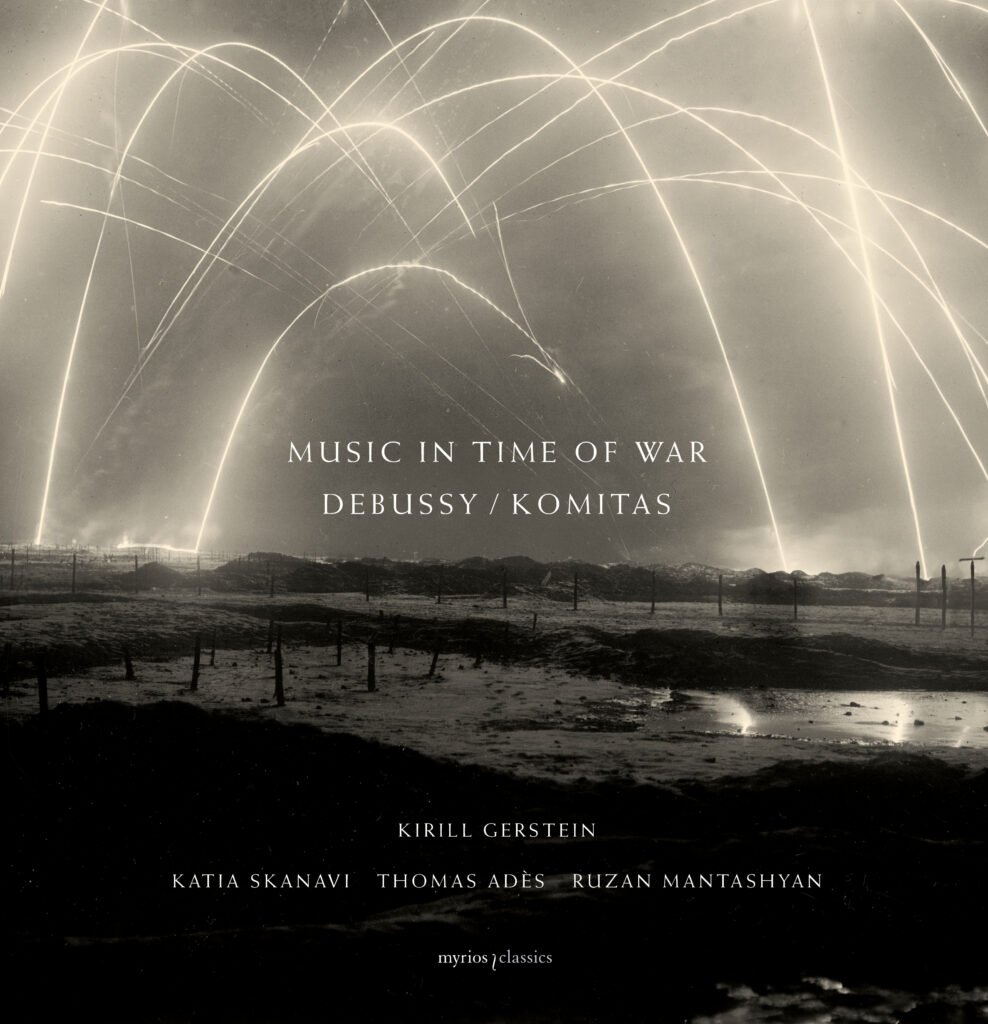 The music [Komitas Seven Armenian Dances] has an artless simplicity, as one might expect, but in Gerstein’s finely hewn performances there were clear suggestions of deeper emotions at work. The sheer care with which he performed these pieces was particularly noteworthy, giving the music space to breathe, and, indeed, to resonate…Gerstein’s Debussy performances were often luminous, but just as importantly, his sound adjusted to the mood of each miniature beautifully…A powerful performance. – Seen and Heard International, October 5, 2021
Inspired by the music of Komitas, pioneer of ethnomusicology and revered as the founder of the Armenian national school of music, Kirill Gerstein’s most recent initiative epitomizes his approach to music-making. Scheduled for release in the weeks between the anniversary of Debussy’s death and Armenian Genocide Memorial Day, Music in Time of War is a double album that places the music of Komitas alongside that of Claude Debussy, a seminal composer in the late 19th and early 20th centuries, who held a deep admiration of Komitas’s music. Both composers were profoundly affected by the implosion of their worlds – Komitas by the Armenian Genocide, Debussy by the First World War – and their musics reflect a close emotional alignment. For many Komitas is terra incognita, yet for those already familiar with his work, his memory burns more brightly than ever. The project is presented as an illustrated book with a series of in-depth essays commissioned by Kirill.
Music in Time of War highlights Kirill’s fascination with music’s power to reflect a narrative and to connect to the world past and present. Born in 1869, Komitas spent his formative years transcribing and preserving rural Armenian songs and published his earliest edition – the original collection of Kurdish folk songs – in 1903. In Paris, where Komitas traveled in 1906, he enjoyed the praise of Debussy who, on hearing the song Antuni (Homeless) is quoted as saying, “If Komitas had written only Antuni, that alone would have been enough for him to be considered a great artist.” Though Komitas physically survived the Armenian Genocide of 1915, he was subsequently brought to Paris, where he spent the remaining 20 years of his life in a psychiatric clinic.
 Kirill Gerstin (Photo (c) Andrej Grilc)
For the recording, Kirill is joined by the Armenian soprano, Ruzan Mantashyan, and pianists Thomas Adès and Katia Skanavi to perform a selection of works for solo piano, voice and piano, piano four hands and two pianos. Kirill pairs Debussy’s 12 Études from 1915 with Komitas’s Armenian Dances for piano composed the following year and includes a selection of Debussy’s late piano pieces composed to raise funds for the war. Komitas’s Armenian Songs, Debussy’s Chansons de Bilitis and his final song, Noël des enfants qui n’ont plus de maison, are sung by Ruzan Mantashyan; En Blanc et Noir pour deux pianos, Debussy’s most overtly anti-war piece, is performed by Adès and Kirill; and 6 Épigraphes antiques, Debussy’s only completed piece from 1914, is played by Skanavi and Kirill.
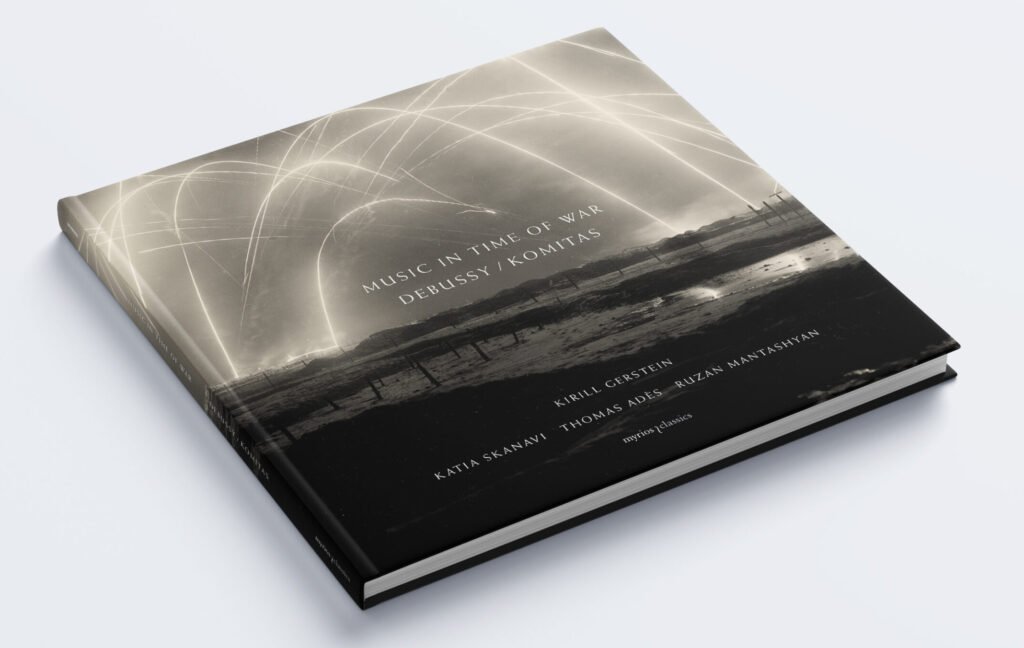 Accompanying the recording are four in-depth essays that explore the impact of war and genocide on society in general and artists in particular. Commissioned from Annette Becker, professor of contemporary history at Paris Ouest Nanterre La Défense, who has written extensively on the two world wars and the extreme violence they nurture; Armenian composer Artur Avanesov; Khatchig Mouradian, author, academic and lecturer at Columbia University and the Armenian and Georgian Area Specialist at the Library of Congress; and composer, virtuoso oboist and conductor Heinz Holliger, the essays give context to Debussy’s and Komitas’s music and their response to creating in times of catastrophe.
As Holliger points out in his conversation with Kirill: “It hurt Debussy that even his friends were disappointed when he no longer wrote as he did in, say, the Nocturnes. They wouldn’t grant him this development. But he always strove to go further, to surpass himself. Had he continued to write, I’m convinced that the course of music history in the 20th century would have been different. It’s hard to imagine him being able, or even wanting, to fit into the fashionable trends of the time. Unfortunately, after the summer of 1915 in Pourville nothing more came from the ‘factories of Nothingness’ (usines de Néant) in which he so often saw himself stagnating in his last years.”
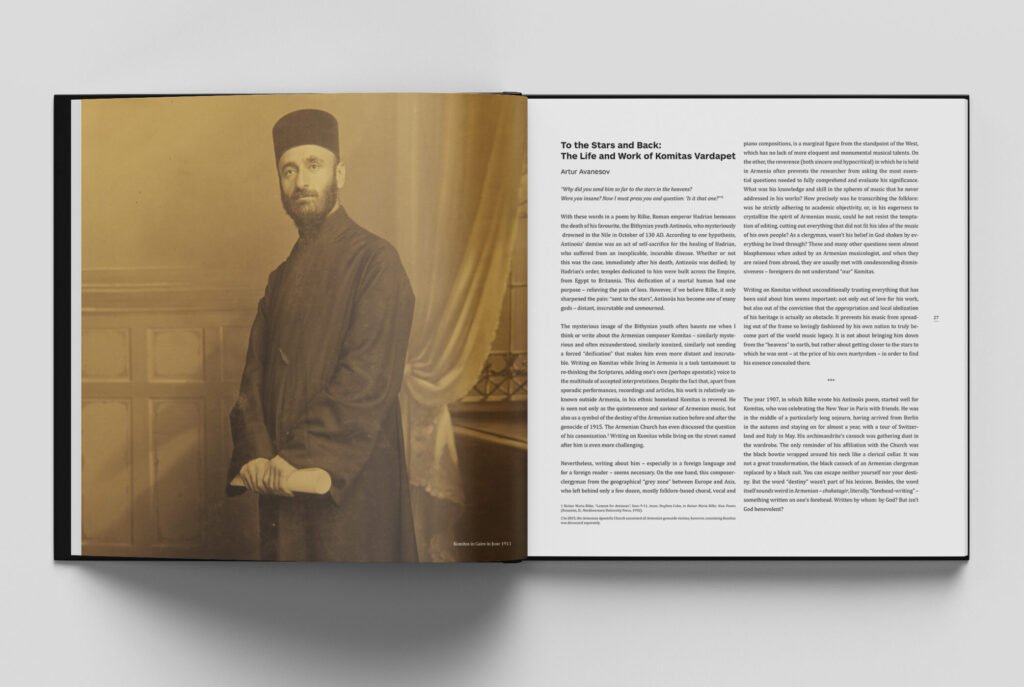 The impact of the Armenian Genocide on Komitas was not dissimilar. As Avanesov writes in his essay: “At first, he [Komitas] tried to work, but going back to his daily routine proved impossible. Besides, he was constantly haunted by paranoid hallucinations and nightmares. In 1916, while conducting his last Easter mass, he started sobbing at the altar as the hymn ‘Lord, Open the Doors’ sounded. He screamed and prayed all night long. The same year, he finalized his last edition of the Piano Dances, after which working became unbearable. His friends took a desperate measure: they lured him out of his home and put him in an institution called Hôpital de la Paix – a bitterly ironic name considering that the hospital was run by the Turkish military. He retreated into himself, choosing death over life.”
Kirill’s music-making combines the traditions of Russia, America and Central Europe, piqued by a deep-rooted curiosity. Born in the former Soviet Union, Kirill was 14 when he moved to the United States to study jazz and classical piano in tandem. From Bach to Adès, Kirill’s playing is distinguished by a ferocious technique and discerning intelligence, matched with an energetic, imaginative musical presence. With solo and concerto engagements taking him from Europe to the United States, East Asia and Australia, Kirill is also in demand for the breadth of his musical influences which, in recent seasons, has led to residencies with the Bavarian Radio Symphony Orchestra (BRSO), London’s Wigmore Hall, the Festival d’Aix-en-Provence and the London Symphony Orchestra.
Kirill has realized many thoughtfully curated projects including “Rachmaninoff 150” with the Berlin Philharmonic and Kirill Petrenko; Tchaikovsky’s three piano concertos, as part of “Beloved Friend” with the Czech Philharmonic and Semyon Bychkov; Busoni’s monumental Piano Concerto with the Boston Symphony Orchestra and Sakari Oramo; The Gershwin Moment with the St. Louis Symphony and David Robertson, including special appearances from Storm Large and Gerstein’s former mentor Gary Burton; Mozart Four-Hand Piano Sonatas with his mentor of 17 years, Ferenc Rados; a compendium of Thomas Adès’s works for piano in collaboration with the composer, which won a 2021 International Classical Music Award; Strauss’s Enoch Arden with the late Bruno Ganz (Wings of Desire; Downfall); Liszt’s Transcendental Études, picked by The New Yorker as one of 2016’s notable recordings; and Tchaikovsky’s First Piano Concerto in the composer’s own final version from 1879.
A firm believer in the importance of teaching, Kirill is currently professor of piano at Berlin’s Hanns Eisler Hochschule and on the faculty of Kronberg Academy. Under the auspices of Kronberg Academy, his series of free and open online seminars entitled Kirill Gerstein invites has presented over 46 seminars and had over 68,000 views, featuring conversations with leading artistic minds. Guest speakers have included Ai Weiwei, Paul Boghossian, Andreas Staier, Brad Melhdau, Thomas Adès, Iván Fischer, Alex Ross, Matthew Aucoin, Kirill Serebrennikov, Elizabeth Wilson, Simon & Gerard McBurney, Robert Levin, Reinhard Goebel, Simon Callow, Emma Smith, Deborah Borda, Rafael Viñoly, Sir Antonio Pappano, Kaija Saariaho, Joshua Redman, Khatchig Mouradian and Michael Haas.
First prize winner at the 10th Arthur Rubinstein Competition and an Avery Fisher Career Grant holder, Gerstein is the sixth recipient of the prestigious Gilmore Artist Award, which enabled him to make his first commissions, new works from Timo Andres, Chick Corea, Alexander Goehr, Oliver Knussen and Brad Mehldau. He has continued to commission, most recently piano concertos from Thomas Adès and Thomas Larcher. In May 2021, he was awarded an honorary doctor of musical arts degree from the Manhattan School of Music.
 Music in Time of War is now available on streaming services by Platoon. The physical album will be available on Myrios Classics as a double CD, including the high-quality 172-page hardcover book in May.
Disc 1
Claude Debussy (1862–1918)
12 Études (1915)
à la mémoire de Frédéric Chopin
PREMIER LIVRE
1 I. Pour les cinq doigts · d’après
Monsieur Czerny 03:02
2 II. Pour les tierces 03:58
3 III. Pour les quartes 05:08
4 IV. Pour les sixtes 04:13
5 V. Pour les octaves 02:44
6 VI. Pour les huit doigts 01:35
DEUXIÈME LIVRE
7 VII. Pour les degrés chromatiques 02:29
8 VIII. Pour les agréments 05:14
9 IX. Pour les notes répétées 03:14
10 X. Pour les sonorités opposées 05:07
11 XI. Pour les arpèges composés 04:42
12 XII. Pour les accords 04:56
Komitas Vardapet (1869–1935)
Armenian Dances (1916)
13 Manushaki of Vagharshapat 02:49
14 Yerangi of Yerevan 03:21
15 Unabi of Shushi 02:00
16 Marali of Shushi 01:17
17 Shushiki of Vagharshapat 01:52
18 Het u Aradj of Karin 02:37
19 Shoror of Karin 05:11
Kirill Gerstein, piano
Disc 2
Claude Debussy
Chansons de Bilitis (1897-98)
Text: Pierre Louÿs
1 I. La Flûte de Pan 02:50
2 II. La Chevelure 03:12
3 III. Le Tombeau des naïades 03:00
Ruzan Mantashyan, soprano
Kirill Gerstein, piano
6 Épigraphes antiques
pour piano à quatre mains (1914–15)
4 I. Pour invoquer Pan, dieu du vent d’été 02:06
5 II. Pour un tombeau sans nom 03:40
6 III. Pour que la nuit soit propice 02:09
7 IV. Pour la danseuse aux crotales 02:15
8 V. Pour l’Égyptienne 03:01
9 VI.Pour remercier la pluie au matin 02:03
Katia Skanavi and Kirill Gerstein, piano
Komitas Vardapet
Armenian Songs
Text: traditional
10 Tsirani tsar 03:32
11 Chinar es 01:58
12 Garoun a 02:23
13 Le le Yaman 02:14
14 Qeler Tsoler 02:38
15 Antouni 04:56
Ruzan Mantashyan, soprano
Kirill Gerstein, piano
Claude Debussy
16 Noël des enfants qui n’ont plus
de maison (1915) 02:40
Text: Claude Debussy
Ruzan Mantashyan, soprano
Kirill Gerstein, piano
Late Piano Pieces
17 Page d’album pour piano pour l’œuvre du « Vêtement du
blessé » (1915) 01:09
18 Berceuse héroïque (1914) pour rendre hommage à S.M. le roi Albert
Ier de Belgique et à ses soldats 04:59
19 Étude retrouvée (1915) 04:21
20 Les Soirs illuminés par l’ardeur
du charbon (1917) 02:00
21 Élégie (1915) from Pages inédites
sur la Femme et la Guerre 02:01
Kirill Gerstein, piano
En blanc et noir pour deux pianos (1915)
22 I. À mon ami A. Koussevitzky
(Avec emportement) 04:33
23 II. Au lieutenant Jacques Charlot
tué à l’ennemi en 1915, le 3 mars
(Lent. Sombre) 06:42
24 III. À mon ami Igor Stravinsky
(Scherzando) 04:36
Thomas Adès and Kirill Gerstein, piano
Author information

Guest Contributor
Guest contributions to the Armenian Weekly are informative articles or press releases written and submitted by members of the community.
|
The post Kirill Gerstein releases “Debussy/Komitas: Music in Time of War” appeared first on The Armenian Weekly.