Germany was at the origin of the European Union, is the economic engine of the Union and one of the most influential actors in the Euro-Atlantic arena. If anything, its role in the EU role has increased with Brexit and especially in light of the ongoing ‘Zeitenwende’. Importantly, Germany has become the main proponent of opening the EU’s doors to the new candidate countries, including Georgia.
As Georgian Prime Minister Irakli Kobakhidze visits Berlin and is due to meet German Chancellor Olaf Scholz on 12 April, we asked Anton Hofreiter, Chairman of the German Bundestag’s EU Affairs Committee, an institution that plays a key role in shaping Germany’s foreign policy, how the processes unfolding in Georgia, including the introduction by the GD of the so-called Foreign Agents’ law, look from a German perspective and whether they will have an impact on the country’s EU integration, what messages the Georgian Prime Minister is expected to receive during his visit to Berlin, what Georgia should do to ensure its evolution from a candidate to an EU member, and other issues.
Civil.ge: You have been a strong advocate of the integration of the former Eastern Partnership trio – Georgia, Moldova, and Ukraine – into the European Union. While the candidacy of these three countries was unthinkable only a few years ago, the war in Ukraine has changed that. But some in Georgia doubt whether this sudden change of hearts is serious and fear that the “expansion fatigue” is still lurking in the backs of European politicians’ minds. What do you tell those people? [some of which may be in Georgia’s ruling party, or supporting it?]
The European Union has a vested interest in welcoming new members. If countries like Georgia want – in their vast majority – to be a member of the European Union, we should support this path.
Georgia is a European country where numerous powers want to increase their influence, from Russia over China to Turkey.
Georgia is a European country where many powers want to increase their influence, from Russia over China to Turkey. This is something we have to prevent, in our own interest and in the interest of the Georgian people who are fighting for rule of law, democracy and freedom. I am committed to convince restrained member states of the benefits of enlargement.
The ruling party has been promoting a slogan, “To Europe with Dignity,” claiming that fulfillment of some EU conditions is somehow diluting the country’s identity or subtracting from its sovereignty. Such a discourse is quite unusual in a country – and for the government – that seeks EU membership. How would you respond to those Georgians who see the grain of truth in that worldview?
The European Union consists of 27 culturally and politically diverse countries – no one is asked to give up their identity. However, Georgia must fulfill the same requirements as any other country that wants to join the European Union. The EU only works on the basis of common rules. It will clearly obstruct Georgia’s accession process if the Georgian government indicates beforehand that it is not willing to fully meet the requirements. You always need to keep in mind: to become a member of European Union you also need to convince the countries which are known to be skeptical of EU enlargement.
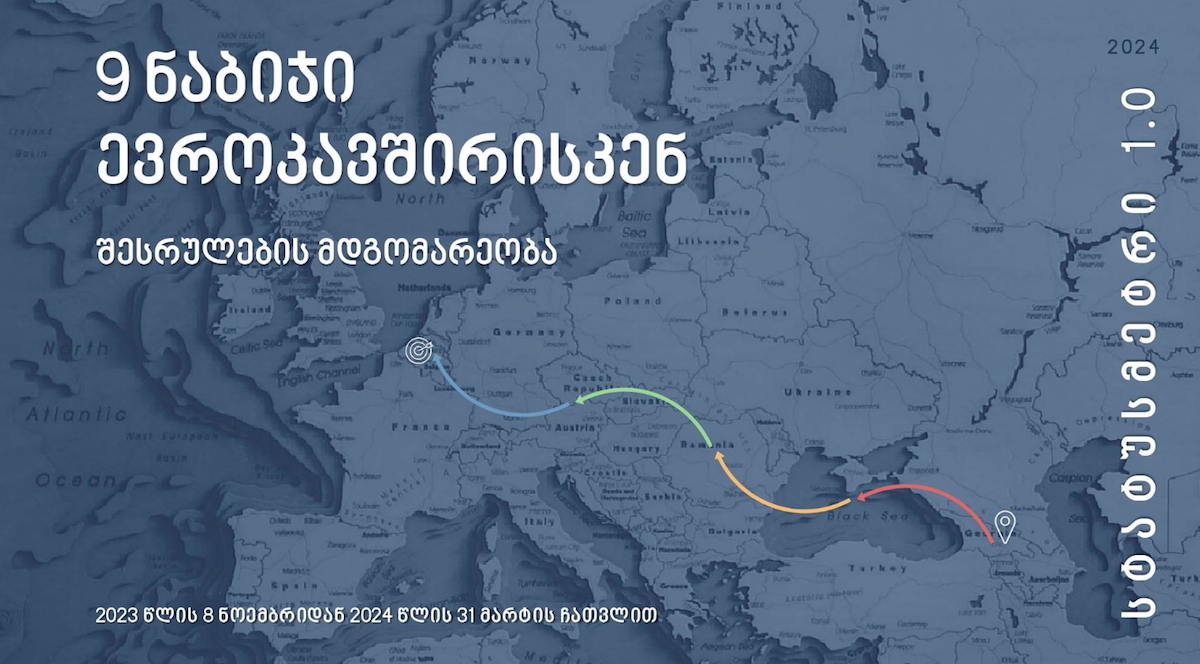
A debate is going on in Georgia about the relative importance of the merit-based criteria for membership as opposed to the political decision. Most pro-European civic activists and analysts stress the importance of fulfilling the requirements for advancing on the membership path. Yet, some in the political class say the political decision trumps the merit – and they point to the decision on candidacy when Georgia was granted a pass, even though it did not fulfill most of the 12 conditions. You have taken an active part in both the EU and national politics; how do you square that circle?
To prevent misunderstandings: first a country must fulfill the requirements, then there will be a political decision on EU membership. I am very much in favor of discussing merit-based steps in between which can be connected to fulfilling the conditions.
…First a country must fulfill the requirements, then there will be a political decision on EU membership.
But there will be no bypassing of requirements. Getting the candidate status was just a first step. Getting ready for membership is the real task, and this is where the Georgian government needs to deliver.
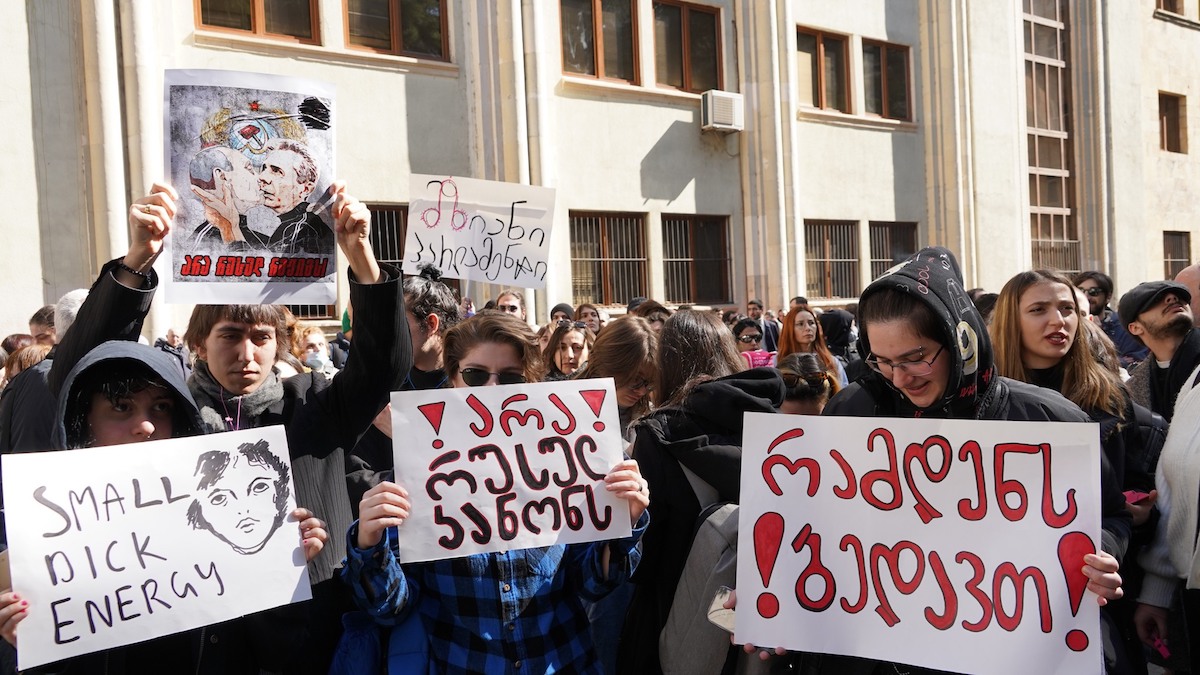
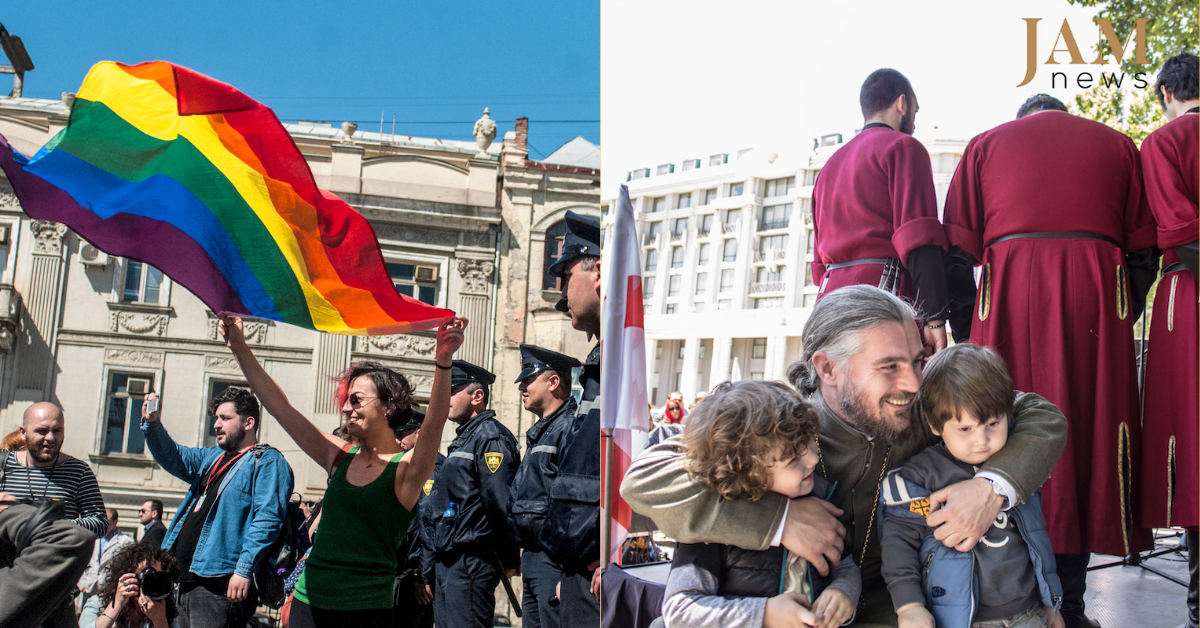
As we speak, many Georgians are taking to the streets to protest the government’s new legislative initiatives: first and foremost, the reintroduction of the so-called Foreign Agents Law. But there are also other legislative initiatives in a similar spirit – the “anti-LGBT propaganda law”, which is currently under review, and the abolition of gender quotas for electoral lists. Georgia’s Western partners, including Germany, as well as local watchdogs and human rights organizations, have sharply criticized these initiatives. Do you agree with those who say that their adoption could lead the EU to review Georgia’s candidacy status? What would be a realistic reaction to the adoption of such laws in Brussels? What would Prime Minister Irakli Kobakhidze hear about it when he visits Berlin on April 12?
I expect Chancellor Scholz to tell Prime Minister Kobakhidze in person that the government’s recent legislative initiatives are putting Georgia’s EU accession process at serious risk.
The proposed laws would reduce civic space and freedoms and are clearly reminiscent of Russia’s autocratic path.
The proposed laws would reduce civic space and freedoms and are clearly reminiscent of Russia’s autocratic path. They undoubtedly contradict Georgia’s commitment to become a full-fledged, democratic member of the European family, for which a strong rule of law, civil rights and free media are indispensable. It is important to have in mind that in the EU we have had a long and painful relationship with Hungarian Prime Minister Viktor Orbán. I am sure that the prospect of another Orbán-like regime will lower the chances of Georgia of joining European Union down to zero. Don’t get me wrong, I want Georgia to become a member of European Union.
Germany is on the side of the Georgian people. But for the country to advance on the path of EU integration, the government has to follow EU rules.
Germany is on the side of the Georgian people. But for the country to advance on the path of EU integration, the government has to follow EU rules. That is what I tell my Georgian partners and that is what the Georgian people have to hold their government accountable to.
This interview would not be complete if we did not ask about Ukraine. There has been much talk of Zeitenwende and we know that Germany will indeed meet – after a long pause – NATO’s 2% benchmark for military spending. We also know that German soldiers started to arrive in Lithuania – the first permanent military base abroad in a long time. But today Ukraine is in a precarious situation on the front lines, partly due to delays in the delivery of ammunition and funding from the US and the EU. What is the outlook for this year? Does Europe have what it takes to help Ukraine stand up to the aggressor? What is your party advocating and, more importantly, what is the German coalition government likely to do?
I am worried that not everybody in Germany has understood how serious the situation is. Germany has grown up in the last two years and has corrected foreign policy mistakes of the past. We are doing a lot, providing Ukraine with economic and humanitarian aid, and at the same time we are the second largest supplier of military goods. Still, it is not enough. If Russia wins the war in Ukraine, this won’t be the end to Putin’s imperial ambitions. Not only Georgia and Moldova would be under increasing threat. We must even prepare for an attack on NATO members. We clearly have to invest more in strengthening Germany’s and European defense.
And lastly, tied to the previous question, one about Georgia’s security. Those who say that Tbilisi should stay away from too close an association with the EU’s sanctions policy against Russia argue that Europe can’t and won’t protect Georgia in case of trouble, pointing to the experience of the 2008 war. Germany has opposed Georgia’s progress towards NATO membership. What is your party’s position on this issue? And how, in your mind, Georgia could better bolster its hard security in the current environment – short of speedy NATO accession?
First of all, sanctions are crucial to limit Putin’s resources to continue his war of aggression. That’s why we must even extend the sanctions regime and fight sanctions evasion. When it comes to Georgia’s security, it is important to strengthen our relations. We should increase the cooperation between Georgia and the EU in the existing framework of the EUMM and European Peace Facility.