
Categories
Audio Review - South Caucasus News

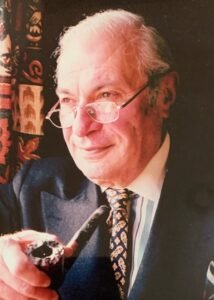
A tribute to Dr. Henry Astarjian


Dr. Henry Astarjian

By Marie Rose Abousefian, Ph.D.

It’s hard to believe that on the other end of the phone I will never, ever hear again: “Yerevan is speaking,” in a cheerful voice that was usually followed by a hearty laugh, the laughter of Dr. Henry Astarjian. I don’t even know how to begin my farewell to a person with whom my friendship has stretched for many years, filled with mutual respect and deep admiration for each other.

With a victorious, noble and proud attitude, a pipe always in his hand and impeccably dressed, this amazing Armenian from Marash would become one of America’s famous neurologists. He participated in the formation of the Armenian community, with his bold political analysis and numerous lectures, connecting the new generation to their roots.

Since 1994, he has participated in conferences of the Parliament of Kurdistan and held meetings with their leaders, defending the interests of the Armenians. He openly made them understand that the southeastern part of Turkey, claimed by the Kurds as their land, remained the property of the Armenians and could not be a matter of negotiation.

In his extremely busy state, he wrote a series of more than 200 articles for Boston’s Hairenik (“Homeland”) magazine under the title “Loud & Clear,” composing a series of interesting and daring analyses in English.

Each year, on April 24 and May 28, he gave active speeches, radio and press interviews dedicated to our independence, which were read and heard in different cities of America, Canada, Armenia, Brussels, London and his birthplace in Iraq.

The biggest was ahead, in 2007. Praeger Security International published his autobiographical book The Struggle for Kirkuk in English, full of historical and political facts. The book was translated twice into Arabic, in Beirut and in Iraqi Kurdistan.

In the days of American justifications for the war against Iraq, it was not easy to write about the destruction of another country’s values ​​by the hands of your own nation.

Despite not being a writer, he was able to masterfully contrast the destructive policies of the interests of big states with the sufferings of an entire country. His book is not only an autobiography, but also a great introduction to the different ethnic groups living in the territory of Iraq: Kurds, Arabs and Turkmen tribes.

Astarjian was born to an Armenian family who escaped from Marash and settled in the Kirkuk region of Iraq. Kirkuk, being one of the largest centers of trade with its enviable abundance of oil and its geographical location, was a connecting link between Iraq, Persia and Turkey, and with its mixed population, it became a field of robbery. 

He received his medical education at the Royal College of Medicine in Baghdad. He was sent for military service to the Kurdish-inhabited region, where with his sharp observation he discovered their culture and character and learned their language, which later helped him negotiate with them alone face-to-face.

The Armenians who survived the Genocide tried to isolate themselves and adapt to the frequent political storms of the country, as everywhere else. But many, including the young Astarjian, fell victim to one of those troubled clashes. He was arrested, thrown into prison and, without trial, condemned to death. He lived in horror of his sentence, which he depicted vividly in his book. However, he was released by the fate given to him from above.

In 1960, new political disturbances in Iraq forced him to leave the country and settle in America, in Boston. Astarjian lectured at the famous Tufts University School of Medicine, while at the same time founding his own clinic, working with great success. He married and had children: two boys, Hratch and Vache, and a girl, Jennifer. He was a caring father until the end and a great grandfather to his grandchildren.

He moved to New Hampshire to continue his activity there. He was the first doctor to bring an MRI in medical practice to New Hampshire. There he married Arev, also an Iraqi-Armenian, an exceptionally kind and dedicated person, who surrounded him with great affection and care until his last days. 

During and after the coronavirus pandemic, he continued to work from home like many others to the age of 90, until the end of his life on April 4, 2024. On that fateful day, the world lost a wonderful, patriotic Armenian, an ardent Marash citizen, and I lost a loyal friend.

In addition to being extremely Armenian, we were connected by the birthplace of our parents. Both of us were avid Marashtsi, without seeing, without knowing, the fragrance of our motherland, which was imprinted in us with such power that our conversation even necessarily started, ended or was spiced with humor and stories about the Marash food (including chi kofte and keshkek ghabakhly). 

Astarjian’s excellent memory, knowledge of Armenian history, sober analysis of world politics and information about the capacity of the human brain stretched and prolonged our conversations, which often ended with him singing. He had a beautiful voice. On holy days he would start with liturgy. I always joked that he should’ve become a clergyman instead of a doctor.

Now, Marash’s voice is silent forever. Our long, interesting conversations will become one-sided, only rich memories in my mind. I am grateful that I got to know him, established a family friendship and as a doctor used him to determine the medical needs of my family and friends.

For the introduction to his book, he chose a Bedouin fable that said, “It was that cloud which brought this rain.”

Today, facing the fact of his absence, I refer to his departed soul with pain with my version of the same fable: “If it wasn’t for that deadly cloud, we two Marashstiner would still continue our interesting conversations, about our country, humanity, the politics of the superpowers who are turning this wonderful world into hell and the capacity of the human brain.”

Rest in peace our beloved Dr. Astarjian. You gave back to your nation and humanity everything that nature created you with. Forever peace to your soul that is trampling through the Motherland, Marash, the passing of the world.

Today, not only your wife, family and relatives mourn your forever departure, but also all those who were cured and lived healthy lives thanks to your treatment, and all those who were inspired by your messages, who will keep you in their memories. Our deepest condolences to Arev, all family members, relatives and colleagues.

Author information

Guest Contributor

Guest Contributor

Guest contributions to the Armenian Weekly are informative articles or press releases written and submitted by members of the community.

|

The post A tribute to Dr. Henry Astarjian appeared first on The Armenian Weekly.

Categories
Audio Review - South Caucasus News

Stand out from the crowd


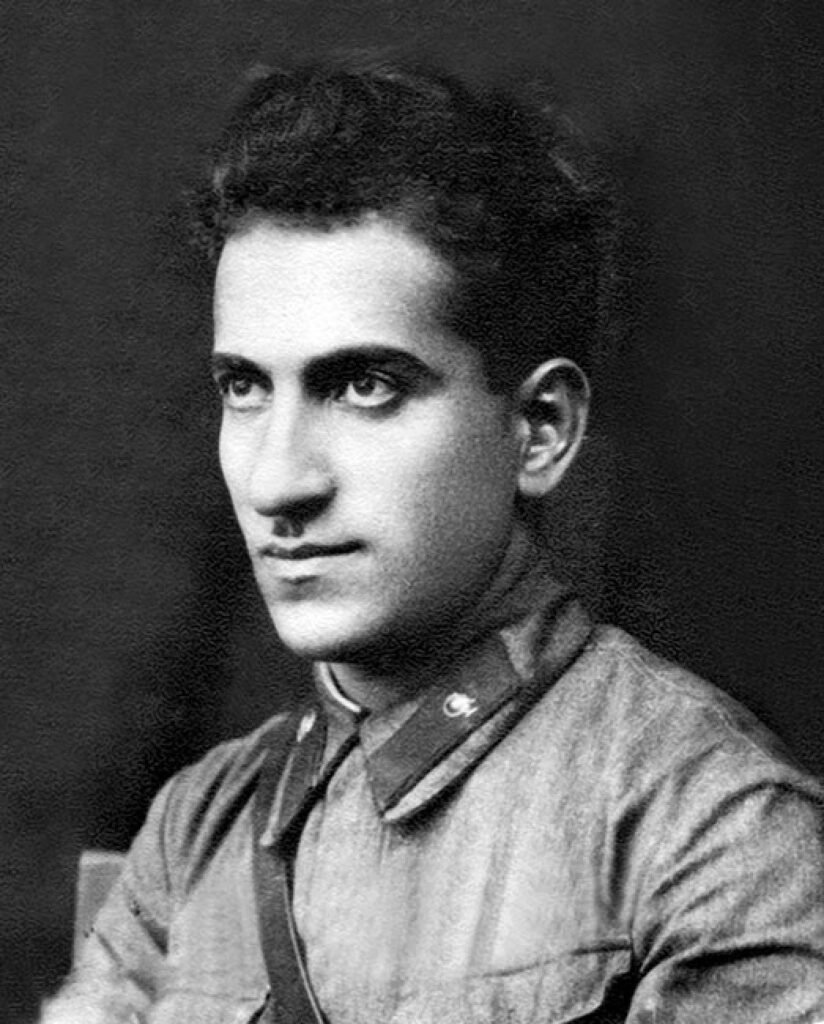
Harutyun Khachatryan as a young soldier
83 years ago, the world was a scary and unfair place where innocent people were persecuted and killed for their beliefs, their religion or their nationality. All across Europe, the Nazis and their local collaborators were destroying everything and everyone. Many people were spectators of these persecutions and were too scared to intervene, but one man stood out from the crowd and refused to be a helpless spectator. This exceptional man is Armenian, and his name is Harutyun Khachatryan.

Born on April 10, 1915, in Nakhichevan, Khachatryan was a kind and intelligent teenager who cared about others more than himself. In 1934, he moved to Yerevan and pursued his studies at the Yerevan State Medical Institute. When World War II broke out, Khachatryan quickly realized that millions of young men were about to be killed and wounded, so he joined the Soviet Army as a physician.

Meanwhile, in Starokostiantyniv, Ukraine, a young man named Iosip Kogan was dreaming of becoming a teacher, but the war put all his dreams on hold. After being drafted into the Red Army, he proudly fulfilled his duties and rose through the ranks. In June 1941, when Germany attacked the Soviet Union, Kogan and his unit were at the railway station of Moscow, waiting for the train that would take them to the front. That’s when Kogan started talking to another officer, who was also waiting for a train – Dr. Khachatryan. The Armenian military physician initially thought that Kogan was Armenian, but Kogan told him that he was Jewish. After a little chat, they said goodbye and never imagined that their paths would cross again.

When Kogan and his unit reached the front lines, they discovered the true meaning of hell on earth. Kogan demonstrated remarkable courage, but the Nazis were unstoppable. Badly wounded by enemy fire, Kogan was captured by German troops on August 24, 1941, and taken to a POW camp. He was in critical condition and was clinging to life. 

That’s when a miracle happened. Khachatryan, who had also been captured and taken to the same POW camp, recognized the young man he had met at the station and immediately treated his wounds. Kogan’s condition quickly improved, but he wasn’t out of danger. At that moment, the Germans were separating the Jewish prisoners from the others, and everybody knew their fate. In order to save Kogan’s life, the Armenian doctor took Kogan’s papers and changed his name to Michail Markosyan. He even taught Kogan a few Armenian words. 

For months, Khachatryan protected and took care of Kogan. Many prisoners looked at Kogan and saw a Jew who could cause them trouble, but Khachatryan saw a human being who needed help. In his situation, most of us would have focused on surviving, but Khachatryan wasn’t an ordinary man. This extraordinary man believed that every single life mattered, and every person in danger should be rescued.

Whenever the Armenian prisoners were sent to a new POW camp, Khachatryan always made sure that Kogan came with them. One day, when all the prisoners had to undergo a medical examination, the Armenian doctor feared that the Germans would realize that Kogan was circumcised, so Khachatryan arranged for Kogan to change places with another prisoner. 

In February 1943, a rumor circulated in the camp that a Jew was hiding among the prisoners. To avoid being discovered, Kogan decided to escape and managed to join a local resistance group. In August 1944, when the area was liberated, Kogan and his comrades joined the Red Army and confronted the Germans until the definitive surrender of Nazi Germany.

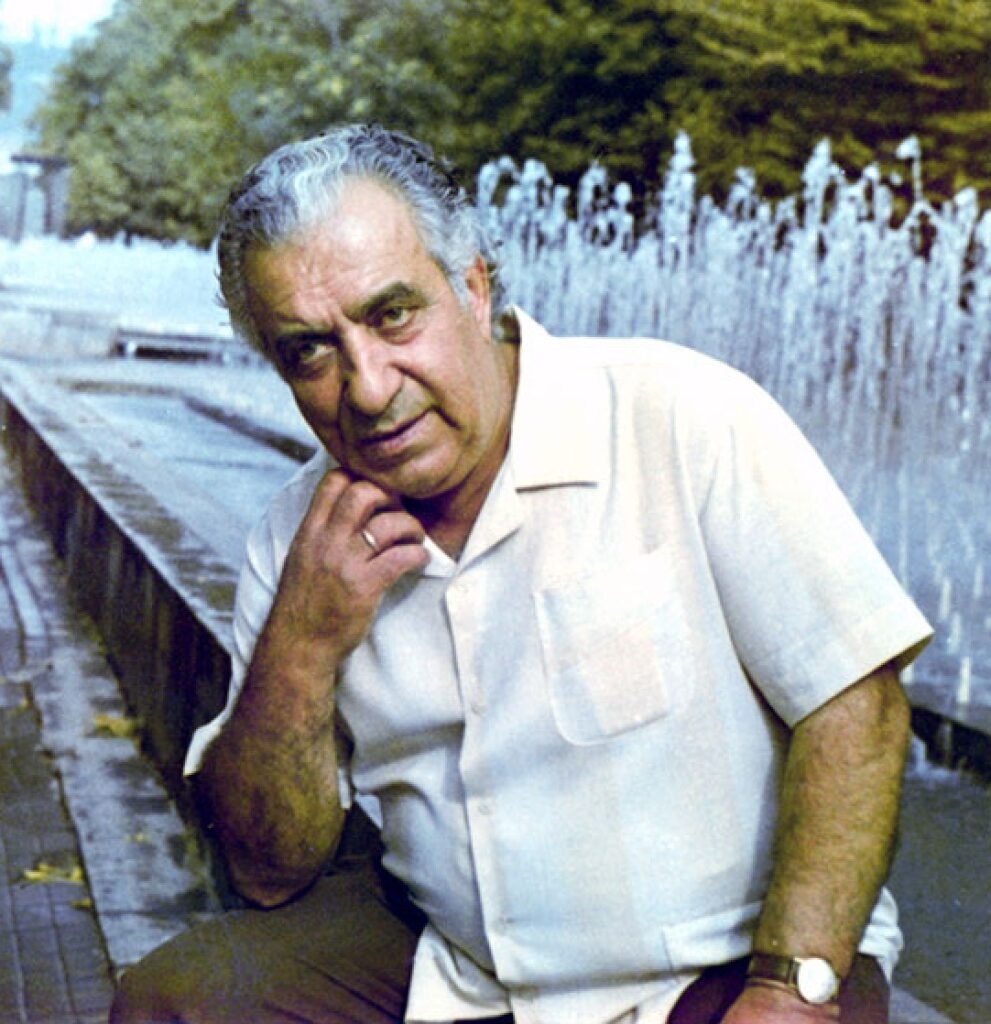
Dr. Harutyun Khachatryan later in his life
Following the war, Khachatryan returned to Armenia and worked as a chief physician at the Ashtarak Regional Hospital. Time went by, but Kogan never forgot the man who saved his life multiple times. To remember the kindness, compassion and courage of this Armenian hero, Kogan wrote down everything that happened. Khachatryan passed away on November 23, 1985, at the age of 70, but 27 years after his death, in 2012, the precious testimony written by Kogan was sent to Yad Vashem memorial, which recognized Khachatryan as Righteous Among the Nations. A magnificent ceremony was held in Yerevan, attended by Israel’s ambassador to Armenia, Shmuel Meirom, and Armenian singer Anna Khachatryan, Harutyun’s granddaughter.

Irish social entrepreneur Mary Davis once said: “We can’t heal the world today, but we can begin with a voice of compassion, a heart of love and an act of kindness.” That’s exactly what Khachatryan did. By saving Kogan, he showed us that all the darkness in the world cannot extinguish the light of a single candle.

Today, the world is still a scary and unfair place where innocent people are persecuted and killed for their beliefs, their religion or their nationality, but there are so many anonymous heroes who are following in Khachatryan’s footsteps and doing what is right. So whoever you are, and whatever happens, whenever you see someone being persecuted, stand out from the crowd, and refuse to be a helpless spectator.

Author information

John Dekhane

John Dekhane

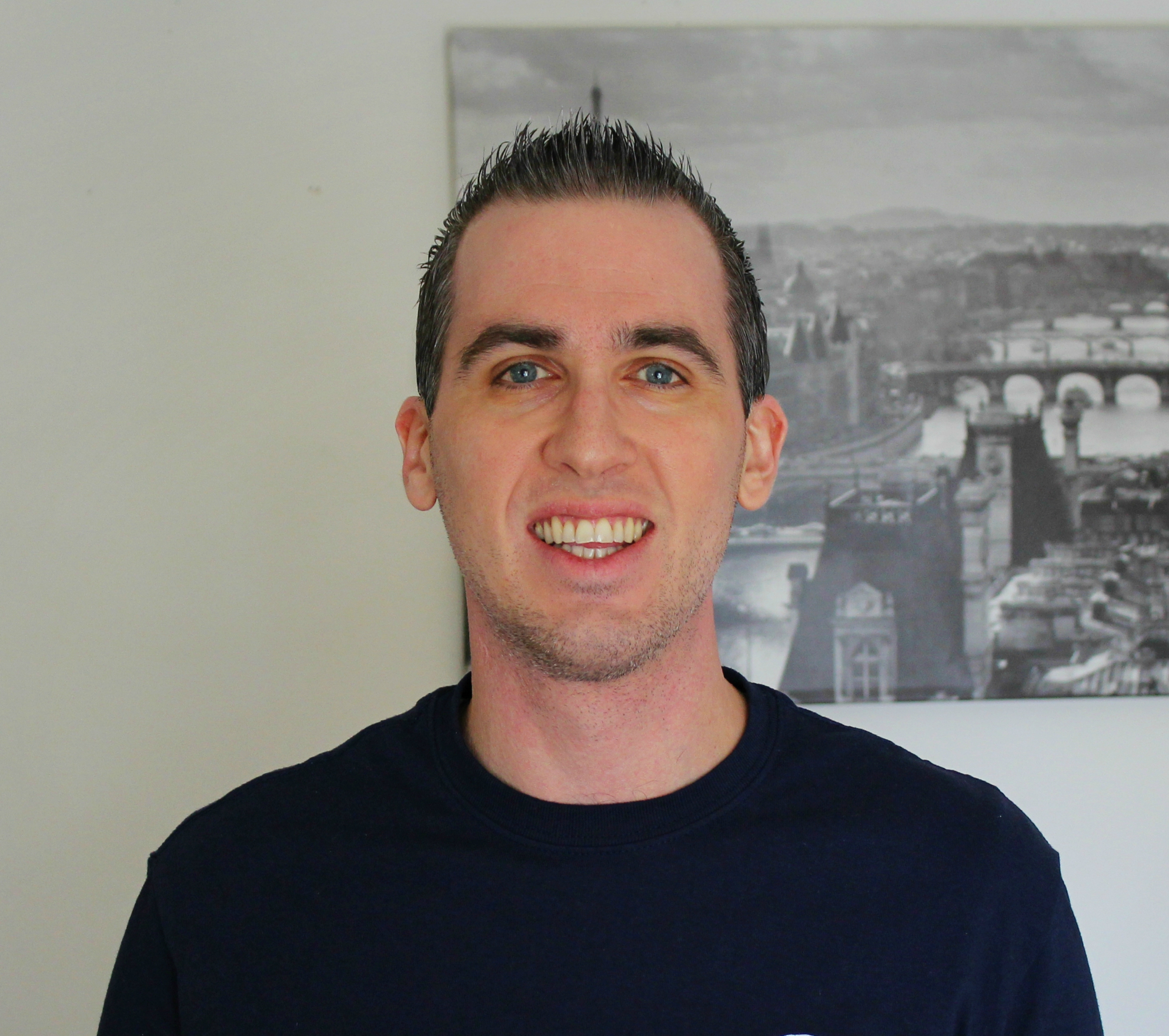
John Dekhane grew up in Paris before moving to the South of France. He works for a sport organization in Monaco. Since he was a child, he has always been interested in World War II with particular emphasis on American soldiers. In order to honor them, over the past years, he has located and purchased WWII U.S. artifacts in Europe and donated these items to more than a hundred museums in the United States.

|

The post Stand out from the crowd appeared first on The Armenian Weekly.


Categories
South Caucasus News

10:16 AM 4/10/2024 – Tweets


Michael Novakhov (@mikenov) / Twitter

The News And Times Information Network – Blogs By Michael Novakhov – thenewsandtimes.blogspot.com

Categories
Audio Review - South Caucasus News

@elonmusk: RT @elonmusk: Brave man


Brave man https://t.co/eB4es8ZgJ1

— Elon Musk (@elonmusk) April 10, 2024


Categories
Audio Review - South Caucasus News

@mikenov: New York City rats can catch the coronavirus that causes Covid-19


New York City rats can catch the coronavirus that causes Covid-19 – Google Search https://t.co/MWk4xr3Ppw

— Michael Novakhov (@mikenov) April 10, 2024


Categories
Audio Review - South Caucasus News

@Jerusalem_Post: RT by @mikenov: Israel has agreed in hostage negotiations in Egypt to concessions about the return of Palestinians to the north of Gaza, but believes Hamas does not want to strike a deal, Israeli officials said on Wednesday. jpost.com/israel-hamas-w…


Israel has agreed in hostage negotiations in Egypt to concessions about the return of Palestinians to the north of Gaza, but believes Hamas does not want to strike a deal, Israeli officials said on Wednesday.https://t.co/J3vwyyOf25

— The Jerusalem Post (@Jerusalem_Post) April 10, 2024


Categories
Audio Review - South Caucasus News

@TOIAlerts: RT by @mikenov: Live update: Israel will attack territory of anyone who attacks it, Gallant says in message to Iran dlvr.it/T5KC6V


Live update: Israel will attack territory of anyone who attacks it, Gallant says in message to Iran https://t.co/H8nvDkQ06B

— ToI ALERTS (@TOIAlerts) April 10, 2024


Categories
Audio Review - South Caucasus News

@john_sipher: RT by @mikenov: If You Want to Understand Russian Power, Listen to the People Who Leave It time.com/6281663/russia…


If You Want to Understand Russian Power, Listen to the People Who Leave It https://t.co/CTktYNBdG0

— John Sipher (@john_sipher) April 10, 2024


Categories
South Caucasus News

Iran vows revenge on Israel after an airstrike on the Iranian consulate in Syria – NPR


Iran vows revenge on Israel after an airstrike on the Iranian consulate in Syria  NPR

Categories
South Caucasus News

Remaining Munitions Seized En Route from Iran to Yemen Transferred to Ukrainian Armed Forces – Department of Justice


Remaining Munitions Seized En Route from Iran to Yemen Transferred to Ukrainian Armed Forces  Department of Justice