Day: April 9, 2024
Categories
Armenia News – NEWS.am

The Georgian State Security Service (SSSG) reacted to a joint investigation by The Insider, 60 Minutes, and Der Spiegel regarding the so-called “Havana Syndrome,” stating that there is no need to prove the unfoundedness of the theory put forward in this investigation.
However, the statement made no mention of the alleged presence of Russian intelligence agent Albert Averyanov in Tbilisi in 2021.
Russian outlet The Insider, American broadcaster CBS, and German Spiegel published a collaborative investigation claiming that operatives of Russia’s Main Intelligence Directorate (GRU) conducted acoustic attacks on US embassy staff, inducing symptoms of “Havana Syndrome” – sudden bouts of nausea, dizziness, pressure fluctuations, auditory hallucinations, concentration and sleep problems.
Additionally, the investigation reports that when GRU agents, father and son Averyanov, were in the Georgian capital in 2021, “Havana Syndrome” struck US embassy staff and their family members.
- Havana Syndrome traces and GRU agents in Tbilisi: The Insider, Spiegel, CBS Investigations
- Five main Russian myths about Crimea and how they work
Statement from the Georgian State Security Service
The Georgian State Security Service (SSSG) asserts that following the dissemination of this information in the media, they have once again verified the facts cited. Considering established international practice, they awaited an official statement from the involved party:
“As known to the public, competent authorities such as the United States Central Intelligence Agency and the Department of State themselves have questioned the validity of the results of the alleged journalistic investigation and have not confirmed the facts published by journalists, not only in Georgia in 2021 but in different years in various countries worldwide, including Germany, Austria, Poland, Cuba, and others.
The Georgian State Security Service considers the above-mentioned response to be comprehensive and satisfying to public interest, and believes there is no need to further substantiate such a version.
Regrettably, there are still politically motivated individuals and media outlets in Georgia who have attempted to exploit this for speculation and to discredit the SSS.
We would like to reassure the public that amid increasing challenges in the region, the country’s security is maintained at the highest level,” the statement reads.
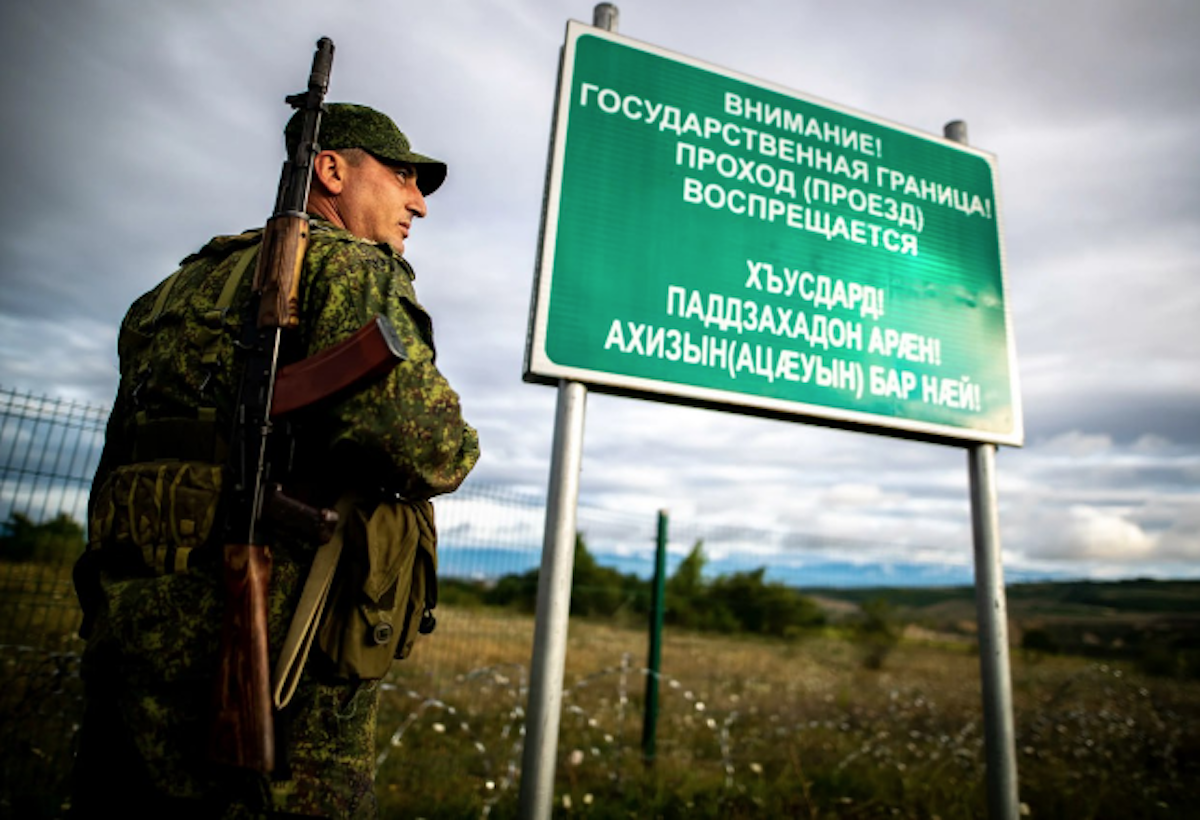
The European Court of Human Rights (ECtHR), in the case of “Georgia v. Russia,” found Russia guilty of human rights violations during the process of “borderization“—the establishment of the demarcation line in the Georgian-Ossetian conflict zone, initiated shortly after the 2008 war.
Georgia filed three additional complaints against Russia with the ECtHR. Additionally, the court received around 200 individual complaints against Georgia, Russia, or both states, related to the 2008 armed conflict or the borderization process.
Key points from the ECtHR decision
- The Court unanimously found violations of Article 2 (right to life), Article 3 (prohibition of inhuman or degrading treatment), first paragraph of Article 5 (right to liberty and security), and Article 8 (right to respect for private and family life). It also found violations of Article 1 (right to property) and Article 2 (right to education) of Protocol 1 to the Convention, and additionally violations of Article 2 (right to freedom of movement) and Article 4 (prohibition of collective expulsion).
- The ECtHR press release notes that the armed conflict between Georgia and Russia in August 2008 initiated a process starting in 2009 known as “borderization,” which restricts people from entering the territory controlled by Georgia and into the separatist regions of Abkhazia and South Ossetia, supported by Russia.
- “Without the Russians, we’d solve it ourselves.” Report from Georgian-Ossetian conflict zone villages
- The murder of Tamaz Ginturi: what happened, Tskhinvali’s version, what Georgian politicians say
- UN adopts resolution on internally displaced persons from Abkhazia and South Ossetia
● The press release also states that borderization is one of the most painful legacies of the Georgian-Russian conflict of August 2008. Specifically, the Georgian government claimed that attempts to enter or leave Abkhazia or South Ossetia resulted in “illegal crossing” of administrative borders, leading to killings, detentions, imprisonment, or harsh treatment of individuals.
● According to the press release, people had their land confiscated, which they used for agriculture, families were separated, and children were forced to choose between learning the Russian language or undertaking long and dangerous journeys to attend school in territory controlled by Georgia.
The ECtHR decision emphasized that there is sufficient evidence—lists of victims, witness testimonies, media reports, and international materials—to conclude that the alleged incidents were not isolated but rather numerous and interconnected, forming a pattern of violations. Furthermore, the apparent lack of effective investigation into the incidents and the failure to take comprehensive measures against all those involved demonstrate that the Russian authorities were officially tolerant of such practices.