
There are no obstacles to expanding cooperation between Azerbaijan and Romania, Sahil Babayev, Minister of Labor and Social Protection of the Population, Co-Chairman of the Joint Commission on Trade-Economic Relations and Scientific-Technical Cooperation
Day: April 1, 2024
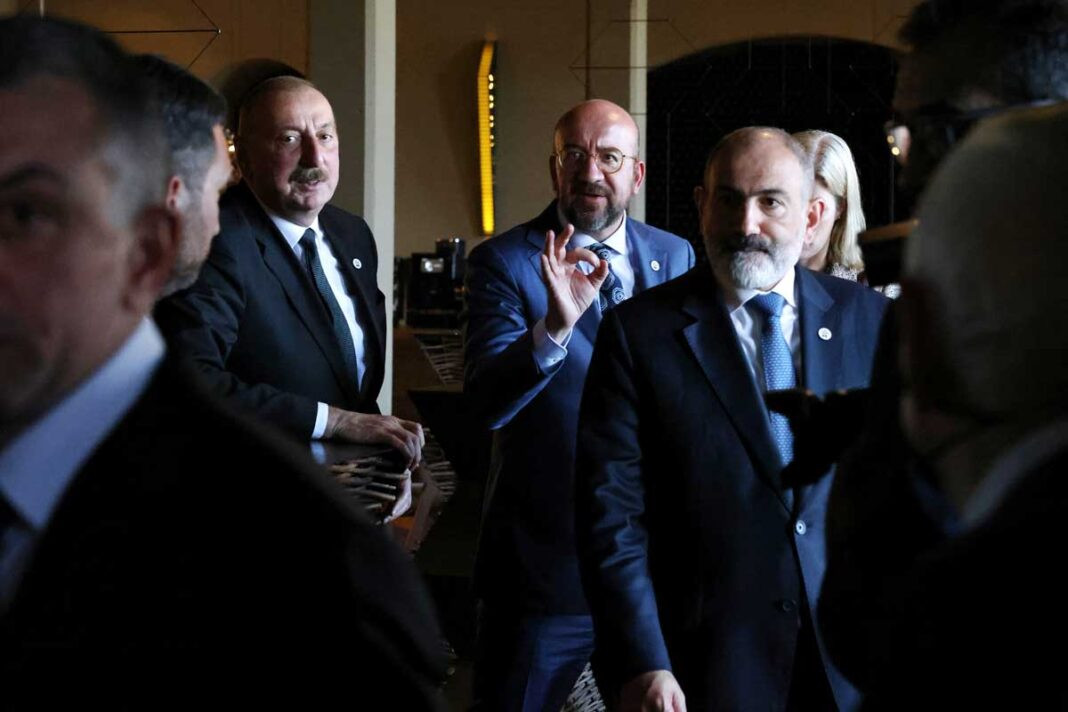
On March 21, Armen Grigoryan, Armenia’s Secretary of the Security Council, announced that Armenia’s Prime Minister Nikol Pashinyan would meet with Ursula von der Leyen, President of the European Commission, and Antony Blinken, Secretary of State of the United States, in a trilateral format on April 5. According to the Armenian official, the meeting is aimed to increase Armenia’s resilience. If this meeting occurs, it will mark a significant milestone in Armenia’s foreign policy, underscoring its efforts to depart from Russia’s orbit and a shift towards seeking security support from Western nations. The initial announcement regarding the meeting was made by von der Leyen on October 5, 2023, during the European Political Community (EPC) summit in Granada, Spain. Given the highly complex geopolitical dynamics of the South Caucasus and the context of the Armenia-Azerbaijan peace process, this meeting is closely followed in Baku, Moscow, and the capitals of other neighboring states.
There are significant concerns that the upcoming meeting could exacerbate geopolitical tensions in the South Caucasus, thereby jeopardizing regional peace and security. This event is perceived as an extension of the ongoing geopolitical competition between Russia and the West into the South Caucasus, posing substantial security risks to the entire region. Such developments are widely viewed as yet another instance of the adventurous foreign policy pursued by Prime Minister Nikol Pashinyan’s government in Armenia, which has been characterized by populist rhetoric and actions. Particularly notable is the impact of Pashinyan’s policies on the Armenian people, as evidenced by his populist statements – such as his assertion in August 2019 that “Karabakh is Armenia. Full stop” – and strategic moves, including the declaration of a “new war for new territories” strategy, which directly contributed to the outbreak of the Second Karabakh War.
He manipulated the Armenian populace with impractical aspirations. For instance, at the onset of his tenure, Pashinyan pledged to increase Armenia’s population from less than 3 million to 5 million by 2050, despite a recent demographic report by the United Nations projecting a decrease to 2,039,000 by 2100. Additionally, he set unrealistic goals such as winning the FIFA World Cup, achieving a 15-fold increase in GDP, establishing at least five technology companies valued at over $10 billion each, attaining a top-twenty ranking in army combat readiness, and reaching the top ten globally in intelligence capabilities. These pledges were made to a nation already grappling with economic decline and demographic challenges.
Meanwhile, the South Caucasus has witnessed significant transformations, contrary to the promises made by Pashinyan to his nation. Pashinyan persists in pursuing imprudent actions, disregarding the delicate regional power dynamics, the tense geopolitical landscape shaped by Russia and Iran, and the potential risks his policies pose not only to Armenia but to the entire region. As an Armenian expert asserted, Pashinyan is taking a risky and adventurous approach by antagonizing Russia without securing any realistic security guarantees from the West. Previously, only the Armenian people bore the brunt of Pashinyan’s adventurous policies; however, Azerbaijanis and Georgians may also be adversely affected if he continues recklessly in his foreign policy pursuits.
Pashinyan’s shift towards the West at the cost of his country’s relations with Russia puts Azerbaijan in an uncomfortable position as it creates expectations in the Western capitals for a similar move from the Azerbaijani government or support to the actions of the Armenian leader. On the contrary, Azerbaijan seeks to maintain its traditional balanced approach in foreign policy and develop friendly relations with all major powers. Today Azerbaijan has become a major contributor to Europe’s energy security exporting natural gas to six European countries and working on the projects to export also to Ukraine and Moldova in the near future. Azerbaijan’s contributions to Europe’s energy security have been highly appreciated by the European Commission in the context of the EU’s efforts to put an end to imports from Russia.
Azerbaijan has been also a close partner of the NATO in its operations in Kosova and Afghanistan. This was commended by Jens Stoltenberg, Secretary General of NATO, in his visit to Baku on March 17-18. “We appreciate very much your contribution to our KFOR mission in Kosovo, but also, of course, your presidency and your contributions to our mission in Afghanistan over many years were extremely important. You are absolutely right, one of the last troops to leave Afghanistan were actually Azerbaijani troops. Because you were responsible for the protection of the airport, which was a key task in the evacuation of the NATO presence in Afghanistan”, said Stoltenberg in his press conference with the Azerbaijani President Ilham Aliyev.
Azerbaijan strives to maintain these friendly relations with the country’s Western partners and, likewise, with other major powers including Russia and China. Located in the highly precarious geography neighboring Russia in the North and Iran in the South, Azerbaijan is compelled to cautiously consider geopolitical realities and balance of power in the region. The tragic events in Ukraine since March 2014 and the war in Georgia earlier in 2008 have underscored that the power balance in this region does not favor making idealistic foreign policy moves without considering the existing geopolitical realities. Given the escalating great power rivalries, it is now more crucial than ever for the South Caucasus countries to recognize and factor in this reality.
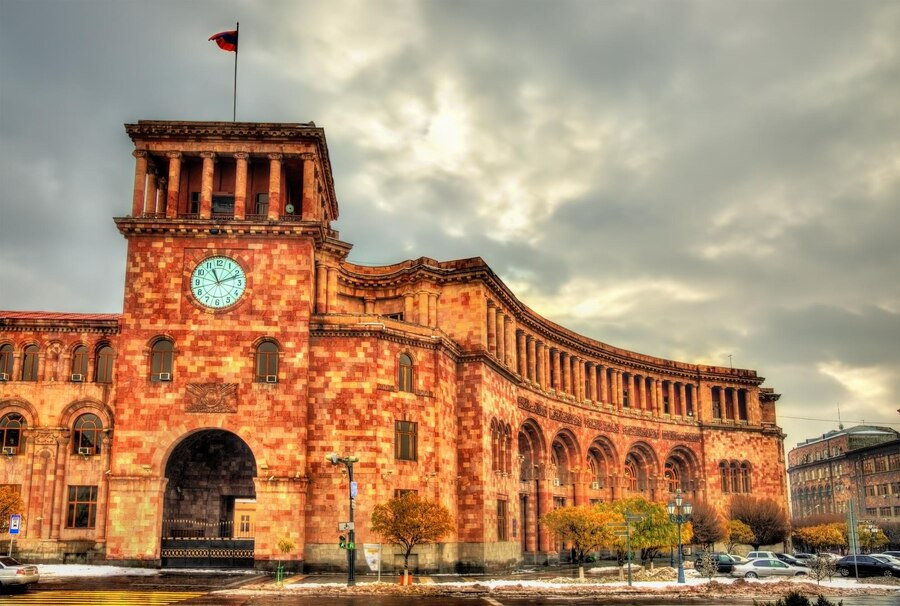
Armenian PM Nikol Pashinyan has signaled his readiness to return the four Azerbaijani villages that occupied and controlled by Armenians since the first Karabakh War. On March 19, speaking to residents of the border village of Voskepar in the Tavush region, Prime Minister Nikol Pashinyan warned of a new war if the territory wasn’t returned to Azerbaijan. Armenia’s PM Pashinyan claimed that quick border demarcation therefore needed to avoid a new conflict with Azerbaijan. “We shouldn’t allow the war to start,” Pashinyan said. The Armenian leader said that those non-enclave villages were outside Armenia’s sovereign territory.
Recall that the Chairman of the State Commissions for the delimitation of the state border between the two countries, Azerbaijan’s Deputy Prime Minister, Shahin Mustafayev earlier called for the immediate return of those non-enclave villages controlled by Armenia in the Gazakh region of Azerbaijan.
PM Pashinyan’s abovementioned statements have caused unprecedented friction between current administration and their opponents and intensified public outrage against him. Three armed men attempted to storm a police station in the Armenian capital of Yerevan’s Nor-Nork district on March 23. It was reported that forty-nine people were arrested. According to Armenian media outlets, those three men intended to free members of the Combat Brotherhood organization, who were being held at the station after being detained earlier. It should be noted that the Combat Brotherhood group was formed in 2021 after the Second Karabakh War and strongly opposes Armenia’s normalization with Azerbaijan. In general, the Armenian opposition parties have accused PM Pashinyan and his cabinet for being a one-sided capitulation. They claim that his approach favors Azerbaijan’s interests and weakens Armenia’s defense capabilities along the border.
Moreover, recently tensions between the Armenian government and Karabakh separatists are rising. Armenian Prime Minister Nikol Pashinyan said that Armenia refuses to recognize any “government in exile”. He noted that such statements are a threat to national security. Pashinyan further stated that his administration is the only one that can exist on Armenian land. Nikol Pashinyan’s statement was obviously a reaction to the interview of Samvel Shahramanyan conducted by Le Figaro. The last leader of the Karabakh separatists Shahramanyan, in particular, announced that under his leadership a “government in exile” was operating in Armenia.
The major reason why PM Pashinyan made such claims that this is a threat to the national security of Armenia is that he, first of all, sees it as a threat to political stability and his personal rule in the country. It is clear that Karabakh Armenians, the leaders of former separatist regime in particular, are extremely hostile towards Pashinyan.
Furthermore, it is reported that a criminal case has been opened regarding the latest events in Karabakh, including the resignation of Arayik Harutyunyan from his “post”. The separatists who managed to escape to Armenia can tell the Armenian investigative authorities a lot of engaging and crucial information. As part of the initiated case, there is a travel ban for many members of the “Artsakh” parliament. Gegham Stepanyan, one of them, tried to go abroad, but he was informed at Zvartnots airport that he was banned from leaving the country in February.
Following the fall of the separatist regime last year in September, Shakhramanyan and some other members of his “administration” moved to Armenia. Even though separatist leader Samvel Shakhramanyan signed a piece of paper called the “decree on the self-dissolution of the NKR”, it seems that they continue their work in Armenian territory. Unfortunately, the Pashinyan government did not close the office where they were sitting causing a threat to the national security of Armenia as highlighted by Pashinyan himself. This action of Pashinyan raises questions about the sincerity of his words and deeds.
To conclude, an increasing surge of tensions between PM Pashinyan and his opponents endangers peace talks and threatens the Azerbaijan-Armenia normalization process. It seems that the reawakening of radical and revanchist groups within Armenia is also in the interest of forces outside the region, which are against the existence of sustainable peace in the South Caucasus. It should not be considered accidental that all these happened immediately after Azerbaijani President Ilham Aliyev’s declaration that now we are closer to peace with Armenia than ever before on March 14. All these events give us reason to say that in the near future, wider provocations from Armenian side will likely occur on the conditional interstate border.
During the initial phase of the anti-terror operation carried out by the Azerbaijani Army in Garabagh in 2023, surveillance equipment previously identified in the trenches, firing positions, fortifications, and permanent deployment locations of the Armenian armed forces were destroyed as legitimate military targets, according to Azerbaijan in Focus, reporting Azernews, citing the Azerbaijani Defense Ministry.
More than 200 optical-electronic and surveillance cameras belonging to the Armenian armed forces, strategically positioned along the 480-kilometer contact line with depths of 10-15 and 20-30 meters, were meticulously installed to monitor the movements of our units and civilian populations, as well as to conduct various types of provocative activities against them.
The high-precision weaponry in our army’s arsenal was utilized to neutralize the optical-electronic and surveillance cameras belonging to the Armenian armed forces identified by our reconnaissance tools in the economic zone of Garabagh.
The post Over 200 Armenian surveillance cameras destroyed in anti-terror operation in 2023 appeared first on Azerbaijan In Focus.
President of the Republic of Azerbaijan Ilham Aliyev has received Minister of Energy of Romania Sebastian-Ioan Burduja, according to Azerbaijan in Focus, reporting AzerTac.
The post President of Azerbaijan Ilham Aliyev received Romania’s Minister of Energy appeared first on Azerbaijan In Focus.
31 марта в Турции прошли местные выборы. На выборах мэров Стамбула, Анкары и Измира по результатам первых подсчетов голосов побеждают оппозиционные кандидаты. Обновленную информацию распространяется BBC. Основная оппозиционная сила, Народно-республиканская партия (НРП), лидирует в крупных городах. Мэр Стамбула от оппозиции Экрем Имамоглу, победивший на выборах в 2019 году, говорит, что доволен результатами. В Анкаре также […]