NPR News: 03-30-2024 8PM EDT
Learn more about sponsor message choices: podcastchoices.com/adchoices
 The South Caucasus News - SouthCaucasusNews.com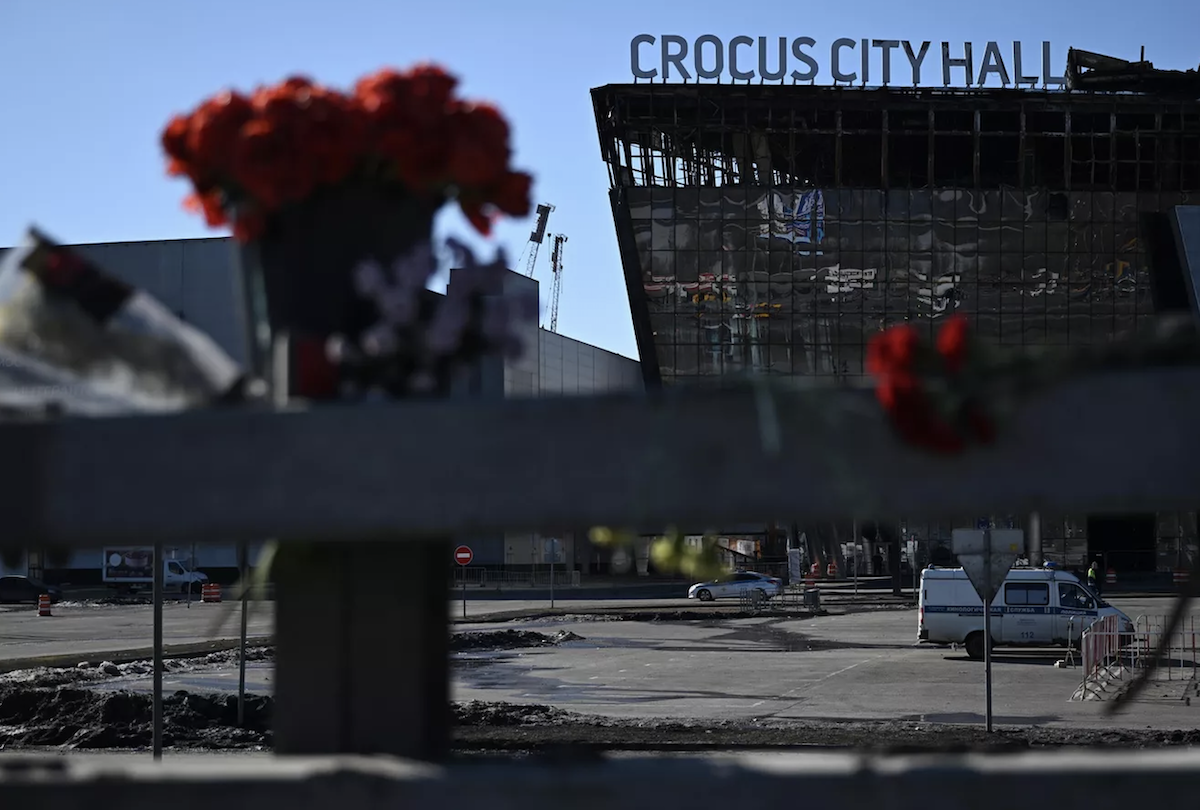
Migrants under pressure in Moscow
After the terrorist attack at the Moscow “Crocus City Hall,” for which several citizens of Tajikistan are accused, Tajik nationals in Russia have faced increased levels of ethnic hostility, fear, and mistrust from the local population. They have become targets of attacks, workplace discrimination, as well as assaults and threats from xenophobic groups.
On the morning after March 22, messages about beatings appeared in Tajik community chats. Tajikistanis warned each other not to be outside in the evenings. As Rustam, a worker living in Moscow, told “Novaya Gazeta Evropa,” he doesn’t plan to go to work in the coming days because he fears attack.
Street attacks on Tajikistanis have occurred in Moscow, the Moscow region town of Fryazino, and Blagoveshchensk. According to “Mediazona,” observers documenting videos of street violence by far-right groups report that in the past few days, videos have emerged showing at least four people being sprayed with gas from pepper spray canisters and five others being beaten.
The Russian government is also monitoring the activity of citizens from Tajikistan on social media. In St. Petersburg, a 26-year-old Tajik citizen was charged with terrorism justification for comments about the terrorist attack at “Crocus City Hall” in Moscow.
Across the country, raids on migrants are taking place. On March 27, the police and Rosgvardia checked the documents of migrants working at the Wildberries warehouse in the Moscow suburb of Elektrostal.
Since March 23, such raids have taken place in Moscow, Moscow region, Volgograd, Tula, annexed Sevastopol, Saratov, Kaliningrad, Yekaterinburg, Nizhnevartovsk, and Nefteyugansk. Police mostly draw up protocols for migrants violating migration laws, and some are required to leave the country.
“We hope we won’t be deported. The recent events in Moscow deeply saddened us. In recent years, the situation with migrants has been difficult. Hopefully, everything will improve, and we can continue working,” said Firdavs Zaymuddinov, who works at a construction site in the Samara region, to Your.tj.
Such close attention from the police and special services puts pressure on employers, who find it easier to terminate (often improperly documented) labor relations with an employee than undergo constant checks and endure sudden raids.
“Employers haven’t told us anything personally. But I heard them say that all these non-Russians should be sent back to their homeland. Now, after these events, we rarely go out on the streets and are cautious,” said Farhodi Dilfigor, a builder from Mytishchi, near Moscow, to Your.tj.
Amid the raids and crackdowns, the Russian Ministry of Labor proposed limiting labor contracts with migrant workers to two years. Additionally, the Ministry of Labor proposed introducing mandatory fingerprinting for migrants. They also want foreigners to provide documentary evidence of their proficiency in Russian, as well as knowledge of Russian legislation and history.
Migrants also face other problems – they are refused service, rental agreements are terminated, and they are denied the most basic human rights.
According to Russian demographers, to maintain production at the current level, Russia needs to attract 390,000 migrant workers annually. Therefore, the participation of labor migrants from Central Asian countries plays a crucial role in maintaining and developing Russian infrastructure, construction, and agriculture.
Russian authorities act without regard to the fact that such treatment of migrants harms not only their safety but primarily the economic development of Russia. Because amid war and tightening migration policies, fewer people want to go there to work.
Zhenya Snezhkina,
Media Network
By Oluwole Ojewale
Urban growth in Africa means cities are becoming more globalised, and crime is increasing in complexity and scope. With in-migration comes the coexistence of various cultures, and the problems associated with managing these differences and the conflicts they provoke.
The proliferation of arms in West African cities, especially since the conflicts in Libya (2011) and Mali (2012) began, has exacerbated the situation. Cities such as Abidjan, Accra, Bamako, Dakar and Lagos are connected to international markets. This enables organised crime syndicates to collaborate with groups in and beyond Africa. Illicit weapons are an important trafficked commodity, and a means to protect and control populations and smuggling routes.
Research by the Institute for Security Studies (ISS) shows that the arms trafficking economy in Mali’s capital Bamako and Lagos, Nigeria, involves diverse actors driven by mutually reinforcing factors. These include transnational criminal groups, violent extremism and thriving gangs that require arms, and the pressures brought on by an influx of people into these spaces.
In Bamako, the increasing presence of transnational terrorist groups is a major driver of weapons trafficking. The dominant groups use their global reach to procure and smuggle arms into Mali, and operate cells in Bamako’s outskirts.
In Lagos, kidnappers, armed robbers, petroleum pipeline vandals, ethnic militias, road transport workers, commercial motorcycle riders and criminal gangs in various neighbourhoods provide a ready market for arms dealers. The No Salary Boys, Awawa Boys and One Million Boys cult gangs terrorise residents with guns bought from local blacksmiths and other sources.
Military sources in Bamako say weapons trafficked along the Niger River are mostly small calibre. Many are either obtained through armoury pillaging when insurgents attack security establishments or are manufactured in illegal workshops in the city. Bamako’s rugged geography helps conceal these factories, which are behind hills and in caves and ravines, ISS research shows.
Firearm importers and traffickers use different smuggling strategies and concealment methods in Lagos. They falsify import papers and merchandise declarations to bring firearms through the city’s seaports. In one case, 1 100 rifles seized at Tin Can Island Port were concealed in a 20-foot container, which the importer had declared as containing toilets and hand basins. Another gun runner hid illegal firearms in a container declared as plasma TVs.
According to the ISS study, poor urban planning and maintenance enable arms trafficking. Bamako’s inner city is dotted with slums, which have been identified as critical arteries for the concentration and circulation of small arms. Numerous slum settlements in Lagos also serve as strategic outlets for arms trafficking and havens for criminals.
Incomplete or abandoned buildings in Bamako and Lagos have become places where criminals plan operations and stockpile and distribute illicit firearms. In Bamako, Kalabancoro Police Station officers recovered illicit firearms from a syndicate occupying an unfinished building in Commune V. In Lagos, guns hidden in derelict houses and plots were retrieved by the Lagos State Police Command’s task force. Improvised explosive devices, bombs, AK47 rifles, cartridges and daggers were also recovered in similar settings from suspected terrorists.
Linked to the challenges posed by poor urban planning is the use of commercial motorbikes as a means of transport in Lagos. The Association of Commercial Motorcycle Operators has emerged as an urban militia using illicit weapons to foment violence. In the first half of 2021, 320 bike operators were arrested in connection with 218 crimes. Police seized 480 guns of various calibres from them.
The collusion of security personnel through armoury theft remains a major source of illicit weapons and ammunition in Lagos, partly due to poorly managed police and military stockpiles. In Bamako and its outskirts, insurgents regularly attack security force outposts, military installations, security convoys and checkpoints to loot weapons.
Easy access to small arms and light weapons in Bamako and Lagos prolongs existing conflicts, such as terrorism in Bamako and ethnic violence in Lagos. It threatens the stability of polarised communities, putting civilians at risk of death or injury.
Data collected by the Armed Conflict Location & Event Data (ACLED) Project and the ISS show 34 attacks in Bamako and its surrounds since 2011 – attributed to armed criminals (62%) and terror groups (21%). ISS reported 20 attacks linked to armed groups in Lagos in 2020, 18 in 2021 and 25 from January-June 2022.
According to ACLED, attacks since 2011 were perpetrated by unknown criminals (43%), the National Union of Road Transport Workers (16%), cultists (7%), and communal militias (9%). ACLED reported that 241 people died in targeted attacks by various armed groups in Lagos since 2012.
Addressing arms trafficking and associated security challenges in cities requires state authorities, multilateral agencies, civil society and city residents to work together. They will need new ways of thinking about what effective responses look like in Bamako and Lagos.
Bamako’s municipal authorities should register all gunsmiths to garner intelligence about their operations – specifically the scale, pattern and supply to designated government agencies such as police departments. City governments in Bamako and Lagos must enact planning regulations to curb the proliferation of incomplete and abandoned buildings, and ensure that unfinished structures are properly policed to avoid conversion into criminal hideouts.
Mali and Nigeria’s central governments must improve infrastructure and contraband-detecting technologies at ports of entry. Electronic surveillance systems will enable better immigration checks and security at unmanned borders. Lastly, civil society organisations should hold governments to account on their plans to stem illicit arms flows into the two cities.
Download the full report.
Joe Biden has long had a problem with PEACE – as in “ceasefires,” “serious peace negotiations,” and conditioning the transfer or sale of major weapons systems as required by five U.S. criminal statutes. From one side of his mouth, Biden urges futilely Israeli compliance with international law while on the other side he supports the daily shipment of weapons of mass destruction to the Israeli government. These weapons are being used in the genocidal killing of Palestinians in Gaza.
A majority in Congress is even more hawkish and lets Biden do whatever he wants in making war abroad. The cornerstone of our Constitution – the separation of powers – has been demolished in area after area. (See, our open letter of November 28, 2023, to the members of the U.S. Congress).
By contrast, American public opinion has turned against U.S. arms shipments to Israel and the annihilation of Palestinian civilians from infants to the elderly. Whole extended families are being wiped out by American-made bombs and missiles. The homeless survivors are injured, starving and suffering from untold illnesses.
The Israeli state terror is producing a Palestinian Holocaust. Netanyahu’s violent anti-semitism against the Arabs of Palestine is out of control. Many courageous Israeli human rights groups protest, to no avail, (See, the December 13, 2023, open letter to Biden that appeared in the New York Times) as Netanyahu and his extremist coalition reveal their long-time objective of driving millions of Palestinians out of what is left of their Palestine.
As for the Hamas raid on October 7th, and the total collapse of the highly touted Israeli border security, a World War II Holocaust survivor told the New York Times, “It should never have happened…” Yet, Netanyahu has blocked an official investigation of this unexplained multi-tiered technological and human intelligence debacle.
Meanwhile, public dissatisfaction with the dictatorial decision-making by the White House and the absence of Congressional action is growing rapidly. More and more labor unions are now opposing Biden’s bombings, Jewish Americans working with Jewish Voice for Peace and If Not Now are brilliantly organizing demonstrations. Veterans for Peace’s 27 chapters around the country are in the streets peacefully demanding a ceasefire, cessation of weapons shipments and major increases in humanitarian aid. They are mostly ignored by the corporate media, NPR and PBS.
Religious groups are beseechingly calling for peace. This week in the latest public letter, 140 Global Christian Leaders, organized by Churches for Middle East Peace (CMEP) called on President Biden “…to have the moral courage to end U.S. complicity in the ongoing violence and, instead, do everything in [his] power to…” stop the “death and destruction” in Palestine.
The CMEP receives little or no coverage by the mainstream media even though this organization represents millions of people.
But then look who is not taking a pro-peace stand, staying silent or actively backing the Israeli war machine. The American Legion and the Veterans of Foreign Wars are on the sidelines. The AFL-CIO Labor Federation finally came out tepidly for a ceasefire but has exerted very little of its muscle on Capitol Hill.
AIPAC, the “pro-Israeli government can do no wrong lobby” has been cultivating relationships with these U.S. organizations and others like them for decades.
The worst abdications have come from the legal profession in the form of State Bar Associations and the American Bar Association (ABA) – the largest organization of lawyers in the world. These lawyers are all “officers of the court” instructed to stand for the rule of law. Except for a brief time in 2005-2006 (https://nader.org/2013/04/19/aba-white-papers/ ) the ABA has idled while Presidents regularly have violated our Constitution and all kinds of laws – domestic and international – with impunity, facilitated by a supine Congress.
Bruce Fein and I have asked 50 State Bar Associations to be first responders in challenging the ongoing breakdown of the rule of law due to their professional duties and knowledge. None have responded.
As for the healthcare professionals watching Israel raining death and destruction directly on Gaza’s hospitals and health clinics, inundated with desperate patients, their endangered physicians and assistants without the means to devote their care, the response is overwhelmingly silent. The American Public Health Association and the American Medical Student Association are among the few to have condemned Israel’s atrocities.
Yet, the desperate pleas by their wounded professional colleagues have failed to register with the likes of the American Medical Association, the American College of Surgeons, the American Academy of Family Physicians, the American Association for the Surgery of Trauma and many others. (See the letter of March 1, 2024, which has gone unanswered).
What can turn our country around? An organized citizenry of less than one percent of the voters in Congressional Districts, giving voice to the voiceless majority, can free Congress from its captivity imposed by the forces of greed, power and violent Empire, draining resources from our dire domestic needs.
As I wrote in the Capitol Hill Citizen (February/March 2024 issue), Congress has become a weapon of mass destruction with multiple warheads. Only the people can recover their sovereign power, under the Constitution, now delegated to a Congress that sells out to the highest corporatist bidders.
On the Israeli slaughter of Gaza’s people, a small but growing number of Democrats in Congress are standing tall. They need your active backing to expand their numbers. (See, Ceasefire Tracker: https://workingfamilies.org/ceasefire-tracker/).
As for the cruel, vicious, genocidal, maniacal Republicans, they remain disgraced in their full-throttled support for Netanyahu, who is fighting for his job, trying to escape Israeli prosecutors and is hugely unpopular in Israel.
The GOP position was expressed by Arkansas Senator Tom Cotton – a lawyer no less – who said last October, for posterity’s eternal damnation: “As far as I’m concerned, Israel can bounce the rubble in Gaza.” This is exactly what the massacring Israeli juggernauts have done with the weapons, taxpayers’ money and diplomatic cover enabled by corrupt outlaws like Tom Cotton.
By Peter C. Earle
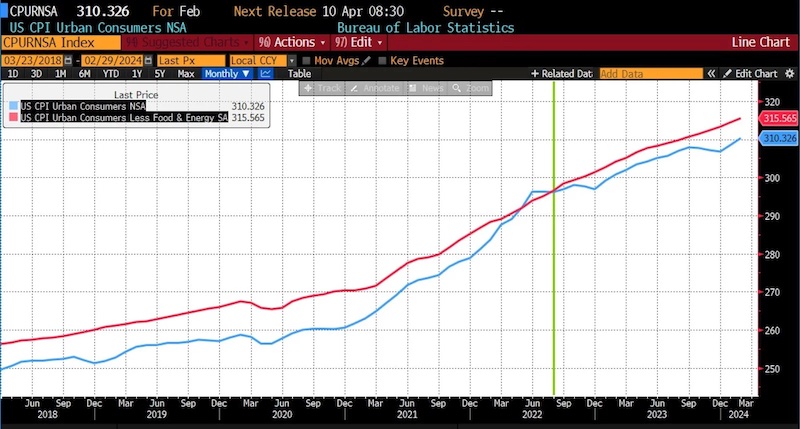
It’s most likely that sinking poll numbers, more than anything else, prompted the Biden Administration’s latest deflective policy initiative. A “Strike Force on Unfair and Illegal Pricing,” to be jointly run by the US Department of Justice (DOJ) and Federal Trade Commission was announced in early March, charged with pursuing “unfair and illegal” pricing. Disinflation has slowed notably throughout the first two months of 2024 and with an election coming, a pivot was essential. Characterizing stubbornly high prices as “gouging” not only angers financially beleaguered Americans, but deters inquiries regarding the effectiveness of the much-touted, and now seldom-mentioned, 2022 spending bill opportunistically titled the “Inflation Reduction Act.”
It cannot be stressed enough that prices have continued to rise since the Inflation Reduction Act was passed in August of 2022. The White House website itself refers to that legislation as the “most significant action Congress has taken on clean energy and climate change in the nation’s history.”
US CPI Urban Consumers Index (blue), US CPI Urban Consumers Ex Food & Energy Index (red), passage of the Inflation Reduction Act (green)
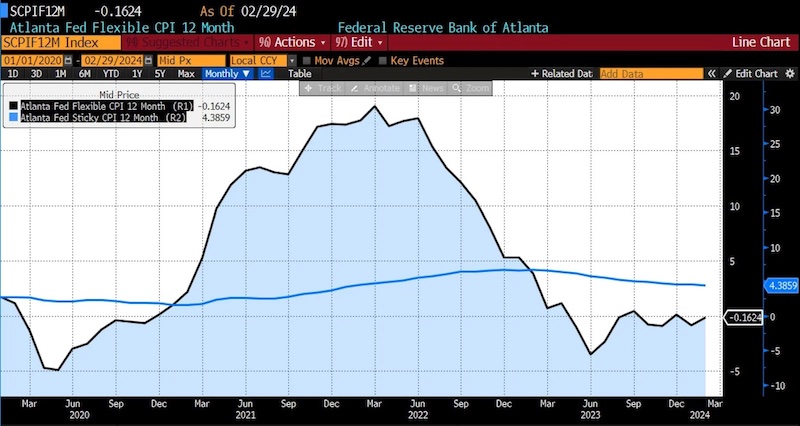
A look at the last 12 months of Consumer Price Index trends, broken into flexible and sticky prices, makes clear the primary source of the recent gumming-up of price deceleration. As a refresher, sticky prices are those which adjust slowly in response to changes in supply and demand — often due to contractual agreements, menu costs, regulatory requirements, and other sources of rigidity.
Atlanta Fed Flexible CPI (12 month, black) vs. Sticky CPI (12 month, blue)
 (Source: Bloomberg Finance, LP)
Any enforcement action by this new investigatory body will necessarily be arbitrary, as all characterizations of pricing as excessive or predatory (or reasonable, for that matter) are subjective. Historically, official attempts to define gouging have pursued different approaches, but primarily refer to prices rising to a degree that generates politically actionable complaints. At times a “price increase threshold” has been cited, defining some dollar amount or percentage increase as excessive. Elsewhere, the designation of goods and services as “essential” has been used to justify interfering in the function of markets. Emergency circumstances have also been invoked — ironically, precisely when unfettered prices are at their most critical — to justify invalidating the decentralized workings of the price system.
Prices are vastly more, both in their derivation and economic function, than the simple exchange ratio they are sometimes dismissed as. They facilitate economic calculation and the rational allocation of goods absent command control. Some sixty-one years ago, Oskar Morgenstern gave an example of exactly how complex prices may be beneath the surface. Quoting from a contract for iron ore summarized as “$4.60 per ton,” the price is:
“not merely $4.60 a ton but $4.60 per gross long ton of 2,240 pounds of Mesaba Bessemer ore containing exactly 51.5 percent iron and 0.045 percent phosphorus, with specified premiums for ore with a higher iron content or a lower phosphorus content and with specified discounts for ore with a lower iron content or a higher phosphorus content; samples to be drawn and analyzed on a dry basis by a specified chemist at Cleveland, the cost being divided evenly between seller and buyer; 48,000 tons to be delivered at the rate of approximately 8,000 tons per month during April-September, inclusive, on board freight cars of the New York Central Railroad at Cleveland, Ohio; the purchaser to pay all charges involved in moving ore from the rail of the lake steamer to the freight car and other port charges such as unloading, dockage, storage, reloading, switching and handling; ore to be weighed on railroad scale weights at Cleveland; payment to be made in legal tender or bank checks of the buyer to the Cleveland agent of the mining company on the 15th of the month for all ore received during the previous month. “
In the case of this single price, anything from the iron content of the resource, to the location of the assaying chemist, to the time and method of delivery, to the basis of payment could change the balance of inputs, necessitating a change of price. If more than one of those many factors change simultaneously, the price may change notably. And this is the price of a single good in a vast market constantly upended and resettled in a furious clash of rigid scarcity and unbound demand. The notion that a bureaucrat can decide, simply by looking at numbers or a change in numbers, that a change in price is excessive or reasonable is rooted in the same esotericism by which a bartender, suddenly elected to public office, instantaneously becomes an expert on economics, political science, law, international relations, civil-military affairs, and so on.
The so-called Strike Force — not a task force, but a strike force, indeed — is likely to act as a bludgeon for government attacks on private interests, and in particular, those viewed as adversaries to the administration. Here are three forecasts pertaining to the nascent numerology junta.
First, its announcements regarding enforcement actions will be timed to coincide with CPI or PCE releases (perhaps employment releases as well, given the recent trend): particularly, while perhaps not exclusively, when those releases are less-than-rosy. Second, that those companies taken to task for ”gouging” will fall within at least one of three major categories:
A. Firms or industries whose cost structures are dominated by sticky prices;
B. Firms or industries regarded as hostile to prevailing political philosophies;
C. Select political targets
In Category A, one would expect to see accusations and punitive measures directed at housing/shelter, healthcare, and utilities firms, among others. Category B targets are likely to include the energy sector (oil, natural gas, and what remains of the coal industry), legacy automakers, large retailers and food chains with a history of resisting collective-bargaining efforts, and certain banks and financial institutions. The Category C may include interests headed or owned by well-known or outspoken billionaires, media firms opposed to the ideologies of the Biden Administration, large companies with ownership based in Israel, Russia, or other nations at odds with current foreign policy objectives, entities or organizations donating or providing support to the other side of the aisle, and vocal opponents of the ESG and DEI wave.
The third and final prediction is that two prominent major sources of sticky prices, union wage contracts and government-imposed costs, will be ignored or overlooked in whatever form of scrutiny is brought to bear on private companies.
In one sense, the introduction of the Strike Force on Unfair and Illegal Pricing represents a retreading of the Nixon Administration’s ruinous Economic Stabilization Program, yet an escalation in its replacement of price controls and wage freezes with an administrative cudgel to harass and assail US citizens: owners, managers, and ultimately shareholders of for-profit firms. It shifts blame from monetary central planners to the most productive members of American society. By employing subterfuge, arrogance, and cowardice all at once, it is perhaps the quintessential political maneuver — a brand of awfulness for which there is no price, but nevertheless, tremendous cost.
By Mohammed Soliman
Just as Halford Mackinder, in his seminal work The Geographical Pivot of History, argued that control over the Eurasian heartland held the key to global mastery, the world stands at the precipice of another pivotal shift—one driven not by geography, but by the relentless force of exponential technological innovation. This is the age of the Technological Pivot of History, where the balance of power hinges not only on landmasses but also on the ability to harness and wield the ever-evolving arsenal of technological advancements.
The pace of innovation today is nothing short of breathtaking. Moore’s Law, what was once a simple observation, has morphed into a self-actualizing prophecy, with processing power doubling roughly every two years. This exponential growth isn’t confined to silicon valleys—it’s reshaping every facet of human lives, from the microscopic to the macroscopic. Transistors, the building blocks of chips, are now routinely crammed into spaces smaller than the width of a human hair. This miniaturization, driven by Moore’s Law, has fueled the rise of smartphones that outperformed desktop computers just a decade ago and unleashed the potential for even more powerful AI applications like autonomous vehicles and real-time medical diagnostics. Generative AI, a subfield focused on creating new content, is already producing stunning results. Tools like DALL-E 2 can generate photorealistic images from mere text descriptions, while GPT-3and Google Bard can write convincing human-quality prose poems and even code. As these models grow more sophisticated, their parameters, the variables that define their behavior, become increasingly complex, opening a vast universe of creative and exponential possibilities.
Robotics and automation are transforming industries, from manufacturing to agriculture. Automated assembly lines are churning out goods with unprecedented efficiency, while robots are tending crops and managing livestock with precision. These advancements are not only boosting productivity but also create new opportunities for human-robot collaboration Looking at an example that’s even more impressive, consider the revolutionary field of DNA testing. Once relegated to expensive research labs, genetic analysis is now accessible to the masses. Companies like 23andMe and AncestryDNA offer affordable kits that unlock previously unknown family history and even predict predisposition to certain diseases. This democratization of genetic information is leading to breakthroughs in personalized medicine and understanding of human health.
The impact of these technological advancements extends far beyond technical improvements, fundamentally altering the power dynamics on the global stage. Just as empires of the past rose and fell based on their mastery of geography and resources, so too will future power dynamics be determined by technological prowess. The landscape of national strength is shifting. Territorial size, resource wealth, and even military might no longer guarantee supremacy. Instead, the ability to foster innovation, attract talent, and adapt will determine who thrives in this rapidly changing landscape. In recent decades, the exponentialgrowth of technology has redefined state sovereignty and hegemony. New geopolitical lines will continue to be drawn around technology and the flow of information, whereby historically, they were formed geopolitically and by way of traditional military superiority. Thus, technology is central to the balance of power. In recent years, it’s become clear that the United States and China are locked in a tech-fueled great power competition, with implications spanning from cyber warfare to intellectual property, from data to AI, and from undersea cables to low-orbit satellites.
The intensifying competition in the cyber and technology domain, often referred to as the “US-China tech Cold War,” is prompting major and regional powers to develop their own cyber and technology doctrines. From the chokepoint of Dutch chipmaking to the ambitious AI programs of Saudi Arabia and the United Arab Emirates, a new wave of rising powers is disrupting the global technology landscape. East Asian shipyards, led by Japan and Korea, now churn out the giants that traverse the world’s oceans, while India and Vietnam witness an industrial revolution. In the skies, Turkey has carved a niche as a drone superpower, with its Bayraktar TB2s becoming a sought-after commodity. These nations are not just catching up, they’re pushing boundaries, shaping the future of technology, and challenging established leaders in a race for innovation that promises to reshape the world. Their technology doctrines reflect the growing recognition that technological prowess can be a significant power multiplier in the current multipolar and volatile world.
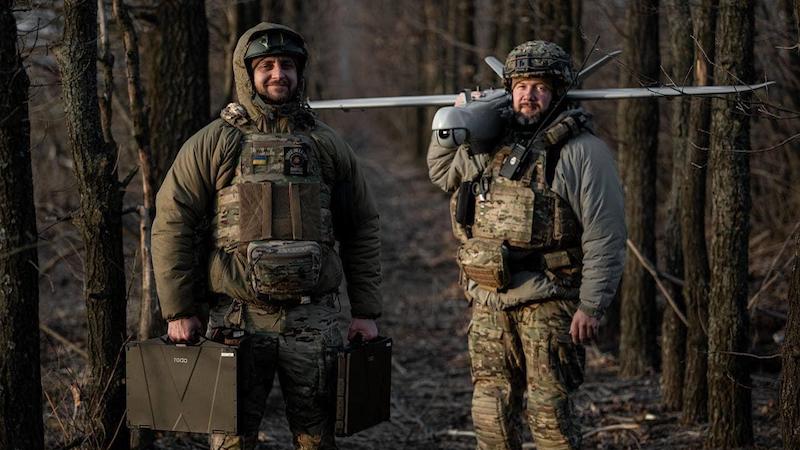
The United States, a long-time trailblazer in technology innovation, now faces greater scrutiny from other nations observing the impact of its tech capabilities on its past geopolitical standing. Case in point: US technology played a vital role in the recent Russia-Ukraine conflict, supporting Ukrainian efforts to counter the Russian invasion. Unsurprisingly, China is pouring billions into AI research and development, aiming to achieve dominance in a technology poised to revolutionize every aspect of human life. Consider the United States, its Silicon Valley churning out disruptive technologies, but grappling with internal divisions and anxieties about the pace of change. The race for technological supremacy is on, and its outcome will define the new hierarchies of power.
Unlike the zero-sum battles for geographical control, the Technological Pivot offers the potential for shared gains amidst inequalities. However, the digital divide threatens to leave entire populations behind in the exponential age. Ethical considerations loom large. Questions of privacy, security, and the very nature of humanity in the age of machines demand urgent attention. Navigating this Pivot demands a paradigm shift in thinking about international cooperation on standards and regulations to ensure responsible and ethical use of technologies, as the use of technologies poses existential questions about our place in a world increasingly shaped by machines.
The Technological Pivot of History is a transformative era where the balance of power is no longer solely dictated by geography but by the ability to harness exponential technological innovation. As the world witnesses the escalating US-China tech Cold War, it becomes evident that the race for technological supremacy is shaping the future hierarchies of power. The digital divide will be widened in the exponential age and threatens to leave entire nation-states on the sidelines of this Technological Pivot of History.
The views expressed in this article are those of the author alone and do not necessarily reflect the position of the Foreign Policy Research Institute, a non-partisan organization that seeks to publish well-argued, policy-oriented articles on American foreign policy and national security priorities.
For years there has been talk of a ‘third force’ to radically change the nature of politics and government in Malaysia. The noble objectives included unity, opportunity and socio – economic growth, while avoiding race, religious, and geographical divisions. Although these principles have some general support, attempts of launching new parties have come and gone, leaving the race-based Semenanjung dominant party status quo intact and unchallenged.
Malaysia is losing its competitive position in the region. The economy is not evolving in a way to structurally prepare for the future, and the wellbeing of the Rakyat is deteriorating. These are undeniable truths which the great majority of Malaysians from all races and sides of the political divide are in agreement.
The government needs to be run by people, with a clear intent of being for the people, and driven by a vision of a Malaysia that can evolve and cement an inclusive and cohesive nationhood that all citizens will be proud of.
This emergence can come from the political leadership of East Malaysia, who have repeatedly shown they are capable of transcending the race and religion divide. East Malaysian leadership can lead the change towards a new generation of younger leaders, with new ideas for policy development, with implementation by people who care about what happens.
The political leaders of Sabah and Sarawak have long governed with philosophies very different from what Malaysians have experienced in Semenanjung. Adenan Satem stands out as the role model for a new united Malaysia but unfortunately he was not able to complete his mission with his early demise.
The East Malaysian people have a sense of nationalism that others in Semenanjung have lost to other narratives. These narratives are perpetually causing division and regression, at the cost of cohesion and advancement.
Many in Sabah and Sarawak also have a sense of patriotism which has withstood the test of MA63, the unequal relationship of the three component states of the federation, their status as stepchildren in budget and development allocations, and the numerous other ways in which they have been discriminated against by Semenanjung dominant coalition governments.
Frankly, it’s time to look east to Sabah and Sarawak and for the Semananjung dominant political pundits to stop ignoring what is happening in the other half of Malaysia. It is time to take their principles, culture and lessons and incorporate them into an administration and government that governs for all Malaysians.
The East Malaysian political leadership can unite and nurture Malaysia towards maturity and new hope. This is not to underestimate the challenge as society, economics, and politics of Sabah and Sarawak are also diverse, and there has never been a strong and resilient Borneo perspective. However, both territories have enough in common to provide a fresh look at where Malaysia should go. And this can begin with GE16.
There are two basic strategies for this possibility to be rolled out and achieved.
It is indeed very possible for East Malaysia as a blocc to be the largest grouping in the next sitting parliament after the GE. The East Malaysian bloc will not just be the kingmaker in the next election, it can take the leadership.
Besides being established partners of past BN governments and the present Unity Government, coalitions such as GPS and GRS would fare even better if they continue to engage and form alliances with one another to present themselves as a united East Malaysian front in preparation for the next election.
This is so that, in the event, talks between PH and UMNO break down in the future, the East Malaysian bloc may continue to push for inclusive policies, including MA63 and other policies, and in doing so, become the stabilising and positive factor in the fractured political landscape that is likely to emerge after GE16.
With 56 seats up for grabs in the next election, and perhaps more seats after the delineation exercise, GPS and GRS may safely hold at least 30 seats and may even be in a position to add more to their new partnership. Should the delineation exercise result in expanding East Malaysia’s parliamentary representation to at least 1/3 of the total parliament seats, this will greatly increase East Malaysia’s weight and participation in the country.
It is evident that East Malaysian MPs have more gumption when it comes to matters related to racial and religious issues. In contrast, Semenanjung parties are either too emotionally and financially invested to think straight or are just trying to score political points by fanning matters and issues to the extreme. The issue of using English for communication with government departments was promptly shot down by Sarawak Premier Abang Jo. Similarly, the UEC has been accepted by the Sarawak government since 2014, whereas this remains a contentious matter on the peninsula. Other than that, Tiong King Sing regularly stands his ground when he broaches issues that no other non-Muslim MPs dare to talk about.
Looking at the political situation today, Semenanjung parties are all established and have little room left for improvement. This is especially the case, ever since reforms have taken a backseat to compromises and power-brokering, and procuring a larger slice of the political cake.
That being the case, smaller parties on the Peninsula should also form alliances with Borneo parties such as Warisan. Although Warisan’s attempt to enter the peninsula fizzled out during the last election, it would be beneficial if there is communication between Warisan and all the smaller parties of the peninsula, such as PSM, PRM, Muda, Gerak Independent and the Green Party as soon as possible. This can be the foundation for strategically engaging other coalitions further down the road.
Some independent observers are forecasting that there will most likely be a hung parliament after the next GE, similarly to GE14. Should this happen, there is opportunity for existing blocs to realign with a East Malaysian grouping leading to potentially more than a new coalition government. This bloc, led by East Malaysia parties and including parties based in the Semenanjung, can reignite reformasi and lead to a new type of politics.
Malaysians from all communities are sick and tired of the same-old, same-old polemics of the past, and GE16 is the time to get it right. If the existing Unity Government needs a push in the right direction, it can only be achievable if the East Malaysian bloc unites and ‘serbu’ (charges into) West Malaysia to keep the old guard on their toes.
We are confident that many voters will agree with the above premise. We recognise that some will see it as improbable or will scoff at the idea of an East Malaysian party bloc leading a future coalition. The pundits may dismiss or disregard the above proposition, but can they present a better alternative?
There is an urgent need for a new unity in the country. This can be shaped by the outcome of GE16. The east wind can be the transformative catalyst.
Lim Teck Ghee is a former senior official with the United Nations and World Bank. Murray Hunter is an independent researcher and former professor with the Prince of Songkla University and Universiti Perlis. Carolyn Khor is a former ministerial press secretary, a former United Nations Volunteer and an independent researcher/writer.