
Yes, we are now waging a global war against totalitarian regimes, and we must win. https://t.co/Y63VNWqB8F
— Emin Bred (@emin_bred) March 29, 2024
Day: March 29, 2024
שבת שלום 🇮🇱 pic.twitter.com/JuUT2ke2xx
— Benjamin Netanyahu – בנימין נתניהו (@netanyahu) March 29, 2024
Кто заказал теракт в “Крокусе?” ФСБ раскрыла новые подробности расследования – Центр || Интерфакс Россия https://t.co/8Y0xCiSmi9
— Michael Novakhov (@mikenov) March 29, 2024
Azerbaijan National Hero Anatoliy Davidovich#039;s memory was honored
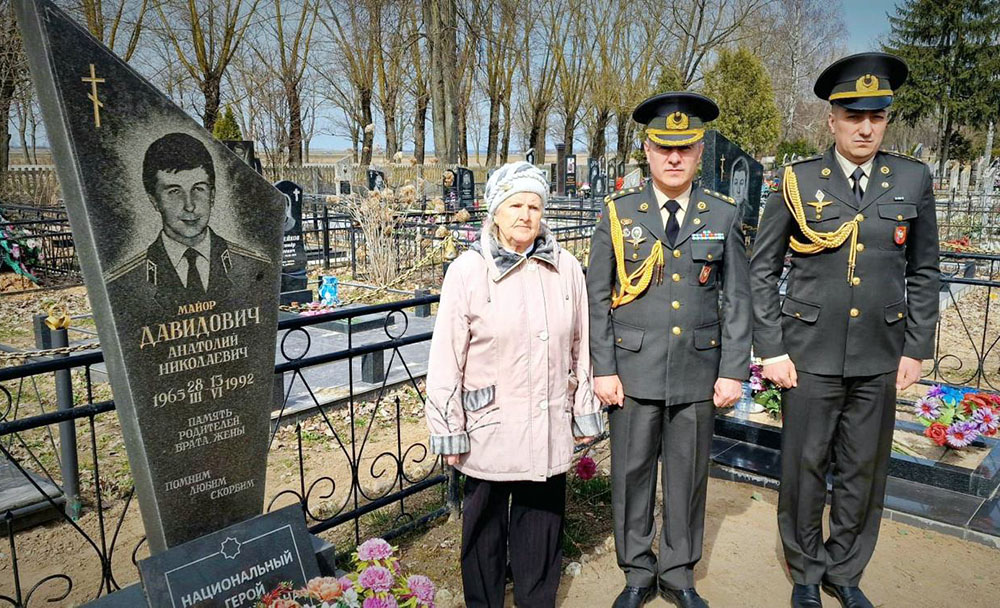
Representatives of the Military Attaché Office of the Armed Forces of the Republic of Azerbaijan to the Republic of Belarus visited the grave of the Azerbaijan National Hero of Belarusian origin, Davidovich Anatoliy Nikolayevich on the occasion of the anniversary of his birth, laid flowers and paid tribute to his memory on behalf of the Azerbaijan Defense Ministry.
The representatives of the Attaché Office enquired about health and concerns of the mother of the National Hero, Kima Davidovich.
Mother of the National Hero expressed her gratitude to the President of the Republic of Azerbaijan, the leadership of the Ministry of Defense for the respect, attention and care to her son’s memory.
It should be noted that A. Davidovich was seriously wounded in the battles for the territorial integrity of Azerbaijan and was evacuated to the hospital, but despite the efforts of the doctors, it was not possible to save his life, he died on June 13, 1992. By the Decree of the President of the Republic of Azerbaijan dated July 3, 1992, Major Davidovich Anatoliy Nikolayevich was posthumously named the National Hero of Azerbaijan.
Azerbaijan National Hero Anatoliy Davidovich#039;s memory was honored
Executive Summary:
- Russian propaganda has admitted to the involvement of Islamic State militants in the attack on Crocus City Hall while pushing the narrative that the West is to blame at Russian President Vladimir Putin’s direction.
- Direct orders from the Kremlin to lay blame for the tragedy on Ukraine and the West signals the impossibility of an objective investigation.
- The Russian authorities will likely manipulate results to suit Putin’s narrative, as ensuring the general population’s safety seems to be a secondary priority for the Kremlin.
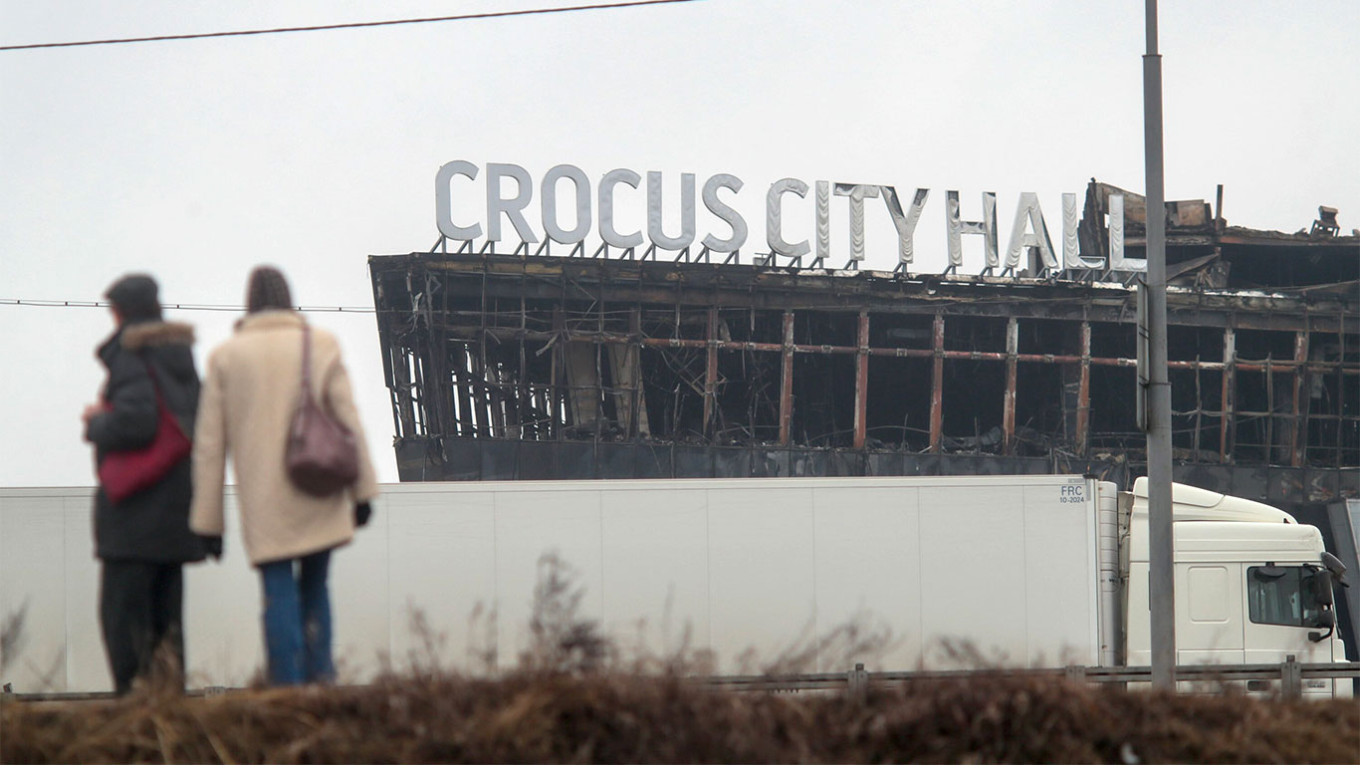
Several days have passed since one of the worst terrorist attacks in Russia’s history took place. On March 22, gunmen opened fire on concert attendees at Crocus City Hall on the outskirts of Moscow (see EDM, March 26, 27). While the Kremlin attempts to exploit the tragedy to its advantage, independent experts highlight the apparent inconsistencies and holes in Moscow’s narrative. Immediately following the attack, several opposition journalists drew analogies with the concert hall attack and the so-called “Ryazan sugar incident.” In 1999, bombings of residential buildings in several Russian occurred. According to some researchers, the Russian special services organized the bombings (Novayagazeta.eu, March 24). Representatives of Ukrainian intelligence openly stated that the recent attack in the Moscow suburbs was “a deliberate provocation by Putin’s special services” (Zn.ua, March 22). Some have suggested that the event could be used as an excuse for a new wave of mobilization in Russia (RTVI, March 26). Putin and Kremlin propagandists may be trying to spin the story to drum up domestic support for the “long war” against Ukraine.
Several aspects of the recent attack cast doubt on this interpretation. On the one hand, independent media, citing government sources, report that the Russian Ministry of Defense is planning to conduct a massive recruitment campaign, preparing for a secret mobilization to encircle Kharkiv. The Kremlin plans to recruit about 300,000 men. Military recruitment and enlistment offices will likely call up more than just reservists (Verstka, March 22). Some experts suggest, however, that the connection between the next wave of mobilization in Russia and the Islamic State in Khorasan Province (ISKP) attack are tenuous. The Kremlin has no need for a tragedy to increase repression, especially against ethnically non-Russian groups. However, if Russian special forces were involved in the concert attack to ease mobilization and trigger the population’s consolidation around the war effort, choosing perpetrators of Slavic or Ukrainian appearance rather than Islamist Tajiks would have better supported their goals (Dossier.center, March 24).
Such propaganda is unlikely to have a significant mobilization effect. At a minimum, many Russian observers have repeatedly noted that every citizen who could go to the front for ideological reasons has already done so. On Russian social networks, users are increasingly calling for the return of the death penalty and posting fiery speeches about how Russia has always won the wars started against it (VK.com, March 24). Together with these calls come warnings about how Russians might also carry out terrorist attacks and even wars, and the security services would be unable to protect the people (VK.com, March 26).
Despite some propaganda, the involvement of ISKP militants in the attack has become obvious. Not only did the United States warn Russia of the threat of terrorist attacks, but Islamist radicals also claimed responsibility publicly for the egregious act, providing video of the attack itself. Not long before, similar terrorist attacks were averted in several European countries, Türkiye, and Kyrgyzstan (Istories.media, March 25). According to the investigative Dossier Center, several days before the attack, members of the Russian Security Council were warned that citizens of Tajikistan could be used in terrorist attacks on Russian territory (Dossier.center, March 24).
Russian intelligence experts note an apparent discrepancy between the elevated level of preparation for the attack and the behavior of its perpetrators. According to one source from the independent media outlet “Important Stories,” a retired Federal Security Service (FSB) lieutenant colonel and former “Alpha Group” Spetsnaz member noted that the perpetrators were caught rather quickly and did not try to hide their faces during the attack, which indicates a lack of professionalism. As a result, he believes the organizers deliberately decided to hand these people over to the Russian security forces to confirm or refute some details of the attack (Istories.media, March 23).
Russian political scientist Vladimir Pastukhov also notes that planning such a high-level attack from abroad is practically impossible. This likely means that someone “led” the terrorists into the building. Similar to several other experts, Pastukhov doubts that the suspects the FSB arrested were actual participants in the attack. According to him, there was a larger group of people who carried out the attack and they conducted themselves much more professionally and brutally (Youtube.ru, March 24). Azerbaijani news agency Turan also suggests that the terrorists who conducted this attack and the Tajiks who were arrested are different people (Turan.az, March 24). The idea that those in custody were not the direct perpetrators is entirely plausible, considering that the Russian security forces needed to even out their failure with some sort of immediate success.
Russian propagandists did not hold back in exploiting the tragedy and, at all costs, blame Ukraine. Meduza reports that media loyal to the Kremlin received orders from the Presidential Administration to emphasize a possible “Ukrainian trace” in their reporting (Meduza, March 23). Kremlin media diligently carried out this order. One of Moscow’s leading propagandists, Margarita Simonyan, denied the involvement of Islamist radicals in the tragedy from the very beginning. She instead blamed the West, which, in her words, “fed” Russia the ISKP version of events with the goal of obscuring the facts (RIA Novosti, March 23). Subsequently, she insisted that “this is not ISIS, this is Ukrainians” (Authori.ru, March 23).
A similar narrative persisted in Russian propaganda until March 25, when Putin himself declared that “radical Islamists committed the crime” (Vzglyad, March 25). After this, it became impossible for Kremlin propagandists to deny the participation of ISKP in the terrorist attack. Putin added that “this atrocity may only be a link in a series of attempts by those who, since 2014, have fought with our country at the behest of the neo-Nazi Kyiv regime” (Vzglyad, March 25). Developing this rhetoric, Russian propagandists declared in unison that the attack was “a joint project of Western intelligence,” with Ukrainian intelligence as its direct organizer (Ukraina.ru, March 26). Religious preachers assert that the Crocus attack was part of the West’s total war against Russia. They declare that, in response, Russians must repent, or begin “to display their civic position on the war against absolute evil” (Youtube.ru, March 24). According to some propagandists, “For Kyiv, using the ISIS brand is a good way to evade responsibility while simultaneously achieving the same goals” (Regnum.ru, March 25). The practical effect of the Kremlin’s propaganda may lead to more aggression against migrants and Russia’s Muslim minority in general (see EDM, March 26, 27). Still, it is unlikely to encourage anyone to mobilize voluntarily.
Even more dangerous, Putin has also instructed the security services to connect the attack to Ukraine and the West. As a result, propagandists are unable to offer a version of the attack that diverges from the Kremlin leader’s narrative. Instead of a real investigation, the Russian authorities will likely fabricate results to suit Moscow. The day after Putin’s declaration, FSB head Aleksandr Bortnikov declared that the United States, the United Kingdom, and Ukraine were behind the terrorist attack on Crocus City Hall (TASS, March 26.) This blatant attempt to manipulate the investigation to achieve a pre-ordained result means that no one will be looking for the real criminals, as ensuring the safety of ordinary Russians is a secondary consideration for the Kremlin.
Russians Left With Unanswered Questions After Crocus City Hall Attack – Jamestown The Jamestown Foundation