
Aras Agalarov tipped the FSB on the secret locations were the security cameras’ tapes were stored, and this allowed the investigators to trace and arrest the suspects. Was this the part of the design: to expose the “expendable” terrorists? – https://t.co/5OkleE3JVt -…
— Michael Novakhov (@mikenov) March 26, 2024
Day: March 26, 2024

Abkhazia removes the excise tax
The Abkhazian parliament will abolish the excise tax on winemaking materials. In the three months since this tax has been in effect, the export of local wine has completely stopped, and the budget has lost over 100 million rubles [over $1 million].
“Winemaking material” is a term in winemaking that refers to natural wine obtained after processing grapes. In simple terms, any wine is considered winemaking material until it is processed into a finished product and bottled.
The “Excise Law,” introduced in Abkhazia in January 2024, imposes a tax on winemaking materials imported into the republic at 30 percent of their cost. The authors of the law hoped it would help fill the treasury, but the result was the exact opposite.
Due to the new tax, by the end of January, one of the largest taxpayers in the republic, “Wines and Waters of Abkhazia,” halted its operations. The excise tax automatically affected the price of their products, and distributors refused to sell them at the new prices.
- Tax exemptions in Abkhazia: will it revitalize the economy or turn the republic into an offshore?
- According to Georgia, Serbian winemakers shouldn’t expect much from new trade agreement with China
- Due to the closed border with Azerbaijan, Georgia lost 1.5 million tourists and $400 million
“Wines and Waters of Abkhazia” owns famous Soviet-era Abkhazian wine brands like “Lykhny,” “Psou,” and “Bouquet of Abkhazia,” which are very popular in the Russian market. Out of 28 million bottles of wine produced last year in Abkhazia, only one million were sold locally, with the rest exported to Russia.
However, the company’s own vineyards do not produce enough grapes for such volumes of wine. Therefore, additional winemaking materials are purchased from outside.
The government-imposed excise tax increased the cost of wine production and made it unprofitable. “Wines and Waters of Abkhazia” stopped their factory operations, just like other wineries that focused on export.
According to Abkhazian economist Akhra Aritava, the wine excise tax has already caused the republic’s budget to lose over 100 million rubles, “and that’s not counting the winemakers’ own losses.”
To correct their mistake, at an extended session of the parliamentary committee on budget, credit organizations, taxes, and finance, the deputies unanimously decided to exempt the import of winemaking materials from excise duty entirely. In the next session, the parliament will officially approve this amendment to the “Excise Law.”
Terms, place names, opinions and ideas suggested by the author of the publication are her / his own and do not necessarily coincide with the opinions and ideas of JAMnews or its individual employees. JAMnews reserves the right to remove comments on posts that are deemed offensive, threatening, violent or otherwise ethically unacceptable.
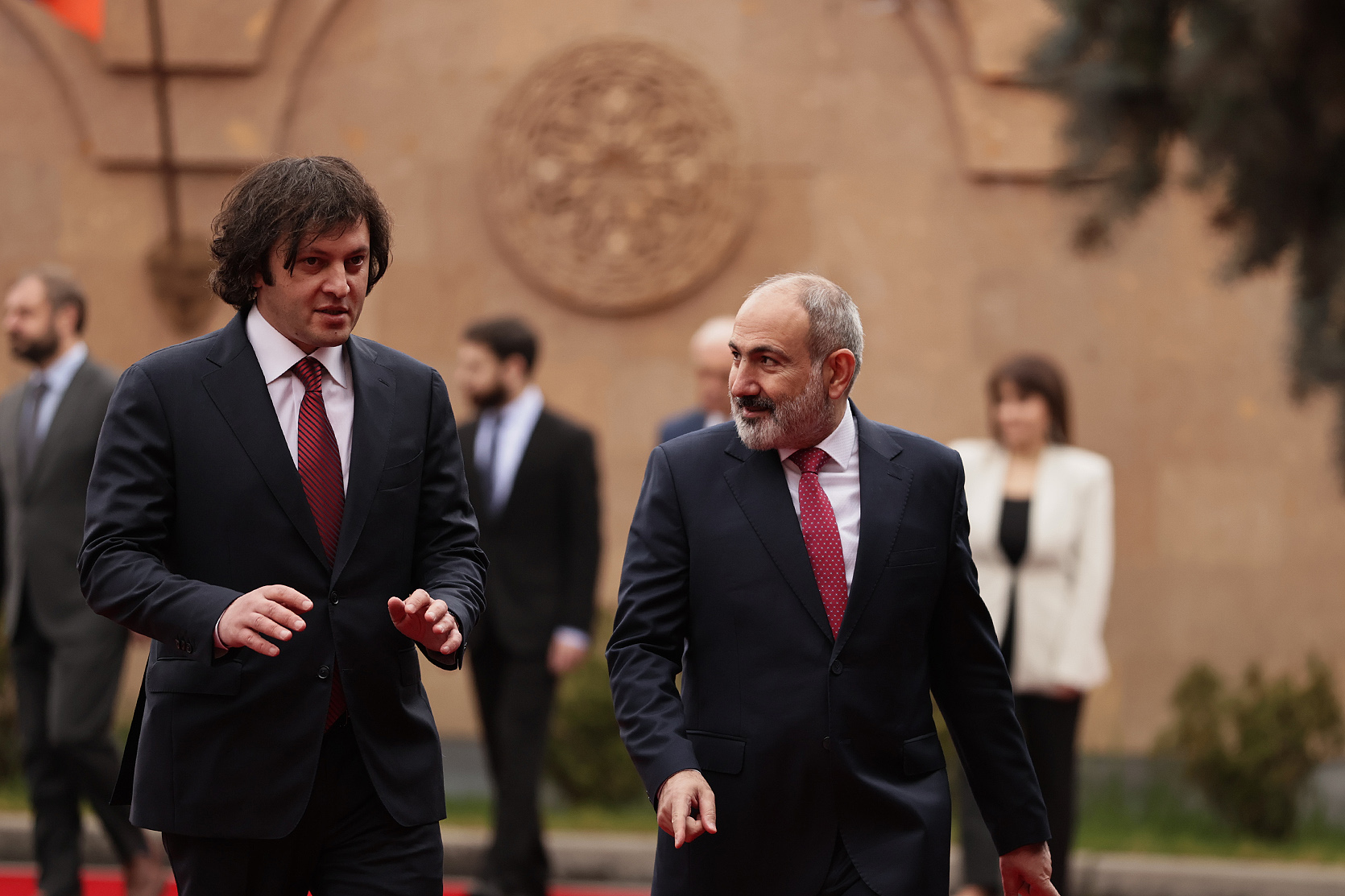
Georgian PM in Yerevan
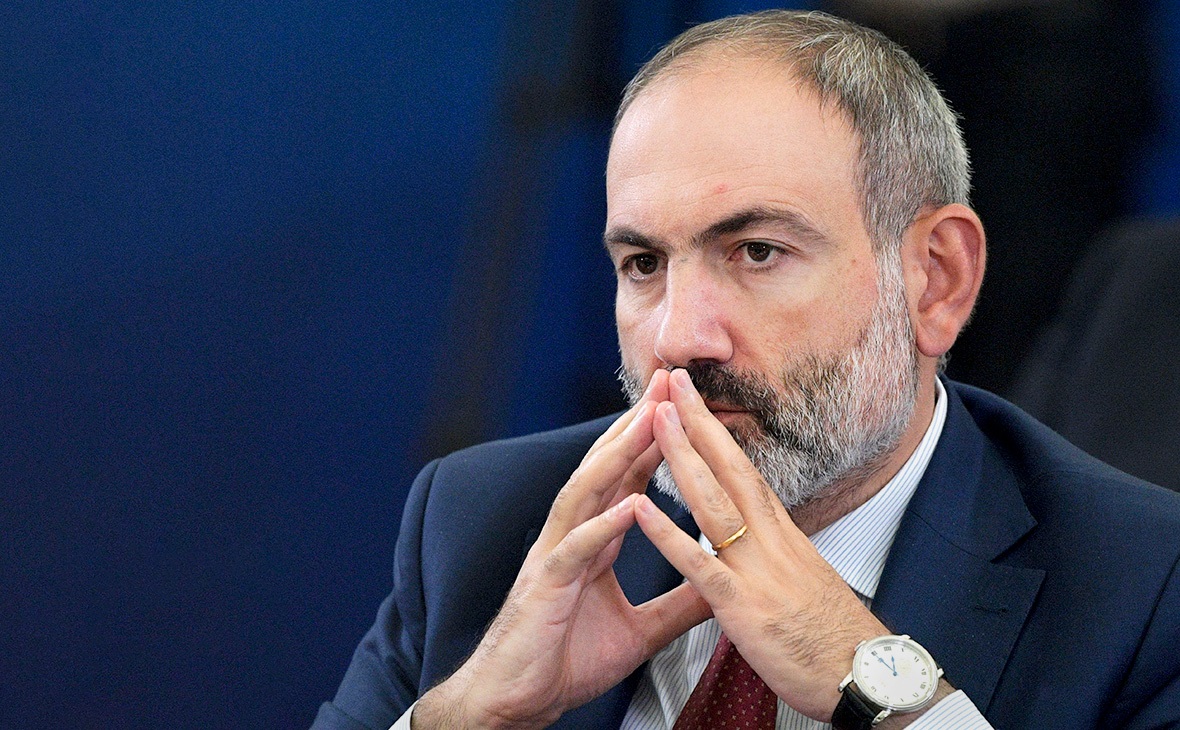
Georgian prime minister Irakli Kobakhidze was on an official visit to Yerevan. After meeting with his Armenian counterpart Nikol Pashinyan, he stated that “Georgia unconditionally recognizes the territorial integrity of Armenia.” The prime minister of Armenia made a similar statement. Additionally, Pashinyan mentioned that he and Kobakhidze discussed the possibility of accelerating the border demarcation process between Armenia and Georgia.
Armenian political scientist Robert Gevondyan sees these discussions as “an attempt to establish clear rules in the region and to implement border-related processes within these rules.” He believes this is important in terms of potentially “bringing Azerbaijan into compliance with these rules.”
Meanwhile, Georgian political scientist Paata Zakareishvili questions how correct it is to consider the relationship between Armenia and Georgia as strategic. He believes that talking about such a level of relations between these two countries is not warranted.
Statements from the prime ministers of the two countries, as well as comments from analysts in Yerevan and Tbilisi.
- 9 key steps for Georgia’s EU entry talks: EU ambassador
- Who is the new prime minister of Georgia? What are the main facts about Irakli Kobakhidze?
- How will the regional configuration in the South Caucasus change? View from Baku
About Armenian-Georgian strategic ties
In a briefing following talks with the Georgian prime minister, Nikol Pashinyan reminded that in January 2024, Armenia and Georgia signed a declaration of strategic partnership. According to him, it outlines an “ambitious perspective” for the further development of bilateral relations in all areas. Now, he and Irakli Kobakhidze discussed the “possible and necessary steps for the practical implementation of the declaration.”
The Armenian prime minister believes that expanding cooperation with Georgia is strategically important for ensuring stability and mutually beneficial partnership in the region.
Pashinyan emphasized that Armenia supports Georgia’s aspiration to join the EU. In his view, Georgia’s European integration “will have a direct impact not only on the region but also on bilateral relations with Armenia.”
The Georgian prime minister stated that by signing the declaration, both countries have elevated their bilateral relations to a higher level:
“The goal is to deepen cooperation, support peace, and stability. This declaration is based on our common principles and values and expresses our support for these values.“
Tbilisi ready to support dialogue between Yerevan and Baku
The Georgian prime minister stated in Yerevan that he hopes for the signing of a peace agreement between Armenia and Azerbaijan. He assured that Tbilisi is ready to support this process and contribute to peace and stability in the region.
“We know and see that Georgia is not only interested in resolving relations between Armenia and Azerbaijan but is also actively trying to contribute to this process,” said Nikol Pashinyan, thanking the Georgian partners.
He also touched on the topic of unblocking communications in the region and reminded of the Armenian government’s project “Peace Junction.” According to the Armenian prime minister, it should become “one of the future themes of strategic partnership between Armenia and Georgia.”
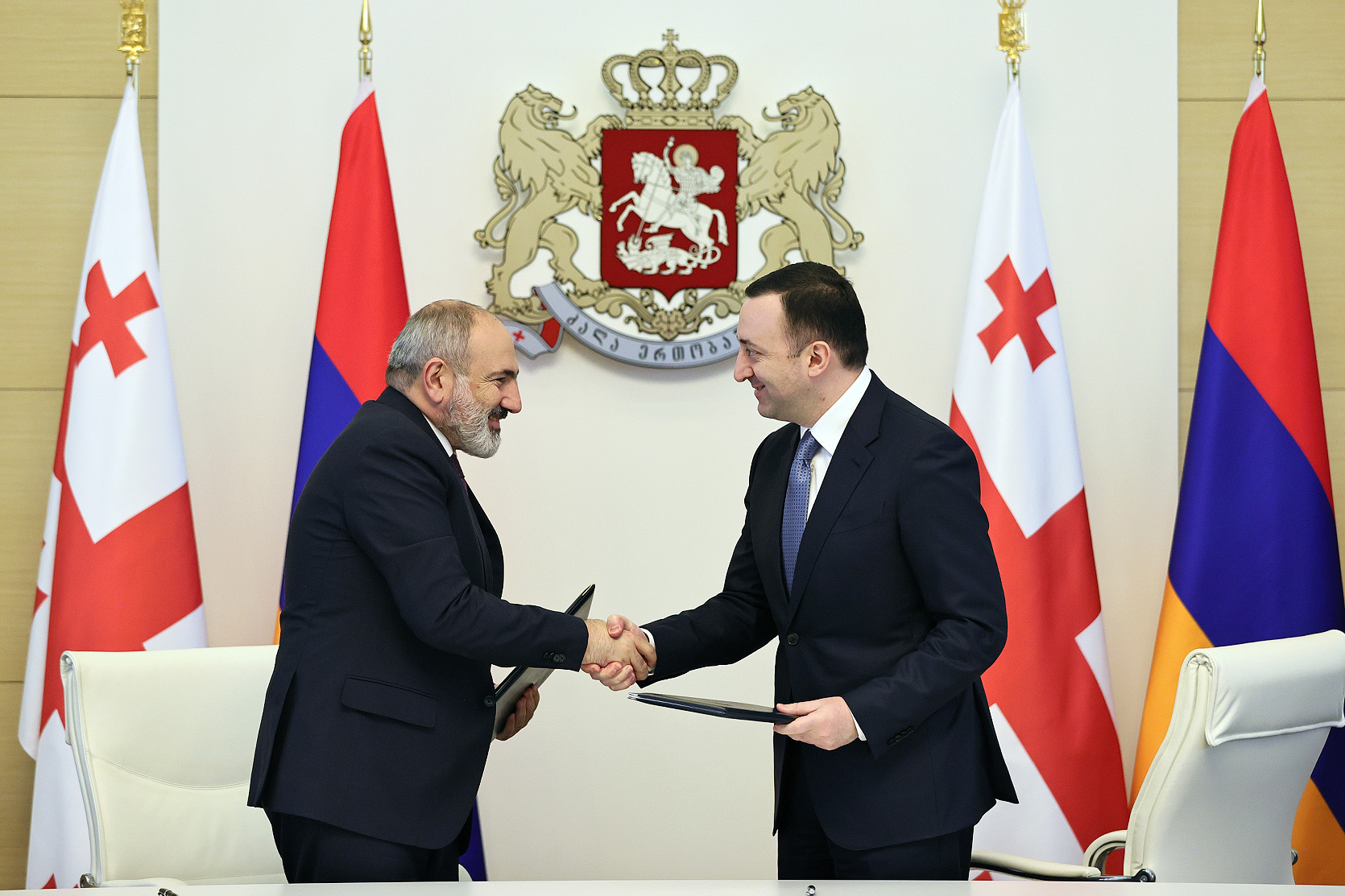
Comment from Yerevan
Political scientist Robert Gevondyan believes the behavior of the Georgian authorities is similar to that of the Armenian authorities:
“Both are conducting cautious and maximally inert policies. The Armenian authorities are trying to move forward with very small steps, avoiding not just excessive risks, but also justified ones. This caution is also present in the case with Georgia,” he told JAMnews.
The analyst believes Tbilisi has been cautious in its relations with Yerevan, as for many years Armenia did not make independent decisions, acting as a Russian outpost. Moreover, according to Gevondyan, this caution persists “inertially” now. However, he suggests that Georgia is interested in Armenia becoming more active and even becoming an economic hub, as this would have a multiplicative effect on strengthening Georgia’s economy:
“If the Armenian authorities continue their course [towards the West] and take a couple of bold, real steps, not just statements, then Georgia will be more confident that Armenia is ready to play its role.”
In the new world order being created, it’s hard to say which forces will be more influential or which countries will be interested in future cooperation between Georgia and Armenia. But at the moment, Armenian-Georgian cooperation is beneficial both for themselves and for the collective West:
“If Georgia manages to become an EU member, then Armenia will only benefit from it, regardless of geopolitical balance developments.“
He emphasizes that being the neighbor of an EU member state would mean striving for higher standards to be competitive. This will positively impact, first and foremost, Armenia’s economy but also other areas.
According to the political scientist, the “Armenia-Georgia duo is much more interesting and promising for the European Union” than Armenia as an individual partner:
“The EU encourages the development of relations between Armenia and Georgia.”
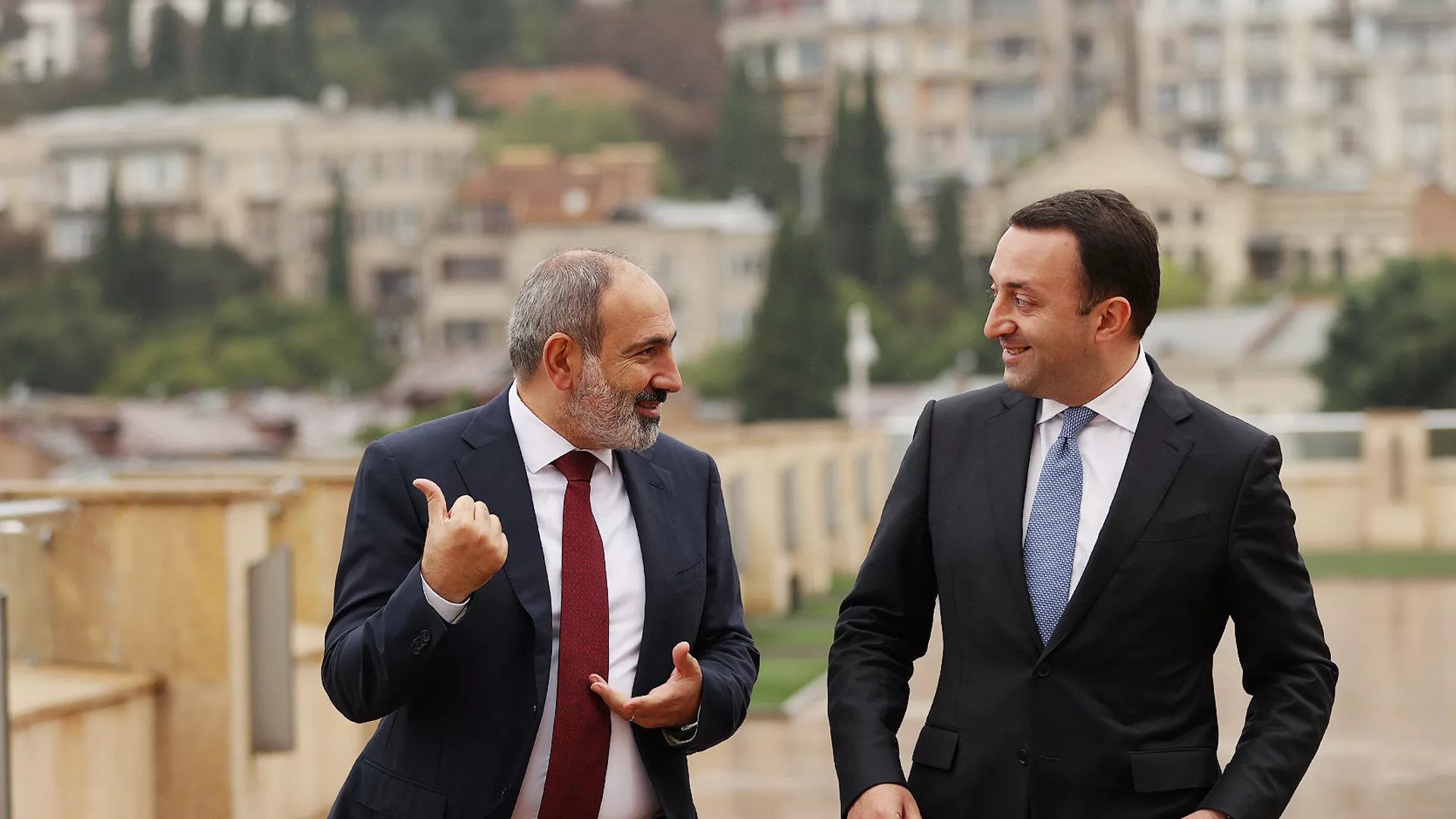
Discussing the potential involvement of Tbilisi in the process of normalizing relations between Armenia and Azerbaijan, Gevondyan stated that Georgia could “only provide a platform” for negotiations:
“In the geopolitical game that exists in the South Caucasus, Georgia holds a certain position, but it does not allow it to become the main player in the negotiation process between Armenia and Azerbaijan.“
He considers the narratives about the prospects of the “Peace Junction” project unrealistic. He believes this project will become a point of contention between superpowers, therefore it cannot be considered a true junction of peace:
“It could rather be called an economic junction, which in the case of healthy competition and geopolitical balance could bring significant benefits to all countries in the region, including Georgia.”
The political scientist is convinced that Georgia agrees with the project’s concept and its implementation:
“Georgia is the only and shortest route through non-Turkish territories for the UAE, India, and China. For the export of raw materials to Europe via Iran and the export of technology and finished products in the opposite direction. Therefore, this route should be very interesting for both Georgia and Armenia, as well as for the countries I mentioned, and for the collective West.“
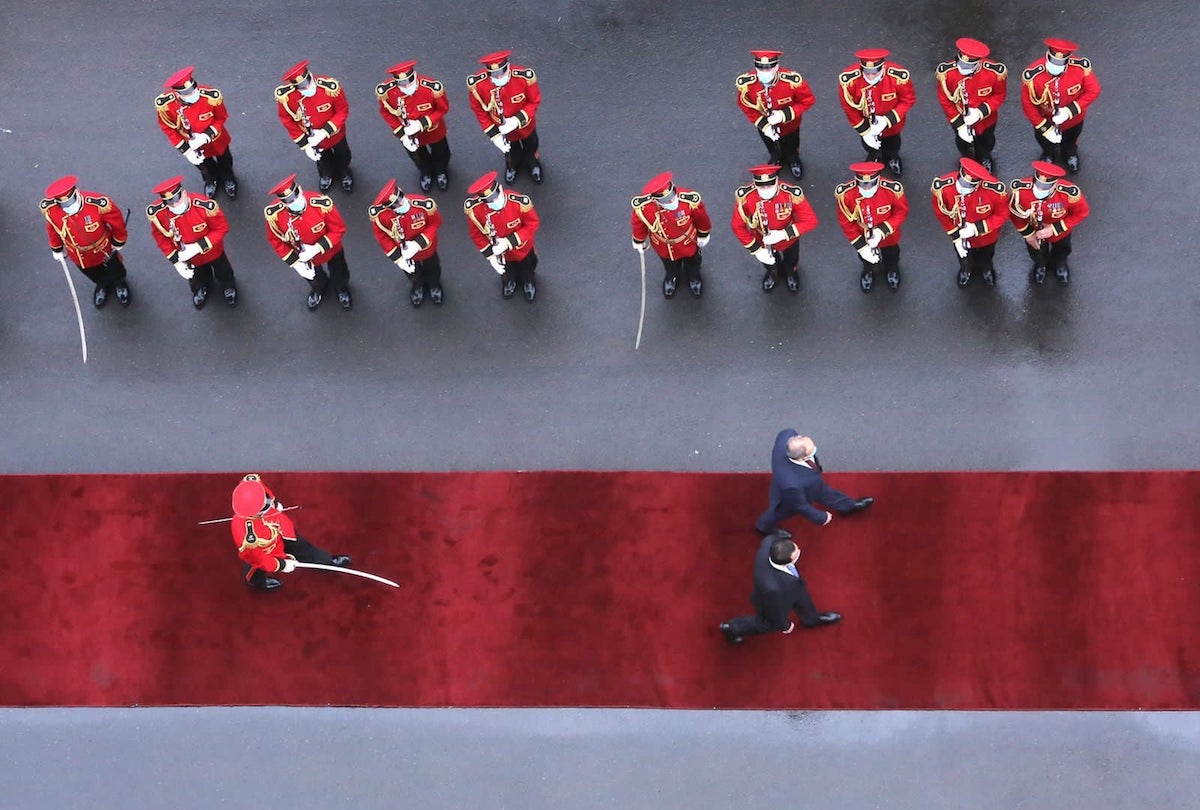
Comment from Tbilisi
Conflictologist Paata Zakareishvili also commented to JAMnews on the Georgian Prime Minister’s visit to Armenia and the current stage of bilateral relations between Georgia and Armenia.
About Kobakhidze’s visit to Yerevan and “strategic partnership”
“The visit of prime minister Kobakhidze to Yerevan was more of a formality. A new prime minister, as a rule, should visit all friendly states – Brussels, Baku, Yerevan, Ankara. It’s a necessary procedure to show respect to friendly countries.
Another question is how appropriately the term ‘strategic’ is used by the Georgian authorities.
You can talk about strategic relations when the partnership of states determines each other’s well-being. So, strategic relations with Azerbaijan make sense to me. After all, Azerbaijani oil goes through Georgia, and this is important for both countries. We depend on each other.
But there are no such relations with Armenia. We maintain decent partnership relations with this country. Armenia uses Georgia’s territory, naturally, as it corresponds to intergovernmental agreements. However, we do not depend on Armenia as much as Armenia depends on Georgia. So what it has to do with strategic relations? I don’t understand.
With Armenia, we have historical, friendly, neighborly relations, which are even more than strategic relationships, but they are not ‘strategic’ in the classical sense.”
About European integration
“It seems that Armenia wants to isolate itself and distance itself from Russia. This distancing is compensated by deepening relations with the European Union.
Turkey also has candidate status. If Armenia, along with Turkey and Georgia, ends up on the list of candidates for membership, then the EU will see a global regional context. And this will be very good for Armenia. It will also help deepen Turkish-Armenian relations.
The European Union’s interest in the Caucasus will increase even more if Armenia takes active steps to join the European Union.”
About Russia’s role in the Caucasus
Asked whether he agrees with the view that Georgia is currently trying to get closer to Russia while Armenia is trying to distance itself from it, Paata Zakareishvili answered:
“Although there are currently problems in bilateral relations, Russia’s influence on Armenia is still significant due to Russia’s large economic presence.
Armenia is a member of the CIS, a member of the Collective Security Treaty, has diplomatic relations with Russia, a Russian military base is located in Armenia, and Russia practically owns the Armenian economy. Georgia does not have anything similar.
Institutionally, economically, politically, and geopolitically, Armenia is still in Russia’s orbit, while Georgia is not.
In the case of Georgia, we can only speak about the political aspect of getting closer to Russia. Perhaps soon, everything else will follow the political aspect. But overall, there is a big difference between Georgia’s orientation towards Russia and Armenia’s not so rapid distancing from Russia.”
On Russia’s Future role in the Caucasus
“Since Turkey appeared in the Caucasus in 2020, when it helped Azerbaijan in the Karabakh issue, Russia’s influence in the region has clearly been declining.
Azerbaijan has also distanced itself from Russia. From both Azerbaijan and Turkey’s perspective, it’s clear they are conducting a cautious pro-Azerbaijani policy.
As for Georgia, I would say the current government is implementing the policy of ‘Georgian Dream,’ not Georgia’s national interests. Unlike Azerbaijan’s and Turkey’s policies, which are centered on the state interests of Azerbaijan and Turkey.
We see how carefully and skillfully Azerbaijan has distanced itself from Russia. The year 2025 will be very important because Russia is supposed to withdraw its troops from Azerbaijani territory then.
Russia is weakening in the Caucasus and in the world, and it’s very unfortunate that at this time, Georgian authorities are showing more sympathies towards Russia. Let’s hope this does not go beyond simple sympathies.”
Russia’s puppet in #Belarus shoots down Putin’s lie that #Ukraine was involved. Today Lukashenko said those responsible for the #MoscowTerroristAttack were escaping to Belarus, not Ukraine. But due to “heightened state of alert, they couldn’t go to Belarus.”… pic.twitter.com/uADtnItWDr
— Glasnost Gone (@GlasnostGone) March 26, 2024
Categories
Armenia News – news.am
FM Mirzoyan briefs Argentine lawmakers on Armenia’s peace efforts – Public Radio of Armenia Public Radio of Armenia – Official Web site