
BREAKING:
Hamas rejects Israel’s 6 week ceasefire offer which was based on exchanging 40 hostages for 700 Palestinian terrorist prisoners.
This means that the ground invasion of Rafah will start soon.
That will be last of Hamas pic.twitter.com/shS721gubh
— Visegrád 24 (@visegrad24) March 25, 2024
Day: March 25, 2024
On Baku’s demands
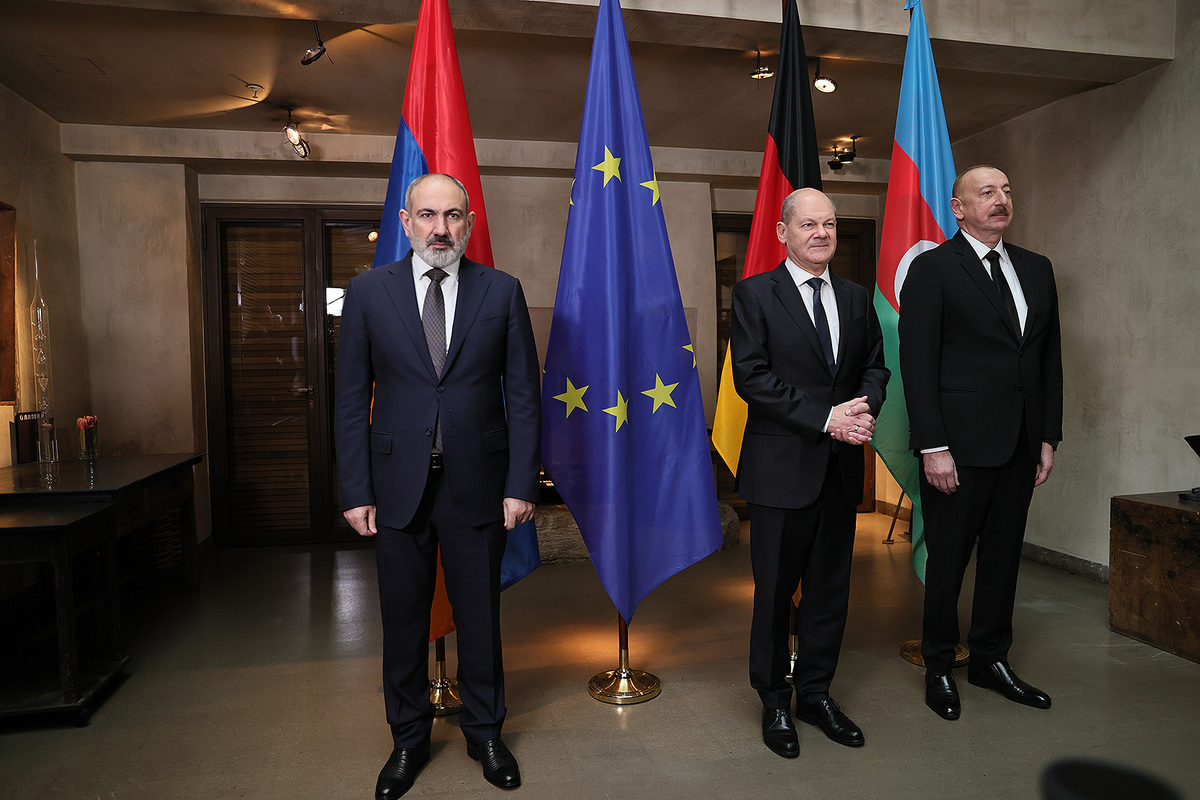
The Blinken-von der Leyen-Pashinyan meeting scheduled for April 5th in Brussels is viewed by German expert Stefan Meister as a “response to the Armenian prime minister’s steps towards Europe, the West, and attempts to distance a bit from Russia.”
He believes that such a “support format” might be possible but it won’t play a decisive role or deliver what Armenia needs most: security guarantees and security cooperation:
“In this very complex situation, everything is connected to security. And I don’t see the US or the EU actually providing it to Armenia at this moment.”
Armenian prime minister Nikol Pashinyan, European Commission president Ursula von der Leyen, and US secretary of state Anthony Blinken will discuss “trilateral cooperation promoting the development of Armenia” in Brussels. This was announced by the secretary of the security council, Armen Grigoryan, who emphasized that “the event will be aimed at strengthening Armenia’s resilience.” This is all that is known about the upcoming meeting at this time.
Key points from Stefan Meister’s interview with Radio “Azatutyun” (Freedom).
- “Armenia has retreated from its own principles in negotiations with Baku.” Opinion
- “Stoltenberg’s visit aims to assess escalation risks” – Opinion from Yerevan
- “Armenia is only served ‘paper pies’ – resolutions.” Opinion from Yerevan
“Germany is not a key mediator, just provides a negotiation platform”
Commenting on Berlin’s involvement in Armenian-Azerbaijani talks, Stefan Meister stressed that it doesn’t amount to full-fledged mediation. Germany only offers a venue for discussions. This role should neither be underestimated nor overestimated.
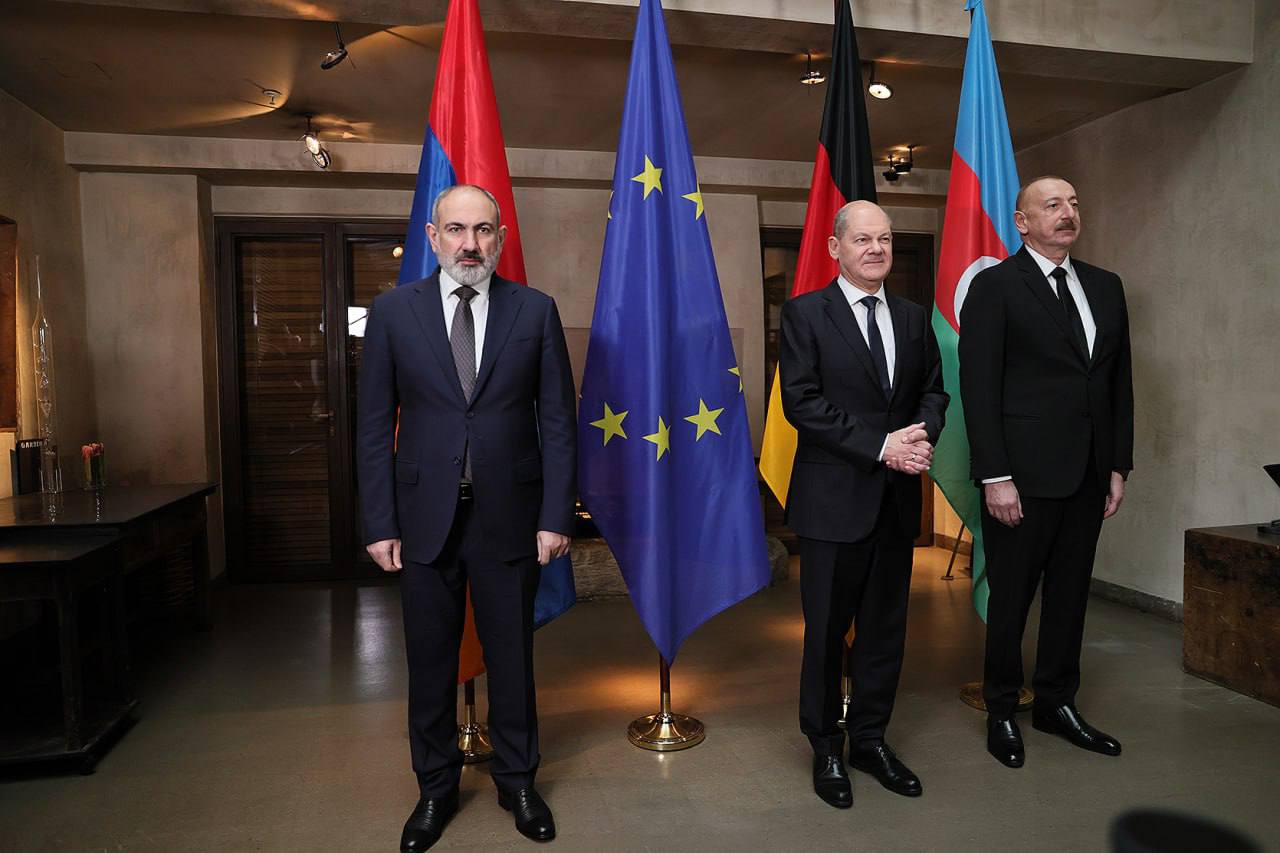
The expert recalled meetings in Munich and Berlin against the backdrop that “the EU format, which was offered by [European Council president] Charles Michel, no longer works” as Azerbaijan rejects it:
“Germany is trying to step in and provide this platform to build a bridge. Perhaps [this venue will be useful] after the elections in Europe. Then, a new intervention or a new step from Europe might occur.“
According to Meister, Berlin could take on more responsibility, exert some pressure on Baku’s maximalist position:
“Perhaps influence subsequent processes. That is, really play a role as a mediator in the negotiations, provide a certain mechanism. But I don’t see readiness from the German side, from the chancellor’s side, to do more than Michel.”
“Baku is trying to push out not just France but also Europe from the region”
During the Russian-Ukrainian war, Azerbaijan has become more important for the EU due to its communication and transit capabilities, says Stefan Meister. Baku’s role is also growing due to hydrocarbons – gas and oil. At the same time, cooperation between Russia and Azerbaijan is increasing.
“Currently, in the South Caucasus, major deals involving Azerbaijan, Iran, Russia, and Turkey are being discussed. These also concern Armenia. The discussions include communications and regional cooperation,” says Meister.
He believes that Azerbaijan, Iran, Russia, and Turkey all agree that the European Union and the West, in general, should not be allowed into the region.
Azerbaijan’s statements against France’s involvement clearly imply the exclusion of all Europe from the region, the expert notes.
At the same time, according to him, the EU’s presence in Armenia is growing. An example is the EU’s civilian mission patrolling the Armenia-Azerbaijan border. The political scientist also sees the importance of economic and security cooperation with Armenia and neighboring Georgia:
“The competition between Western countries and the region’s authoritarian countries is growing in terms of who collaborates with whom and who wants to play what role in the region in the future.”
“Azerbaijan is putting strong pressure on Armenia”
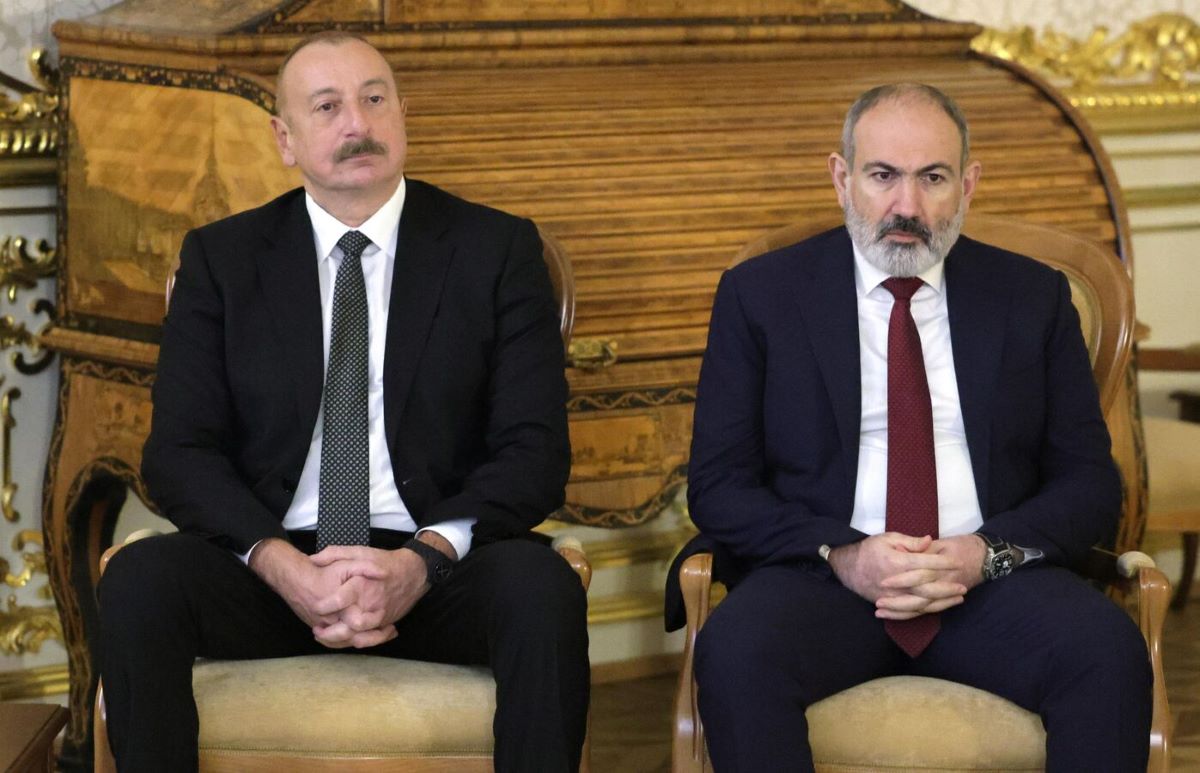
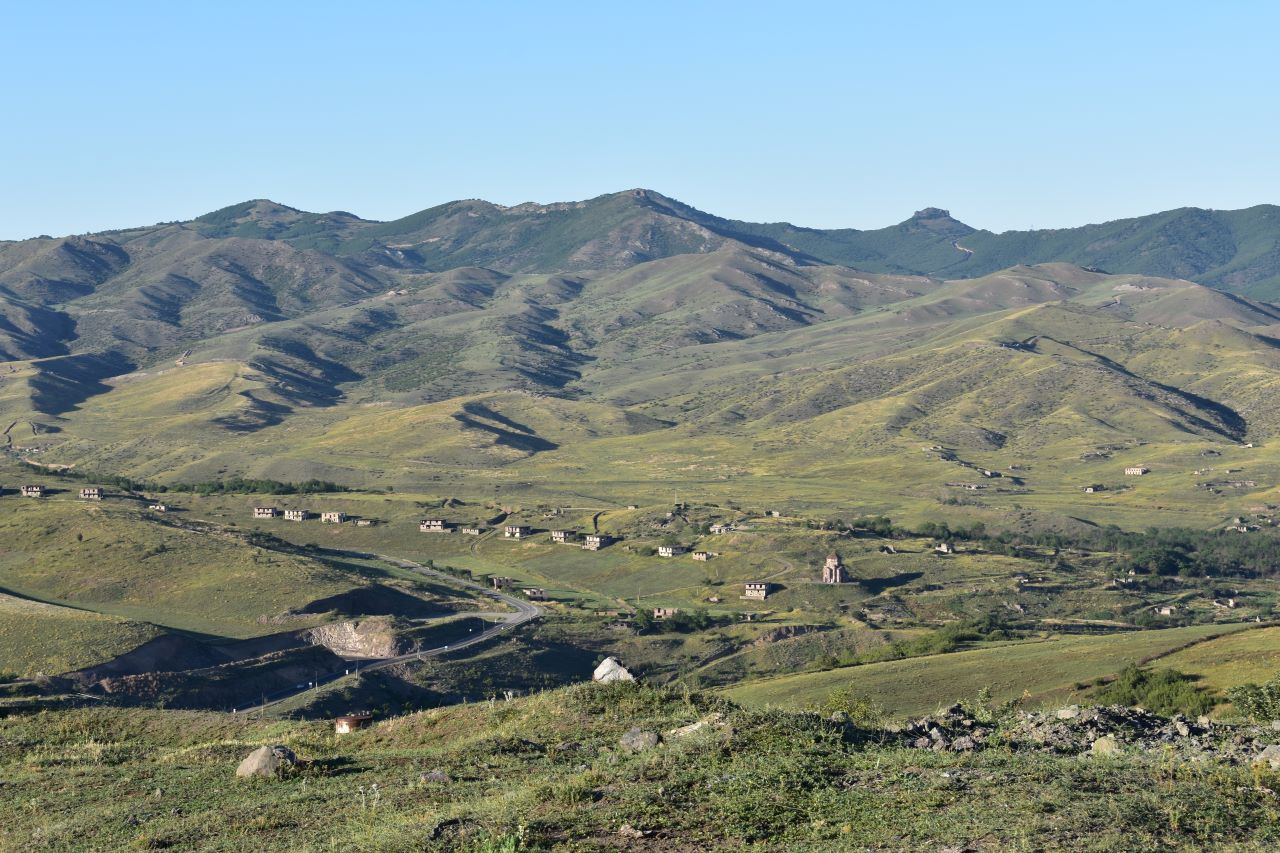
Regarding the strong pressure Azerbaijan is exerting on Armenia, the expert spoke about the border delimitation negotiations between the countries. These are happening bilaterally and, in Stefan Meister’s opinion, have reached “perhaps not the final, but a decisive stage – discussing details.” The expert believes that Baku is forcing Yerevan to agree on key issues. For example, on returning four non-enclave villages in the Tavush region:
“Here, it’s important to decide which map to use as the basis for delimitation. Meanwhile, the balance of power is very uneven. I think Armenia must consent to many painful issues. Therefore, I believe that handing over these territories [to Azerbaijan] is the right decision.”
However, the political scientist says that these actions should occur within the overall package of border delimitation, not as a separate action. Because “in some sense, they also serve as leverage for Armenia.”
“Goodwill alone is not enough; negotiations are necessary.” And it’s hard to say whether returning the four villages will lead to an agreement and peace, “even if it’s the right step,” emphasizes Meister.
“It seems that Aliyev needs the conflict”
Stefan Meister notes that in Baku, there’s an intention to demand more concessions rather than to negotiate anything. He sees no desire to reach an agreement or to end the conflict:
“From Aliyev’s perspective, the Karabakh problem is now solved. He has always built his legitimacy on the image of an enemy, on the need to return Nagorno-Karabakh. The question is, what’s left? What’s new? Is this part of a larger game, including towards Armenia?“
Pashinyan has already made significant concessions, the expert believes. But Azerbaijan continues to push its agenda, despite the fact that “Armenia cannot give more at this point.”
“This leads to the conclusion that perhaps there is no real interest in a reliable and stable agreement,” observes the German political scientist.
Watching the rhetoric of Aliyev and other Azerbaijani officials, he sees “a maximalist approach to maintaining the enemy paradigm towards Armenia.”
The political scientist emphasizes that the president of Azerbaijan even questions the very existence of the Armenian state:
“Now, this discourse might become the new paradigm on which the legitimacy of the president of Azerbaijan is built. I think this would be a very dangerous game because it’s actually about the existence of Armenia. And this game will never end, because for Aliyev’s regime, it’s very important to stay in power and gain this legitimacy.”
 The Committee for the Protection of the Fundamental Rights of the Artsakh People is gravely alarmed by recent reports detailing Azerbaijanʼs flagrant violations of the rights of Armenian prisoners of war (POWs), particularly in regard to the fundamental principle of the right to be free from public curiosity as outlined in the Third Geneva Convention Relative to the Treatment of Prisoners of War. These actions are not only morally reprehensible but also in direct contravention of international humanitarian law.
Article 13 of the Third Geneva Convention explicitly prohibits POWs from being subjected to public curiosity. Azerbaijanʼs public airing of videos depicting POWs constitutes a gross violation of their right to privacy and dignity under this convention. Article 27 of the Fourth Geneva Convention similarly prohibits such public spectacles against noncombatants.
Furthermore, these actions violate the Universal Declaration of Human Rights, which affirms the right to privacy and protection from arbitrary interference with oneʼs privacy, family, home or correspondence.
The airing of staged interviews with Armenian POWs and hostages by Azerbaijan constitutes a direct violation of their rights and further exacerbates their already precarious situation. Such manipulative tactics by Azerbaijan serve to undermine the integrity of international humanitarian law and must be unequivocally condemned by the international community.
In light of these egregious violations, we urgently call upon state actors and human rights organizations to take direct action to prevent Azerbaijan from further airing videos or interviews of POWs and hostages. This includes leveraging diplomatic channels, imposing sanctions if necessary and issuing public condemnations to hold Azerbaijan accountable for its actions.
We emphatically stress that allowing any retransmission of such videos by other states parties is not only itself a grave violation of the Third and Fourth Geneva Conventions but also a reprehensible disregard for the basic principles of humanitarian law. Therefore, it is imperative that all states parties take immediate and decisive action to prevent any and all retransmission of Azerbaijani broadcasts of such videos on any and all servers, media and/or platforms under their jurisdictions.
Furthermore, we demand immediate and unfettered access for international humanitarian organizations, such as the International Committee of the Red Cross, to all detention facilities where Armenian POWs and hostages are held. This access is crucial to ensuring the well-being and proper treatment of these individuals in accordance with the Geneva Conventions and other applicable international human rights treaties, including the International Covenant on Civil and Political Rights and the Convention against Torture and Other Cruel, Inhuman or Degrading Treatment or Punishment.
It is imperative that Azerbaijan comply with its obligations under international law and ceases all actions that violate the rights of Armenian POWs and hostages. Failure to do so not only undermines the principles of humanity and dignity but also threatens regional stability and peace.
We stand ready to work alongside the international community to address these violations and ensure the protection of the rights of all individuals affected by this conflict. We call upon all state actors and international organizations to continue to demand the immediate and unconditional release of all Armenians unlawfully held in Azerbaijani captivity.
It is our collective responsibility to uphold the principles of the Geneva Conventions and applicable human rights instruments and safeguard the dignity and well-being of all POWs and hostages illegally held in Azerbaijani captivity.
Committee for the Protection of the Fundamental Rights of the Artsakh People
March 25, 2024
Author information

Guest Contributor
Guest contributions to the Armenian Weekly are informative articles or press releases written and submitted by members of the community.
|
The post Urgent action needed to address Azerbaijanʼs violation of Armenian prisoner of war rights under the Geneva Convention appeared first on The Armenian Weekly.