
По словам министра иностранных дел Ильи Дарчиашвили, граждане Грузии в Мексике не похищены. Так он отреагировал на информацию, распространенную «Мтавари архи» о том что мексиканский наркокартель взял в заложники около 30 грузин недалеко от мексиканской границы. Министр иностранных дел не уточнил, что произошло с гражданами Грузии в Мексике и установлено ли их местонахождение. «Что касается […]
Day: March 18, 2024
Шольц получил от Шрёдера похвалу за свою позицию по TAURUS – и был раскритикован за это оппозицией. Экс-канцлер Германии похвалил нынешнего главу государства за отказ поставлять Украине дальнобойные ракеты. “Думаю, Олаф Шольц делает именно то, чего я ожидаю от канцлера ФРГ в… pic.twitter.com/kQP1nQSjaB
— DW на русском (@dw_russian) March 18, 2024

Rapid geopolitical change is curtailing Russian power in the South Caucasus, boosting the influence of Middle Eastern countries and bookending the region’s “post-Soviet” history.
The South Caucasus is undergoing a geopolitical transformation. The war in Ukraine and the effective resolution of the Nagorno-Karabakh conflict between Armenia and Azerbaijan mean that the region is entering a new age. Armenia, Azerbaijan, and Georgia have gradually become more confident on the world stage, with each trying to limit its dependence on Russia by diversifying its foreign policy.
Georgia has boosted relations with the European Union, China, and—to some extent—the United States, while Azerbaijan has sought closer ties with Turkey, Israel, Central Asia, and a number of European countries. Having gone through the traumatic loss of Nagorno-Karabakh, Armenia has pushed for closer engagement with the EU, rapprochement with Turkey, and even military links with India and some European states.
Instead of an arena for competition between Russia and the West, the South Caucasus has turned into a highly congested geopolitical space, with up to six major powers vying for influence. We are not, however, just witnessing the end of the post-Soviet period. We are witnessing the end of exclusive Russian influence in the South Caucasus, which has been the status quo for almost two hundred years.
The decline of Russian power has led to the reemergence of close links between the South Caucasus and the broader Middle East. Indeed, geography favors such a connection. Russia lies across the formidable Caucasus mountains, and Middle Eastern states have long regarded the South Caucasus as a natural continuation of their own territories.
The deepening ties are visible in growing trade, investment, energy infrastructure, and railways that link the South Caucasus to two large neighboring powers: Turkey and Iran.
Turkey is a key ally of Azerbaijan, and also enjoys close links with Georgia, while Armenia has Iran’s backing. In particular, Turkey has been pushing for the development of east-west connectivity that cuts through the traditional Russia-sponsored north-south infrastructure. The successful completion of the Baku-Tbilisi-Kars railway is one example; another is the push by Baku and Ankara to open a new route via Armenia’s southernmost province of Syunik.
Iran, too, has scored significant victories. In October, it inked a deal with Baku on a new transit corridor linking Azerbaijan to its exclave of Nakhchivan via Iranian territory. Tehran has also advanced work on the International North-South Transport Corridor, which runs from southern Iran to Russia via Azerbaijan and the Caspian Sea. Other initiatives involve the development of roads through Armenia, which could provide solid links between Iran and Georgia’s Black Sea ports of Poti and Batumi.
Energy infrastructure in the South Caucasus, too, is increasingly tied to the Middle East. Azerbaijan has become one of Turkey’s major gas suppliers, covering about 16 percent of the country’s needs in 2022, while Iran and Armenia have agreed to extend their gas trade agreement through 2030.
The civil war in Syria showed how political and military developments in the Middle East impact the South Caucasus. For instance, residents of the Pankisi Gorge in Georgia volunteered to fight with radical Islamist groups in Syria and Iraq, sparking fears of terrorism spreading. Syria is also one of few countries that has recognized the independence of Georgia’s separatist regions of Abkhazia and South Ossetia. And the Second Nagorno-Karabakh War of 2020 allegedly saw Syrian soldiers fighting for Azerbaijan.
Even beyond security, Armenia and Georgia have built robust relations with other prominent Middle Eastern countries. Saudi Arabia recently agreed to establish diplomatic relations with Armenia, which has also expanded its ties with other Gulf states. Similar trends are visible in Georgia’s relations with nations like Saudi Arabia, Iraq, and Jordan.
Other actors like Israel are also playing an increasingly active role. Israel’s relations with Azerbaijan are especially noteworthy, with the two states enjoying close military ties. Azerbaijan used high-tech Israeli weaponry to devastating effect in the Second Nagorno-Karabakh War, and, more recently, in September 2023, when it reclaimed full control over the disputed region. Azerbaijan is also a major supplier of oil to Israel, meeting as much as 40 percent of the country’s demand.
Azerbaijan’s links with the Middle East mean that flare-ups between Israel and Iran could have local consequences. Iran has expressed concern about Israel allegedly using Azerbaijan for espionage activities, and Azerbaijan was one of just a few Muslim countries not to condemn Israel’s military operation in Gaza, sparking anger in Tehran.
With an end to Russian dominance in the South Caucasus, it’s clear that the region is growing closer to the Middle East. Historically speaking, this is actually a return to normal practice, with Middle Eastern powers traditionally the most influential in the region. For Iran and Turkey, Russian hegemony was always an aberration.
The process could yield benefits for the West. After all, shifting tectonic plates create opportunities for multiple actors to project power. But the EU and United States are limited by geographical distance, and the absence of significant economic levers. Turkey and Iran are both nearby, and eager to accrue more influence in the South Caucasus.
Rapid geopolitical change is curtailing Russian power in the South Caucasus, boosting the influence of Middle Eastern countries and bookending the region’s “post-Soviet” history.
The South Caucasus is undergoing a geopolitical transformation. The war in Ukraine and the effective resolution of the Nagorno-Karabakh conflict between Armenia and Azerbaijan mean that the region is entering a new age. Armenia, Azerbaijan, and Georgia have gradually become more confident on the world stage, with each trying to limit its dependence on Russia by diversifying its foreign policy.
Georgia has boosted relations with the European Union, China, and—to some extent—the United States, while Azerbaijan has sought closer ties with Turkey, Israel, Central Asia, and a number of European countries. Having gone through the traumatic loss of Nagorno-Karabakh, Armenia has pushed for closer engagement with the EU, rapprochement with Turkey, and even military links with India and some European states.
Instead of an arena for competition between Russia and the West, the South Caucasus has turned into a highly congested geopolitical space, with up to six major powers vying for influence. We are not, however, just witnessing the end of the post-Soviet period. We are witnessing the end of exclusive Russian influence in the South Caucasus, which has been the status quo for almost two hundred years.
The decline of Russian power has led to the reemergence of close links between the South Caucasus and the broader Middle East. Indeed, geography favors such a connection. Russia lies across the formidable Caucasus mountains, and Middle Eastern states have long regarded the South Caucasus as a natural continuation of their own territories.
The deepening ties are visible in growing trade, investment, energy infrastructure, and railways that link the South Caucasus to two large neighboring powers: Turkey and Iran.
Turkey is a key ally of Azerbaijan, and also enjoys close links with Georgia, while Armenia has Iran’s backing. In particular, Turkey has been pushing for the development of east-west connectivity that cuts through the traditional Russia-sponsored north-south infrastructure. The successful completion of the Baku-Tbilisi-Kars railway is one example; another is the push by Baku and Ankara to open a new route via Armenia’s southernmost province of Syunik.
Iran, too, has scored significant victories. In October, it inked a deal with Baku on a new transit corridor linking Azerbaijan to its exclave of Nakhchivan via Iranian territory. Tehran has also advanced work on the International North-South Transport Corridor, which runs from southern Iran to Russia via Azerbaijan and the Caspian Sea. Other initiatives involve the development of roads through Armenia, which could provide solid links between Iran and Georgia’s Black Sea ports of Poti and Batumi.
Energy infrastructure in the South Caucasus, too, is increasingly tied to the Middle East. Azerbaijan has become one of Turkey’s major gas suppliers, covering about 16 percent of the country’s needs in 2022, while Iran and Armenia have agreed to extend their gas trade agreement through 2030.
The civil war in Syria showed how political and military developments in the Middle East impact the South Caucasus. For instance, residents of the Pankisi Gorge in Georgia volunteered to fight with radical Islamist groups in Syria and Iraq, sparking fears of terrorism spreading. Syria is also one of few countries that has recognized the independence of Georgia’s separatist regions of Abkhazia and South Ossetia. And the Second Nagorno-Karabakh War of 2020 allegedly saw Syrian soldiers fighting for Azerbaijan.
Even beyond security, Armenia and Georgia have built robust relations with other prominent Middle Eastern countries. Saudi Arabia recently agreed to establish diplomatic relations with Armenia, which has also expanded its ties with other Gulf states. Similar trends are visible in Georgia’s relations with nations like Saudi Arabia, Iraq, and Jordan.
Other actors like Israel are also playing an increasingly active role. Israel’s relations with Azerbaijan are especially noteworthy, with the two states enjoying close military ties. Azerbaijan used high-tech Israeli weaponry to devastating effect in the Second Nagorno-Karabakh War, and, more recently, in September 2023, when it reclaimed full control over the disputed region. Azerbaijan is also a major supplier of oil to Israel, meeting as much as 40 percent of the country’s demand.
Azerbaijan’s links with the Middle East mean that flare-ups between Israel and Iran could have local consequences. Iran has expressed concern about Israel allegedly using Azerbaijan for espionage activities, and Azerbaijan was one of just a few Muslim countries not to condemn Israel’s military operation in Gaza, sparking anger in Tehran.
With an end to Russian dominance in the South Caucasus, it’s clear that the region is growing closer to the Middle East. Historically speaking, this is actually a return to normal practice, with Middle Eastern powers traditionally the most influential in the region. For Iran and Turkey, Russian hegemony was always an aberration.
The process could yield benefits for the West. After all, shifting tectonic plates create opportunities for multiple actors to project power. But the EU and United States are limited by geographical distance, and the absence of significant economic levers. Turkey and Iran are both nearby, and eager to accrue more influence in the South Caucasus.
Arlington, MA – Poetry and music have been intertwined since time immemorial. In the millennia-old Armenian history, the origin of this rich cultural legacy dates to the fifth century CE and beyond. On Saturday, April 6 at 4 p.m., the Armenian Cultural Foundation in cooperation with Amaras Art Alliance and the Armenian Music Festival of Rhode Island will host the Vahan Artsruni (guitar) Duo and Nelly Manukyan (flute). The event is dedicated to the 155th anniversary of Komitas Vardapet, the great Armenian musicologist, composer, arranger and choirmaster.
 Vahan Artsruni
Born in Yerevan, Vahan Artsruni is a renowned Armenian singer and composer known for his innovative approach to music. He is a multifaceted artist known for his contributions to Armenian and Assyrian spiritual music, theater and cinema. Artsruni explores a wide range of musical styles, from chamber and alt-rock to electronic, symphonic, choir, film and theater compositions. His notable work includes the Komitas: Ten Revelations song cycle based on Komitas’ poetry, arrangements of sacred Assyrian Church of the East music and reinterpretations of Armenian monophonic hymns by St. Mesrop Mashtots, an Armenian linguist, composer, theologian, statesman and hymnologist, best known for inventing the Armenian alphabet (c. 404-406 CE).
Over his nearly four-decade career, Artsruni has released 14 albums and DVDs; composed the soundtrack for 21 documentaries, six animated and three feature films; and provided the music for eight theater productions and a ballet performance. Additionally, he has been involved in organizing music festivals and concert programs.
His contributions to the world of music are recognized by his inclusion in the Armenian Musical Encyclopedia of the National Academy of Sciences of Armenia (2019). His song cycle Komitas: Ten Revelations was integrated into the State General Education School Program as a part of the music school textbook in 2007. Furthermore, his album Mashtots: Sacred Armenian Songs from the Fifth Century was featured in the collection Mashtots by the Center for Christian Education of Holy Etchmiadzin and served as the Official Release of the international initiative, Rock Aid Armenia.
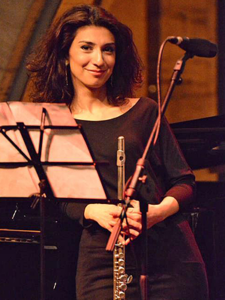 Nelly Manukian
Nelly Manukyan, born in Armenia to a musical family, is a flute player, improviser and pianist. The range of her improvisational skill has no boundaries, including all known styles of jazz, rock music and ethno-jazz projects.
A graduate of the Tchaikovsky Music School with Excellence Diploma in piano and flute studies, Manukyan entered the Yerevan State Conservatory of Music after Komitas, simultaneously serving as a flute teacher in the music school after Konstantin Sarajyan.
Manukyan took part in the first Japanese music festival held in Armenia in 1994, performing compositions by Atsuhiko Takenaka, to whom she has dedicated many piano compositions. In 1999, she performed these compositions during the second Japanese music festival in Yerevan.
Manukyan’s first steps as a jazz flutist passed under the leadership of world famous American jazz piano player Armen Donelian. Her performances also include various musical styles such as Latino, Fusion, Jazz-Rock and Progressive Rock.
She has also participated in different musical projects and jazz festivals in Armenia and performed in famous halls such as Royal Festival Hall in England. Manukyan has played with many outstanding musicians such as Bobbie Sanabria, Armen Donelian, Garner Thomas, Rick Taylor, Anatoly Kroll, Jay Rodriguez, Alexis Bosh and Rony Barrak. She is a winner of the first Jazz Competition-Festival of jazz improvisators “Master – Jam Fest,” which was held in Odessa in June 2013.
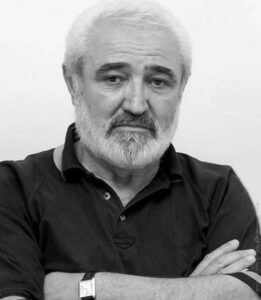 Razmik Davoyan
One of the most prominent poets of Armenia, Razmik Davoyan (1940-2022) grew up in Gyumri. Upon graduating from high school and later the local Medical College in 1958, he moved to Yerevan in 1959 to study Philology and History at the State Pedagogical University and graduated in 1964. From 1965-1970, he was the editor of the poetry and prose section of the Literary Weekly, and later served as senior advisor at the Committee for Cultural Relations with the Diaspora (1970-1975) and Secretary of the Central Committee for Armenia’s State Prizes (1975-1990). In 1994, he became the first elected president of the Writers’ Union of Armenia. From 1999-2003, he served as Adviser (on cultural and educational issues) to the President of the Republic of Armenia.
Davoyan’s first poem was published in 1957 in the daily, Worker of Gyumri. His works, over 30 volumes, were widely translated all over the Soviet Union and published in countless literary magazines and journals in Russian, Czech and English. Selections of Davoyan’s poems have also been translated and published in literary periodicals in Italy, France, Syria, former Yugoslavia, Iran, China and the U.S.
He is the recipient of several prizes and commendations, among them, Armenia’s State Prize for Literature (1986), Order of St. Mesrop Mashtots (1997), President’s Prize for Literature for his children’s book (2003) Little Bird at the Exhibition, a Medal “for services to the fatherland” (2010) and the CIS “Stars of the commonwealth” international award in Moscow in 2012.
The program, followed by a reception, will include: “My Tear of Penitence” and “Your Compassion is Abundant” by Mesrop Mashtots (362–440 CE), several works by Komitas (1869-1935), five works based on the poetry of Razmik Davoyan (1940-2022) and original works by Vahan Artsruni.
Concert tickets ($25) can be secured through amarasonline.com or by contacting the Armenian Cultural Foundation office (781-646-3090), weekdays from 10 a.m.-2 p.m.
Author information

Guest Contributor
Guest contributions to the Armenian Weekly are informative articles or press releases written and submitted by members of the community.
|
The post Music in Poetry Celebrated at the Armenian Cultural Foundation appeared first on The Armenian Weekly.