
Day: March 15, 2024
Categories
Armenia News – Armenia News
Residents of a village near the Georgian mining town of Chiatura have blocked access to a mine running under their village, to demand adequate compensation for the destruction of their village.
Residents of Shukruti, in western Georgia, set up a tent outside the mine entrance on Wednesday, the latest in a series of protests against mining company Georgian Manganese.
The land in and around Shukruti began to collapse in 2019, with the Georgian Manganese initially denying any connection to the mines running beneath.
Protests by residents of Shukruti culminated in a 30-day hunger strike in 2021, during which several residents sewed their lips shut to demand compensation for the damage to their homes.
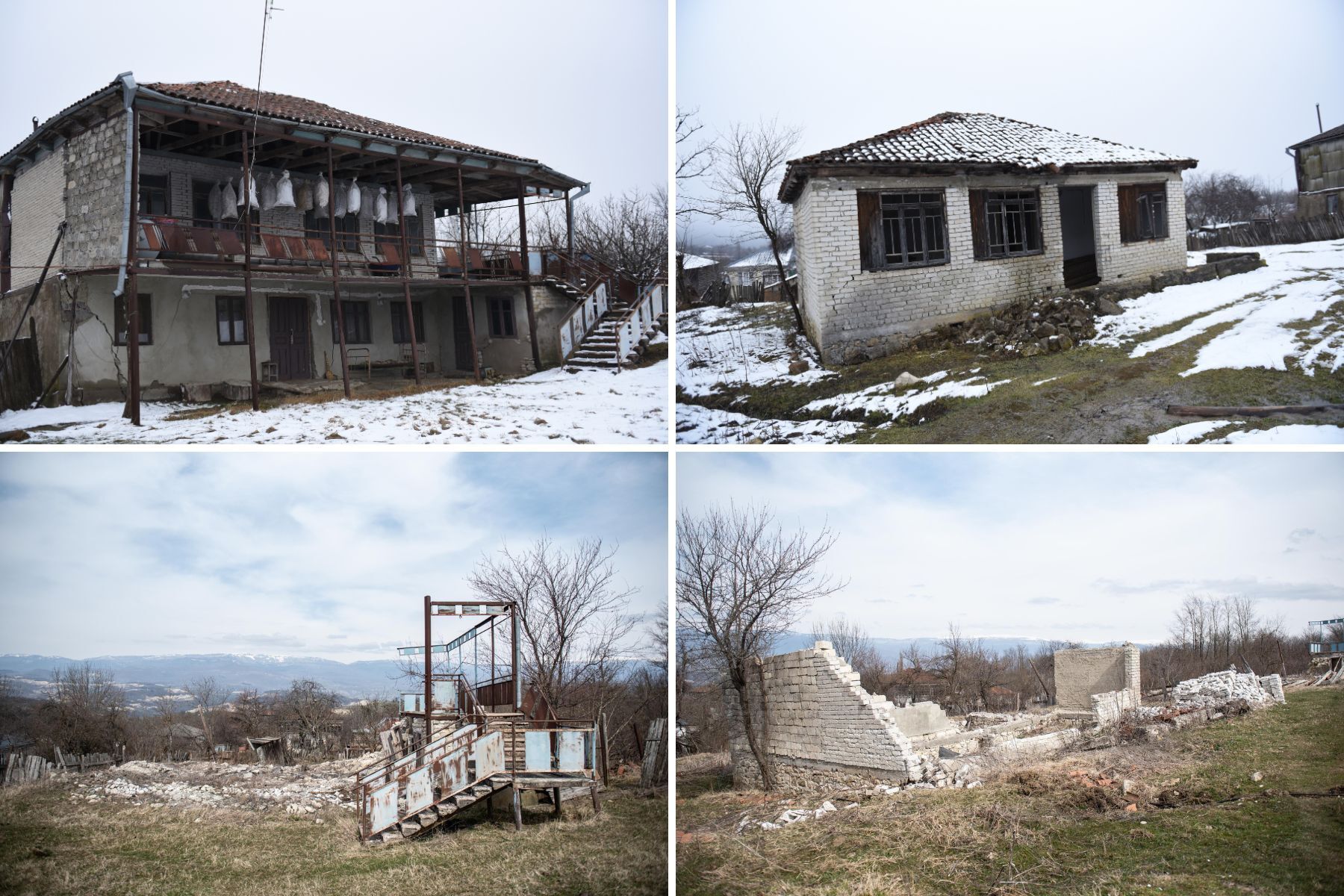 Images from 2020 (above) and March 2024 show the damage progressing in Shukruti. Photos: Mariam Nikuradze/OC Media.
[Read more: In pictures | Lips sewn shut in Chiatura’s sinking village]
While Georgian Manganese struck a deal with the residents to end their protest in June 2021, residents of Shukruti now say the company has not delivered on its promise to fully compensate them.
Giorgi Bitsadze, one of the residents protesting in front of the mine in Shukruti, told OC Media on Thursday that Georgian Manganese had compensated the residents with ‘measly sums’ of money.
Another protester, Jumberi, told OC Media that the company had agreed in 2021 to compensate some residents only for damage to their houses, not the total value nor for their relocation. Since then, he said, the houses had continued to collapse.
‘Now there is such a situation here that there will be nothing left at all’, he said.
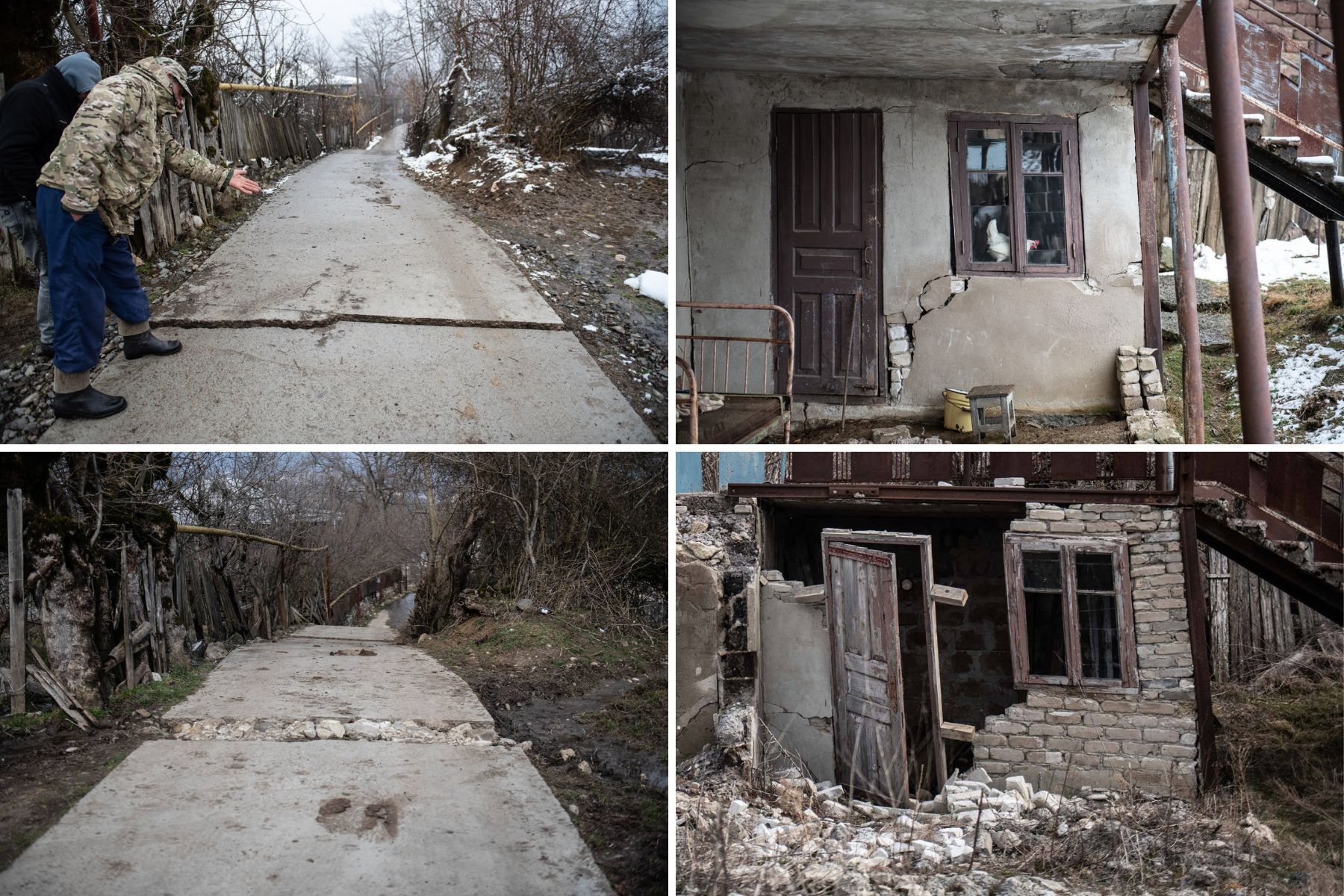 Several houses in Shukruti have been destroyed as a result of mining under the village. Photo: Mariam Nikuradze/OC Media.
Jumberi said that the recent deadly landslide in Shovi had caused people to worry that the same could happen in Itkhvisi, claiming that Georgian Manganese had shut down several mines in response to the tragedy.
[Listen to the Caucasus Digest: Podcast | Shovi: an avoidable tragedy?]
The protesters also demand that experts assess whether Shukruti and its buildings were habitable and safe after years of intensive manganese mining under the village.
‘[We don’t know] when the foundations will collapse […] All rain and snow is dangerous for us’, said Asmat Neparidze, another protester.
In 2022, around 20 houses collapsed and many other buildings were damaged in the nearby village of Itkhvisi. Many in Itkhvisi have refused to leave their homes, despite a government audit warning that over 100 houses had become too dangerous to live in.
[Read more: A Georgian village falls through the cracks]
Georgian Manganese acquired a 40-year mining license to operate a mine under Shukruti in 2006.
‘We became refugees in our country’
On Wednesday, Georgian Manganese claimed to have fully compensated the residents of Shukruti, dismissing those protesting as a ‘radical group […] trying to mislead the public’.
‘The radical group, which makes demands to the company, has already received compensation. Funds were gradually disbursed in different years according to the individual private property assessment’, read the company’s statement.
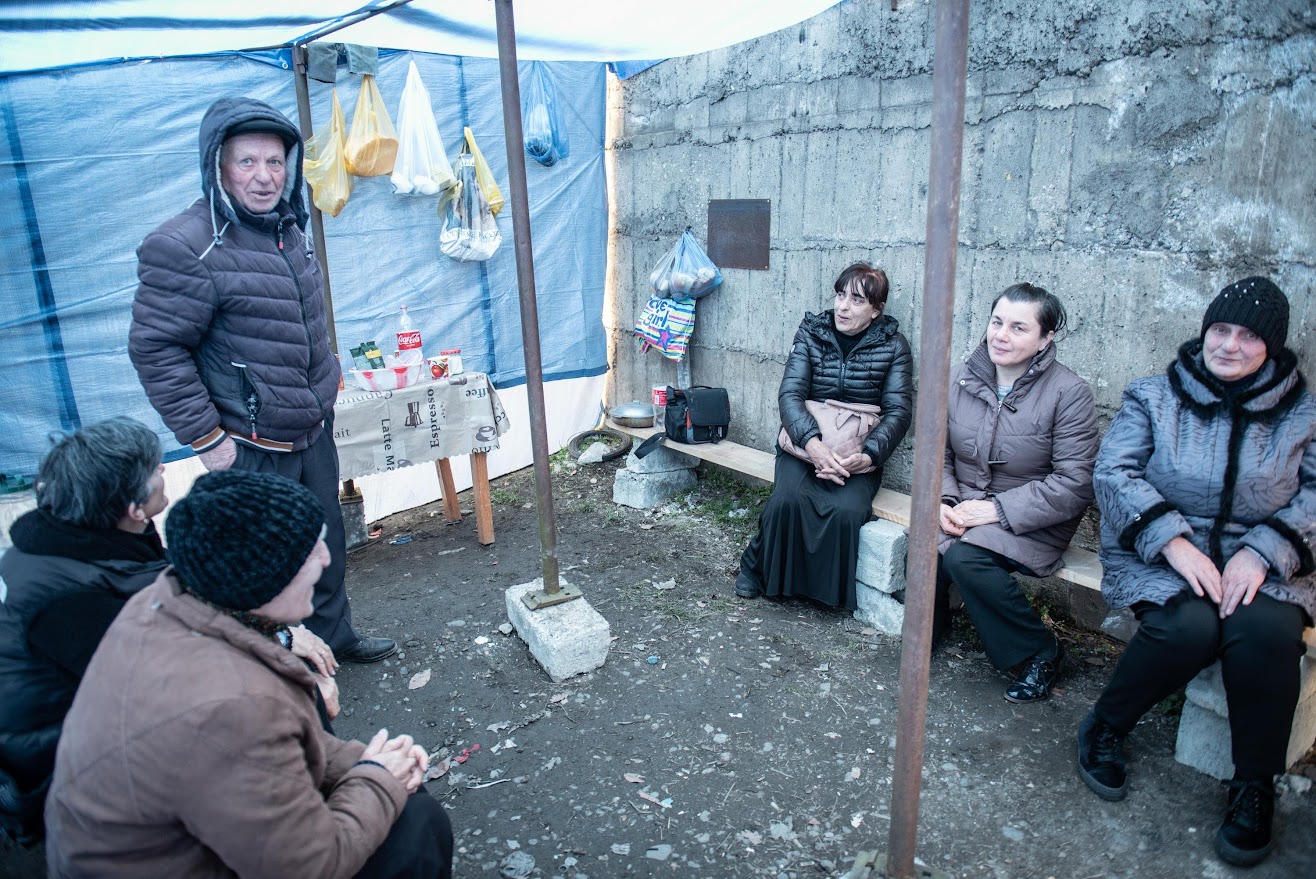 Several residents of the village have set up a tent to block entrance to the mine. Photo: Mariam Nikuradze/OC Media.
Georgian Manganese stated that it had disbursed a total of ₾11 million ($4 million) as compensation to the residents of Shukruti and the nearby village of Perevisa.
They said that while a global slump in Manganese prices had ‘temporarily delayed’ the process of issuing compensation, they had resumed the payouts earlier in March.
However, many of those who have received compensation say the company was underpaying even on what they had previously promised.
Despite receiving compensation, Shukruti resident Giorgi Bitsadze told OC Media that Georgian Manganese had deducted ₾5,000–₾10,000 ($1,900–$3,8000) from some of the residents’ total promised compensation.
Bitsadze also said that Georgian Manganese had forced residents to write ‘certificates of appreciation’ upon receiving compensation from the company. He claimed that the certificate did not list the financial sums provided as compensation for their damaged properties, but rather as ‘financial assistance’ from Georgian Manganese to the community.
‘We need to sign an agreement’, he said. ‘Of course, all this should be raised to the national level, so that tomorrow, when our houses are destroyed, we will not be left up in the air’.
Ghentor Gaprindashvili, a lawyer from Shukruti, told OC Media that an audit by the National Forensics Bureau revealed that Georgian Manganese had greatly undervalued his property’s worth — by around 55%.
The Bureau also estimated the value of his crops to be worth ₾72,000 ($27,000), while Georgian Manganese appraised them to be worth only around ₾18,000 ($6,700).
Others in Shukruti have also warned that the constant mining under the village has contributed to polluting their crops.
The protesters claimed that Georgian Manganese had yet to open talks with the protesters in Shukruti as of Friday.
On Friday, Georgian Manganese told OC Media that prior to operating mines in communities, they conduct negotiations with residents to assess the value of their property and agree to offer them compensation for potential damages mining activity would incur on their homes.
Residents of Shukruti deny this, claiming that the company frequently does not even warn local residents when launching new mining activities.
Georgian Manganese also denied requiring Shukruti’s residents to submit ‘notes of appreciation’ upon receiving compensation for their damaged properties.
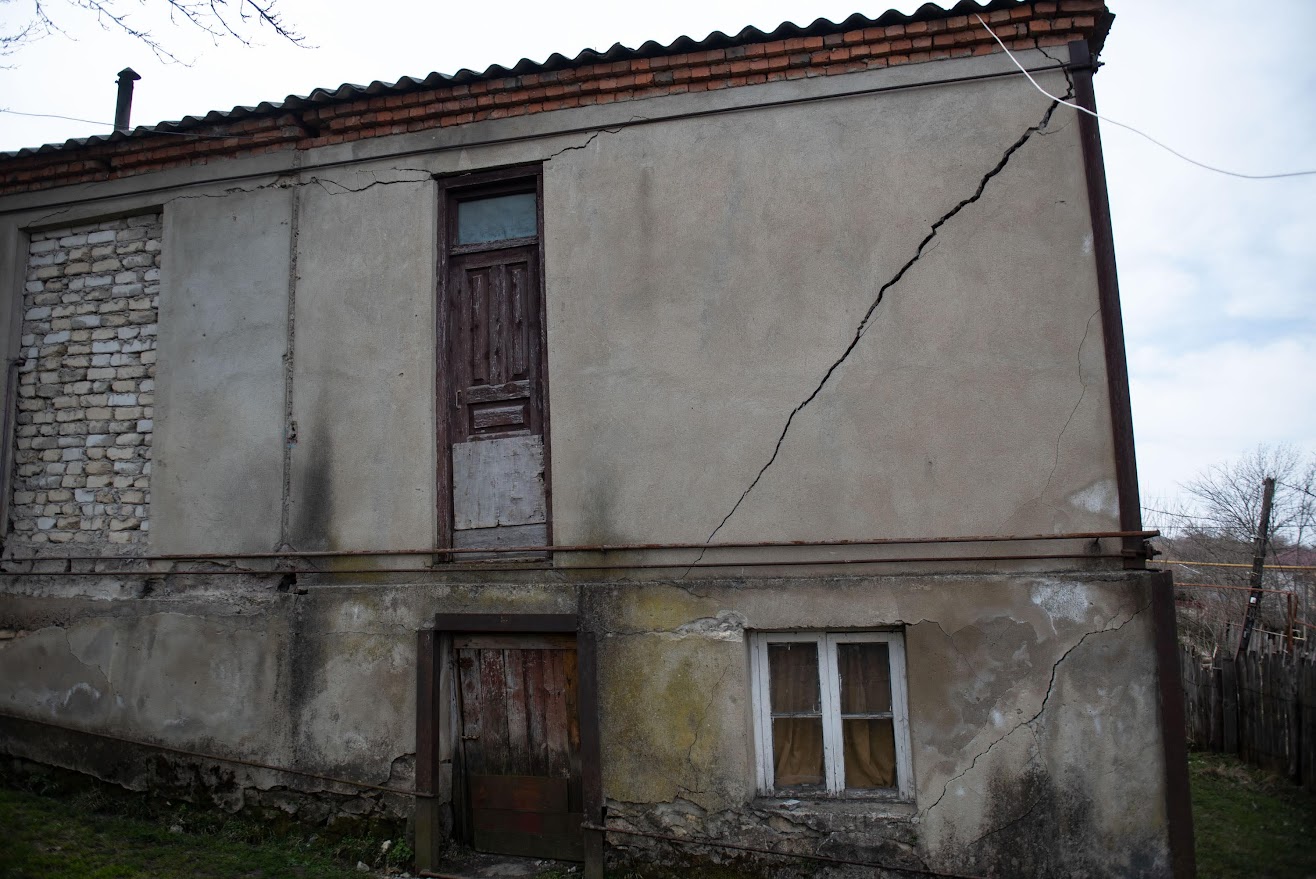 The residents of Shukruti have told OC Media that new cracks ‘appear everyday’ in their homes. Photo: Mariam Nikuradze/OC Media.
However, Bitsadze, told OC Media that new cracks continue to appear on the walls of their homes as they await compensation from Georgian Manganese.
‘We have become refugees in our country’, he said.
The post Mine entrance blocked near Shukruti in renewed protest against Georgian Manganese appeared first on OC Media.
Export of sanctioned goods to Russia
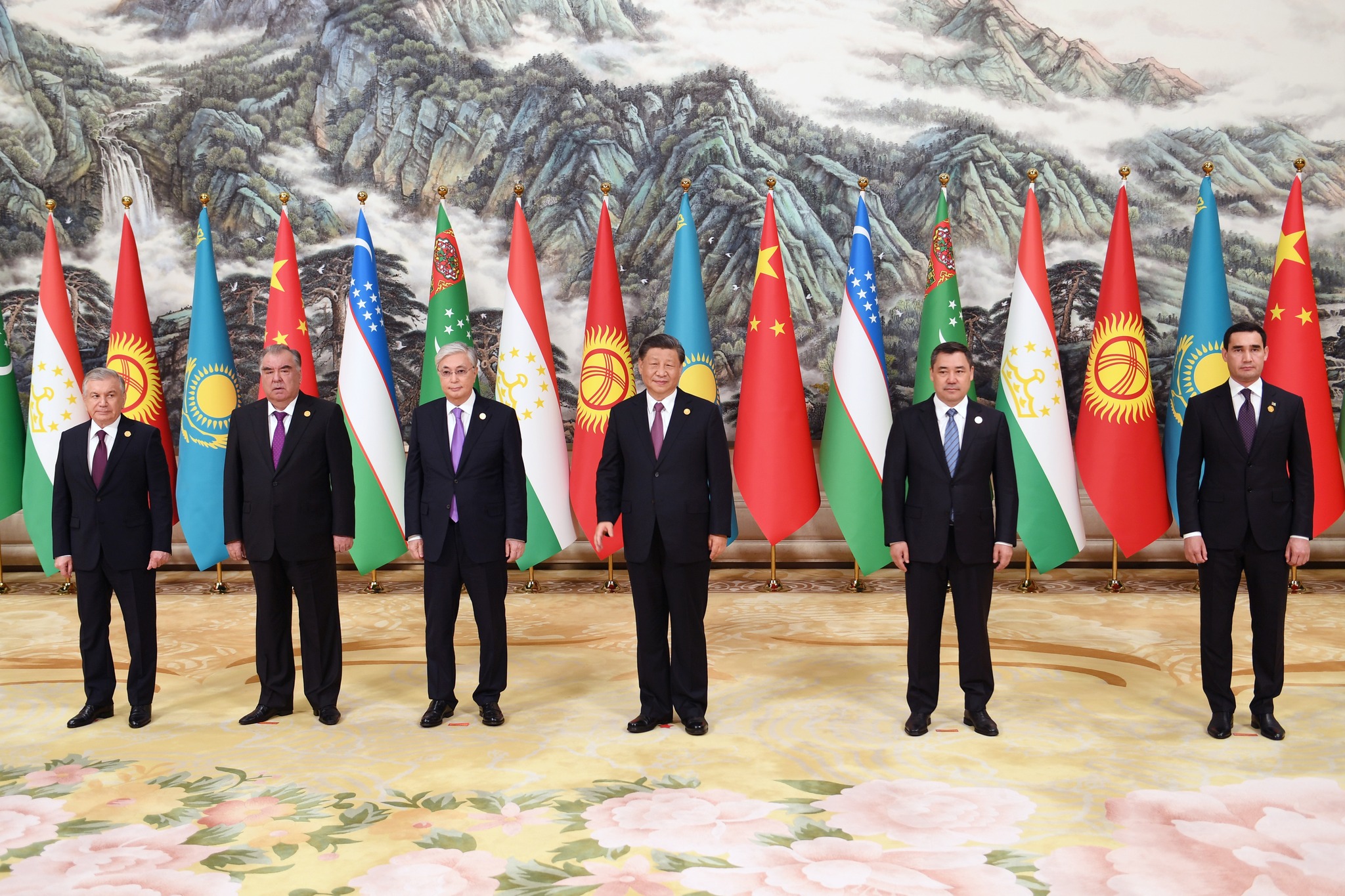
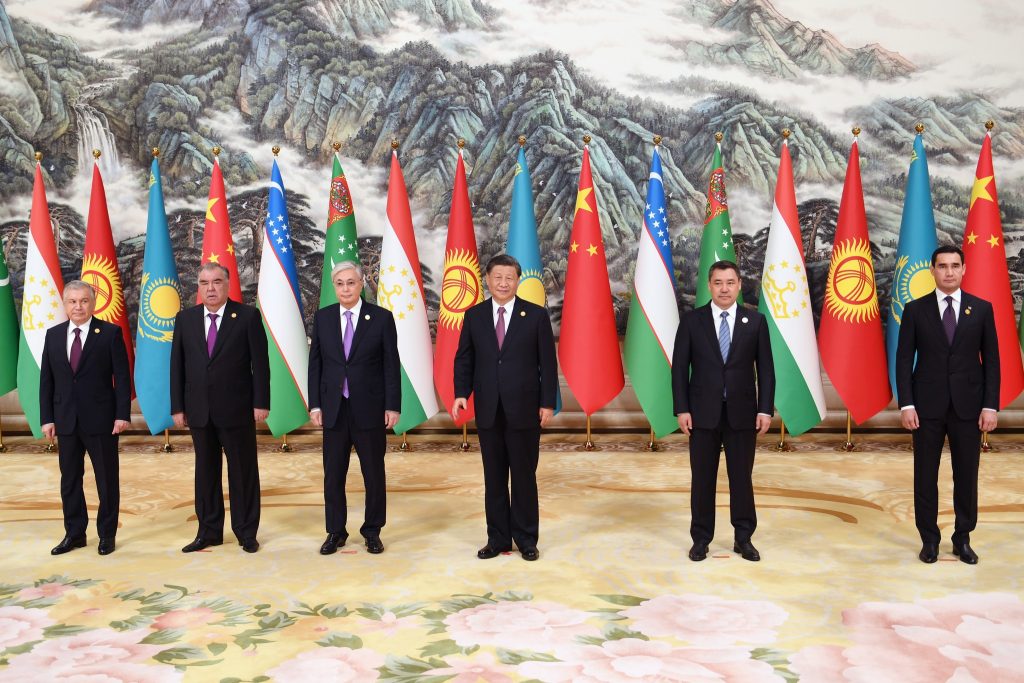 Photo: Emomali Rahmon
Goods exported to Russia from China through Central Asia don’t have to be weapons to aid Russia’s military efforts in Ukraine.
After Russia’s invasion of Ukraine, the US, the EU, and many other countries imposed a wide range of sanctions on Russia. This forced Moscow to use alternative routes through countries like Turkey and Central Asian neighbors to organize the delivery of sanctioned goods.
Many countries did not join the sanctions against Russia directly but still prefer to avoid the risk of secondary sanctions. China, in particular, maintains strong ties with Russia and aims to reduce the risk of secondary sanctions as much as possible. Central Asian countries, sharing borders with China and Russia, have been especially useful in providing indirect assistance to China in its trade with Russia.
The goods exported to Russia from China via Central Asia don’t necessarily have to be weapons to support Russia’s military efforts in Ukraine. Without the import flows of industrial goods through Central Asia, Moscow might have to make tougher compromises, choosing “guns over butter.” Thus, re-export schemes undermine sanctions, allowing Russia to flexibly maintain production lines for military goods.
China is one of the main trading partners of the Central Asian countries, and the import from China to Central Asia has almost doubled over the last five years. However, in 2022, after the Russian invasion of Ukraine, imports from China surged. During the same period, exports from Central Asia to Russia also significantly increased.
From 2018 to 2019, the import from China to Central Asia increased by 17 percent. It decreased in 2020 due to the pandemic but returned to pre-pandemic levels in 2021. Then, in 2022, imports from China increased by 44 percent, with Kyrgyzstan’s share in this import growing particularly fast. According to Temur Umarov, a fellow at the Carnegie Russia Eurasia Center, 2023 became a record year for trade between Central Asian countries and China.
The growing export of China to Central Asia is notable as its global export has not shown such strong growth, while the economic growth rates in Central Asia are comparable to previous years.
In 2022, the volume of exports from Central Asia to Russia increased by nearly one-third. Kyrgyzstan’s share in the total regional export to Russia increased almost two and a half times, Uzbekistan’s more than half, and Kazakhstan’s exports to Russia rose modestly by a quarter. However, Tajikistan’s exports to Russia remained almost nil.
This study hypothesizes that the increase in trade with Russia and China is interconnected and due to the re-export of Chinese goods to Russia, particularly to help China avoid Western sanctions against Russia.
To further explore this connection, we analyzed Central Asia’s foreign trade using the Trade Map online resource, comparing main categories of goods in imports from China and exports to Russia, noting significant growth from 2021 to 2022. Turkmenistan was excluded from this study due to the lack of available data.
For Uzbekistan, two new categories appeared in the list of main imports from China and exports to Russia in 2022: “nuclear reactors, boilers, machinery” and “electrical machines and equipment.” Exports of “nuclear reactors, boilers, machines” from Uzbekistan to Russia increased by 264 percent, and electrical machines and equipment by 150 percent. Meanwhile, imports of “nuclear reactors, boilers, machines” from China to Uzbekistan rose by more than one-third (134 percent), and electrical machines and equipment nearly by a quarter (124 percent). However, the absolute import figures of these goods from China significantly exceed their export to Russia.
For Kyrgyzstan, four new categories appeared in the lists of imports from China and exports to Russia: “nuclear reactors, boilers and machines,” “knitted fabrics,” “footwear,” and “various articles of base metal.” Specifically, the export of “nuclear reactors, boilers, and machines” increased by 41,105 percent. However, cotton export provided almost a quarter of last year’s increase in shipments to Russia, rising by 7,564 percent. The growth in “various articles of base metal” in 2021-2022 was particularly notable: exports to Russia increased by 1,245 times. An interesting point is that “knitted fabrics” became the second fastest-growing new export category to Russia, increasing by 411 times, while “nuclear reactors, boilers, and machines” grew 23 times, and “footwear” seven times.
The significant increase in fabric exports could be due to a surge in orders from Russian companies, says Saparbek Asanov, head of the Light Industry Enterprises Association of Kyrgyzstan “Legprom”. These goods are not directly under sanctions, but re-export trade to Russia includes not just sanctioned goods but also those affected by global brands leaving the Russian market.
There’s a likelihood that demand for military apparel influenced the supply chains of clothing to Russia. Financial sanctions forced many Russian firms, which previously outsourced production needs, to turn to the Kyrgyz market. Kyrgyz clothing manufacturers are not only fulfilling orders for external brands but are also exporting clothes and designs of local brands, indicating a significant shift in the industry dynamics.
For Kazakhstan, categories like “nuclear reactors, boilers, and machinery” and “electrical machines and equipment” were listed as major goods of import from China in 2022, and also of export to Russia. These categories increased fivefold compared to the pre-war year, suggesting that they cover goods subject to sanctions that could be used by the Russian military-industrial complex.
Tajikistan, in 2022, did not have overlapping groups of goods in trade with both countries, likely due to its limited role in China’s attempts to bypass sanctions in its trade with Russia.
The trade turnover of Kazakhstan, Kyrgyzstan, and Uzbekistan with both China and Russia significantly increased in 2022 compared to 2021. A comparison of imports from China and exports to Russia over time shows that several categories of goods are responsible for this growth. The category “nuclear reactors, boilers, and machinery” appears in the lists of all three countries, taking leading positions in imports from China and exports to Russia. For instance, this category grew by 553.34 percent in Kazakhstan, 2,342.56 percent in Kyrgyzstan, and 264.18 percent in Uzbekistan from 2021 to 2022. Between 2018 and 2019, the same category only grew by 8.62 percent and 24.24 percent in Kazakhstan and Uzbekistan respectively, while it decreased by 75.44 percent in Kyrgyzstan. These shifts convincingly suggest a connection between the growth in 2021-2022 and Russia’s invasion of Ukraine followed by the introduction of Western sanctions.
According to Temur Umarov, in the coming years, it will become increasingly difficult for Central Asian states to help Russians circumvent sanctions. However, much will depend on the reaction of the EU and the USA. Umarov emphasized that Western countries are not ignoring this trend, and a slight decline in trade between Russia and Central Asia was already observed in 2023.
However, this decrease is relative, and according to Umarov, re-export schemes may become more focused on products that are specifically not under sanctions but are unavailable in Russia due to global brands avoiding the Russian market.