
Russia accuses France of trying to reinforce its presence in Armenia to spy on nearby states | Politics Yeni Şafak English
Day: March 14, 2024
President of the Republic of Azerbaijan Ilham Aliyev has received Guy Ryder, the Under-Secretary-General for Policy at the United Nations, according to Azerbaijan in Focus, reporting Trend.
The post President Ilham Aliyev receives UN Under-Secretary-General for Policy appeared first on Azerbaijan In Focus.
“Global Baku Forum already transformed many years ago into one of the leading international conferences on a global scale,” said President Ilham Aliyev as he addressed the opening ceremony of the 11th Global Baku Forum on “Fixing the Fractured World” in Baku, according to Azerbaijan in Focus, reporting AzerTac.
“I think that Global Baku Forum now is in line with such leading international fora like the Davos World Economic Forum and the Munich Security Conference,” the head of state emphasized.
The post President Ilham Aliyev: Baku Forum transformed into one of the leading international conferences on a global scale appeared first on Azerbaijan In Focus.
Minister of Foreign Affairs and National Community Abroad of the People’s Democratic Republic of Algeria Ahmed Attaf has met with the Representative of the President of the Republic of Azerbaijan on special assignments Elchin Amirbayov, according to Azerbaijan in Focus, reporting AzerTac, citing the ministry’s statement.
During the meeting, the sides hailed the dynamic development of relations between the two countries. They also exchanged views on the steps to be undertaken for future deepening of the bilateral relations. The two emphasized the importance of diversification of cooperation towards various domains, including the economic ones.
During the conversation, the parties underscored that this year marks the 30th anniversary of the establishment of diplomatic relations between the two countries, and these steps coincide with this historical event.
The statement also mentions about the 29th session of the Conference of the Parties to the UN Framework Convention on Climate Change (COP29), which will be hosted by Azerbaijan in November this year.
The post Azerbaijan, Algeria exchange views on further deepening of bilateral relations appeared first on Azerbaijan In Focus.
An out-of-touch opposition still tainted by past corruption scandals is not very tempting for Serbs – many of whom view Aleksandar Vucic as ‘the best of a bad bunch’.
By Tatyana Kekic
It was an inauspicious start to the year for Serbia’s President Aleksandar Vucic. After winning a landslide victory in December’s elections, the government faced weeks of protests by the opposition group Serbia Against Violence, SPN, over its claims that the elections were rigged.
But the daily protests and hunger strikes that made international headlines didn’t last. Despite opposition promises to continue protests into the New Year, a repeat of the large demonstrations seen on December 30 has yet to materialise.
A majority of Serbs don’t appear interested in contesting the election results. In fact, those results point to Vucic’s continued popularity in the country at large. His ruling Serbian Progressive Party beat the opposition by 24 percentage points in the parliamentary election.
What explains the high levels of support for Vucic, even in the light of his creeping authoritarianism and alleged election tricks? The usual response among liberals is to blame misinformation and media manipulation. But this risks treating voters like sponges, ready to absorb anything they hear on TV.
The tendency to blame support for populist leaders on their illiberal tactics alone also ignores the reality that voters are sometimes willing to overlook the democratic deficiencies of leaders, if they believe they will deliver greater stability, or if the democratic opposition has been discredited.
Many Serbs are aware that Vucic controls the media and intimidates the opposition, sometimes by broadcasting their private sex tapes on daytime TV. But many also overlook these flaws, either because they think he is delivering for the majority, or because they view the alternative as even worse.
Explaining their support for the President, many Serbs often point to the progress Serbia has made since the Progressives took office in 2012, when unemployment was as high as 24 per cent and average wages as low as 300 euros a month. Unemployment is now in single digits and wages have more than doubled since then.
According to Serbia’s national statistical office, average net earnings increased from around 375 euros a month in 2013 to 639 euros in 2022. The Progressives’ sound economic policies are also reflected in robust real GDP growth rates and large inflows of foreign direct investment, FDI.
Vucic likes the narrative of rebuilding Serbia, and sometimes uses it quite literally. He is constantly on TV boasting about building new roads, for example. While Belgrade still lacks a metro, Vucic claims that Serbia has built more motorways in the past decade than in the past 50 years.
While for many Belgraders the Belgrade Waterfront project is an eye-sore and a money laundering project, others genuinely buy into the government’s line that the project represents progress and a leap into modernity.
Belgrade Tower, the tallest skyscraper in the Balkans, until Bulgaria built its Sky Fort in 2023, dominates the city’s skyline like a giant sore thumb. Put aside aesthetics, however, and you have quite a picture of progress.
Contrast this with the last time the opposition was in power, under the leadership of the Democratic Party between 2000 and 2012, together with the Democratic Party of Serbia, until a 2008 split.
Many remember this time as a period of turbulent transition, when the upper middle class got richer at the expense of ordinary workers and farmers.
The decade after the fall of Slobodan Milosevic in 2000 was marked by the rise of tycoons and the legitimisation of their wealth by privatisation. Criminals profited from the sale of state-owned companies in the absence of regulations; often, politicians did, too.
The opposition has since changed leadership but is still associated with a series of corruption scandals. In 2014, when former President Boris Tadic stepped down as Democratic Party leader, he acknowledged that it had earned “the title of a corrupt and scandal-stained party”. The public had a “phrase about yellow thieves”, he said, in reference to the party’s colours.
The former Belgrade mayor, Dragan Djilas, who succeeded Tadic as party leader, was himself a wealthy businessman. His personal fortune made him an easy target of Progressive smear campaigns. He is now president of the Freedom and Justice Party and a key figure in the opposition SPN.
The democratic opposition has not only been contaminated by corruption scandals. Soon after Tadic was elected for his second term in 2008, the former province of Kosovo unilaterally declared independence and was widely recognised by the West. While the Democrats never accepted its independence, it was widely seen to have “given Kosovo away”.
Kosovo’s UDI gave the impression of a government incapable of defending Serbia’s interests abroad. In contrast, Vucic is seen to defend Serbia’s interests, by refusing to give too much on Kosovo and by opposing sanctions against Russia.
Out of touch with public opinion, opposition figures like Djilas criticise the government’s refusal to align Serbia with EU foreign policy. In a recent article for Politico, in which he called upon the West to take action against election irregularities, Djilas criticised Vucic’s refusal to impose sanctions on Russia.
Such interventions are unlikely to go down well with Serbs. According to a study released by Demostat in March 2022, 50 per cent of respondents believed their country should remain neutral, even if such a stance were to incur sanctions and goods shortages on a scale similar to those experienced during the Yugoslav wars.
It is not only on foreign policy that the opposition is out of touch. By focusing on issues such as government corruption, lack of media pluralism and the environment, the SPN ignores problems that might resonate more with voters, such as soaring food price inflation, which was among the highest in Europe in 2023.
The SPN’s narrow programme lacks appeal among the rural, conservative and working-class voters who form the majority of Vucic’s support. It also lacks coherence. The parties comprising the SPN have little in common other than shared revulsion for Vucic.
The opposition also squabble among themselves, about who should be included on what list, who is best to lead the movement and so forth. A few weeks ago, the opposition group “We –Voice of the People” collapsed after a series of personal insults and threats of physical injury led to a split in leadership.
Internal power struggles are a familiar theme in Serbian opposition politics. Rather than looking inwards, however, opposition parties prefer to blame their poor election performances on an unfair media landscape and irregularities at the ballot-box. But it is too easy to blame a lack of popular support on government foul play.
As the leader of the Socialist Party, Ivica Dacic, quipped after his party struggled to gain more than 6 per cent in December’s polls, he would also like a repeat of the elections.
But it is unclear if the opposition would fare any better if new and fairer elections were held. Despite all his flaws, Vucic remains the best of a bad bunch, as far as most Serbs are concerned.
- About the author: Tatyana Kekic is a freelance journalist based in Belgrade specialised in Russian and Eastern Europe affairs.
- Source: The opinions expressed are those of the author and do not necessarily reflect the views of BIRN.
By Leon Hadar
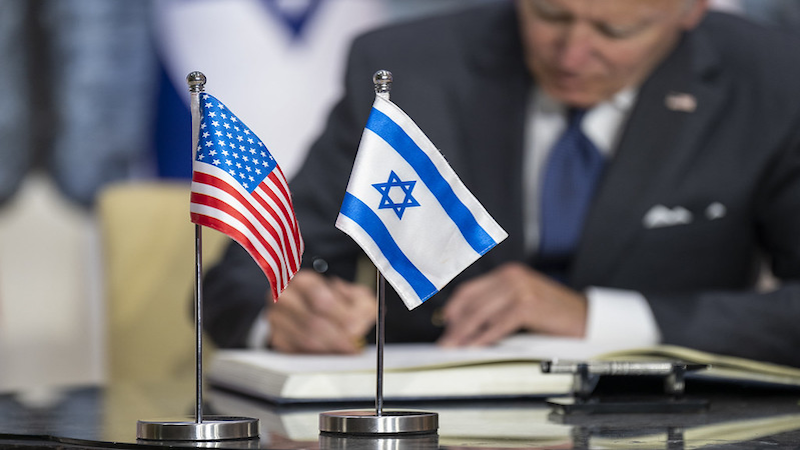
The divisions between Israel and the United States over the Gaza War seem to have deepened in the aftermath of the release of Prime Minister Benjamin Netanyahu’s plan for post-war Gaza. The plan did not include reference to one of Washington’s key demands from Israel: that it accepts the idea of establishing an independent Palestinian state.
The Israeli plan was “at odds with US aims” and bound to lead to tensions between the two countries, predicted the Financial Times. The Economist concluded that “Israel scorns America’s unprecedented peace plan.”
Indeed, the American media narrative contrasted the American plan for the “Day After” in Gaza, advanced by Secretary of State Anthony Blinken and backed by Saudi Arabia, with Netanyahu’s vision, putting into sharper focus “the widening gap between Netanyahu and the Biden Administration on the occupied territories and future of post-war Gaza.”
Are the Israeli and American visions for the “Day After” as irreconcilable as the pundits suggest?
More likely, they represent the tensions between an American position—that is aligned with the view of Saudi Arabia and other Arab-Sunni governments—and Israeli public concerns over the security threat that an independent Palestinian state would pose. American and Israeli policymakers can try to bridge these differences by setting Palestinian independence as a long-term goal.
Saudi-Israeli Normalization Without a Palestinian State
Saudi Arabia emerged as key to the Biden Administration’s strategy in the Middle East prior to the Hamas attack on Israel on October 7, 2023 and even more significantly in its aftermath. The Hamas attack had put on hold an initial US diplomatic initiative that aimed at normalizing relations between Saudi Arabia and Israel: an outcome that would help form an Arab-Israeli strategic partnership to contain Iran. The plan also included a US security commitment to Riyadh and a green-light to Saudi efforts to enrich uranium.
What the initiative did not include was a pledge to establish an independent Palestinian state. Earlier reportsindicated that the Saudis would not have demanded the re-establishing of the two-state solution as a condition for normalizing ties with Israel. The Saudi interest in a diplomatic détente with Israel as a way of counter-balancing Iran superseded their commitment to end Israeli military occupation of Palestinian territories. The Saudi position was certainly in line with that of Netanyahu, who has maintained that Israel could make peace with the Arabs and integrate into the Middle East without accepting Palestinian demands for a Palestinian State.
What a Difference a Hamas Attack Makes
After October 7, 2023, the Palestinian issue was forced to the top of the Middle East and international agendas, displaying the high costs involved in neglecting it. Moreover, the devastating Israeli military response to the killing of at least 1,139 people, mostly civilians, and the kidnapping of about 240 others resulted in major human catastrophe in Gaza, including the death of more than 30,000 Palestinians.
The images of this devastation resulted in mounting support for Palestinians in the Arab world. The public pressure from the so-called Arab street forced Saudi Arabia to reiterate its commitment to the Palestinian cause and to distance itself from Israel and its main foreign backer, the United States. In that context, the Saudis were not in a position to establish diplomatic ties with Israel. If anything, the Saudis were playing on Arab and Muslim unity in a bid to appease public opinion.
Saudi-Israeli Normalization Plus a Palestinian State
The American response to these developments consisted of a high-wire balancing act, in which Washington continued to provide Israel with full diplomatic and military support in an attempt to avert broader regional conflagration, all while criticizing Israel’s conduct of the war in Gaza and pressing it to allow humanitarian aid to the Palestinians there.
With Israel and the United States facing international pressure to end the offensive in Gaza, Blinken launched a major diplomatic initiative in which the Saudis would play a leading role. In practical terms, the United States restarted the plan for normalization of relations between Israel and Saudi Arabia, only this time, the Palestinian issue would be a priority. Call it normalization plus the two-state solution.
The Biden Administration refrained from proposing a comprehensive and detailed plan for peace in the region. However, the vision it laid out assumes the mobilization of regional support for reconstruction and governance in Gaza after Israel’s war with Hamas ends. That would become a nucleus for an independent Palestinian State, under the control of a reformed Palestinian Authority. From the American perspective, bolstering Israel’s security and the creation of a Palestinian state were compatible goals.
Israeli Opposition to the Two-State Solution
The Hamas attack demonstrated that ignoring the Palestinian issue is not sustainable.
Netanyahu’s strategy, based on the notion that the world and especially the Sunni Arab states had grown tired of the Palestinian issue, was shattered on October 7. Ignoring the reality of the Palestinian problem has been a mistake and the Biden Administration’s current effort to place the issue on its evolving diplomatic agenda in the Middle East is sensible.
But ignoring one political reality does not justify ignoring another political reality, in this case, Israeli opposition to the two-state solution. Some pundits in Washington seem to suggest that Netanyahu’s opposition to the two-state solution and to the establishment of a Palestinian state is the main obstacle for advancing the Biden Administration’s Middle East strategy. According to the Washington Post, “White House officials have increasingly concluded that Netanyahu is focused on his own political survival to the exclusion of any other goal and is eager to position himself as standing up to Biden’s push for a two-state solution.”
Netanyahu has suggested that he would be willing to accept the Palestinian state in a 2009 speech at Bar-Ilan University, but under conditions that no Palestinian leader could ever accept: not just de-militarization and Israeli security control over airspace, but also an Israeli capital in an undivided Jerusalem. In retrospect, the speech was very much in line with the consensus in Israel on the issue. There are certainly no indications that the trauma of October 7 has shifted Israeli public attitudes toward accepting the idea of an independent Palestinian state.
If anything, as one prominent Israeli pollster suggested, the Hamas attack shifted Israeli public attitudes to the right that most Israelis support Netanyahu in continuing Israeli military control of Gaza and the rest of the occupied Arab territories. Only around 25 percent of the Israelis would now support the establishment of a Palestinian state, and they agree to that only under certain conditions that most Palestinians would not accept. Indeed, today most Israelis would likely agree with the arguments made by Netanyahu in his Bar-Ilan speech.
Moreover, this is very much the position of Benny Gantz, the retired Israeli general who is seen as the leading successor to Netanyahu. While he remains opposed to annexing the West Bank and Gaza, he would also be opposed to any solution under which a Palestinian entity is not fully demilitarized and doesn’t remain a united Jerusalem remains the capital of Israel.
Recalling the Post-Yom Kippur War Era
There are those who point to the United States push for Egyptian-Israeli disengagement agreements in the aftermath of the 1973 Yom-Kippur War as a possible model for pursuing an Israeli-Palestinian deal today. But they should recall that getting Israel to make the necessary concessions at that time was possible because Israel had actually achieved a military victory in that war and was ready to make concessions to the Egyptians.
Moreover, in 1973 Washington, under the direction of former Secretary of State Henry Kissinger, wasn’t pushing for a grand diplomatic bargain between Israel and Egypt. Washington was pursuing incremental diplomacy as opposed to aiming to transform each side’s basic conceptions of their respective national interest.
Indeed, the Israeli-Egyptian peace agreement was signed six years later following Egyptian President Anwar Sadat’s visit to Israel and a long and difficult diplomatic push by the United States.
To Dream the Impossible Dream
Much of the criticism of Netanyahu’s post-war plan is that far from being ambitious, it seems to try to perpetuate the current status-quo, to continue maintaining the Israeli occupation of the Palestinian territories, and, most importantly, it seems to make it impossible to establish a Palestinian state, a goal that is central to American policy.
Netanyahu’s plan describes a demilitarized Gaza that would face continued heavy Israeli military presence after combat operations end, a buffer zone of limits to Palestinians along Gaza’s perimeter, and Israeli control of the Egypt-Israel border in order to seal off the southern strip. The United States, on the other hand, is opposed to changes in the territorial boundaries of the Gaza Strip.
Netanyahu has also rejected the American proposal to assign a reformed Palestinian Authority, led by younger and more competent leaders, to the task of controlling Gaza in the post Hamas era. Instead he proposed that a group of Palestinian civilians with no ties to Hamas control the strip.
A Basis for American-Israeli Dialogue
While the Israeli plan underscores the gap between the Netanyahu’s government and the Biden Administration, it also leaves open the possibility that the Israeli government would move in the American direction after Israel achieves its goals of defeating Hamas and recovering its hostages.
Indeed, the vagueness in some of the wording in the Israeli plan may be a signal to Washington that while Israel is rejecting the notion of Palestinian sovereignty, the idea could be resurrected at some point in the future in the post-Hamas era. The Biden Administration has expressed its commitment to the two-state solution. But as the Americans are aware, the differences between the most moderate Israeli and the most moderate Palestinians would turn any negotiations over the issue into a diplomatic dead-end.
To put it in simple terms, no Palestinian would accept the idea of a demilitarized Palestinian state, and this is the Israeli precondition for allowing for Palestinian sovereignty. It is difficult to imagine the coming of Israeli and Palestinian minds on three crucial issues: the right of return of the 1947 Palestinian refugees into Israel, the future of the holy sites in Jerusalem, and Israel’s identity as a Jewish state.
In face of this wide differences between the Israeli and Palestinian positions, Washington should embrace the idea of an independent Palestinian state living in peace with Israel as a long-term goal as opposed to a concrete policy proposal that could be pursued in the near future. If Washington does not accept Israeli demands for continuing military control and presence in Gaza, it needs to come up with an alternative plan that would provide security guarantees for Israel after its withdrawal from Gaza.
The United States could propose, for example, the deployment of NATO and Arab peacekeeping to Gaza. If that is not a realistic option, it may have to accept temporary—as opposed to permanent—Israeli military presence in Gaza. Similarly, the United States, Israel, and Saudi Arabia could consider the possibility of selecting a government led by Palestinian technocrats to replace Hamas in Gaza, the assumption being that at some point in the future Palestinians would be able to elect their own leadership.
In a way, if and when the war in Gaza ends and Hamas is defeated, Washington and Jerusalem would be in a position to come up with a shared vision for Gaza, including demilitarization, Palestinian autonomy, and economic reconstruction, that would be accepted by Saudi Arabia and other Sunni Arab states, with the objective of an independent Palestinian state remaining a long-term goal.
The views expressed in this article are those of the author alone and do not necessarily reflect the position of the Foreign Policy Research Institute, a non-partisan organization that seeks to publish well-argued, policy-oriented articles on American foreign policy and national security priorities.
- About the author: Leon Hadar is a Senior Fellow in the Foreign Policy Research Insitute’s Middle East Program.
- Source: This article was published by FPRI
The State of the Union address exemplifies everything that is wrong with this country. Trivialities are spun as being important, the most serious issues are glossed over, and lies are said to be true. The state of the union is one of failure.
If there were any question that this nation is a failed state, the recent State of the Union (SOTU) address makes the case and removes any doubt about the depth of decline. The constitutional requirement that the president, “… from time to time give to the Congress Information of the State of the Union…” is now an extravagant combination of nonsense, mendacity, and war propaganda that reveals the depth of rot in the U.S. body politic.
The SOTU address is an opportunity for serious issues to be addressed but which are instead discussed as sophomoric saber rattling as members of congress jump up and down clapping like trained seals as the president pledges to stop Putin, stand up to Putin and not back down to Putin who we are told is on the march and sowing chaos throughout all of Europe. While democrats over acted the republicans sat and frowned. So-called journalists give undue attention to the pantomime and draw phony conclusions based on the theatrics. Corporate media play an important part in aiding and abetting the spread of obfuscations, confusion, and outright lies.
The manufactured drama is bipartisan and members of the Congressional Black Caucus (CBC) happily participate in the tawdry show along with the rest of their colleagues. This year they invited as their guest a Texas high school student, Darryl George , who has been suspended from school for refusing to cut his dreadlocks. His stance is commendable and the treatment he has received is contemptible, but one would think that the CBC could highlight an issue of greater importance to the masses of Black people.
But taking care of the people’s business is simply not on the agenda, for the CBC or anyone else. “The CBC stands in full support of Darryl’s personal right to wear his hair the way he chooses…” was CBC Chair Steven Horsford’s statement. Congresswoman Bonnie Watson-Coleman chimed in about the CROWN Act, which would give legislative protection to wearing the their hairstyle of one’s choice. This undue attention to a lack of substance is an indication of the CBC’s political irrelevance. Then again they aren’t alone in having diminished themselves. The entire political class plays right along.
Of course the president is the star of the show and Joe Biden didn’t disappoint. His active and enthusiastic participation in Israel’s war crimes has lowered his already anemic approval ratings, and now thousands of primary election voters are casting ballots for “uncommitted” as opposed to the incumbent president. What better moment to pretend that he and Israeli prime minister Benjamin Netanyahu are in opposition to one another than to put on a show at the State of the Union address?
The clumsiness of the performance made it all the more outrageous when the president pretended to insult Netanyahu on camera. Democratic senator Michael Bennet began the charade with Secretary of State Blinken and Transportation Secretary Buttigieg by his side as extras in the movie.
“Great speech. I was telling the Secretary, I was in Jordan and Israel this weekend and we’ve got to keep pushing on what you are doing on the humanitarian stuff.” Biden jumped in on cue, “I told him, Bibi, and don’t repeat this, but you and I are going to have a ‘come to Jesus’ meeting.” A staffer comes in and murmurs something to Biden who ends the conversation with, “I’m on a hot mic here. Good. That’s good.”
The response to millions of people expressing outrage over genocide was treated as a public relations stunt, which is what SOTU and the U.S. presidency have become.
If nothing else SOTU laid bare the utter fraudulence of the Biden presidency. It is harder to make the case of lesser evilism or holding one’s nose to vote when the betrayals are so blatant. Claims of moving Biden to the left or holding feet to the fire were always made by the cynical to the naive. Both the con artists and their targets have a lot of explaining to do when Biden used the SOTU speech to appeal directly to the Trump voters we are otherwise told to view as deplorable.
Republican congresswoman Marjorie Taylor-Greene was decked out in MAGA regalia and gave Biden a button which read, “Say her name, Laken Riley.” The suspect in the murder of this young Georgia woman is an undocumented man. After chastising republicans for failing to pass an immigration bill which liberals should have opposed on principle, Biden said, “Lanken [Laken] Riley, an innocent young woman who was killed. By an illegal. That’s right. But how many thousands of people are being killed by illegals?”
We are otherwise told that Donald Trump is a fascist and his supporters are extreme MAGA and also very fascist and they all want to undo democracy. Then Biden makes a lie out of his own propaganda and appeals to the very people we are told are so dangerous with a quote that could easily have come from a Trump rally.
Jim Crow Joe is nothing if not consistent. Blatant racist appeals have been his stock in trade throughout his political career. Of course he referred to an undocumented person as an “illegal.” His back tracking afterward was also part of the SOTU stunt, an effort to disappear what he had intentionally given attention to. The farce continued after he was criticized for apologizing but then claimed he hadn’t apologized when in fact he had. Biden first made an appeal to racism, then winked and hoped everyone would forget, but the more open racists attacked him and he then went full circle and embraced the racist remark he made in the first place.
The “illegal” fiasco would be funny if it weren’t so serious. Of course this country is governed by very unserious people and they aren’t serious because they don’t really govern anything. The oligarchs do and their puppet strings are more and more visible and their errand boys and girls look more and more foolish.
Giving serious attention to Biden, the State of the Union, or the congress can only lead to being scammed. The devolution of the political process is always more obvious in an election year and shows that the state of the union is one of failure.