
AzerNews.Az
 The South Caucasus News - SouthCaucasusNews.com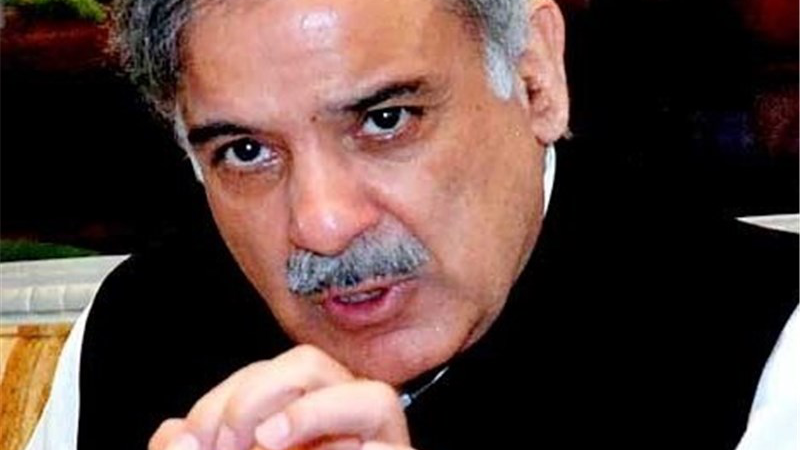
By Sushant Sareen
Normally in Pakistan, the political commentariat starts speculating on the longevity of every new government within a few weeks of it assuming office. But obituaries of the Shahbaz Sharif-led ‘Hybrid Pro Max’ regime started being drafted even before the new Prime Minister was selected. Hardly anyone expects the new government to last its full term. The maximum time in office that most pundits are ready to give this unwieldy coalition—more of a shotgun marriage forced by the Pakistan Army—is between 18 and 24 months.
Given that the average tenure of a Prime Minister since 1985 (excluding caretakers) has been around two years and four months, the 18-24 month prediction is well within the ballpark. Add in the monumental challenges confronting the new government, the lack of popular support it enjoys, the pulls and pressures of coalition politics, and the overbearing attitude of the military, which is underwriting and underpinning the new dispensation, and it becomes very clear why no one expects this government to last the distance. Even so, notwithstanding the usual political buffeting, conspiracy theories and rumours of imminent demise, as long as it survives, the Shahbaz government will neither be fragile nor unstable.
The Shahbaz government can be called weak only in the sense that it has very little agency of its own. It is a government cobbled together by the military establishment, which is pretty much calling all the shots. All crucial ministries—finance, interior, foreign—will be manned either by people endorsed/recommended by the Army, or will have minders placed in them to keep a solid control over them.
The real government in Pakistan is now the Special Investment Facilitation Council (SIFC). It was initially set up to facilitate investments but has taken over virtually all the decision making and policy framing functions of the nominal government. But it is the Shahbaz government that will front all the difficult decisions taken by SIFC, and also take the political fall for them. Depending on what spin someone wants to give, the government can either be seen as weak because it is being led by the nose by the SIFC, or, it can be seen as a strong government implementing the most onerous decisions at great political cost.
On paper, Shahbaz is comfortably placed as far as the numbers game goes. He enjoys the support of over 200 members in the 366-member National Assembly. With the allotment of reserved seats, which would have otherwise gone to Imran Khan’s party, Shahbaz could soon have a two-thirds majority in the House. Compare this to Imran Khan who barely managed a majority in 2018.
Of course, a parliamentary majority has only a notional relevance in Pakistan. It doesn’t matter if someone has a two thirds majority, or has a bare majority mark, or even is in a minority. As long as the government enjoys the support of the army, it is stable. The day it loses that support, the numbers in National Assembly become irrelevant. The thing is that, for now, and the foreseeable future, Shahbaz Sharif has the military backing him completely. He will, therefore, be firmly ensconced in the Prime Minister’s office, as long as there is no falling out with the military.
What goes in Shahbaz’s favour is the fact that the current army leadership needs him as much as he needs them to stay in power. The cabal of generals led by Gen. Asim Munir doesn’t have a whole lot of options to play around with, even less so after the election results in which Imran Khan emerged winner against all odds. That the results were changed and the mandate stolen doesn’t distract from the reality that neither the military nor the current political dispensation enjoy the support of the people. Both for self-preservation, and for reasons of state survival, they have no choice but to stick to each other.
Destabilising or displacing the current government is a non-option because there is no alternative unless Munir is ready to smoke the peace pipe with Imran Khan—almost an impossibility as things stand. Given the public mood, which will become more hostile as more bitter pills are administered to the people, the mutual dependence between the Army and the government will only increase. This will make them even more dependent on the military. But what this also means is that there is space for negotiation and bargaining between the ‘selected’ regime and the military overlords.
Although Shahbaz Sharif will not mind being utterly obsequious to the Army—a perfect yes-man, if ever there was one—there will be a temptation, even a kind of reflex, in Nawaz Sharif to push some of his pet agendas, resist some of the diktats and regain some agency for the party and government. In some ways, playing mediator and bridge between his political boss Nawaz Sharif, and his boss in government Gen. Asim Munir, will be Shahbaz Sharif’s biggest political challenge. If he can manage this tussle between Nawaz and Munir, and if all other things remain the same, the current arrangement should at least last for the next 18 months i.e. until October/November 2025 when the question of an extension for Gen. Munir will come up. The extension issue could create friction between the Army and the Sharifs, especially if Nawaz is not inclined to give it.
In politics, however, the other things don’t remain the same. A lot will, therefore, depend on how bad the economic and security situation becomes and how the street and the soldiery reacts. Beyond a point, the Munir junta will not be able to push things through. Dissent from within the military is dangerously high. There are reports that the military brass is monitoring WhatsApp groups, issuing warnings to officers and men who are seen as silent dissenters, and there are unconfirmed reports of court martials of senior Pakistan Air Force officials—all of which indicate that something is happening below the surface.
If things reach the tipping point, then there is a very good chance that any extension for Munir will simply be untenable. There will be enormous pressure from within the Army to replace him. And, if Munir goes, the political house of cards he has put together will come crashing down. In a way, the fates of Munir and Shahbaz are now tied to each other.
As far as the coalition is concerned, it isn’t going anywhere. The Pakistan People’s Party (PPP) will keep making noises but will keep supporting the government. Every disagreement will be a ploy to extract something out of the federal government and get some good old-fashioned virtue signalling to limit the damage to its own vote bank. But beyond that, the track record of the PPP has been to be as obsequious to the military establishment as Shahbaz Sharif. Asif Zardari, who will be sitting in the Presidency for the next five years, has perfected the art of making a show of defiance and then quietly folding once his bluff is called.
In any case, the PPP has virtually no presence outside of Sindh in Punjab, despite vigorous efforts to increase its vote bank, the PPP remains where it was in 2018. And in Balochistan, it won because of a blatantly rigged election. The party knows that if fresh elections were to be called, it would end up with less than it has now. Plus, it might have to contend with an Imran (or one of his cronies) at the helm—hardly a very palatable prospect. The other big coalition partner, Muttahida Quami Movement (MQM) too doesn’t have any real political capital to leverage. Virtually all its seats were gifted to it by the ‘deep state’. It will do what the Army tells it to do.
At the political level, the biggest challenge will be on how to handle the resurgent Pakistan Tehrik-e-Insaf (PTI), which has won 93 seats. Although the PTI has been robbed of its reserved seats (not to mention the other seats where its winning candidates were declared losers), it is unlikely to be a docile Opposition. In 2018, the then Opposition, led by Pakistan Muslim League Nawaz (PML-N) and PPP, had huge numbers but didn’t put up any fight because they had been warned by the military establishment to not create trouble. The PTI is unlikely to be as obedient or compliant. It will agitate the street and campaign hard on social media, building narratives against the incumbents who, in any case, will be perpetually on the back foot because of a lack of legitimacy and rising anger on account of economic difficulties.
Over the next few months, there will be a lot of fire and fury in political rhetoric, speculation galore, but this government is not going anywhere anytime soon. How much it controls things and how much it is controlled by the military establishment will depend on how it bargains and negotiates, as well as on how much fiscal and political space is available to it. But any predictions of its demise are highly exaggerated for at least a year, maybe even two. After that, all bets are off.
Hungary’s dilatory approval of Sweden’s bid to join NATO brought much relief and high-fiving at alliance headquarters in Brussels. It took much diplomatic bribing of the pro-Russian Viktor Orban government in Hungary (as it did the ambivalent Recep Tayyip Erdogan government in Turkey) to get the unanimous vote of alliance countries to bring in another new member.
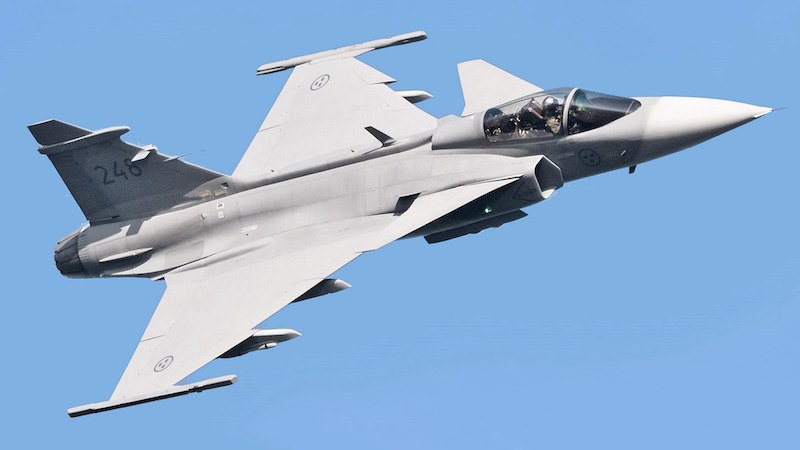
To close the deal, Swedish prime minister Ulf Kristersson had to make a pilgrimage to Budapest bearing gifts—four Swedish-made Gripen fighter jets and a promise by Saab, the aircraft producer, to open an artificial intelligence research center in Hungary. The New York Times concluded that Hungary’s approval of Sweden’s accession sealed “a major shift in the balance of power between the West and Russia set off by war in Ukraine.” And the strutting and flexing within the alliance already seems to have started.
Sweden’s geography does provide several advantages for NATO vis-à-vis Russia. Swedish territory includes Gotland Island, which helps control entry to and exit from the Baltic Sea. With Finland and Sweden in the alliance, it will be easier to bottle up the Russian Navy inside the Baltic and prevent its breakout into the Atlantic Ocean. Because Russia’s nearby Kola Peninsula is home to two-thirds of Russia’s second-strike nuclear deterrent, Swedish territory also makes a great outpost to spy on developments. Finally, in any NATO conflict with Russia, reinforcing NATO’s Baltic countries of Latvia, Lithuania, and Estonia would be more accessible from Sweden.
Of course, because of its essential geography, Stockholm had received quiet defense guarantees from Washington even before accession. However, the perception that the formal accession of Finland and Sweden into the alliance alters the balance of power in Europe vis-à-vis Russia has a significant downside, starting almost immediately.
A significant disadvantage of alliances—outside of the potential for freeriding —is that with the security guarantee of the leader, less powerful countries gain confidence to pursue riskier strategies. The danger of this phenomenon is illustrated by the recent loose talk from some of Europe’s leaders, who met in Paris about sending their troops to Ukraine. French president Emmanuel Macron has always been more favorable to European-driven military action. He publicly announced last month that he would not rule out the dangerously escalatory step of deploying European troops to Ukraine. Although he emphasized that no consensus was reached among the European countries—“in an official, approved, and endorsed way”—he also asserted that “anything is possible if it is useful to reach our goal,” which he argued was to guarantee that “Russia cannot win this war.”
The Biden administration should temper any indications of a growing resolve among European nations to intervene directly in Ukraine. To date, although the United States military aid to Ukraine vastly exceeds the combined sum provided by the Europeans, the Biden administration has exercised appropriate caution on actions that could escalate the war into a direct conflict with nuclear-armed Russia.
As the eruption of World War I teaches us, alliances can drag countries into catastrophic wars that nobody wants. Today, this caution is especially required given NATO’s Article V security guarantee, which considers an attack on one member as an attack on all. As the North Atlantic Treaty stipulates:
…[A]n armed attack against one or more of them in Europe or North America shall be considered an attack against them all and consequently they agree that, if such an armed attack occurs, each of them, in exercise of the right of individual or collective self-defence recognized by Article 51 of the Charter of the United Nations, will assist the Party or Parties so attacked by taking forthwith, individually and in concert with the other Parties, such action as it deems necessary, including the use of armed force, to restore and maintain the security of the North Atlantic area.
Smaller alliance members spooked about Russia’s recent limited gains in the Ukraine war and encouraged by the perceived positive shift in the NATO-Russia balance with Sweden’s entry could very well entangle the United States in an escalation with the United States and Russian nuclear forces squaring off. Thus, President Biden needs to squash such brash and unwise talk among its ever-growing number of security clients in Europe.
This article was also published in The National Interest
Alon Pinkas, a former senior Israeli diplomat, well-plugged into Washington, tells us that a frustrated White House finally has “had enough.” The rupture with Netanyahu is complete: The Prime Minister does not comport himself as “an U.S. ally” should; he severely criticises Biden’s Middle East policies, and now the United States has come to understand this fact.
Biden cannot afford any further Israel-affects to jeopardise his electoral campaign, and so – as his State of the Union Speech makes clear – he will double-down on misconstrued policy frameworks for both Israel and Ukraine.
So what does Biden intend to do about Netanyahu’s act of defiance against the “holy grail” of U.S. policy recommendations? Well, he invited Benny Gantz, a member of Israel’s War Cabinet to Washington, and wrapped him around an agenda “reserved for a prime minister, or someone they think will, or should be, premier.” Officials apparently thought that by initiating a visit outside of usual diplomatic protocols, they may “have unleashed a dynamic that could lead to an election in Israel,” Pinkas notes, resulting in a leadership more amenable to U.S. ideas.
It was clearly intended as a first step to “soft power” régime change.
And the prime reason for the declaration of war on Netanyahu? Gaza. Biden apparently didn’t appreciate the snub received in the Michigan primary when the Gaza protest vote surpassed 100,000 “uncommitted votes.” Polls – especially amongst the young – are flashing red warning signals for November (in no small part because of Gaza). Democratic national leaders are beginning to worry.
Leading Israeli commentator, Nahum Barnea, warns that Israel is “loosing America”:
We are accustomed to thinking of America in familial terms … We receive weapons and international backing and the Jews give their votes in the key states and money to the campaigns. This time, the situation is different … Since the votes in [presidential] elections are counted regionally, only a few states … actually decide … Like Florida, [a] key state, where the votes of the Jews can decide who will move into the White House, so too can the votes of the Muslims in Michigan decide … [Activists] called on the primary voters to vote “uncommitted” to protest Biden’s support for Israel … Their campaign succeeded beyond expectations: 130,000 Democratic voters supported it. The slap in the face to Biden reverberated across the entire length and breadth of the political establishment. It not only attested to the rise of a new, efficient and toxic political lobby, [but] also to the revulsion that many Americans feel when they see the pictures from Gaza.
“Biden loves Israel and is truly afraid for it,” concludes Barnea “but he has no intention of losing the elections because of it. That is an existential threat.”
The problem however, is the converse: It is that U.S. policy is deeply flawed, and wholly incongruent with majority public sentiment in Israel. Many Israelis feel they are fighting an existential struggle, and must not become ”just fodder” (as they see it) to a U.S. Democratic electoral strategy.
The reality is that Israel is rupturing with Team Biden – not the converse.
Biden’s key plan which rests on a revitalised Palestinian security apparatus is described – even in the Washington Post – as “improbable.” The U.S. tried a PA security “revitalising” initiative under U.S. General Zinni in 2002 and Dayton in 2010. It did not work – and for good reason: Palestinian Authority security forces are simply viewed by most Palestinians as the hated stooges enforcing continued Israeli occupation. They work to Israeli security interests, not Palestinian security interests.
The other main components to U.S. policy is an even more improbable “de-radicalised” and anaemic “two-state solution,” buried within a regional concert of conservative Arab States acting as its security overseer. This policy approach reflects a White House out of kilter with today’s more eschatological Israel, and one failing to move on from perspectives and policies hailing from decades past which, even then, were failures.
The White House therefore has resorted to an old trick: To project all of its own policy failings onto a foreign leader for not making the “unworkable” work, and to try to replace that leader with someone more compliant. Pinkas writes:
“Once the United States became convinced that Netanyahu was not being cooperative, not being a considerate ally, behaving like a crude ingrate … focused only on his political survival after the October 7 debacle, the time was ripe to try a new political course.”
However, Netanyahu’s policy – for better or worse – reflects what a majority of Israelis think. Netanyahu has his well-known personality defects and is seriously unpopular in Israel, yet that does not mean that a plurality disagrees with his, and his government’s programme.
So “enter Gantz,” unleashed by Team Biden as prospective PM-in-waiting into the Washington and London diplomatic pool.
Except that the ploy didn’t work as expected. As Ariel Kahana writes (in Hebrew, in Israel Hayom on 6 March):
Gantz met with all of the top administration officials with the exception of President Biden, and presented positions that are identical to the positions that Netanyahu has presented in his talks with them over the past number of weeks.
Not destroying Hamas in Rafah means sending a fire truck to put out 80% of the fire,” Gantz told Sullivan. Harris and other officials retorted that it would be impossible to evacuate 1.2 million Gazans from the Rafah area—an evacuation that they view as an essential precondition for any military operation in that southern Gaza Strip city.” “Gantz flatly disagreed.
Even larger gaps came to the fore in discussions about humanitarian aid. Whereas many Israelis are livid about the decision to allow the delivery of supplies to the enemy — [which they view as] an act that has helped Hamas, has prolonged the war and has delayed a hostage deal—the Americans believe that Israel isn’t doing enough. Biden’s aides have even accused Israeli officials of lying about the quantity of aid that has been delivered and the pace of its delivery.
Aid of course, has become (rightly) the neuralgic issue pressing on the Democratic Party’s electoral prospects, but Gantz was not having it. As Kahana notes:
Regrettably, the most senior American officials are also out of touch with reality when it comes to other aspects of the war as well. They still believe that the Palestinian Authority should govern Gaza, that peace can be achieved in the future by means of the “two-state solution,” and that a normalization agreement with Saudi Arabia is within reach. Gantz was forced to address that flawed reading of the situation.
So, U.S. administration officials heard from Gantz the very same policy agenda that Netanyahu has repeated to them in recent months: Gantz also warned that trying to “play him off” against Netanyahu was pointless: He might very much wish to replace Netanyahu as prime minister at some point, but his policies wouldn’t be substantively different from those of the present government, he explained.
Now that the visit is over and now that Gantz has said what he said, the White House is coming to terms with a new experience: The limitations to U.S. power and to automatic compliance by other states – even the closest of allies.
The U.S. can neither force its will on Israel, nor compel an “Arab Contact Group” to come into being, nor compel a putative Arab Contact Group to support and fund Biden’s “fantastical” Gaza “solutions.” It is a salutary moment for U.S. power.
Netanyahu is an experienced “old Washington hand.” He prides himself on his ability to read U.S. politics well. No doubt he calculates that whilst Biden can raise the rhetoric a pitch or two, the latter is on a tight leash in respect to how much of a gap he can open between him and the Jewish mega-donors in an election year.
Netanyahu, on the other hand, seemingly has concluded that he can safely ignore Washington – at least for the next ten months.
Biden is desperate for a ceasefire; but even here – on the hostage issue, on which the U.S. policy array stands or falls – the U.S. has a “tin ear.” A last minute demand is made to Hamas to say which of the original hostages are alive.
The request may seem reasonable to outsiders, yet the U.S. must know that neither Hizbullah, nor Hamas, give hostage “proof of life” for free: there is a cost in terms of the exchange ratio for dead bodies and for live hostages. (There is a long history of Israeli failed “proof of life” demands).
Reports indicate that Israel is refusing to agree on withdrawal from Gaza; it is refusing to allow Palestinians from northern Gaza to return to their homes, and it is refusing to agree to a comprehensive ceasefire.
All these are original Hamas demands – they are not new. Why should it surprise or offend Biden when they are repeated again. It is not an escalation of demands by Sinwar (as the western and Israeli media allege). It reflects rather, an unrealistic negotiating strategy embraced by Washington.
According to Al-Quds newspaper, Hamas has presented in Cairo “a final document that is not subject to negotiation.” This includes, inter alia, a demand to halt the fighting in Gaza for a full week before executing a hostage-release deal, and a clear Israeli statement about full withdrawal from the Strip – complete with international guarantees.
Hamas is also demanding that all Gazans have the unconditional right to return to their homes, as well as to the entry of supplies to the entire Gaza Strip without security division, beginning on the first day of the deal. According to the Hamas document, the release of hostages would begin a week after the ceasefire begins. Hamas rejects Israel’s demand that any of its members or leaders be exiled and sent abroad. (This occurred in the release of hostages from the Church of Nativity siege, where a number of Palestinians were exiled to EU states – an act that was heavily criticised at the time.)
In a separate clause, Hamas has said that neither it, nor any other Palestinian groups, would provide a list of hostages until 48 hours before implementing the deal. The list of prisoners Hamas is demanding to be released is long, and includes the release of 57 people who were released as part of the 2011 Gilad Shalit deal and subsequently re-arrested; all female and minor security prisoners; all sick security prisoners and everyone over the age of 60. According to the report, only after the first stage is completed will negotiations on the next stage of a deal begin.
These demands should not surprise anyone. It is all too common that people with little experience believe that hostage deals can be reached relatively easily and quickly, by means of rhetoric, media and diplomatic pressure. The history is different. The average time to agree a hostage release is more than a year.
Team Biden urgently needs to reassess its approach, starting from the understanding that it is Israel that is rupturing from the stale, ill-judged U.S. consensus. Most Israelis agree with Netanyahu, who said again yesterday that “the war is existential and must be won.”
How is it that Israel can contemplate severing from the U.S.? Possibly because Netanyahu understands that the “power structure” in the U.S. – as in Europe – that controls much, if not most of the money shaping U.S. politics, and particularly the stance of Congress, is heavily dependent on the Israeli “cause” existing, and continuing to exist, and it is not therefore the case that Israel is wholly dependent on the U.S. power structures and its “good will” (as Biden pre-supposes).
The “cause of Israel” both gives domestic U.S. structures their political meaning, their agenda and their legitimacy. A “No Israel” outcome would pull the carpet from under them, and would leave U.S. Jews experiencing existential insecurity. Netanyahu knows this – and also appreciates that the existence of Israel, per se, offers Tel Aviv a certain degree of control over U.S. politics.
To judge from yesterday’s State of the Union Address, the U.S. Administration is incapable of navigating the present impasse with Israel, and is instead doubling down rather on its time-worn and platitudinous notions. Using the State of Union Address as a bully-pulpit for old thinking is no strategy. Building a jetty in Gaza has a history, too. It solves nothing – except further consolidating Israeli control over Gaza’s borders and any possible prospects for post-occupation Gaza – Cyprus in place of Rafah for Israeli security checks. (Gaza once had both a harbour and an international airport – all long reduced to rubble, of course, by previous rounds of Israeli bombing).
The inattention to reality is not an electorally “incidental” and irksome issue that needs better PR management by the campaign team:
Israeli and U.S. officials have been warning for some time of a possible spike in tension to coincide with the start of Ramadan on 10 March. Israel’s Channel 12 (in Hebrew) reports that the head of the Military Intelligence Division, “Aman,” has warned the Israeli government in a confidential document of the possibility of a religious war breaking out during the month of Ramadan, starting with an escalation in the Palestinian territories; extending to several fronts, and then turning into a regional war.
This warning – Channel 12 claims – was the main reason behind Netanyahu’s decision not to impose harsher than usual restrictions on Palestinians entering Al-Aqsa for Ramadan prayers.
Yes, things might get worse, much worse, for Israel.
Source: This article was published at Strategic Culture Foundation.

The Russian President Vladimir Putin’s meeting on Wednesday in Moscow with top officials of economic ministries and leaders of the southern and Azov sea regions — ‘Novorossiya’ historically — signifies a major initiative in the Kremlin’s geo-strategy, with global ramifications, as the conflict in Ukraine meanders toward a new phase.
What lends poignancy to the occasion at once is that Putin is beating the swords into ploughshares at a juncture when the US and its allies sounding bugles. Indeed, one way of looking at Wednesday’s meeting is that it is a riposte to the fanciful conjecture 10 days earlier by French President Emmanuel Macron that European armies might march into Ukraine to push back Russians.
Putin signalled something profound — that war cries to defeat Russia is already time past. With the capture of the strategic town of Avdiivka and the rapid advance further west since then, cities like Pokrovsk, Kostyantynivka and Kramatorsk are now facing a fast-approaching front line, littered with signs of approaching Russian army.
As the Russian forces gain more momentum in the Donetsk region, the question of where they will stop is becoming increasingly difficult to answer. There is much unfinished business still. A big concentration of Russian military facing Kharkov is ominous. Odessa is also in Russian sights.
The progress of Russian operations may seem ponderous. In the past month, Russian forces gained only around 100 square kilometres of Ukrainian territory (according to Belfer Centre’s latest Russia-Ukraine War Report Card) but then, in a war of attrition, tipping point comes most unexpectedly, and before one catches breath, it’s all over. The Wall Street Journal wrote that Ukraine has few remaining military strongholds in Donbass, which means that with each Russian advance, Ukraine must retreat to often underprepared positions.
A New York Times report on Thursday titled Mutual Frustrations Arise in U.S.-Ukraine Alliance ended on a sombre note citing Western officials and military experts that “a cascading collapse along the front is a real possibility this year.”
President Joe Biden was conspicuously taciturn in passing judgement on the war in his State of the Union Address at the US Congress on Thursday, except to warn the Kremlin rhetorically that “(we) will not walk away. We will not bow down.” The cryptic remark could mean anything, but he did acknowledge that “Overseas, Putin of Russia is on the march…”
Importantly, Biden put in cast iron his past commitment not to send troops to participate in the war in Ukraine. And his focus was on the Bipartisan National Security Bill in the pipeline that would resume large-scale military aid to Ukraine whose future is now even more uncertain what with Donald Trump’s unstoppable surge as the candidate of the Republican Party.
The fear that the US is walking away from the war is gut-wrenching for Europeans. The French President Emmanuel Macron’s remark last week on Monday on the dispatch of Western ground troops to Ukraine was reflective of belligerence and bravado that often accompanies frustration. Earlier this week, Macron urged Ukraine’s allies not to be “cowardly” in supporting Kiev to fight Russian forces; on Thursday, he went further at a meeting with party leaders to advocate a “no limits” approach to counter Russia.
But there is a big picture, too. On Thursday, Macron met with Moldovan President Maia Sandu, pledging France’s “unwavering support” for her ex-Soviet country as tensions mount between Chisinau and pro-Russian separatists in the breakaway province of Transnistria. During the Macron-Sandu meeting, the two signed a bilateral defence deal, as well as an “economic roadmap,” although no details were provided.
The timing of France’s defence deal with Moldova, which follows a security pact with Ukraine last month, hints at geopolitical considerations to get a toehold in that vital region — where Dniester River rising on the north side of the Carpathian Mountains and flowing south and east for 1350 kms drains into the Black Sea near Odessa — to challenge the rise of Novorossiya, which is in the throes of renewal and regeneration.
For more than three decades, Transnistria has been considered a possible flash point for a conflict. The endgame in Ukraine has a domino effect on Moldavia, which, encouraged by the West, step by step, is strategically defying Russia to “erase” its influence, and move into the EU and NATO camp. Russia has been watching closely but patience is wearing thin.
Sandu is a semi-finished American product — an ethnic Romanian who got transformed as a graduate of John F. Kennedy School of Government at Harvard and had a stint in the World Bank and was pitchforked into the top rungs of Moldavian politics, eventually as the pro-European candidate in the Moldovian president election in 2016.
Sandu has the same genetic make-up as another colourful figure in the post-Soviet space whom the US groomed for “regime change” in Tbilisi — Mikheil Saakashvili who was the president of Georgia for two consecutive terms from 2004 to 2013 following a colour revolution stage-managed from Washington. The strategic calculus both in Georgia and Moldova basically aims at NATO’s expansion into the Black Sea which has been historically a Russian sphere of influence.
Therefore, Macron’s recent remarks on western combat deployment in Ukraine must be understood properly. He is by no means spiting the Biden Administration — nor is Germany differing from him — as he pushes the envelope and hopes to salvage victory out of the jaws of NATO’s defeat in Ukraine. Biden administration will be quietly pleased with Macron’s tantrums against the Russian windmill in the regions of Novorossiya and the Black Sea.
The startling disclosure recently of the discussion between two German generals regarding the logistical complexity of lethally destroying the Crimean Bridge shows that Berlin is very much part of the Ukraine project despite the fault lines in the Franco-German axis.
France tasted blood in pushing a similar strategy in Armenia, which has virtually moved out of the Russian orbit and is jettisoning CSTO membership while seeking EU and NATO membership. Its focus will be to evict Russian military presence in Transnistria.
Reacting to the West’s thickening plot in Moldova, Transnistria has sought protection from Moscow. There is a big population of ethnic Russians in that region. The response from the Kremlin has been positive and swift. Shades of Donbass!
At Wednesday’s meeting in the Kremlin on the economic and infrastructure development in the new territories, Putin stressed the modernisation of the Azov-Black Sea road modernisation plans. He said, “we have big plans to develop roads in the Azov-Black Sea region.”
Of course, infrastructure development and strengthening of transportation networks will be an important template of Russia’s counter-strategy. Moscow is not waiting for a conclusive end to the conflict in Ukraine for the integration of the new territories into its economy from a long term perspective.
The crux of the matter, in geopolitical terms, is that Novorossiya is rising from the ashes like the phoenix and becoming, as Catherine the Great envisaged, Russia’s most important all-weather gateway to the world market connecting its vast untold mineral resources and huge agricultural potential. George Soros knows it; Wall Street knows it; Biden knows it. For France and Germany too, it is invaluable as a resource base if it is to ever regain its economic dynamism.
But in immediate terms, the challenge lies in the politico-military sphere — that “Russia cannot be allowed to win in Ukraine,” as Russia’s First Deputy Permanent Representative to the United Nations Dmitry Polyansky summed up. Russia has requested a Security Council meeting on Ukraine for March 22. Polyansky said Russia will expose the diabolical plots of France, Germany and the US.
This article was published at Indian Punchline
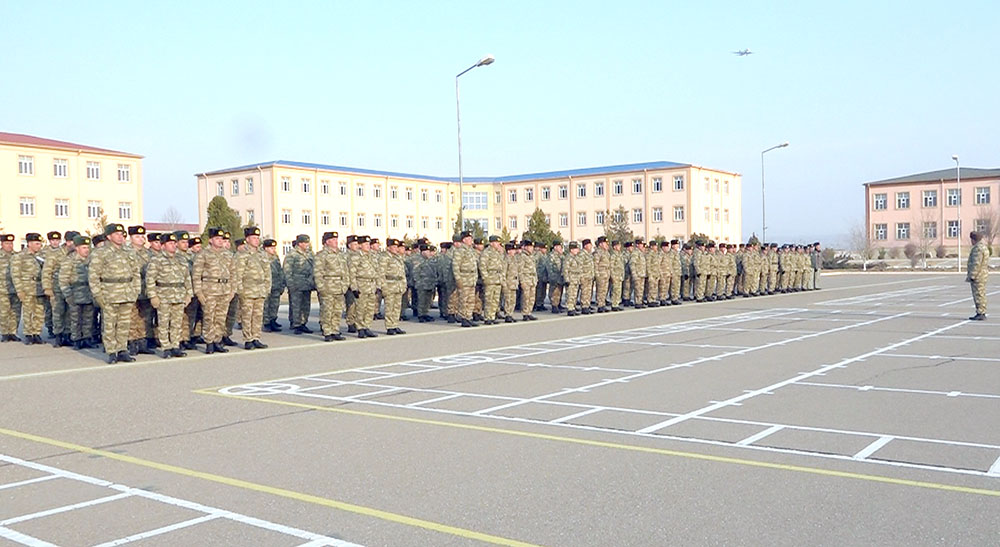
В Отдельной общевойсковой армии состоялись сборы с командирами батальонов, дивизионов и их заместителями по системе командирской подготовки.
На сборах, проведенных в целях совершенствования теоретических знаний и практических навыков офицеров, укрепления их навыков в управлении подразделениями, основное внимание было уделено планированию и проведению занятий по тактической, разведывательной, огневой, физической и строевой подготовке.
На занятиях с офицерами были отработаны такие вопросы, как важность новых требований, возникающих в современном общевойсковом бою, возможные проблемы в управлении, а также аспекты, на которые следует обратить внимание при борьбе с беспилотными летательными аппаратами и малогабаритными квадрокоптерами.
Были проверены практические навыки привлеченного к сборам офицерского состава по физической и строевой подготовке, приняты зачеты на знание руководящих документов и топографии.
В заключение был проведен анализ сборов, в ходе которых офицерам были даны поручения по дальнейшему повышению уровня боевой подготовки и профессионализма подчиненного состава, адаптации проводимых учений к условиям реального боя и использованию технологических инноваций.
В Отдельной общевойсковой армии состоялись занятия по командирской подготовке – ВИДЕО