Categories
Audio Review - South Caucasus News

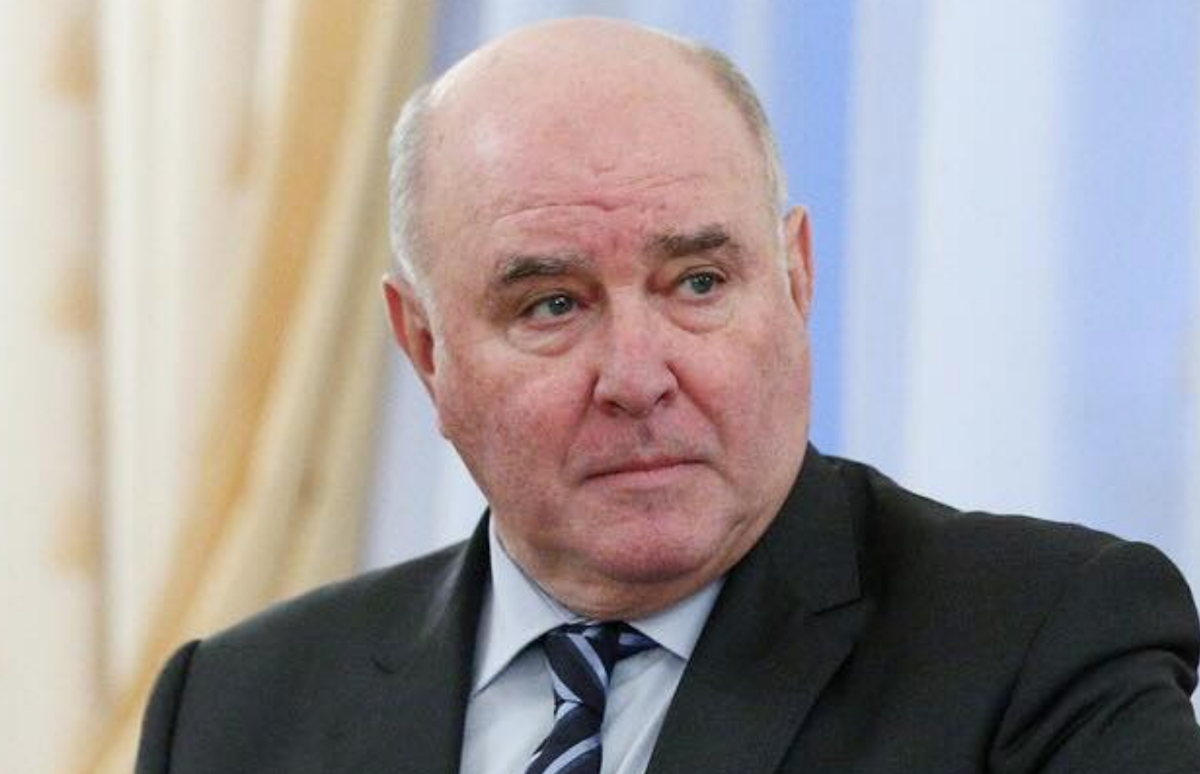
Grigory Karasin: “Russia is interested in mutually beneficial cooperation with Georgia”


Grigory Karasin, the chairman of the Foreign Affairs Committee of the Council of the Russian Federation, stated that Moscow is interested in resuming mutually beneficial cooperation with Georgia.

In an interview with the Russian state news agency TASS, Karasin commented on the appointment of Giorgi Kvirikashvili as the new special representative of the prime minister of Georgia for relations with Russia and said that the “positive results achieved over the last 11 years” will continue to be in demand.

I am convinced that these efforts will continue to be needed in the future. Russia is interested in a pragmatic dialogue and returning to full-scale, mutually beneficial cooperation with Georgian partners,” Karasin said.


Karasin recalled that in 2012, the Russian leadership unhesitatingly supported the course for normalization of bilateral relations proposed by the Georgian authorities, and an informal dialogue mechanism was established “for depoliticized discussion of various aspects of interaction with a focus on trade-economic ties, transportation communication, and humanitarian contacts.”

There have been 26 meetings, mostly in person (during the pandemic times — via video conference), with continuous contact maintained in a remote format,” Karasin said.

According to him, these decisions significantly simplified contacts between the people of the two countries:

They created additional opportunities for cultural exchanges, contacts through scientific and educational institutions, youth organizations. They contributed to strengthening economic ties and intensifying interaction between business communities. They stimulated further development of tourism. In 2023, more than 1.4 million of our compatriots visited Georgia.”


Categories
Audio Review - South Caucasus News

Ukrainian Official Outlines Three Conditions for “Normalizing” Relations with Georgia


David Arakhamia, leader of the “Servant of the People” faction in the Ukrainian Verkhovna Rada, outlined three steps that Georgia must take to “normalize relations” with Ukraine, including releasing from prison and returning to Ukraine Mikheil Saakashvili (who is a Ukrainian citizen), suspending direct flights with Russia “as demanded by the Georgian people themselves,” and stopping “helping the aggressor to evade sanctions.” “Then the normalization will be easy”- noted Arakhamia.

A day earlier, on March 11 the Government of Georgia issued two statements denouncing wanted UNM-era former Chief Prosecutor and Justice Minister Zurab Adeishvili’s inclusion in the official Ukrainian delegations to Brussels and Berlin. In one of the statements which addressed the Ukrainian authorities, the Georgian Government said “it is crucial and imperative for the normalization of relations that the Ukrainian authorities extradite the criminals currently holding high positions in their administration to Georgia.”

In response, Arakhamia’s wrote on his Telegram channel on March 12 that “the pro-Kremlin authorities in Georgia are putting forward some demands for the extradition of our citizens to “normalize relations” and “if we really talk about “normalization,” there is a plan [refers to the above mentioned three steps] for this…”

Responding to Arakhamia’s statement, on March 12 the Prime Minister of Georgia Irakli Kobakhidze once again emphasized Georgia’s support to Ukraine, and reiterated the call on the Ukrainian authorities “to make decisions that will contribute to the further deepening of historical friendship [between Ukraine and Georgia] and will not contribute to the artificial division of the peoples and the countries.”

According to PM Kobakhidze, now “there is a very difficult situation in Ukraine and “therefore, we, first of all, respect the Ukrainian people and, so, we are not going to enter into polemics with Arakhamia or other politicians.”

Also Read:


Categories
Audio Review - South Caucasus News

Prosecutor’s Office Asks Germany, Belgium to Extradite Wanted ex-Official


The Prosecutor’s Office of Georgia appealed to the competent agencies of Germany and Belgium to arrest and extradite UNM-era former Chief Prosecutor and Justice Minister Zurab Adeishvili, who has been sentenced in absentia in Georgia on several criminal charges. The Prosecutor’s Office confirmed to Civil.ge the extradition request, adding that “the Prosecutor’s Office of Georgia, within the scope of its powers, implements all measures provided for by law to bring persons who have committed crimes in Georgia to Georgian justice, regardless of their location.”

Zurab Adeishvili has recently been included in the Ukrainian delegations to Brussels and Berlin, leading to harsh criticism of Ukraine, Germany and the EU from the ruling Georgian Dream party and the Georgian government.

On March 11, the Georgian Government issued two separate statements denouncing Adeishvili’s inclusion in the visits. One statement was directed towards Ukrainian authorities, while the other responded to earlier statements on the issue made by the German Embassy in Tbilisi and the EU Delegation to Georgia.

The German Embassy had cited lack of legal ground for banning Adeishvili, while the EU had spoken of disinformation around the visit.

Zurab Adeishvili, a highly influential figure in former President Saakashvili’s inner circle, left Georgia a day after the October 2012 parliamentary elections, that resulted the nation’s first peaceful transfer of power through elections since regaining independence in 1991. The Georgian Prosecutor’s Office put Adeishvili on wanted list in 2013 on several counts but still fails to achieve his extradition. In 2015, Interpol dropped red notice for him, which was issued in 2013. After the Maidan in Ukraine, Adeishvili reportedly moved to Ukraine, according to the latest information on his whereabouts, he is working for the Ukrainian authorities.


Categories
Audio Review - South Caucasus News

Biden Administration Requests USD 117 Million Aid for Georgia in 2025


The fiscal year 2025 budget project by U.S. President Joe Biden’s Administration for the Department of State and USAID envisages USD 116.5 million in assistance to Georgia through multiple programs.

The largest portion of this amount, USD 80 million, is requested to be disbursed to Georgia under Assistance to Europe, Eurasia and Central Asia, making it the second largest potential recipient in the Europe/Eurasia region after Ukraine (USD 250 million).

In the 2023 budget, USD 88 million was requested for Georgia under the Assistance to Europe, Eurasia, and Central Asia. According to the 2025 budget request document, an estimated USD 85.4 million was allocated for the country. PM Irakli Kobakhidze was asked to comment on why this funding might have been reduced. At first Kobakhidze said he could not comment on the issue, since the U.S. side decides on the allocation of funds. However, he then added that “a very large part of these funds are directed to CSOs,” claiming that “the CSOs have disappointed the U.S.” and that “perhaps this has become the reason for the reduction of funds.

In addition, Georgia is requested to receive USD 25 million under Foreign Military Finance (FMF) fund, remaining the second largest recipient after Ukraine (USD 94.6 million). Lithuania, Latvia, and Estonia are requested to receive USD 9.75 million each.

Further, International Military Education and Training (IMET) projects USD 1.75 million for the country.

Georgia is also set to receive USD 3.25 million through Global Health Programs – USAID. The budget draft also envisages a further USD 4.4 million for Georgia through International Narcotics and Law Enforcement funding.

Under Nonproliferation, Anti-Terrorism, Demining and Related Programs, Georgia is requested to receive USD 1 million, and USD 1.1 million specifically through Conventional Weapons Destruction.

Georgia Priorities Listed

The explanatory note of the draft budget says that the Fiscal Year 2025 request maintains “high levels of support for Armenia, Georgia, Moldova, Ukraine, and the Western Balkans, while also supporting the democratic aspirations of the Belarusian people.”

The USD 80 million to Georgia under Assistance to Europe, Eurasia and Central Asia aims to support the country’s democratic and economic development, advance its Euro-Atlantic integration, and “build resilience against malign influence.”

“Funding will help strengthen institutional checks and balances and the rule of law; support efforts led by Georgian civil society to advance democratic and economic development; improve access to independent, reliable, and balanced media; promote political pluralism.”

The note also stresses that the aid is aimed to support “reconciliation efforts including in Abkhazia and South Ossetia; increase energy security and advance clear energy; promote reforms necessary to foster economic development and diversification; advance digitalization and strengthen cyber security and resilience; expand private-sector competitiveness and agricultural productivity; and help Georgia to attract foreign investment.”

“Border security and anti-corruption initiatives will strengthen institutional capacity, public accountability, internal control and oversight, and integrity across the government,” the note adds.

The note for International Military Education and Training (IMET) says the funding’s “priority recipients may include Bulgaria, Georgia, Romania, and Ukraine.”

“IMET serves as an effective and efficient means to strengthen military alliances and international coalitions critical to U.S. national security goals and regional stability.”

The Foreign Military Financing (FMF) explanatory note also includes Georgia among the priority recipient countries “at significant risk from Russian aggression or malign influence”. In addition to Georgia, other priority countries include Ukraine, Estonia, Latvia, and Lithuania.

“As the regional landscape rapidly changes in large part due to Russia’s 2022 full scale invasion of Ukraine, the strategic security priorities remain steadfast: to counter Russian aggression and influence by bolstering Allies’ and partners’ capabilities to defend their territorial integrity and sovereignty, provide for their own defense through improved interoperability with a resolute NATO and other Western forces, the creation of force multipliers in the region, and the implementation of sustainable defense reforms.”

Also Read:


Categories
Audio Review - South Caucasus News

Karasin Praises Bilateral Dialogue with Georgia, Says Russia Committed to Continue


Grigory Karasin, Head of the Russia’s Federation Council’s Committee on International Affairs, who is the Russian participant in the Georgian-Russian dialogue (informally known as the Karasin-Abashidze dialogue after the surnames of the two participants), told the Russian pro-government news agency TASS that he is convinced that “the positive results” achieved over the past 11 years in the informal dialogue with Zurab Abashidze, the Georgian Prime Minister’s Special Representative for relations with Russia, will continue to be in demand after the appointment of Giorgi Kajaia to this post.” He is further quoted as saying: “Russia is interested in pragmatic dialogue and a return to full-fledged mutually beneficial cooperation with Georgian partners.”

On March 11, Georgian Prime Minister Irakli Kobakhidze announced at a cabinet meeting that he had appointed the former head of the Georgian Interests Section at the Swiss Embassy in Russia Giorgi Kajaia as the new special envoy for relations with Russia. Zurab Abashidze, who had held this post since 2012 and since that time was also a permanent participant on the Georgian side in the mentioned bilateral dialogue format, was appointed Advisor to the Prime Minister.

According to TASS, Karasin recalled that in 2012 the Russian leadership “did not hesitate” to support the course proposed by the Georgian authorities for the normalization of bilateral relations, and an informal dialogue mechanism was established “for depoliticized discussion of various aspects of interaction, with a focus on trade and economic relations, transport links and humanitarian contacts”.

Noting that 26 meetings have been held since its establishment, mostly in person (via videoconference during the pandemic) Karasin highlighted issues discussed within the format, such as “facilitating conditions for communication between residents of Russia and Georgia”, “promoting conditions for the liberalization of the visa regime introduced in 2000 for Georgian citizens”, “restoring direct air links that had been temporarily suspended four years earlier”, etc.

He is further quoted by the same source as stressing that these decisions have “created additional opportunities for cultural exchanges, contacts through scientific and educational institutions, youth organizations, contributed to the strengthening of economic ties, intensification of interaction between business circles, spurred further development of tourism” adding that “in 2023, more than 1.4 million of our compatriots visited Georgia.”

He also said: “We have been actively working to create favorable conditions for Georgian products to access the Russian market and Russian products to the Georgian market. In 12 years, bilateral trade turnover between Russia and Georgia has grown many times over, and last year exceeded $2.4 billion. Karasin noted: “Our country has firmly taken the place of the largest market for products of the Georgian agro-industrial complex, including two-thirds of exported wine.”

Among the results of the format, Russian MP also singled out the recent “significant increase “in the capacity of the only operating land route between the countries – the Georgian Military Road – including through the modernization of the Zemo Larsi border crossing point, as well as road infrastructure. He also noted that a large-scale reconstruction of the mountainous section of the road is being completed on the Georgian side, including the construction of a tunnel under the Jvari Pass, “which will minimize the impact of weather conditions on the movement of passenger and cargo vehicles.” Karasin also stressed the increasing frequency and geography of direct flights between our countries saying that “there are already more than 60 flights per week between Russian and Georgian cities, and this is far from the limit.”

He added that all these years, great importance had been attached to humanitarian issues, including the “organization of annual trips of groups of pilgrims from North Ossetia” to ancestral burial grounds in the Truso Gorge of the Kazbegi district of Georgia.

In 2008, after the Russia-Georgia war Moscow recognized the independence of Abkhazia and South Ossetia, and Tbilisi responded by severing diplomatic relations. The direct dialogue format between the two countries was established after the Georgian Dream Party came to power in the 2012 elections. Since then, the two members of the format have been Zurab Abashidze, the Georgian prime minister’s Special Representative for relations with Russia, and Grigory Karasin, who was at the time Russia’s deputy Foreign Minister.

The establishment and operation of a direct dialogue format with Russia while it still occupies Georgian territory has often been criticized by the opposition, which also cites the format’s lack of transparency and opacity as its main problems. The format’s operation has been accompanied by controversy over alleged leaks of audio recordings revealing secret consultations between the two sides, against the backdrop of the GD government’s rapprochement with Russia, on issues such as the construction of a new road linking Georgia to Russia and the restoration of direct flights.

Also Read:


Categories
South Caucasus News

Ukrainian Official Outlines Three Conditions for “Normalizing” Relations with Georgia


David Arakhamia, leader of the “Servant of the People” faction in the Ukrainian Verkhovna Rada, outlined three steps that Georgia must take to “normalize relations” with Ukraine, including releasing from prison and returning to Ukraine Mikheil Saakashvili (who is a Ukrainian citizen), suspending direct flights with Russia “as demanded by the Georgian people themselves,” and stopping “helping the aggressor to evade sanctions.” “Then the normalization will be easy”- noted Arakhamia.

A day earlier, on March 11 the Government of Georgia issued two statements denouncing wanted UNM-era former Chief Prosecutor and Justice Minister Zurab Adeishvili’s inclusion in the official Ukrainian delegations to Brussels and Berlin. In one of the statements which addressed the Ukrainian authorities, the Georgian Government said “it is crucial and imperative for the normalization of relations that the Ukrainian authorities extradite the criminals currently holding high positions in their administration to Georgia.”

In response, Arakhamia’s wrote on his Telegram channel on March 12 that “the pro-Kremlin authorities in Georgia are putting forward some demands for the extradition of our citizens to “normalize relations” and “if we really talk about “normalization,” there is a plan [refers to the above mentioned three steps] for this…”

Responding to Arakhamia’s statement, on March 12 the Prime Minister of Georgia Irakli Kobakhidze once again emphasized Georgia’s support to Ukraine, and reiterated the call on the Ukrainian authorities “to make decisions that will contribute to the further deepening of historical friendship [between Ukraine and Georgia] and will not contribute to the artificial division of the peoples and the countries.”

According to PM Kobakhidze, now “there is a very difficult situation in Ukraine and “therefore, we, first of all, respect the Ukrainian people and, so, we are not going to enter into polemics with Arakhamia or other politicians.”

Also Read:


Categories
South Caucasus News

Prosecutor’s Office Asks Germany, Belgium to Extradite Wanted ex-Official


The Prosecutor’s Office of Georgia appealed to the competent agencies of Germany and Belgium to arrest and extradite UNM-era former Chief Prosecutor and Justice Minister Zurab Adeishvili, who has been sentenced in absentia in Georgia on several criminal charges. The Prosecutor’s Office confirmed to Civil.ge the extradition request, adding that “the Prosecutor’s Office of Georgia, within the scope of its powers, implements all measures provided for by law to bring persons who have committed crimes in Georgia to Georgian justice, regardless of their location.”

Zurab Adeishvili has recently been included in the Ukrainian delegations to Brussels and Berlin, leading to harsh criticism of Ukraine, Germany and the EU from the ruling Georgian Dream party and the Georgian government.

On March 11, the Georgian Government issued two separate statements denouncing Adeishvili’s inclusion in the visits. One statement was directed towards Ukrainian authorities, while the other responded to earlier statements on the issue made by the German Embassy in Tbilisi and the EU Delegation to Georgia.

The German Embassy had cited lack of legal ground for banning Adeishvili, while the EU had spoken of disinformation around the visit.

Zurab Adeishvili, a highly influential figure in former President Saakashvili’s inner circle, left Georgia a day after the October 2012 parliamentary elections, that resulted the nation’s first peaceful transfer of power through elections since regaining independence in 1991. The Georgian Prosecutor’s Office put Adeishvili on wanted list in 2013 on several counts but still fails to achieve his extradition. In 2015, Interpol dropped red notice for him, which was issued in 2013. After the Maidan in Ukraine, Adeishvili reportedly moved to Ukraine, according to the latest information on his whereabouts, he is working for the Ukrainian authorities.


Categories
South Caucasus News

Biden Administration Requests USD 117 Million Aid for Georgia in 2025


The fiscal year 2025 budget project by U.S. President Joe Biden’s Administration for the Department of State and USAID envisages USD 116.5 million in assistance to Georgia through multiple programs.

The largest portion of this amount, USD 80 million, is requested to be disbursed to Georgia under Assistance to Europe, Eurasia and Central Asia, making it the second largest potential recipient in the Europe/Eurasia region after Ukraine (USD 250 million).

In the 2023 budget, USD 88 million was requested for Georgia under the Assistance to Europe, Eurasia, and Central Asia. According to the 2025 budget request document, an estimated USD 85.4 million was allocated for the country. PM Irakli Kobakhidze was asked to comment on why this funding might have been reduced. At first Kobakhidze said he could not comment on the issue, since the U.S. side decides on the allocation of funds. However, he then added that “a very large part of these funds are directed to CSOs,” claiming that “the CSOs have disappointed the U.S.” and that “perhaps this has become the reason for the reduction of funds.

In addition, Georgia is requested to receive USD 25 million under Foreign Military Finance (FMF) fund, remaining the second largest recipient after Ukraine (USD 94.6 million). Lithuania, Latvia, and Estonia are requested to receive USD 9.75 million each.

Further, International Military Education and Training (IMET) projects USD 1.75 million for the country.

Georgia is also set to receive USD 3.25 million through Global Health Programs – USAID. The budget draft also envisages a further USD 4.4 million for Georgia through International Narcotics and Law Enforcement funding.

Under Nonproliferation, Anti-Terrorism, Demining and Related Programs, Georgia is requested to receive USD 1 million, and USD 1.1 million specifically through Conventional Weapons Destruction.

Georgia Priorities Listed

The explanatory note of the draft budget says that the Fiscal Year 2025 request maintains “high levels of support for Armenia, Georgia, Moldova, Ukraine, and the Western Balkans, while also supporting the democratic aspirations of the Belarusian people.”

The USD 80 million to Georgia under Assistance to Europe, Eurasia and Central Asia aims to support the country’s democratic and economic development, advance its Euro-Atlantic integration, and “build resilience against malign influence.”

“Funding will help strengthen institutional checks and balances and the rule of law; support efforts led by Georgian civil society to advance democratic and economic development; improve access to independent, reliable, and balanced media; promote political pluralism.”

The note also stresses that the aid is aimed to support “reconciliation efforts including in Abkhazia and South Ossetia; increase energy security and advance clear energy; promote reforms necessary to foster economic development and diversification; advance digitalization and strengthen cyber security and resilience; expand private-sector competitiveness and agricultural productivity; and help Georgia to attract foreign investment.”

“Border security and anti-corruption initiatives will strengthen institutional capacity, public accountability, internal control and oversight, and integrity across the government,” the note adds.

The note for International Military Education and Training (IMET) says the funding’s “priority recipients may include Bulgaria, Georgia, Romania, and Ukraine.”

“IMET serves as an effective and efficient means to strengthen military alliances and international coalitions critical to U.S. national security goals and regional stability.”

The Foreign Military Financing (FMF) explanatory note also includes Georgia among the priority recipient countries “at significant risk from Russian aggression or malign influence”. In addition to Georgia, other priority countries include Ukraine, Estonia, Latvia, and Lithuania.

“As the regional landscape rapidly changes in large part due to Russia’s 2022 full scale invasion of Ukraine, the strategic security priorities remain steadfast: to counter Russian aggression and influence by bolstering Allies’ and partners’ capabilities to defend their territorial integrity and sovereignty, provide for their own defense through improved interoperability with a resolute NATO and other Western forces, the creation of force multipliers in the region, and the implementation of sustainable defense reforms.”

Also Read:

Categories
South Caucasus News

Karasin Praises Bilateral Dialogue with Georgia, Says Russia Committed to Continue


Grigory Karasin, Head of the Russia’s Federation Council’s Committee on International Affairs, who is the Russian participant in the Georgian-Russian dialogue (informally known as the Karasin-Abashidze dialogue after the surnames of the two participants), told the Russian pro-government news agency TASS that he is convinced that “the positive results” achieved over the past 11 years in the informal dialogue with Zurab Abashidze, the Georgian Prime Minister’s Special Representative for relations with Russia, will continue to be in demand after the appointment of Giorgi Kajaia to this post.” He is further quoted as saying: “Russia is interested in pragmatic dialogue and a return to full-fledged mutually beneficial cooperation with Georgian partners.”

On March 11, Georgian Prime Minister Irakli Kobakhidze announced at a cabinet meeting that he had appointed the former head of the Georgian Interests Section at the Swiss Embassy in Russia Giorgi Kajaia as the new special envoy for relations with Russia. Zurab Abashidze, who had held this post since 2012 and since that time was also a permanent participant on the Georgian side in the mentioned bilateral dialogue format, was appointed Advisor to the Prime Minister.

According to TASS, Karasin recalled that in 2012 the Russian leadership “did not hesitate” to support the course proposed by the Georgian authorities for the normalization of bilateral relations, and an informal dialogue mechanism was established “for depoliticized discussion of various aspects of interaction, with a focus on trade and economic relations, transport links and humanitarian contacts”.

Noting that 26 meetings have been held since its establishment, mostly in person (via videoconference during the pandemic) Karasin highlighted issues discussed within the format, such as “facilitating conditions for communication between residents of Russia and Georgia”, “promoting conditions for the liberalization of the visa regime introduced in 2000 for Georgian citizens”, “restoring direct air links that had been temporarily suspended four years earlier”, etc.

He is further quoted by the same source as stressing that these decisions have “created additional opportunities for cultural exchanges, contacts through scientific and educational institutions, youth organizations, contributed to the strengthening of economic ties, intensification of interaction between business circles, spurred further development of tourism” adding that “in 2023, more than 1.4 million of our compatriots visited Georgia.”

He also said: “We have been actively working to create favorable conditions for Georgian products to access the Russian market and Russian products to the Georgian market. In 12 years, bilateral trade turnover between Russia and Georgia has grown many times over, and last year exceeded $2.4 billion. Karasin noted: “Our country has firmly taken the place of the largest market for products of the Georgian agro-industrial complex, including two-thirds of exported wine.”

Among the results of the format, Russian MP also singled out the recent “significant increase “in the capacity of the only operating land route between the countries – the Georgian Military Road – including through the modernization of the Zemo Larsi border crossing point, as well as road infrastructure. He also noted that a large-scale reconstruction of the mountainous section of the road is being completed on the Georgian side, including the construction of a tunnel under the Jvari Pass, “which will minimize the impact of weather conditions on the movement of passenger and cargo vehicles.” Karasin also stressed the increasing frequency and geography of direct flights between our countries saying that “there are already more than 60 flights per week between Russian and Georgian cities, and this is far from the limit.”

He added that all these years, great importance had been attached to humanitarian issues, including the “organization of annual trips of groups of pilgrims from North Ossetia” to ancestral burial grounds in the Truso Gorge of the Kazbegi district of Georgia.

In 2008, after the Russia-Georgia war Moscow recognized the independence of Abkhazia and South Ossetia, and Tbilisi responded by severing diplomatic relations. The direct dialogue format between the two countries was established after the Georgian Dream Party came to power in the 2012 elections. Since then, the two members of the format have been Zurab Abashidze, the Georgian prime minister’s Special Representative for relations with Russia, and Grigory Karasin, who was at the time Russia’s deputy Foreign Minister.

The establishment and operation of a direct dialogue format with Russia while it still occupies Georgian territory has often been criticized by the opposition, which also cites the format’s lack of transparency and opacity as its main problems. The format’s operation has been accompanied by controversy over alleged leaks of audio recordings revealing secret consultations between the two sides, against the backdrop of the GD government’s rapprochement with Russia, on issues such as the construction of a new road linking Georgia to Russia and the restoration of direct flights.

Also Read:


Categories
South Caucasus News

N.J. Sen. Bob Menendez, wife plead not guilty to newest obstruction and bribery charges – KBRX


N.J. Sen. Bob Menendez, wife plead not guilty to newest obstruction and bribery charges  KBRX