
So That Church-State Relations Become Normal Armenian News by MassisPost
Day: March 10, 2024
Paris — French President Emmanuel Macron said Sunday for the first time that he backed new end-of-life legislation that would allow what he called “help to die” and wanted his government to put forward a draft bill to parliament in May.
France’s neighbors Switzerland, Belgium and the Netherlands have adopted laws that allow medically assisted dying in some cases. But France has resisted that step, in part under pressure from the Catholic Church.
The Claeys-Leonetti law on the end of life, adopted in 2016, authorizes deep sedation but only for people whose prognosis is threatened in the short-term.
In an interview with Liberation newspaper, Macron said he did not want to call the new legislation euthanasia or assisted suicide, but rather “help to die.”
“It does not, strictly speaking, create a new right nor a freedom, but it traces a path which did not exist until now and which opens the possibility of requesting assistance in dying under certain strict conditions,” he said.
Macron said those conditions would need to be met and a medical team would assess and ensure the criteria for the decision was correct.
It would concern only adults capable of making the decision and whose life prognosis is threatened in the medium-term such as final-stage cancer, he said.
Family members would also be able to appeal the decision, Macron said.
The bill builds on the work of a group of 184 randomly appointed French citizens who debated the issue.
They concluded their work last year with 76% of them saying they favored allowing some form of assistance to die, for those who want it.
The decision to push ahead with the end-of-life legislation comes after the right to abortion was enshrined into the French constitution, following an overwhelming vote by lawmakers earlier this month.
Macron has sought to bolster his image as a social reformer just three months before June’s European parliamentary elections. His party is more than 10 points behind the far-right Rassemblement National party in polls.
Beijing, China — Shanghai Zhenhua Heavy Industries, or ZPMC, said on Sunday its cranes do not pose a cybersecurity threat, after U.S. congressional committees questioned the Chinese state-owned company’s work on cranes bound for the United States.
The House of Representatives’ security panels, scrutinizing ZPMC’s installation of Swiss engineering group ABB’s equipment onto U.S.-bound ship-to-shore cranes, in January invited ABB executives to public hearings to clarify its relationship with ZPMC, which they said raised “significant concerns.”
“ZPMC takes the U.S. concerns seriously and believes that these reports can easily mislead the public without sufficient factual review,” it said in a filing, referring to the probe by the Homeland Security and Strategic Competition committees.
“The cranes provided by ZPMC do not pose a cybersecurity risk to any ports,” it said.
ABB has said it sold its control and electrification equipment to many crane manufacturers, including Chinese companies, which in turn sold cranes directly to U.S. ports.
The U.S. and China, the world’s biggest economies, frequently accuse each other of cyberattacks and industrial espionage. Washington this year said it had disrupted a Chinese cyber-spying operation targeting U.S. infrastructure and was investigating Chinese vehicle imports for national security risks. It previously barred Chinese telecom companies.
ZPMC said the cranes it supplies are used in ports around the world, including the United States, and comply with international standards and applicable laws and regulations.
Listed on the Shanghai stock exchange, ZPMC is one of the largest port machinery manufacturers in the world, owning a fleet of more than 20 transportation vessels, according to its website.
ABB generates 16% of its sales from China, second only to the U.S. market at 24%.
Paris — French President Emmanuel Macron said Sunday for the first time that he backed new end-of-life legislation that would allow what he called “help to die” and wanted his government to put forward a draft bill to parliament in May.
France’s neighbors Switzerland, Belgium and the Netherlands have adopted laws that allow medically assisted dying in some cases. But France has resisted that step, in part under pressure from the Catholic Church.
The Claeys-Leonetti law on the end of life, adopted in 2016, authorizes deep sedation but only for people whose prognosis is threatened in the short-term.
In an interview with Liberation newspaper, Macron said he did not want to call the new legislation euthanasia or assisted suicide, but rather “help to die.”
“It does not, strictly speaking, create a new right nor a freedom, but it traces a path which did not exist until now and which opens the possibility of requesting assistance in dying under certain strict conditions,” he said.
Macron said those conditions would need to be met and a medical team would assess and ensure the criteria for the decision was correct.
It would concern only adults capable of making the decision and whose life prognosis is threatened in the medium-term such as final-stage cancer, he said.
Family members would also be able to appeal the decision, Macron said.
The bill builds on the work of a group of 184 randomly appointed French citizens who debated the issue.
They concluded their work last year with 76% of them saying they favored allowing some form of assistance to die, for those who want it.
The decision to push ahead with the end-of-life legislation comes after the right to abortion was enshrined into the French constitution, following an overwhelming vote by lawmakers earlier this month.
Macron has sought to bolster his image as a social reformer just three months before June’s European parliamentary elections. His party is more than 10 points behind the far-right Rassemblement National party in polls.
Beijing, China — Shanghai Zhenhua Heavy Industries, or ZPMC, said on Sunday its cranes do not pose a cybersecurity threat, after U.S. congressional committees questioned the Chinese state-owned company’s work on cranes bound for the United States.
The House of Representatives’ security panels, scrutinizing ZPMC’s installation of Swiss engineering group ABB’s equipment onto U.S.-bound ship-to-shore cranes, in January invited ABB executives to public hearings to clarify its relationship with ZPMC, which they said raised “significant concerns.”
“ZPMC takes the U.S. concerns seriously and believes that these reports can easily mislead the public without sufficient factual review,” it said in a filing, referring to the probe by the Homeland Security and Strategic Competition committees.
“The cranes provided by ZPMC do not pose a cybersecurity risk to any ports,” it said.
ABB has said it sold its control and electrification equipment to many crane manufacturers, including Chinese companies, which in turn sold cranes directly to U.S. ports.
The U.S. and China, the world’s biggest economies, frequently accuse each other of cyberattacks and industrial espionage. Washington this year said it had disrupted a Chinese cyber-spying operation targeting U.S. infrastructure and was investigating Chinese vehicle imports for national security risks. It previously barred Chinese telecom companies.
ZPMC said the cranes it supplies are used in ports around the world, including the United States, and comply with international standards and applicable laws and regulations.
Listed on the Shanghai stock exchange, ZPMC is one of the largest port machinery manufacturers in the world, owning a fleet of more than 20 transportation vessels, according to its website.
ABB generates 16% of its sales from China, second only to the U.S. market at 24%.
Categories
NPR News: 03-10-2024 5PM EDT
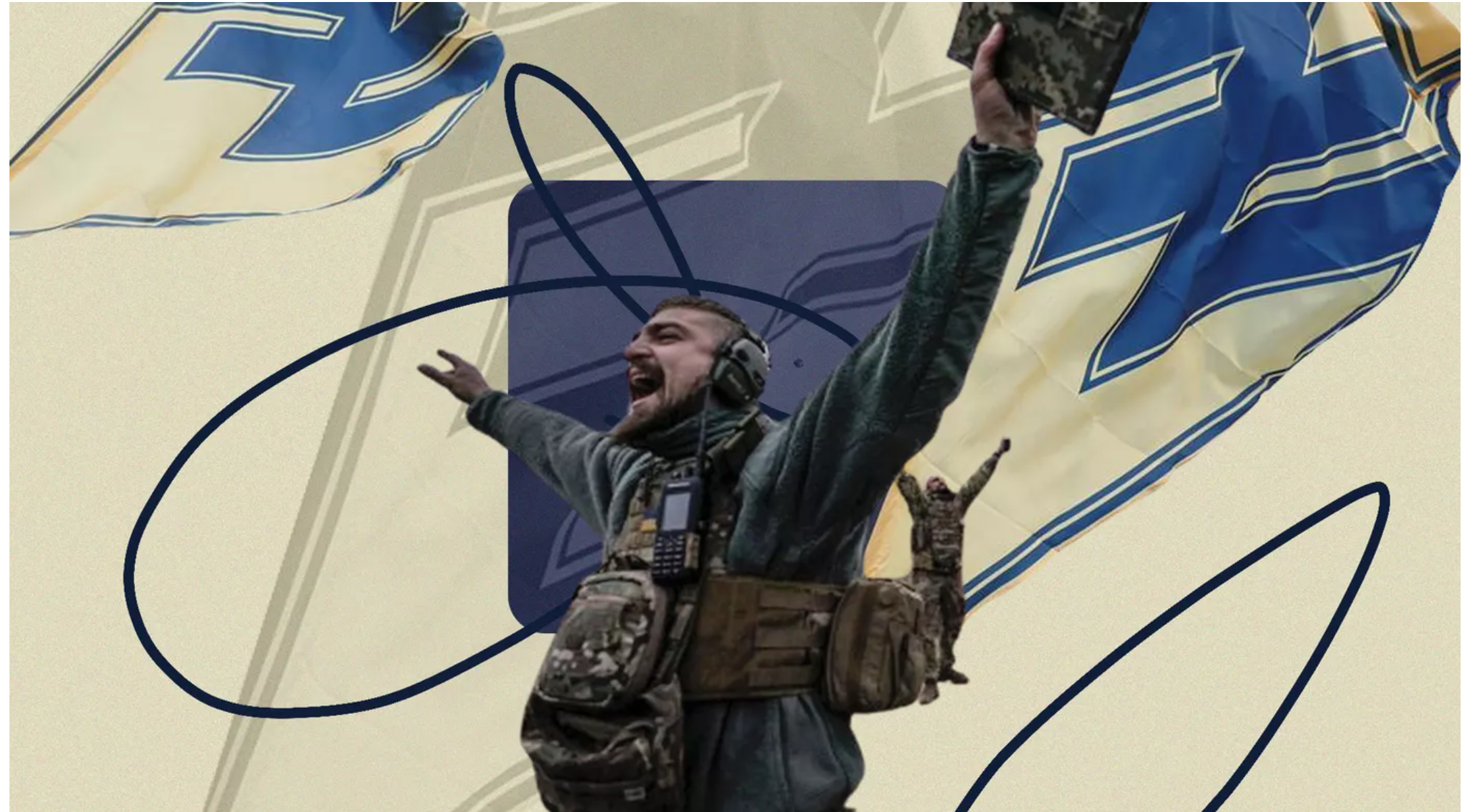
10 years of fighting for Ukraine
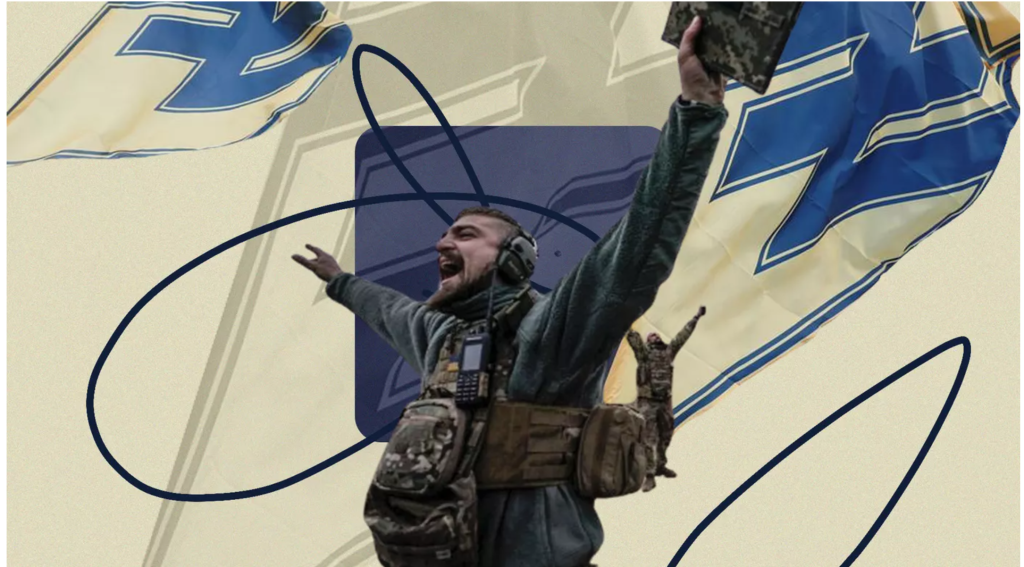 28-year-old “Azov” member Yar. Hromadske
The fog thickens immediately as we enter the Serebryansky forest. Blue sky is visible above the surviving dark green pine branches, while dry branches and bark crackle underfoot. Due to the fog, the horizon is not visible, making it seem as if something ominous is hiding beyond, ready to attack at any moment. In the forest, neither birds nor animals can be heard. Sounds of explosions and missile strikes come from all directions. Surviving trees in the Serebryansky forest are rare; most are burnt and bare.
At a certain point, we abandon our vehicle and proceed on foot to the dugouts where the positions of an experienced unit are located. “Wonderland forest: enter with legs, leave without,” say the “Azov” members. The soldier, whose call sign is Yar, walks quickly — he is our guide. We enter a dugout. It smells of pasta here.
“If we knew we’d have guests, we would have cooked more,” the guys tell us.
But we have no time for treats.
“Let’s move on,” Yar responds quickly. “Good health, Cossacks.”
Leaving behind a newly recruited fighter, we continue deeper into the forest with Yar to other positions.
“As if somewhere in the Zaporozhian Sich”
We get to know Yar soon after his birthday. For the guy, this is his sixth or seventh birthday at war, he can’t even precisely recall which.
“We gathered with comrades, bought some meat, and sat in a family circle. I like it, it’s better than at home. Relatives come there and here it goes: ‘What’s going on, Igor? You’re closer, probably you know better, when will it end?’”
Yar is 28. A short, sandy-haired guy with a beard and green eyes. The first thing we notice upon meeting is the tattoo: a large trident on his neck. It was inked by his acquaintance, Pasha Rudenko, in the summer of 2022. After the full-scale invasion, the tattoo artist Rudenko also joined the Ukrainian Armed Forces (UAF): “Now he’s taking down Russians with FPV drones.”
For Yar, the trident is a sacred symbol that cannot be worn by someone indifferent to the events in the country.
He himself wasn’t indifferent since childhood, all because of his grandmother. She was left an orphan because, as she told, her father was killed just for being Ukrainian. The grandson heard a lot about these events and the struggle of the UPA (Ukrainian Insurgent Army) from her. And also about people who were indifferent. And then in her voice, he sensed condemnation.
“I remember condemning those people then: ‘How so, the war came, and they close off and do nothing?’ And then I thought: ‘What would I have done?’”
Everything was shown and determined by the Maidan. Then 17-year-old Igor, along with friends, traveled from his native Lviv to Kiev to take part in the Revolution of dignity. He tried to be at the most important events of the Maidan, including on February 18-20.
“I knew we had to be there (on the Maidan — ed.) right now. The level of self-organization was very high. I saw this for the first time in my life, felt as if somewhere in the Zaporozhian Sich [Cossack political and military community, 16th – 18th century – JAM], surrounded by like-minded people. Even then, I understood that I was participating in historical events, and this place, possibly, was the most important on Earth at the moment,” Yar recounts.
Every year, the guy remembers the events of 2014, looks through photos. If possible, he tries to come to the Maidan.
“I remember the moment when the whole mass of people was running down Institutska Street. I rushed with everyone. I jumped over an overturned school desk in such a way that there was still room left. Such intense adrenaline. I hid behind a barricade and only then realized what was happening, why everyone was running: the first hits on the protesters had begun. Almost everyone had taken cover, but my friends remained in place. They were burning tires to create a smoke screen. I was sitting behind the barricade thinking about what to do: ‘Will I be indifferent and run away — or will I go help my friends?’ It was a turning point for me,” recalls the “Azov” member.
Then Yar grabbed someone’s shield and ran to help his friends. Even more intense shooting began. In about 15-20 meters, the guy says, there were already the first shooters.
“When I crossed the road, it seemed like I was visible to everyone. It was a stressful moment, locking many memories from that day. After Maidan, I understood that I couldn’t be indifferent to the important socio-political processes happening in our country,” says Yar.
That’s why the guy got his profession as a builder in college, and already in 2015, he went to serve as an artilleryman in the volunteer battalion “Azov”.
 Yar with a comrade, provided by Hromadske
“It’s much easier to face fear here”
We get into the car and head to the next point, with Yar driving. Passing through the swamp sometimes becomes more challenging. We abandon the car and walk to our destination — one of the positions. Here, Yar picks up a soldier he will take to the unit’s location, where he can wash up and rest.
“Do you have any civilian friends?” I ask Igor.
“Definitely no friends. Many acquaintances with whom I lost contact because they are not involved in the socio-political situation in the country. My best friends are also at war. One comrade is in ‘Azov’ — Igor Galushko, with whom I was at the Maidan in 2014. He has been lucky since then. He had a metal shield; we were at the farthest barricade. Igor peeked out to see where the ‘Berkut’ were, then we saw a small bullet hole in his shield. After the Maidan, he immediately went to the ATO (Anti-Terrorist Operation).”
Yar says it’s much easier to deal with fear here than to be a civilian and constantly afraid: “Here, you already know what may await you; to a certain extent, you’ve come to terms with it. There, people constantly fear, they run and hide; I find it hard to understand. Therefore, I feel better because I am here and it doesn’t bother me.”
Yar considers the ATO/OOS (Operation of United Forces) events as a sort of “training ground” for what is happening now.
“It’s very good that the full-scale invasion didn’t happen in 2014-2015. We would not have been ready for it. Until 2022, we had enough time to go through training ranges and learn, to master weapons,” says Yar. “To think there wouldn’t be a full-scale war, I can’t imagine that. It’s illogical.”
 Yar with Krugly at the Svetlodarsk Bulge, provided by Hromadske
“We were sure we wouldn’t live until summer”
Igor was with “Azov” from 2015 to 2020, where he served in an 82mm mortar unit. Then, he says, he understood the workings of Soviet artillery, which came in handy in 2022. During these five years, Igor served in Pavlopil, Mariinka, Shyrokyne. His last deployment in 2019 to the Svetlodarsk Bulge was the most challenging for him. He spent nine months there.
“I remember we were digging a dugout and setting up a position very close to the enemy, 100-200 meters away,” says Yar.
During that deployment, he lost his close comrade Krugly.
“We tried to combine war and rest. We would go to the village of Novoluhanske, a few kilometers from our positions, to play football. Krugly was supposed to drive us back to the positions — to help dig a dugout for our guys, but he didn’t pick us up and went by himself. That night, the Russian professional barrel artillery targeted their positions. He and another friend, Maxon, died, and several guys were wounded,” Yar recalls.
In 2020, when Igor was 25, he decided to return to civilian life, back to his native Lviv.
“What were those two years of civilian life like?” I ask the man.
“Awesome.”
 The last shared photo with brother-in-arms Vasyl. In a t-shirt with an image of Krugly. Photo provided by Hromadske
During this time, Igor tried his best to devote himself to studies and mastering English. He spent the mornings in one course and the afternoons in another. Igor absorbed everything like a sponge. Between studies, he exercised on the sports ground. That’s how the first six months passed. Then he got a job in a cafe to see how this business works from the inside. Later, he opened his first “Military Cafe” in Lviv – a cozy place where military personnel and like-minded people can gather. The establishment is still operating while Yar is at war. For him, this coffee shop is a small escape and a link to civilian life.
By the end of winter 2022, there were no doubts left that a large-scale war was about to start. Two weeks before February 24, Igor packed his backpack and waited. He wanted to join his “Azov” comrades, but they were in Mariupol, so it was impossible. Along with former Maidan activists, he joined the 80th Lviv air assault brigade.
“At the beginning of 2022, we all arrived, looked at each other:
– So, are we going to artillery?
– Let’s go.
– Guys, you do understand that all of us will die?
– Yes.
– That’s a shame.
We were sure we wouldn’t live until summer. But summer passed, we started to believe in ourselves.”
“I clearly understand why I’m here”
In 2023, Igor returned to “Azov.” He is currently engaged in combat work with BM-21 “Grad” rocket systems, organizing the unit’s move to the fire position, selecting positions, and ensuring the people’s return.
“What shall we call the fire mission?” his brother-in-arms asks Yar as we stop once again in the middle of the forest. The soldiers closely inspect the nearby area and study the map.
“Let’s see,” Igor ponders. “Something with Lviv is needed.”
“Enough already,” his comrades jokingly protest.
“Let’s call it ‘Kulparkivska’.”
“What?”
“Kul-par-kiv-ska.”
“What’s there?”
“The place we’ll all end up after the war.”
“Valhalla?”
“Almost. The most famous psychiatric hospital in Lviv.”
A few hours later, the morning fog in the Serebryansky forest clears. More and more often, the sounds heard around are those of our artillery firing.
“Would I like to be home now, doing my own things?” Yar ponders. “Yes, I would, but only when there is no armed warrior standing on our borders killing our people. Not being directly involved in important processes, in defense… it’s hard for me to imagine. Of course, the enthusiasm and drive aren’t the same as when I was 19 when I joined. But now, I clearly understand why I’m here.”
In 2016, Hromadske already filmed Igor, who had just come home on leave from service.
“It’s a pity so many people died (during the Maidan — ed.), but their deaths were not in vain. Maidan was the beginning of significant changes,” Igor said back then.
Eight years after that interview, Yar still feels the same. In the few hours we spent with him, he solves work-related issues over the phone and worries that he won’t complete all tasks because of us.
During the conversation, Yar contemplates his words. He speaks measuredly and calmly. Over these years, Igor has noticeably matured. After all, despite his age, he has seen and experienced a lot.
The material was created with the support of “Media Network”.
Categories