
Categories
Selected Articles

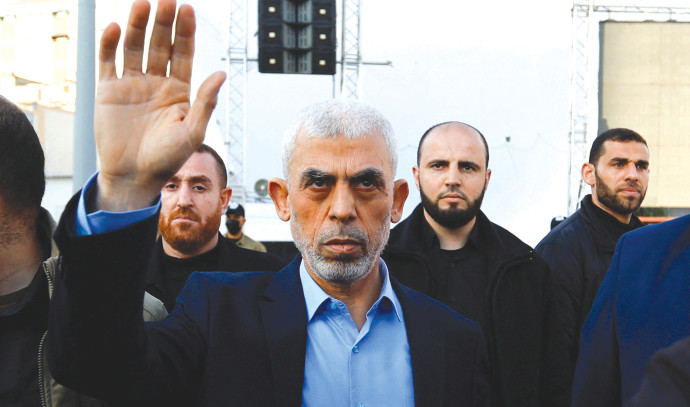
The bottom line on Sinwar: How much is he in control? – analysis


578037

Defense Minister Yoav Gallant’s public boasts that Hamas Gaza leader Yahya Sinwar’s days as the leader of the movement were limited, were a bit exaggerated. But there may be a more important point of optimism to be gleaned from Sinwar’s actions.

After nearly four months of top Israeli defense officials admitting they did not know the answer to an all-important question: it seems likely that Sinwar does want to live, rather than die a martyr.This does not mean that the Israeli hostages still alive will be returned; there are many obstacles and things could go awry. But it may be the most significant hopeful moment to get them back and end the conflict since Israel took operational control over northern Gaza, but with nothing to show for it in the elimination of Hamas leaders. But before explaining why, Gallant’s statements need to be examined along with Israeli intelligence and past Israeli developments with Sinwar.Some believed that his gamble of launching a mega massacre against Israel on October 7 showed that he had become messianic, had a death wish, and was willing to risk his regime just to draw blood. In this narrative, he sought to die in glory, rather than maintain his indefinite control over Gaza, however held back by Israeli power his rule was. The barrier of fear among the residents is cracking. Sinwar (credit: REUTERS)If Sinwar was willing to die, and take the hostages with him rather than face capture or a deal to end Hamas’s rule in Gaza, then it was unclear whether Israel had a clear path to all the hostages’ return. This seemed to be supported by Sinwar’s response to Israel’s capture of northern Gaza. He was willing to give up some hostages to reconstitute his defenses and to have a chance of dragging the IDF into a full ceasefire, but, even after the IDF flattened northern Gaza, Sinwar was still willing to risk an IDF onslaught in his hometown of Khan Yunis in southern Gaza.

Are attempts to negotiate with Sinwar worth it?

Instead of accepting exile in Qatar at that point in exchange for the return of the hostages, sparing Khan Yunis from an intense and destructive invasion, Sinwar again seemed undeterred that more of Gaza would become a graveyard.

IDF generals throughout Gaza became doubtful that Sinwar could be negotiated with. The Jewish state might need to choose between  the hostages’ return and Sinwar in power, or eliminating Sinwar and losing many hostages.The hopeful theory at that point was that Sinwar was holding out until the IDF was “knocking on his door,”  and that, once cornered, he would give up the hostages for expulsion to Qatar.But Sinwar’s willingness to launch the attack on October 7 and to let Gaza burn over and over again placed all of this in doubt.That was until Gallant’s comments on Sunday.Sinwar is no longer easily reachable by Hamas’s leadership abroad.One of the reasons there is no hostage deal yet is that Hamas is still demanding to retain its rule in Gaza. Another reason is that no one in Hamas can locate Sinwar to get his approval of a deal and his commitment to produce the hostages. He has not been giving military orders for some time. Yahya Sinwar highlighted in a video published by the IDF on February 13, 2024 (credit: IDF SPOKESPERSON’S UNIT)This means that at some point others could act independently.This is what Gallant is describing when he talks of Hamas seeking a new leader. but there is no active process yet to replace Sinwar who possesses many hostages, Hamas’s most valuable asset.Some Hamas operatives believe that Sinwar and Hamas will eventually outlast the IDF, once the Jews tire of policing Gaza.

IT HAPPENED IN southern Lebanon after less than two decades. And that means at some later point, whoever might turn on Sinwar could face retaliation.

So Hamas’s outside leaders are trying to find someone to speak to in Gaza who can produce hostages and help them contact Sinwar or get a sense of what Hamas military assets remain.Hamas in Gaza is not done with Sinwar, but is seeking an interim strategy until a more opportune moment for greater collective military action presents itself.This puts Israel and Hamas at a transition point but not a final tipping or endpoint.As long as he holds the hostages, Sinwar remains powerful and relevant, even if others are cutting into many aspects of his power.

Then why the optimism?

Because he continues to run even as large aspects of his power are crumbling.It was one thing to let northern Gaza and even Khan Yunis burn.Until this week, Israel was offering him expulsion to Qatar in exchange for the hostages, while ministers Benny Gantz, Gadi Eisenkot, much of the media, and the powerful hostages’ families lobby were pressing Netanyahu even to leave Sinwar in power in exchange for the hostages.Until this week, staying hidden and fleeing repeatedly could still be seen to advance his goal of holding Gaza and achieving a mass release of Palestinian prisoners.The sea change is that now Sinwar is allowing significant aspects of his rule to fall apart – and is still fleeing.  If his goal was to win glory, maintain his rule, and prepare to die, this would be the point to stop running.He could try to call Israel’s bluff, by revealing his hideout but keeping hostages so close that Israel would not dare attack him.  The fact that he is choosing to flee even as his power erodes, suggests he is worried that if Israel finds him, he may not survive even with the hostages shielding him.Therefore, if this assessment is correct, is true, once Israel does catch him, he may be willing to release all hostages in exchange for expulsion.And if Israel knows that and can get closer to him, then Jerusalem may finally have a way to bring an end to the main aspect of the conflict. 


Categories
South Caucasus News

NPR News: 03-10-2024 10AM EDT


NPR News: 03-10-2024 10AM EDT

Learn more about sponsor message choices: podcastchoices.com/adchoices

NPR Privacy Policy


Categories
(@mikenov) / Twitter

@mikenov: RT @politico: Pope Francis says Ukraine should consider negotiated end to war https://t.co/5vvXrmsge0


Categories
(@mikenov) / Twitter

@mikenov: RT @nexta_tv: ⚡️ Poland responds to the Pope: if Putin leaves Ukraine, there will be no need for negotiations “How about, for balance, enc…


Categories
(@mikenov) / Twitter

@mikenov: RT @MailOnline: Buckingham Palace gates are boarded up after driver crashed into them in late-night smash which saw armed police yell ‘keep…


Categories
(@mikenov) / Twitter

@mikenov: RT @POTUS: The issue facing our nation isn’t how old we are, it’s how old our ideas are. Hate, anger, revenge, retribution are among the o…


Categories
(@mikenov) / Twitter

@mikenov: RT @guardiannews: Pope criticised for saying Ukraine should ‘raise white flag’ and end war with Russia https://t.co/aY14a8zafC


Categories
South Caucasus News

Armenia considers possibility of joining the EU: FM – Mehr News Agency – English Version


Armenia considers possibility of joining the EU: FM  Mehr News Agency – English Version

Categories
Audio Review - South Caucasus News

As Israel’s Ties to Arab Countries Fray, a Strained Lifeline Remains


  • Updates
  • Maps
  • Photos
  • Roots of the Conflict
  • Lives Ended in Gaza
  • Where Hostage Families Gather

The United Arab Emirates has maintained its links to Israel throughout the war in Gaza, but the relationship, built on a U.S.-brokered deal, is under pressure as anger against Israel grows.

Two people are silhouetted amid a backdrop of blue sky. Aid parcels dot the sky.

Members of the Jordanian Armed Forces dropping aid parcels along the Gaza coast, in cooperation with Egypt, Qatar, France and the United Arab Emirates, on Feb. 27.Credit…Jehad Shelbak/Reuters

March 10, 2024, 5:01 a.m. ET

Only a few years ago, plenty of citizens of the United Arab Emirates were willing to speak warmly about their country’s budding ties with Israel.

Israel had just established relations with the Emirates through a U.S.-brokered deal. Business groups sprung up to funnel cross-country investment. Two women, Emirati and Israeli, posed for a photograph holding hands atop a skyscraper in Dubai. American, Emirati and Israeli officials predicted that their deal, called the Abraham Accords, would spread peace across the Middle East.

But now, as Israel’s monthslong bombardment of Gaza fuels anger around the region, Emirati fans of the deal are increasingly hard to find.

An Emirati businessman who had once touted the economic ties said that he had left an Emirati-Israeli business council, and that he had nothing else to say. Some Emiratis, although frustrated with the accords, said they were afraid to speak publicly, citing their authoritarian government’s history of arresting critics. One figure who did speak out, Dubai’s deputy police chief, declared online that Arabs had “truly wanted peace” and that Israel had “proved that its intentions are evil.”

Neither the Emirates nor Israel is likely to walk away from the deal, analysts say: It remains a diplomatic lifeline for Israel while its ties to other Arab countries fray, and it has brought the Emirates billions in trade and positive public relations in Western nations. But the current trajectory of the war does not bode well for the accords or the security of the Middle East, said Mohammed Baharoon, the head of B’huth, a Dubai research center.

“This is a partnership,” he said, “and if one partner is not paying their dues, then it’s not a partnership anymore.”

Anger toward Israel and its main ally, the United States, has risen sharply in the Arab world over Israel’s bombardment and invasion of Gaza, which has killed more than 30,000 Palestinians, Gazan health officials say, and left two million others facing mass displacement, the risk of starvation and a collapsing medical system.

An Emirati Red Crescent tent in Rafah, in the southern Gaza Strip. Officials in the United Arab Emirates have responded to the war between Israel and Hamas by focusing on aid to Gaza and calling for a cease-fire and the creation of a Palestinian state.Credit…Agence France-Presse — Getty Images

For the handful of Arab leaders who maintain ties with Israel, the war has pushed them to reconsider that relationship. Jordan recalled its ambassador in November. Egyptian officials have warned that any action that sends Gazans spilling into Egypt could potentially jeopardize a decades-old treaty. And Israel’s ambassadors to Bahrain, Morocco and Egypt have largely remained in Israel since the war began on Oct. 7, after the Hamas-led attack that Israeli officials say killed about 1,200 people.

The diplomatic chill has left Israel’s Embassy and Consulate in the Emirates as its only fully functioning diplomatic mission in the Arab world. Several government-owned airlines also suspended flights, leaving the Emirates as the only country in the Middle East where people can fly directly to Israel.

Despite the pressure, Emirati officials say they have no intention of cutting ties.

In a written statement to The New York Times, the Emirati government highlighted how Emirati officials had used their relationship with Israel to facilitate the entry of humanitarian aid for Gazans, as well as the medical treatment of injured Gazans taken to the Emirates.

“The U.A.E. believes that diplomatic and political communications are important in difficult times such as those we are witnessing,” the government said.

In late February, Israel’s economy minister, Nir Barkat, became the first Israeli minister to visit the Emirates since Oct. 7, attending a gathering of the World Trade Organization. In an interview, he said he was “very optimistic” after meeting with Emirati officials.

“There’s a bit of sensitivity while the war is still happening,” he said, but the two countries “have aligned interests, and the Abraham Accords are extremely strategic for all of us.”

Still, even if the existence of the accords is not at stake, what the relationship will look like is far from certain, many Israelis and Emiratis said.

Nir Barkat, the Israeli minister of economy and industry, at the 13th World Trade Organization ministerial conference on Feb. 26 in Abu Dhabi, United Arab Emirates. His attendance at the conference made him the first Israeli minister to visit the U.A.E. since the Oct. 7 attack on Israel.Credit…Abdel Hadi Ramahi/Reuters

“The romantic phase of the Abraham Accords kind of faded away,” said Noa Gastfreund, an Israeli co-founder of the Tech Zone, a group that connects Emirati and Israeli tech entrepreneurs and investors. Now, she said, “we got into the realistic phase of understanding that it won’t be easy.”

The accords, announced in 2020, were particularly coveted by Israel as a major step toward greater integration into the Middle East, where Arab countries had long isolated Israel over its treatment of Palestinians and control over Gaza and the West Bank.

While Prime Minister Benjamin Netanyahu of Israel and President Donald J. Trump hailed the deal as a milestone, the Emirati president, Sheikh Mohammed bin Zayed Al Nahyan, tempered his celebration. He emphasized that Mr. Netanyahu and Mr. Trump had reached an agreement “to stop further Israeli annexation of Palestinian territories.”

Over the next few years, hundreds of thousands of Israeli tourists poured into the Emirates, and in 2022, the country reported $2.5 billion in trade with Israel. A handful of Israeli restaurants opened in Dubai; one called itself Cafe Bibi, after Mr. Netanyahu’s nickname.

But cracks soon emerged among disappointed Emiratis, watching as Jewish settlements expanded in the West Bank and Israel formed the most right-wing government in its history.

Multiple plans by Mr. Netanyahu to visit the Emirates never materialized. The accords did not expand to include countries like Oman or Qatar. And while Saudi officials have pursued talks with American officials to potentially recognize Israel, they are uninterested in joining the accords — and are demanding heavy concessions.

At a conference in September, Anwar Gargash, a senior Emirati official, said that the Israeli relationship was “going through a difficult time.”

A handful of Israeli restaurants opened in Dubai after the Abraham Accords, which established formal relations between Israel and the United Arab Emirates, were signed in 2020. Credit…Andrea DiCenzo for The New York Times

Tensions have only worsened since the war began. Dhahi Khalfan, Dubai’s deputy police chief, has posted scathing denunciations of Israel on social media, saying that Israeli leaders “don’t deserve respect.”

“I hope for all Arab leaders to reconsider the issue of dealing with Israel,” he wrote in January — an unusually frank plea in the Emirates, where most citizens say little about politics, out of both deference and fear.

Several Emiratis declined to be interviewed about the war in Gaza or Emirati ties with Israel. One Emirati in his 20s agreed to speak on the condition that he be identified only by a middle name, Salem.

He described a growing sense of cognitive dissonance as he enjoyed a comfortable life, amid gleaming skyscrapers and specialty coffee shops, while images of death and destruction streamed out of Gaza. The relationship with Israel was demoralizing, he said, particularly because he and many Emiratis had been raised to view Palestinians as brothers whom they must protect.

He now believes the Abraham Accords were an attempt to curry favor with the Emirates’ Western allies, he said. It made him feel like his country’s values were up for sale, he said.

Emirati views toward the accords had already grown darker before the war, according to the Washington Institute for Near East Policy, a generally pro-Israel research organization. By November 2022, 71 percent of those surveyed in the Emirates said that the accords were having a “negative” effect on their region.

So far, Emirati officials have responded to the war by focusing on aid to Gaza, directing increasingly harsh rhetoric toward Israel, and calling for a cease-fire and the creation of a Palestinian state.

The strongest remarks from an Emirati official to date came from Lana Nusseibeh, the country’s U.N. representative, in recent testimony to the International Court of Justice. She denounced “Israel’s indiscriminate attacks on the Gaza Strip,” argued that Israel’s occupation of the West Bank was illegal and demanded consequences.

Palestinians who were evacuated from the Gaza Strip arriving in Abu Dhabi in November.Credit…Karim Sahib/Agence France-Presse — Getty Images

She also said, at a conference in Dubai last month, that the Emirati government was not willing to fund the reconstruction of Gaza without an “irreversible” pathway to a Palestinian state.

In an interview, Mohammed Dahlan, an influential Palestinian exile and a close adviser to the Emirati president, suggested that Arab rulers had soured on Mr. Netanyahu.

Before the war, Mr. Netanyahu and Biden administration officials had set their eyes on a larger prize than relations with the Emirates: an Israeli deal with Saudi Arabia.

That prospect now looks increasingly out of reach, scholars say.

“Israel has become a moral burden for anyone engaging with it,” a Saudi academic, Hesham Alghannam, wrote in a Saudi magazine last month. “Arabs are nearing the conclusion that while peace with Israel may still be conceivable, it is no longer desirable.”

During Mr. Barkat’s visit, an image circulated on social media of the Israeli minister and Saudi Arabia’s commerce minister exchanging business cards at an event. The Saudi government swiftly denied the meeting had been intentional.

“An unknown individual approached the minister to offer greetings and later identified himself as the minister of economy in the Israeli occupation government,” the government said in a statement.

Asked about the Saudi reaction, Mr. Barkat said, “we love to create collaboration with all peace-seeking countries in the region.”

Patrick Kingsley, Adam Rasgon and Omnia Al Desoukie contributed reporting.


Categories
Selected Articles

As Israel’s Ties to Arab Countries Fray, a Strained Lifeline Remains


  • Updates
  • Maps
  • Photos
  • Roots of the Conflict
  • Lives Ended in Gaza
  • Where Hostage Families Gather

The United Arab Emirates has maintained its links to Israel throughout the war in Gaza, but the relationship, built on a U.S.-brokered deal, is under pressure as anger against Israel grows.

Two people are silhouetted amid a backdrop of blue sky. Aid parcels dot the sky.

Members of the Jordanian Armed Forces dropping aid parcels along the Gaza coast, in cooperation with Egypt, Qatar, France and the United Arab Emirates, on Feb. 27.Credit…Jehad Shelbak/Reuters

March 10, 2024, 5:01 a.m. ET

Only a few years ago, plenty of citizens of the United Arab Emirates were willing to speak warmly about their country’s budding ties with Israel.

Israel had just established relations with the Emirates through a U.S.-brokered deal. Business groups sprung up to funnel cross-country investment. Two women, Emirati and Israeli, posed for a photograph holding hands atop a skyscraper in Dubai. American, Emirati and Israeli officials predicted that their deal, called the Abraham Accords, would spread peace across the Middle East.

But now, as Israel’s monthslong bombardment of Gaza fuels anger around the region, Emirati fans of the deal are increasingly hard to find.

An Emirati businessman who had once touted the economic ties said that he had left an Emirati-Israeli business council, and that he had nothing else to say. Some Emiratis, although frustrated with the accords, said they were afraid to speak publicly, citing their authoritarian government’s history of arresting critics. One figure who did speak out, Dubai’s deputy police chief, declared online that Arabs had “truly wanted peace” and that Israel had “proved that its intentions are evil.”

Neither the Emirates nor Israel is likely to walk away from the deal, analysts say: It remains a diplomatic lifeline for Israel while its ties to other Arab countries fray, and it has brought the Emirates billions in trade and positive public relations in Western nations. But the current trajectory of the war does not bode well for the accords or the security of the Middle East, said Mohammed Baharoon, the head of B’huth, a Dubai research center.

“This is a partnership,” he said, “and if one partner is not paying their dues, then it’s not a partnership anymore.”

Anger toward Israel and its main ally, the United States, has risen sharply in the Arab world over Israel’s bombardment and invasion of Gaza, which has killed more than 30,000 Palestinians, Gazan health officials say, and left two million others facing mass displacement, the risk of starvation and a collapsing medical system.

An Emirati Red Crescent tent in Rafah, in the southern Gaza Strip. Officials in the United Arab Emirates have responded to the war between Israel and Hamas by focusing on aid to Gaza and calling for a cease-fire and the creation of a Palestinian state.Credit…Agence France-Presse — Getty Images

For the handful of Arab leaders who maintain ties with Israel, the war has pushed them to reconsider that relationship. Jordan recalled its ambassador in November. Egyptian officials have warned that any action that sends Gazans spilling into Egypt could potentially jeopardize a decades-old treaty. And Israel’s ambassadors to Bahrain, Morocco and Egypt have largely remained in Israel since the war began on Oct. 7, after the Hamas-led attack that Israeli officials say killed about 1,200 people.

The diplomatic chill has left Israel’s Embassy and Consulate in the Emirates as its only fully functioning diplomatic mission in the Arab world. Several government-owned airlines also suspended flights, leaving the Emirates as the only country in the Middle East where people can fly directly to Israel.

Despite the pressure, Emirati officials say they have no intention of cutting ties.

In a written statement to The New York Times, the Emirati government highlighted how Emirati officials had used their relationship with Israel to facilitate the entry of humanitarian aid for Gazans, as well as the medical treatment of injured Gazans taken to the Emirates.

“The U.A.E. believes that diplomatic and political communications are important in difficult times such as those we are witnessing,” the government said.

In late February, Israel’s economy minister, Nir Barkat, became the first Israeli minister to visit the Emirates since Oct. 7, attending a gathering of the World Trade Organization. In an interview, he said he was “very optimistic” after meeting with Emirati officials.

“There’s a bit of sensitivity while the war is still happening,” he said, but the two countries “have aligned interests, and the Abraham Accords are extremely strategic for all of us.”

Still, even if the existence of the accords is not at stake, what the relationship will look like is far from certain, many Israelis and Emiratis said.

Nir Barkat, the Israeli minister of economy and industry, at the 13th World Trade Organization ministerial conference on Feb. 26 in Abu Dhabi, United Arab Emirates. His attendance at the conference made him the first Israeli minister to visit the U.A.E. since the Oct. 7 attack on Israel.Credit…Abdel Hadi Ramahi/Reuters

“The romantic phase of the Abraham Accords kind of faded away,” said Noa Gastfreund, an Israeli co-founder of the Tech Zone, a group that connects Emirati and Israeli tech entrepreneurs and investors. Now, she said, “we got into the realistic phase of understanding that it won’t be easy.”

The accords, announced in 2020, were particularly coveted by Israel as a major step toward greater integration into the Middle East, where Arab countries had long isolated Israel over its treatment of Palestinians and control over Gaza and the West Bank.

While Prime Minister Benjamin Netanyahu of Israel and President Donald J. Trump hailed the deal as a milestone, the Emirati president, Sheikh Mohammed bin Zayed Al Nahyan, tempered his celebration. He emphasized that Mr. Netanyahu and Mr. Trump had reached an agreement “to stop further Israeli annexation of Palestinian territories.”

Over the next few years, hundreds of thousands of Israeli tourists poured into the Emirates, and in 2022, the country reported $2.5 billion in trade with Israel. A handful of Israeli restaurants opened in Dubai; one called itself Cafe Bibi, after Mr. Netanyahu’s nickname.

But cracks soon emerged among disappointed Emiratis, watching as Jewish settlements expanded in the West Bank and Israel formed the most right-wing government in its history.

Multiple plans by Mr. Netanyahu to visit the Emirates never materialized. The accords did not expand to include countries like Oman or Qatar. And while Saudi officials have pursued talks with American officials to potentially recognize Israel, they are uninterested in joining the accords — and are demanding heavy concessions.

At a conference in September, Anwar Gargash, a senior Emirati official, said that the Israeli relationship was “going through a difficult time.”

A handful of Israeli restaurants opened in Dubai after the Abraham Accords, which established formal relations between Israel and the United Arab Emirates, were signed in 2020. Credit…Andrea DiCenzo for The New York Times

Tensions have only worsened since the war began. Dhahi Khalfan, Dubai’s deputy police chief, has posted scathing denunciations of Israel on social media, saying that Israeli leaders “don’t deserve respect.”

“I hope for all Arab leaders to reconsider the issue of dealing with Israel,” he wrote in January — an unusually frank plea in the Emirates, where most citizens say little about politics, out of both deference and fear.

Several Emiratis declined to be interviewed about the war in Gaza or Emirati ties with Israel. One Emirati in his 20s agreed to speak on the condition that he be identified only by a middle name, Salem.

He described a growing sense of cognitive dissonance as he enjoyed a comfortable life, amid gleaming skyscrapers and specialty coffee shops, while images of death and destruction streamed out of Gaza. The relationship with Israel was demoralizing, he said, particularly because he and many Emiratis had been raised to view Palestinians as brothers whom they must protect.

He now believes the Abraham Accords were an attempt to curry favor with the Emirates’ Western allies, he said. It made him feel like his country’s values were up for sale, he said.

Emirati views toward the accords had already grown darker before the war, according to the Washington Institute for Near East Policy, a generally pro-Israel research organization. By November 2022, 71 percent of those surveyed in the Emirates said that the accords were having a “negative” effect on their region.

So far, Emirati officials have responded to the war by focusing on aid to Gaza, directing increasingly harsh rhetoric toward Israel, and calling for a cease-fire and the creation of a Palestinian state.

The strongest remarks from an Emirati official to date came from Lana Nusseibeh, the country’s U.N. representative, in recent testimony to the International Court of Justice. She denounced “Israel’s indiscriminate attacks on the Gaza Strip,” argued that Israel’s occupation of the West Bank was illegal and demanded consequences.

Palestinians who were evacuated from the Gaza Strip arriving in Abu Dhabi in November.Credit…Karim Sahib/Agence France-Presse — Getty Images

She also said, at a conference in Dubai last month, that the Emirati government was not willing to fund the reconstruction of Gaza without an “irreversible” pathway to a Palestinian state.

In an interview, Mohammed Dahlan, an influential Palestinian exile and a close adviser to the Emirati president, suggested that Arab rulers had soured on Mr. Netanyahu.

Before the war, Mr. Netanyahu and Biden administration officials had set their eyes on a larger prize than relations with the Emirates: an Israeli deal with Saudi Arabia.

That prospect now looks increasingly out of reach, scholars say.

“Israel has become a moral burden for anyone engaging with it,” a Saudi academic, Hesham Alghannam, wrote in a Saudi magazine last month. “Arabs are nearing the conclusion that while peace with Israel may still be conceivable, it is no longer desirable.”

During Mr. Barkat’s visit, an image circulated on social media of the Israeli minister and Saudi Arabia’s commerce minister exchanging business cards at an event. The Saudi government swiftly denied the meeting had been intentional.

“An unknown individual approached the minister to offer greetings and later identified himself as the minister of economy in the Israeli occupation government,” the government said in a statement.

Asked about the Saudi reaction, Mr. Barkat said, “we love to create collaboration with all peace-seeking countries in the region.”

Patrick Kingsley, Adam Rasgon and Omnia Al Desoukie contributed reporting.