NPR News: 03-09-2024 7AM EST
Learn more about sponsor message choices: podcastchoices.com/adchoices
 The South Caucasus News - SouthCaucasusNews.com
Or, briefly about how we became the first country where people defeated the “foreign agents” law…
It all started at the beginning of March 2022. Facing the street protests, the government of Georgia was compelled to submit an application to join the European Union and thus follow in the footsteps of Ukraine and Moldova. They did not want to do it, and they said so. When forced by citizens to submit an application despite their expressed wish, the government used all kinds of tricks so that the EU would not grant the candidacy to Georgia.

Giorgi Mshvenieradze Chairs the “Democracy Defenders”
We observed these attempts in the aggressive rhetoric of the Prime Minister and other high political officials, denigrating Western institutions and politicians. Finally, to add injury to insults, on the very eve of the EC making its decision, the director of a critical media channel, Nika Gvaramia was arrested on trumped-up charges. He was rightly considered a political prisoner.
People’s patience ran thin, and the anti-Western policies triggered large-scale street protests in Tbilisi in June 2022, just when they felt the opposition was too weakened to take to the streets. Yet, it was not political leaders but Georgian non-governmental organizations that stood at the head of the protest movement, which created a new headache for the authorities.
Since September 2022, they launched and gradually intensified a disinformation campaign against Georgian CSOs, essentially copying the spirit and methods of a similar 2011 campaign in Russia.
The coordinated campaign included verbal attacks from government politicians, disinformation stories prepared by propagandist media, and a campaign on social networks.
Its purpose was to foster negative attitudes towards Georgian non-governmental organizations and to discredit them in public eyes. Already in September, there were rumors that a legislative initiative was being prepared by the majority in the parliament, aiming to limit the activities of Georgian CSOs.
In February 2023, the government considered that society was already sufficiently primed. The ruling majority registered a draft law in the parliament. It was avowedly addressing the problem of transparency of non-governmental organizations – the problem that was entirely made up. The government had and still has full access to the information about the financing of CSOs. “Transparency problem” was obviously a window-dressing – but a functional one.
When initiating the draft law, the government wanted to focus on the discussion of the details of the draft. It tried to cajole CSOs into going through the legislation article by article and to avoid focusing on its ultimate goals. When talking about the draft law, the ruling party officials rehashed the same arguments that Vladimir Putin offered when a similar law was being debated in Russia.
For example, Irakli Kobakhidze, the leader of the Georgian Dream, claimed that referring to Georgian non-governmental organizations as “foreign agents” did no harm to their reputation. “Agent,” especially “foreign agent” in Russian and in Georgian, means “a spy.” But is calling an insurance agent an agent insulting?! Kobakhidze asked with feigned incredulity. Putin offered precisely the same example before.
Facing the mounting threat, a group of non-governmental organizations decided to gather and quickly take measures against the announced law. We felt that it posed a threat not only to Georgian CSOs but also to the civic space, the country’s democracy, and its European integration.
Representatives of 24 organizations attended this first meeting. They formed a core group and set about working against this draft law.
The subgroups were created, which worked autonomously in the frames of a shared single strategy to achieve a common goal. Some of them reached out to the grassroots and other non-governmental organizations; others worked with international organizations, and others still planned and held events, communicated with the media, drafted legal opinions, offered legal assistance, and helped with strategic communications. Each subgroup had its own tasks and had coordinators who constantly shared information with others.
The analysis of the presented bill revealed that its content and goals were similar to those of Russian law, which was presenting the European Union and the U.S. as threats to our country. This bill was essentially directed against the West.
By this time, we were already familiar with the experience of other countries with similar laws.
We also knew that there was no precedent when the authorities were forced by public protest to abandon the adoption of a similar law. So we knew exactly what not to do, but we didn’t know exactly what to do.
After several days of work, we completed the analysis of the government’s main narrative, what attitudes it was trying to form in society, and what behavior it wanted to induce in people.
We decided to act differently. We decided that, unlike in the past, we wouldn’t answer the government’s accusations and wouldn’t justify ourselves when faced with lies. Instead, we would show the public why the government was doing this. With this strategy at hand, we went onwards.
The protest was organized with the participation of many independent actors, and I do not want to belittle anyone’s role. However, here I will highlight a few issues that played an important role in the success of the Georgian people against the “Russian law”:
We monitored and analyzed the situation daily. Based on this, we worked in the directions where it was most needed.
We also tried not to be radical. We always left face-saving options to the ruling party, left them the possibility to backtrack. It turned out in the end that our assessment of the stage we were at, which tactics could and could not be used, was correct.
A common threat – the Russian law – united us, and we resisted the temptation of bringing other matters to the table, issues that could have been used for deepening cleavages. We operated according to a plan that we updated periodically. And we were doing our best to make the resistance non-violent.
Our hope was to force the government to back down by the time the third and final hearing was to be held in the parliament in June. But their resolve turned out to be weaker than we thought. Things sped up. The protest of the Georgian people turned out to be stronger than the government had ever imagined.
And the Georgian people won. I won’t say that the government has lost. Because yes, many of those people may not see it today, being blinded by the veil of power. But, perhaps, when they lose power years later, they will remember the initiation of this law as one of the most stupid things they did, and maybe they will be grateful to the Georgian people who stopped them from adopting the “Russian law.”
Or, briefly about how we became the first country where people defeated the “foreign agents” law…
It all started at the beginning of March 2022. Facing the street protests, the government of Georgia was compelled to submit an application to join the European Union and thus follow in the footsteps of Ukraine and Moldova. They did not want to do it, and they said so. When forced by citizens to submit an application despite their expressed wish, the government used all kinds of tricks so that the EU would not grant the candidacy to Georgia.
Giorgi Mshvenieradze Chairs the “Democracy Defenders”
We observed these attempts in the aggressive rhetoric of the Prime Minister and other high political officials, denigrating Western institutions and politicians. Finally, to add injury to insults, on the very eve of the EC making its decision, the director of a critical media channel, Nika Gvaramia was arrested on trumped-up charges. He was rightly considered a political prisoner.
People’s patience ran thin, and the anti-Western policies triggered large-scale street protests in Tbilisi in June 2022, just when they felt the opposition was too weakened to take to the streets. Yet, it was not political leaders but Georgian non-governmental organizations that stood at the head of the protest movement, which created a new headache for the authorities.
Since September 2022, they launched and gradually intensified a disinformation campaign against Georgian CSOs, essentially copying the spirit and methods of a similar 2011 campaign in Russia.
The coordinated campaign included verbal attacks from government politicians, disinformation stories prepared by propagandist media, and a campaign on social networks.
Its purpose was to foster negative attitudes towards Georgian non-governmental organizations and to discredit them in public eyes. Already in September, there were rumors that a legislative initiative was being prepared by the majority in the parliament, aiming to limit the activities of Georgian CSOs.
In February 2023, the government considered that society was already sufficiently primed. The ruling majority registered a draft law in the parliament. It was avowedly addressing the problem of transparency of non-governmental organizations – the problem that was entirely made up. The government had and still has full access to the information about the financing of CSOs. “Transparency problem” was obviously a window-dressing – but a functional one.
When initiating the draft law, the government wanted to focus on the discussion of the details of the draft. It tried to cajole CSOs into going through the legislation article by article and to avoid focusing on its ultimate goals. When talking about the draft law, the ruling party officials rehashed the same arguments that Vladimir Putin offered when a similar law was being debated in Russia.
For example, Irakli Kobakhidze, the leader of the Georgian Dream, claimed that referring to Georgian non-governmental organizations as “foreign agents” did no harm to their reputation. “Agent,” especially “foreign agent” in Russian and in Georgian, means “a spy.” But is calling an insurance agent an agent insulting?! Kobakhidze asked with feigned incredulity. Putin offered precisely the same example before.
Facing the mounting threat, a group of non-governmental organizations decided to gather and quickly take measures against the announced law. We felt that it posed a threat not only to Georgian CSOs but also to the civic space, the country’s democracy, and its European integration.
Representatives of 24 organizations attended this first meeting. They formed a core group and set about working against this draft law.
The subgroups were created, which worked autonomously in the frames of a shared single strategy to achieve a common goal. Some of them reached out to the grassroots and other non-governmental organizations; others worked with international organizations, and others still planned and held events, communicated with the media, drafted legal opinions, offered legal assistance, and helped with strategic communications. Each subgroup had its own tasks and had coordinators who constantly shared information with others.
The analysis of the presented bill revealed that its content and goals were similar to those of Russian law, which was presenting the European Union and the U.S. as threats to our country. This bill was essentially directed against the West.
By this time, we were already familiar with the experience of other countries with similar laws.
We also knew that there was no precedent when the authorities were forced by public protest to abandon the adoption of a similar law. So we knew exactly what not to do, but we didn’t know exactly what to do.
After several days of work, we completed the analysis of the government’s main narrative, what attitudes it was trying to form in society, and what behavior it wanted to induce in people.
We decided to act differently. We decided that, unlike in the past, we wouldn’t answer the government’s accusations and wouldn’t justify ourselves when faced with lies. Instead, we would show the public why the government was doing this. With this strategy at hand, we went onwards.
The protest was organized with the participation of many independent actors, and I do not want to belittle anyone’s role. However, here I will highlight a few issues that played an important role in the success of the Georgian people against the “Russian law”:
We monitored and analyzed the situation daily. Based on this, we worked in the directions where it was most needed.
We also tried not to be radical. We always left face-saving options to the ruling party, left them the possibility to backtrack. It turned out in the end that our assessment of the stage we were at, which tactics could and could not be used, was correct.
A common threat – the Russian law – united us, and we resisted the temptation of bringing other matters to the table, issues that could have been used for deepening cleavages. We operated according to a plan that we updated periodically. And we were doing our best to make the resistance non-violent.
Our hope was to force the government to back down by the time the third and final hearing was to be held in the parliament in June. But their resolve turned out to be weaker than we thought. Things sped up. The protest of the Georgian people turned out to be stronger than the government had ever imagined.
And the Georgian people won. I won’t say that the government has lost. Because yes, many of those people may not see it today, being blinded by the veil of power. But, perhaps, when they lose power years later, they will remember the initiation of this law as one of the most stupid things they did, and maybe they will be grateful to the Georgian people who stopped them from adopting the “Russian law.”
Ukraine’s collaborator law
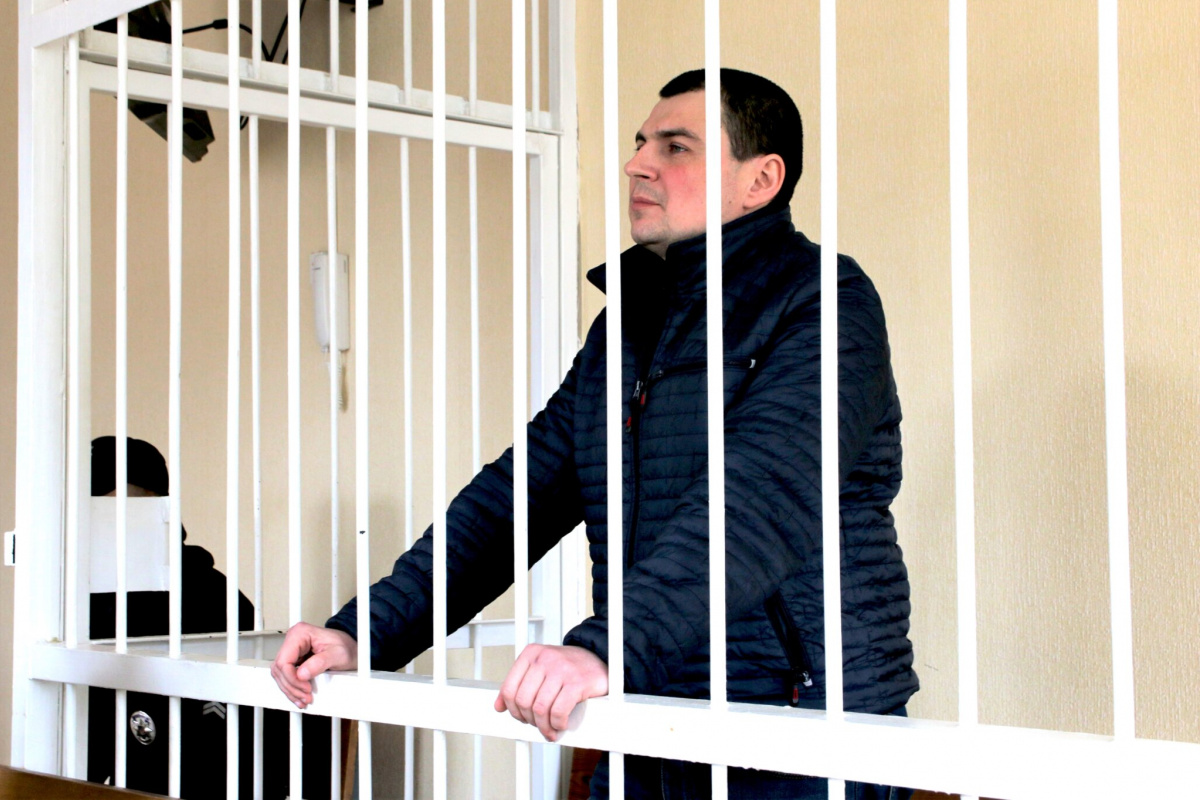
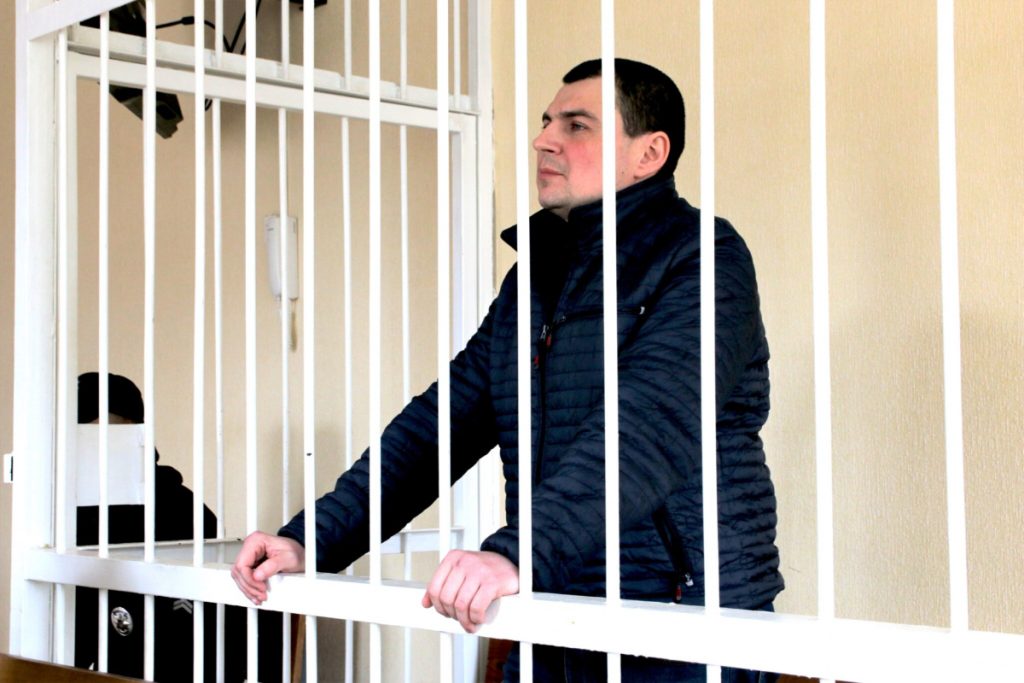 Resident of Lyman, Dmytro Herasymenko, was convicted of collaborationism. Photo: Oleksiy Arunyan / “Hrati”
Since the adoption of the collaborationism legislation in 2022 in Ukraine, debates about who should be tried and how continue unabated. The lack of clear definitions in the law leads to misunderstanding and uncertainty.
This poses difficulties for those who lived or still live in occupied territories, as people find it hard to understand what actions could result in criminal charges. It reaches the point where utility workers are labeled as collaborators.
For instance, Dmytro Herasymenko, an electrician from the city of Lyman in Donetsk Oblast, found himself trapped when Russian forces captured the town and he took a job with the local electrical grid under the occupiers.
After Lyman was reclaimed by Ukraine, Dmytro was tried and found guilty of collaborationism, but the appellate court reduced his sentence. His story has become emblematic, with “Donbas News” providing the details.
Lyman was occupied by the Russian army in May 2022. The complete capture of the town was preceded by intense shelling and fighting.
The city remained under occupation for five months. Dmytro stayed in his native Lyman the entire time due to his sick father and mother. He is an electrician who had been working for the private energy company DTEK since 2013 and was a crew chief. After Russian forces took over Lyman, he had to think about survival and look for ways to earn a living. Rumors spread that the Lyman district operational service (RES) would be restarted and needed workers.
Dmytro went for an interview. About 15 other former employees also attended. The new leaders turned out to be representatives from the “Energy company” of Gorlovka, occupied since 2014.
“They asked: ‘Who among you is technical staff?’ They needed, so to speak, someone to rely on. But I raised my hand because I had been a crew chief. And Vladimir Alexandrovich raised his hand too; he was also a crew chief but worked on overhead lines in the city,” Dmytro Herasymenko told “Donbas News.”
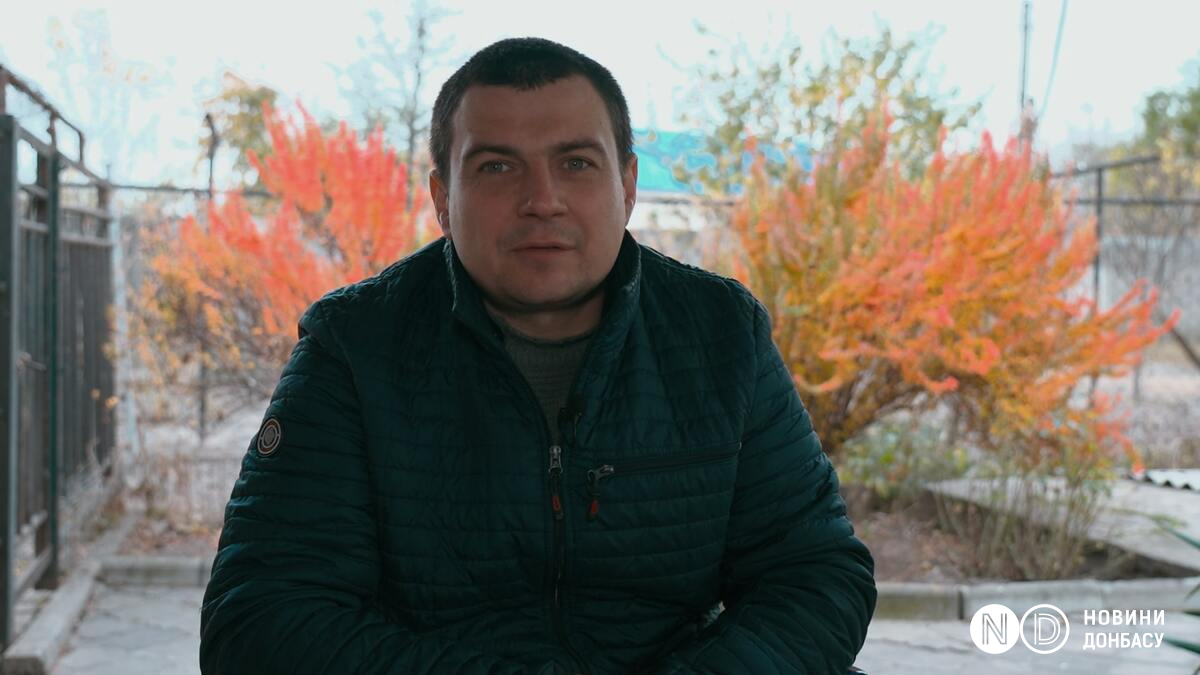 Dmytro Herasymenko, convicted of collaborationism. Photo: Dmytryi Glushko / Donbas News
Since he was younger, the representatives of the “DNR” group appointed him as the “senior.” This is how Dmytro worked for some time. But then he was officially offered the position of acting head of the local RES branch. Dmytro says he didn’t want to accept it, but the “DNR” people said it was that or nothing.
“I didn’t want to take the job; I didn’t need the position. I’m more of a hands-on person, I prefer working with the ‘hardware’. I just wanted to help restore the lines, to bring electricity back to the town. Because neighbors, relatives were asking: ‘When will there be light?’ I was told: either you work in this position, or you don’t work at all. I was afraid to just walk away because I thought there might be consequences,” explains Dmytro, convicted of collaborationism.
Dmytro’s team restored the electrical networks. But after the probation period, he submitted his resignation.
“It’s a double-edged situation. On one hand, it seems I collaborated. But on the other, why did I do it? I did it to help the residents who stayed here. They are citizens of Ukraine; nobody disowned them. Again, it’s a double-edged situation. I knew I made the wrong move, that I should not have taken the job, etc. But due to circumstances, that’s how it turned out,” Dmytro tells Donbas News.
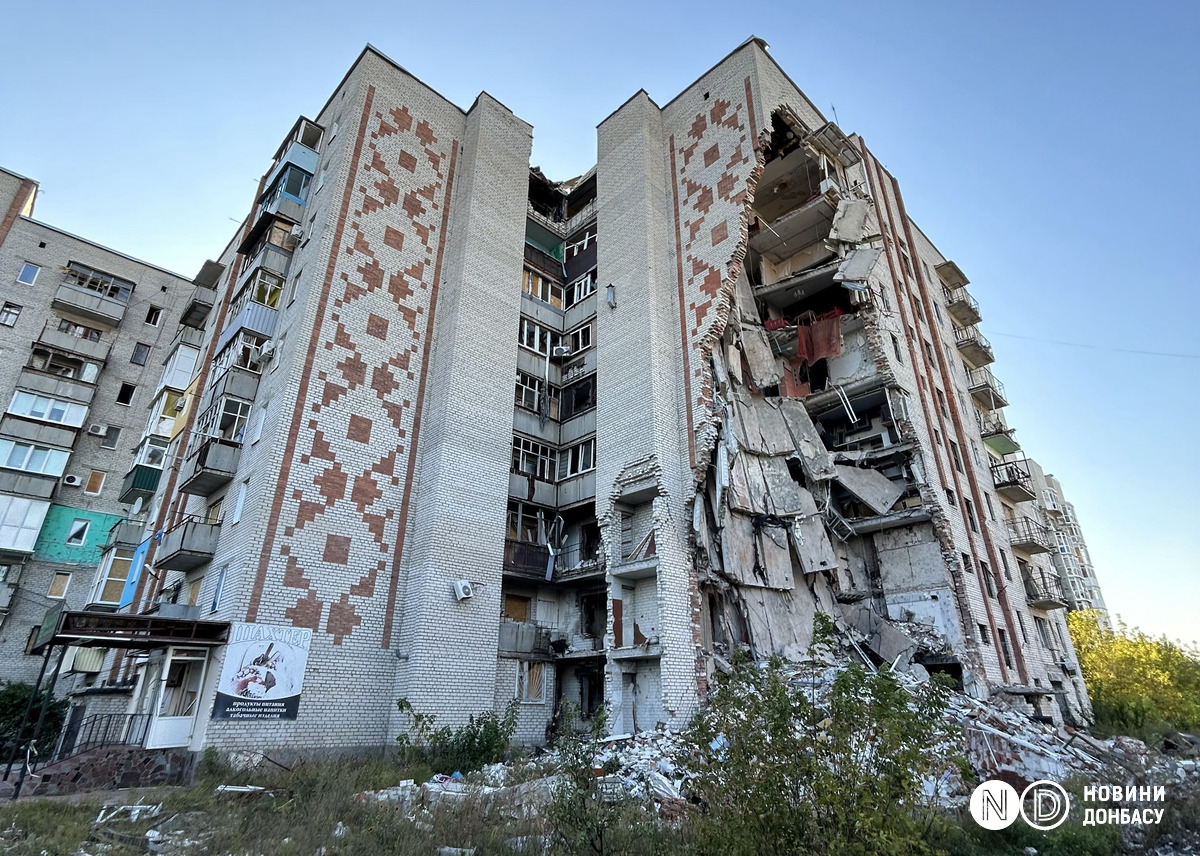 A house in Lyman damaged due to shelling. Photo: Dmytryi Glushko / Donbas News
The Ukrainian Armed Forces de-occupied Lyman on October 1, 2022. Just a few weeks after that, the SBU (Security Service of Ukraine) detained Dmitry and accused him of collaborationism — that is, cooperating with the occupiers.
This is under Article 111-1 of the Criminal code of Ukraine, which was introduced into the legislation in March 2022 — at the beginning of Russia’s full-scale invasion.
“In prison, they treated me nicely. Even other criminals serving time for different charges would ask, ‘What were you jailed for?’ When they heard it was Article 111: ‘Oh, you’re a collaborator, that’s it…’ Then, if they were interested, they would start talking to me. I really didn’t do anything bad, as nobody suffered or died because of me. Such people are not mistreated. Guys who were there for correcting [artillery fire] — of course, they are treated badly,” Dmitry shares.
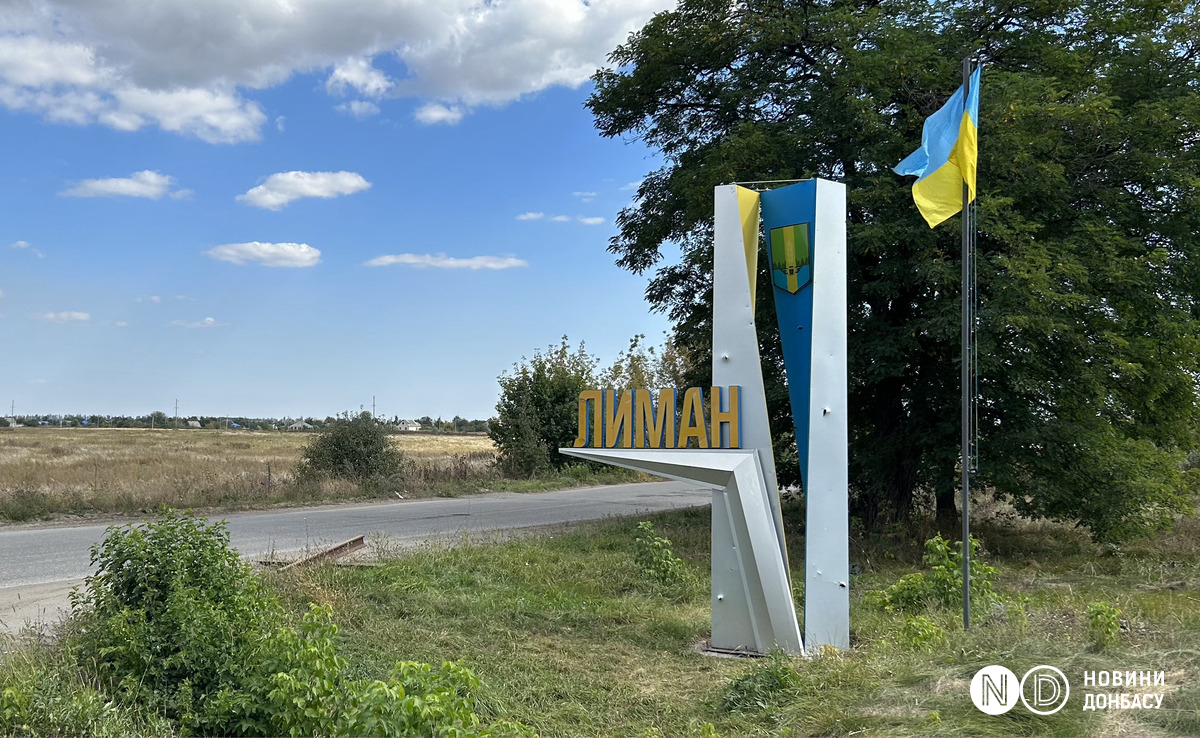 The stele at the entrance to Lyman. Photo: Dmitry Glushko / Donbass News
The list of actions qualified as collaborationism encompasses a wide range of activities, such as social media posts denying Russian aggression, holding positions in occupation administrations, or transferring any resources to the occupiers.
Adjusting fire and betraying the positions of the Ukrainian Armed Forces (UAF) are usually tried under entirely different articles. Often, even before the territories are liberated, such people are already on the lists of the SBU (Security service of Ukraine).
This also applies to high-ranking collaborators. However, it also happens that in the first days following the liberation of a city, when law enforcement conducts “stabilization measures,” local residents themselves report those who collaborated with the Russians.
“When the de-occupation of a settlement takes place, a very large number of people come to us themselves: ‘Guys, look, I live here, my neighbor, my acquaintance collaborated with the occupiers.’ Someone pointed out patriotically minded people to the occupiers. Someone collaborated with the occupiers for profit, someone was robbed, looted… They consider this to be the norm. And therefore, a large number of people turn to us themselves,” a Security service of Ukraine operative told Donbass News.
When a suspect is detained, they are interviewed, in which law enforcement tries to understand the motivation behind their actions.
But, according to a Donbass News source from the SBU, they have never once heard a coherent argument.
“I have never once heard any justified thoughts as to why the person had no other choice. There is always a choice,” he emphasizes.
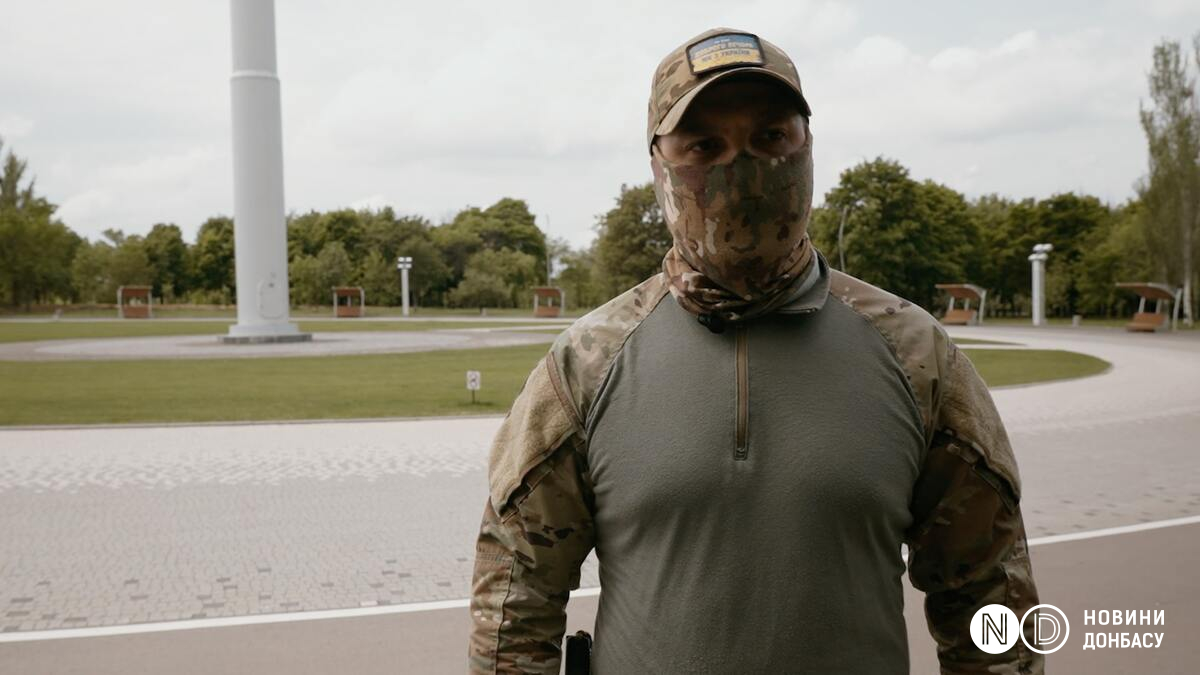 Security Service of Ukraine operative. Photo: Dmitry Glushko / Donbass News
For example, lawyer Oleg Rogov, whom Dmitry’s relatives turned to, is unwilling to help those who have committed serious crimes or have defected to the enemy’s side.
“There is, of course, my own taboo: defending former law enforcement officers. In principle, if someone has betrayed or broken their oath once, there’s no guarantee they won’t do it again,” Oleg emphasized in a conversation with Donbass News.
The attitude towards fire adjusters, high-ranking collaborators, and those who surrendered UAF positions is entirely different, both in prison and among ordinary people.
“The attitude is negative. Those people gave away the locations of military units, civilian institutions for some pennies, for some material benefits. And Ukrainian people died, property was damaged,” explains lawyer Oleg Rogov.
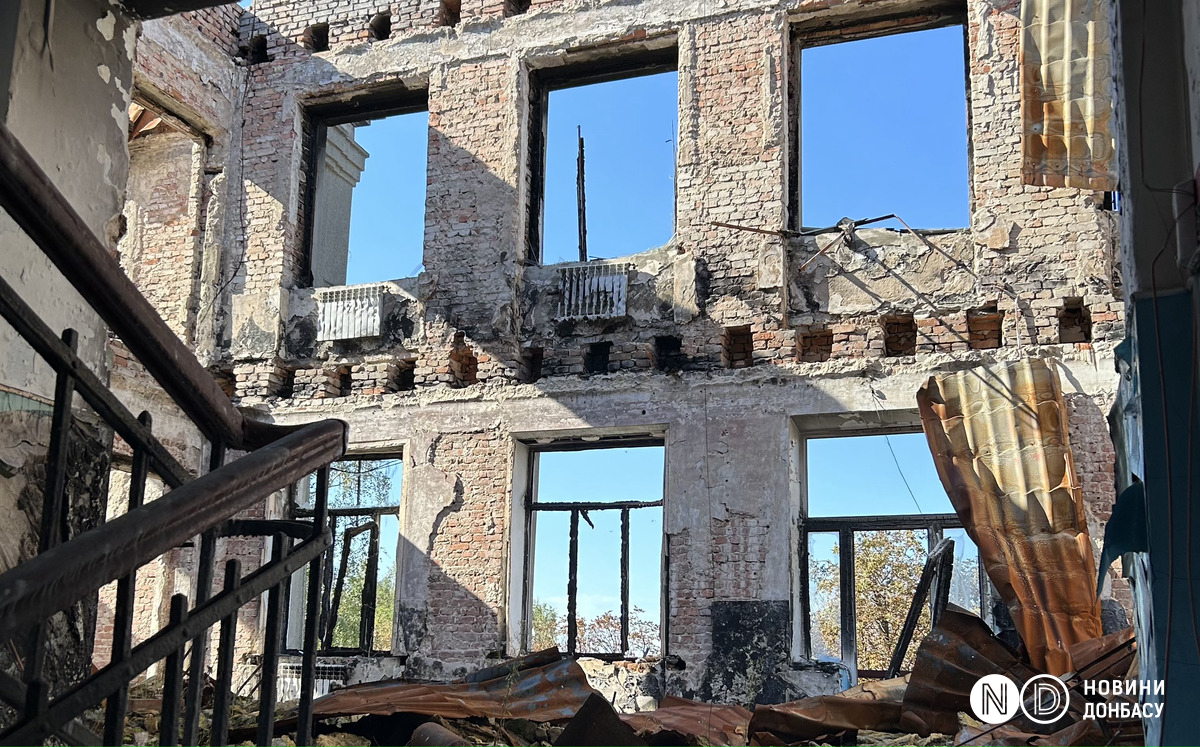 Consequences of the fighting in Lyman. Photo: Dmitry Glushko / Donbass News
Since the court sentenced Dmitry to three years in prison, confiscated all his property, and banned him from holding managerial positions or working with power grids for ten years, this verdict caused outrage among the residents of Lyman and the defendant’s friends.
At the time of his arrest, Dmitry had a pregnant wife at home, but the court did not consider this, so people who knew about the case provided support to the electrician’s family while he was in custody. Meanwhile lawyer Rogov tried to draw attention to this and similar cases.
“Those who were under occupation, and the few people who commented on the limited publications on the topic in Ukraine and abroad, agreed that those who cooperated with the authorities of the so-called ‘DNR’ should not be harshly punished. Again, they cooperated not because they wanted to profit. Dmitry had no further aspirations for promotion, especially since he had held a managerial position before the active hostilities in Ukraine,” says the defender.
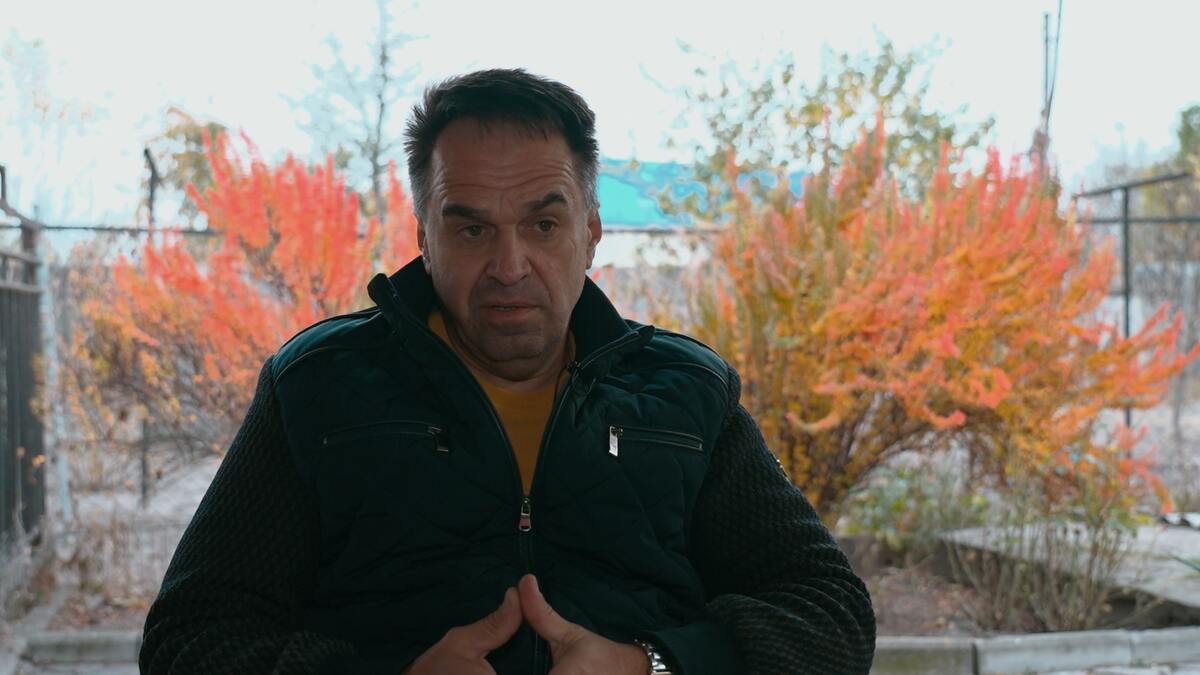 Oleg Rogov, lawyer of Dmitry Gerasimenko. Photo: Dmitry Glushko / Donbass News
But the Industrial district court of Dnipro, in the lawyer’s opinion, did not consider the evidence provided and Dmitry’s position and, as Oleg claims, had pre-determined the verdict. This could be inferred from inaccuracies in the documentation.
“Starting from the investigator incorrectly stating the time of occupation and de-occupation of the city of Lyman last year (the lawyer’s comment was recorded at the end of 2023 — Ed.), and some nuances concerning my client’s direct performance of duties were missed. The fact that he didn’t carry out any commercial activity associated with material costs that went to help the ‘DNR’, ‘LNR’. And specifically, my client did not give any command, therefore, the workers did not connect the ‘DNR’ administrative bodies [to the electrical grid]. That is the police, military headquarters, local government bodies,” the lawyer emphasized.
Disagreeing with the verdict, Oleg filed an appeal. Fortunately for his client, it was considered, and the sentence was significantly softened. It was replaced with 2 years probation, without confiscation of property.
“He committed a minor offense. There were no consequences harmful to the country, Ukraine. No one was harmed. He just tried to support the livelihood of the city of Lyman. Besides the occupiers, there were more than 9000 local residents who needed heating, light, gas, and everything else,” the defender explains his position.
Dmitry agreed with the court’s decision and so far does not know how the prosecution will proceed. But, according to the Geneva Convention, medics and utility workers should not be tried at all.
Therefore, the issue of amending the law on collaborationism is raised quite often by journalists, human rights activists, and deputies of the Verkhovna Rada.
“Although there were negative responses concerning collaborators, but that’s just their opinion. Again, those who lived through the occupation will still not be able to understand and hear those who were outside the occupation,” stated the lawyer.
“It’s a myth that all people who remained during the city’s occupation are all separatists. No, that’s far from the case! Every person who couldn’t leave, doesn’t necessarily have separatist, collaborationist, or any other motives. There are just people who are psychologically and somehow internally not ready. This mostly concerns people of retirement age, who are not ready to leave their home, they don’t understand where to go, they don’t understand what will happen to them there,” explains an SBU operative.
Human rights activist Alena Luneva says that currently, three-quarters of the cases are against people who did not commit any serious crimes.
The human rights center ZMINA conducted extensive research, examining about 700 verdicts under different parts of the laws on collaborationism.
“It seems like we are stamping cases for statistics against people who, in the absence of authority, remained to help people survive, distributed humanitarian aid, or acted as communicators between the community and the occupying authority. Such responsibility should be measured, and the prospects for reintegration should be weighed. We don’t see this now,” Luneva emphasized in a conversation with Donbass News.
While a significant number of cases are filed against utility workers or school teachers, many real high-ranking collaborators fled to Russia during the liberation of Ukrainian territories.
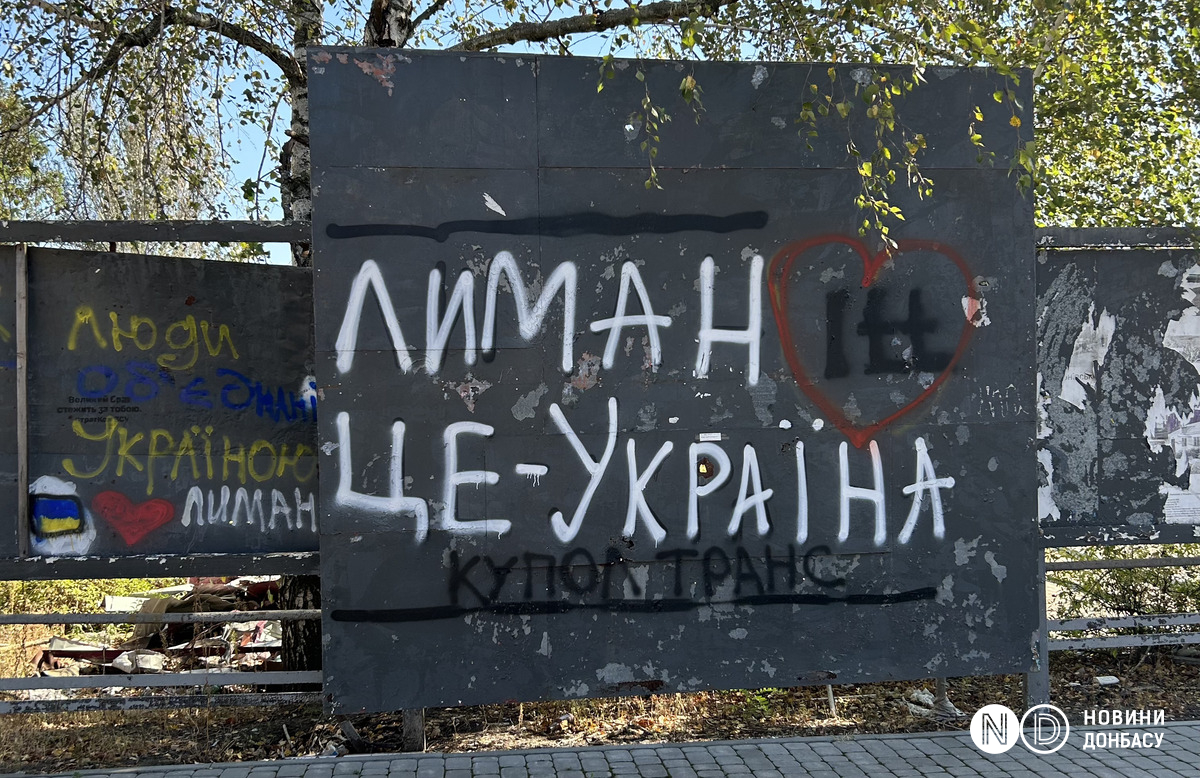 Pro-Ukrainian inscription in Lyman. Photo: Dmitry Glushko / Donbass News
The lawyer also emphasizes that the current legislation does not clearly define the types of collaborative activities, causing difficulties for law enforcement and courts.
“If you voluntarily sided with the enemy, you undoubtedly should face punishment. But as the article in the Criminal Code currently stands, we are just intimidating residents of the occupied territories. Because Russia uses this article. It promises people that when Ukraine regains control over the currently occupied territories, those who lived there will go to prison. And in reality, this is the last thing the state of Ukraine needs: to lose the loyalty of people living under occupation and waiting for Ukraine,” believes the human rights defender.
Unfortunately, until amendments are made to the current law on collaborators, people remaining in territories not controlled by Ukraine will likely have to deal with the implications of this article.
After all, it’s not always possible to precisely prove the intent of a person on the other side of the front line. Perhaps their life was threatened, or the person had no choice but to go to work to feed their family.
On the other hand, there is a public demand for fair punishment of those who truly sided with Russia and committed crimes against Ukraine.
*The material is created with the support of “Media Network”
“There is a pressing need for Western intelligence agencies to gather enough information to reach solid conclusions about the extent of Russian involvement in the Hamas attack, and to make those conclusions public. The findings will be an essential element of managing as well as…
— Michael Novakhov (@mikenov) March 9, 2024