
Palestinian factions seek unity at Moscow meeting as Russia vies for greater role in Gaza war | CNN https://t.co/JnoHSxsA0k pic.twitter.com/K7ATxhJV6i
— Michael Novakhov (@mikenov) March 9, 2024
Day: March 9, 2024
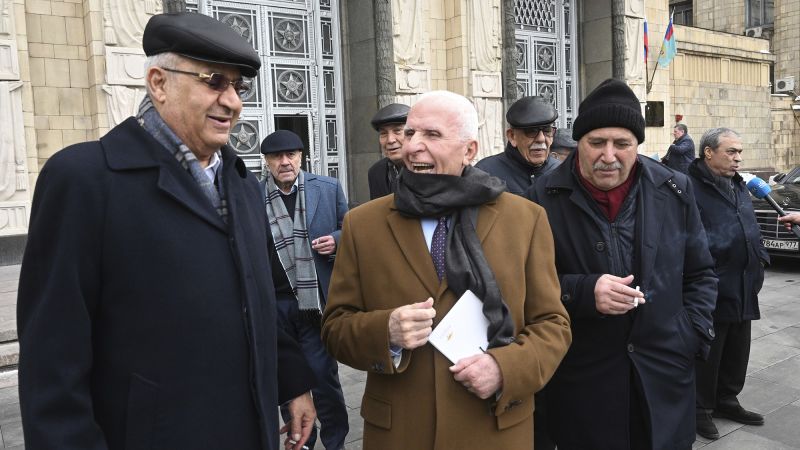
Palestinian factions, some of whom have been at odds for almost two decades, are meeting in Moscow to discuss forming a new government just days after the Palestinian Authority government resigned.
The objective of the two-day talks is to unite the factions under the Palestine Liberation Organization (PLO), a coalition of parties that signed a peace treaty with Israel in 1993, and form a new government in the Palestinian Authority (PA), Hussein Hamayel, spokesperson for the Fatah political party, told CNN on Wednesday.
Hamas, which is fighting a war with Israel in Gaza that has killed more than 30,000 people in the enclave, is attending the talks, according to Russian media. It is not part of the PLO and does not recognize Israel.
“The incorporation of Hamas, along with other factions that are outside the PLO, is an essential step for the reform and revival of the PLO,” said Khaled Elgindy, senior fellow at the Middle East Institute in Washington DC. “Otherwise, the PLO cannot legitimately claim to be truly representative.”
Fatah dominates both the PLO and the PA, the interim Palestinian government that was established in the Israeli-occupied West Bank after the 1993 agreement known as the Oslo Accords was signed.
The PA has however become deeply unpopular among Palestinians, and is seen as corrupt and unable to provide security in the face of regular Israeli military incursions. It is also under intense pressure from the United States to reform.
The PA held administrative control over Gaza until 2007, after Hamas won the 2006 legislative elections in the occupied territories and expelled it from the strip. Since then, Hamas has ruled Gaza and the PA governs parts of the West Bank.
PA Foreign Minister Riyad al-Maliki was cited by Reuters as saying that while he hoped there would be an understanding about the need to support a technocratic government, he wasn’t expecting “miracles.”
“I believe that the meeting in Moscow should be followed by other meetings in the region soon,” he said.
Analysts say that Hamas joining the PLO would be a significant development, given that it could potentially unify the Palestinian factions and create a consensus cabinet. “The goal is to establish a technocratic government that does not include members of any political faction but that operates with the approval of all of them,” said Elgindy.
Despite the PLO’s recognition of Israel, Hamas joining the bloc wouldn’t mean that it would automatically acknowledge it, he added. “Hamas joining the PLO would not in of itself amount to a recognition of Israel, though it could – and likely would – constrain the kinds of concessions that the PLO might make in any future diplomatic process with Israel.”
Hamas has said in the past that it is willing to accept a Palestinian state on the territories Israel captured in the 1967 war, but has ruled out recognition of Israel.
Israel has rejected the prospect of the PA returning to Gaza after the war there ends, a position that is at odds with the US, which is pushing for a reformed PA that can rule both territories.
The main hurdles to Hamas joining the PLO, said Elgindy, would be how much power it would get in the grouping, and how to deal with its weapons and fighters. “These will be extremely difficult to negotiate since they require the two dominant factions, Fatah and Hamas, each to relinquish a measure of power in the interest of national unity,” he said.
The talks have also highlighted Russia’s attempts to play a bigger role in the conflict. Moscow had offered to mediate between Hamas and Israel soon after the war started, touting its ties to all regional stakeholders.
Russia has refrained from directly condemning the October 7 attack on Israel, despite 16 of its citizens being killed on the day by Hamas-led militants. That was “a cardinal break from a longstanding public relations strategy in the region of a peacemaker who could talk to all sides,” according to Anna Borshchevskaya, an expert on Russia’s Middle East policy at the Washington Institute for Near East Policy.
Moscow has also lashed out at those who’ve accused it of supporting terrorism for its continued ties with Hamas. Unlike most Western nations, it has not designated the militant group as a terrorist organization and has invited high-level Hamas delegations to Moscow for meetings with top Russian officials over the years, but it has also exerted pressure on the group in the past to change its ways.
By hosting the talks, Russia’s may be trying to take control of the narrative in a conflict where its Western rivals also have a stake, said Borshchevskaya.
“What is standing in the backdrop of these discussions is a battle for global narratives,” she said, adding that it may be having some success in that arena. Russia is hosting the dialogue “for dialogue’s sake,” she said.
Russian President Vladimir Putin “is furthering the chaos in the region with the aim of weakening the West and pro-Western forces,” she said. “We (the West) are now losing (against Russia in) both the military battlespace and one of narratives.”
For Moscow, involvement in the war is a way to project power and expand its influence in the Middle East at the US’ expense, said Elgindy. Russia is nevertheless well placed to play such a role, he added.
“It is one of the few major powers that has ability to talk to all Palestinian factions, including Hamas, which is not something the US could do or that many Arab states are interested in doing,” he said.
CNN’s Matog Saleh and Celine Alkhaldi contributed to this report.
Palestinian factions, some of whom have been at odds for almost two decades, are meeting in Moscow to discuss forming a new government just days after the Palestinian Authority government resigned.
The objective of the two-day talks is to unite the factions under the Palestine Liberation Organization (PLO), a coalition of parties that signed a peace treaty with Israel in 1993, and form a new government in the Palestinian Authority (PA), Hussein Hamayel, spokesperson for the Fatah political party, told CNN on Wednesday.
Hamas, which is fighting a war with Israel in Gaza that has killed more than 30,000 people in the enclave, is attending the talks, according to Russian media. It is not part of the PLO and does not recognize Israel.
“The incorporation of Hamas, along with other factions that are outside the PLO, is an essential step for the reform and revival of the PLO,” said Khaled Elgindy, senior fellow at the Middle East Institute in Washington DC. “Otherwise, the PLO cannot legitimately claim to be truly representative.”
Fatah dominates both the PLO and the PA, the interim Palestinian government that was established in the Israeli-occupied West Bank after the 1993 agreement known as the Oslo Accords was signed.
The PA has however become deeply unpopular among Palestinians, and is seen as corrupt and unable to provide security in the face of regular Israeli military incursions. It is also under intense pressure from the United States to reform.
The PA held administrative control over Gaza until 2007, after Hamas won the 2006 legislative elections in the occupied territories and expelled it from the strip. Since then, Hamas has ruled Gaza and the PA governs parts of the West Bank.
PA Foreign Minister Riyad al-Maliki was cited by Reuters as saying that while he hoped there would be an understanding about the need to support a technocratic government, he wasn’t expecting “miracles.”
“I believe that the meeting in Moscow should be followed by other meetings in the region soon,” he said.
Analysts say that Hamas joining the PLO would be a significant development, given that it could potentially unify the Palestinian factions and create a consensus cabinet. “The goal is to establish a technocratic government that does not include members of any political faction but that operates with the approval of all of them,” said Elgindy.
Despite the PLO’s recognition of Israel, Hamas joining the bloc wouldn’t mean that it would automatically acknowledge it, he added. “Hamas joining the PLO would not in of itself amount to a recognition of Israel, though it could – and likely would – constrain the kinds of concessions that the PLO might make in any future diplomatic process with Israel.”
Hamas has said in the past that it is willing to accept a Palestinian state on the territories Israel captured in the 1967 war, but has ruled out recognition of Israel.
Israel has rejected the prospect of the PA returning to Gaza after the war there ends, a position that is at odds with the US, which is pushing for a reformed PA that can rule both territories.
The main hurdles to Hamas joining the PLO, said Elgindy, would be how much power it would get in the grouping, and how to deal with its weapons and fighters. “These will be extremely difficult to negotiate since they require the two dominant factions, Fatah and Hamas, each to relinquish a measure of power in the interest of national unity,” he said.
The talks have also highlighted Russia’s attempts to play a bigger role in the conflict. Moscow had offered to mediate between Hamas and Israel soon after the war started, touting its ties to all regional stakeholders.
Russia has refrained from directly condemning the October 7 attack on Israel, despite 16 of its citizens being killed on the day by Hamas-led militants. That was “a cardinal break from a longstanding public relations strategy in the region of a peacemaker who could talk to all sides,” according to Anna Borshchevskaya, an expert on Russia’s Middle East policy at the Washington Institute for Near East Policy.
Moscow has also lashed out at those who’ve accused it of supporting terrorism for its continued ties with Hamas. Unlike most Western nations, it has not designated the militant group as a terrorist organization and has invited high-level Hamas delegations to Moscow for meetings with top Russian officials over the years, but it has also exerted pressure on the group in the past to change its ways.
By hosting the talks, Russia’s may be trying to take control of the narrative in a conflict where its Western rivals also have a stake, said Borshchevskaya.
“What is standing in the backdrop of these discussions is a battle for global narratives,” she said, adding that it may be having some success in that arena. Russia is hosting the dialogue “for dialogue’s sake,” she said.
Russian President Vladimir Putin “is furthering the chaos in the region with the aim of weakening the West and pro-Western forces,” she said. “We (the West) are now losing (against Russia in) both the military battlespace and one of narratives.”
For Moscow, involvement in the war is a way to project power and expand its influence in the Middle East at the US’ expense, said Elgindy. Russia is nevertheless well placed to play such a role, he added.
“It is one of the few major powers that has ability to talk to all Palestinian factions, including Hamas, which is not something the US could do or that many Arab states are interested in doing,” he said.
CNN’s Matog Saleh and Celine Alkhaldi contributed to this report.
Live update: WSJ: Qatar threatening to deport Hamas chiefs if they don’t agree to hostage truce deal https://t.co/hT36cmwtLX
— ToI ALERTS (@TOIAlerts) March 9, 2024
BREAKING:
Armenia is now considering applying to join the European Union.
Foreign Minister Ararat Mirzoyan delivered the news today.
Armenia’s relationship with Russia has been deteriorating swiftly in recent weeks.
🇦🇲🇪🇺 pic.twitter.com/1O97qKbSOw
— Visegrád 24 (@visegrad24) March 9, 2024
My article published in Estonia about why Russia’s sovereign assets in the West have to be seized / sent to Ukrainehttps://t.co/tnZgpnkolx
— Anders Åslund (@anders_aslund) March 9, 2024
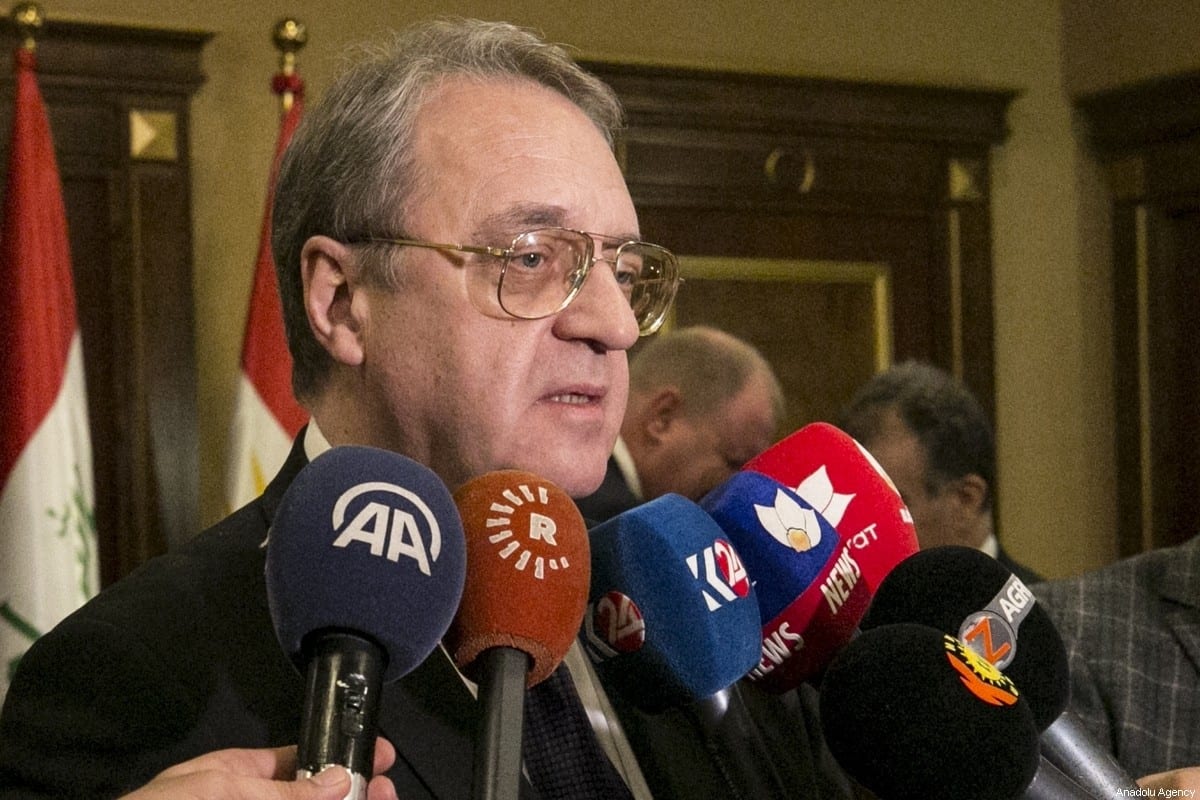
The Hamas delegation on Saturday discussed with Russia’s special envoy for the Middle East and North Africa, Mikhail Bogdanov, the latest developments in the Gaza Strip, Anadolu Agency reports.
“On the sidelines of the Palestinian meetings held in Moscow, the delegation of the Islamic Resistance Movement Hamas met with the Special Envoy of the Russian President to the Middle East and Africa, Deputy Foreign Minister, Mr. Mikhail Bogdanov, at the headquarters of the Russian Foreign Ministry this Friday evening,” the Palestinian group said in a statement.
The delegation from the resistance movement expressed gratitude to the Russian Federation for “their position in support of the Palestinian people, and for hosting the Palestinian meetings.”
It also reviewed “the course of the meetings and the positive results they achieved in uniting the Palestinian ranks, responding to aggression, providing relief to our people, supporting the valiant Palestinian resistance, and emphasizing the continuity of the meetings.”
READ: Hamas: ‘International community failing to protect Gaza’s children from starvation’
Representatives from Palestinian political forces have gathered in the Russian capital, and talks are expected to last until the evening.
Israel started its war on Gaza after the Oct. 7, 2023, cross-border incursion by Hamas. It has since killed more than 30,300 Palestinians and pushed the territory to the brink of famine.
Hamas, which controls the Gaza Strip, and Fatah, the party that dominates the Palestinian Authority, which in part administers the occupied West Bank, are the two largest Palestinian factions.
Some states have floated the idea of a technocratic government for Palestinians, a step in efforts to make progress towards talks on a two-state solution to the Israeli-Palestinian conflict. But it is unclear how things could move forward until Hamas and Fatah work out their long-running differences.
It has also been suggested that the Palestinian Authority govern Gaza after the war ends.
READ: Israel’s prisons overflowing with Palestine prisoners, hindering new arrests