
US, EU Call On Iran To Dilute 60% Uranium, Stop Short Of Censure ایران اینترنشنال
Day: March 6, 2024
“No One Hears Their Voices” Suicides and Self-Immolations in Iran’s Orumiyeh Prison Center for Human Rights in Iran
I can’t help but feel a twinge of annoyance when asked the question, “So you’re Armenian like Kim Kardashian?” It’s not the question itself that bothers me, but rather the dismissive reduction of the vast and spirited Armenian culture to a single celebrity’s persona. I am not Armenian “like Kim Kardashian.” I am Armenian like Zabel Yessayan, a political writer and voice for women in the early 1900s, like revolutionary and soldier Soghomon Tehlirian, like the poet and public activist Yeghishe Charents. I am Armenian like my Շողեր Տատիկ (Grandma Shogher), the sole survivor of the Armenian Genocide among her parents and eight siblings.
My great-great-grandmother was born on Christmas Day in 1905. She was the youngest of nine children – a Christmas miracle, as she was called. Her family led a simple rural life in the city of Mush in Western Armenia. Her father was a farmer, and her mother, as were most women in traditional Armenian families at the time, a housewife. The native Armenians of Grandma Shogher’s village lived alongside Kurdish, Assyrian and Turkish people, sent to live there by the government in order to assimilate the area. In the 1910s, after the Young Turks ascended to power, news began to circulate throughout the village of plans for the deportation of the Armenian population. People were assured that they were being deported farther west for their “safety.” The seemingly absurd talk of deportation was brushed off as mere village gossip. In the spring of 1915, just months after Grandma Shogher turned 10, these rumors transpired into a tragic reality.
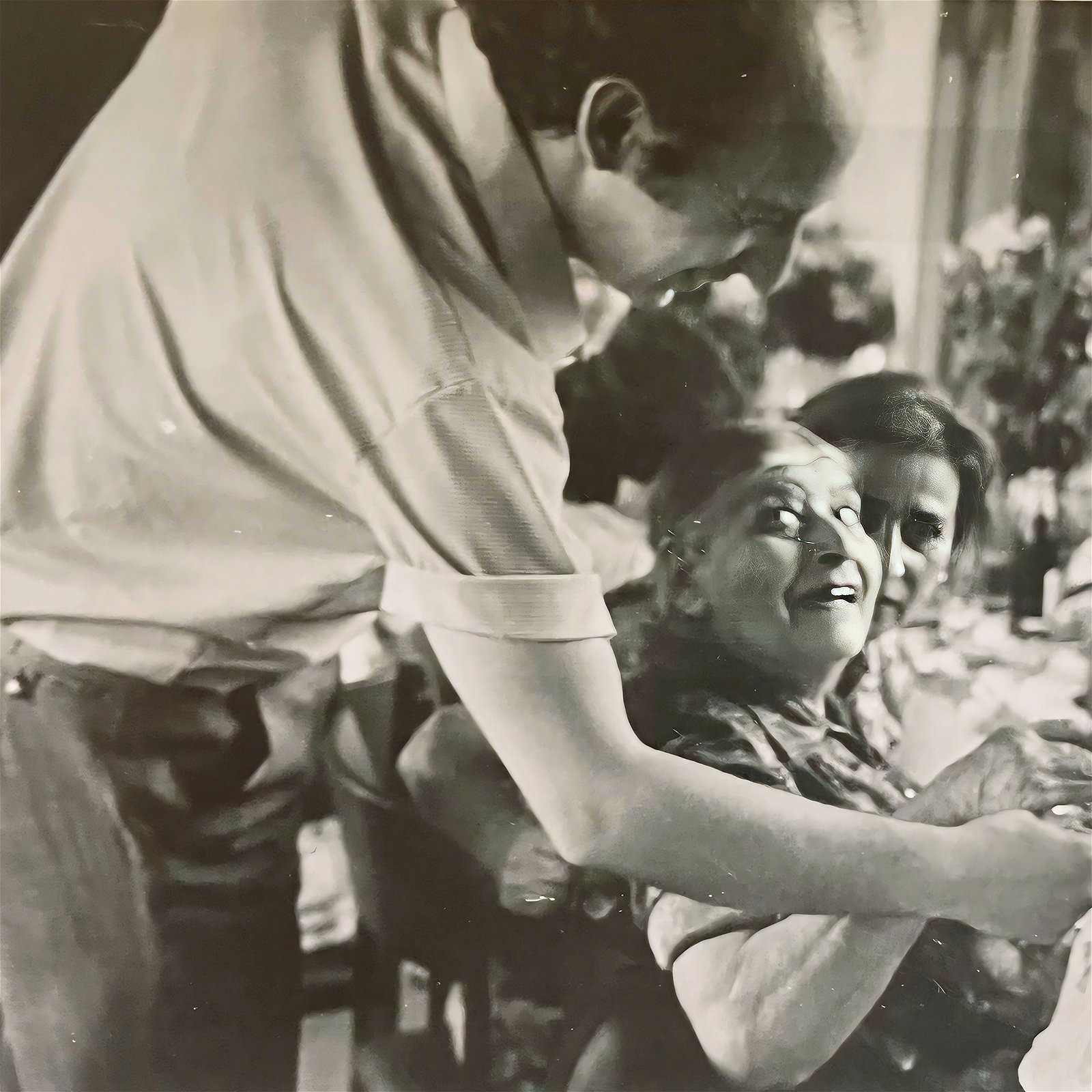 Grandma Shogher (75 years old, seated and smiling up at the man behind her) at her grandson’s engagement celebration on July 6, 1980 in Yerevan, Armenia
The Young Turks commenced their agenda of ethnic cleansing on April 24, 1915 under the guise of the World War. It began with the mass detention and extermination of the Armenian intellectual class, including prominent figures Krikor Zohrab, Daniel Varoujan and Ruben Sevak. That morning, the sun shone down on the village, but the air felt heavy with fear and anguish. Grandma Shogher would recount how ordinary citizens were gathered in the village centers, and Armenians were grouped separately. They were set to be deported from Mush, and those who refused to leave their homes were executed. Homes were broken into and burned and civilians tortured. These deportations from village to village occurred in multiple stages, each resulting in more loss of life. Those who didn’t perish in their villages perished in transit to the next. This was an inevitable death sentence.
Grandma Shogher’s family decided to flee east, seeking refuge in the then-Russian territory of Nakhichevan. Following this strenuous journey, they arrived in the village of Varmazyar, not as a family of 11, but of five. Grandma Shogher did not like to recount what she witnessed on their passage to Nakhichevan. Rarely did she mention the harsh brutalities that took the lives of half of her siblings. Amidst horrors of crucifixion, starvation, beating, burning, rape and mutilation that unfolded before her, Grandma Shogher remarked on one particular sight as the most harrowing: that of infants being violently torn from the wombs of their mothers. The harshly rooted patriarchal complexities of war often left women as the primary targets of violence.
Once the family settled in Nakhichevan, they believed they were out of harm’s way. This, though, was far from the culmination of Grandma Shogher’s journey. After the fall of the Russian Empire, tensions rose between the Turkic and Armenian communities of the territory as did the desire to drive the Armenians from their ancestral lands. One afternoon, Grandma Shogher’s neighbors visited their home. The neighbors, who were Turkish, arrived bringing word that Turkish soldiers were coming to the village, offering to help them escape. Despite skepticism, Grandma Shogher’s mother chose to stay in their home. As night fell, their worst fears were realized. Turkish soldiers broke into her home, killing her parents and two sisters in front of her. She found herself not surrounded by 10, but alone. Grandma Shogher survived purely due to her small stature and quick thinking, hiding in a small ottoman.
“Shogher! Shogher!” the familiar voice of their Turkish neighbor called. Grandma Shogher, still sheltered behind the ottoman, warily revealed herself. Although they would face execution had they been caught, the Turkish family took her in. They reunited her with relatives in the village of Khachik in present-day Armenia. Grandma Shogher never harbored resentment towards the people at whose hands she had witnessed such atrocities. She said that it was because of people like her neighbors that she still saw a slight glimmer of hope in the face of such despair.
I am proud to say that I am a descendant of a survivor. Grandma Shogher’s fortuitous destiny holds the history of not only my family and my culture but also the world as we know it. My story is just one of many, as each Armenian family lineage possesses not only a unique chronicle of loss, but also one of endurance and survival. The millions of individual stories are woven together by the threads of my people’s shared tragic history. Though very few, survivors like Grandma Shogher are a testament to the deep-rooted history of my people that has been silenced and denied by the perpetrators for over a century. Our wounds are still open, but each descendant of an Armenian Genocide survivor is living proof of strength and perseverance through injustice.
Author information
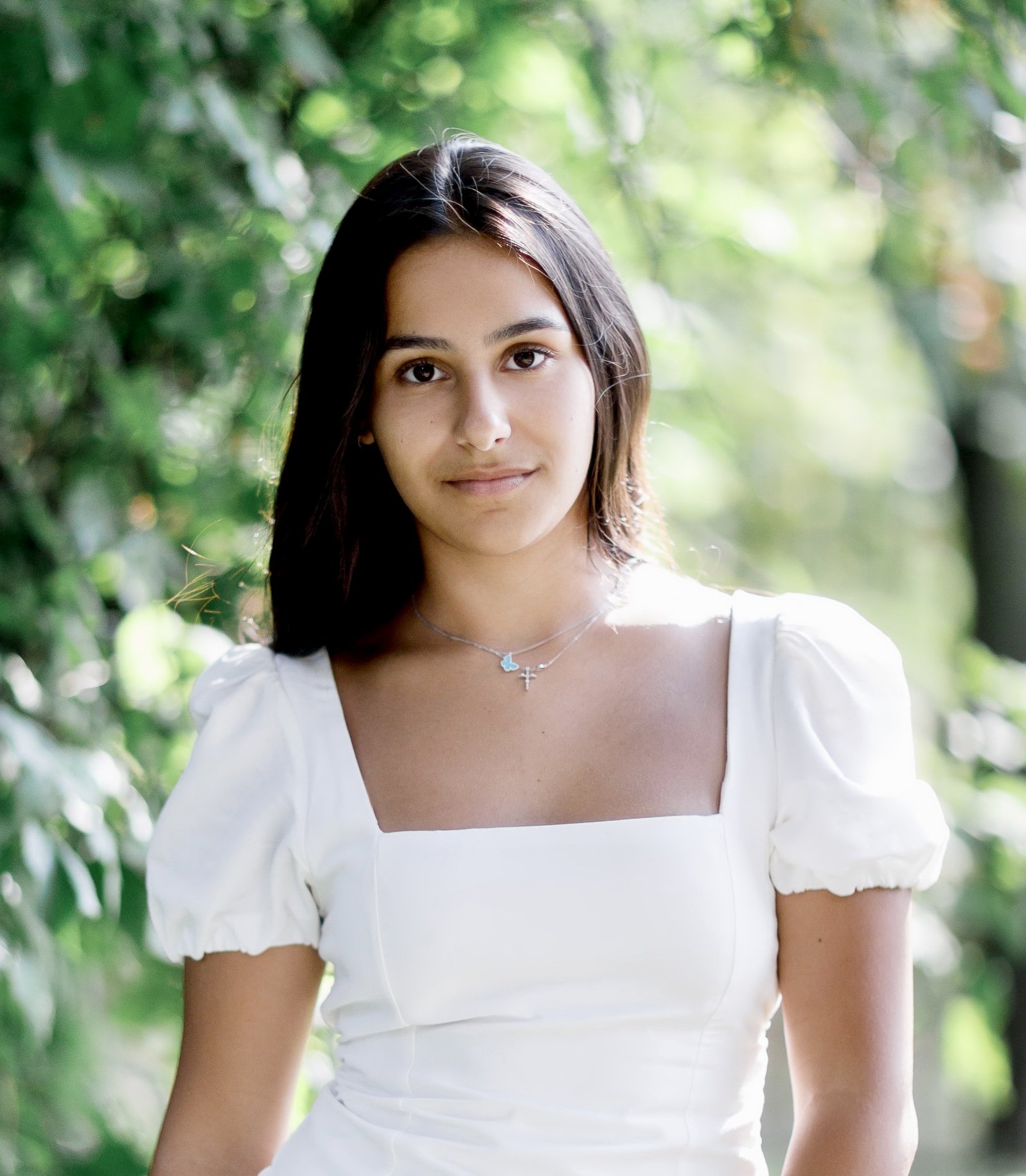
Emily Tarverdyan
Emily Tarverdyan is a 17-year-old student from Los Angeles dedicated to shedding light on global issues to foster meaningful dialogue. Her interests center around policy, youth advocacy and the Armenian cause.
|
The post My Grandma Shogher on surviving the genocide appeared first on The Armenian Weekly.
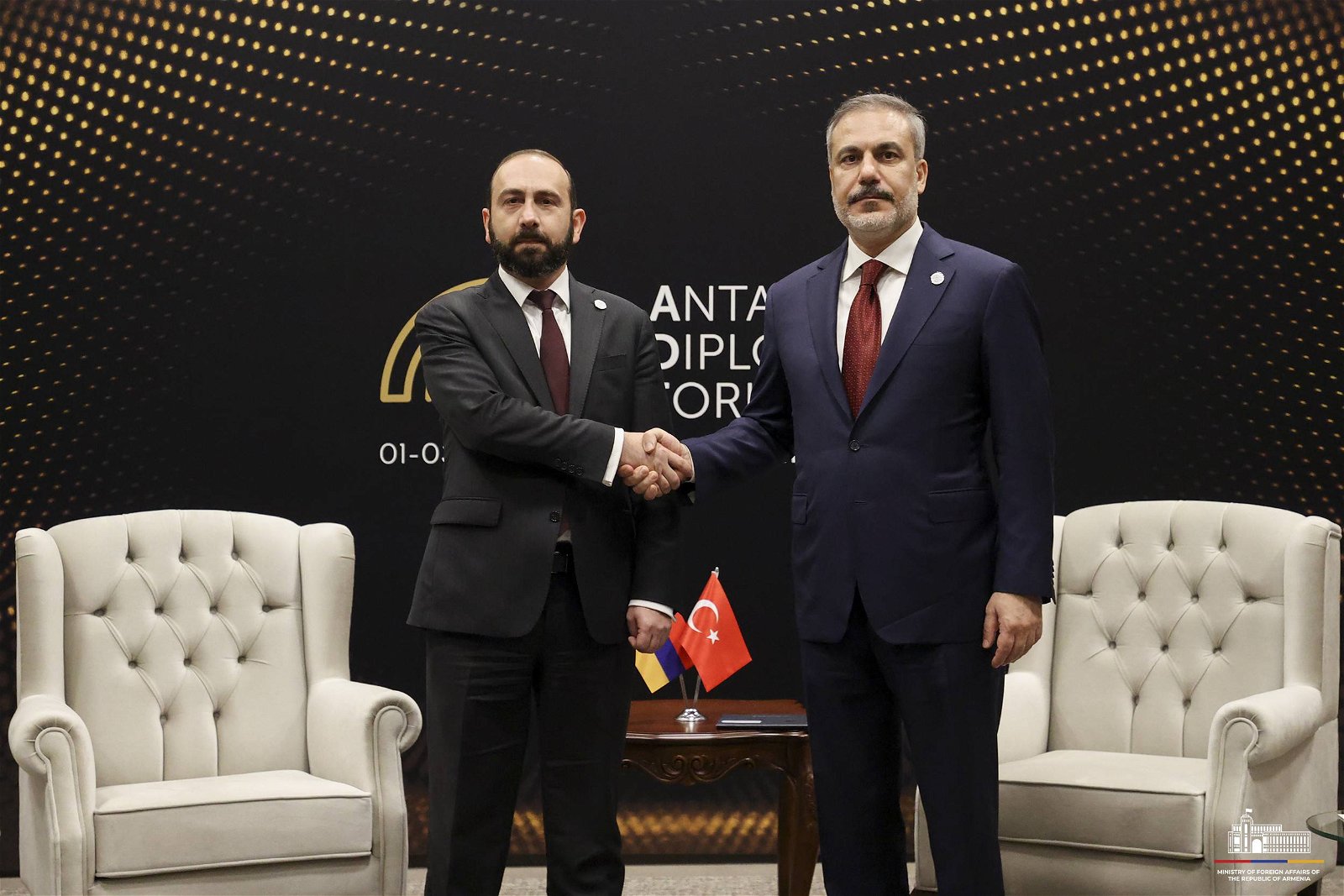 Minister of Foreign Affairs of Armenia Ararat Mirzoyan and Minister of Foreign Affairs of Turkey Hakan Fidan on the sidelines of the Antalya Diplomatic Forum, March 1, 2024 (Ministry of Foreign Affairs of the Republic of Armenia)
YEREVAN—A panel discussion titled “Peace, Development and Connectivity in the South Caucasus” held at the Antalya Diplomatic Forum brought together key representatives from Armenia, Turkey, Azerbaijan and the European Union. The discussion shed light on the diverse perspectives and challenges surrounding peace efforts in the region.
The Antalya Diplomatic Forum, an international conference on diplomacy hosted by Turkey, was held from March 1-3. Among the participants in the panel discussion were Ruben Rubinyan, the Deputy Speaker of the Armenian National Assembly; Serdar Kilic, Turkey’s representative for Armenian-Turkish normalization; Hikmet Hajiyev, foreign policy advisor to the president of Azerbaijan; and Toivo Klaar, the EU Special Representative for the South Caucasus and the crisis in Georgia.
Rubinyan, the special representative for Armenian-Turkish normalization, emphasized Armenia’s commitment to peace and constructive dialogue. He highlighted Armenia’s sovereignty regarding its constitution and legislation and expressed concerns about Azerbaijan’s willingness to uphold agreed principles. He stressed the importance of operating infrastructure under sovereign conditions and Armenia’s readiness to implement agreements, including reopening the Armenia-Turkey border.
Kilic acknowledged the sensitivity and complexity of regional negotiations. He emphasized the need to build mutual trust and take the lead on regional solutions rather than rely on external impositions. He expressed readiness to engage in dialogue with Armenia, even suggesting holding future meetings in Yerevan.
Hajiyev asserted Azerbaijan’s position following what he called the resolution of the Artsakh conflict. He accused Armenia of perpetuating a confrontational approach along the Armenia-Azerbaijan border. Hajiyev also rejected external intervention in the process from global actors. He highlighted Azerbaijan’s expectation that Armenia address concerns regarding Azerbaijani enclaves in Armenia.
Klaar underscored the EU’s expectation for Turkey’s involvement as a regional leader to facilitate communication channels in the South Caucasus. He emphasized the EU’s commitment to achieving peace in the region and the importance of de-blocking borders, including the connection between Azerbaijan and its exclave Nakhichevan. He reiterated the EU’s long-term engagement in promoting stability and security in the South Caucasus.
Armenian Minister of Foreign Affairs Ararat Mirzoyan provided updates on Armenia’s ongoing normalization efforts with Azerbaijan, reaffirming Armenia’s commitment to mutual recognition of territorial integrity and transparency in the delimitation process. He also presented Armenia’s “Crossroads of Peace” proposal, which would unlock regional transport routes and infrastructure, highlighting its economic benefits and investment opportunities for regional cooperation.
Mirzoyan met with Turkey’s Minister of Foreign Affairs Hakan Fidan to discuss comprehensive normalization of relations between Armenia and Turkey and explore practical measures for this process.
Turkologist Gevorg Galtakyan argued that the meeting yielded significant statements. Galtakyan highlighted Hajiyev’s remarks, focusing on Turkey’s perception of Mount Ararat as a territorial claim. Kilic also made noteworthy comments, suggesting that Armenia is responsible for the stalemate in Armenian-Turkish border negotiations. Galtakyan speculated that this deadlock might be linked to the recent controversy surrounding the installation of the Nemesis statue.
However, Galtakyan noted some diplomatic missteps, particularly from the Armenian side. He pointed out Rubinyan’s lack of diplomatic finesse during discussions, citing an instance in which Rubinyan seemingly oversimplified the complex process of border opening between Armenia and Turkey.
Galtakyan also underscored Klaar’s statements, indicating the collective Western and Turkish efforts to enhance Turkey’s role in the South Caucasus while minimizing Russian influence. He suggested that Armenia should adopt a more introspective approach, prioritizing its own interests over those of external powers.
Despite Armenia’s presence at the diplomatic forum, Galtakyan lamented the absence of Armenian-centric discussions on the agenda. The forum, attended by over 20 heads of states, 90 ministers and numerous representatives of international organizations, provided a platform for crucial diplomatic exchanges, with Armenia’s delegation, led by Mirzoyan, also participating in the discussions.
Efforts begun in 2023 towards signing a treaty between Armenia and Azerbaijan, as indicated by various official statements from Yerevan, Baku and international leaders, have yet to materialize. The failure to reach an agreement has shed light on the entrenched divisions and unresolved conflicts in the region. Particularly, the latter half of last year illustrated that the Aliyev administration remains committed to its policy of extracting concessions from Armenia and imposing its will, rather than seeking genuine reconciliation.
According to the chairman of Voskanapat Center for Strategic Research, Hrant Melik-Shahnazaryan, Azerbaijani President Ilham Aliyev appears in no rush to expedite negotiations, having already asserted control over Artsakh and displaced its Armenian population. With minimal obstacles standing in his way, Aliyev perceives the situation as largely favorable for Azerbaijan, confident that time is on his side.
On the other hand, Armenian Prime Minister Nikol Pashinyan, who frequently speaks of an era of peace, also exhibits reluctance to sign a treaty hastily. Pashinyan’s hesitation stems from various concerns, including fears that an agreement may lead to diminished international support for Armenia and domestic backlash due to perceived unfavorable terms.
Melik-Shahnazaryan argued that both Aliyev and Pashinyan seem content to prolong the negotiation process, albeit for different reasons. They aim to garner the support of the international community and their respective societies, while avoiding initiatives that could jeopardize their political agendas.
The recent engagement in “letter negotiations,” wherein Azerbaijan forwarded recommendations and corrections regarding a potential treaty to Armenia, underscores the disparity in interests between the two sides. According to opposition MPs, Armenia’s interests are not adequately represented in these discussions.
However, the complexities of the Armenian-Azerbaijani conflict extend beyond the personal agendas of Aliyev and Pashinyan. Geopolitical considerations, particularly the involvement of Russia, the West and other regional powers, significantly influence the dynamics of the conflict.
For Russia and the West, the South Caucasus holds strategic importance in their respective geopolitical agendas. The region serves as a battleground for their competing interests, with each vying for influence and control. Russia aims to maintain and enhance its influence in the post-Soviet space, often at the expense of Armenia’s interests, while the West seeks to diminish Russia’s presence in the region.
Moreover, the issue of communication infrastructure further complicates the geopolitical landscape. Turkey, alongside Azerbaijan, has emerged as a key player in this arena, offering proposals that could potentially alter the balance of power in the region.
The Armenian-Azerbaijani negotiation process and the prospects for a peace treaty are intricately tied to broader geopolitical dynamics. Until the conclusion of ongoing geopolitical competitions, Armenia and Azerbaijan may remain beholden to the interests of larger powers. Nonetheless, the experiences of Aliyev and Pashinyan highlight the critical importance of national leadership and strategic vision in navigating complex negotiations.
Author information

Hoory Minoyan
Hoory Minoyan was an active member of the Armenian community in Los Angeles until she moved to Armenia prior to the 44-day war. She graduated with a master’s in International Affairs from Boston University, where she was also the recipient of the William R. Keylor Travel Grant. The research and interviews she conducted while in Armenia later became the foundation of her Master’s thesis, “Shaping Identity Through Conflict: The Armenian Experience.” Hoory continues to follow her passion for research and writing by contributing to the Armenian Weekly.
|
The post Antalya Diplomatic Forum highlights key challenges in South Caucasus peace process appeared first on The Armenian Weekly.