
Day: March 6, 2024
The Turkish government, led by autocratic leader President Recep Tayyip Erdogan, has banned the entry of over 100,000 foreigners from 150 countries, including journalists and academics, just because they have expressed views critical of the government.
This is a violation of the most basic principle of democracy – freedom of expression. This is also a violation of the criteria for Turkey’s membership in NATO and the Council of Europe, which is based on the “shared values of democracy, human rights and the rule of law.”
Yet, neither NATO nor the Council of Europe criticize Turkey for its multiple and longstanding violations of their lofty principles. Even when the European Court of Human Rights, a part of the Council of Europe, rules that Turkey is guilty of violating such rights, the government of Turkey simply ignores the court’s judgment and refuses to pay the ordered financial penalty, even though abiding by its verdict is mandatory for all members.
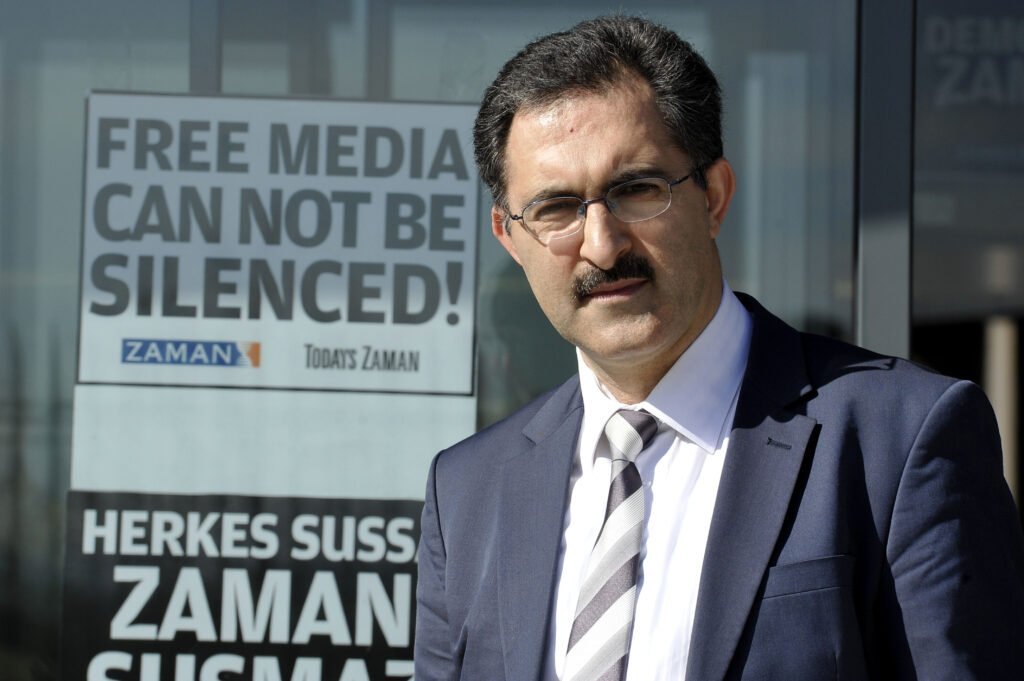 Turkish journalist Abdullah Bozkurt, based in Stockholm, Sweden (March 2016/Wikimedia Commons)
Abdullah Bozkurt, the Sweden-based Turkish investigative journalist, exposed the Turkish ban in a Nordic Monitor article titled, “Turkey’s Secret Blacklist Targets Foreign Critics with Entry Bans and Deportations.”
The Turkish government’s secret database designates the banned foreigners with the code G followed by two-digit numbers, describing the specific reasons for restricting their entry to the country.
“The G-87 restriction code is perhaps the most frequently used designation for foreigners, signifying that an individual labeled with this code is deemed to pose a threat to general public safety. The alleged evidence justifying such classification often originates from intelligence sources or the assessment made by the risk group responsible for screening incoming passengers at airports or at border crossing points,” Bozkurt revealed.
The unsuspecting foreigners become aware of their ban only after they arrive at a Turkish airport. Some of them are refused entry, while others are arrested. The reason for their ban could be as innocent as posting or liking a message on social media. The restrictive measures are not only a violation of the rights of these individuals, but also a violation of the Turkish constitution, as no laws have been passed authorizing such bans.
The information on the foreigners is collected either by the Security General Directorate (Emniyet) and the National Intelligence Organization (MIT) or diplomats at Turkish embassies overseas who monitor those who make critical comments about Erdogan’s government. To make matters worse, some of these foreigners are described as terrorists, without any evidence, simply for criticizing Turkey.
In 2019, former Interior Minister Suleyman Soylu publicly warned: “In Europe, especially in Germany, there are people who attend meetings of terrorist organizations and then come to [the resort cities of] Antalya, Bodrum and Mugla for vacation. We have taken precautions now…Let them come, see if they can enter the [country] easily. It’s not so simple. We will detain them and send them back.”
Ironically, the Erdogan government has facilitated the entry into Turkey of real terrorists belonging to ISIS. Bozkurt mentioned that “in 2012, Erdogan personally assisted a one-time al-Qaeda financier to enter Turkey, despite a ban on him imposed by a U.N. Security Council designation, and secretly met with him in Istanbul and Ankara several times.”
Sometimes, the Turkish government detains a completely innocent foreign visitor for the purpose of extorting from another country political favors or the exchange of prisoners. An example of such Turkish blackmail took place when Pres. Erdogan ordered the arrest of American pastor Andrew Brunson and offered to exchange him with Fethullah Gulen, a Muslim cleric who had escaped to the United States from Turkey after being falsely accused of plotting a coup against Erdogan. Pres. Trump refused to exchange Gulen for Brunson and imposed sanctions on Turkey. After serving two years in jail, pastor Brunson was finally released and allowed to return to the United States.
The extensive list of individuals on the Turkish government’s blacklist has given rise to a lucrative business for certain law firms who specialize in defending the rights of those banned from entry into the country. Sometimes even after the courts have ordered the government to remove the name of an individual from the blacklist, the Turkish government has refused to comply, claiming that its evidence cannot be presented in court because it is considered a state secret.
Bozkurt concluded his article: “The blacklist serves as a tool in the Erdogan government’s toolbox to perpetuate an intimidation campaign against critics, particularly foreign journalists, activists and human rights defenders. Denying entry or enforcing abrupt deportations, the government has used the blacklist to restrict the reporting activities of foreign journalists on the ground. Over the last decade, numerous foreign journalists have been affected by this practice, facing the repercussions of having their names added to the list. It appears that the blacklist will continue to be maintained by the Erdogan government’s repressive rule for the foreseeable future.”
A simple solution to this problem is for foreigners not to travel to Turkey, thus protecting themselves from harassment, deportation or arrest. The refusal to go to Turkey would deliver a major blow to the country, as millions of tourists visit Turkey each year, injecting tens of billions of dollars into the bankrupt Turkish economy.
Author information

Harut Sassounian
California Courier Editor
Harut Sassounian is the publisher of The California Courier, a weekly newspaper based in Glendale, Calif. He is the president of the Armenia Artsakh Fund, a non-profit organization that has donated to Armenia and Artsakh one billion dollars of humanitarian aid, mostly medicines, since 1989 (including its predecessor, the United Armenian Fund). He has been decorated by the presidents of Armenia and Artsakh and the heads of the Armenian Apostolic and Catholic churches. He is also the recipient of the Ellis Island Medal of Honor.
|
The post Turkey bans entry of foreigners who criticize President Erdogan appeared first on The Armenian Weekly.
There’s this book called I Know a Woman. In it, the author Kate Hodges writes about connections between the women who have shaped our world – the friendships, the mentorships and the inspiration linking some of the world’s most fascinating women to one another. She says, “Behind every great woman…is another great woman.” If you have ever interacted with your local Armenian Relief Society (ARS) chapter, you’d know that to be true.
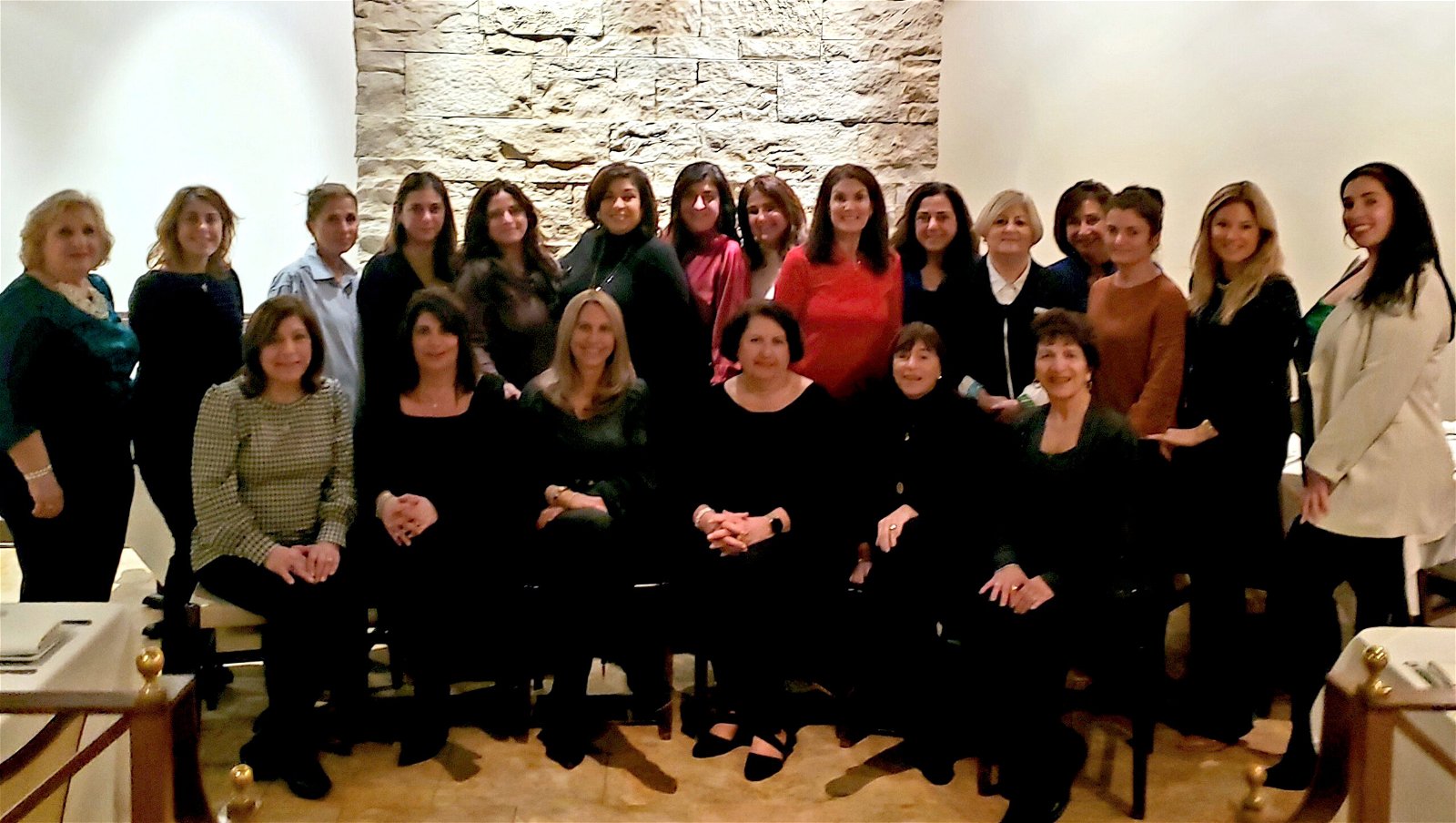 Some of the current members of the ARS Bergen County “Armenouhi” Chapter
This year marks the 100th anniversary of my own chapter – the ARS Bergen County “Armenouhi” Chapter. For a hundred years, these incredible women have met in homes and church basements, crafting creative and lucrative fundraisers, awarding scholarships to impressive young Armenian students and finding ways to support their communities across the world through aid and relief. In 1924, founding member Armenouhi Shirvanian opened up her home in Bogota, New Jersey to a group of friends: Anoush Aslanian, Parantzem Aslanian, Bayzdar Basmadjian, Valentine Garabedian, Haiganoush Hagopian and Aghavni Sarafian. Instead of the usual cheneh, the women had a meaningful goal: seek ways to raise funds and help Armenians in need. And thus, the ARS Bergen County “Armenouhi” Chapter, previously known as the Bogota ARS Chapter, was formed.
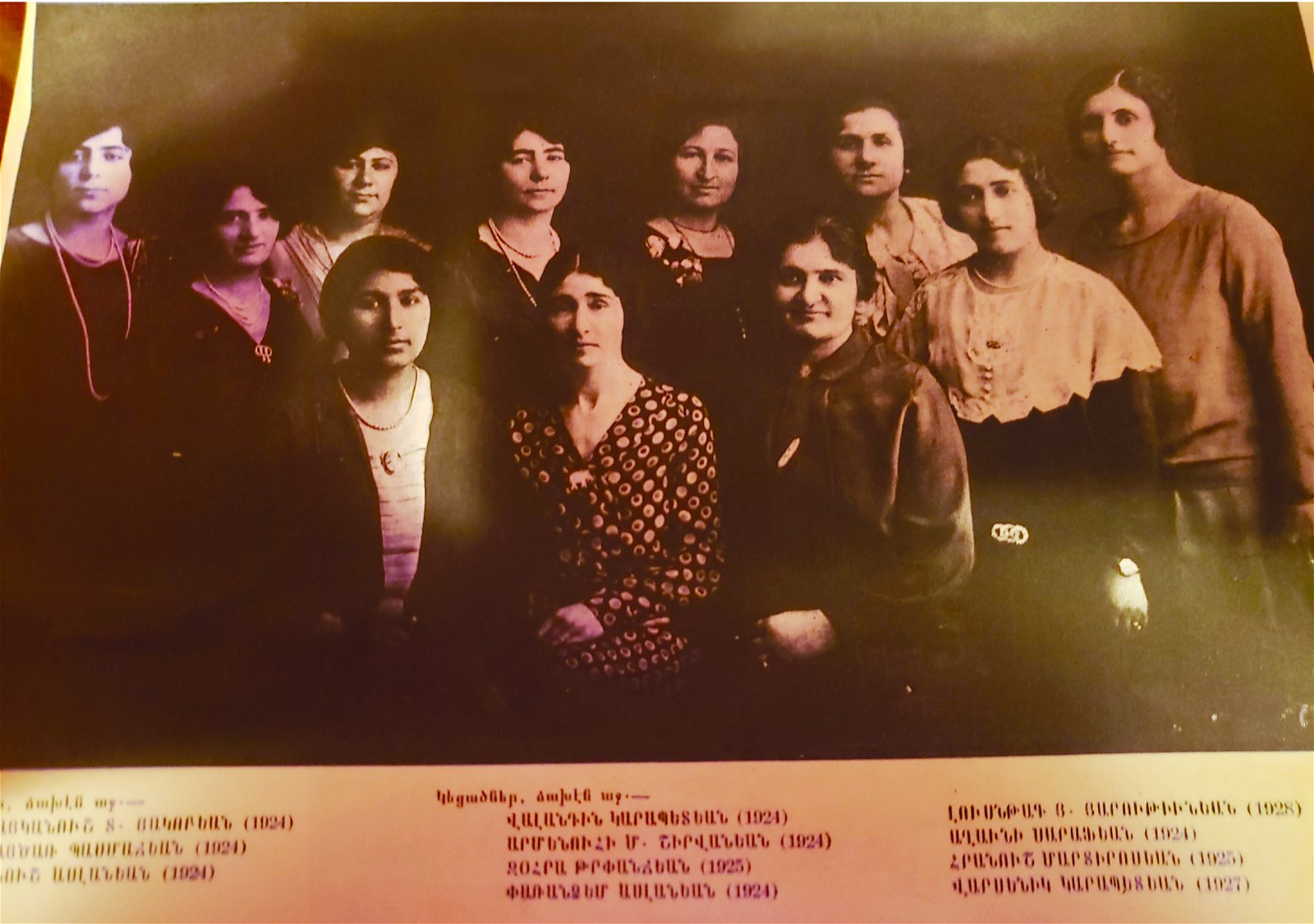 Founding members of the ARS Bergen County “Armenouhi” Chapter, then known as the Bogota Chapter
In the following years, the founders were joined by new members, including Zora Tufanjian, Lousentak Haroutunian, Heranoush Mardirossian and Varsenik Garapedian. Together, they hosted rummage sales and tea parties and sold Christmas cards and calendars to raise money for Armenian soldiers fighting in World War II and to support Armenian schools in Syria and Lebanon.
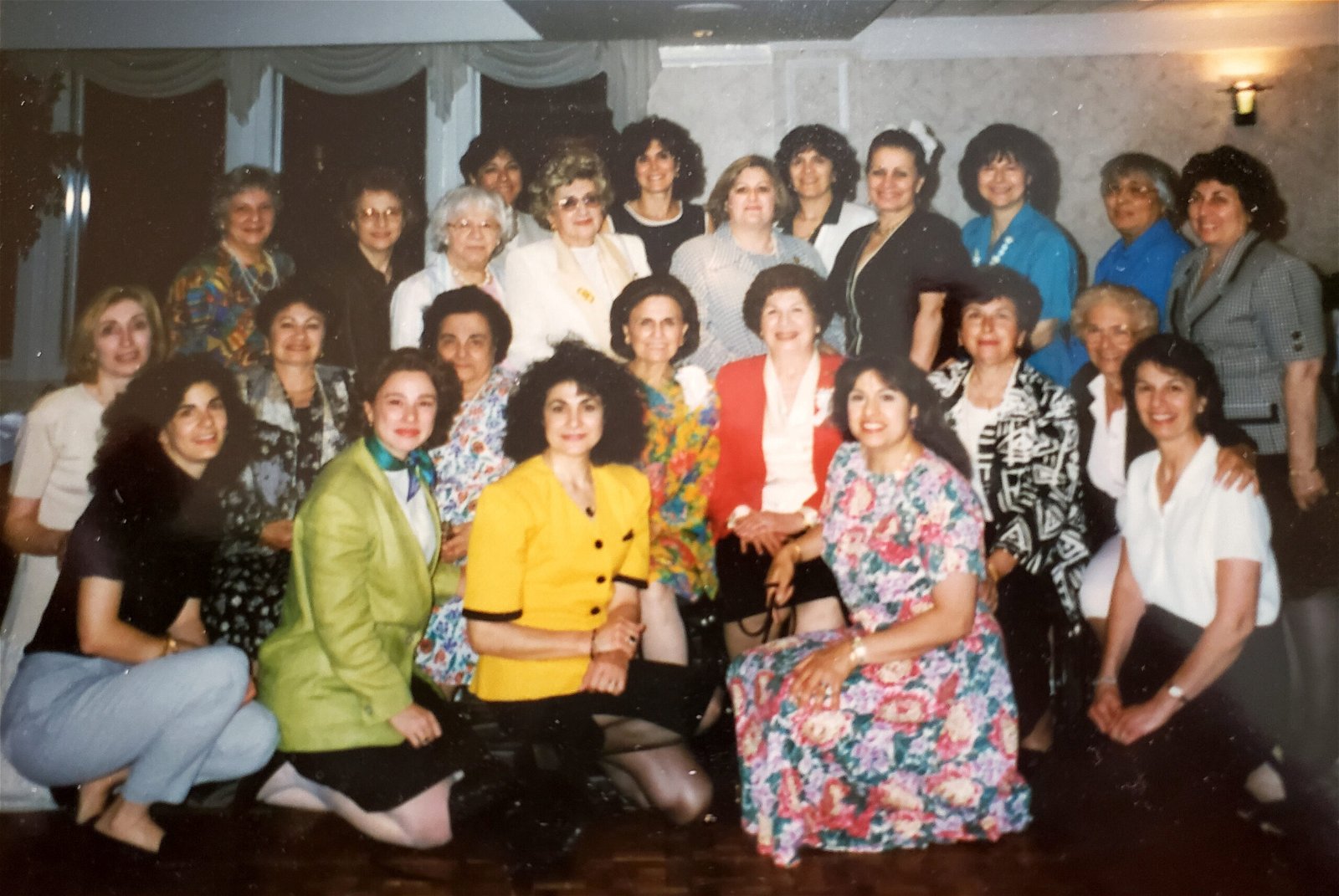 Members of the ARS Bergen County “Armenouhi” Chapter, many of whom are photographed as mother and daughter pairs
Time passed, new members joined, the chapter expanded and changed names, but the spirit always remained the same: incredible women helping others. Today, the ARS Bergen County “Armenouhi” Chapter continues to thrive through its dedication to service. The women, who lovingly call each other ungerouhi, have found increasingly creative ways to fundraise for our most precious causes, including Artsakh relief, donations to AYF Camp Haiastan, the foundation and operation of the Nareg School, and the awarding of over 285 scholarships since its scholarship fund’s inception in 1969.
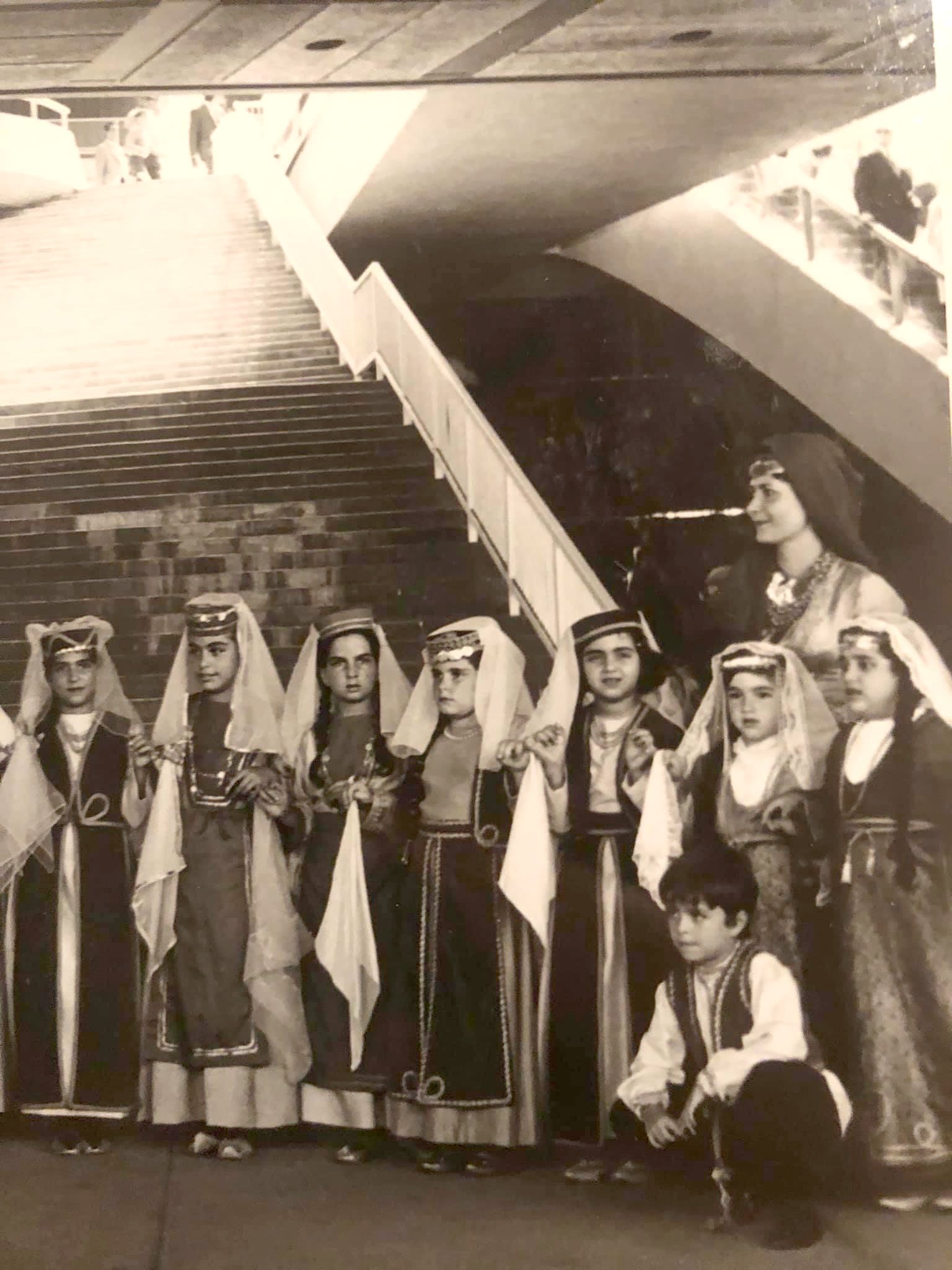 Member Sosy Krikorian Kadian leads a group of dancers at the 1965 World’s Fair
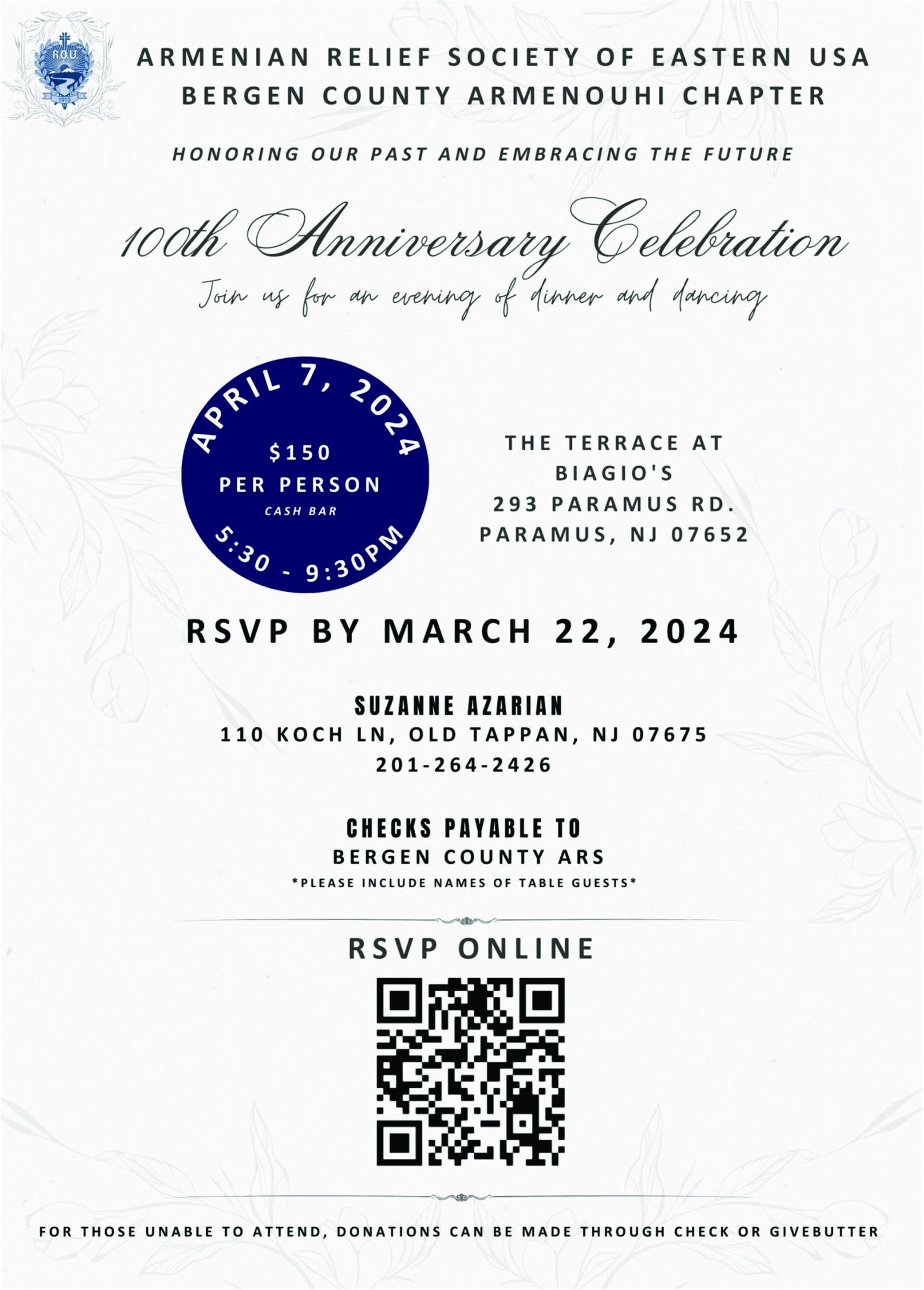
When you’ve been doing such incredible work for so long, you’ve got to celebrate. To commemorate 100 years of service to the Armenian community and to honor the past while embracing the future, the ARS Bergen County “Armenouhi” Chapter will host an evening of dinner and dancing on Sunday, April 7 at The Terrace at Biagio’s. Members Maria Dellakian, Maro Demirdjian, Gladys Fenarjian, Hermine Manoukian, Sally Najarian, Hasmik Simonian and Takoush Tarpinian will be honored for their dedication of 50 years to the ARS, along with members who have since passed. Entertainment will be provided by musician Vicken Makoushian.
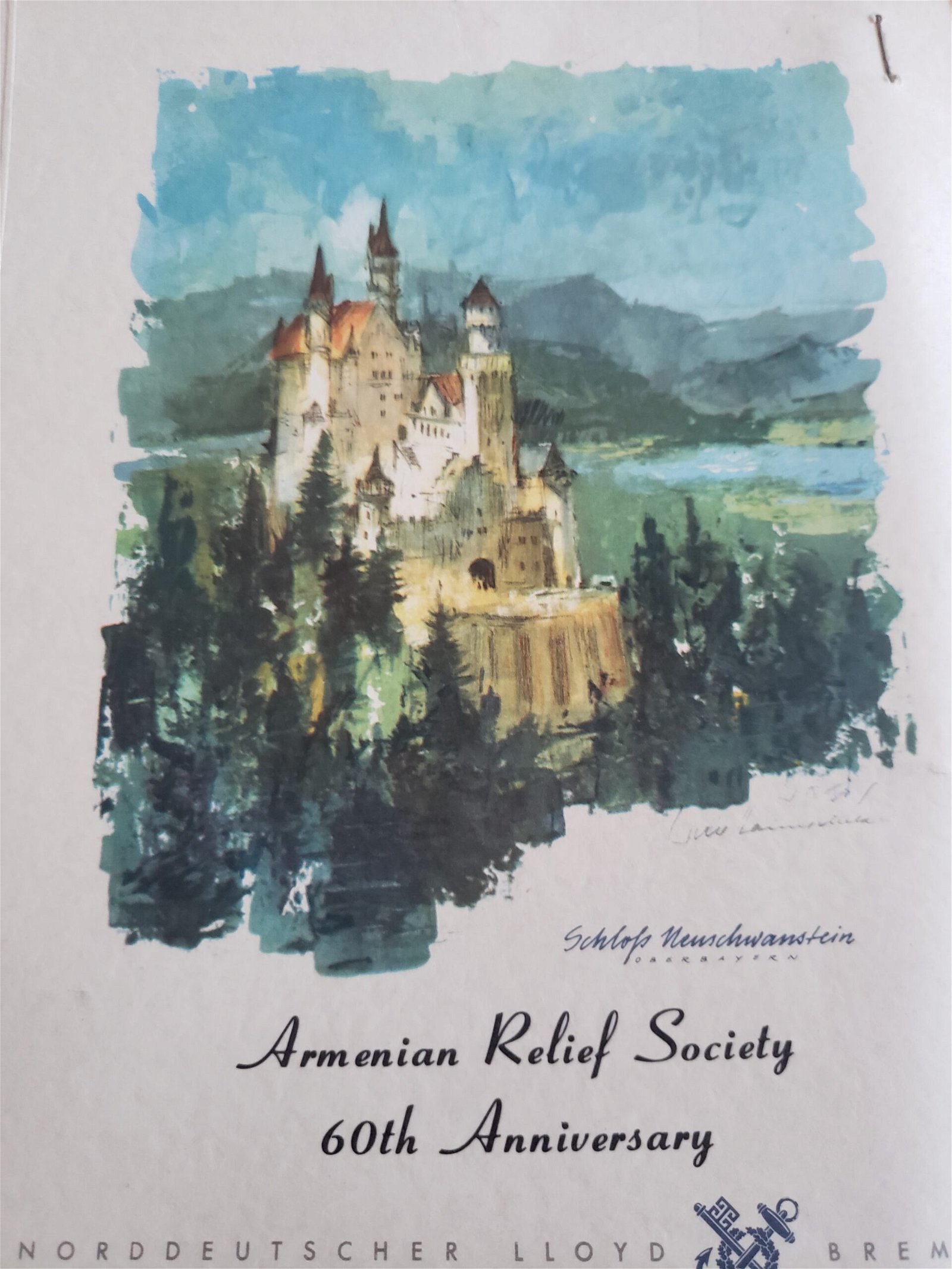 Invitation to ARS Bergen County “Armenouhi” Chapter’s 60th Anniversary Celebration
To reserve your ticket for the event or to make a donation, contact Suzanne Azarian at 201-264-2426 or reserve online through GiveButter. Proceeds, as they always do, will find their way into the hands of the most incredible women who will then selflessly find ways to use the money to better our Armenian communities. The great women of the ARS Bergen County “Armenouhi” Chapter have done so for the last hundred years, and they’ll continue for hundreds more.
Author information

Arev Dinkjian
Arev Dinkjian grew up in an Armenian household in Fort Lee, NJ. She was always surrounded by art, sourced by her musical father and grandfather, Ara and Onnik, or her creative mother Margo. Arev graduated from Providence College with a degree in elementary and special education. She enjoys teaching language arts to her students and takes great pride in instilling an appreciation for literature in her classroom. She is a former member of the New Jersey AYF “Arsen” Chapter and a member of both the Bergen County ARS and the Sts. Vartanantz Ladies’ Guild. She also dedicated many summers to AYF Camp Haiastan, which she says remains her favorite topic to write about.
| Twitter |
The post ARS Bergen County “Armenouhi” Chapter Celebrates 100 Years appeared first on The Armenian Weekly.
Categories
The Region in Brief
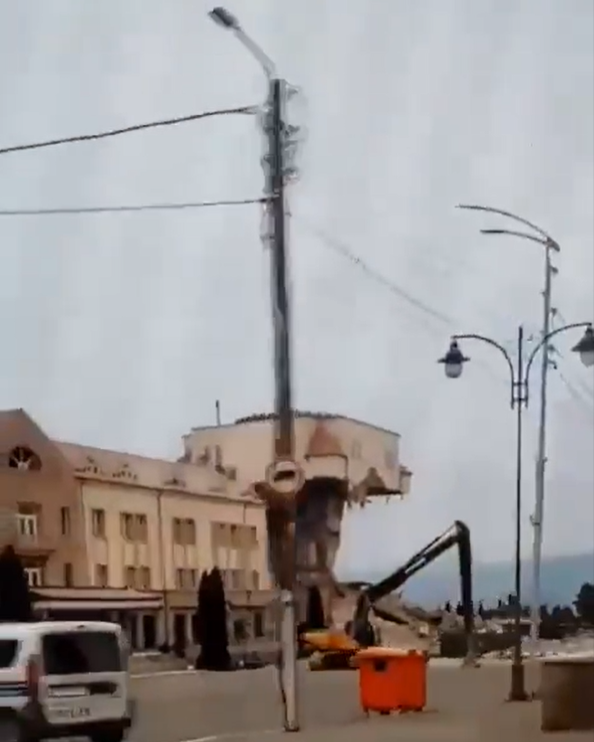 The ruins of the demolished Artsakh National Assembly building (Twitter)
Artsakh
Azerbaijan’s recent demolition of significant buildings in Stepanakert, including the National Assembly building of the Republic of Artsakh, has sparked outrage and condemnation. The parliament building, erected in the 2000s, was more than just a physical structure; it represented the aspirations and identity of the Armenian population in Artsakh. Its demolition is seen as a deliberate attempt by Azerbaijan to erase traces of Armenian heritage and assert control over the region. In addition to the parliament building, the Artsakh Veterans’ Association was also demolished. These acts of destruction not only erase physical landmarks but also undermine cultural expression and deny Armenians’ historic presence in the region.
Azerbaijan
The recent establishment of the “West Azerbaijan Research Center” at Azerbaijan State Pedagogical University has sparked outrage amongst Armenians across the globe. Analysts argue that this move represents a grave threat to Armenia’s sovereignty and territorial integrity. A map at the center showcases Armenian territories with Azerbaijani names and labels modern day Armenia as “Western Azerbaijan.” The deliberate use of Azerbaijani names on the map of Armenian states is seen as an attempt to rewrite history and deny Armenia’s ownership over these territories. This revisionist approach to geography poses a direct challenge to Armenia’s sovereignty and territorial integrity.
Russia
Russian Foreign Minister Sergey Lavrov and his Armenian counterpart Ararat Mirzoyan held a telephone conversation on Tuesday, March 5 to discuss mutual cooperation in international organizations. The top officials “discussed current issues of bilateral and regional cooperation, including the process of normalizing Armenian-Azerbaijani relations, as well as cooperation in the field of international associations in the region,” according to a statement from the Russian Foreign Ministry. The call came three days after Lavrov threatened that Russia would “reconsider” its relationship with Armenia if the latter continues to align itself with the West.
Russian Prime Minister Mikhail Mishustin is on a two-day working visit to Azerbaijan, where discussions will center on enhancing Russian-Azerbaijani trade and economic cooperation. Talks will involve President Ilham Aliyev and address energy, transport, industry and culture. Additionally, the agenda includes addressing agreements between Russia, Azerbaijan and Armenia to normalize relations and unblock communication corridors. Mishustin’s visit comes amid regional tensions, with considerations for regional security and stability likely to be on the table.
Turkey
The Minister of Defense of Azerbaijan, Zakir Hasanov, visited Turkey today for an official visit to discuss bilateral security cooperation. During the visit, Hasanov anticipated a series of meetings, including visits to Turkey’s military facilities.
Author information

Hoory Minoyan
Hoory Minoyan was an active member of the Armenian community in Los Angeles until she moved to Armenia prior to the 44-day war. She graduated with a master’s in International Affairs from Boston University, where she was also the recipient of the William R. Keylor Travel Grant. The research and interviews she conducted while in Armenia later became the foundation of her Master’s thesis, “Shaping Identity Through Conflict: The Armenian Experience.” Hoory continues to follow her passion for research and writing by contributing to the Armenian Weekly.
|
The post The Region in Brief appeared first on The Armenian Weekly.
This article is the conclusion of her four-part series, exclusively for the Armenian Weekly, on the making of Encounters and Convergences: A Book of Ideas and Art by Seta B. Dadoyan.
Hard humanism ‒ After completing 10 drawings, I was tempted by the suggestions of animal and human forms in rock formations. The most primitive form of the head of a prehistoric being was symbolic of the soul of matter. It was a rock taking on a primeval life-force, a spirit and emotions [“Primeval”]. The concept took a spectacular expression and dramatization in the “Spirit of matter,” through a landscape of dry roots, branches, precipitating rocks and the emergence of a struggling horned creature on a hillside.
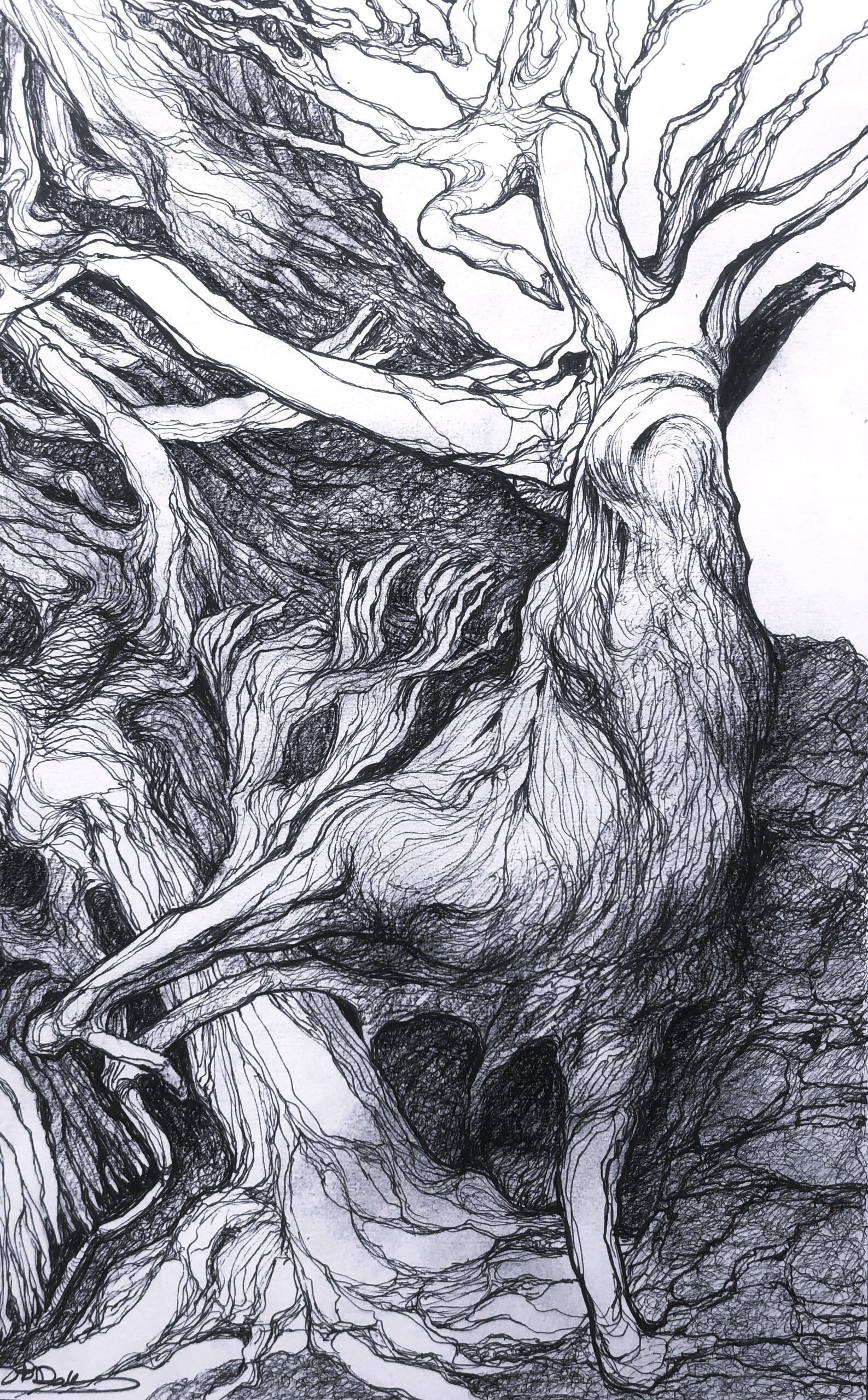 Spirit of matter, New York, 2022. Mixed media, 21×33 cm
It is about how one becomes what one is out of sheer existence.
What I call hard humanism became manifest in the rock formation that evolved into “The thinker.” There is almost a complete head and eyes, squeezed between rocks but still focused and thinking, the most sublime of all human activities. I could think of no other means to describe the condition of someone in extreme encounters. It was being “human all too human.” This Nietzschean phrase is most expressive of human vulnerability and of the convergence of the act of thought and understanding, both in art and writing. It is about how one becomes what one is out of sheer existence. Beyond the various religious and cultural approaches to death and the dead, I see them as parts of the whole and always in the present time.
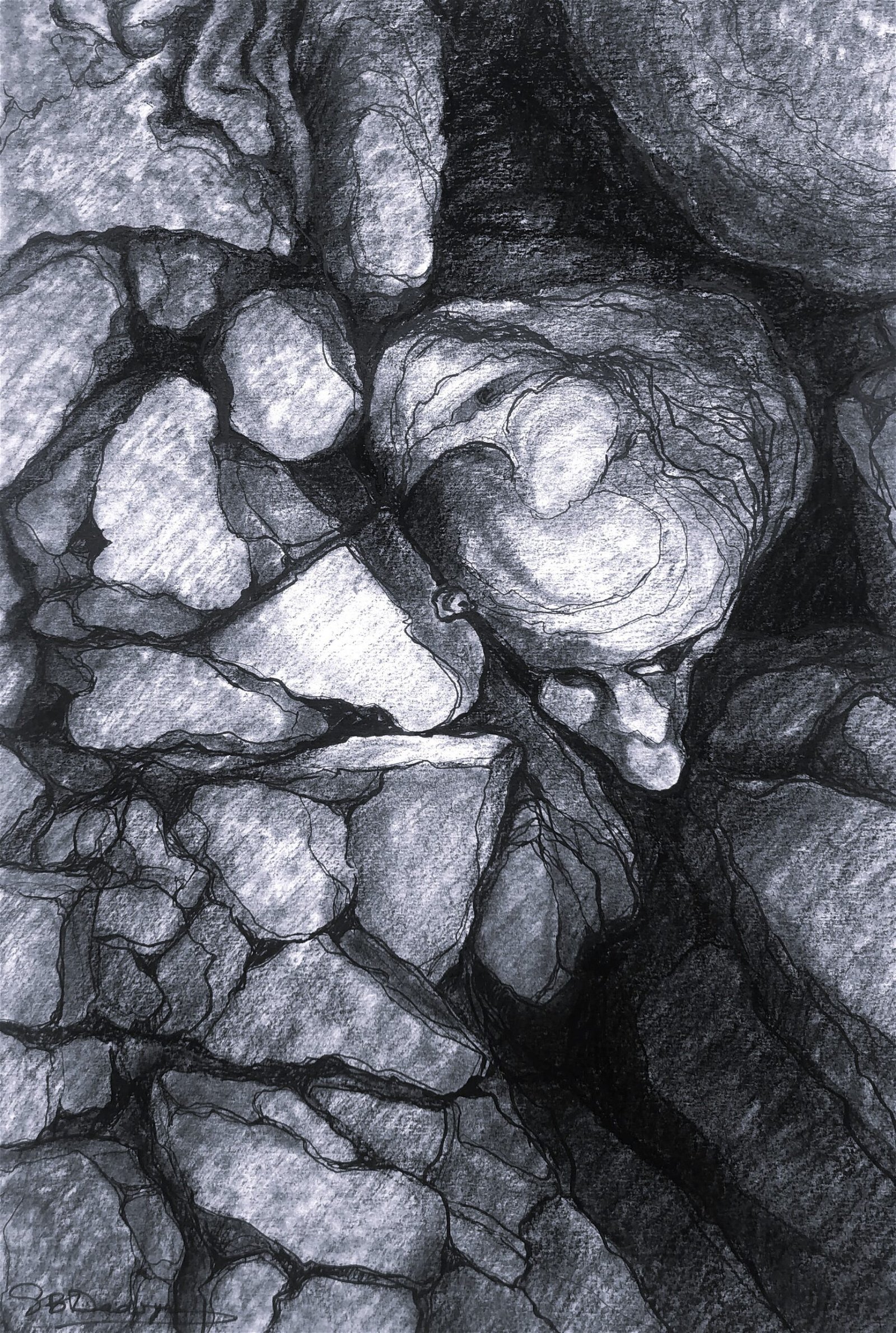 The thinker, New York, 2022. Mixed media, 21.5×32.5 cm
Of all the trees, I see the banyan tree as a tree with spirit, or the most expressive of the spirit of matter in perpetual motion. The unique forms and movements of the branches swirling, twisting, climbing and penetrating walls and pavements explore the endless potential of the life force. The banyan trees are also expressive of thought processes, events, experiences, encounters and convergences. As a student at American University of Beirut, and later a professor, I often sat by the banyan tree in front of the Assembly Hall with amazement, thinking of the many myths about it. Finally, in 1991 I made a drawing. While most of my memories of this institution and the people are mixed, the banyan tree stands as a “portrait” of a friendly place where I spent almost a quarter century [“Banyan tree of AUB ‒ A portrait”]. After over three decades I went back to the banyan tree and made seven more. Each drawing has its own story and world, and viewers will soon make theirs. The experience is as visual as it is intellectual and spiritual for both the maker and the viewer [illustrations #79 to #85].
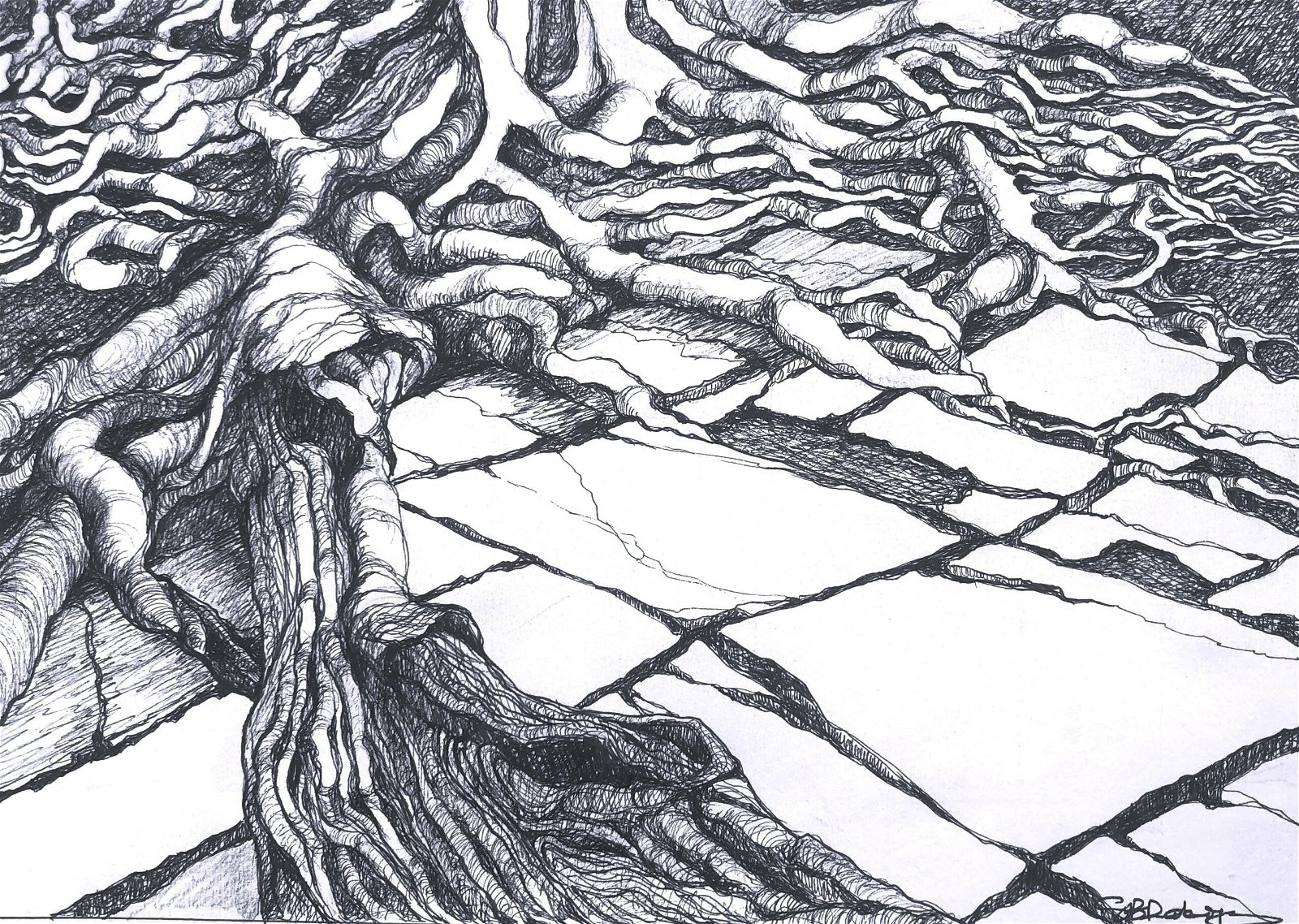 Banyan tree 2, New York, 2022. mixed media, 30×21 cm
In my readings of the aesthetics of Heidegger and Gadamer, I was intrigued by the concepts of “concealment” and “unconcealment.” Both are about the truth-content of artwork. For Heidegger, artwork is the unfolding, the disclosure of a truth, or worlds of truth. For Gadamer, “Truth is an event or process in and through which both the things of the world and what is said about them come to be revealed,” and “converge,” in my term.
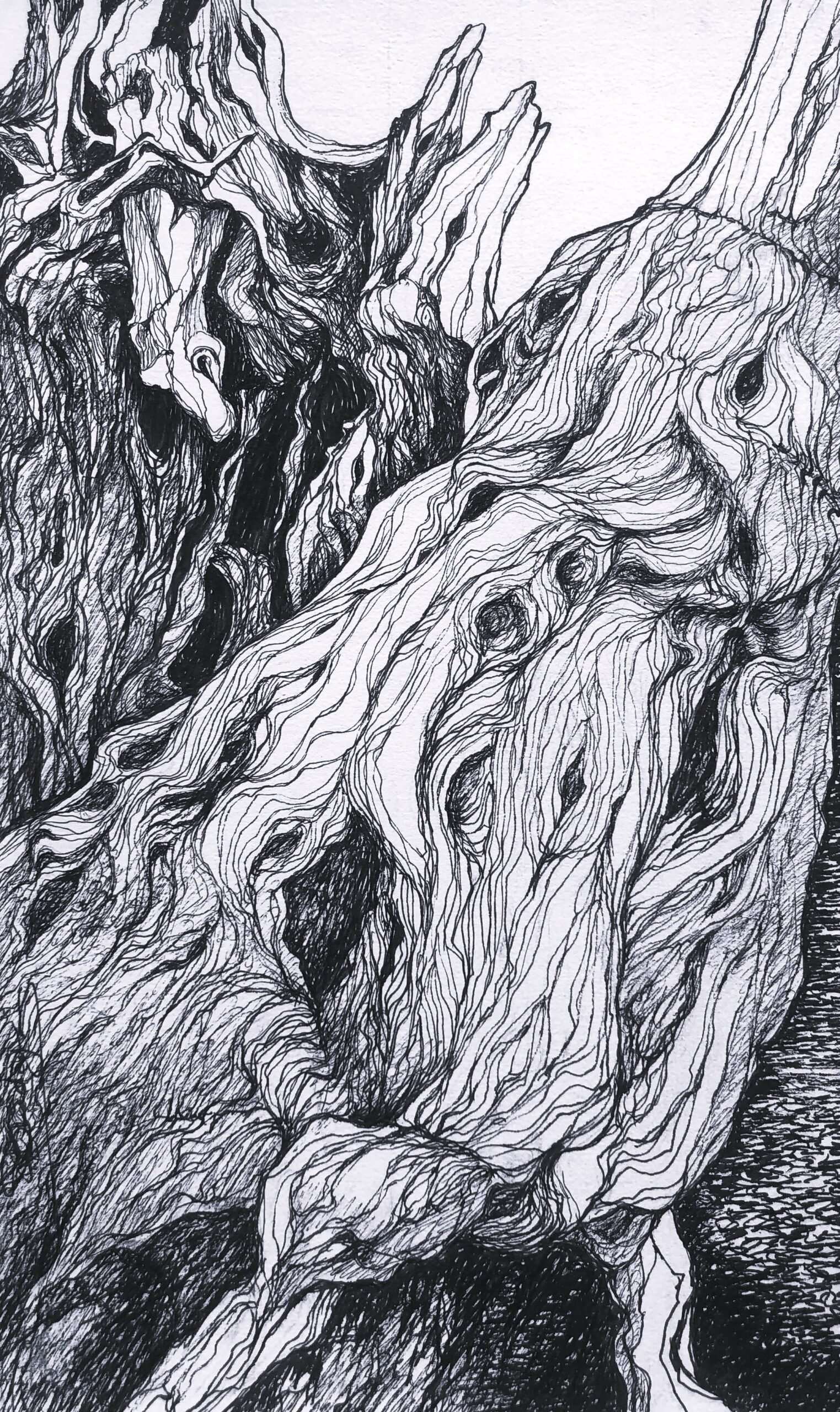 Concealment, New York, 2022. Mixed media, 20×32 cm
In “Concealment,” the dry roots and trunks “conceal” several crocodile-shape beasts of different sizes, with a central one in an upward diagonal thrust, frozen yet with open eyes as the soul of matter. The “Enterrement” (burial, #89) marks an extreme action of concealment. A conclusive work, of sorts, “The unconcealment” is inspired by a positive reversal. The view is from inside of a large cave, where water from a waterfall from a hill outside crashes in and turns into a calm river. On the lower right side, a dark rock-figure, with its back to the viewer, witnesses the “event.” The cave is a moment and a space of disclosure.
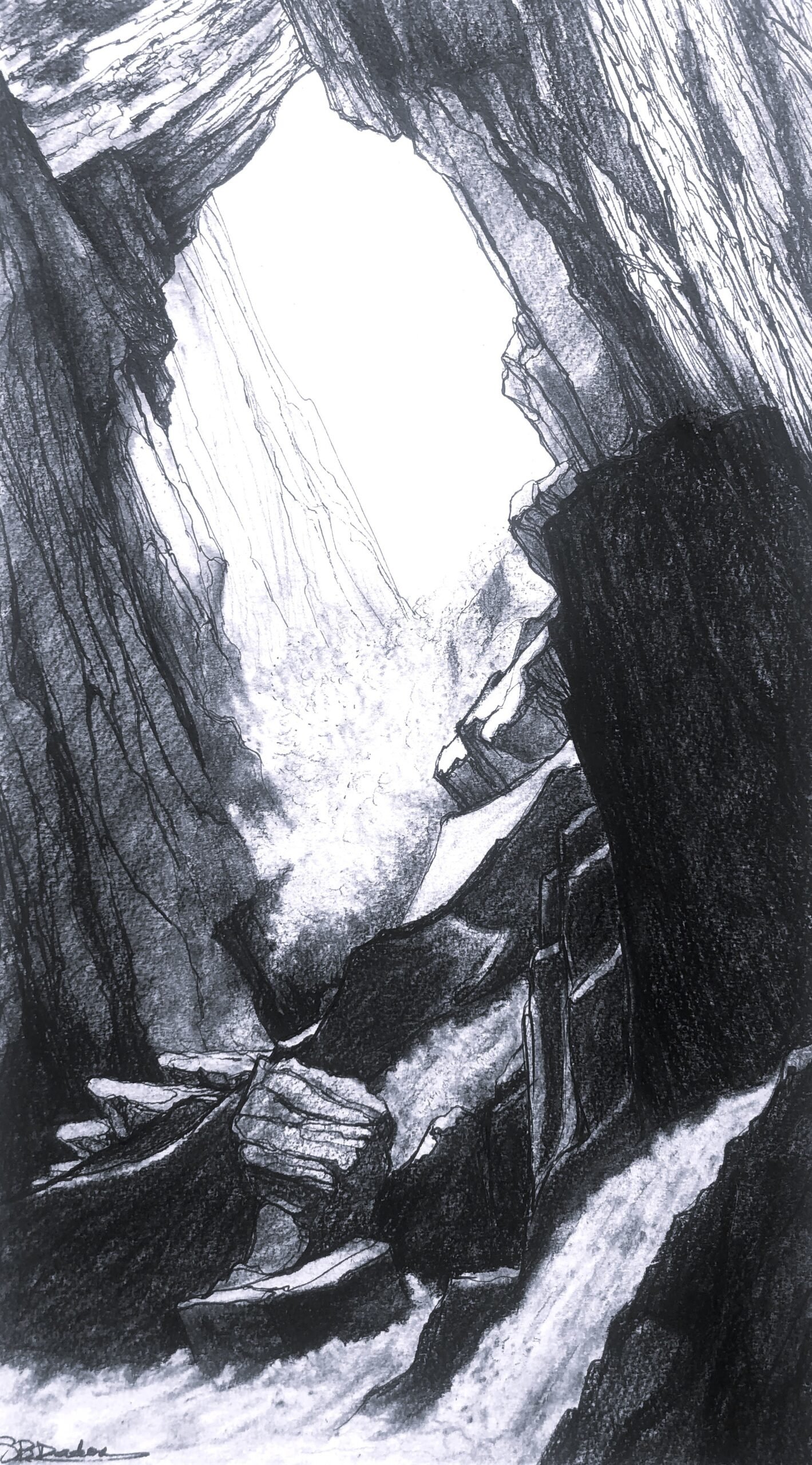 The unconcealment, New York, 2022. Mixed media, 18.5×34 cm
While I was preparing the cover design of my book, in the early morning of February 6, a massive 7.8 magnitude earthquake – probably one of the biggest ever in the region ‒ struck southeastern Turkey and northwestern Syria beyond the gulf of Alexandretta on the Mediterranean. Among many other cities, my father’s birthplace Ayntab/Gaziantep, very close to the epicenter, was mostly destroyed, my birthplace Aleppo was seriously damaged, and what was Armenian Cilicia, from where most survivors of the Genocide came, was devastated.
Homes turned into graves. Over four decades earlier, in 1982, the ‘Awkar building at Sana’eh, very near our home in Beirut, turned into rubble before our eyes by an Israeli vacuum bomb, as it was said, and became a grave for its inhabitants. Two years ago, on August 4, 2020, a near-nuclear explosion of a large amount of ammonium nitrate, unsafely and illegally stored at the Port of Beirut, exploded. Homes turned into graves, again. The motif of home/grave spontaneously inspired two sketches, “Resurrection,” perhaps of my “Thinker,” and “Homes and graves.” The episode also marked my return to the human figure.
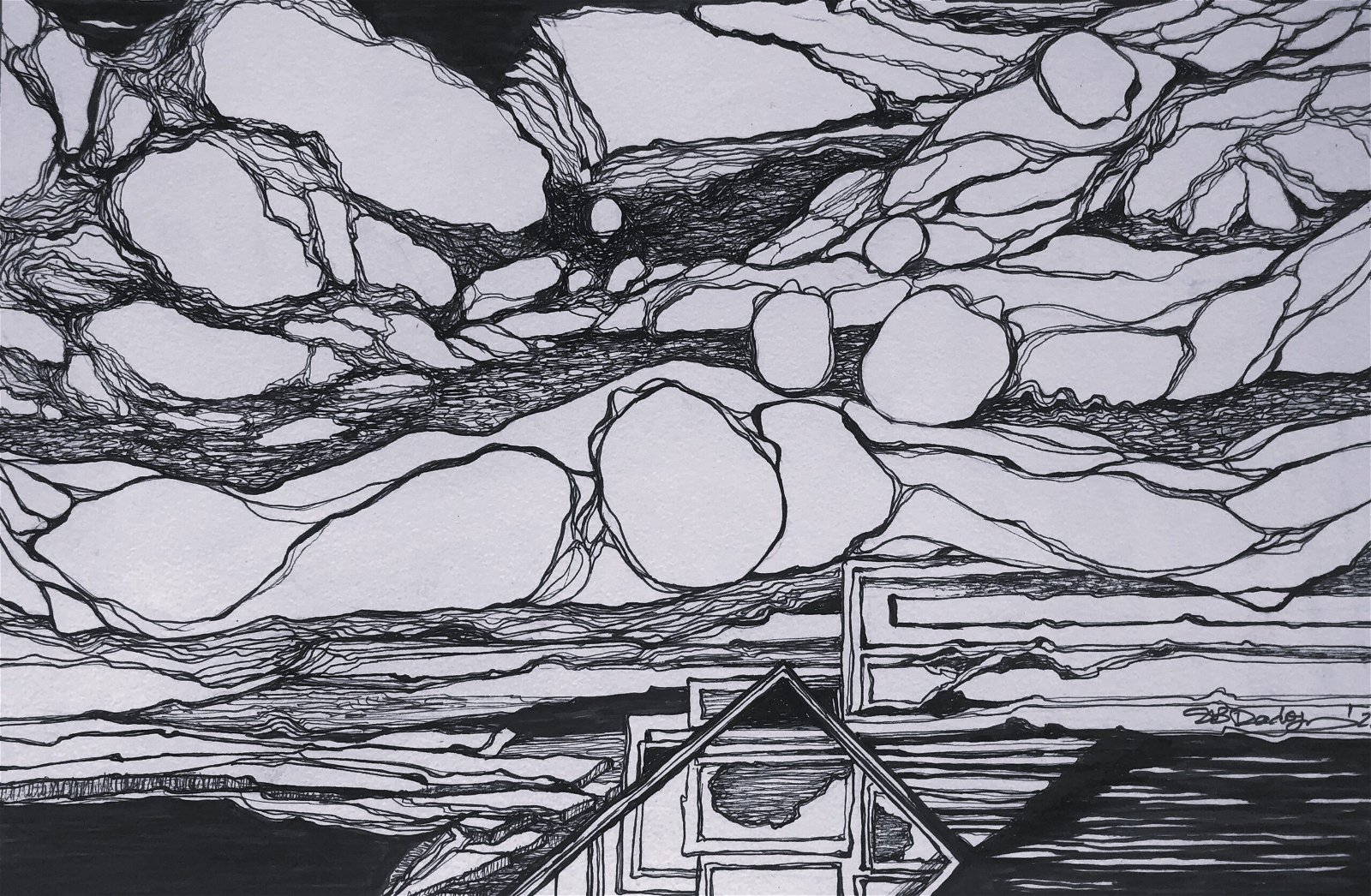 Homes and graves, New York, Feb 2023. Ink, 20×30 cm
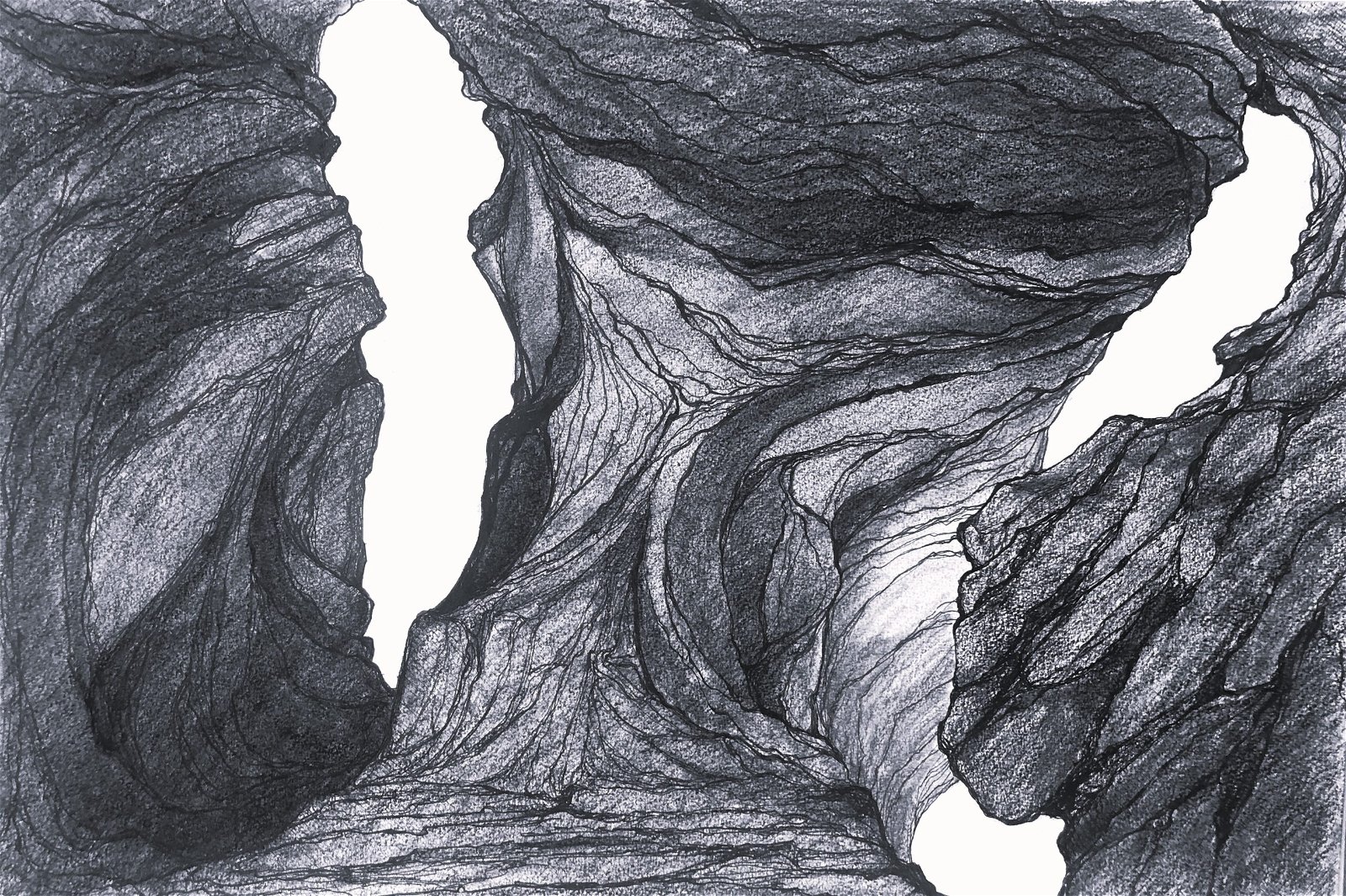 Encounters and convergences, New York, Feb 2023. Mixed media, 30.5×45.5 cm (1)
In conclusion
The sequence of a dozen books over four decades and a selection of 90 artworks divided into two main phases, 1975-1991 and 2021-2022, reveal a pattern that sums up my scholarship and art of mind, spirit and vision. I have devoted more than twice as much time to my scholarship than to my art. Wartime Lebanon was a unique environment for encounters with chaos, strife and human suffering. My American-Armenian experience was another phase and produced its reflections. Both my scholarship and art were ways of encountering and converging in writing and drawing. If Wartime Lebanon triggered my art, my condition as an Armenian native of the Islamic World put me on a long and difficult path of research into unbroken grounds.
This pattern of unequal phases of writing and art is not common, because research is a most demanding dedication. The accumulation of over 50 wartime drawings in a relatively short time establishes the legitimacy of the two principles of my aesthetic and scholarship: encounters and convergences. Encounters led to the creation of contexts or “horizons” to understand and come to terms with my circumstances, through scholarship or art; convergences happened both in the artwork and scholarship. This is what I mean by my situatedness and the criteria for the truth-content of all my works, in writing and images. The objective of both activities was not capturing immutable truths or eternal beauties – there are no such things. All my works are statements that suggest deeper understandings for a more human and better world.
Finally, a cross-disciplinary look at my last drawings and my recent literature will immediately reveal their unity, even in style and the aesthetic of writing and drawing. The banyan trees penetrating the forest and breaking through brick walls, spiraling rock-bridges, steep stairs and rocks sprouting spirits are essentially images of confrontations and convergences, both in drawing and writing, about my experiences, and the historical experiences of an ancient and a small people in perpetual self-creation.
Author information

Dr. Seta B. Dadoyan
Dr. Seta B. Dadoyan (née Satenik Barsoumian) is a prominent Armenian scholar and painter and a Doctor of Philosophical Sciences in Philosophy. In addition to her research and publications on Western Armenian culture, her novel and extensive research focuses on the medieval and modern Armenian political, cultural and intellectual experiences in their interactive aspects within the Near Eastern world. She is considered a trailblazer and leading specialist in a novel discipline of Islamic-Armenian interactive history, initiated by her and to which she has dedicated six of her 12 volumes and many groundbreaking studies. She was professor of cultural studies, philosophy and art history at the American University of Beirut. After moving to the United States in 2005, she was visiting professor of Armenian and Near Eastern Studies at Columbia University, St. Nersess Seminary, the University of Chicago and the State University of Yerevan. For her exceptional scholarly contributions to Armenian studies and intellectual culture, in September 2021 the Society of Armenian Studies honored her with the “Lifetime Achievement Award.” In September 2015, she was granted the “St. Mesrop Mashtots‘” Medal, and in January 1999, the highest “Medal and Diploma of David Invictus/Anhaght” of the Philosophical Academy of the National Academy of Sciences of Armenia. She has authored 11 and co-authored and edited two volumes, as well as published over 60 scholarly papers in academic journals.
|
The post Banyan trees and “an ancient people in perpetual self-creation” appeared first on The Armenian Weekly.

