

Day: February 26, 2024
Azerbaijan Army held a series of events on the occasion of the 32nd anniversary of the Khojaly genocide – VIDEO
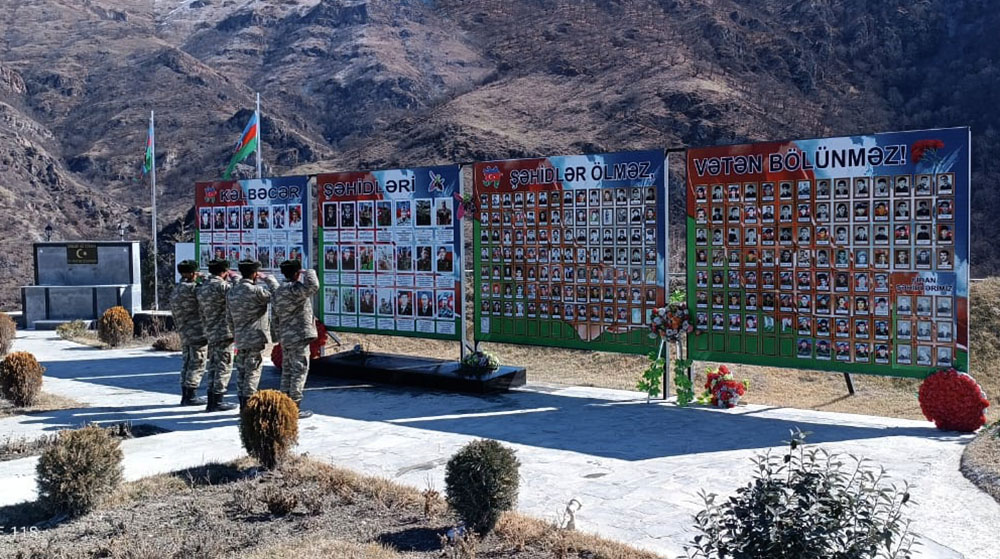
On the occasion of the 32nd anniversary of the Khojaly genocide, a series of events were held in the types of troops, Army Corps, formations, military units and special educational institutions of the Azerbaijan Army, as well as in the diplomatic representations of the Republic of Azerbaijan in foreign countries.
At the remembrance ceremonies, the memory of National Leader Heydar Aliyev and Shehids (Martyrs), who sacrificed their lives for the sovereignty, independence and territorial integrity of Azerbaijan, as well as the victims of the Khojaly genocide was honored with observing a minute of silence. The National Anthem of the Republic of Azerbaijan was accompanied by the military orchestra.
The speakers highlighted the destruction of the Khojaly city on the night of February 25-26, 1992 by Armenian armed detachments with the participation of the 366th regiment of the former Soviet army stationed in the Khankendi city. It was noted that 613 people, including 106 women, 63 children, and 70 elderly, were killed with cruelty as a result of the next massacre committed by Armenian aggressors against Azerbaijani people, 1275 civilians were captured, and the destiny of 150 people is still unknown.
Victory gained under the command of the Victorious Supreme Commander-in-Chief in the 44-day Patriotic War in response to the provocations and military aggression of Armenia, and the anti-terror operation conducted by the Azerbaijan Army, were also mentioned at the ceremonies.
The activities held by the President of the Republic of Azerbaijan, Supreme Commander-in-Chief of the Armed Forces Mr. Ilham Aliyev, as well as the Heydar Aliyev Foundation to introduce the Khojaly genocide to the world, were emphasized at the events.
Literary and artistic compositions, photo exhibitions and videos made by the Army Ideological and Cultural Center named after Hazi Aslanov were demonstrated, as well as the documentary film “13” and other films on the topic of Khojaly’s losses were shown at the commemorative events.
Servicemen also visited the monuments to the Khojaly genocide, gave lectures on this topic during socio-political training classes and met with witnesses of the tragedy.
Azerbaijan Army held a series of events on the occasion of the 32nd anniversary of the Khojaly genocide – VIDEO
#Azerbaijan‘s President Aliyev states “..[Armenia] should understand that the only way is to accept all of Azerbaijan’s conditions..” during a speech visiting #NagornoKarabakh‘s Kojali area today.
Source: https://t.co/DhoQGKb3kx pic.twitter.com/FJwWIDo5Q4
— Nagorno Karabakh Observer (@NKobserver) February 26, 2024
EU Ambassador to Georgia Paweł Herczyński, commenting with journalists at the February 26 event “Fighting for Freedom, Defending Europe – War in Ukraine and the Role of its Partners in Defending Ukraine & Euro-Atlantic Security”, spoke, among other issues, about Georgia’s foreign policy alignment with the EU’s Common Foreign and Security Policy (CFSP), stressing that “for the moment, the alignment rate is rather low” compared to that of the other countries seeking EU membership.
CFSP Alignment: According to Ambassador Herczyński, the EU expects “all candidate countries, including Georgia, to have this [CFSP] alignment rate as close to one hundred percent as possible.” While noting that there are “a lot of sensitivities” in the Georgian case, referring to the geopolitical situation and the occupied territories, Ambassador Herczyński stressed that the EU expects a “gradual increase” in the alignment rate, which he said has already been increasing “since the last several months”. According to him, the EU is working with the Georgian authorities to ensure that the rate of CFSP alignment increases so that once Georgia joins the Union, its foreign policy will be “identical” to that of the EU. He also noted that this low rate is problematic, because it means that if Georgia were in the EU, approximately half of the CFSP statements by EU would not have been adopted due to the lack of consensus.
Disinformation: Asked to comment on disinformation and foreign information manipulation in Georgia, Ambassador Herczyński emphasized that as elections approach in both Georgia and the European Union, “for sure, this information targeting the European Union [and the West] will increase.”
Elections: The EU Ambassador declined to comment specifically on the Georgian elections, stressing that the EU cannot support any particular political party in Georgia, although he did emphasize that the EU clearly supports free and fair elections, as well as a free and fair electoral process, so that each political party can present its program and is be able to fight for votes, and the future parliament can represent the diversity of different opinions of the Georgian people.
Nine Steps, Accession Negotiations: Asked whether Georgia’s failure to meet any of the European Commission’s nine steps will affect the country’s European path, i.e. its advancement to the next stage of opening EU accession negotiations, Ambassador Herczyński said that the EU is currently starting preparations for the next enlargement report. Ambassador Herczyński stated that the EU will consult with “practically everyone”, noting that consultations with civil society will begin next week. He also emphasized that the EU will “rely very heavily on the input of the Georgian Government”. Finally, Ambassador Herczyński encouraged all Georgian stakeholders involved in the implementation of the nine conditions to “work tirelessly”. He urged the government to be inclusive and the opposition to be constructive in working together to fulfill the conditions.
Unity: The EU Ambassador underlined the importance of unity of various players in Georgia for the common goal of the country to join the EU: “My dream is to see unity among not only Georgian population, but among Georgia’s political elites.” He expressed his wish for the government to be inclusive, the opposition to be constructive and civil society to be meaningfully involved in the processes. “This is a collective effort, a monumental task, this is a historic moment, and this requires the unity of everyone working in the same direction.”
De-oligarchization: Asked about the Anti-Corruption Bureau and the Venice Commission’s recommendations in this regard, the EU Ambassador first mentioned de-oligarchization, saying that it essentially means “creating a system that would make Georgian political life resilient to the different pressures coming from the influential, rich businessmen,” adding that the Anti-Corruption Bureau plays one of the key elements in this regard and that the EU hopes that it will be “significantly strengthened.”
Also Read