
Day: February 26, 2024
#Azerbaijan could use the #Berlin meeting as an opportunity for a military attack against #Armenia. Today, President Ilham #Aliyev issued an ultimatum to Armenia, declaring that “The only way for Armenia is to accept all conditions of Azerbaijan. Armenia, which is seeking new… pic.twitter.com/JC2IJZhGji
— Robert Ananyan (@robananyan) February 26, 2024
vienna — Iran’s stock of uranium enriched to near weapons-grade has shrunk, bringing it below the theoretical threshold at which it could produce three atom bombs, but problems with inspectors persist, reports by the U.N. nuclear watchdog said Monday.
Although the International Atomic Energy Agency has said Iran’s enrichment of uranium to up to 60% continues apace, Iran diluted more than it produced in the past three months, one of the two confidential quarterly reports to member states said.
The IAEA reports did not give a reason for the so-called “down-blending” of 31.8 kg of material enriched to up to 60%, after which the stock fell by an estimated 6.8 kg since the last such quarterly reports to 121.5 kg.
“At the beginning of the year they decided to do a down-blending. … A couple of weeks later they did another down-blending, this time with a smaller amount,” a senior diplomat said when asked about the reports seen by Reuters, adding that it was not clear why Iran had done it.
“Maybe they don’t want to increase tensions [with the West]. Maybe they have an agreement with somebody. We don’t know.”
At the end of last year Iran had enough uranium enriched to up to 60% purity — close to the roughly 90% of weapons-grade — to potentially, if enriched further, produce three nuclear bombs, according to the IAEA’s theoretical definition.
It also has stocks of uranium enriched to lower levels with which it could, if it wanted to, produce enough fuel for more bombs. Iran denies having any such intention. Western powers say there is no civilian justification for such high enrichment.
Iran slowed its enrichment of uranium to up to 60% purity last year in what diplomats said was probably the result of secret talks between Washington and Tehran that led to the release of U.S. citizens held in Iran.
In November, however, Iran ended that slowdown and returned to its pre-slowdown production rate of around 9 kg a month from the slowdown rate of 3 kg, an IAEA report in December showed.
IAEA chief Rafael Grossi told Reuters last week the rate had slowed slightly since the end of last year to around 7 kg a month. The senior diplomat said, however, that Grossi was using an average over months and the current rate was 9 kg a month.
The secret talks have ended and there is little hope of reviving them with the Israel-Hamas conflict raging, diplomats have said. There is also little sign the United States and its allies are prepared to take action like pushing for a resolution against Iran at the IAEA’s Board of Governors meeting next week.
The reports said Iran has failed to provide the necessary cooperation on various pressing issues, such as the so-called de-designation of some inspectors that has drastically reduced the expertise on uranium enrichment the IAEA can deploy in Iran.
“The Director General [Grossi] deeply regrets that Iran has yet to reverse its decision to withdraw the designations for these inspectors. This is essential to fully allow the Agency to conduct its verification activities in Iran effectively,” one of the reports said.
vienna — Iran’s stock of uranium enriched to near weapons-grade has shrunk, bringing it below the theoretical threshold at which it could produce three atom bombs, but problems with inspectors persist, reports by the U.N. nuclear watchdog said Monday.
Although the International Atomic Energy Agency has said Iran’s enrichment of uranium to up to 60% continues apace, Iran diluted more than it produced in the past three months, one of the two confidential quarterly reports to member states said.
The IAEA reports did not give a reason for the so-called “down-blending” of 31.8 kg of material enriched to up to 60%, after which the stock fell by an estimated 6.8 kg since the last such quarterly reports to 121.5 kg.
“At the beginning of the year they decided to do a down-blending. … A couple of weeks later they did another down-blending, this time with a smaller amount,” a senior diplomat said when asked about the reports seen by Reuters, adding that it was not clear why Iran had done it.
“Maybe they don’t want to increase tensions [with the West]. Maybe they have an agreement with somebody. We don’t know.”
At the end of last year Iran had enough uranium enriched to up to 60% purity — close to the roughly 90% of weapons-grade — to potentially, if enriched further, produce three nuclear bombs, according to the IAEA’s theoretical definition.
It also has stocks of uranium enriched to lower levels with which it could, if it wanted to, produce enough fuel for more bombs. Iran denies having any such intention. Western powers say there is no civilian justification for such high enrichment.
Iran slowed its enrichment of uranium to up to 60% purity last year in what diplomats said was probably the result of secret talks between Washington and Tehran that led to the release of U.S. citizens held in Iran.
In November, however, Iran ended that slowdown and returned to its pre-slowdown production rate of around 9 kg a month from the slowdown rate of 3 kg, an IAEA report in December showed.
IAEA chief Rafael Grossi told Reuters last week the rate had slowed slightly since the end of last year to around 7 kg a month. The senior diplomat said, however, that Grossi was using an average over months and the current rate was 9 kg a month.
The secret talks have ended and there is little hope of reviving them with the Israel-Hamas conflict raging, diplomats have said. There is also little sign the United States and its allies are prepared to take action like pushing for a resolution against Iran at the IAEA’s Board of Governors meeting next week.
The reports said Iran has failed to provide the necessary cooperation on various pressing issues, such as the so-called de-designation of some inspectors that has drastically reduced the expertise on uranium enrichment the IAEA can deploy in Iran.
“The Director General [Grossi] deeply regrets that Iran has yet to reverse its decision to withdraw the designations for these inspectors. This is essential to fully allow the Agency to conduct its verification activities in Iran effectively,” one of the reports said.
This is one of the abandoned sanatoriums located in the Pirshagi settlement on the periphery of Baku. In 1992, during the first Karabakh War, many forcibly displaced people from Khojaly settled here in one-bedroom cottage-type houses.
The sanatorium is situated on the shores of the Caspian Sea. However, the sea is not visible from here as the coast is fenced off. You can only hear the sounds of the waves and feel the cold of the sea.
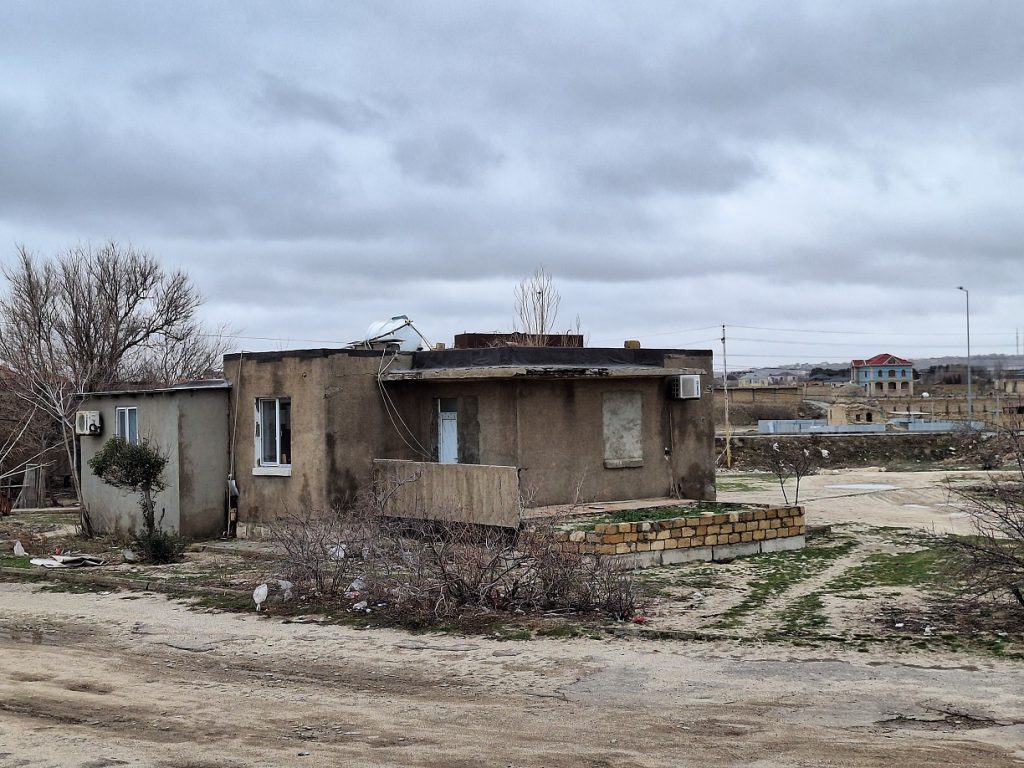 Many forcibly displaced people from Khojaly settled here in one-bedroom cottage-type houses 32 years ago
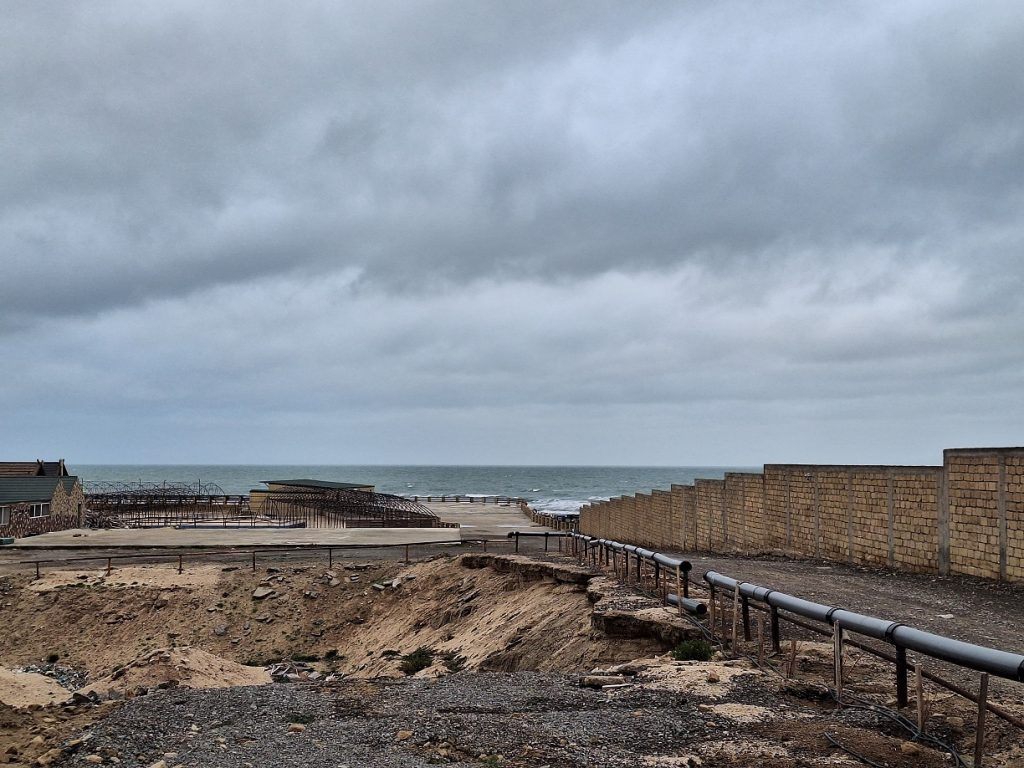 The sea is not visible from here as the coast is fenced off
Ten years ago, public transport didn’t reach the sanatorium. Residents had to walk 4-5 km to the nearest bus stop. Now, there is only one minibus that goes from here to the “Koroglu” metro station.
Currently, about 80 families reside here. Previously, there were 112 families. In 2020, some of them were resettled into nine-story residential buildings constructed for IDps in the Ramana settlement.
There aren’t many people on the streets. Perhaps it’s due to the cold; the frost is biting.
According to residents, everything seems to freeze in February here. They say that they commemorate the anniversary of the Khojaly tragedy with immense pain every year. Neighbors gather in each other’s homes to hare their memories of Khojaly and reminisce about their loved ones lost on that ominous night.
“Among the residents of Khojaly, there is an unspoken rule: in February, no one celebrates holidays, festivities, or weddings at home. Every year, throughout this month, we are all in mourning,” says sanatorium resident Gunay Abdulova.
The Khojaly tragedy is considered the bloodiest event in the history of the Karabakh War. According to official information, as a result of the Khojaly massacre, which occurred on the night of February 25-26, 1992, 613 residents of Khojaly perished, including 63 children, 106 women, and 70 elderly individuals. Eight families were completely annihilated.
Twenty-five children lost both parents, while 130 children lost one parent.
487 individuals were wounded, including 76 children. 1275 people were taken hostage. The fate of 150 of them, including 68 women and 26 children, remains unknown to this day.
5379 people were forced to leave their homes.
Last week, as a result of construction-restoration works in the center of Khojaly, a mass grave was discovered. As a result of procedural actions, it was established that the human remains found belong to at least 4 individuals (one of whom was a child aged 4-5). It is reported that their hands and feet were tied.
Azerbaijan and several foreign countries have recognized the Khojaly tragedy as genocide.
Gyunay hails from the city of Shusha. Even though she was only 6 years old when she and her family left their home, she remembers that night very well.
On the night of March 13, 1992, a Grad rocket hit the house in Shusha where Gyunay lived with her father, mother, brother, and three sisters. The house was completely destroyed by fire. That night, Gyunay’s father evacuated the entire family from Shusha and took them to Baku.
“Over the years, the most hurtful thing was being called refugees in the country of which we are citizens. Perhaps only those who have experienced such things can relate,” Gyunay recalls the years of forced displacement.
In 2008, when she married Jeyhun Abdulov, an IDp from Khojaly, she moved into their one-bedroom cottage in this sanatorium. From this marriage, Gyunay and Jeyhun have two sons.
“They were the last hostages freed from Khojaly”
The Abdulov family hails from Khojaly. Jeyhun and Eldeniz Abdulov, the parents of Kamal and Sevil, lived there until February 25, 1992, the night of the invasion of Khojaly. That night, two members of the family—Sevil and their 13-year-old son Jeyhun—were wounded and taken prisoner by Armenian soldiers.
Jeyhun himself doesn’t talk about it; it’s difficult for him to relive everything. Therefore, Gyunay recounts their story based on her mother-in-law’s account. She says that her husband always refrained from discussing the tragedy, so everything she knows she heard from her mother-in-law, Sevil khanum.
“That night, after the shooting started, my father-in-law came home and told his wife—my mother-in-law—that it was time to leave. He and their eldest son, Eldeniz, were fighting as part of the self-defense unit. That night, they were trying to evacuate people from Khojaly.
Jeyhun and his mother, along with other residents of Khojaly, escorted people to the Gargar River to head towards Agdam. Meanwhile, the men went back to hold the defense.
People moved towards Agdam through the forest. It was very cold that night, and there was snow everywhere. They were being shot at from behind. One bullet pierced Jeyhun’s left shoulder, and another grazed his mother’s temple,” recounts Gunay.
Jeyhun and his mother tried to continue despite their wounds. But Jeyhun had no strength left to walk, so his mother laid him among the bushes in the forest. Although Jeyhun asked his mother to leave him and go with the others, Sevil Abdulova stayed with her son. They and several others sat and waited for help.
“After a long night, they were found by a group of Armenian soldiers. My mother-in-law said that they first demanded money and valuables. A woman who objected was shot along with her son. When they approached her, my mother-in-law handed over all the money she had in her pockets. She only begged them not to harm her son,” Gunay shifts her gaze to her husband, who listens from a distant corner.
That same night, Kamal Abdulov was also wounded. He had stayed in Khojaly with his eldest son to evacuate the residents. Eldeniz and his comrades managed to get Kamal out and bring him to Agdam. After he regained consciousness, they began searching for Jeyhun and his mother among those arriving from Khojaly. When they couldn’t find them, everyone assumed they had perished.”
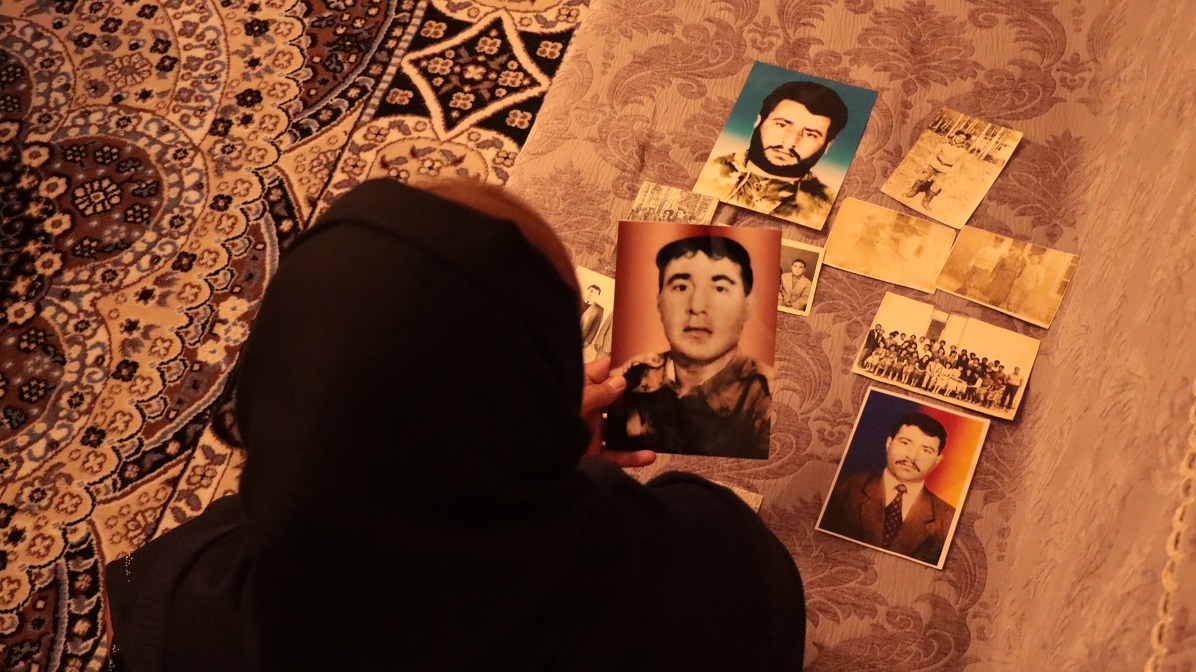
Gunay recounts that the Armenians crammed Jeyhun and his mother into the back of a large military vehicle with several other captives and brought them to a place resembling a basement. A day later, the mother and son were moved to another basement. Besides them, there was an old man and an 18-year-old girl. They were selected for exchange with Armenian prisoners.
After two months in this basement, they were handed over to the Azerbaijani side at the prisoner exchange point in the Agdam district.
“Jeyhun, Mom said you were the last hostages released from Khojaly. Am I remembering correctly?” Gunay turns to her husband.
“Yes, that’s right,” Jeyhun says, speaking for the first time in the conversation.
The Khojaly district came under Azerbaijani control as a result of military actions initiated by the Azerbaijani side on September 19, 2023. The Abdulovs heard this news on television.
“When we heard about the liberation of Khojaly, there was such a commotion in the courtyard. Everyone came out of their houses, congratulating each other, talking happily, laughing. Jeyhun and I started crying tears of joy. We didn’t know what to do. Our hearts nearly stopped from excitement. The children ran around, jumping in the house, looking at us, and rejoicing,” she recalls.
“It’s a pity Sevil Khanum couldn’t see this day,” Gunay says, as if suddenly remembering her death.
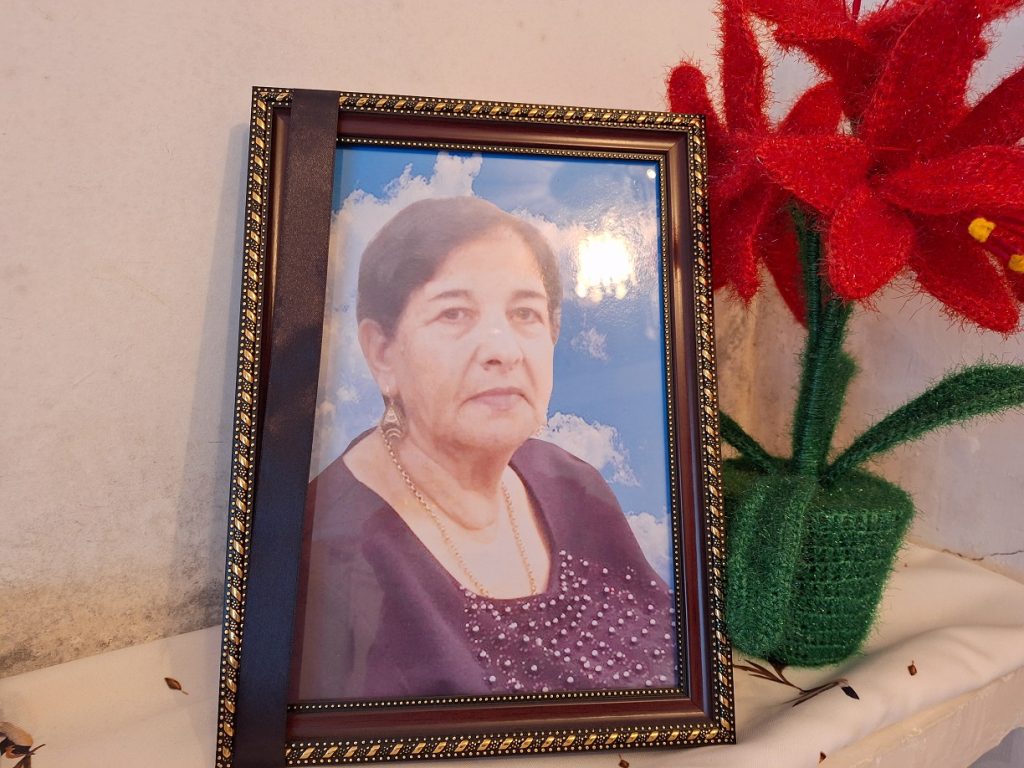 Sevil Abdulova did not live to see the liberation of Khojaly
Sevil Abdulova passed away in November 2022 due to prolonged health issues. The Abdulov family is now preparing to return to their native home without her.
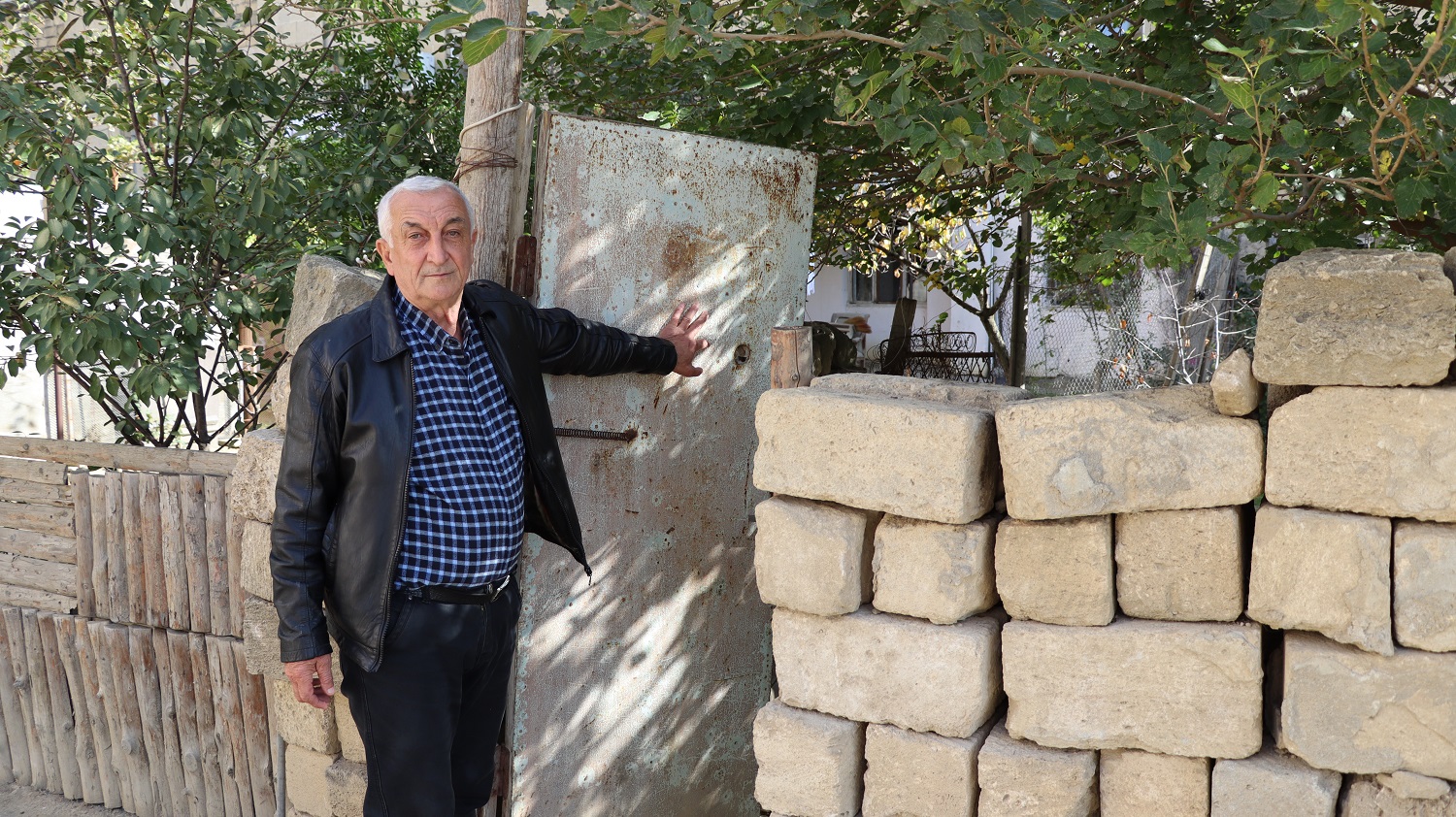
When they left Khojaly, they were only able to take the key to the house they lived in.
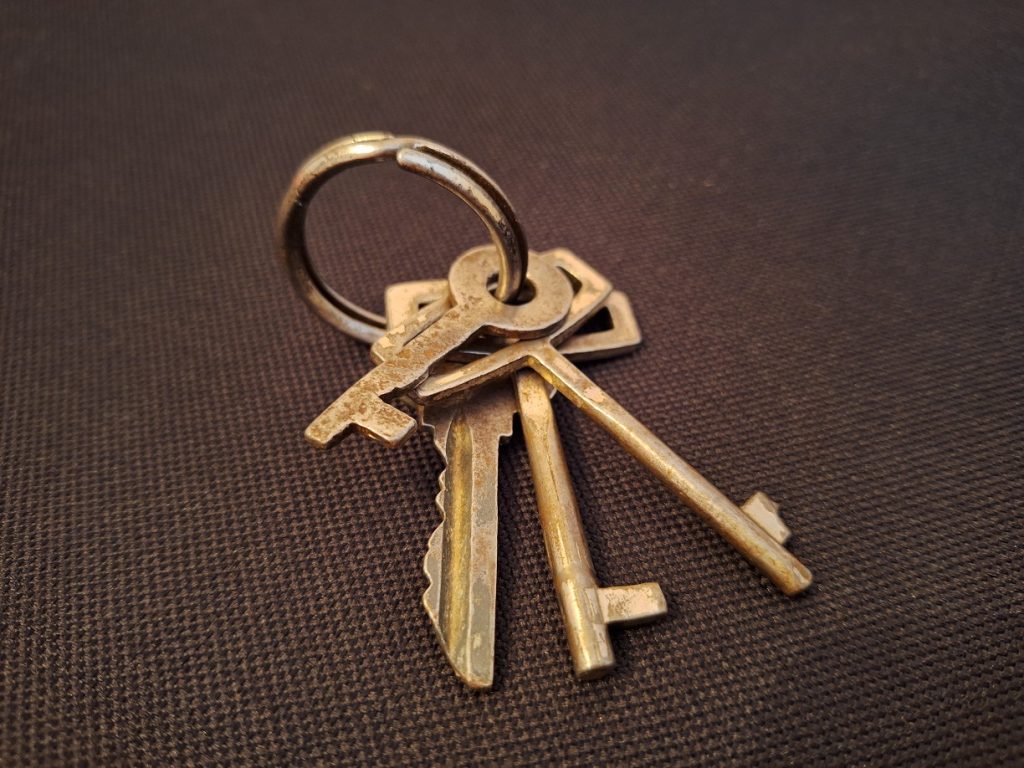 The keys to the Abdulov family’s house in Khojaly
“He’s being beaten on the head, he laughs, he’s being beaten, he laughs, as if he’s lost his mind”
Zaruna Salimova is one of the residents of Khojaly, living in the sanatorium. She lives here with her husband, three sons, daughters-in-law, and three grandchildren.
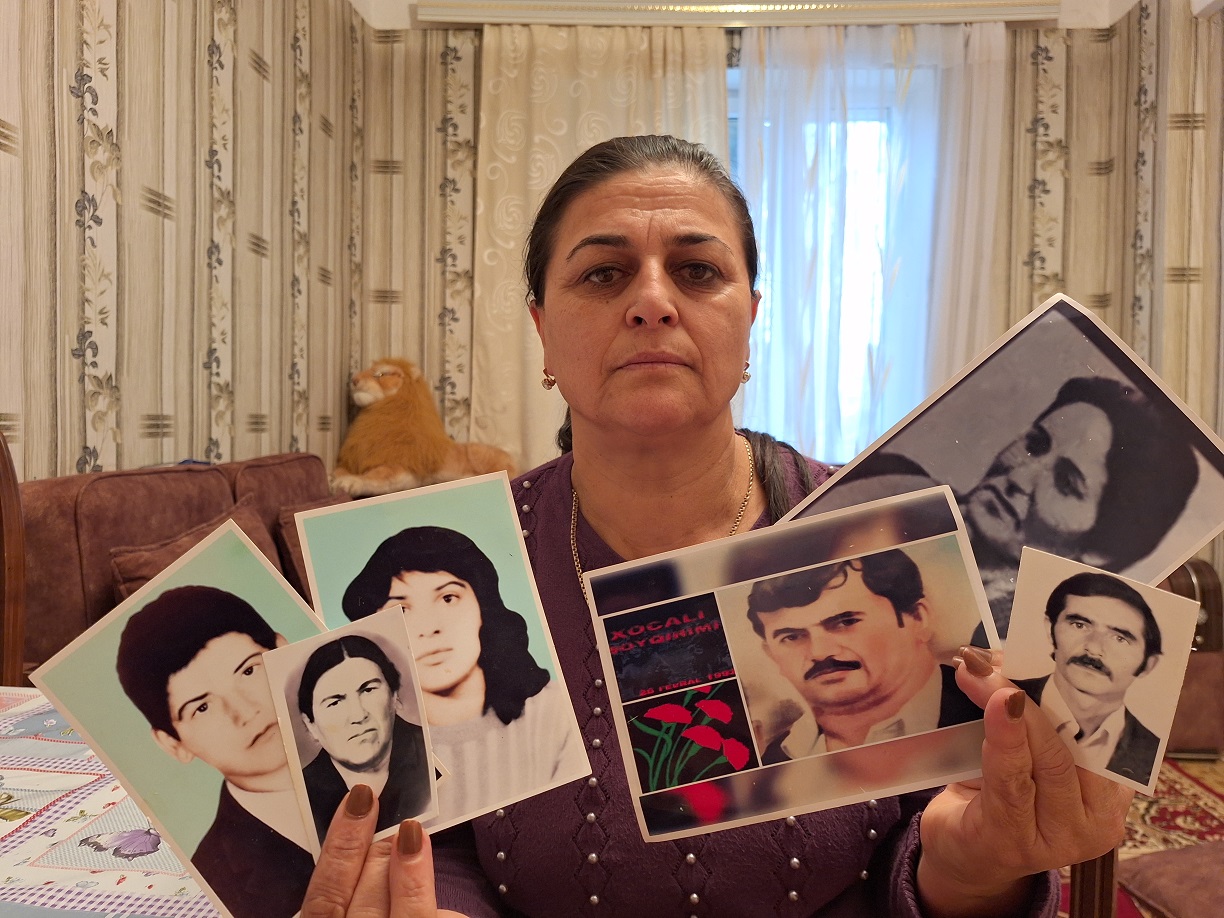
Four months before the invasion of Khojaly, she married her fellow villager, Farhad. She was 20 years old at the time. She and her husband wanted to spend their whole lives in their home in Khojaly and raise their children there. But the war shattered their dreams.
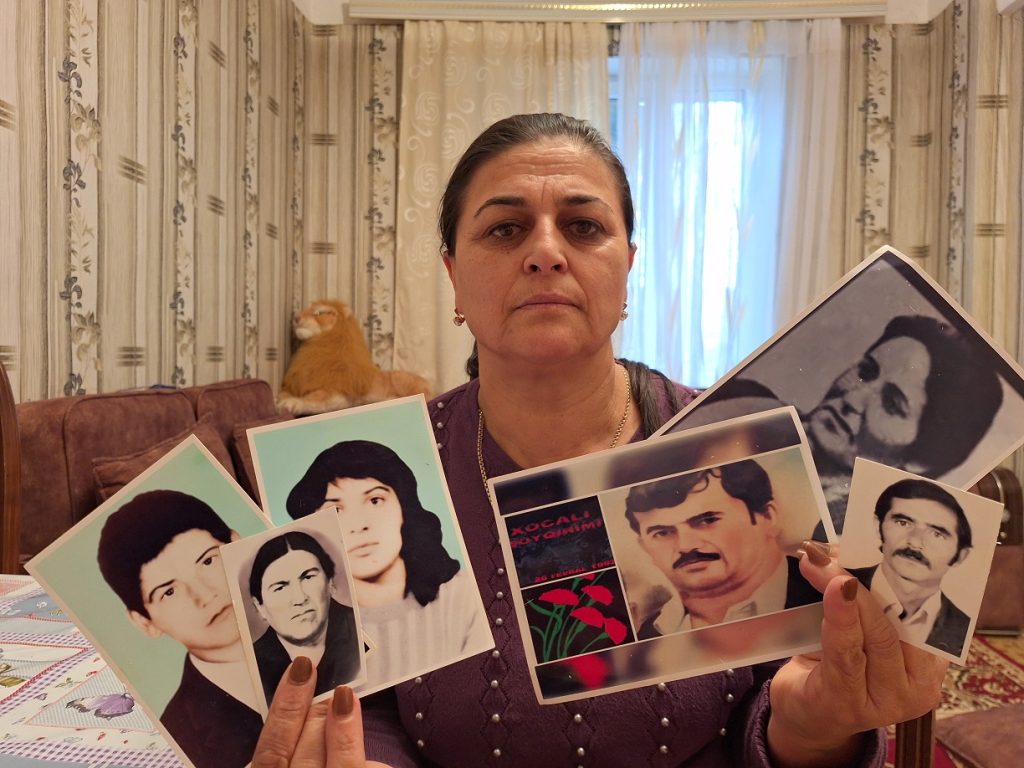 Zaruna Salimova lost fifteen relatives in Khojaly
Since Khojaly had been encircled long before the occupation, it was completely cut off from the outside world. During this time, unarmed residents of Khojaly organized night watch shifts. On the night of February 25th, Farhad was on duty.
“It was a night when gunfire started. My mother-in-law, father-in-law, brother-in-law, his wife, and two children were at our house. Farhad came home in a hurry and told us to hurry up, we needed to leave quickly, Armenians entered Khojaly. There’s no time to waste. My mother-in-law, Adila, was a sick woman of 60 years. She couldn’t walk on her own. My husband and brother-in-law carried their mother out of the house on their shoulders,” Zaruna recalls.
The Salimov family, along with about 50 residents of Khojaly, set out along a forest road towards Agdam. Describing this road, Zaruna says that the night darkness in the forest was illuminated by the flashing of bullets, as they were constantly fired upon from behind.
“I have never seen heavier snow than the one that fell in Khojaly in February of that year. It was snowing so heavily that you couldn’t open your eyes. It was difficult for the elderly, sick people, and women with babies in their arms to walk. But there was nothing else to do. Bullets were raining over our heads. How many people were hit by bullets? My mother-in-law was also hit. The white snow was red with the blood of the people of Khojaly.
I remember, we were walking, and suddenly our neighbor Vagif fell face down in the snow. The poor man had a heart attack. His wife begged for help. But how could we help? We had to run. She was left with three children next to her husband. We never found out the fate of any of them. Out of our 50 companions, only 12 made it to Agdam.”
Zaruna walked from Khojaly to Agdam with a three-month-old baby in her womb. She was deeply shocked by what she saw that night, as well as by the news of the disappearance and death of her relatives. As a result of these shocks, her baby was stillborn in the sixth month of pregnancy.
She says that what happened to her uncle Huseyn horrified her the most.
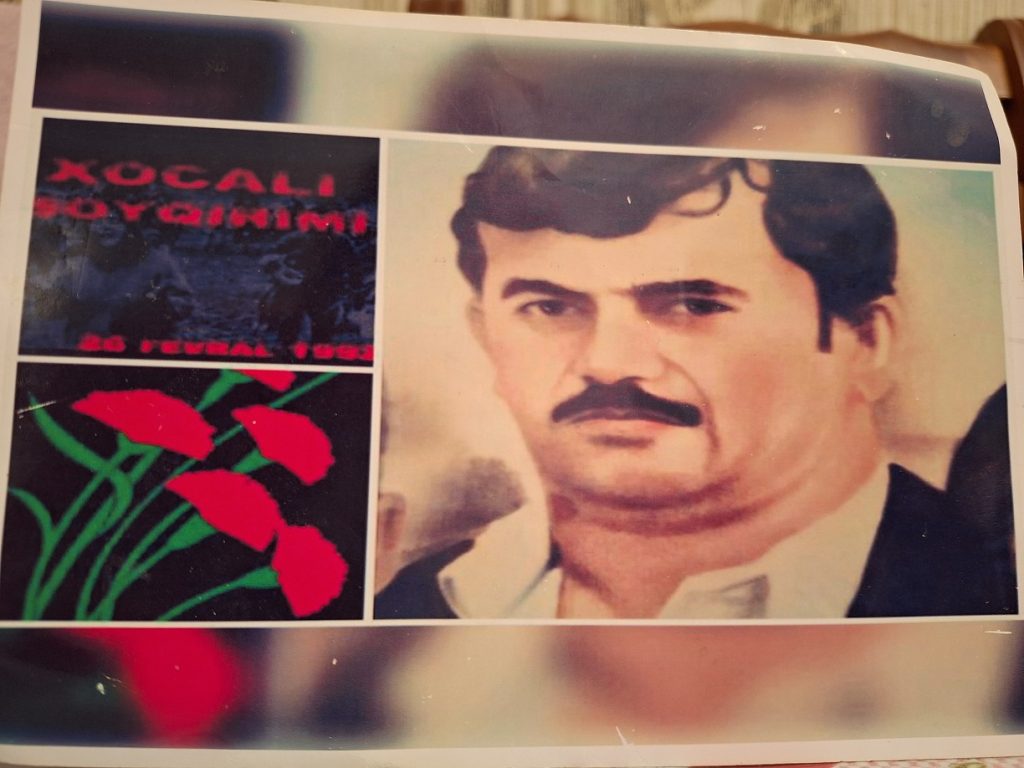 Uncle of Zaruna Salimova, Huseyn, was captured and reportedly tortured to death
“Uncle Huseyn fought as a volunteer. On February 26, he was captured in the woods near Khojaly. He saw soldiers had made a fire in the forest. He thought they were ours. Approaching closer, he realized they were Armenians, but he couldn’t escape. They tied him to the back of a military vehicle and dragged him through the snow for hours,” she says, bursting into tears.
Another captive who was with her uncle Guseyn, later exchanged for Armenian prisoners, told them they were held in the Askeran prison. According to him, Guseyn was killed by cruel torture – he was repeatedly beaten with a blunt object on the head.
“He said that after many hours of torture, Uncle Guseyn began to laugh. They were hitting him on the head, and he was laughing. His skull was shattered, probably he had lost his mind, he didn’t feel pain anymore. He died a few minutes later,” says Zaruna with fear in her voice.
That night she lost a total of 15 relatives, including her aunt Zarifa, cousin Emin, and cousin Rasmia, as well as her uncle Huseyn.
“There is only one thing I know: we must return home”
As a result of the Second Karabakh war in the fall of 2020 and the military actions initiated by the Azerbaijani army in September 2023, the territories of the former Nagorno-Karabakh Autonomous Oblast and seven adjacent districts, which had remained under Armenian control for over 30 years, were returned to Azerbaijan.
After this, displaced persons from these areas were given the opportunity to visit their native cities and villages along routes established by the Azerbaijani government.
Only a few people living in the sanatorium were able to take advantage of this opportunity. Zaruna Salimova is one of them. She went to Khojaly on February 15.
At first, she wanted to see her father’s house, but only found a plain and the ruins of destroyed houses. However, the house of her husband’s parents, where she moved after marriage, stood untouched in its place, although it looked abandoned. They believe that an Armenian family lived there after they left.
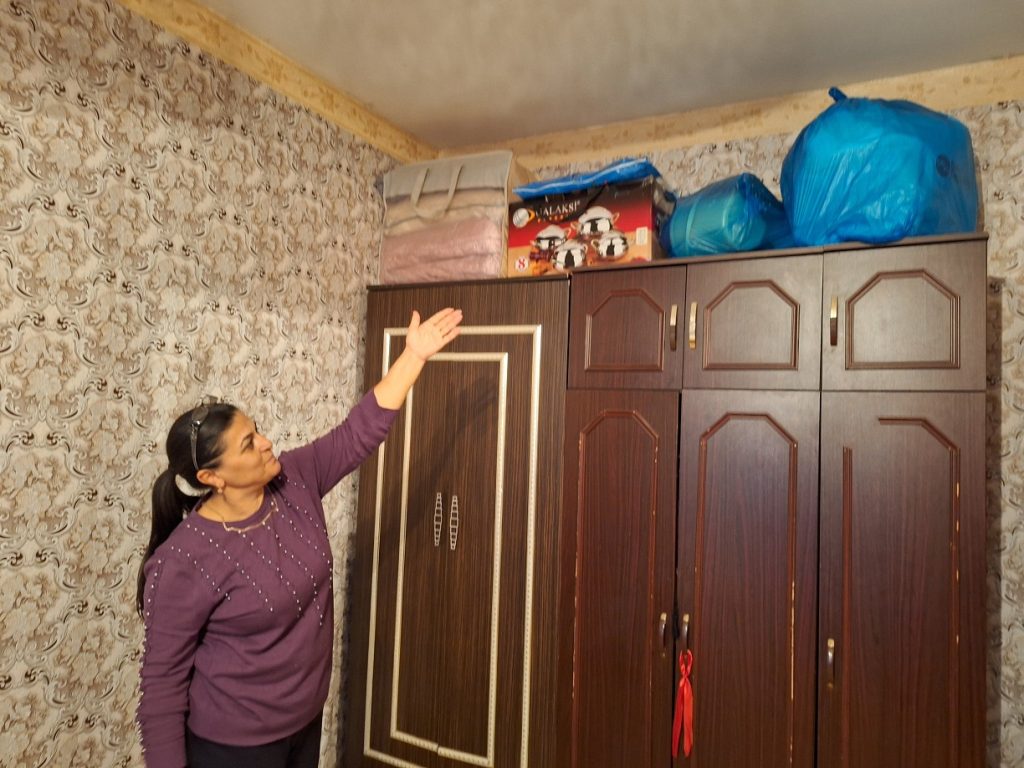 Zaruna Salimova says, they were informed that they would be resettled in their home in Khojaly in the coming months
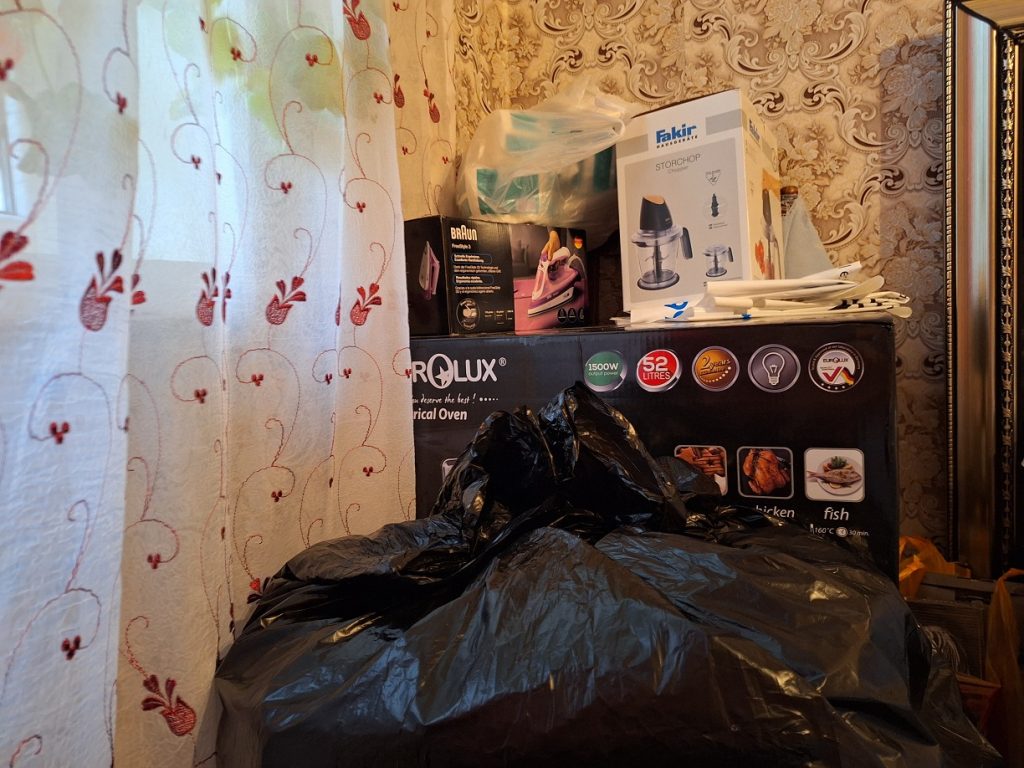 They were unable to prepare in advance when they had to leave Khojaly, but now they are preparing to return
According to Zaruna Salimova, they received information from the authorities that they will be resettled back to Khojaly in the coming months. Even repairs to their home have begun. However, she feels saddened that not all of her relatives will be able to return to their native places:
“I’m sad that most of my relatives won’t be able to return there. My mother, father, and brother have missed Khojaly for many years. Unfortunately, they didn’t live to see the day to see their homeland again. Honestly, I don’t even know how we will be able to live in Khojaly after all that we’ve been through. I only know one thing — we must return to our native homes.”
It has been 32 years since the Khojaly tragedy, which left a scar in the memory of the Azerbaijani and Turkic nations. On the night from February 25 to 26, 1992, Armenian vandals massacred the inhabitants of several settlements including Karkijahan, Meshali, Malibayli, Gushchular, Garadaghli, and a number of others, where the inhabitants of Khojaly suffered the heaviest losses.
Armenian Youth Lead Call for Justice in the Wake of the Artsakh Genocide
WASHINGTON—The Armenian Youth Federation – Youth Organization of the Armenian Revolutionary Federation Washington, D.C. “Ani” Chapter organized a protest in front of the Azerbaijani embassy this Sunday afternoon in commemoration of those who were killed during the anti-Armenian pogroms of 1988 and calling for justice in the wake of the Artsakh genocide of 2023.
In late February, nearly 40 years ago, the Armenian population of Azerbaijan faced a brutal and merciless massacre organized and committed by ordinary Azeri citizens. In Sumgait, mobs of Azeris gathered to attack helpless Armenian families, while in Baku, dozens to hundreds were killed, raped, and brutally injured by similar mobs. Every year since these ambushes, Armenians around the world commemorate those we lost during the pogroms.

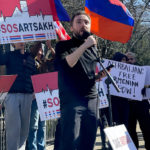
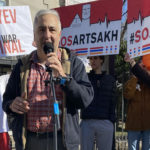
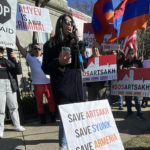
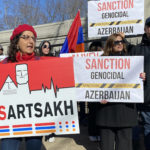
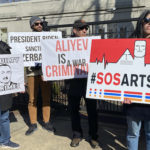
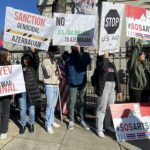
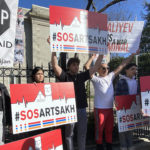
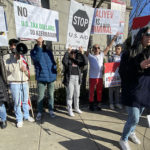
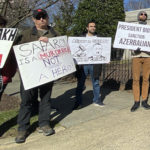
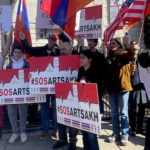
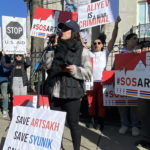
Although decades have passed since the annihilation of Armenians from Sumgait, Baku, Kirovabad, and Maragha, Armenian Americans and supporters demonstrated that they have not forgotten this miscarriage of justice, spending a cold Sunday afternoon passionately chanting their pleas to “stop threats of war” and “recognize the Artsakh Genocide.”
AYF D.C. “Ani” Chapter member Hovsep Seferian, who, last year, had shared his family’s story of survival from Azerbaijan’s murderous attacks in Baku, roused the crowd with his speech condemning Azerbaijan’s genocidal ethnic cleansing of Artsakh Armenians, and warned of further aggression against Armenia. “Aliyev has made his intent to take Syunik very clear and has gone so far as to claim Yerevan as historic Azerbaijani territory. Make no mistake, that’s where he’s going next,” stated Seferian. He urged Armenian Americans to “answer the call of our homeland in what will become its darkest hours if we don’t act.” He emphasized the need to pass the “Armenian Protection Act of 2024 and the 502B legislation in the House and Senate [to] cut American aid from Azerbaijan and keep American taxpayer dollars out of the hands of dictators like Aliyev and Erdogan.”
AYF D.C. “Ani” Chapter member Sune Hamparian, describing the 1988 Sumgait massacres, noted, “These pogroms should not and cannot be confused with the spontaneous acts of an angry crowd. Like the genocide of 1915 – they were premeditated.” Spotlighting the existential threat on the Amenian Homeland, Hamparian explains, “Having emptied Western Armenia, then Nakhichevan, and now Artsakh – they’ve turned their sights on Syunik. Their goal: An Armenia emptied of Armenians. Their weapon: Terror and violence.”
Armenian National Committee of America Executive Director Aram Hamparian followed, urging Congressional action to sanction Azerbaijan, send assistance to survivors of the Artsakh Genocide, and ensure their dignified and safe return to Artsakh. “If you all show up, if you all turn out, we can get our Congressional delegations on board,” stated Hamparian.
AYF D.C. “Ani” Vice Chair Matt Girardi then closed the gathering with brief remarks reminding Armenians that “[while] some see our struggle as a burden, I see it as a sign of life– because we have much to fight for!” Then adding, “Artsakh will return to us, Nakhichevan will return to us, and we will leave future generations of Armenians with peace, prosperity, and security in a free, united, and independent Armenia.”
The AYF urges all readers to take action on the ANCA website to support the passage of the Armenian Protection Act, impose sanctions on Azerbaijan by passing 502B legislation, and divest funds from Turkey and Azerbaijan.